Connect with us

National

Publish Subsidy Panel Report, Unmask Real Thieves, Otedola Tasks Tinubu

Published

on

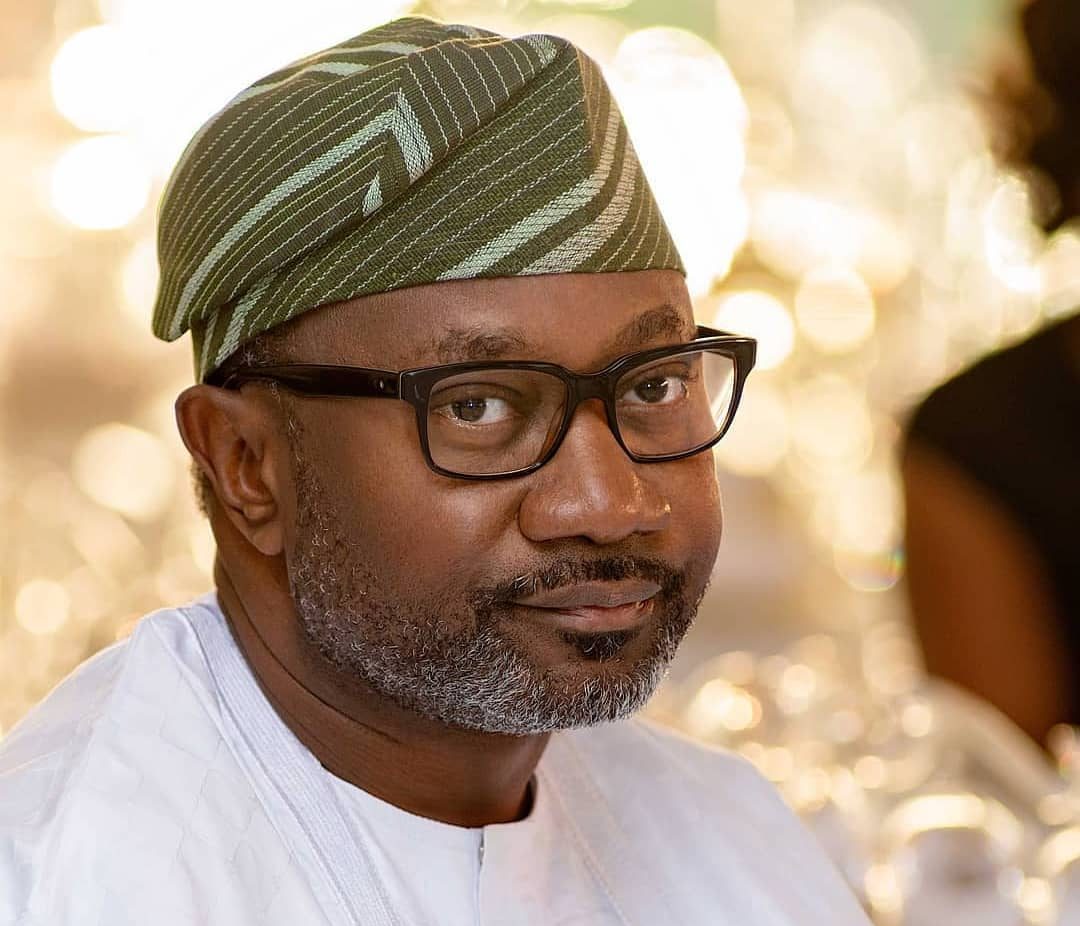
Billionaire businessman, Femi Otedola, has appealed to President Bola Tinubu to release the full report by the Aigboje Aig-Imoukhuede panel carried out under the Goodluck Jonathan administration on the controversial fuel subsidy regime.

Otedola said that Nigerians deserve to know the truth about those who looted public funds under the Petroleum Subsidy Fund (PFA) scheme, which lasted several years.

“I implore President Bola Ahmed Tinubu to release the full Aigboje Aig-Imoukhuede report on subsidy fraud as Nigerians deserve to know the truth. It is on record that the Presidency at the time called on the late Economic and Financial Crimes Commission (EFCC) Chairman, Ibrahim Lamorde, to halt the investigation. Let the report be made public so the real subsidy thieves can be unmasked,” Otedola said in a statement on Sunday.

Otedola made the appeal to Tinubu while reacting to an allegation by Umar Sani, a former Special Adviser (Media) to ex-Vice President Namadi Sambo, who said that at the peak of the subsidy regime, Otedola, through his company, Zenon Petroleum and Gas Ltd, benefitted from the scam he’s now criticising.

Sani claimed that he has empirical evidence showing that Otedola controlled as much as 90 per cent of diesel imports, and up to 40 per cent of other products at the time. “The same system he now condemns was one in which he was deeply entrenched and from which he personally benefited immensely.”

Yet, Otedola said he has instructed his lawyers to file a N1 billion lawsuit against Sani for defaming him, maintaining that he only sold diesel, which had no subsidy at the time he controlled the market in Nigeria.

“My attention has been drawn to a mischievous and malicious publication written by one Umar Sani, a former Special Adviser (Media) to former Vice President Namadi Sambo, attempting to twist facts and drag my name into disrepute and allegations of complicity in the subsidy fraud.  His insinuations are false, baseless, and a shameless attempt to pander to lies and rewrite history. Let me set the record straight for the overall benefit of the discerning public.

“Zenon Petroleum and Gas Limited was wholly an importer and trader of diesel with a market share in excess of 90 per cent, never traded in Premium Motor Spirit (PMS) and as such could not have claimed for subsidy under the Petroleum Subsidy Fund scheme.

Diesel had been long deregulated even before the adoption of the PSF and did not fall under petroleum products to be claimed under the PSF regime.

“PMS was the only product that was eligible for claim under the PSF scheme in a bid by the government to make the product available and affordable to all and sundry. It is therefore shocking that someone like Umar Sani who occupied a position of authority and responsibility could display such ignorance of basic industry facts in public.

“I view this as either mischief (and taking advantage of the uneducated public) or a blatant display of gross ineptitude. If diesel did not fall under the subsidy regime, how can Umar Sani then accuse Zenon Petroleum and Gas Limited of impropriety under the subsidy regime?” Otedola asked.

Writing on the process that led to the exposure of the subsidy fraud, Otedola stated that he was indeed a member of President Goodluck Jonathan’s Economic Team and was the one who first alerted the President of the monumental fraud being perpetrated by economic saboteurs under the PSF scheme.

“When he (Jonathan) called the then Minister of Petroleum, she denied it. With my strong determination to stop the economic malaise and bleeding, I called Senator Bukola Saraki and reported the fraud to him. He took it to the floor of the Senate, and from there the House of Representatives began its investigation.

“These statesmen are alive and my assertions above can be corroborated if necessary. If I was complicit in subsidy theft, would I be the one to raise the alarm and blow the whistle on myself? That alone should question the motive of Umar Sani for his most recent publication on this matter,” he pointed out.

When it became public industry knowledge that he (Otedola) was the whistleblower on the subsidy fraud, he said that some of the perpetrators decided to fight back by using the House Committee on the probe, headed by Farouk Lawan who tried to indict him without any basis.

“As they always say, it’s only natural for corruption to fight back. The House Committee on the subsidy probe was now being manipulated by the subsidy fraudsters and thereby turning the probe panel into an extortion racket. When the harassment and blackmail became incessant on my person, I petitioned the authorities and worked with the Department of State Security (DSS) in a sting operation.

“The money was provided by the DSS, duly marked, and handed over to me under security surveillance. I then gave it to Farouk Lawan in line with the sting operation. That is on record. To twist that carefully documented operation into an indictment against me is laughable and only exposes the ignorance of Mr. Sani. You may be aware that Hon. Lawan was subsequently convicted and sentenced to five years imprisonment for bribery. The facts are very clear and public,” he added.

On the allegations and insinuations about his Asset Management Corporation of Nigeria (AMCON) involvement, Otedola described it as a demonstration of mischief and ineptitude on the part of Sani.

He wondered why someone would twist publicly available information to ‘miseducate’ the populace, highlighting that he had never hidden the fact that he (Otedola) suffered financial losses from the global economic meltdown of 2008 resulting in a huge debt exposure to the Nigerian financial services industry.

The loans, he said, were sold to AMCON, after which he (Otedola) in turn gave up his assets worth hundreds of billions of Naira to settle his obligations under a court-ordered settlement.

“It is on record that AMCON itself publicly commended my approach and told other debtors to follow my example. Court records are there for anyone seeking the truth to investigate. AMCON officials from that time are also alive today to confirm the truth. I even addressed this matter in my book, ‘Making it Big’ which was recently published and released to the public,” Otedola said.

The businessman, therefore, vowed that he would not allow anyone to toy with his hard-earned reputation, announcing his decision to sue the former presidential aide over the alleged defamatory remarks.

“Because of these deliberate lies and unfounded allegations, I have instructed my lawyers to file a N1billion libel suit against Umar Sani. People must learn that reputations are not to be toyed with for cheap propaganda and to serve as a deterrent for other mischief makers in the future. I will go to every extent that this is achieved.

“To Mr. Sani and others who peddle these half-baked stories: go and read my book Making It Big, study the facts, and stop disgracing yourselves with ignorance. I have nothing to hide and I have always acted in the interest of truth and accountability. Those who benefitted from subsidy fraud know themselves. I will not sit back and allow falsehood to be written into history,” he maintained.

Continue Reading
Click to comment

Leave a Reply

Your email address will not be published. Required fields are marked *

National

Glo Leads in Investments, Performance As NCC Sets New Standard for Telecoms

Published

on

By

Nigeria’s digital transformation continued to gain momentum as Nigerian Communications Commission (NCC) and Globacom (Glo) reinforced a powerful partnership built on transparency, long-term investment, and consumer trust.

Through its Industry Performance Reports, developed with global network intelligence firm, Ookla under the QoS/QoE Crowdsourcing Project, NCC is setting a new benchmark for accountability in the telecoms sector.

The quarterly, data-driven reports provide independent insights into network performance, coverage and real-world user experience across operators, states and regions.

A senior NCC official described the initiative as “sunlight and substance”, stating that it enables Nigerians to see clearly how networks perform so that excellence is rewarded and complacency is exposed.

Within this rigorously lit landscape, Globacom has emerged as a standout performer. Its leadership position is anchored in decades of sustained investment, patient capital, and continuous modernisation.

From pioneering one of the largest fibre-optic backbones in the country to upgrading radio access and core networks, Glo has consistently treated infrastructure as a long-term covenant with Nigeria’s future.

A member of Glo’s executive leadership summarised the company’s philosophy, thus, “We invest as if Nigeria’s tomorrow depends on what we build today—because it does. Our goal is not to be loud, but to be lasting.”

NCC–Ookla analytics now validate what many subscribers already experience: Glo’s network is engineered for substance, not spectacle.

With strong fibre-to-site architecture, resilient backhaul and intelligent traffic management, Glo delivers stable speeds, lower latency and dependable service in real-world conditions.

The commission’s focus on Connectivity on the Move highlights performance along major road corridors—critical arteries of commerce and social life. Here, Glo’s dense fibre footprint and redundant routes ensure fewer call drops, faster data sessions and reliable streaming for Nigerians on the move.

On the Urban vs Rural Divide, Glo’s strategy of extending fibre closer to base stations and modernising legacy sites is narrowing performance gaps between metropolitan and underserved areas.

Where signals once faltered, connectivity now flows with confidence.

Glo’s measured approach to next-generation technology is equally notable. NCC’s 5G Reality Check compares coverage with actual usage and experience. By prioritising strong 4G foundations and fibre-fed sites, Glo is ensuring that future 5G deployment is credible, inclusive and sustainable.

The reports also examine how networks affect battery life and device temperature. Here again, Glo’s optimisation protocols and modernised core architecture stand out, reducing unnecessary signalling and improving everyday user comfort.

For consumers, the impact is tangible. A small-business owner in Ibadan, Segun Adeleye, stated, “My work runs on data. With Glo, I just connect and go. That confidence is everything.”

With the NCC providing the tools for transparency and Glo delivering on long-term leadership and investment, Nigeria’s telecoms industry is entering a new era—one defined not by promises, but by performance.

Regulation is the lighthouse; leadership is the ship. And together, NCC and Glo are steering Nigeria towards a faster, fairer and more connected future.

ThisDay

Continue Reading

National

Tinubu’s Stumble Purely Accidental, Not Health Related – Presidency

Published

on

By

President Bola Tinubu’s spokesperson, Bayo Onanuga, has explained the reason the Nigerian leader stumbled in Turkey.

Onanuga, while addressing enquiries on Tuesday, said Tinubu lost balance in Turkey because he stepped on a metal object.

“The President stepped on a metal on the floor, which made him lose his balance,” Onanuga said.

The incident happened when the Nigerian leader was walking alongside his Turkish counterpart, President Recep Erdogan, in Ankara, capital of Turkey, on Tuesday.

Prior to the incident, Tinubu inspected a parade as part of a state reception.

A review of the video of the incident showed that the president went down after a camera man moved his tripod stand close to him.

But Onanuga said the President merely stepped on an object, resulting in a minor loss of balance.

“This is not a big deal, except for those who want to make mischief out of a fleeting incident. It was a mere stumble, thank God, not a fall,” he said.

Sources within the Presidency explained that the stumble was purely accidental and unrelated to the President’s health.

Tinubu’s aide on on social media, Dada Olusegun on Tuesday, said the President continued his engagements as scheduled after the incident.

Olusegun stated that Tinubu was part of a joint press conference with the Turkish leader immediately after a bilateral meeting.

Similarly, Tinubu’s aide on public communication, Sunday Dare, said the President was in good shape and fully engaged in official activities.

“President Tinubu, after a stately welcome ceremony in Ankara, proceeded to scheduled bilateral meetings with the President of Türkiye and other senior government officials from both countries,” Dare said.

“No injury was recorded, and the President went on to participate fully in the rest of the scheduled programme.”

Reacting to public speculation, the Presidency reportedly said there was “no cause for alarm,” stressing that Tinubu remains hale and hearty.

Tinubu is in Türkiye as part of Nigeria’s ongoing diplomatic engagements aimed at strengthening bilateral relations, particularly in trade, investment, defence cooperation and infrastructure development.

“The visit is aimed at strengthening the existing cordial relations between the two countries and exploring further areas of cooperation in security, education, social development, innovation, and aviation,” Onanuga said in a statement on Sunday.

“It also reciprocates an earlier state visit to Nigeria by the Turkish President, Recep Tayyip Erdogan, from October 19 to 20, 2021.”

The visit will feature a business forum bringing together investors from both countries to explore areas of interest

Continue Reading

National

Peter Obi Blames Leadership Failures for National Grid Collapse, Power Crisis

Published

on

By

Former presidential candidate, who is also a former Governor of Anambra State, Peter Obi, has attributed Nigeria’s perennial national grid collapse and worsening electricity crisis to persistent leadership failures.

Obi made the remarks in a social media post on X (formerly Twitter) on Saturday, referencing the latest grid collapse.

He pointed out that the problem has been recurring, with multiple of collapse recorded in 2025, and now the crisis has returned in January 2026.

The former presidential candidate highlighted the long-standing underperformance of Nigeria’s power sector, describing it as unacceptable for Africa’s most populous nation.

Obi noted that for three consecutive years—from 2023 through 2025—Nigeria has been ranked as the country with the lowest access to electricity worldwide, leaving nearly 100 million citizens without reliable power.

What Obi is saying 

Obi expressed deep disappointment over Nigeria’s energy situation and emphasized the urgent need for competent leadership in the sector.

“In January 2025, we witnessed the first grid collapse of that year, which was followed by several other collapses. Now in January 2026, the national shame has commenced again with yesterday’s collapse,” he said.

“This power crisis is a direct result of continuous leadership failures. The power sector is critical and requires competent and committed leadership to thrive,” Obi added.

Obi urged Nigerians to prioritise leadership qualities such as competence, accountability, and empathy in future elections.

He stressed that the power sector is crucial for industrialisation, business growth, and improving the quality of life for citizens, and warned that anything less than strong leadership is unacceptable.

Backstory 

Nairametrics reported yesterday that Nigeria was plunged into darkness following the collapse of the national electricity grid, marking the first system failure recorded in 2026.

Data obtained from the Nigerian Independent System Operator (NISO) showed that power generation across the country dropped to 0 megawatts (MW) at about 1:00 pm, indicating a total shutdown of the grid.

The collapse triggered widespread blackouts in many parts of the country, with electricity distribution companies forced to shut down supply to customers as a result of the system failure.

What you should know 

The NISO says Friday’s nationwide power outage was caused by a system-wide disturbance from multiple 330kV transmission line trips and the disconnection of some grid-connected generating units.

NISO said preliminary findings from its operational assessment point to multiple failures on the high-voltage transmission network, which ultimately destabilised the entire system.

Nigeria’s national grid has experienced repeated partial and total collapses in recent years, raising concerns among industry stakeholders and electricity consumers.

Continue Reading

Trending