Connect with us

Featured

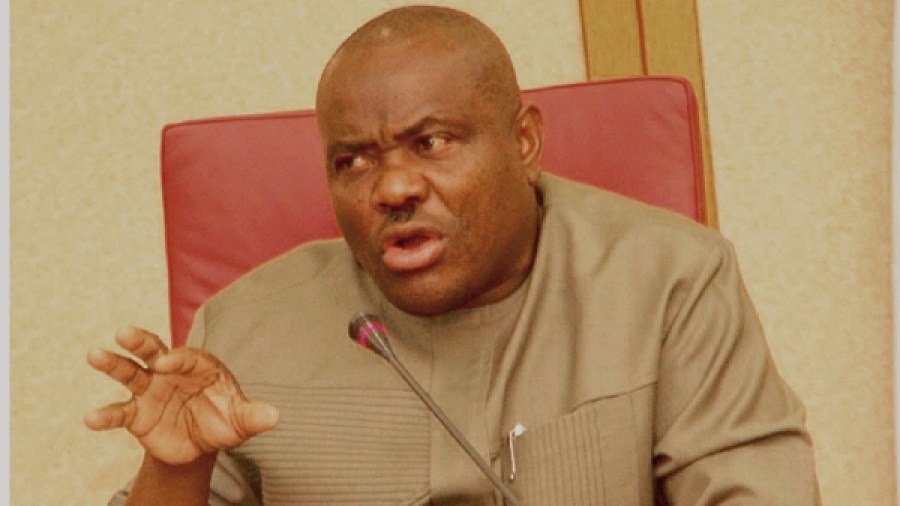
Wike Ignites Fresh Crisis in PDP, Insists South-South Congress Must Be Recognised

Published

on

As the former main opposition party, the Peoples Democratic Party (PDP), appeared to have resolved lingering crises of leadership, which reduced it to a shadow of its former self and caused mass defection of its top members, the party seems to be heading for another prolonged tussle.

This is as the Minister of the Federal Capital Territory (FCT), Nyesom Wike, has outlined fresh conditions for reconciliation, insisting that the party must reverse recent decisions he considers unjust, including the removal of Chief Dan Orbih as the party’s National Vice Chairman (South-South).

Speaking in his monthly television interview, Wike maintained that until these grievances are addressed, the PDP should not proceed with plans for its national convention scheduled for November.

“It is over for now, but there are still some things remaining,” he said. “The South-South zonal congress that was held in Calabar must be upheld. Dan Orbih remains the National Vice Chairman for South-South. If they don’t agree, that’s an error on their part. If they want another round of crisis, so be it.”

Wike warned that any attempt to ignore the outcome of the Calabar congress would amount to impunity. “They say they’re going to the convention. I’m sorry. Let the matter be resolved first,” he insisted.

Wike insisted that the congress, which took place in Calabar, was conducted legitimately and must not be tampered with.

“Our South-South zonal congress that was held must be upheld. There’s no doubt, no two words about it,” the minister said.

“When we were doing our South-South congress, the Acting National Chairman claimed that the PDP governors were not in support of the National Congress. Where are the PDP governors now?” he asked rhetorically.

On his support for President Bola Tinubu’s re-election in 2027, Wike did not shy away from reaffirming his admiration for the President.

“Why wouldn’t I support a southern candidate—or even President Tinubu, if he’s running again?” he queried. Citing Tinubu’s decision to remove the fuel subsidy on his first day in office, Wike described him as a leader with courage and conviction. “That is bold leadership,” he said.

While reiterating that he remains a PDP member, Wike emphasised that he cannot support any presidential candidate, regardless of party, who lacks competence. “At my level now, I cannot support someone I know is not competent; whether he’s my friend or not,” he said.

On the effort by political coalition forces to stop Tinubu’s re-election, Wike aimed at former Vice President Atiku Abubakar, criticising what he described as a pattern of opportunistic defections. “People move from one party to another for selfish reasons,” he said. “Someone who’s been seeking the presidency for years keeps moving from PDP to APC and back again. Then suddenly says he wants to ‘rescue Nigeria.’ Rescue what? From what?”
Nigerian Airways plane models

He also defended his stance in the 2023 elections, saying he acted based on principle. “I take serious exception to people calling me double-faced. I made it clear I wouldn’t support Atiku. I didn’t attend the primaries and then turn around to support him. I stood for equity, fairness, and justice,” he stated.

Wike explained that his support for Tinubu in 2023 was informed by a belief that the APC candidate could lead Nigeria effectively. “I believed President Tinubu had a better chance and better capacity. And I was right,” he said.

On internal PDP crisis and court orders, Wike accused some PDP leaders of fueling the party’s crisis by disregarding internal rules and court orders. He cited the case of Senator Samuel Anyanwu, whose position as National Secretary was contested despite a court ruling and a congressional decision in his favour.

Nigerian Airways plane models

He insisted that impunity remains the core problem within the party. “The so-called buccaneers and vampires have left because the party refused to do the right thing,” he said, adding that he would remain in the PDP and “fight from within.”

Responding to speculation about his political alliances, Wike confirmed meeting with some governors but denied stoking a crisis within the Labour Party. “I’ve met governors from Edo, Ebonyi, and Kogi. These are my colleagues. That’s what politicians do. And no, I’m not stoking any crisis in the Labour Party. If they have problems, that’s their own doing.”

On the controversial local government elections and declaration of emergency rule in Rivers State, Wike defended the legality of the decisions. He cited constitutional provisions and Supreme Court rulings that validate the appointment of sole administrators pending elections. “If you don’t conduct elections, local governments can’t access federal allocations. That’s why elections must be held—even under emergency rule,” he stated.

Asked about reports of a PDP-APC power-sharing arrangement in Rivers State, Wike claimed ignorance but argued that such cooperation is not inherently wrong. “If leaders from both parties sit down to say, ‘let’s not fight,’ what’s wrong with that? Shouldn’t we be happy that politicians are working together for peace?”

Continue Reading
Click to comment

Leave a Reply

Your email address will not be published. Required fields are marked *

Featured

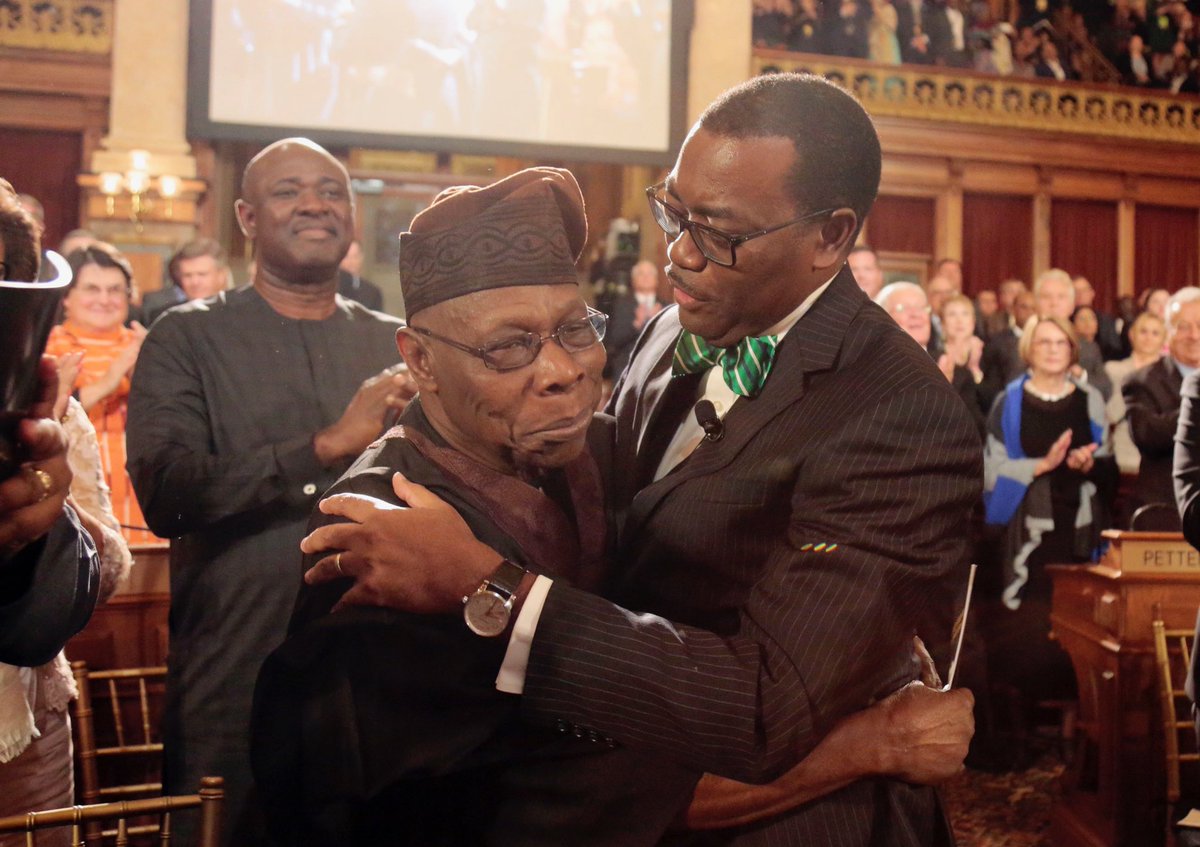
Akinwumi Adesina Celebrates Obasanjo at 89

Published

on

By

By Eric Elezuo

Immediate Past President of African Development Bank (AfDB), Dr Akinwumi Adesina, has celebrated former President Olusegun Obasanjo,  on his 89th birthday.

In the statement the former Minister of Agriculture signed on behalf of himself and his wife, he noted that Obasanjo is a man of wisdom, foresight, courage and boldness among other qualities.

The statement titled, Happy Birthday: President Olusegun Obasanjo, GCFR, at 89, is presented as follows, in full:

Today, we celebrate a man who walks across generations like a bridge between time and destiny – a leader whose credibility is unquestioned and whose respect knows no borders.

A man of wisdom, rich with insight. A man of courage, who steps boldly into the battlefields of ideas and argument, unafraid to speak, unafraid to stand, unafraid to be counted.

In the public square he cannot be silenced. He does not merely ruffle feathers – he pulls them out, speaking truths that are sometimes uncomfortable, yet always necessary, driven by an unwavering devotion to truth, equity, and justice.

Disciplined in thought. Disciplined in action. Disciplined in judgment.

When conflict rises and storms gather over nations, the world turns to voices of wisdom— and among those voices uniquely stands President Obasanjo.

A leader who dares to walk where others hesitate. A man who speaks to the mighty without fear and lifts the weary without condescension— challenging the powerful to do what is right, while urging the humble never to lose hope.

An indefatigable spirit, whose optimism refuses to drown in the tides of despair, rising ever higher with a familiar refrain echoing across years: “We will get it right.”

A defender of the weak. A reconciler of enemies.

A soldier who walked through the fires of war and emerged a builder of peace, a bridge for peace, a reconciler of differences, and a defender of the weak.

The Yoruba adage reminds us: “An elder cannot stand in the marketplace and watch the head of a baby slump on the back of its mother.”

Baba Obasanjo is an elder among elders. He will not only warn the mother to secure the child— he will help her do it. And if the knot still loosens, he will do what only the truly responsible elder does: lift the child himself and carry the infant upon his own back.

A man whose memory is sharp as history itself— remembering dates, details, and moments with the precision of a living archive.

And yet, beyond titles and offices, beyond uniforms and presidential seals, he remains something greater:

A father not only to his own, but to many. To a nation. To a continent.

The Baba of Africa. The Baba of the world.

Today, as you turn 89, we celebrate not only the years you have lived but the lives you have touched, the conflicts you have calmed, and the courage you have inspired.

May God continue to grant you strength, health, and vitality.

May your voice remain strong, your wisdom undimmed, your presence a guiding light for generations yet unborn.

For in the long march of time, you stand as one of its wisest elders.

The timeless Baba.
Happy 89th Birthday.
Hearty congratulations!

Dr. Akinwumi A. Adesina, CON, C.G.H. (‘Akin 45’) and Grace Oluyemisi Adesina (“Yemisi 55”)

Continue Reading

Featured

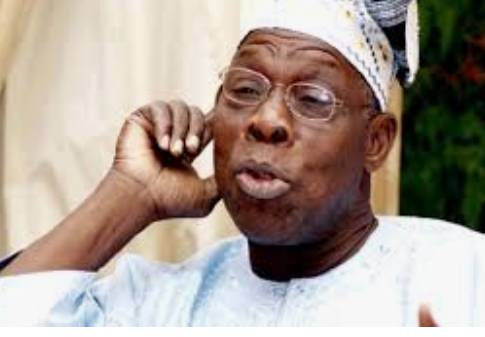
I Dey kampe, Not Dying Anytime Soon, Obasanjo Declares at 89

Published

on

By

Former President, Chief Olusegun Obasanjo, has said that at 89 years, he won’t die anytime soon.

He condemned those circulating a fake letter in which he was purportedly speaking about his death, saying they were only wasting their time because “I dey Kampe.”

The former president disclosed this on Wednesday while delivering a colloquium titled “Burden and Blessing of Leadership: Reflections from Global Africa to the World” held as part of the ceremonies lined up to mark his 89th birthday in Abeokuta.

Obasanjo was born on March 6, 1937.

The former president said at 89 years he had no doubt that God did not make a mistake to keep him alive and reasonably healthy at his age.

He slammed those wishing him dead, saying he would remain on the earth surface agile and healthy for as long as his Creator wanted.

“For my final note in this address, I want to point your attention to the work of some never-do-well.

“They publish and circulate a fake paper credited to me that I am writing, giving notice of my death, pafuka.

“That is their wish and surely not God’s wish for me. God has assured me that He has more for me to do on earth, and He has given me the wherewithal to do it.

“And those who wish otherwise are going to be dealt with by God Himself. I dey kampe as usual,” the former President said.

Earlier, the former President had lamented the leadership crisis that he said had, for decades, stifled Africa’s development, growth, and economic prosperity.

“Africa is not a problem to be managed but a promise to be fulfilled through honest, courageous, selfless, incorruptible and transformational leadership,” he said.

He explained that genuine leadership carried immense burdens, citing his own incarceration and near execution under the military junta of the late Gen Sani Abacha as part of that burden.

Highlighting Africa’s unrealised potential, he said, “By every measure of natural endowment, Africa should be a continent of prosperity, stability, peace, security and global influence.

“Instead, a major part of the continent remains a theatre of preventable disease and suffering, starvation, conflict, insecurity and poverty.”

Obasanjo identified leadership failure, not geography or history, as the primary cause.

“The primary cause is the failure of those entrusted with power to lead for the people and serve them rather than against them; to build institutions rather than subvert them; to welcome accountability rather than flee from it, to ensure equity and justice rather than enthrone injustice, inequality and inequity.”

He warned that many leaders arrive with promises but soon govern for personal or familial gain, undermine democracy, and erode institutions.

“The same young reformer who promised accountability begins to silence the press, harass the judiciary, and intimidate civil society.

“All institutions become perverted only to serve the interest of the leader, his family, political accomplices and business interests,” he said.

To close the leadership gap, Obasanjo stressed the need for leadership formation, not just training.

“We must invest not only in teaching leaders what to do, but in forming leaders who are constituted and imbued with attributes and values to do the job the right way,” he said.

The former President urged young Africans to take democracy seriously and commit to governance that is accountable, transformational, transparent, and oriented toward the common good.

“A continent that fails its youth does not merely waste a generation; it plants the seeds of instability that will haunt the next several generations,” he said.

Reflecting on personal leadership experiences, Obasanjo described the loneliness and moral weight of decision-making, from commanding troops in the Nigerian Civil War to serving as Nigeria’s President from 1999 to 2007.

“The loneliness I speak of is the loneliness of final decision… your decision will affect millions of lives. That weight settles on one pair of shoulders – the leader’s shoulders,” he explained.

“I remember a few days before the Nigerian Civil War ended in January 1970. I was commanding the Third Marine Commando Division.

“My troops were positioned for the final push. Hundreds of thousands of Igbo civilians were trapped, starving, dying. On one side was the imperative of ending the war quickly to stop further suffering.

“On the other was the risk that a military advance would deepen the humanitarian catastrophe. No textbook told me what to do. No senior officer was going to make that call. It was mine alone. I made it. We saved lives by not shelling Owerri.  History has rendered its verdict,” he said.

He stated that a leader also carried the burden of being the repository of other people’s hopes — hopes that are often larger than any human being can satisfy.

Obasanjo said that “When I was elected President in 1999, the Nigerian people had endured years of military dictatorship, economic stagnation, and institutional decay.

“They did not elect a president, some of them thought; they elected a miracle performer. And when the miracle did not arrive in full measure overnight — as it never can — I could hear the murmurs of some of them. This is the burden: to be elevated by hope and measured by time, often simultaneously.

The former President said that with leadership also comes the burden of principle, adding that “True leadership requires the willingness to hold a position when it is unpopular, to say no when yes would be more convenient, to name a truth that powerful interests wish suppressed.

“This costs friendships. It costs alliances. It sometimes costs your freedom — as I learned in the prison under Sani Abacha, where I was held for three and a half years, tried before a kangaroo tribunal, and very nearly executed.”

He also highlighted the blessings of leadership, citing achievements such as Paris Club debt relief and the establishment of the Economic and Financial Crimes Commission to recover stolen public funds.

“The blessing of having done the right thing when doing the wrong thing would have been easier. That is the first blessing of leadership: the opportunity for moral self-definition. Not who others say you are,” he said.

On his personal well-being, Obasanjo affirmed that he remained strong at 89 and condemned those spreading false news of his death.

“God has assured me He has more for me to do on earth, and He has given me the wherewithal to do it. I dey kampe as usual,” he added.

The Punch

Continue Reading

Featured

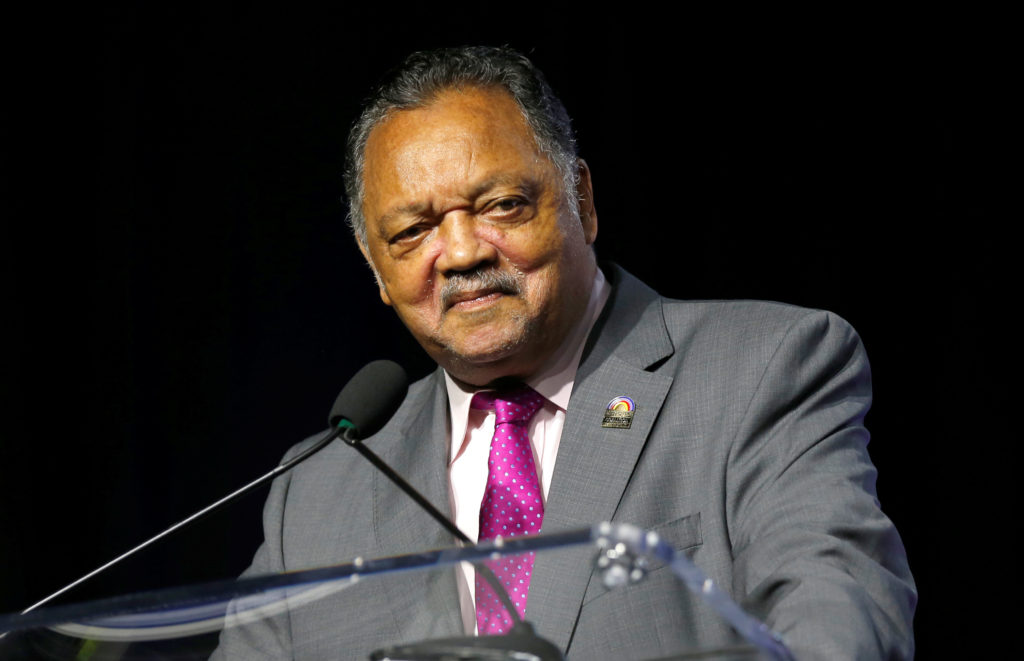
Akume Leads Nigeria’s Delegation to Jesse Jackson’s Funeral in US

Published

on

By

President Bola Tinubu has approved a five-person delegation to represent Nigeria at the final burial rites of Rev. Jesse Jackson, the American civil rights leader, activist and former presidential candidate who died at age 84 on February 17, 2026, in Chicago.

Senator George Akume, Secretary to the Government of the Federation, is the leader of the delegation, according to a press statement from the Presidency on Wednesday.

Other members are the Minister of State for Foreign Affairs, Bianca Odumegwu-Ojukwu; Minister of Arts, Culture and Creative Economy, Hannatu Musawa; the Special Presidential Envoy for Global and Pan-African Affairs, Brian Browne; and the Senior Special Assistant, Foreign Affairs and International Relations, Ambassador Sola Enikanolaye.

The delegation will deliver President Tinubu’s message of condolences to the Jackson family.

In an earlier tribute, President Tinubu described Reverend Jackson as a great friend of Nigeria and Africa.

“He was a moral voice and a formidable resistance to apartheid in South Africa. He played a leading role in the campaign for the release from prison of Nelson Mandela and other African National Congress leaders. He won critical support for sanctions against the then apartheid government,” President Tinubu wrote.

Continue Reading

Trending