Connect with us

Business

Dangote’s 650,000bpd, Modular Refineries to Drive Nigeria’s Huge Demand for Petroleum Products – Kyari

Published

on

The 650,000bpd Dangote Petroleum Refinery, Nigerian National Petroleum Corporation (NNPC) as well as other modular refineries are expected to be the major drivers of Nigeria’s demand for petroleum products, which is projected to grow massively in the nearest future.

Speaking at the 15th Oil Trading and Logistics (OTL) Africa Downstream Week in Lagos, the Group Managing Director of NNPC, Mallam Mele Kyari, said NNPC Refineries’ 445,000 barrels-per-day (BPD), Dangote Refinery’s 650,000 BPD and the 250,000 BSD expected to come from the Condensate Refineries through the private sector partnership respectively would supply the requirement of Premium Motor Spirit (PMS) needs in Nigeria.

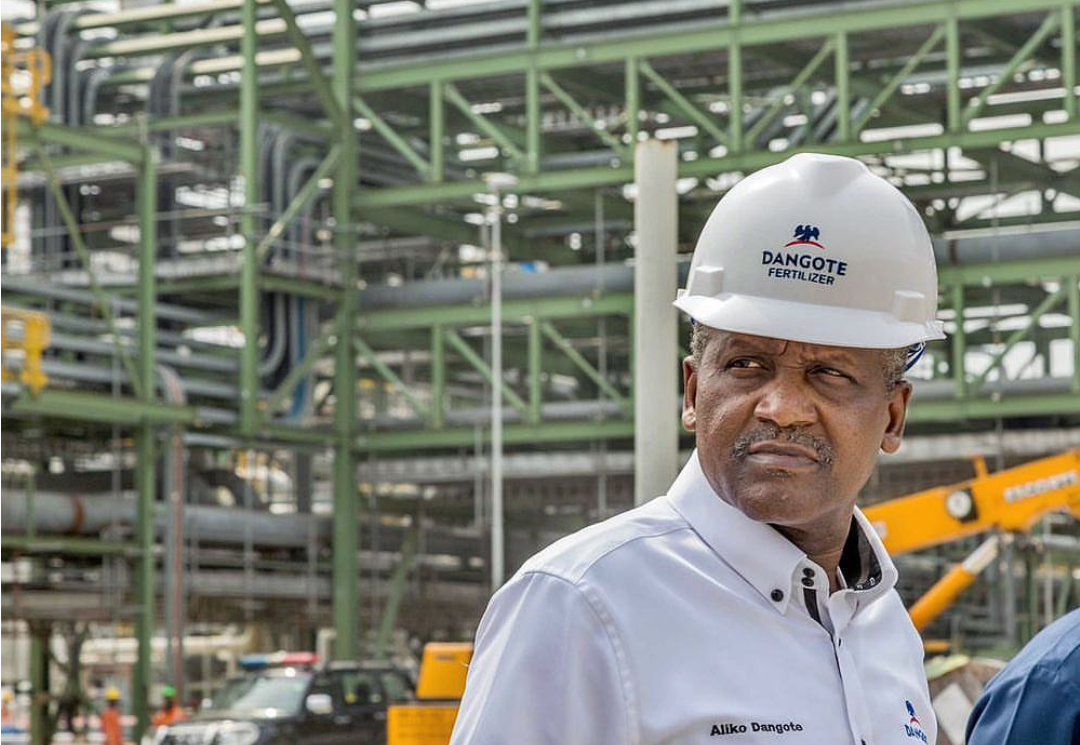
Kyari’s position only corroborated that of President of the Dangote Group, Aliko Dangote who said he was dissatisfied with the fact that Nigeria is a leading oil producer but imports all her petroleum needs.

Dangote who was speaking on his mega refinery project in Lagos said it was the unsavoury situation the nation found itself that made him to take up the challenge to embark on the construction of the gigantic refinery project, which he said is one of the biggest in the world.
According to him some 29,000 Nigerians would be employed in the refinery when completed and that would also help in the employment generation drive of the federal government.

Kyari, who was represented by the Group Executive Director, Downstream, NNPC, Adeyemi Adetunji, explained that the diversification of NNPC’s portfolio through acquisition of 20 per cent equity valued at $2.6 billion in the 650,000 bpd Dangote Refinery located in the Lekki Free Trade Zone would ensure national energy security and guarantee market for Nigeria’s 300,000 bpd.

He stated, “NNPC is adding 215,000 BPD of refining capacity through private sector driven co-location at the existing facilities in Warri Refining and Petrochemical Company (WRPC) and Port Harcourt Refining Company (PHRC) respectively. Modular refineries are also adding capacities such as the 5,000 BPD Waltersmith refinery, which will be upgraded to 50,000 BPD.

“Additional 250,000 BPD is expected to come from the Condensate Refineries through the private sector partnership. The co-location and Condensate refineries will close the PMS supply-demand gap and create positive returns to the investors,” the NNPC helmsman added.

He said the Corporation has progressed with the Refineries Rehabilitation Programme to boost its participation in the oil & gas value chain by awarding the $1.5 billion Port Harcourt rehabilitation contract with the commitment to deliver on Warri and Kaduna Refineries.
On gas commercialisation effort, Kyari said the Federal Government has declared 2021-2030 as the decade of gas development in Nigeria.

Kyari said the demand for natural gas could grow about four times over the next decade, increasing from 4.8 billion cubic feet per day (bcf/d) in 2020 to between 10 – 23 bcf/d in 2030.

He said currently, supply to the domestic market was about 8bcf/d to power, 0.77 bcf/d to industries, and about 54 bcf/d was flared, while 3.2 bcf/d was for export gas through the LNG and the West Africa Gas Pipeline (WAGP).

According to him, achieving this growth in demand would be occasioned by increasing the dispatchable capacity of existing power, in line with the Presidential Power Initiative, which is less than 1.4 bcf/d).

He added that the growth would be achieved through assuring delivery of major fertiliser projects (Dangote, Brass) 5 bcf/d), and enabling industrial demand for natural gas in the northern axis of the country (1.2 bcf/d).

On the global oil market outlook, Kyari said, “Some $10.4 trillion global stimulus in response to the COVID-19 pandemic has led to the rebound in consumers’ spending while incentives for long-term investments in hydro-carbon have waned.”

He stated that hydrocarbon would continue to be relevant in the global energy mix for the next two decades, quoting the recent data by the Organisation of Petroleum Exporting Countries (OPEC).

On the issue of downstream in transition, the NNPC boss noted that the Nigerian oil and gas industry has been in transition prior to the passage of the Petroleum Industry Bill (PIB), in response to the global energy transition and decarbonisation initiatives.

Kyari maintained that it would be difficult to discuss the transition in the downstream sub-sector in isolation from the overall evolution that was happening in the industry. He said NNPC had diversified its portfolio over the years, transiting to an energy company with new investments in gas, power, and renewables, pointing out that key pipeline projects are ongoing to assure delivery of gas to the demand nodes.

He stated, “The OB3 project, which brings gas from East to West, is nearing completion. The 614km Ajaokuta, Kaduna, Kano (AKK) project, which was launched by Mr. President in June 2020, is progressing very well. These could add up to $40 billion to annual GDP and create additional six million jobs.

“The corporation has progressed with the Refineries Rehabilitation Programme to further boost its participation in the Oil and Gas value chain by awarding the $1.5 billion Port Harcourt rehabilitation contract with the commitment to deliver on Warri and Kaduna Refineries.

“The rehabilitation of critical downstream infrastructure comprising of major pipelines, depots and terminals through the Build, Operate and Transfer (BOT) financing model is on course,” he added.
Kyari explained that the transition in Nigeria’s oil and gas sector was being driven by the global decarbonisation efforts to switch to renewables in response to environmental concerns.
As investments in hydrocarbon continued to wane due to energy transition and geopolitics, Kyari said the world economy faced shortages, high energy prices, rising inflation and sluggish growth.

Continue Reading
Click to comment

Leave a Reply

Your email address will not be published. Required fields are marked *

Business

ConOil, TotalEnergies Sign Massive Production Contract to Boost Nigeria’s Oil and Gas Output

Published

on

By

By Eric Elezuo

In a bid to boost Nigeria’s oil and gas output, Conoil Producing Limited has partnered Total Energies Limited to sign a massive production contract.

The contract-signing ceremony, which took place on Thursday, at LA DEFENSE, in Paris, France, saw the Chairman of Conoil Producing, and Commander of the French Légion d’Honneur (CdrLR), Dr. Mike Adenuga Jr., signing on behalf of Conoil while the Chairman and Chief Executive Officer of TotalEnergies, Mr. Patrick Pouyanné, signed for TotalEnergies, in whose headquarters office served as the venue of the event.

Details soon…

Continue Reading

Business

Tinubu’s 15% Import Duty on Petrol is Good for Nigeria, Says Rewane, Marketers Disagree

Published

on

By

Popular economist and chief executive of Financial Derivatives Company Limited, Bismark Rewane, has explained that President Bola Ahmed Tinubu’s approval of a 15 per cent import duty on petrol and diesel is good for the country.

Rewane, speaking in an interview on Channels TV, said the import tariff is designed to encourage local production of petroleum products.

According to the policy, it is aimed to discourage imports and retain jobs in Nigeria.

“Petrol import duty is good for the country. Why is it good? Because it encourages domestic production. Anytime you import, you are actually creating jobs for other countries rather than your own country. Basically, import protection is good,” he said.

The move means that Nigerians would have to pay more for fuel consumption when it is implemented.

Recently, data from the Nigerian Midstream and Downstream Petroleum Regulatory Authority showed that 69 per cent of petrol consumed in Nigeria is imported, while 31 per cent is locally produced.

The policy places Dangote Refinery in an advantageous position in the country’s oil and gas sector.

However, Nigerians have kicked against the move, saying it would cause more hardship in the country.

This comes as an All Progressives Congress chieftain in Delta State, Ayiri Emami, on Thursday urged President Tinubu to withdraw the 15 per cent import duty tariff because it will bring more hardship for Nigerians.

Meanwhile, Petroleum marketers have warned that the pump price of Premium Motor Spirit, popularly called petrol, could exceed N1,000 per litre following the 15 per cent ad valorem import tariff on fuel imports.

The new policy, which takes effect after a 30-day transition period expected to end on 21 November 2025, is part of the government’s strategy to protect local refiners and reduce the influx of cheaper imported products that threaten domestic refining investments.

However, marketers say the move could backfire and push retail prices beyond the reach of average Nigerians.

Commenting in a telephone interview on Thursday, multiple depot operators with knowledge of the matter, who spoke on condition of anonymity, said the decision could further raise the price of petrol, which already sells for around N920 per litre, in many parts of the country.

“As it is, the price of fuel may go above N1,000 per litre. I don’t know why the government will be adding more to people’s suffering,” one of the depot operators said.

Another depot operator added, “Unfortunately, some of the importers are working in alignment with Dangote, which is why the last price increase was general; all players raised their prices at once. Let’s just wait and see what happens next.”

Another operator added that without a clear framework to stabilise market forces and ensure fair competition, the new import duty could trigger another round of price hikes and worsen the hardship faced by consumers.

The National Vice-President of the Independent Petroleum Marketers Association of Nigeria, Hammed Fashola, also agreed that the tariff had its implications, saying it might lead to a price surge.

Fashola said the policy had both positive and negative effects, adding that it could discourage importation while promoting local refining.

The IPMAN leader opined that some marketers moght perceive it as an opportunity to monopolise the sector in favour of Dangote and a few other refineries.

“The 15 per cent tariff on imported fuel has its own implications. Maybe the price will go up, and equally, it will discourage importers from bringing in fuel if it becomes too costly.

“But it has both negative and positive effects on the sector. I see that the government is trying to protect local refiners, but it will have its own implications because people will see it as a way of monopolising the industry for certain people. At the same time, the government aims to protect the local refiners.”

However, Fashola stressed that the failure of the local refiners to supply enough fuel into the domestic market could trigger a fuel crisis.

“If the local refiners fail, it will have its own implications. It may lead to scarcity, and people will not have an alternative. So, it has both positive and negative effects. That’s the way I see it,” he added.

Continue Reading

Business

FirstBank Partners Verve to Issue Free Debit Cards in Nationwide Promo

Published

on

By

First Bank of Nigeria Limited (FirstBank), Nigeria’s premier and leading financial inclusion services provider, has announced the launch of the Verve Flash Promo, a special initiative rewarding customers with free Verve cards.

The campaign, which commenced on 6 October 2025, and will run until 30 January 2026, is exclusively targeted at FirstBank customers whose ATM cards have expired.

The free cards will be issued daily to 131 customers on a first-come, first-served basis across the Bank’s branches, nationwide. FirstBank’s unwavering commitment to convenience, accessibility, and customer satisfaction.

Speaking on the rewards to FirstBank customers, Chuma Ezirim, the Group Executive, e-Business and Retail Products at FirstBank, said: “The Verve Flash Promo is not just about rewarding customers with free verve debit cards; it is about celebrating our legacy of 131 years of trust, resilience, and innovation in the Nigerian financial services industry. At FirstBank, we remain committed to providing customer-centric solutions that enable secure, seamless, and convenient payment experiences. Partnering with Verve International on these initiatives, including the Verve Good Life promo, underscores our shared vision of deepening financial inclusion while rewarding our loyal customers for their continuous patronage.”

Also commenting, Vincent Ogbunude, Managing Director, Verve International, noted:

“Through strategic collaborations like this with FirstBank, we continue to demonstrate Verve’s commitment to enhancing access to seamless payment solutions for every Nigerian. The Verve Flash Promo not only rewards loyal customers but also reinforces our vision of making everyday transactions more rewarding, secure, and convenient. As we extend the Good Life Promo, we remain steadfast in our goal of deepening financial inclusion while delivering real value to Verve cardholders across the country.”

Meanwhile, the ongoing Verve Good Life promo, designed to reward Verve debit card holders for using their cards at specific merchant points, has been extended to 30 November 2025.

During the period, Verve Card holders enjoy 10% cashback at The Place Restaurant, Quickteller, Buypower, Filmhouse, AlliExpress, Addide Supermarkets, and Chowdeck app every Thursday to Sunday.

Verve cardholders can now enjoy a 10% cashback on the Google Play Store any day of the week throughout the Good Life Promo, which runs until 30 November 2025. Moreso, every transaction made with a Verve card whether on ATMs, POS terminals, or online platforms automatically earns customers a chance to win up to ₦1,000,000.

Continue Reading

Trending