Connect with us

Islam

Friday Sermon: Reflections on Ramadan 2: The Taraweeh Conundrum

Published

on

By Babatunde Jose

The Taraweeh prayer is a special form of supererogatory prayer performed in the congregation immediately or some minutes after the obligatory Isha prayer during the holy month of Ramadan. However, scholarly discussions have emerged regarding whether Taraweeh is a firmly established Prophetic Sunnah or an innovation (bid‘ah).

While it is widely accepted that the Prophet Muhammad (SAW) performed Taraweeh, historical accounts indicate that he did not continue leading it publicly due to concerns that it might become obligatory.

He always offered the Sunnah or nafl (Tahajjud) prayers at home and only the fard prayers were offered at the Masjid in congregation. There are plenty of Hadiths reflecting this matter.

What therefore, is Tahajjud prayer?  We can call this the ‘sixth’ prayer as mentioned in the Quran as an “additional” prayer, but made obligatory only for the Prophet (SAW): And pray in the small watches of the morning: (it would be) an additional prayer (or spiritual profit) for thee: soon will thy Lord raise thee to a Station of Praise and Glory!  (Al-Isra, Quran 17:79)

Prophet Muhammad (SAW) said regarding the month of Ramadan:“Whoever establishes the night prayer (Qiyam al-Layl) in it out of sincere Faith and hope for reward from Allah, all of his previous sins will be forgiven.” [Sahih al-Bukhari, volume 3, book 32, number 226]

The Ahl al-Sunnah wa’l Jama’ah or Sunnis generally considers it a Sunnah to offer specific evening prayers – the Taraweeh – in congregation during the holy month of Ramadan. The Shi’ah, on the other hand, is not allowed to offer them in congregation.

Meanwhile, we do not find the word “Taraweeh” anywhere in the Quran and Hadith because the prayer is referred to as the “Night Prayer” (Qiyam-ul-layl) in the Quran and Sunnah, which basically is the Tahajjud prayer.

It is a term developed later amongst Muslims. Linguistically, the word “Taraweeh” is the plural of the word ‘tarwiha’ referring to the short period of rest between every two or four units of the prayer.

It is a well-established fact that the Taraweeh, as a congregational night prayer of Ramadan, owes its existence to the order of the second caliph, ‘Umar b. al-Khattab.

Narrated Abu Hurayra: Allah’s Apostle said, “Whoever prayed at night the whole month of Ramadan out of sincere faith and hoping for a reward from Allah, then all his previous sins will be forgiven.” Ibn Shihab (a sub-narrator) said, “When Allah’s Apostle died, the people continued observing that Nawafil individually, not in congregation, and it remained as such during the Caliphate of Abu Bakr and in the early days of ‘Umar’s Caliphate.

Abdur Rahman bin ‘Abdul Qari said, “I went out in the company of ‘Umar bin Al-Khattab one night in Ramadan to the mosque and found the people praying in different groups – a man praying alone or a man praying with a little group behind him. Then, ‘Umar said, ‘In my opinion I would better collect these (people) under the leadership of one Qari (reciter) (i.e. let them pray in congregation!)’. So, he made up his mind to congregate them behind Ubayy bin Ka’b. Then, on another night, I went again in his company and the people were praying behind their reciter. On that, ‘Umar remarked, ‘What an excellent bid’ah this is.’ [Sahih al-Bukhari, volume 3, book 32, number 227]

“It was called bid’ah because the Prophet (SAW) did not use to pray it in congregation, and neither was it prayed like that in the time of Abu Bakr al-Siddiq.” [al-Qastallani, Irshad al-Sari, Sharh Sahih al-Bukhari, volume 5, page 4] [al-Nawawi, Sharh Sahih Muslim, volume 6, page 287]

Umar was the first who set the example of the night prayer of Ramadan, the Taraweeh, and instructed different regions regarding it. This was during the month of Ramadan of the year 14AH. He appointed for the people reciters of the Quran who led the Taraweeh prayer for men and women.” Ibn Sa’d, Kitab al-Tabaqat, volume 3, page 281; al-Suyuti, Tarikh al-Khulafa’, page 137; al-‘Ayni, ‘Umdat al-Qari fi Sharh Sahih al-Bukhari, volume 6, page 125.

Offering the optional prayers individually inside the home and away from the congregation in the mosque is highly recommended by the Prophet (SAW) as it brings more blessings for the home and family and helps in the Islamic upbringing of children. The Prophet (SAW) said: “O people! Perform your prayers at your homes, for the best prayer of a person is what he performs at his home, except the compulsory (congregational) prayer.” Sahih al-Bukhari, volume 9, book 92, number 393; al-Nasa’i, Sunan, volume 3, p. 161, p. 198.

Once Abdullah bin Mas’ud asked the Prophet (SAW): “Which is better; to pray in my house or in the mosque?” The Prophet (SAW) replied: “Do you not see how near to the mosque my house is? To pray in my house is more beloved to me than to pray in the mosque except for the obligatory prayers.” Ibn Majah, Sunan, English translation: Vol. 1, Book 5, Hadith 1378.

Narrated Zaid bin Thabit : Allah’s Apostle (SAW) made a small room (with palm leaf mat). Allah’s Apostle (SAW) came out (of his house) and prayed in it. Some men came and joined him in his prayer. Then again the next night they came for the prayer, but Allah’s Apostle (SAW) delayed and did not come out to them. So they raised their voices and knocked on the door with small stones (to draw his attention). He came out to them in a state of anger, saying, “You are still insisting (on your deed, i.e. Taraweeh prayer in the mosque) that I thought that this prayer (Taraweeh) might become obligatory on you. So you people, offer this prayer at your homes, for the best prayer of a person is the one which he offers at home, except the compulsory (congregational) prayer.” [Sahih al-Bukhari, volume 8, book 73, number 134]

Imam al-Baqir and Imam al-Sadiq were asked about the permissibility of praying optional prayers in congregation during the nights of Ramadan. They both narrated a tradition of the Prophet (SAW) where he said: “Verily, the offering of nafila (recommended prayers) in congregation during the nights of Ramadan is an innovation…” [al-Hurr al-`Amili, Wasa’il al-Shi`ah, volume 8, page 45]

This view of the Imams from the Prophet’s progeny is confirmed by a scholar well-known amongst the Ahl al-Sunnah who writes: “The progeny of the Prophet (SAW) say that congregation in Tarawih is an innovation”. [al-Shawkani, Nayl al-Awtar, volume 3, page 50]

“The scholars agree on its merit, but they differ on whether it is better to pray it in one’s home individually or in congregation in a mosque.” Al-Nawawi, the famous commentator of Sahih Muslim, then goes on to list scholars who support the second and dominant view. He then writes: “Malik, Abu Yusuf, some Shafi’i scholars, and others say that it is better to pray it individually in the home”. [al-Nawawi, Sharh Sahih Muslim, volume 6, page 286]

Another hadith that refers to this prayer is: Narrated Abu Huraira: Allah’s Apostle said: “Whoever establishes prayers during the nights of Ramadan faithfully out of sincere faith and hoping to attain Allah’s rewards (not for showing off), all his past sins will be forgiven.”  (Bukhari, Book 2, Hadith 36)

By “establishes prayers during the nights of Ramadan” the Prophet (SAW) is indicating the Tahajjud prayer. During Ramadan, Tahajjud prayer is substituted as Taraweeh prayer, which is essentially the same prayer offered in the same manner without any change.

They are both classified as qiyaam al-layl. However the Qiyaam al-layl during Ramadan is called Taraweeh because the Salaf used to rest (istarahu) after every two or four rakats, because they made their prayers long in order to make the most of this season of great reward.

Tahajjud, on the other hand, is a voluntary night prayer performed after sleeping and can be offered any night of the year, not limited to Ramadan. It is part of Qiyam al-Layl, the general night prayer, and is highly recommended in the last third of the night. Tahajjud can be prayed in any number of rakats according to personal preference, and it is better performed at home rather than in congregation.

According to a Hadith, the number of rakats in the night prayer is not limited but  should be in two rakats at a time and end with one rakat witr: Ibn `Umar said, “While the Prophet (SAW) was on the pulpit, a man asked him how to offer the night prayers. He replied, ‘Pray two rakat at a time and then two and then two and so on, and if you are afraid of the dawn (the approach of the time of the Fajr prayer) pray one rakah and that will be the witr for all the rakat which you have offered.” Ibn `Umar said, “The last rakat of the night prayer should be odd, for the Prophet (SAW) ordered it to be so.

Taraweeh is therefore a Ramadan-specific night prayer performed mainly in congregation, whereas Tahajjud is a voluntary night prayer performed late at night, any time of the year, emphasizing personal devotion and spiritual reflection. Fortunately for the larger Umma, Taraweeh in congregation has come to stay, having been practiced for over 1,400 years: Time and usage has settled the controversy on the side of the majority Sunni.

Shafa and Witr are voluntary night prayers too, performed after Isha, with Shafa being even-numbered rakats and Witr being an odd-numbered concluding prayer.

Witr prayer, which means “odd” in Arabic, is a highly recommended Sunnah (non-obligatory) prayer that holds great significance in Islam. Witr prayer can be performed anytime after the Isha prayer and before the Fajr (dawn) prayer. The best time to pray Witr is during the last third of the night, as this time is considered particularly blessed. However, if one fears they will not wake up for the late-night prayer, it is permissible to pray Witr earlier in the night.

In Qiyam of Ramadan, Sheik Albaani said it is Sunnah to recite Sabih ismi Rabika al-‘A’la in the first rakah, Qul Ya ayuha’l-Kafiroon in the second rakah, and Qul Huwa Allahu ahad in the third rak’ah. Sometimes Qul a’odhu bi Rabi’l-Falaq and Qul a’odhu bi Rabi’l-Nas may be added as well.

Ya Ghaafir, forgive me for every single sin I ever put forth, cover me in this life and the next, and don’t let shame keep me from returning to You. Ya Ghaffar, for every time I fall and rise again, meet me with another chance. Let my heart grow softer with every repentance, and my view of the door of Your mercy only grow wider. For You have never tired of forgiving me despite my constant sins. Ya Ghafur, forgive me for what I know and what I don’t, what I’ve done and what I still may do, wash away every hidden trace of my wrongdoing, and turn the stains of my past into light on my scrolls. Reach me with Your forgiveness even in the holes that I’ve dug for myself. Ya Tawwaab, turn towards me so that I may turn back to You. And call me back every time I drift. And accept me every time I return. Make repentance my constant companion and joy and Jannah my reward in finding You again.

Barka Juma’at and Ramadan Kareem

Continue Reading
Click to comment

Leave a Reply

Your email address will not be published. Required fields are marked *

Islam

Friday Sermon: Reflections on Ramadan 1: Prophet’s (SAW) Ramadan Sermon

Published

on

By

By Babatunde Jose

Ramadan is the [month] in which was sent down the Qur’an, as a guide to mankind, also clear [Signs] for guidance and judgment [Between right and wrong]. So every one of you who is present [at his home] during that month should spend it in fasting, but if anyone is ill, or on a journey, the prescribed period [Should be made up] by days later. Allah intends every facility for you; He does not want to put you in difficulties. [He wants you] to complete the prescribed period, and to glorify Him in that He has guided you; and perchance ye shall be grateful.  (Surat Al-Baqarah 2:185)

Muslims welcome the holy month of Ramadan as a time for religious and divine reflection. It is a time for spiritual stocktaking and moral revitalization. It is a time of rejuvenation of religious and moral piety and reaffirmation of faith.

Even the diehard and titular Muslims undergo a behavioral and attitudinal change during this month. The mosques are filled to capacity and the whole community assumes an atmosphere of religiosity: A time when even the confirmed sinners seek the benevolence of Allah; a time when evil and vile men seek atonement for their iniquities.

Such is the month of Ramadan. Perchance, our leaders will take advantage of the promise of forgiveness from Allah to turn a new leaf and do the needful in making our life better and seek the path of righteousness.

We have suffered enough as a people and this suffering does not need to continue. With the resources with which we have been endowed, there is enough for everyone to bask in the prosperity of our God-given provisions. But when a few conspire to deny the majority their rightful share of the commonwealth, they sentence the people into penury, want, misery and poverty. Ramadan is therefore, an opportunity for sober reflection and a chance for meaningful and positive change.

Those who have perfected the ignoble art of cheating their fellowmen and converting the common patrimony into personal wealth have an opportunity to rethink and change. If only we know that the end is nearer than we think.

Abu Huraira narrated that Allah’s Messenger (SAW)said: “When the month of Ramadan starts, the gates of heaven are opened and the gates of Hell are closed and the devils are chained.” [Bukhari] Fasting in Ramadan is therefore a shield from Hell; fasting subdues sinful desires and reduces their severity: It is these desires and lusts that lead to Hell Fire.

The Quran talks about the reward of fasting and there are verses which general meaning infers that those who obey Allah will be saved from Hell, and fasting is a form of obeying Allah. The Hadith of our beloved Prophet Mohammad (SAW), are clear in this regard; Abu Said al-Khudri reported that the Messenger of Allah (SAW), said: “No servant fasts on a day in the path of Allah except that Allah removes the Hell Fire seventy years further away from his face.” [Bukhari and Muslim]  Abu Said al-Khudri also relates that the Messenger of Allah (SAW) said: “Fasting is a shield with which a servant protects himself from the Fire”[Ahmad, Sahih]

“Uthman Ibn Abil-`Aas relates that the Messenger of Allah (SAW) said : “Whoever fasts a day in the way of Allah, Allah places between him and the Fire a trench like that between heavens and the earth”. [at-Tirmidhi and at-Tabarani, sahih]

So Muslims fast as an act of worship, a chance to get closer to God and a way to become more compassionate to those in need.

We will end this sermon with the Prophet’s (SAW) Ramadan Sermon:

“O People! The month of Allah (Ramadan) has come with its mercies, blessings and forgiveness. Allah has decreed this month the best of all months. The days of this month are the best among the days and the nights are the best among the nights and the hours during Ramadan are the best among the hours.

“This is a month in which you have been invited by Him (to fast and pray). Allah has honored you in it. In every breath you take is a reward of Allah, your sleep is worship, your good deeds are accepted and your invocations are answered.

“Therefore, you must invoke your Lord in all earnestness with hearts free from sin and evil, and pray that Allah may help you to keep fast, and to recite the Holy Qur’an. Indeed! Miserable is the one who is deprived of Allah’s forgiveness in this great month.

“While fasting, remember the hunger and thirst on the Day of Judgment. Give alms to the poor and needy. Pay respect to your elders, have sympathy for your youngsters and be kind towards your relatives and kinsmen. Guard your tongue against unworthy words, and your eyes from scenes that are not worth seeing (forbidden) and your ears from sounds that should not be heard. Be kind to orphans so that if your children may become orphans they will also be treated with kindness.

“Do repent to Allah for your sins and supplicate with raised hands at the times of prayer as these are the best times, during which Allah Almighty looks at His servants with mercy. Allah Answers if they supplicate, responds if they call grants if He is asked, and accepts if they entreat.

“O people! You have made your conscience the slave of your desires. Make it free by invoking Allah for forgiveness. Your back may break from the heavy load of your sins, so prostrate yourself before Allah for long intervals, and make this load lighter. Understand fully that Allah has promised in His Honor and Majesty that people who perform Salat and Sajda (prostration) will be guarded from Hell-fire on the Day of Judgment.

“O people! If anyone amongst you arranges for Iftar (meal at sunset) for any believer, Allah will reward him as if he had freed a slave, and Allah will forgive him his sins.” A companion said: ‘but not all of us have the means to do so,’ to which the Prophet (SAW) replied: ‘Keep yourself away from Hell-fire though it may consist of half a date or even some water if you have nothing else.’

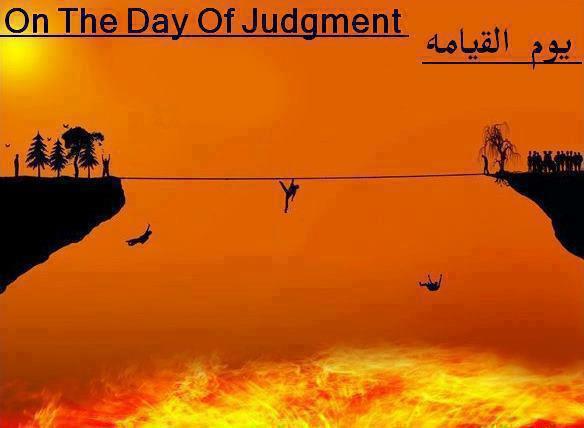
“O people! Anyone who, during this month cultivates good manners will walk over the Sirat (bridge to Paradise) on the day when feet will tend to slip. For anyone who during this month eases the workload of his servants, Allah will make easy his accounting, and for anyone who doesn’t hurt others during this month, Allah will safeguard him from His Wrath on the Day of Judgment. Anyone who respects and treats an orphan with kindness during this month, Allah shall look at him with kindness on that Day. Anyone who treats his kinsmen well during this month, Allah will bestow His Mercy on him on that Day, while anyone who mistreats his kinsmen during this month, Allah will keep away from His Mercy.

“Whoever offers the recommended prayers during this month, Allah will save him from Hell, and whoever observes his obligations during this month, his reward will be seventy times the reward during other months. Whoever repeatedly invokes Allah’s blessings on me, Allah will keep his scale of good deeds heavy, while the scales of others will be tending to lightness. Whoever recites during this month an Ayat (verse) of the Quran, will get the reward of reciting the whole Quran in other months.

“O people! The gates of Paradise remain open during this month. Pray to your Lord that they may not be closed for you; while the gates of Hell are closed, pray to your Lord that they never open for you. Satan has been chained; invoke your Lord not to let him dominate you.”

“Ali ibn Talib (Radhi Allahu ‘Anh) said: “I asked, ‘O Messenger of Allah (SAW), what are the best deeds during this month?'” He replied: ‘O Abu-Hassan, the best of deeds during this month is to be far from what Allah has forbidden.'”

May Allah accept our Fast as acts of Ibadah; Amin.

Barka Juma’at and Ramadan Karim

Continue Reading

Islam

Friday Sermon: Facing Ramadan: A Journey Through Time 2

Published

on

By

By Babatunde Jose

With the spread of Islam across continents and through the corridors of time, Ramadan’s observance was enriched by diverse cultural influences and historical contexts. From the simplicity and profound devotion of the early days, we now turn our gaze to the era of the Islamic Caliphates, where Ramadan would find new expressions and significance amidst the burgeoning Islamic civilization.

The observance of Ramadan in the early Islamic Caliphates was marked by the emphasis on fasting, communal prayers, and charity. The companions of Prophet Muhammad (SAW), who had firsthand experience of Ramadan’s early days, emphasized the importance of these practices. The simplicity and spiritual focus of Ramadan observed during the Prophet’s time were maintained, with a strong emphasis on the Quranic recitation and reflection. The Umayyad Caliphate saw the Islamic empire expand dramatically, bringing new cultures and traditions into the fold. The Abbasid period is often referred to as the Golden Age of Islam, marked by significant advancements in science, literature, and philosophy.

Under the Rashidun Caliphate: “Rightly Guided,” or “Perfect”, the first four caliphs of the Islamic community, known in Muslim history as the orthodox or patriarchal caliphs: Abu Bakr ( 632–634), Omar (634–644), Uthman (644–656), and Ali (656–661). The companions emphasized the simplicity and spiritual focus of Ramadan observed during the Prophet’s time with a strong emphasis on the Quranic recitation and reflection.

The 29-year rule of the Rashidun was Islam’s first experience without the leadership of the Prophet Muhammad (SAW). His example, however, in both private and public life, came to be regarded as the norm (Sunnah) for his successors.

The Rashidun were responsible for the adoption of an Islamic calendar, dating from Hijra, the flight from Mecca to Medina (622), and the establishment of an authoritative reading of the Quran, which strengthened the Muslim community and encouraged religious scholarship and also witnessed the formalization of Taraweeh prayers in congregation. There was also a controversy over ʿAli’s succession that split Islam into two sects, the Sunni (who consider themselves traditionalists) and the Shia (“party of Ali”), which have survived to modern times.

Taraweeh: The decision of the Prophet (SAW) not to gather people under one Imam for night prayers, fearing its potential obligation on the Umma, no longer applied after his death. Omar ibn Al-Khattab (may Allah be pleased with him) recognized this change in circumstances and, as a result, initiated the congregational Taraweeh prayer under one imam.

This decision marked a significant shift from the previous practice where separate groups observed Taraweeh, even in the same mosque, paving the way for the community to come together under a single Imam for the Taraweeh prayer during the time of Omar ibn Al-Khattab.

There might be a misconception among some that Taraweeh prayer was established by Omar. However, it is crucial to clarify that Taraweeh was initiated by the Prophet (SAW). People saw the Prophet praying at night and decided to join. With time it became a full congregation and the Prophet had to stop it by announcing that if he had continued, he feared that Allah might include the Taraweeh as an obligatory prayer.

The term Taraweeh, derived from the Arabic word “Tarweeh,” meaning ‘rest’, likely came into use during or after the era of Omar (may Allah be pleased with him).

The names for voluntary night prayers as used in the Quran and Hadith are called night prayer (Salat al-Layl), Tahajjud, Qiyam, or Qiyam Ramadan. Taraweeh is the plural of the Arabic word Tarweeh, meaning rest. Worshippers used to engage in extended Rakat and take breaks in between, giving rise to the name Taraweeh.

The Umayyad Caliphate saw the Islamic empire expand dramatically, bringing new cultures and traditions into the fold. This era witnessed the further consolidation of Taraweeh prayers in congregation and the practice of Iftar and Suhoor began to incorporate a wider variety of foods, reflecting the diverse culinary cultures of the expanding empire.

The Abbasid Caliphate is often referred to as the Golden Age of Islam, marked by significant intellectual and spiritual revival, advancements in science, literature, and philosophy. During Ramadan, scholars and poets would gather to discuss religious and philosophical matters, enriching the spiritual atmosphere of the month, reminiscent of the modern day Ramadan lectures, tafsir and other intellectual gatherings. The tradition of Muktadirs, or public iftar, was established, where rulers would host lavish meals for the public, fostering a sense of community and solidarity. This is a practice that persists today where many contribute to funds for organizing Iftar at various mosques.

The Ottoman Empire, with its vast territories spanning Europe, Asia, and Africa, brought a new level of cultural richness and administrative sophistication to the observance of Ramadan. As the empire thrived, so did the traditions of Ramadan, which were celebrated with great fervor and communal spirit across its diverse lands.

The Ottoman Sultans played a central role in the Ramadan observance, embodying the unity of political and spiritual leadership. They participated in and often led the Taraweeh prayers, reinforcing the significance of communal worship during the holy month. The tradition of the Mahya lights, where mosques were adorned with illuminated messages of faith between their minarets, became a hallmark of Ottoman Ramadan, symbolizing the light of Islam.

As one of the Five Pillars of Islam—the fundamental acts of Islamic worship—Ramadan is rife with sacred traditions.

The beginnings and endings of Ramadan are ruled by the lunar cycles, and so the beginning of this holy month is typically heralded by the appearance of the new moon. At this time, many Muslims decorate their homes with lamps, lights, crescents, and stars. This tradition may have originated in Egypt, where, during the Fatimid Caliphate, Caliph al-Mu’izz li-Din Allah was greeted by lantern-holders to celebrate his rule. Although make no mistake—Ramadan isn’t a time for celebration, but rather for spiritual reflection.

The central activity of Ramadan is, of course, fasting. For the entire month, Muslims refrain from eating in day time, with the exception of those who are elderly, ill, or have any other condition which might preclude fasting.

This fasting must be intentional. The concept of niyyah—which means “intention”—guides the fasting of Ramadan.

After breaking the fast, but before eating dinner, Muslims offer the fourth of their five daily prayers—the Maghrib prayer, and after dinner, they make their way to their Mosques to offer the Isha prayer. This is followed by a special voluntary prayer called Taraweeh, which is offered by the congregation.

The Shafa and Witr prayers are essential night prayers in Islam, performed after the Isha prayer. But during Ramadan they are performed immediately after the Taraweeh prayers. However, those who wish to go the extra mile could wake up after a light sleep to perform the Tahajjud which may contain as many rakats a one may like.

The final ten days of Ramadan are considered some of the most holy. The 27th night is of particular importance—this is called Laylatul Qadr, the “Night of Power.” This is the night that Muhammad (SAW) received his first revelation, and many Muslims spend this night praying and reciting the Quran.

After the 30 days of Ramadan have passed, the month concludes in a celebration, known as Eid-ul-Fitr, wherein Muslims gather to offer prayers of thanks.

This isn’t just a time for abstract reflection—Ramadan has a real, practical purpose that creates real changes within those who observe it. Ramadan is all about growing nearer to God or God Consciousness. Physically carrying out tasks solely for God helps Muslims to feel that He is a reality in their lives, and bequeaths a sense of purpose and direction.

It is also about developing and strengthening powers of self-control so that, throughout the rest of the year, sinful desires and thoughts can be better resisted.

Finally, Ramadan is a great time to learn and practice charity, kindness, and generosity. Deprivation and fasting helps Muslims to remember the plight of those less fortunate, as well as those blessings that may normally be taken for granted.

Above all, those who observe Ramadan find themselves with a chance to truly contemplate their faith and rid themselves of those bad habits they have accumulated over the previous year. It is a time unlike any other in the Islamic calendar, a sort of “reset button” for the soul.

For Muslims, Ramadan was founded so that humankind could benefit from its customs to change for the better, strengthening their bond with God and enabling themselves to make the world a better place.

The verses pertaining to the importance of fasting were revealed to Prophet Muhammad (SAW) in February 624 BC, or in the month of Shawwal in the second year of Hijrah (Migration).

O ye who believe! Fasting is prescribed to you as it was prescribed to those before you, that ye may (learn) self-restraint, (Quran 2:183)

After its revelation, the month of Ramadan was designated as the month of fasting in Islam, and fasting (Sawm) was included as one of the core 5 pillars of Islam. Fasting would now be from dawn to dusk, and it would be compulsory for all adult Muslims.

By the mercy of Allah (SWT), fasting was not imposed on everyone without exceptions! Muslims who were travelling, sick, or menstruating were made exempt from fasting.

Ramadan is the (month) in which was sent down the Koran, as a guide to mankind, also Clear (Signs) for guidance and judgment (between right and wrong). So every one of you who is present (at his home) during that month should spend it in fasting, but if anyone is ill, or on a journey, the prescribed period (should be made up) by days later. Allah intends every facility for you; He does not want to put you to difficulties. (He wants you) to complete the prescribed period, and to glorify Him in that He has guided you; and perchance ye shall be grateful. (Quran 2:185)

While fasting was an incredibly physically and mentally strenuous process back then, especially with the weather conditions, it has become much easier for Muslims now to observe their fast. All due to advancements in technology and transportation! Modern conveniences such as refrigeration and air conditioning are a massive help in alleviating some of the physical challenges of fasting.

Through it all, the changes in the observance of fasting during Ramadan over time highlight the enduring importance of this sacred time of year.

So, in a nutshell! Ramadan is not about starving oneself. The history of Ramadan is complex, it is a month of great blessings, a time of spiritual rejuvenation and magnification for Muslims all around the world that engage in worship and increase their awareness of God.

As we enter the month of Ramadan, let us remember the significance of this sacred month and the experience it brings. May it be a time of peace, love, and blessings for us and our loved ones! May Allah accept our fast, prayers, supplications, acts of compassion and sacrifice.

Rabbana atina fid dunya hasanatan wa fil Aakhirati hasanatan waqina ‘azab an-nar.

Barka Juma’at and happy weekend

Continue Reading

Islam

Friday Sermon: Facing Ramadan: A Journey Through Time 1

Published

on

By

By Babatunde Jose

Ramadan is the ninth month of the Islamic lunar calendar, observed by Muslims as a month of fasting, prayer, reflection, and community, commemorating the revelation of the Quran to Prophet Muhammad (SAW).

The month is significant as it is believed to be the time when the Quran was revealed. Ramadan Fast became obligatory in 624CE or 2AH, second year after the Hijrah. The command was revealed in the month of Sha’ban in Medina, making fasting for the following month of Ramadan mandatory for Muslims. It was introduced to purify the soul and foster God-consciousness. The commandment was revealed in Quran 2:183-185. The Prophet(SAW) fasted nine Ramadans before his passing.

Ramadan Fast is one of the Five Pillars of Islam, which are fundamental acts of worship and practice for Muslims. The primary practice during this month is fasting (Sawm), where Muslims refrain from eating and drinking from dawn until sunset. This fasting is not just a physical act but also a time for spiritual reflection, increased devotion, and worship. Muslims are encouraged to engage in prayer (Salah), recitation of the Quran, and acts of charity during this month.

To understand the roots of Ramadan, we need to look back to 610 A.D., the momentous year when Muhammad (SAW) meditated in the cave of Hira, near Mecca. During this meditation, the angel Jibril visited him and revealed the first words of what would later be known as the Quran, explaining that Allah (SWT) is the one and only God. This marked the beginning of Islam and laid the foundation for the values that define it, including fasting. At this time in Arabia, polytheism was common, but the revelation established a new path cantered on monotheism. This first meeting with Jibril is known as Laylat al-Qadr (the Night of Power), which many believe occurred on the 27th night of the lunar month of Ramadan. Allah knows best.

The observance of Ramadan (the word having become synonymous with Fasting) serves multiple purposes: it fosters a sense of community, encourages self-discipline, and enhances empathy for the less fortunate. It is a time for Muslims to purify their souls, seek forgiveness, and strengthen their relationship with Allah. The spiritual rewards for fasting are believed to be multiplied during this holy month, making it a deeply significant period in the Islamic faith.

In summary, Ramadan is not only a time of fasting but also a period of spiritual growth, community bonding, and reflection on one’s faith and actions. It has evolved over the centuries, maintaining its core significance while adapting to various cultural practices around the world.

From a historical perspective, before the advent of Islam, fasting was already a significant practice in many cultures and religions. The concept of fasting during certain periods of the year predates Islam and is a practice that was common in ancient civilizations, particularly in religious and spiritual contexts. Some of the notable examples of fasting in pre-Islamic cultures include:

Fasting, known as Ta’anit, is a practice rooted in Jewish tradition, where individuals abstain from all food and drink, including water, for a designated time. The Hebrew term for fasting, ẓwm cf. Sawm, signifies both the act of fasting and the fast itself. Fasting serves various purposes, including spiritual preparation, communal mourning, and atonement for sins. On Yom Kippur it is traditional for able-bodied adults to fast, consuming no food or beverages. Jews don’t fast on Shabbat or joyous holidays, so as not to interfere with the celebration (except when Shabbat coincides with Yom Kippur).

Christianity also has a long history of fasting. Early Christians adopted fasting as a means of penance and devotion. One of the key fasting periods in Christianity is Lent, which lasts for 40 days leading up to Easter. During Lent, Christians abstain from certain foods or luxuries as a way of mimicking the 40-day fast that Jesus undertook in the desert. In addition to Lent, early Christians observed other fasting days throughout the year, including those associated with specific saints or religious events.

In ancient Egypt, fasting was practiced for both religious and health reasons. The Egyptians believed that fasting helped to cleanse the body and soul. Ritual fasting was a common practice in many religious ceremonies, often connected with the worship of their gods and the afterlife. Priests and the elite class were especially dedicated to fasting as part of their spiritual discipline.

Fasting was practiced in pre-Islamic Arabia, although it wasn’t structured in the same way as the fasting observed by Muslims today. Many of the early Arab tribes would fast during times of mourning or as part of special religious observances. However, fasting was not institutionalized or prescribed as a year-round practice. Even before its prescription, Muslims fasted on specific days including Ashura. Instead, it was often episodic and based on local customs and tribal traditions.

Fasting as a spiritual discipline is not unique to Islam but is shared by many other religious and spiritual traditions. Hinduism, Buddhism, and Jainism also incorporate fasting as an important ritual for purifying the body, mind, and spirit. In Hinduism, fasting is often linked to festivals, as well as to penance and devotion to particular deities. Similarly, in Buddhism, fasting is sometimes practiced as a means of gaining enlightenment, and in Jainism, fasting is an essential part of spiritual development.

The fasting practices of pre-Islamic cultures laid the foundation for the structured fasting observed in Islam today. With the advent of Islam, the practice of fasting was codified in the Qur’an, with clear guidelines and rules, such as the exclusion of food, drink, and sexual intercourse during the daylight hours, while also emphasizing the importance of self-reflection, spiritual growth, and charity.

Muslims across the world observe Ramadan in a way that has remained relatively consistent throughout the centuries. However, local customs and traditions often influence the practices associated with Ramadan, such as the foods prepared for iftar and suhoor, the way the fast is broken, and the communal aspects of prayer and worship. Despite these variations, the underlying purpose of Ramadan remains unchanged: to seek spiritual growth, self-purification, and an increased connection to God.

This sacred period, established more than 1,400 years ago, is not only a testament to the endurance of faith but also a mirror reflecting the rich tapestry of Islamic history and culture.

The observance of Ramadan, as commanded in the Quran, is a practice filled with deep spiritual significance. It commemorates the month in which the Quran was revealed to Prophet Muhammad (SAW), serving as a guide for personal conduct, spirituality, and community life. Beyond its religious implications, Ramadan has been a catalyst for cultural traditions, social bonds, and historical milestones throughout Islamic history.

As we embark on a “Journey through time,” to explore the evolution of Ramadan from its origins to the present day, we will traverse through the ages, from the early days of Islam, across caliphates and empires, through periods of change and challenge, to the global observance of Ramadan in modern times. Each era brought its own traditions, interpretations, and celebrations of Ramadan, enriching the practice with diverse cultural flavors and deepening its significance.

This exploration is not just a historical recount; it’s an invitation to appreciate the enduring spirit of Ramadan that transcends time and geography. It’s a story of how a month of fasting has continued to inspire millions, fostering a sense of unity and purpose across the Muslim world.

The Divine Inception

The inception of Ramadan as a sacred period of fasting is deeply rooted in the Islamic faith, tracing back to a night known as Laylat al-Qadr (the Night of Decree). It was during this blessed night, believed to fall within the last ten days of Ramadan, that the Quran was first revealed to Prophet Muhammad (SAW) by the angel Gabriel. This momentous event marked the beginning of a new chapter in human history, laying the foundation for the observance of Ramadan.

In the early days of Islam, the observance of Ramadan was characterized by simplicity and profound devotion. Muslims would fast from dawn until sunset, refraining from food, drink, and other physical needs. The nights were marked by communal prayers (Taraweeh), and the breaking of the fast (Iftar) was typically done with dates and water, following the tradition of Prophet Muhammad (SAW).

The significance of Ramadan extended beyond the act of fasting. The communal aspects of Ramadan, such as sharing meals and engaging in extra acts of charity (Zakat and Sadaqah), fostered a strong sense of brotherhood and solidarity among the early Muslim community, as it still does.

As the early Muslim community embraced the practices and principles established during Ramadan’s inception, the observance of this holy month began to evolve. With the spread of Islam across continents and through the corridors of time, Ramadan’s observance was enriched by diverse cultural influences and historical contexts. From the simplicity and profound devotion of the early days, we now turn our gaze to the era of the Islamic Caliphates, where Ramadan would find new expressions and significance amidst the burgeoning Islamic civilization.

May Allah count us among the blessed that would witness the coming Ramadan and may He accept it as an act of Ibadah from us. May we start it with Bismillah and end it with Alhamdulillah.

Barka Juma’at and happy weekend

Continue Reading

Trending