Connect with us

National

Egbetokun Rejigs Police Hierarchy, Redeploys DIG, 17 CPs

Published

on

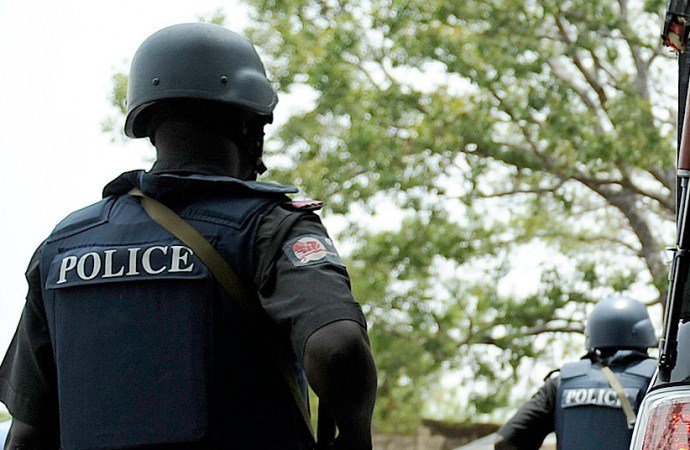
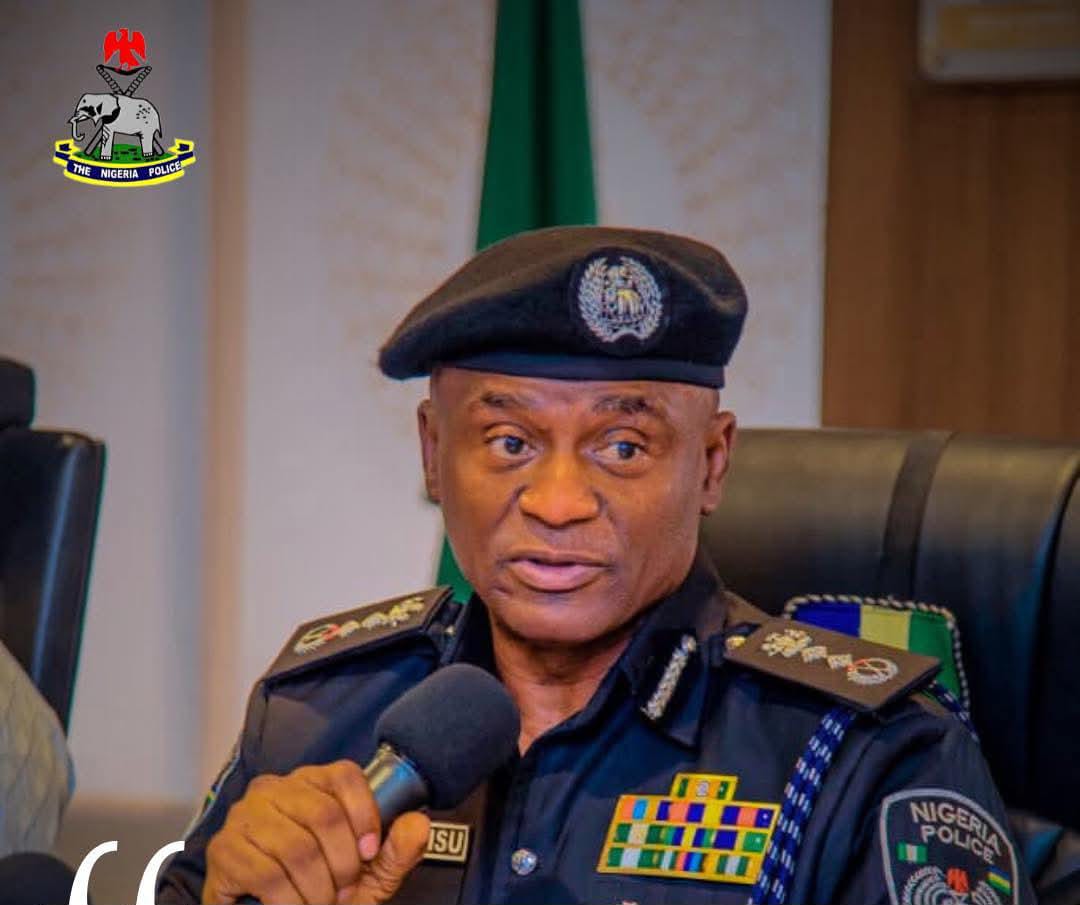
The Inspector-General of Police (IGP), Kayode Egbetokun, has approved a major redeployment of senior officers, posting a Deputy Inspector-General of Police (DIG) and 17 Commissioners of Police to key operational departments and State commands across the country in what the Force described as a move to strengthen leadership and service delivery.

According to the Force Public Relations Officer, Chief Superintendent of Police (CSP) Benjamin Hundeyin, the redeployments are aimed at reinforcing intelligence gathering, improving operational efficiency and enhancing public safety nationwide.

“The deployments are intended to strengthen operational capacity, effective leadership, enhance public safety, and improve service delivery,” Hundeyin said in a Tuesday post on the Nigeria Police Force’s official X handle.

Under the new arrangement, Deputy Inspector-General of Police Mohammed Usaini Gumel has been assigned to head the Force Intelligence Department, placing him at the centre of the police’s intelligence coordination and analysis.

At the command level, Commissioner of Police Aina Adesola has been posted to Delta State, Umar Mohammed Hajedia to Kebbi State, and Iyamah Daniel Edobor to Bayelsa State, as part of efforts to reinforce leadership in strategic states.

Several commissioners have also been deployed to specialised units and formations.

Osagie John Agans-Irabor was assigned to the Anti-Human Trafficking Unit at the FCID Annex in Lagos, while Johnson Ayodeji Babalola will head the Special Enquiries Bureau at the FCID in Abuja. Adepegba K. Adetoye was posted to the Marine Unit at Force Headquarters, Abuja, and Tabitha Bako and Umar Ali Fagge were appointed deputy commandants at the Police Colleges in Kaduna and Ikeja respectively.

Others include Audu Garba Bosso to General Investigation at the FCID Annex in Kaduna, Edwin Esiunnoh Ogbeghagha to Community Policing at Force Headquarters, Arikpo Ofem Ikpi to the Investment Office of the Department of Logistics and Supply, and Cyril Uchenna Obiozo to the Maritime Command in Lagos. Samuel Yerima was named Coordinator of Courses at the Police Staff College, Jos, while Alhaji Mohammed Danlandi was deployed to the X-Squad at the FCID Annex in Kaduna.

Further postings saw Richard Bala Gara assigned to the Inspectorate Department of Training and Development, Lasisi A. Titilola to the Railway Command in Lagos, and Obuagbaka C. John to the Safer Highway Unit in the Department of Operations at Force Headquarters, Abuja.

Egbetoku urged the redeployed officers to justify the confidence reposed in them, charging them to draw on their experience to deliver results. He emphasised the need to “uphold professionalism, integrity, and ethical standards” and to ensure strict adherence to the rule of law in the discharge of their duties.

The redeployment comes amid ongoing efforts by the police leadership to reposition the Force for more effective crime prevention, intelligence-led policing and improved engagement with the public.

Continue Reading
Click to comment

Leave a Reply

Your email address will not be published. Required fields are marked *

National

Just In: Tinubu Signs Electoral Bill into Law

Published

on

By

President Bola Ahmed Tinubu has signed the Electoral Act, 2022 (Repeal and Re-Enactment) Bill 2026 into law.

This follows the passage of the bill by the National Assembly on Tuesday after months of deliberations.

The House of Representatives on Tuesday, during the emergency plenary, passed the Electoral Act (Amendment) bill, 2026, through Third Reading, with approval of both manual and electronic transmission of election results from each polling unit to the IREV portal, as prescribed in Form EC8A.

Despite the walkout protest staged by members of the opposition lawmakers Caucus led by the Minority Leader, Rep. Kingsley Chinda, the House adopted Clause 60 on ‘Counting of votes and forms’, during the Committee of the Whole, chaired by the Deputy Speaker, Hon. Benjamin Kalu.

Continue Reading

National

Senate Passes Electoral Act Amendment Bill 2026

Published

on

By

The Senate, on Tuesday, passed the Electoral Act, 2022 (Repeal and Re-Enactment) Bill 2026.

Before the passage, there was a rowdy session as the upper chamber resumed proceedings with a demand for division over Clause 60 raised by Senator Enyinnaya Abaribe (ADC/Abia South).

The Senate President, Godswill Akpabio, stated that he believed the demand had previously been withdrawn, but several opposition senators immediately objected to that claim.

Citing Order 52(6), the Deputy Senate President, Barau Jibrin, argued that it would be out of order to revisit any provision on which the Senate President had already ruled.

This submission sparked another uproar in the chamber, during which Senator Sunday Karimi had a brief face-off with Abaribe.

The Senate Leader, Opeyemi Bamidele, then reminded lawmakers that he had sponsored the motion for rescission, underscoring that decisions previously taken by the Senate are no longer valid.

He maintained that, consistent with his motion, Senator Abaribe’s demand was in line.

Akpabio further suggested that the call for division was merely an attempt by Senator Abaribe to publicly demonstrate his stance to Nigerians.

The Senate President sustained the point of order, after which Abaribe rose in protest and was urged to formally move his motion.

Rising under Order 72(1), Abaribe called for a division on Clause 60(3), specifically concerning the provision that if electronic transmission of results fails, Form EC8A should not serve as the sole basis, calling for the removal of the proviso that allows for manual transmission of results in the event of network failure.

During the division, Akpabio directed senators who supported the caveat to stand.

He then asked those opposed to the caveat to rise.

Fifteen opposition senators stood in opposition.

However, when the votes were counted, the Senate President announced that 15 senators were not in support of the proviso, while 55 senators voted in support of it.

Earlier, proceedings in the Senate were momentarily stalled as lawmakers began clause-by-clause consideration of the Electoral Act, 2022 (Repeal and Re-Enactment) Bill 2026, following a motion to rescind the earlier amendment.

The motion to rescind the bill was formally seconded on Tuesday, paving the way for the upper chamber to dissolve into the committee of the whole for detailed reconsideration and reenactment of the proposed legislation.

During the session, the Senate President, Godswill Akpabio, reeled out the clauses one after another for deliberation.

However, the process stalled when at clause 60, Senator Enyinnaya Abaribe (ADC/Abia South), raised a point of order, drawing immediate attention on the floor.

Following the intervention, murmurs spread across the chamber as lawmakers began speaking in small groups and approaching the Senate President’s desk for consultations.

The chamber immediately moved into a closed door session.

Before rescinding the Electoral Act, the Red Chamber raised concerns over the timing of the 2027 general elections and technical inconsistencies in the legislation.

Rising under Order 52(6) of the Senate Standing Orders, the Senate leader, Opeyemi Bamidele, moved the motion to reverse the earlier passage of the bill and return it to the Committee of the Whole for fresh deliberations.

He explained that the development follows the announcement by the Independent National Electoral Commission (INEC) of a timetable fixing the 2027 general elections for February 2027, after consultations with the leadership of the National Assembly.

He stated that stakeholders had raised concerns that the proposed date conflicts with the provisions of the amended law, particularly the requirement that elections be scheduled not later than 360 days before the expiration of tenure.

He further noted that upon critical review of the passed bill, the 360-day notice requirement prescribed in Clause 28 could result in the scheduling of the 2027 Presidential and National Assembly elections during the Ramadan period.

According to him, holding elections during Ramadan could negatively affect voter turnout, logistical coordination, stakeholder participation, and the overall inclusiveness and credibility of the electoral process.

The motion also highlighted discrepancies discovered in the Long Title and several clauses of the bill, including Clauses 6, 9, 10, 22, 23, 28, 29, 32, 42, 47, 51, 60, 62, 64, 65, 73, 77, 86, 87, 89, 93, and 143. The identified issues reportedly affected cross-referencing, serial numbering, and internal consistency within the legislation.

Continue Reading

National

FG Orders NAFDAC to Suspend Enforcement of Ban on Sachet Alcohol

Published

on

By

The Federal Government has directed the National Agency for Food and Drug Administration and Control to suspend all enforcement actions relating to the proposed ban on sachet alcohol and 200ml PET bottle alcoholic products.

The government also warned the agency to immediately stop sealing factories and warehouses over the issue.

The directive was contained in a statement issued on Wednesday in Abuja by the Special Adviser on Public Affairs to the Secretary to the Government of the Federation, Terrence Kuanum.

Kuanum said the order followed a joint intervention by the Office of the Secretary to the Government of the Federation and the Office of the National Security Adviser, which raised concerns over the security implications of continued enforcement in the absence of a fully implemented National Alcohol Policy.

“Accordingly, all actions, decisions, or enforcement measures relating to the ongoing ban on sachet alcohol are to be suspended pending the final consultations and implementation of the National Alcohol Policy and the issuance of a final directive,” the statement read.

He said although the National Alcohol Policy had been signed by the Federal Ministry of Health in line with the directive of President Bola Tinubu, both offices insisted that NAFDAC must refrain from all enforcement measures until the policy is fully implemented and further directives are issued.

The government said such measures include factory shutdowns, warehouse sealing and public emphasis on the sachet alcohol ban.

According to the statement, the continued sealing of warehouses and what it described as a “de facto ban” on sachet alcohol products, without a harmonised policy framework, was already causing economic disruptions and posing security risks, particularly due to its impact on jobs, supply chains and informal distribution networks nationwide.

Kuanum said the position reinforced an earlier directive issued by the SGF’s office in December 2025, which suspended all actions relating to the proposed ban pending consultations and a final decision.

He added that the SGF’s office had also received a letter from the House of Representatives Committee on Food and Drugs Administration and Control dated November 13, 2025, raising concerns over NAFDAC’s proposed enforcement actions and referencing existing resolutions of the National Assembly on the issue.

The letter, referenced NASS/10/HR/CT.53/77 and signed by the Deputy Chairman of the committee, Hon. Uchenna Okonkwo, raised concerns over NAFDAC’s proposed enforcement actions and drew attention to existing resolutions of the National Assembly on the issue.

The Federal Government said it was reviewing legislative resolutions, public health considerations, economic implications and national interest factors surrounding the matter.

The government said the involvement of the National Security Adviser showed that the issue had gone beyond regulatory concerns, warning that premature enforcement without coordinated policy implementation could destabilise communities, worsen unemployment and trigger security challenges.

It assured Nigerians and industry stakeholders that a final decision would be communicated after consultations and inter-agency coordination, in the interest of public health, economic stability and national security.

Continue Reading

Trending