Connect with us

News

Sanwo-Olu Presents N4.2tr 2026 Budget to Lagos Assembly

Published

on

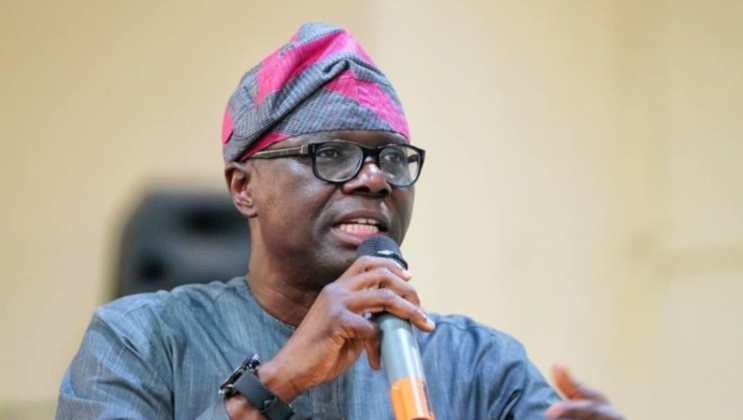
Governor Babajide Sanwo-Olu on Tuesday laid before the Lagos State House of Assembly a N4.237 trillion Appropriation Bill for the 2026 fiscal year, describing it as an ambitious, future-driven financial plan aimed at solidifying his administration’s legacy in its final full year.

Presenting the proposal, titled the “Budget of Shared Prosperity,” the governor said it reflects the collective optimism that Lagos will continue to expand opportunities, strengthen its leadership role, and reinforce its status as Africa’s foremost megacity.

Sanwo-Olu disclosed that the budget projects total revenue of N3,993,774,552,141, comprising N3.12 trillion in Internally Generated Revenue and N874 billion in expected Federal Transfers. The funding structure, he noted, leaves a deficit financing requirement of N243,332,457,167.

For the 2026 fiscal year, capital expenditure is set at N2,185,085,419,495, while recurrent expenditure stands at N2,052,021,589,812. He explained that the recurrent component covers overheads, personnel costs, and debt obligations.

A breakdown of recurrent spending shows total overhead costs of N1,084,245,843,091, including general overheads, subventions and dedicated expenditures, while personnel costs amount to N440,494,339,384. Recurrent debt charges are projected at ₦143,876,701,943, with debt repayments estimated at N383,404,705,394.

Sanwo-Olu also outlined the sectoral distribution of the 2026 budget. General Public Services will receive N847,472,071,966; Public Order and Safety, N147,040,088,897; and Economic Affairs, N1,372,307,808,626. The Environment Ministry is allocated N235,957,235,138, while Housing receives N123,760,310,429.

The Health sector is earmarked N338,449,258,945; Education gets N249,132,921,287; Social Protection, N70,024,171,038; and the Recreation and Culture sector will take N54,682,339,586.

The governor said the year 2026 carries special weight as the last full calendar year of his administration, describing it as a period crucial for consolidating achievements and ensuring a “strong, successful finish.”

He reaffirmed his commitment to completing all ongoing and newly initiated projects, adding that his administration will continue to prioritise citizen engagement to ensure government decisions reflect the needs of Lagosians.

According to him, Lagos is entering a new phase of “accelerated impact,” driven by sustained investment in infrastructure, human capital, social welfare and governance systems that are “intentional, inclusive and future-oriented.”

Sanwo-Olu reiterated his administration’s core mission: “To keep Lagos secure, to keep Lagos working, to keep Lagos growing, and to make sure the prosperity we build is shared by everyone who calls this centre of excellence home.”

He commended the Lagos State House of Assembly for its consistent partnership, describing the lawmakers as steadfast allies in the state’s development journey. He also praised the civil service for its hard work in translating government vision into measurable progress.

DailyPost

Continue Reading
Click to comment

Leave a Reply

Your email address will not be published. Required fields are marked *

News

I Won’t Surrender Rivers N700bn IGR to Anyone, Fubara Vows

Published

on

By

Rivers State governor, Siminalayi Fubara, has resisted alleged pressure to hand over N700 billion, representing 35% of the State’s internally generated revenue (IGR), to anyone, sparking a heated power struggle with former Governor Nyesom Wike, now Federal Capital Territory (FCT) minister.

The dispute has raised concerns about the welfare of Rivers State residents, with 4.4 million people living in multidimensional poverty.

The feud between Fubara and Wike, who unilaterally chose Fubara as his successor, has escalated into violent confrontations, defections, and legal battles.

Wike has threatened to make Rivers State “ungovernable” if Fubara fails comply, while his supporters have vowed to “deal with” Fubara.

In response, Fubara has warned that he cannot be intimidated, saying: “Rivers State is not a playground” and that he’s prepared to defend the state’s interest.

His supporters have also threatened to mobilise protests against Wike and his allies.

The crisis had paralysed governance, prompting President Bola Tinubu to declare a six-month emergency rule in the State last year.

The situation remains tense, with both sides maintaining their respective stance.

The outcome will have significant implications for Rivers State and Nigerian politics.

The dispute highlights concerns about godfatherism in Nigerian politics and its impact on governance.

Wike has accused Fubara of ingratitude, while Fubara sees the former’s demands as an attempt to undermine his authority.

Continue Reading

News

Rivers Assembly Begins Impeachment Proceedings Against Fubara

Published

on

By

The Rivers State House of Assembly has commenced impeachment proceedings against Governor Siminalayi Fubara.

The legislature kicked off the process at plenary on Thursday.

The lawmakers are accusing Fubara and his deputy of gross misconduct.

Speaker of the House, Martin Amaewhule, is presiding over the session.

The day’s proceedings bear the imprimatur of renewed hostilities between Fubara and his predecessor Nyesom Wike, minister of the Federal Capital Territory (FCT).

On December 5, 2025, a horde of the Rivers assembly lawmakers led by the speaker, announced their defection from the Peoples Democratic Party (PDP) to the All Progressives Congress (APC).

Days later, Fubara formalised his own switch from the PDP to the APC.

However, the sabre-rattling and thinly veiled remarks between Wike and Fubara, which culminated in the declaration of emergency rule in the state in March 2025, have persisted.

Most of the Rivers lawmakers have stayed loyal to Wike.

TheCable

Continue Reading

Featured

US Imposes $15,000 Visa Bond on Visiting Nigerians

Published

on

By

The United States has introduced new travel restrictions that may require Nigerians applying for B1/B2 business and tourism visas to post financial bonds of up to $15,000, as Washington tightens entry conditions for nationals of countries it classifies as high risk.

Under the new policy announced by the U.S. State Department on Tuesday, applicants from 38 countries, 24 of them in Africa, including Nigeria, may be required to provide visa bonds of $5,000, $10,000, or $15,000, depending on the assessment made during their visa interview. The measures will take effect on different dates, with Nigeria’s implementation scheduled to begin on January 21.

According to the State Department notice, “any citizen or national traveling on a passport issued by one of these countries, who is found otherwise eligible for a B1/B2 visa, must post a bond for $5,000, $10,000, or $15,000.” Applicants will also be required to submit a Department of Homeland Security Form I-352 and agree to the bond terms through the U.S. Treasury Department’s Pay.gov platform, regardless of where the visa application is submitted.

The department stressed that payment of a bond does not guarantee the issuance of a visa, warning that fees paid without the direction of a consular officer will not be refunded.

Nigerians who post the required bonds and obtain visas will also be restricted to entering the United States through designated airports, including Boston Logan International Airport, John F. Kennedy International Airport in New York, and Washington Dulles International Airport in Virginia.

Refunds of the bonds will only be made if the Department of Homeland Security confirms that the visa holder departed the United States on or before the authorised date of stay, if the applicant does not travel before the visa expires, or if the traveller applies for entry and is denied admission at a U.S. port of entry.

The development comes barely a week after partial U.S. travel restrictions on Nigeria took effect. On December 16, Nigeria was listed among 15 mostly African countries placed under partial travel suspensions, alongside Angola, Antigua and Barbuda, Benin, Côte d’Ivoire, Dominica, Gabon, and The Gambia.

Explaining Nigeria’s inclusion, U.S. authorities cited the continued activity of extremist groups such as Boko Haram and the Islamic State in parts of the country, which they said created “substantial screening and vetting difficulties.” The U.S. also referenced visa overstay rates of 5.56 percent for B1/B2 visas and 11.90 percent for F, M, and J visas.

As a result of the designation, the suspension covers both immigrant visas and several non-immigrant categories, including B1, B2, B1/B2, F, M, and J visas.

Continue Reading

Trending