Connect with us

Business

Tinubu’s 15% Import Duty on Petrol is Good for Nigeria, Says Rewane, Marketers Disagree

Published

on

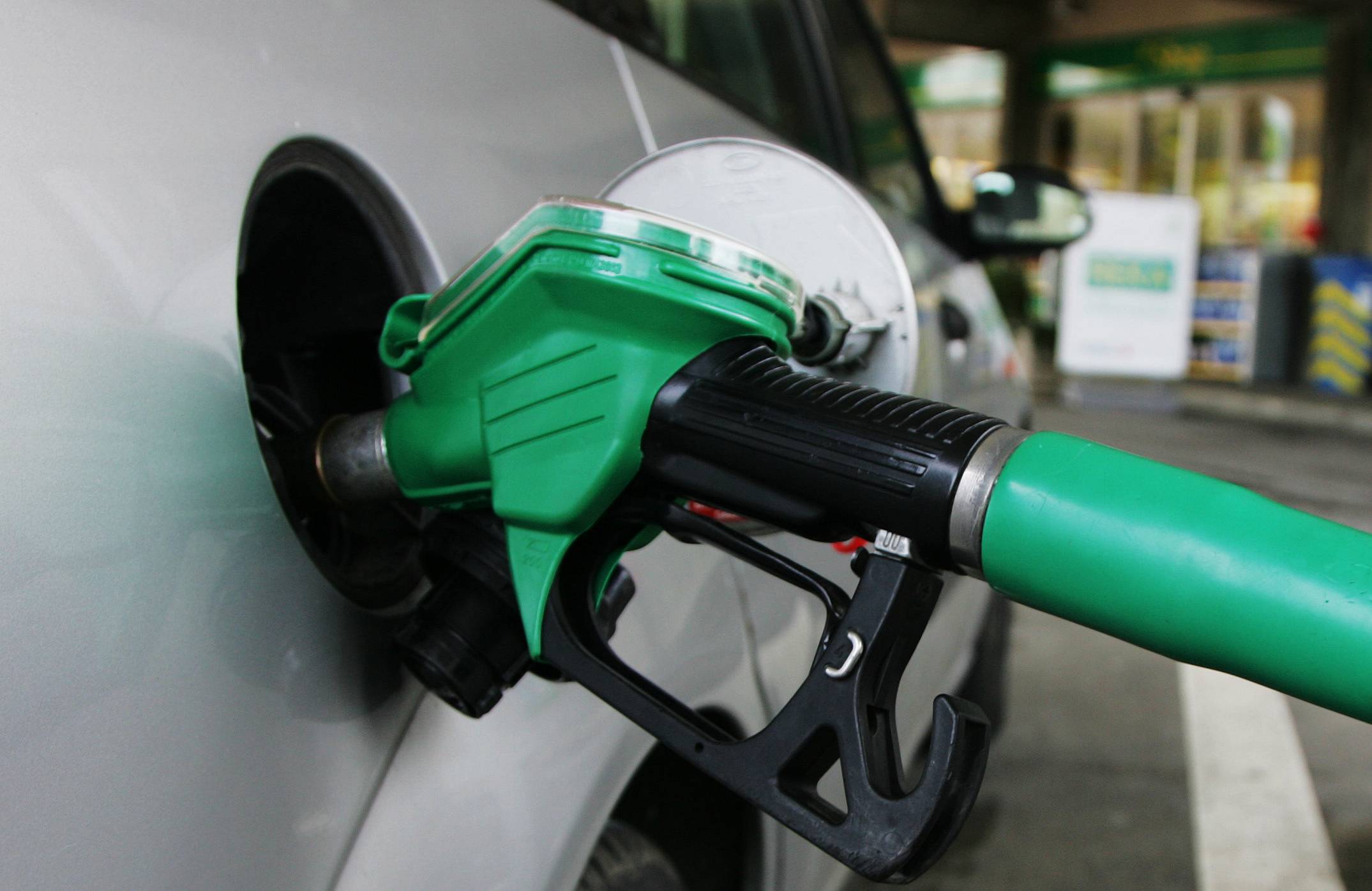
Popular economist and chief executive of Financial Derivatives Company Limited, Bismark Rewane, has explained that President Bola Ahmed Tinubu’s approval of a 15 per cent import duty on petrol and diesel is good for the country.

Rewane, speaking in an interview on Channels TV, said the import tariff is designed to encourage local production of petroleum products.

According to the policy, it is aimed to discourage imports and retain jobs in Nigeria.

“Petrol import duty is good for the country. Why is it good? Because it encourages domestic production. Anytime you import, you are actually creating jobs for other countries rather than your own country. Basically, import protection is good,” he said.

The move means that Nigerians would have to pay more for fuel consumption when it is implemented.

Recently, data from the Nigerian Midstream and Downstream Petroleum Regulatory Authority showed that 69 per cent of petrol consumed in Nigeria is imported, while 31 per cent is locally produced.

The policy places Dangote Refinery in an advantageous position in the country’s oil and gas sector.

However, Nigerians have kicked against the move, saying it would cause more hardship in the country.

This comes as an All Progressives Congress chieftain in Delta State, Ayiri Emami, on Thursday urged President Tinubu to withdraw the 15 per cent import duty tariff because it will bring more hardship for Nigerians.

Meanwhile, Petroleum marketers have warned that the pump price of Premium Motor Spirit, popularly called petrol, could exceed N1,000 per litre following the 15 per cent ad valorem import tariff on fuel imports.

The new policy, which takes effect after a 30-day transition period expected to end on 21 November 2025, is part of the government’s strategy to protect local refiners and reduce the influx of cheaper imported products that threaten domestic refining investments.

However, marketers say the move could backfire and push retail prices beyond the reach of average Nigerians.

Commenting in a telephone interview on Thursday, multiple depot operators with knowledge of the matter, who spoke on condition of anonymity, said the decision could further raise the price of petrol, which already sells for around N920 per litre, in many parts of the country.

“As it is, the price of fuel may go above N1,000 per litre. I don’t know why the government will be adding more to people’s suffering,” one of the depot operators said.

Another depot operator added, “Unfortunately, some of the importers are working in alignment with Dangote, which is why the last price increase was general; all players raised their prices at once. Let’s just wait and see what happens next.”

Another operator added that without a clear framework to stabilise market forces and ensure fair competition, the new import duty could trigger another round of price hikes and worsen the hardship faced by consumers.

The National Vice-President of the Independent Petroleum Marketers Association of Nigeria, Hammed Fashola, also agreed that the tariff had its implications, saying it might lead to a price surge.

Fashola said the policy had both positive and negative effects, adding that it could discourage importation while promoting local refining.

The IPMAN leader opined that some marketers moght perceive it as an opportunity to monopolise the sector in favour of Dangote and a few other refineries.

“The 15 per cent tariff on imported fuel has its own implications. Maybe the price will go up, and equally, it will discourage importers from bringing in fuel if it becomes too costly.

“But it has both negative and positive effects on the sector. I see that the government is trying to protect local refiners, but it will have its own implications because people will see it as a way of monopolising the industry for certain people. At the same time, the government aims to protect the local refiners.”

However, Fashola stressed that the failure of the local refiners to supply enough fuel into the domestic market could trigger a fuel crisis.

“If the local refiners fail, it will have its own implications. It may lead to scarcity, and people will not have an alternative. So, it has both positive and negative effects. That’s the way I see it,” he added.

Continue Reading
Click to comment

Leave a Reply

Your email address will not be published. Required fields are marked *

Business

FirstBank, Subsidiary of FirstHoldCo, Meets ₦500bn Regulatory Capital Requirement

Published

on

By

First HoldCo Plc (“FirstHoldCo” or “the Group”) has announced that its commercial banking subsidiary, First Bank of Nigeria (FirstBank), has successfully met the Central Bank of Nigeria’s (CBN) minimum capital requirement of ₦500 billion. This milestone was achieved following the completion of a series of strategic capital initiatives, including a Rights Issue, a Private Placement, and the injection of proceeds from the divestment of the Group’s merchant banking subsidiary.

This successful capitalisation underscores strong market confidence in FirstHoldCo Group’s business model, long-term strategy, and growth prospects. With a fortified capital base, FirstBank is positioned to accelerate its support for the real sector, enhance financial inclusion, and deliver innovative, digitally driven customer experiences.

The recapitalisation strengthens the Group’s overall financial resilience, providing a robust platform for earnings growth through business expansion, technological innovation, and the pursuit of new opportunities.

In March 2024, the CBN directed commercial banks to raise their capital base to a minimum of ₦500 billion within a 24-month period to bolster the Nigerian banking sector’s stability and capacity. FirstBank has now fulfilled this requirement well ahead of the regulatory deadline.

In a related development, FirstHoldCo have expressed its desire to raise fresh funding and inject additional capital into the Group’s existing subsidiaries and new business adjacencies in 2026. This forward-looking commitment is aimed at further enhancing service offerings and facilitating strategic expansion.

Commenting on the achievement, Mr. Femi Otedola, CON, Chairman of First HoldCo Plc, said: “On behalf of the Board, I extend our profound gratitude to our shareholders for their trust and unwavering support throughout this capitalisation programme. From the oversubscribed Rights Issue to the seamless Private Placement, investors have demonstrated resounding confidence in our strategic direction. Securing FirstBank’s capital base ahead of schedule is a testament to our collective commitment and positions us firmly for our next growth phase. We also appreciate the professional guidance of the CBN and SEC throughout this process.”

Mr. Wale Oyedeji, Group Managing Director of First HoldCo Plc, added: “This successful capital raise is a pivotal milestone for FirstHoldCo. It provides us with the financial strength to execute our core strategic priorities: driving innovation, delivering superior customer value, and enhancing sustainable profitability. With this solid foundation, we are focused on accelerating performance, improving competitive returns, and delivering lasting value to all our stakeholders.”

Continue Reading

Business

Heirs Energies Executes $750m Afreximbank Financing to Drive Long-Term Growth

Published

on

By

Heirs Energies Limited, Nigeria’s leading indigenous integrated energy company, has executed a USD 750 million financing with the African Export–Import Bank (Afreximbank).

The transaction was concluded at a signing ceremony in Abuja on Saturday 20th December 2025, attended by Mr. Tony O. Elumelu, CFR, Chairman of Heirs Energies, and Dr. George Elombi, President and Chairman of Afreximbank.

The transaction represents one of the largest financings secured by an indigenous African energy company and demonstrates lender confidence in Heirs Energies’ operating performance, governance standards, proprietary brownfield excellence capability, and long-term growth trajectory.

Since assuming operatorship of OML 17, Heirs Energies has delivered a disciplined transformation programme, focused on restoring production, strengthening asset integrity, and improving operational efficiency. Through targeted brownfield interventions and infrastructure optimisation, the Company has successfully transitioned from acquisition-led financing to a capital structure aligned with the long-term development profile of its reserves.

Oil and gas production has doubled, from an acquisition production level of 25,000 barrels of oil per day (bopd) and 50 million standard cubic feet of gas per day (mmscf/d). Today, OML-17 produces over 50,000 bopd and 120 mmscf/d. All the gas production goes into the Nigerian domestic gas market and has been catalytic for power generation in Nigeria. Community relations have been transformed and the highest standards of health and safety implemented.

The Afreximbank facility will accelerate field development, optimise production, and allow Heirs Energies to pursue value-accretive growth opportunities, while maintaining disciplined capital management.

Speaking at the signing, Mr. Tony O. Elumelu, CFR, Chairman of Heirs Energies, said:

“This transaction is a powerful affirmation of what African enterprise can achieve when backed by disciplined execution and long-term African capital. It reflects the successful journey Heirs Energies has taken – from turnaround to growth – and reinforces our belief in African capital working for African businesses. This is Africa financing Africa’s future.”

Dr. George Elombi, President and Chairman of Afreximbank, stated:

“Afreximbank is proud to support Heirs Energies at this pivotal stage of its growth. This financing reflects our confidence in the Company’s leadership, governance, and asset base, and aligns with our mandate to support African champions that are driving sustainable economic transformation across the continent.”

The transaction further reinforces Afreximbank’s role in enabling indigenous operators with the scale and capability to deliver sustainable energy development, energy security, and long-term economic value across Africa.

With this milestone achieved, Heirs Energies is firmly positioned to advance into its next phase of growth, focused on operational excellence, responsible resource development, and enduring value creation for stakeholders.

Heirs Energies Limited is Africa’s leading indigenous-owned integrated energy company, committed to meeting Africa’s unique energy needs, while aligning with global sustainability goals.  Having a strong focus on innovation, environmental responsibility, and community development, Heirs Energies leads in the evolving energy landscape and contribute to a more prosperous Africa.

The African Export-Import Bank is a Pan-African multilateral financial institution mandated to finance and promote intra- and extra-African trade. The Bank plays a critical role in supporting Africa’s industrialisation, trade expansion, and economic transformation.

Picture: Chairman, Heirs Energies, Mr. Tony O. Elumelu CFR and President and Chairman of the African Export-Import Bank (Afreximbank), Dr. George Elombi, during the signing ceremony to mark the execution of a USD 750 million Financing Transaction between Heirs Energies and the Afreximbank in Abuja on Saturday

Continue Reading

Business

NNPCL Slashes Fuel Price by N80

Published

on

By

The Nigerian National Petroleum Company Limited (NNPCL) has effected another reduction in the pump price of petrol, marking the third cut this December.

A survey of filling stations in Abuja on Thursday showed that the state-owned oil company lowered the price to N835 per litre from N915, reflecting a N80 reduction.

The latest adjustment follows similar moves by independent marketers, including MRS, BOVAS and AA Rano, which recently reviewed their pump prices to between N739 and N865 per litre across the Federal Capital Territory.

Findings indicate that the downward review by NNPCL and other marketers was triggered by a drop in ex-depot prices, after Dangote Refinery and depot owners reduced rates to between N699 and N800 per litre.
NNPCL and several filling stations had earlier reduced fuel prices on December 4 and December 10, 2025, as competition and supply dynamics continued to influence pricing in the downstream sector.

Continue Reading

Trending