Islam
Friday Sermon: Futility of Excessive Competition for Material Wealth
Published
3 months agoon
By
Eric
Imam Bukhari records from Sayyidina Anas that the Messenger of Allah (SAW) said: “If the son of Adam had a valley full of gold, he would like to have two valleys, for nothing fills his mouth except dust. And Allah forgives him who repents to Him.”
The Tafsir of Surah At-Takathur, Chapter 102 of the Quran emphasizes the futility of excessive competition for worldly gains and material wealth. It warns that such distractions can lead to neglecting the remembrance of Allah and the afterlife. The surah highlights that people will eventually realize the consequences of their excessive focus on material pursuits. Just as the bible said: For what shall it profit a man, if he shall gain the whole world, and lose his own soul? Or what shall a man give in exchange for his soul? Mark 8:36-37
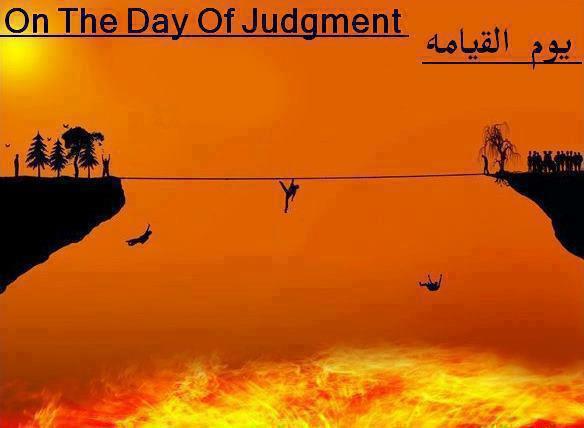
Surah at-Takathur reads: In the Name of Allah, the Most Gracious, the Most Merciful. 1. The mutual increase diverts you, 2. Until you visit the graves. 3. Nay! You shall come to know! 4. Again nay! You shall come to know! 5. Nay! If you knew with a sure knowledge. 6. Verily, you shall see the blazing Fire! 7. And again, you shall see it with certainty of sight! 8. Then on that Day you shall be asked about the delights!
The word takathur is derived from the root kathrah, and means ‘to amass much wealth’. Qatadah says that this word is also used in the sense of ‘taking pride in the abundance of material goods’. Sayyidina Ibn ‘Abbas reports that the Messenger of Allah (SAW) recited this verse and explained its meaning, thus: “Acquiring wealth but not paying out of it the obligatory dues.”
Allah says that all are preoccupied by love of the world, its delights and its adornments, and this distracts you from seeking the Hereafter and desiring it. These delays you until death comes to you and you visit the graves, thus becoming its inhabitants.
Acquisitiveness, that is, the passion for seeking an increase in wealth, position, the number of adherents or followers or supporters, mass production and mass organization, may affect an individual as such, or it may affect whole societies or nations.
Up to a certain point it may be good and necessary. But when it becomes inordinate and monopolizes attention, it leaves no time for higher things in life, and a clear warning is here sounded from a moral point of view. Man may be engrossed in these things till death approaches, and he looks back on a wasted life, as far as the higher things are concerned.
That is, until the time comes when you must lie down in the graves and leave pomp and circumstance of an empty life. The true reality will then appear before you. Why not try to strive for a little understanding of that reality in this very life?
Three kinds of “yaqin” (certainty of knowledge) are described in Surah 69:51. The first is certainty of mind or inference mentioned here: we hear from someone, or we infer from something we know: this refers to our own state of mind. If we instruct our minds in this way, we should value the deeper things of life better, and not waste all our time in ephemeral things. But if we do not use our reasoning faculties now, we shall yet see with our own eyes, the penalty for our sins. It will be certainty of sight. We shall see Hell. But the absolute certainty of assured truth is that described in Sura 69:51. That is not liable to any human error or psychological defects. But verily it is Truth of assured certainty. (Quran 69:51)
All Truth is in itself certain. But as received by men, and understood with reference to men’s psychology, certainty may have certain degrees. There is the probability or certainty resulting from the application of man’s power of judgment and his appraisement of evidence.
This is “`ilm-ul-yaqin”, certainty by reasoning or inference. Then there is the certainty of seeing something with our own eyes. “Seeing is believing.” This is “`ain-ul-yaqin”, certainty by personal inspection. See Sura 102:5, 7. Then, as here, there is the absolute Truth, with no possibility of error of judgment or error of the eye, (which stands for any instrument of sense perception and any ancillary aids, such as microscopes, etc.). This absolute truth is the “haqq-ul-yaqin” spoken of here.
We shall be questioned, i.e., we shall be held responsible for every kind of joy we indulge in-whether it was false pride or delight in things of no value, or things evil, or the enjoyment of things legitimate, – the last, to see whether we kept this within reasonable bounds.
It is therefore important for our thieving elite who take pride in robbing the exchequer to note that there shall be a reckoning. A day they will answer for all the billions and trillions they have stolen. How on this God created Earth can some people amass so much wealth that would last till the ‘second coming’?
In Sahih Al-Bukhari, it is recorded in the Book of Ar-Riqaq (Narrations that soften the Heart) from Anas bin Malik, who reported that Ubayy bin Ka’b said, “We used to think that this was a part of the Qur’an until the Ayah was revealed which says; The mutual increase diverts you.”
He was referring to the Hadith in which the Prophet (SAW) said, If the Son of Adam had a valley of gold, he would desire another like it…
Imam Ahmad recorded from ‘Abdullah bin Ash-Shikhkhir that he said, “I came to the Messenger of Allah (SAW) while he was saying, ‘The mutual increase diverts you.’ “The Son of Adam says, “My wealth, my wealth.” But do you get anything (of benefit) from your wealth except for that which you ate and you finished it, or that which you clothed yourself with and you wore it out, or that which you gave as charity and you have spent it?”
Muslim, At-Tirmidhi and An-Nasa’i also recorded this Hadith. Muslim recorded in his Sahih from Abu Hurayrah that the Messenger of Allah (SAW) said: The servant says “My wealth, my wealth.” Yet he only gets three (benefits) from his wealth: that which he eats and finishes, that which he wears until it is worn out, or that which he gives in charity and it is spent. Everything else other than that will go away and leave him for the people.
Al-Bukhari recorded from Anas bin Malik that the Messenger of Allah (SAW) said: Three things follow the deceased person, and two of them return while one remains behind with him. The things which follow him are his family, his wealth and his deeds. His family and his wealth return while his deeds remain.
The owners of the Hilltop mansions should take a leaf from what became of Ijesa Lodge, Castle of Mercy, Deribe Mansion, sprawling residence of Adebisi Idiikan, omo Ogunja and of course, Darocha’s Water House.
Imam Ahmad recorded from Anas that the Prophet (SAW) said: The Son of Adam becomes old with senility, but yet two things remain with him: greed and hope.
Again nay! you shall come to know! Meaning, ‘if you knew with true knowledge, you would not be diverted by rivalry for wealth away from seeking the abode of the Hereafter until you reach the graves.’ Then Allah says, Verily, you shall see the blazing Fire! And again you shall see it with certainty of sight!
Allah then says: Then on that Day you shall be asked about the delights! Meaning, ‘on that Day you all will be questioned concerning your gratitude towards the favors that Allah blessed you with, such as health, safety, sustenance and other things. You will be asked: Did you return His favors by being thankful to Him and worshipping Him?
Ibn Jarir recorded that Al-Husayn bin ‘Ali As-Suda’i narrated from Abu Hurayrah that he said, “Once while Abu Bakr and ‘Umar were sitting, the Prophet (SAW) came to them and said, What has caused you two to sit here? They replied, “By He Who has sent you with the truth, nothing has brought us out of our houses except hunger.’
“The Prophet (SAW) said, By He Who has sent me with the truth, nothing has brought me out other than this. So they went until they came to the house of a man from the Ansar, and the woman of the house received them. The Prophet said (SAW) to her, Where is so-and-so? She replied, ‘He went to fetch some drinking water for us.’ So the man came carrying his bucket and he said, ‘Welcome. Nothing has visited the servants (of Allah) better than a Prophet (SAW) who has visited me today.’ Then he hung his bucket near a palm tree, and climbed it and returned to them with a cluster of dates. So the Prophet (SAW) said, Why didn’t you pick (some of them)? The man replied, ‘I wanted you to choose with your own eyes.’ Then he took a blade to slaughter a sheep and the Prophet (SAW) said, Do not slaughter one that gives milk. So he slaughtered a sheep for them that day and they all ate.
“Then the Prophet (SAW) said, You will be asked about this on the Day of Judgment. Hunger caused you to come out of your homes and you did not return until you had eaten this meal. So this is from the delights.”
It has been confirmed in Sahih Al-Bukhari and the Sunans of At-Tirmidhi, An-Nasa’i and Ibn Majah from Ibn ‘Abbas that the Messenger of Allah (SAW) said, Two favors are treated unjustly by most people: health and free time. This means that the people are lacking gratitude for these two favors.
Imam Ahmad recorded from Abu Hurayrah that the Prophet (SAW) said, Allah the Mighty and Majestic says on the Day of Judgement, “O Son of Adam! I made you ride upon the horses and camels, I gave you women to marry, and I made you reside and rule (in the earth). So where is the thanks for that?”
Let us ponder over these and reflect deeply. Have we been grateful for all that we have received and answer the question: Which of the favors of Allah can we deny? The phrase “which of the favors of your Lord do you deny?” is a recurring question in Surah Ar-Rahman (Chapter 55 of the Quran), highlighting the countless blessings bestowed by Allah. The response from believers is that none of His favors are denied, acknowledging His gifts such as faith, health, wealth, and the environment. This verse serves as a reminder to be grateful for the divine blessings in our lives.
Barka Juma’at and happy weekend.
Related
You may like
Islam
Friday Sermon: Science in the Quran: Bridging Faith and Modern Discoveries
Published
2 days agoon
January 9, 2026By
Eric
By Babatunde Jose
Throughout history, the Holy Quran has provided descriptions of natural phenomena that modern science has only recently begun to comprehend. The Quran/science connection continues to fascinate both believers and researchers alike as we delve deeper into understanding our universe.
Scientific references in the Quran refer to verses that describe natural phenomena with accuracy that seems impossible for the time of revelation, long before modern scientific methods or equipment. These aren’t vague, mystical passages that can be stretched to fit any interpretation. Rather, they often contain specific details that align remarkably well with discoveries made centuries later.
In 7th century Arabia, there were no microscopes, no telescopes, and other appurtenances. The prevailing scientific understanding was limited by what could be observed with the naked eye. And yet, the Quran contains descriptions of embryology, astronomical phenomena, and deep-sea characteristics that modern scientific research has confirmed.
The scientific knowledge in the Quran serves as a bridge between faith and reason for many believers.
From a historical perspective, the recognition of scientific accuracy in the Quran isn’t a modern phenomenon designed to make Islam seem compatible with science. In fact, early Islamic scholars were often at the forefront of scientific discovery, inspired partly by Quranic encouragement to observe and study the natural world. The first verse revealed to Prophet Muhammad (SAW) was “Read,” emphasizing the importance of knowledge acquisition in Islam.
During the Islamic Golden Age (8th-14th centuries), scholars like Ibn al-Haytham, Al-Biruni, and Ibn Sina (Avicenna) made groundbreaking contributions to medicine, astronomy, mathematics, and optics. Many explicitly cited finding the words of Allah to be a source of intellectual inspiration.
One of the most striking examples of Quran pronouncement concerns the origin of the universe. Modern cosmology points to the Big Bang as the moment of creation of the universe – the idea that the universe began as a singularity before expanding into what we see today.
The Quran states in Surah Al-Anbiya: “Have those who disbelieved not considered that the heavens and the earth were a joined entity, then We separated them” (Quran 21:30).
This verse, revealed 1,400 years ago, describes the heavens and earth as once being a single entity that was subsequently separated. Many scholars see this as remarkably aligned with the Big Bang theory, which wasn’t proposed until the 20th century.
In 1929, astronomer Edwin Hubble discovered that the universe was expanding – a revolutionary finding that changed our understanding of cosmology. But centuries earlier, the Quran stated in Surah Adh-Dhariyat: “And the heaven We constructed with strength, and indeed, We are [its] expander” (Quran 51:47).
The Arabic word “moosi’oon” used here indicates the active and ongoing expansion of the universe. When this verse was revealed, the prevailing belief was that the universe was static and eternal. Therefore, this Quranic assertion was contrary to scientific ideas of the time, yet aligned perfectly with discoveries made in the 20th century.
Before modern astronomy, humans believed the sun circled the earth. But the Quran correctly describes celestial orbits in Surah Al-Anbiya: “And it is He who created the night and the day and the sun and the moon; all [heavenly bodies] in an orbit are swimming” (Quran 21:33).
Surah Yasin states: “It is not for the sun to catch up to the moon, nor does the night outstrip the day. Each is swimming in an orbit” (Quran 36:40).
These verses describe the independent orbits of the sun and moon, along with the concept that they’re “swimming” (the Arabic word “yasbaḥoon”) through space – a surprisingly accurate description of celestial bodies moving through the vacuum of space, floated as if in water. The meaning of the word “orbit” here aligns perfectly with our modern understanding of celestial mechanics, despite being stated in the Quran 14 centuries ago.
Mountains have long been admired for their majesty, but their formative role in Earth’s stability wasn’t understood until plate tectonics theory developed in the 20th century. Modern geology has revealed that mountains have deep “roots” that stabilize the earth’s crust.
The Quran states in Surah An-Naba: “Have We not made the earth a resting place, and the mountains as stakes?” (Quran 78:6-7). The description of mountains as “stakes” or “pegs” (awtad in Arabic) is remarkably consistent with modern understanding that mountains deeply penetrate the surface of the earth; much like a stake stabilizes a tent.
The water cycle – evaporation, cloud formation, and precipitation – is fundamental to life on Earth. The Quran in Surah Ar-Rum describes this process with remarkable accuracy: “It is Allah who sends the winds, and they stir the clouds and spread them in the sky however He wills, and He makes them fragments so you see the rain emerge from within them” (Quran 30:48).
Another verse in Surah Al-Hijr states: “And We send the fertilizing winds and sent down to earth water from the sky” (Quran 15:22). The reference to “fertilizing winds” is particularly noteworthy, as modern meteorology confirms that winds play a crucial role in cloud formation and rainfall.
The Quran in Surah Al-Anbiya also emphasizes the life-giving properties of water in the verse: “We made from water every living thing. Will they not then believe?” (Quran 21:30). This fundamental fact is now a cornerstone of modern biology, but was stated clearly in the Quran long before modern science established this as a scientific truth.
Barrier between Seas: One of the most frequently cited examples of Quran oceanography is its description of the barrier between different bodies of water, in Surah Ar-Rahman: “He released the two seas, meeting [side by side]; Between them is a barrier [so] neither of them transgresses” (Quran 55:19-20).
Modern oceanography has confirmed that when two seas meet, they don’t immediately mix due to differences in density, temperature, and salinity. This creates a boundary where the waters remain distinct – exactly as described in the Quran. This is remarkable scientific evidence of the Quran’s accuracy regarding natural phenomena. How could this knowledge be available to someone living in a desert environment, far from oceans, at a time when people knew very little about oceanography?
Perhaps the most detailed scientific facts in the Quran relate to human embryology and the development of the embryo. The Quran describes the stages of fetal development with remarkable precision in Surah Al-Mu’minum: “We created man from an extract of clay. Then We placed him as a drop into a clot, and then We made the clot into a lump, and We made the lump into bones, and We clothed the bones with flesh. Then We produced him as another creation” (Quran 23:12-14).
Dr. Keith Moore, a prominent embryologist, was so impressed by the Quran embryology descriptions that he incorporated Quranic terminology into his textbooks. “It is remarkable,” he noted, “how accurately the Quran describes embryonic development, using terminology that precisely fits what we can now observe with modern equipment. This level of precision from an illiterate man in the 7th century represents a true marvel.”
The frontal lobe of the brain, responsible for planning and initiating behavior, is now known to be involved in lying. Interestingly, the Quran makes reference to the front of the head in connection with lying in Surah Al-Alaq: “No indeed! If he does not stop, We will seize him by the naseyah (forelock), a lying, sinful naseyah!” (Quran 96:15-16).
This connection between the frontal area of the brain and lying/sin was unknown in the 7th century, yet aligns with modern neuroscience findings about the role of the prefrontal cortex in ethical decision-making. For many scholars of Islamic texts, this precise correlation represents another scientific wonder of the Quran.
Long before fingerprinting became a science, the Holy Quran, Surah Al-Qiyamah referenced the unique nature of fingertips: “Yes, We are able to put together in perfect order the very tips of his fingers” (Quran 75:4).
Until the development of submarines and specialized equipment, humans had no way to explore the ocean depths. The Quran, however, describes deep seas with remarkable accuracy in Surah An-Nur: “Or [they are] like the darkness in a darkness of a fathomless sea which is covered by waves, upon which are waves, over which are clouds – layers of darkness, some of them upon others” (Quran 24:40).
Modern oceanography studies have confirmed that at depths below 200 meters, there is complete darkness in a deep sea. The verse’s description of layered darkness and waves above which are waves matches what we now know about internal waves that occur at the density boundary between layers of water.
Dr. William Hay, a marine scientist, remarked that this Quranic description is “remarkably modern in the context of what we know about the deep sea.” The precision of this description, coming from an illiterate prophet in a desert environment far from oceans, is considered by many to be a clear phenomenon that aligns with the laws of nature that we’ve only recently come to understand through the scientific method.
Another fascinating aspect of Islamic scientific discoveries relates to the boundaries between different types of water. The Quran states in Surah Al-Furqan: “He is the one who has set free the two bodies of flowing water, one sweet and palatable, the other salty and bitter. And He has made between them a barrier and a forbidding partition” (Quran 25:53).
This verse describes not only the different properties of freshwater and saltwater but also the existence of a partition between them. Modern oceanography has confirmed that where rivers meet the sea, there exists a “pycnocline” zone with distinct properties different from both the freshwater and the seawater. The mathematical precision of these natural boundaries, described in the Quran, represents another scientific wonder.
Surah Al-Hadid and many other parts of the Quran contain similar precise descriptions of natural phenomena that align with modern scientific understanding, despite being revealed in an era when such knowledge was not available.
While many scholars find the scientific references in the Quran compelling, others urge caution in interpretation. Dr. Muzammil Siddiqi notes, “The Quran is primarily a book of guidance, not a book of science. When it mentions scientific phenomena, it does so to direct humans to reflect on creation as a sign of the Creator.” Allahu Akbar!
Barka Juma’at and a happy weekend.
Related
Islam
Friday Sermon: Origin of Life: Failure of Scientific Explanations
Published
1 week agoon
January 2, 2026By
Eric
Can science explain the origin of life? The origin of life is enmeshed in so many hypotheses, theories, conjectures, speculations and propositions that, in an attempt to exclude the contribution of God, there has been no headway. They even say it’s an accidental phenomenon which cannot be explained.
The study of the origin of life is a very active research area in which important progress is being made, although the consensus among scientists is that none of the current hypotheses has thus far been confirmed. The origin of life on Earth stands as one of the great mysteries of science. Various answers have been proposed, all of which remain unverified. In an attempt to find solutions to the mystery of life and find out if we are alone in the galaxy, we will need to better understand what geochemical conditions nurtured the first life forms.
The earliest solid evidence for life is found in stromatolitic formations in Western Australia and South Africa, dated as 3.5 billion years old. However, evidence may yet be found that life was present on Earth more than 3.5 billion years ago.
Phillip Johnson is known as the father of intelligent design, the idea in its current form appeared in the 1980s, and Johnson adopted and developed it after Darwinian evolution came up short, in his view, in explaining how all organisms, including humans, came into being.
The Haldane-Oparin theory on the origin of life was tested to a limited extent by two American chemists, Harold Urey and Stanley Miller. They successfully produced organic molecules from some of the inorganic components thought to have been necessary for the appearance of life, the prebiotic phase. But they did not succeed in creating life.
The origin of life on Earth (and possibly on other planets) is said to be the result of the chemical evolution of the universe. Generations of stars have enriched the interstellar medium (ISM) with atomic elements that can form simple molecules even in the exotic conditions found in outer space.
Origin of life is also called biogenesis, protobiogenesis and biopoiesis. There is significant scientific evidence that life originated from a single source. Two major lines of evidence involve RNA and the shape of amino acids. All cells use ribosomes and transfer RNA (tRNA) to synthesize proteins from chains of amino acids. This process is very similar in all living organisms.
But, what is the real origin of life? Life is coeternal with matter and has no beginning; life arrived on Earth at the time of Earth’s origin or shortly thereafter it is assumed. Life arose on the early Earth by a series of progressive chemical reactions. Such reactions may have been likely or may have required one or more highly improbable chemical events. And it gets complicated from there.
The most accepted theory on the origin of life is the theory of biochemical evolution. The modern theory is also known as “chemical theory” or theory of primary abiogenesis. In the modern theory, the hypothesis of abiogenesis was proposed with a condition that the non-living materials can give rise to life in the condition of primitive earth.
The scientific theories of the origin of life therefore include Spontaneous origin; that Life may have evolved from non-living matter as association with prebiotic molecules under primitive earth conditions, became more and more complex. This theory suggests that life could come from nonliving things, decaying and rotting matter like straw, mud, etc.
Other theories are the panspermia theory, the theory that life began in ice, the theory that life began in clay, the “RNA world” theory of the origin of life, the Oparin-Haldane theory of the origin of life, and the theory that life began in deep-sea vents.
Evidence for the panspermia theory includes the fact that some living things have survived, even after 1.5 years mounted outside the International Space Station– in one case 100% of the bacterial endospores placed in Mars-type conditions were viable – still capable of life, in other words. A quarter of the experiment’s tobacco seeds survived to be grown as plants back on Earth.
The idea that life can flourish only under terrestrial conditions has been made obsolete by research. It is a mistake to believe that life cannot exist without water and oxygen. Even on our own earth there are forms of life that need no oxygen. They are called anaerobic bacteria. A given amount of oxygen acts like poison on them. Why should there not be higher forms of life that do not need oxygen?
Scientific investigation, concentrated on our earth until very recently, has praised this world of ours as the ideal planet. It is not too hot and not too cold; it has plenty of water; there are unlimited quantities of oxygen; organic processes constantly rejuvenate nature.
In fact, the assumption that life can exist and develop only on a planet like the earth is untenable. It is estimated that 2,000,000 different species of living creatures live on the earth. Of these—this again is an estimate—1,200,000 are “known” scientifically. And among these forms of life known to science there are still a few thousand that ought not to be able to live at all according to current ideas!
In the light of current scientific research, the premises for life must be thought out and tested anew. For example, one would think that highly radioactive water would not support life. But there are actually some kinds of bacteria which can adapt themselves to the lethal water that surrounds nuclear reactors. An experiment carried out by biologist Dr. Sanford Siegel sounds eerie. He re-created the atmospheric conditions of Jupiter in his laboratory and bred bacteria and mites in this atmosphere, which share none of the prerequisites we have hitherto laid down for ‘life’. Ammonia, methane, and hydrogen did not kill them. The experiments by Dr. Howard Hinton and Dr. Blum, Bristol University entomologists, had equally startling results.
We also know of bacteria that live in volcanoes, of others that eat stone, and some that produce iron. The forest of question marks grows.
Experiments are going on at many research centers. New proof that life is by no means bound to the prerequisites for life on our planet are constantly accumulating. For centuries the world appeared to revolve around the laws and conditions that govern life on earth. This conviction distorted and blurred our way of looking at things; it put blinkers on scientific investigators, who unhesitatingly accepted our standards and systems of thought when viewing the universe.
“Have not those who disbelieved known that the heavens and the earth were one connected entity, then We separated them?…” (Quran 21:30)
Dr. Alfred Kroner is one of the world’s renowned geologists. He is Professor of Geology and the Chairman of the Department of Geology at the Institute of Geosciences, Johannes Gutenberg University, Mainz, Germany. He said: “Thinking where Muhammad came from . . . I think it is almost impossible that he could have known about things like the common origin of the universe, because scientists have only found out within the last few years, with very complicated and advanced technological methods, that this is the case.”
The Quran’s narrative of the creation of the universe is rich with detail, symbolism, and profound insights. It speaks to the majesty and power of God as the Creator, the ordered and purposeful nature of the cosmos, and the intricate interconnections of all living things. For believers, these verses provide a source of awe and inspiration. It encourages a deeper appreciation of the universe and its Creator.
Through its timeless wisdom, the Quran continues to inspire exploration and understanding. It invites humanity to reflect on the origins of existence and our place within the grand tapestry of creation.
The Quran contains numerous verses that highlight Allah’s creation, emphasizing His power, wisdom, and the signs of His existence in the universe. On the Creation of the Heavens and the Earth: “Indeed, in the creation of the heavens and the earth and the alternation of the night and the day are signs for those of understanding.” (Surah Al-Imran 3:190). This verse encourages reflection on the natural world as a testament to Allah’s existence and power.
On His ability to create: “Is not He, Who created the heavens and the earth Able to create the like of them? Yes, indeed! He is the All-Knowing Supreme Creator.” (Surah Yaseen 36:81). This verse emphasizes Allah’s omnipotence in creation.
“Indeed, in the creation of the heavens and the earth, and the alternation of night and day, are signs for people of understanding.” (Surah Al-Baqarah 2:164) Highlights the importance of recognizing the signs of Allah in the natural world.
“And We did not create the heavens and the earth and whatever is between them in play.” (Surah Al-Anbiya 21:16). This verse indicates that creation is intentional and serves a greater purpose.
“And certainly did We create man out of clay and then We made him a sperm-drop in a firm lodging. Then We made the sperm-drop a clinging clot, and We made the clot a lump [of flesh], and We made out of that lump bones and clothed the bones with flesh; then We developed out of it another creation.” (Surah Al-Mu’minun 23:12-14). This verse describes the stages of human creation, illustrating Allah’s intricate design.
These verses collectively emphasize that the universe and everything within it is a deliberate creation of Allah, filled with signs that invite reflection and understanding. They serve as reminders of His power, wisdom, and the purpose behind creation, encouraging believers to contemplate the world around them and recognize the signs of their Creator.
Rabbana afrigh ‘alaina sabran wa thabbit aqdamana wansurna ‘alal-qawmil-kafirin. Our Lord! Bestow on us endurance, make our foothold sure, and give us help against the disbelieving folk (Quran 2:250)
Barka Juma’at and Happy New Year. May the New year usher in tremendous good for us all and greater reflection of our position in the scheme of Allah’s purpose. May we luxuriate in greater happiness and good health, Amen.
Related
Islam
Friday Sermon: Journey in the Passage of Time: Old Age
Published
2 weeks agoon
December 26, 2025By
Eric
“And whomever We give a long life, We cause him to regress in creation. Then, will they not exercise their reason?” (Quran 36:68)
Humans begin as a single cell formed by the fusion of sperm and egg, undergo prenatal development, and are born as infants. They progress through childhood, adolescence, adulthood, and finally, old age, experiencing various physical, cognitive, and emotional changes along the way.
The journey of man from the cradle to old age is a spectacular train of events that involves transformations, metamorphosis and change which is both physical and spiritual.
An old friend, Muyiwa (75) was at a function recently and this was what he wrote: . . . it was difficult to put names to some faces. Some came in doubled over walking sticks. Some came in with impaired sights and had to ‘feel’ their way around. Some relied on solicitous spouses to chaperon them. One or two came in with a caregiver or a wet nurse. These illustrate the baggage and the manner the lines of life have fallen over some over the years. People in the evening and twilight of their lives described.
Many who, like Muyiwa, were very active in their 30s and 40s are today feeling the ping of reduced locomotion, cognitive dissonance. Some cannot even perform as a result of ED and cannot partake of the fun-life of old, just as another friend laments.
This is particularly seen in the Quran’s highlight of various stages of life, uniquely describing the nature of human creation in terms of strength while referring to old age as a stage of weakness and infirmity and the greying of hair as that which subsequently follows that of strength (Quran, 30:54, 36:68).
The Quran in one instance, describes this stage of life as “infirm old age” (Quran 19:8) while establishing the relative quality of old age with respect to divine decree as found in the reality that some die young while others grow older to learn wisdom; determined by Divine will (Quran 40:67).
The Quran reinforces some of the social dynamics pertaining to the elderly as in the narrative of the daughters of Prophet Shu‘ayb (Jethro) who took on their father’s role due to his physical weakness (Quran 28:23); or the empathetic portrayal of the emotional state of the elderly, as in the case of Jacob, an aged and venerable man who grieved for the loss of his beloved son Joseph (Quran 12:78). The Quran also highlights the perspective of an old man’s reaction to his children while exhibiting concern at their decrepit perception (Quran 12:94); or associates old age with men’s impotency in producing offspring and womens’ inability to conceive children (Quran 3:40).
Others however, speak rather of the “functional age,” as is the case with Izzat Ismail who maintains that old age is associated with a generally observable and measurable decline in physical and rational capabilities (‘Izzat, 1983: 17). For Sadhan, the musinn refers to every old person unable to care for themselves due to age, yet not necessarily as a result of disability or other reasons”. Shaykhukhah (old age) denotes noticeable patterns of physical decline in the physique and function of the individual due to the onset of advanced age in such a manner that it affects both physiological and rational processes (Qanari, 1987: 17).
The majority of Islamic sources allude in general form to certain subjective characteristics such as physical weakness, greying hair, forgetfulness, and feebleness. On a different tangent, and rather precisely however, Islam describes the age of forty as a time of maturity and wisdom and according to the Quran call for acts of thankfulness to God, piety and kindness towards parents (Quran, 46: 15). It was at this age that Prophet Muhammad(SAW) is reported to have received the revelation of the Quran.
The Qur’an also makes special mention of an age termed ardhal al-‘umur, as in the following: “And Allah creates you, then causes you to die, and among you is he who is brought back to the most abject stage of life, so that he knows nothing after (having had) knowledge”. (Quran 16: 70)
English translators of the Quran have rendered the phrase ardhal al-‘umur as “the most abject stage of life” (Pickthall), the “feeble age” (Yusuf Ali), “senility” (muhsin), ‘the worst part of the age’ (Mufti Ta. Usmani), or “the meanest of age” (Daryabadi). For al-Suddi (d. 745), ardhal al-‘umur refers to centenarians who have reached or exceeded one hundred years of age; or seventy five years of age as reported on the authority of Ali; ninety according to Qatadah; and ninety-five according to some others. Ibn ‘Abbas perceives ardhal al-‘umur as one’s lowest point of inability, whereby one becomes similar to an immature child (la ‘aqla lahu) (Qurtubi, 2005, 10:103).
Suyuti (d. 1505), a Shafi‘ite scholar, argues that the age of haram is in effect synonymous with ardhal al-‘umur due to the imbalance in mental abilities, senses, deteriorated comprehension and failure of memory, and also in view of the change in one’s physical outlook, and the growing inability to carry out many religious obligations and duties, as well as the tolerant leniency they are granted in performing others (Suyuti, 1996, 6:62).
The Quranic clause (‘so that he knows nothing after (having had) knowledge’) (Quran 16:70, 22:5) goes on in the same verse to highlight a decrease in learning abilities, and perhaps even a retrograde reversal of the condition of learning and interaction; effectively implying a return to the state of fundamental childhood and of physical weakness, basic thinking and meager comprehension exhibited through forgetfulness or even denial and rejection of learned information, alongside an increasingly pervasive inability to manage ordinary matters of life.
Razi interprets this clause as indicative of the symptoms of the stage following adulthood, consisting of extreme weakness and deficiency (nuqsan). The stage of “feebleness of age” however, does not necessarily result in the total dismissal of learning capabilities or a state of complete mental imbalance, but rather highlights a decline in cognitive capabilities due to forgetfulness and the likely inability to acquire or process new knowledge. It denotes a state of physical and mental weakness and perhaps futile effort to reform the past.
Some view this as a stage of disgrace, likely because of its characteristically regressive nature, therefore perceiving it to reflect a rather undesirable episode in human life. It is perhaps for this reason that Prophet Muhammad (SAW) is reported to have sought refuge in God from old age (‘Asqalani, 2001, 2: 470).
The condition of muddled confusion is known to experts in the discipline of Hadith as kharaf or ikhtilat and expresses a discordant mental imbalance and untenable speech and actions by the speaker as a result of sickness or old age.
On the basis of certain hadith reports, a number of Muslim scholars –most prominent amongst them being Shanqiti (d.1971) – suggest that reading the Qur’an protects and wards one against the state of elderly feebleness and furthermore that Muslim scholars are immune to forgetfulness, loss of knowledge, deterioration of cognitive faculty, memory or insanity (Shanqiti, 1995, 2:410). His prime contention is that true belief in God, obedience and constant remembrance preserves believing persons from the frailty of old age.
In his Ruh al Ma‘ani, Alusi disagrees with this assumption and argues on the contrary, that real life experiences contradict the said immunity and in fact appear otherwise, as shown with the many Quran memorizers who were afflicted by the plight of feebleness.
Along a similar parallel, some Muslim scholars have explored the possible connection between the condition of age’s feebleness and the theological beliefs one holds. Alusi disapproves of this thesis while some others argue that disbelief results in the eventual state of infirmity of body and mind as understood from the Quran (Quran 95:4−6).
While these various opinions speak of significant differences and indicate a rather subjective assessment of old age, particularly in regards to the onset of old age, they nonetheless collectively underline salient features prominent throughout the condition of elderly such as physical changes, growing needs and increasing dependence.
Which stage of life is the most important? Some might claim that infancy is the key stage, when a baby’s brain is wide open to new experiences that will influence all the rest of its later life. Others might argue that it’s adolescence or young adulthood, when physical health is at its peak. Many cultures around the world value late adulthood more than any other, arguing that it is at this stage that the human being has finally acquired the wisdom necessary to guide others. Who is right?
The truth of the matter is that every stage of life is equally significant and necessary for the welfare of humanity. We need to value each one of these gifts if we are to truly support the deepest needs of human life.
Since each stage of life has its own unique gift to give to humanity, we need to do whatever we can to support each stage, and to protect each stage from attempts to suppress its individual contribution to the human life cycle.
As I start another journey in life at 76, I give all the glory to Allah who has seen me this far. I ask for good health to traverse the terrain of the twilight of life when we cannot see clearly even in the flood lights of the stadium, nor hear the rumbling of the ocean even on the sea shore. To those who have walked with me this far, I say a big thank you. And to Almighty Allah, Alhamdulillahn Robil Alahmin.
Barka Juma’at and Compliments of the Season
Related


New Tax Laws: Presidential Committee Tackles KPMG over Criticisms of ‘Gaps’, ‘Errors’ and ‘Omissions’
Rivers Impeachment Brouhaha: Wike, Fubara ‘Run’ Abroad to Meet Tinubu
Strategy and Sovereignty: Inside Adenuga’s Oil Deal of the Decade
The Boss Man of the Decades, Dr. Mike Adenuga Jr + The Conoil Deal That Shaped 2025
CAF Acknowledges Akor Adams’ Goal Tribute to DR Congo Superfan
AFCON 2025: BUA Group Chair Rewards Super Eagles with $1.5m for Beating Algeria
Voice of Emancipation: Implications of President Trump’s Christmas Day Bombing
I Won’t Surrender Rivers N700bn IGR to Anyone, Fubara Vows
Meet Fidelity Bank’s New Board Chair, Amaka Onwughalu
Stop Insulting Nigerians: An Economy That Works Only in Government Speeches is a Fraud
US Imposes $15,000 Visa Bond on Visiting Nigerians
FirstBank, Subsidiary of FirstHoldCo, Meets ₦500bn Regulatory Capital Requirement
Rivers Assembly Begins Impeachment Proceedings Against Fubara
What Will Be the End of Wike?
Trending
-
News4 days agoI Won’t Surrender Rivers N700bn IGR to Anyone, Fubara Vows
-
Boss Of The Week6 days agoMeet Fidelity Bank’s New Board Chair, Amaka Onwughalu
-
Opinion6 days agoStop Insulting Nigerians: An Economy That Works Only in Government Speeches is a Fraud
-
Featured4 days agoUS Imposes $15,000 Visa Bond on Visiting Nigerians
-
Business5 days agoFirstBank, Subsidiary of FirstHoldCo, Meets ₦500bn Regulatory Capital Requirement
-
News4 days agoRivers Assembly Begins Impeachment Proceedings Against Fubara
-
Opinion5 days agoWhat Will Be the End of Wike?
-
Headline6 days ago2027: Why Atiku, Obi Must Collaborate