
National
US Senators Cry Out over Selective Massacre of Christians, Seek Re-designation of Nigeria As ‘Country of Particular Concern’

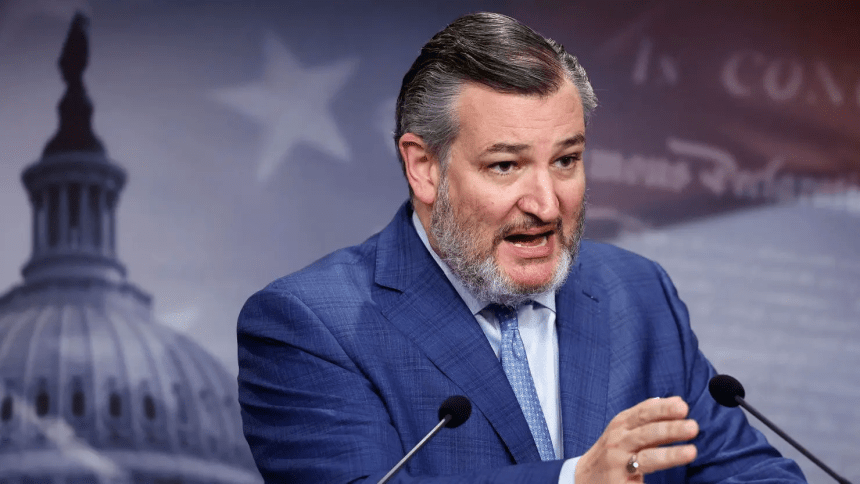

A group of Republican Senators has written to the United States Secretary of State, Marco Rubio, urging him to consider re-designating Nigeria as a “Country of Particular Concern” (CPC) under the International Religious Freedom Act (IRFA), citing what they described as “continued unchecked acts of violence and terrorism against religious minorities” in the country.
The lawmakers allege that the Christians are being subjected to massive violence in Nigeria.
The letter was signed by Senators Ted Budd, Josh Hawley, Pete Ricketts, Ted Cruz, and James Lankford.
In their letter, the Senators stated: “We write to urge you to consider designating Nigeria as a Country of Particular Concern (CPC) pursuant to the International Religious Freedom Act (IRFA) to give the President additional authority to take specific actions to address the continued unchecked acts of violence and terrorism against religious minorities perpetrated by non-State actors in Nigeria.”
The lawmakers recalled: “As you know, Secretary of State Mike Pompeo designated Nigeria as a CPC in December 2020, for the ongoing and egregious violations of religious freedom perpetrated within its borders, particularly by nonstate actors such as Boko Haram and other terrorist groups.”
They also noted: “While Secretary of State Antony Blinken removed Nigeria from the CPC list in 2021, on March 25, 2025, the United States Commission on International Religious Freedom (USCIRF) recommended that Nigeria be placed once again on the CPC list, citing several incidents of violence and terrorism against religious minorities.”
The Senators referenced several deadly incidents in Nigeria, including mass killings and kidnappings targeting Christians.
“In May 2024, al-Qaeda-affiliated Ansaru gunmen reportedly kidnapped 160 mainly Christian children and killed eight people in Niger State but later released the abducted children…..in Niger State, suspected bandits killed 10 farmers, including Christians, and in August, bandits reportedly killed 70 Christians and kidnapped 20 students in separate attacks in Benue State.”
They added: “Most recently, in late June 2025, reports suggest that at least 200 Christians in Nigeria were brutally killed by terrorists in Benue state.”
“This same report suggests that Nigeria is one of the most dangerous places in the world to be Christian, citing 3,100 of the 4,476 Christians killed during their reporting period lived in Nigeria.”
The Senators further referenced actions taken by former U.S. President Donald Trump to promote religious freedom, including an executive order establishing the Religious Liberty Commission.
“As you know, on May 1, 2025, President Trump issued an executive order to establish the Religious Liberty Commission with the intent for this commission to vigorously enforce the historic and robust protections for religious liberty enshrined in Federal law and to work with the White House Faith Office to partner with the Ambassador at Large for International Religious Freedom to further the cause of religious liberty around the world’.”
They also recalled Trump’s 2019 global appeal at the United Nations: “On September 23, 2019, President Trump issued a global call to condemn religious persecution and defend the freedom of all believers stating that:
‘Today with one clear voice, the United States of America calls upon the nations of the world to end religious persecution.’”
“To stop crimes against people of faith, release prisoners of conscience, repeal laws restricting freedom of religion and belief…America stands with believers in every country who ask only for the freedom to live according to the faith that is within their own hearts?.”
Concluding their letter, the Senators expressed gratitude for Trump’s role in advancing religious liberty and urged Secretary Rubio to act decisively.
“We are grateful for President Trump and your work to champion our founding freedoms at home, as well as to condemn religious persecution around the world. We hope you will carefully consider designating Nigeria as a Country of Particular Concern (CPC) pursuant to the International Religious Freedom Act (IRFA). We look forward to hearing from you.”
Previously, SaharaReporters reported that United States expressed “deep concern” over persistent violence against Christians and other vulnerable groups in Nigeria, warning that the government in Abuja must take stronger action to protect its citizens from terrorist attacks.
This comes after American comedian Bill Maher drew attention to the rising number of Christians killed by extremist groups such as Boko Haram and ISIS-West Africa.
In a statement to Newsweek, the US State Department confirmed it has repeatedly raised the issue with the Nigerian government at the highest levels.
“The United States remains deeply concerned about the levels of violence against Christians and members of other groups in Nigeria, including the threats posed by terrorist groups like Boko Haram and ISIS-West Africa in northern Nigeria. We have raised these issues with the Nigerian government at the highest levels,” the statement said.
The Department stressed that Nigeria must act more decisively to halt repeated attacks on religious communities, insisting that its laws must align with commitments to religious freedom.
International advocacy group Open Doors ranks Nigeria as the seventh most dangerous place in the world for Christians, noting that “more Christians are killed for their faith in Nigeria than in the rest of the world combined.”
The Nigerian government has dismissed reports suggesting that terrorists in Nigeria are carrying out a systematic genocide against Christians, describing such claims as “false, baseless, despicable, and divisive.”






Obi Condemns Arrest of Sheikh Ahmad Shortly after Meeting in Kaduna

Dangote Warns of Dire Consequences for Nigeria If Iran War Continues

N868m Fraud: Court Jails Ex-AGF Nwabuoku 72 Years

Trump Announces 5-Day Ceasefire on Strikes Against Iran, Opts for Talks

Open Letter to British Prime Minister, Sir Keir Starmer by Gold Emmanuel

The Travails of Nasir El-Rufai

Voice of Emancipation: President Tinubu’s State Visit to the United Kingdom

AFCON 2025: George Weah Urges CAS to Overrule CAF’s Verdict

My Dear Brother, Dele Momodu by Segun Adeyemi

The Oracle: The New Digital Colonialism: Navigating AI Policy Uunder Foreign Tech Dominance (Pt. 3)

2027: Peter Obi Raises Doubt About Clinching ADC Presidential Ticket

Why Investing in People Outperforms Every Resource on Earth

AI and Neurodiversity: The Future Must Work for Everyone

TEF Entrepreneurship: Tony Elumelu Foundation Sets March 22 to Announce 2026 Cohort
-
 Sports4 days ago
AFCON 2025: George Weah Urges CAS to Overrule CAF’s Verdict
-
 Opinion3 days ago
My Dear Brother, Dele Momodu by Segun Adeyemi
-
 The Oracle4 days ago
The Oracle: The New Digital Colonialism: Navigating AI Policy Uunder Foreign Tech Dominance (Pt. 3)
-
 Headline5 days ago
2027: Peter Obi Raises Doubt About Clinching ADC Presidential Ticket
-
 Opinion3 days ago
Why Investing in People Outperforms Every Resource on Earth
-
 Tech and Humanity5 days ago
AI and Neurodiversity: The Future Must Work for Everyone
-
 Featured5 days ago
TEF Entrepreneurship: Tony Elumelu Foundation Sets March 22 to Announce 2026 Cohort
-
 World1 day ago
Trump Announces 5-Day Ceasefire on Strikes Against Iran, Opts for Talks