Connect with us

Opinion

Of Awujale Adetona’s Religious Beliefs and Monarchical Heresy

Published

on

By Mobolaji Sanusi

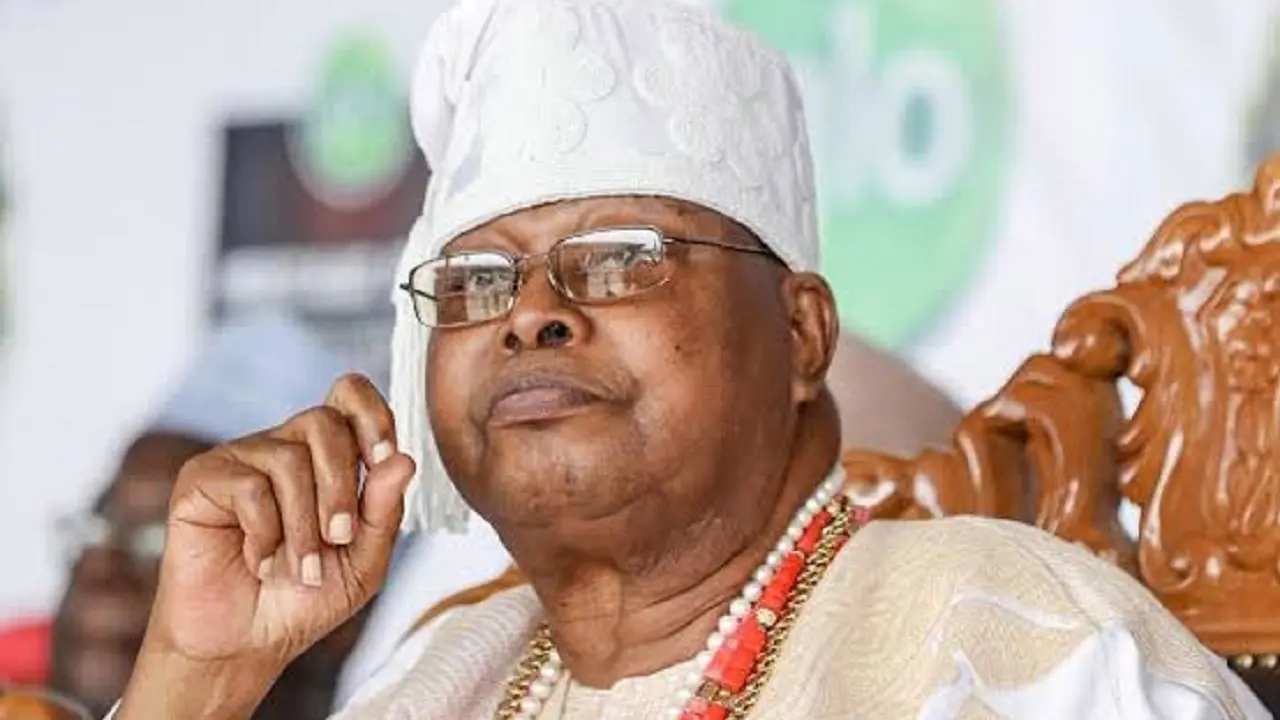
The recently demised Awujale of Ijebuland, Oba Sikiru Kayode Adetona Ogbagba II is assumably resting in the bosom of his creator, far from the hustle and bustle of telluric vanities. While alive, he lived life to the hilt. Was crowned an Oba as a young man in his twenties who was brought back from England where he was studying after the death of his predecessor in 1959.

Ostensibly, he was as at death, the longest reigning traditional ruler of his time having reigned for sixty-five years, dying at age 91.

In all ramifications, Awujale Adetona achieved a lot, earning the respect of high and mighty including the hoi polloi amongst his people. But for his later years anti-culture/tradition activism, he did well for himself.

At death, he was one of the most respected monarchs in the political entity called Nigeria, hailing from the Yoruba ethnic group. He was a traditional ruler with socio-political influence; largely known for being courageous, principled and with perceived integrity as attested to by the applause heaped on him by notable people, including incumbent President Bola Ahmed Tinubu, GCFR.

Doubtful if the people of Ijebu Ode will be blessed with such an influential monarch as successor to the man within the nearest future. Time shall tell.

Whatever accolades Adetona might have garnered, such were diminished by his failure to protect, to his last days on earth, his primary responsibility of being the repository of his people and communities’ customs and traditional heritage.

He lived a kingship life but was unfortunately unroyally buried. Adetona was a jolly good fellow king who in the late seventies was too steep in dangerous political maneuvering akin to traditional rulers of that era. This nearly cost him his throne during the second republic. But for the Buhari/Idiagbon coup of December 31st, 1983, he would have said goodbye to the throne over forty years ago.

The twilight of Awujale Adetona’s life as traditional ruler was marred with culture-traditional chaos—akin to being wise after the fact. His mind became colonially colonised. He lost touch with socio-cultural and traditional realities.

Otherwise, how can one describe his vehement insistence before death that his burial rites must be devoid of long entrenched royally cultural/traditional rites by the Odis of Ijebu-Ode in tandem with ancient Ijebuland and Yoruba kingship history.

Being a Muslim from birth that embraced Yoruba Kingship tradition early in life, he dithered by jettisoning culture/tradition that he was meant to protect leading to his being buried not royally but in line with Islamic rites.

And being an Oba while alive, this has set a bad precedent for trado-cultural kingship reverence in Yoruba land. Yes, Adetona as an individual had the preferential legal rights on how he should be buried at death but as an Oba with customary obligations, he had abdicated such wishful rights that ran contrary to established customary traditional rites. If he had wished any contrary to the latter like he had done, he should have long relinquished the throne of his forefathers he occupied in trust before his death.

Like it is said in law, Awujale met the condition precedent of his Yoruba traditional contractual obligations for becoming an Oba in 1960 but jettisoned the condition subsequent at death in 2025 by insisting his dead body’s insulation from traditional processes. Even in contemporary times, most Christian Obas including their Muslim counterparts, are relegating traditional rites because of their religious beliefs. The question is: Why take up traditional rulership mantle with modus/rites that contradicts their supposed foreign religious beliefs?

More posers: Can religious beliefs override traditional engagements/duties of traditional rulers freely entered into? Is it right for traditional rulers to be more catholic than the Pope on issues of religious beliefs that are against traditional teachings? As traditional rulers, are they not supposed to be worshippers of, and custodians of all their existing ethnic ancient religions? These rhetorical questions become necessary because even in England where Christianity is well entrenched, the world has witnessed traditional rites unknown to Christian doctrines routinely performed before and after the coronation of their king/queen and even at their death.

The entire world saw the Britons bring an ancient ‘stone’ and sacrificial ‘goat’ into the church while performing royal rites for outgoing and incoming queen/king respectively.

To the foreign religion hypnotised black traditional rulers of Nigeria and Africa, that British culture/tradition symbolises satanism. But to the Britons that symbolises Christianity, that is their own culture/tradition to be showcased to global audience with glee, irrespective of their religious beliefs.

The religious hypocrisy of kings like late Awujale Adetona and other living cohorts against Yoruba culture/tradition lack principled historical antecedents. Awujale Adetona should have abdicated his throne at the point he considered Islam to be more important than the culture and tradition of his people. An historical precedent on the honourable path to toe when as an King there is a clash between personal convictions and culture/tradition was laid at the epochal December 1936 moment when King Edward VIII abdicated the throne of England in preservation of the age-long Anglicanism view on divorce; particularly as it affects remarriage by incumbent English monarch that also doubles as the customary head of the Church of England.

Background check by yours sincerely shows that King Edward VIII of England had fallen in love with one Wallis Simpson, a two-time America divorcee. The widespread unwillingness to accept Wallis Simpson as the King’s consort and the King’s insistence on marrying her led to his honourable consequential decision to abdicate the throne to go with the love of his life, and preserve the age-long culture/tradition integrity/reverence of the throne of his forefathers.

This kind of principled honourable decision is what Awujale Adetona shied away from while alive. The current Oluwo of Iwo and needlessly controversial king, Oba AbdulRasheed Adewale Akanbi, who relishes being more Islamic than the Arabs is denigrating the culture/tradition of his forefathers and Yoruba land when he should have honourably abdicated the throne to pursue the tenets of his beloved faith.

Even more recently, during the funeral obsequies of demised Pope Francis in Rome, we all watched masquerade-like figures inside the Vatican church conducting their rites devoid of any hullabaloo. To the original Catholics in the Vatican, that is their culture and tradition that no external influence can take away from them. But to the Catholic black man, that to them is erroneously satanic.

However, it is curious and laughable to see some of our Obas including late Awujale Adetona trying to hypocritically annihilate our traditional rulership culture and traditions simply because of their foreign religions that promised them ‘heaven’ through scriptural teachings. Yours sincerely believes that only good conscience manifesting in fair and humane dealings with fellow humans are the surest bet to sliding through the gate(s) of heaven. Praying five times a day or sleeping in churches are obviously no sure guarantees of making heaven.

What late Adetona and other living Obas with this culturally destructive mindsets have forgotten is that cultural values and traditions are the core principles and ideals upon which an entire community exists. Without these cultures and traditions, they can’t, in the first place, be an Oba and still enjoy the reverence/courtesies being extended to them. Put differently, kingship is a creation of tradition. Jettisoning tradition for foreign religions by monarchs invalidates the basis for the throne on which they sit.

Collectively, it is undeniable that these localised values have shaped our behavior, identity and worldview, passed through generations and playing crucial role in maintaining societal cohesion and stability, including sustenance of the kingship institutions.

To all culturally abhorrent traditional rulers under the guise of affirming any imported religions, let it be known that our culture and traditions should forever live in our hearts, souls and conduct. It is somewhat regrettable that this traditional rulership infiltrations by foreign minded religious Obas is gradually killing the traditional values upon which our Yoruba ethnic group is predicated today.

To all foreign religions’ influenced Obas in Ijebu-Ode extending to Iwo, Ogbomoso and other parts of Yoruba land that are misbehaving as if preserving our traditional cultures and traditions is satanic and antithetical to showing respect for their adopted religions, time to have a rethink or abdicate their traditional thrones is now.

Now globally proven that local cultures, traditions and religions of a people have nothing against their mental and scientific abilities and development. Unequivocal examples against our colonised kings’ minds are Japan, Korea, Singapore, Israel, China and others with local religions, cultures and traditions that have propelled them to technological advancement and economic prosperity. Despite Christianity and Islam addictions by our Obas, most criminalities and pilfering of nation’s natural resource endowments happen in their backyards while they look the other way. Our Obas can maintain religious diversity without compromising our own cultural identity and value chains.

All culturally aberrant traditional rulers must also know that from time immemorial, our cultures and traditions, when effectively practiced, have prevented our societies from sliding into anomie. They have helped in preserving discipline among the Yoruba households.

Our foreign religions indoctrinated Obas should realise that cultural values, passed down through generations, are known to play a crucial role in maintaining social cohesion and stability. Awujale betrayed the cultural trust reposed in him by Ijebu people and by extension Yoruba people-at-large.

Henceforth, any prince from ruling households in Yoruba land that feels that foreign religions are superior to our culture and traditions should not be considered for traditional stools and those Obas with such contradictory beliefs should honourably abdicate the thrones of their ancestors or be deposed without hesitation if they fail to do so.

Sanusi, a former MD/CEO of LASAA, is Managing Partner of Lagos State based AMS RELIABLE SOLICITORS

Continue Reading
Click to comment

Leave a Reply

Your email address will not be published. Required fields are marked *

Opinion

The State of Leadership Today: A Look at Global, African and Nigerian Realities

Published

on

By

By Tolulope A. Adegoke PhD

“Leadership for our age is measured not by the height of the throne, but by the depth of its roots in integrity, the breadth of its embrace of collective talent, and the courage to cultivate systems that bear fruit for generations yet unseen” – Tolulope A. Adegoke, PhD.

Leadership today is at a crossroad. Around the world, in our communities, and within our organizations, old ways of leading are straining under new pressures. This isn’t just a theoretical discussion; it’s about the quality of our daily lives, the success of our businesses, and the future of our nations. Let’s walk through the current trends, understand their very real impacts, and then explore practical, hands-on solutions that can unlock a better future for everyone.

Part 1: The Leadership Landscape – Where We Stand

The Global Picture: Beyond the Solo Leader

The image of the all-powerful, decisive leader at the top of a pyramid is fading. Today, effective leadership looks different. It’s more about empathy and service than authority. People expect their leaders—in companies and governments—to be authentic, to listen, and to foster teams where everyone feels safe to contribute. Furthermore, leadership is now tightly linked to purpose and responsibility. It’s no longer just about profits or power; stakeholders demand action on climate, fair treatment of workers, and ethical governance. Leaders must also be tech-savvy guides, helping their people navigate constant digital change while dealing with unpredictable global events that disrupt even the best-laid plans.

Africa’s Dynamic Challenge: Youth and Promise

Africa’s story is one of incredible potential meeting stubborn challenges. The continent is young, energetic, and full of innovative spirit. Yet, this tremendous asset often feels untapped. Too frequently, a gap exists between this rising generation and established leadership structures, leading to frustration. While the African Continental Free Trade Area (AfCFTA) presents a historic chance for economic unity, it requires leaders who think beyond their own borders. At the same time, democratic progress sometimes stalls, with leaders clinging to power. The most pragmatic leaders are those who engage with the vibrant informal economy—the hustlers, market traders, and artisans—who form the backbone of daily life and hold the key to inclusive growth.

Nigeria’s Pressing Reality: Crisis and Resilience

In Nigeria, the leadership experience often feels like moving from one emergency to the next. Attention is consumed by immediate crises—security threats, economic swings, infrastructure breakdowns—making long-term planning difficult. This has triggered a profound loss of confidence, visibly seen in the “Japa” phenomenon, where skilled professionals leave seeking stability and opportunity abroad. This brain drain is a direct critique of the system. Politics remains deeply influenced by ethnic and regional loyalties, which can overshadow competence and national vision. Yet, in the face of these trials, a remarkable spirit of entrepreneurial resilience shines through. Nigeria’s business people and tech innovators are daily solving problems and creating value, often compensating for wider systemic failures.

Part 2: The Real-World Impact – How This Affects Us All

These trends are not abstract; they touch lives, businesses, and countries in tangible ways.

·         On Everyday People: When leadership is perceived as self-serving or ineffective, trust evaporates. People feel anxious about the future and disconnected from their leaders. This can manifest as cynicism, social unrest, or the difficult decision to emigrate. The struggle to find good jobs, feel secure, and build a future becomes harder, deepening inequalities.

·         On Companies and Organizations: Businesses operate in a tough space. They face a war for talent, competing to retain skilled employees who have global options. They must also navigate unpredictable policies, provide their own power and security, and balance profitability with rising demands for social responsibility. The burden of operating in a challenging environment increases costs and risk.

·         On Nations: Countries plagued by poor governance face a competitiveness crisis. They struggle to attract the kind of long-term investment that builds economies. Policy becomes unstable, changing with political winds, which scares off investors and stalls development. Ultimately, this can destabilize not just one nation but entire regions, as problems like insecurity and migration spill across borders.

Part 3: A Practical Pathway Forward – Building Leadership That Delivers

The situation is complex, but it is not hopeless. Turning things around requires deliberate, concrete actions focused on systems, not just individuals.

1. Fortify Institutions with Transparency and Merit.

We must build systems so strong that they work regardless of who is in charge.

·         Action: Legally protect key institutions—the electoral body, the civil service, the courts—from political interference. Appointments must be based on proven competence and integrity, not connections.

·         Action: Implement technology-driven transparency. Let citizens track government budgets and projects in real time through public online portals. Sunshine is the best disinfectant.

2. Bridge the Gap Between Leaders and the Led.

Leadership must become a conversation, not a monologue.

·         Action: Create mandatory Youth Advisory Councils at all levels of government and in large corporations. Give young people a formal platform to contribute ideas and hold leaders accountable on issues like education, digital innovation, and job creation.

·         Action: Leaders must adopt regular, unscripted “town hall” meetings and use simple digital platforms to explain decisions and gather feedback directly from citizens and employees.

3. Channel Entrepreneurship into National Solutions.

Harness the proven problem-solving power of the private sector.

·         Action: Establish Public-Private Impact Partnerships. For example, the government can partner with tech companies to roll out digital identity systems or with agribusinesses to build modern farm-to-market logistics. Clear rules and shared goals are key.

·         Action: Launch National Challenge Funds that invite entrepreneurs and researchers to compete to solve specific national problems, like local clean energy solutions or affordable healthcare diagnostics, with funding and market access as the prize.

4. Redeploy Nigeria’s Greatest Export: Its Diaspora.

Turn the brain drain into a brain gain.

·         Action: Create a Diaspora Knowledge & Investment Bureau. This agency would actively connect Nigerians abroad with opportunities to mentor, invest in startups, or take up short-term expert roles in Nigerian institutions, transferring vital skills and capital.

·         Action: Offer tangible incentives, like tax breaks or matching funds, for diaspora-led investments in critical sectors like healthcare, renewable energy, and vocational training.

5. Cultivate a New Mindset in Every Citizen.

Ultimately, the culture of leadership starts with us.

·         Action: Integrate ethics, civic responsibility, and critical thinking into the core curriculum of every school. Leadership development begins in the classroom.

·         Action: Celebrate and reward “Local Champions”—the honest councilor, the community organizer, the business owner who trains apprentices. We must honor integrity and service in our everyday circles to reshape our collective expectations.

Conclusion: The Work of Building Together

The challenge before us is not to find a single heroic leader. It is to participate in building a better system of leadership. This means championing institutions that work, demanding transparency in our spaces, mentoring someone younger, and holding ourselves to high ethical standards in our own roles.

For Nigeria and Africa, the possibility of a brighter future is not a dream; it is a choice. It is the choice to move from complaining about leaders to building leadership. It is the choice to value competence over connection, to seek common ground over division, and to invest in the long-term health of our community. This work is hard and requires patience, but by taking these practical steps—starting today and in our own spheres—we lay the foundation for a tomorrow defined by promise, stability, and shared success. The power to deliver that possibility lies not in one person’s hands, but in our collective will to act.

Dr. Tolulope A. Adegoke, AMBP-UN is a globally recognized scholar-practitioner and thought leader at the nexus of security, governance, and strategic leadership. His mission is dedicated to advancing ethical governance, strategic human capital development, and resilient nation-building, and global peace. He can be reached via: tolulopeadegoke01@gmail.comglobalstageimpacts@gmail.com

Continue Reading

Opinion

Globacom Redefines Standard for Telecoms in 2026

Published

on

By

By Michael Abimboye

As always, Globacom is at the heart of telecoms transformation in Nigeria. The acquisition of additional spectrum, is a decisive move that has expanded network capacity and fundamentally improved customer experience.

With the ability to carry significantly higher data volumes at greater speeds, users are seeing faster downloads, stronger uploads, seamless video streaming, and clearer voice calls even at peak periods. Crucially, this expansion has driven down latency. Independent performance testing has ranked Glo as the network with the lowest latency in Nigeria, meaning faster response times whenever data commands are initiated.

This spectrum advantage is being matched on the ground by the rollout of thousands of new LTE sites nationwide. Network capacity has increased pan-Nigeria, with noticeably higher download speeds across regions. At the same time, the installation of thousands of additional towers is easing congestion and closing coverage gaps, particularly in high-density locations such as markets and tertiary institutions, where demand for fast, reliable internet is highest.

Power reliability, often the silent determinant of network quality, is also being reengineered. Globacom has deployed hybrid battery power systems across numerous sites, reducing dependence on diesel while improving sustainability. Beyond cost efficiency, this greener model delivers stronger uptime ensuring uninterrupted power supply and optimal performance for base stations and switching centres.

Behind the scenes, Glo has upgraded its switching systems and data centres to accommodate rising traffic volumes nationwide. These upgrades are designed not only for today’s demand but to ensure the network consistently meets performance KPIs well into the future, even as data consumption continues to grow.

Equally significant is the massive reconstruction and expansion of Globacom’s optic fibre cable (OFC) network. Along highways and metro routes affected by road construction, fibre routes are being reconstructed and relocated to safeguard service continuity. Thousands of kilometres of new fibre have also been rolled out nationwide, fortifying the OFC backbone, improving redundancy, reducing network glitches, and enabling the network to handle increasingly heavy data loads with resilience.

These investments collectively address long-standing coverage gaps while driving densification and capacity enhancement in already active areas, ensuring a more balanced and reliable national footprint.

At the core layer, Globacom is modernising its network elements through new platforms and applications, upgraded enterprise and interconnect billing systems, and an expanding roster of roaming partners for both in-roaming and out-roaming services strengthening its integration into the global telecoms ecosystem.

Taken together, these are not incremental upgrades. They represent a deliberate, system-wide repositioning.

In 2026, Globacom is not just improving its network; it is asserting itself as the technical leader in Nigeria’s telecommunications industry and has gone on a spending spree to satisfy the millions of subscribers enjoying seamless connectivity across Nigeria.

Continue Reading

Opinion

How GLO Sustains Everyday Businesses in Kano, Nigeria’s Centre of Commerce

Published

on

By

By Dr Sani Sa’idu Baba

For more than two weeks, Kano woke up under a veil of fog. Not the poetic kind, but the stubborn Harmattan fog that dulls vision, slows movement, and disrupts daily rhythm. Dawn arrived quietly. Shops opened late. Calls failed repeatedly. Internet bars blinked on and off like uncertain promises. Across the state, one reality became impossible to ignore: communication had become a struggle. This reality carried even greater weight in the capital of Kano, the centre of commerce in Nigeria.

As Ramadan approaches and gradually leads to the celebration of Eid-el-Fitr, everyone understands what this season represents. It is a period when online businesses, both big and small, become a major source of livelihood for millions. Traders prepare for peak demand, online vendors scale up advertising, and buyers from across the country look to Kano for goods. Visitors stream in from other states, transactions multiply, and the success of this entire commercial ecosystem depends heavily on one thing: seamless network connectivity between buyers and sellers.
In Kano, where business breathes through phone calls, alerts, and instant messages, poor network is not just inconvenient, it is costly. Calling became difficult. Browsing the internet felt like a battle. For many, it meant frustration. For others, it meant loss.

As these challenges persisted day after day, conversations across the city began to take a clear and consistent direction. In homes, offices, and markets, a new conversation began to dominate discussions. A brother of mine, deeply involved in the communication business at Farm Center Market, the largest hub for telecom activity in Kano shared his amazement. Day after day, customers walked up to data vendors with one clear, confident request: “Glo data.” Not alternatives. Not experiments. Just Glo, he said. At first, it seemed puzzling. If you were already on Glo, you might not even notice the difference. But for those struggling on other networks, the contrast was undeniable. In the middle of foggy mornings and unstable signals, Glo stood firm.

And soon, the conversation spread everywhere. At tea junctions in the early hours, as people warmed their hands around cups of shayi, discussions circled around how Glo “held up” when others disappeared. In university classrooms, students whispered comparisons before lectures began, who could download materials, who could submit assignments, and which network actually worked. More strikingly, Glo users quietly turned their phones into lifelines, sharing hotspots with classmates so others could access lecture notes, submit assignments, and stay connected. At sports viewing centres, between goals and missed chances, fans debated networks with the same passion as football rivalries. In markets, traders told customers how Glo saved their day. In every gathering of people across Kano, Glo became the reference point. The reason was simple: Glo had saved businesses.

Consider the POS operator by the roadside. Every successful transaction that attracts him/her ₦100 here, ₦200 there is survival. Failed transfers mean angry customers and lost income. During these fog-heavy days, many operators would have been stranded. But where Glo bars stayed strong, withdrawals went through, alerts dropped, and trust preserved.

Picture a roadside trader making her first sale of the day through a simple WhatsApp call, her voice steady as she confirms an order that will set the tone for her business. Nearby, an online vendor advertises products in WhatsApp groups, responds to messages, takes calls from interested buyers, and confirms deliveries, all in real time. Behind every one of these small but significant transactions is reliable connectivity. Delivery riders weaving through traffic and racing against time also depend on uninterrupted network access to reach customers, confirm payments, and complete orders. In moments when other networks struggled, Glo quietly kept these wheels of commerce turning, ensuring that daily hustle did not grind to a halt. Beyond the busy streets of the city, the impact of this reliability becomes even more profound in remote villages in Kano.

Back in Kano city, rising transportation costs have reshaped the way people work. Many professionals have had no choice but to adapt, turning their homes into offices and relying heavily on the internet to stay productive. Many now attend virtual meetings, send large files, collaborate remotely, and meet deadlines without leaving their homes. In a period marked by economic pressure and uncertainty, dependable internet is no longer a convenience, it is a necessity. In these conditions, Glo continues to provide the stability that keeps work moving forward.

At this point, Glo stops being seen merely as a telecommunications company. It emerges as the invisible backbone of the Nigerian hustle, supporting the determination and resilience of everyday people. From POS operators and online merchants to students, delivery services, market traders, and remote workers who refuse to give up, Glo remains present in the background, quietly powering their efforts. In tough terrains, harsh weather, and challenging times, when other networks fluctuate or fade, Glo stays connected.

You may not always hear it announce itself loudly, and you may not notice it when everything is working smoothly. But when a single call saves a business, when one alert prevents a financial loss, and when one stable connection keeps a dream alive, Glo proves its value, not as noise or empty promises, but as consistent reliability and lived experience. And that is how quietly, consistently, and powerfully Glo continues to power Nigeria’s everyday businesses, sustaining dreams and survival UNLIMITEDLY…

Dr. Baba writes from Kano, and can reached via drssbaba@yahoo.com

Continue Reading

Trending