
Featured
Dele Momodu: Legacy in Motion

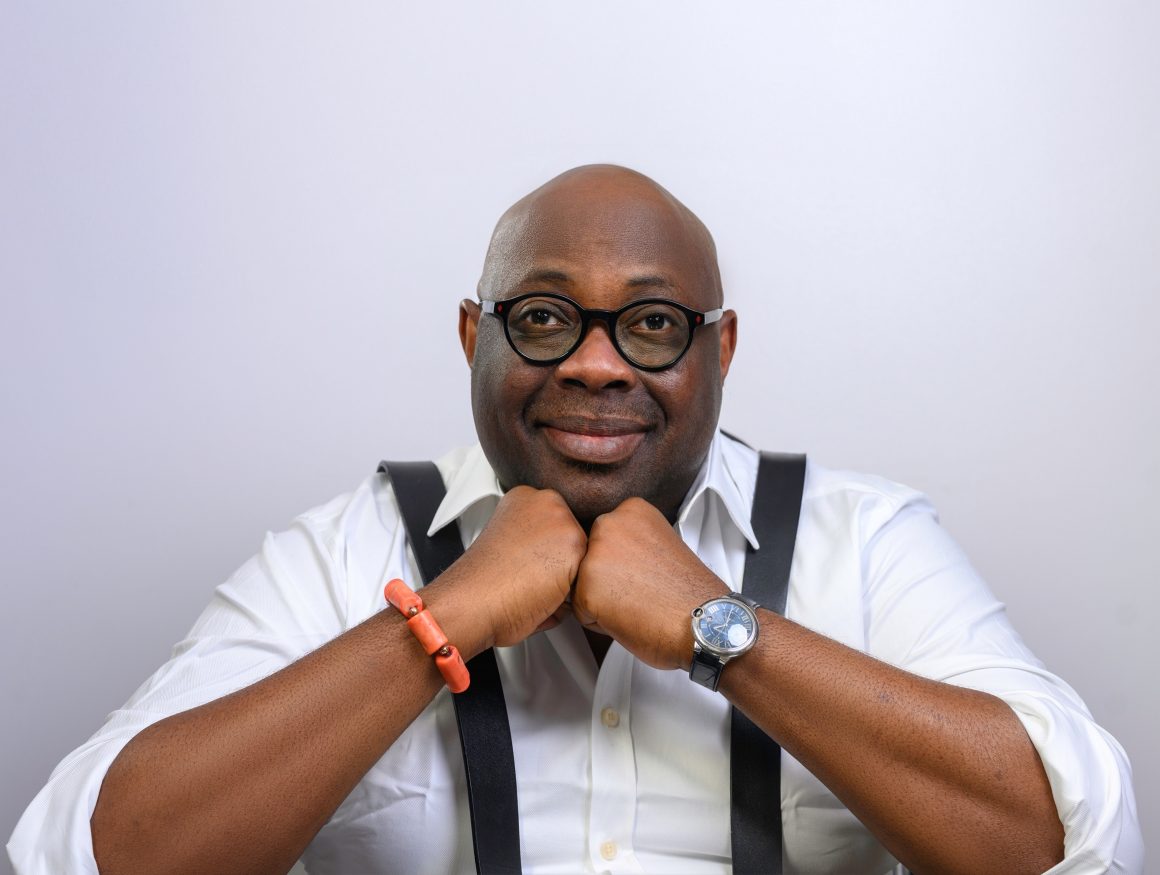

By Konye Chelsea Nwabogor
There are people who chase relevance, and then there are those who become it. Dele Momodu, at 65, stands as one of the few Nigerians who has not only witnessed the evolution of media, politics, and public life, but has also shaped it.
To say he has lived many lives would be an understatement. Journalist. Publisher. Political aspirant. Cultural archivist. Outspoken commentator. And yet, even with a life so full, he’s still writing new chapters—on his own terms.
For decades, he has moved between boardrooms and ballrooms, newsrooms and palaces, always with a reporter’s curiosity and a statesman’s gravitas. Through Ovation International, the glossy magazine he founded in 1996, Momodu did something audacious: he made African success not just visible, but glamorous. He documented history in real-time, spotlighting not just presidents and billionaires, but the spirit of a continent eager to be seen on its own terms.

However, what makes his story truly compelling isn’t just the magazine covers or the celebrity handshakes—it’s the mind behind it all. Dele Momodu has consistently shown a rare ability to stay ahead of the curve. While others were still adjusting to hashtags and livestreams, he was already building his digital voice, engaging global audiences, and mentoring a new generation of storytellers—without losing the elegance and depth that defined his early career in print.
Unapologetically vocal and refreshingly blunt, he has mastered the delicate art of being both insider and outsider. He critiques power without flinching, yet understands the machinery from the inside. His 2011 presidential bid may not have led to a seat at Aso Rock, but it cemented his place in Nigeria’s democratic conversation—a media man unafraid to step into the arena.
At 65, he is reflective, but far from retiring. His curiosity remains sharp, his presence magnetic, his words weighty. Whether he’s sharing memories of MKO Abiola, challenging government policies on Instagram live, or spotlighting a rising designer he bumped into at the airport, Dele Momodu remains an institution unto himself—seasoned, yes, but never static.
In this exclusive interview with Konye Chelsea Nwabogor , he opens up about the Ovation journey, his views on Nigeria today and his fears and hopes for the media.
Happy Birthday, sir. 65 is indeed a markable milestone. What thoughts have been occupying your mind in this season of reflection? When you think back to the young man walking the grounds of Ife, did you ever imagine this life- this kind of journey?
To be quite honest, my life seems to have been on a rollercoaster. It is surreal. I don’t really know how my father, Jacob Momodu, migrated from a village called Ihievbe, in today’s Edo State, to the ancient town of Ile-Ife, and met my mother, Gladys, from Gbongan, and they fell in love with each other. I was born in 1960 and was the only child of their union. My father worked with the Public Works Department (PWD) where he rose to become a Road Road Overseer. My mother was a petty trader who sold food to prisoners and warders at Ife Prisons. We were of extremely modest income but survived on goodwill and contentment.
In 1973, my father suddenly passed on, and life immediately became harrowing for the family he left behind. I was barely 13 at that time and I had to meander my ways through a labyrinth of unforeseen circumstances and unimaginable challenges. We were kicked out of our rented “face-me-I-face-you” home in Moore, Ile-Ife. We had to move in with our sympathetic family, The Oyemades, in Modakeke.
It was impossible to see or envisage a bright future ahead of us. My mother really laboured hard. My dreams then were limited. Perhaps, at the very best, I had hoped to graduate, become a teacher, marry a teacher, and live happily thereafter.
Ovation has become more than a magazine. It’s part of the cultural fabric. Did you always know you were building something that would outlive trends? What was the founding vision, and has it stayed intact over the years—or has it evolved with you?
The story of Ovation is that of a mysterious babe that came out of an unplanned and unexpected pregnancy. I had originally planned to have this baby in 1991, after I lost my job as Editor of Classique magazine, but had to abort the plans when funding it became a major problem.

Fast forward to 1995, I suddenly became exiled in London and a new and scary situation stared at me. How do I survive in a city where every bill must be paid as at when due? My cousin, Segun Fatoye, then came up with the suggestion that I should establish a media company in London.
Once again, funding became a major hurdle to cross.
We managed to raise the less than 20 percent of what was required but we were determined to overcome all obstacles. Our passion for excellence and quality was extraordinary, and we were determined to produce a world-class publication, and God answered our prayers.
You’ve covered some of the most powerful and iconic people in the world. Of all the rooms you’ve entered, and all the stories you’ve captured, which ones left a permanent mark on you?
Without any doubt, it would be the awe-inspiring room of Ambassador Chief Antonio Deinde Fernandez on an island in New York. Nothing compares to it. The closest would probably be the home of Alhaji Mai Deribe in Maiduguri. Both properties were photographed exclusively for Ovation International magazine by the famous Scottish photographer, Colin Ramsay, now of blessed memories. We had so much fun shooting those iconic homes.
You’ve remained consistently relevant in a media landscape that’s constantly evolving. How were you able to expand so seamlessly into the digital space? What do you credit for that adaptability?
My determination to succeed is extraordinary. I have always had this nagging fear of returning to those days of anguish and agony.
Fortunately for me, I decided to contest Nigeria’s Presidential election in 2011. Naturally, I was compelled to embrace social media. After losing the election, I converted them from politics to business. It was the smartest move I ever made.
You have also managed to build a distinct voice online, especially on social media. What do you think is the role of a journalist in the age of immediacy, visibility, and algorithms?
Our role is not just to post salacious falsehoods in the name of beating deadlines or creating trends. We must demonstrate restraint and responsibility. All is not lost, though. Nigeria still parades some of the brightest and boldest journalists in Africa. The biggest impediment to quality journalism is the dwindling income. Most media houses are barely surviving.
No doubt, journalism has become an endangered specie in our country Nigeria. Anyone with a smartphone can set up an instant blog, no matter how poorly educated. This is dangerous and highly inimical to the growth of a once-revered profession.
Do you think Nigerian journalism still holds power, or has it become too entwined with politics, commerce, and survival?
Every media organisation is usually a reflection of the biases and prejudices of its proprietors. This is not limited to Nigeria. This is even more pronounced in Europe and America where media is often divided on ideological grounds.
You’ve always had the courage to say what others won’t. What gives you the confidence to speak so boldly, particularly on political matters?
I graduated from the then University of Ife, now Obafemi Awolowo University, Ile-Ife, and also bagged a Master’s degree from the same institution, which was well renowned for its radicalism and “A luta” culture. I grew up reading Marxist/Leninist and Soyinkean literatures. I participated in many struggles. I was in exile during the Abacha regime, and I joined Senator Bola Ahmed Tinubu and other NADECO fighters in pulling some stunts. Therefore, I cannot be afraid of speaking truth to Tinubu today because he’s President. I expect him to remember and appreciate our journeys together and respect my right to free speech. I will never disrespect or disparage him, but I will never be squeamish in front of any Nigerian leader. At 65, I’m now an elder statesman and ready to make sacrifices for my nation.

Your commentary on Nigeria, especially its leadership, economy, and direction, often stirs intense reactions. Do you worry about backlash, or is that part of the responsibility that comes with being a public voice?
I have since passed the stage of worrying over any backlash from rulers and their acolytes. I’m sure they know I’m a sincere critic and not a career agitator. It would have been a lot easier for me to join the government and gain access to stupendous opportunities, but I chose the road less travelled. I’m very proud of my choice and I intend to exercise my FREEDOM of expression and Association till eternity.
What frustrates you most about Nigeria’s current political landscape? Is there anything that still gives you hope?
I’m definitely frustrated about the lack of principle and ideology in our politics. The shamelessness of politicians also worries me. The level of greed and self-aggrandisement is too shocking and unacceptable in more reasonable terrains. Hope is fast evaporating in me. I’m only awaiting a miracle.
You’ve built a media empire, travelled across continents, shaped public narratives, and influenced policy conversations—but what would you say has been your proudest moment?
I will humbly and modestly say I have succeeded in building not just a global brand but also a double brand, similar to that of Richard Branson of the Virgin Group and Bill Gates of Microsoft.
I received the honorary Fellowship of the African Public Relations Association (APRA) alongside President John Dramani Mahama in Kigali, Rwanda, in 2019, in recognition of my public relations skills. Mine has been an uncommon trajectory. And I give God all the glory.
What would you like Ovation to represent in another 70 years, long after your name has become history?
A media outfit that continues to promote the positive stories of Africa.
What brings you the most joy in private moments—away from the public persona, the interviews, the speaking engagements?
Watching my children grow into men doing great things of their own without relying on their father’s name or contacts.
You’ve mentored many young voices, both in media and politics. What is the one quality you believe is non-negotiable for anyone who wants to last in this space?
Integrity.
What’s something you believe now, at 65, that you didn’t believe at 35?
That Nigeria could ever degenerate to this terrible level.
What still drives you? What keeps you curious?
The passion for greatness.
When all is said and done, what do you hope the Ovation of your life sounds like?
Culled from ThisDay Style




The Oracle: The New Digital Colonialism: Navigating AI Policy Under Foreign Tech Dominance (Pt. 1)

Presidency Releases Postings of Ambassadors-designate

Court Grants Malami, Family N200m Bail

Israeli Ambassador Accuses Iran of Spreading Terror, Sponsoring Extremist Activities in Nigeria

Mike Ozekhome Celebrates Obasanjo at 89, Says Former President Wiser with Age

Friday Sermon: Reflections on Ramadan 3: Spiritual Stocktaking

Akinwumi Adesina Celebrates Obasanjo at 89

Prof Jide Owoeye: When a Distinguished Academic Turns 70

NELFund Extends Deadline for Student Loan Applications Nationwide

Federal Government Issues Travel, Safety Warning for Nigerians in Iran, Gulf States

Iran Confirms Supreme Leader Ali Khamenei Dead after US-Israeli Attacks

Shiites Protest in Kano over Killing of Iran’s Supreme Leader

FIFA Strikes Out Nigeria’s Petition, Okays DR Congo for 2026 World Cup Play-Off

Saudi Arabia Shuts Down One of World’s Largest Oil Refinery after Iran’s Drone Strike
-
 Boss Of The Week6 days ago
Prof Jide Owoeye: When a Distinguished Academic Turns 70
-
 News4 days ago
NELFund Extends Deadline for Student Loan Applications Nationwide
-
 National6 days ago
Federal Government Issues Travel, Safety Warning for Nigerians in Iran, Gulf States
-
 Middle East6 days ago
Iran Confirms Supreme Leader Ali Khamenei Dead after US-Israeli Attacks
-
 Featured5 days ago
Shiites Protest in Kano over Killing of Iran’s Supreme Leader
-
 Middle East4 days ago
Saudi Arabia Shuts Down One of World’s Largest Oil Refinery after Iran’s Drone Strike
-
 Sports2 days ago
FIFA Strikes Out Nigeria’s Petition, Okays DR Congo for 2026 World Cup Play-Off
-

 World5 days ago
Trump Claims 48 Iran Leaders Killed in US-Israeli Operations