Connect with us

The Oracle

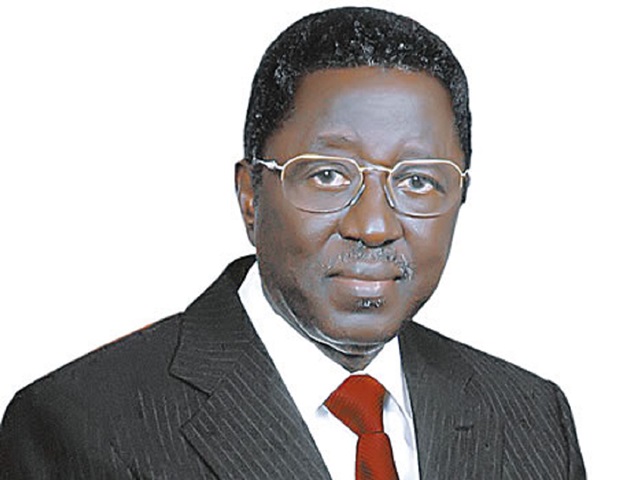
The Oracle: Senator Jonah Jang: A Legacy of Leadership, Service and Fidelity

Published

on

By Prof Mike Ozekhome SAN, CON, OFR, FCIArb, LL.D.

PROLOGUE: THE BIRTH OF A WARRIOR

In the quiet hills of Du,in the quiet surburbs of Plateau State, a child was born on the 13th of March, 1944. On this day in 2025,that young boy turned 81.The winds of destiny had blown softly that morning, carrying with them the whispers of unannounced greatness. Little did the world know that this little baby, a retired German,US and Nigerian-trained Air Commodore and former Military Governor of old Benue and Gongola states ( the latter now Adamawa and Tarsba state),Sen Jonah David Jang, CON,would one day carve his name in the annals of Nigerian history. He did so not just as a soldier; not just as a governor; not just as a pilot and Airforce officer; not just as a Senator;but also as a towering figure whose life truly exemplifies the true testament of character, honour, resilience, courage and divine purpose.

From an early age, Jonah Jang was not like other children. There was a spark in his little eyes, a quiet but unmistakable determination that spoke of something greater than the ordinary. He was not one to simply watch life unfold before him.He had a smouldering fire, a hunger, an insatiable desire to make an impact on the society.
Raised in a rural land where tradition met with the harsh realities of modernity and survival, Jang quickly learnt that life was nothing but a battlefield and that only those with an unyielding spirit and unflagging determination could emerge victorious. Jang’s faith was his compass; his discipline his armour; and his patriotic zeal his drive.His destiny though not yet revealed by then, was already being woven into the very fabric of his being.

So when the military came calling, Senator Jang like an eagle drawn to the winds, hugged it and fiercely soared. Trained in West Germany,the Nigerian Defence Academy and the United States, Governor Jang was not just another recruit; he was a moving force to be reckoned with. His time in the Nigerian Air Force shaped him into the warrior he was meant to be. Rising through the ranks to Wing Commander, he mastered the skies, not just as a pilot, but as a leader of men and material, a strategist and a man who understood that power was a responsibility and nit just an ornamental privilege.

FROM THE MILITARY TO THE POLITICAL FIELD

Fate is hardly ever predictable. Destiny always remains wrapped in the belly of mother nature. Jang did not know he had been born to do more than merely serve in uniform. His mission was not yet complete. The battlefield had shifted from the skies of war and bombs to the slippery battlefield of governance. So, like a general stepping into unfamiliar terrain, he gingerly took his first tender steps into politics, a new world where wars were fought not with weapons and brute force, but with conversation, consultation, wisdom, willpower and an unwavering resolve to manage challenges of betrayal, perfidy, duplicity and treachery.

THE GOVERNOR WHO DARED TO DREAM
“Where there is no vision, the people perish.” – Proverbs 29:18.

Leadership is not for the faint-hearted, and politics, especially in Nigeria, is not for the weak and cowardly. Jonah Jang soon learnt this when he became a two-term  Governor of Plateau State between 2007 and 2015. He did not take the seat as an imperious ruler; he took it as a servant of the people.For him, leadership was a calling, a sacred duty to restore dignity, to uplift the downtrodden and to leave behind a legacy that would stand the test of time.

Plateau State, beautiful as it was, had its peculiar challenging struggles. Roads were broken; infrastructure was failing,; ethnic tensions were high; insecurity strut about proudly like a peacock; and corruption lurked in the shadows. Many would have buckled under the weight of such monumental challenges. But not Jang. He had been trained to face turbulence, both in the skies and on the ground. Thus, he began his mission of uncommon transformation.

Under his leadership, trust returned to governance.Roads were built; security was enhanced and strengthened; the youths were engaged; ghost workers were flushed out; and the social,economic, education and agricultural sectors witnessed an unforgettable revival. But beyond the tangible projects, Jang gave Plateau something greater; he gave them hope. He made the people realize they could not only dream, but could realize such dreams. He was ans still is,a father to the state. Jang was a leader who did not rule from a distance but stood with the people;fought for them and defended them.

His leadership was tested time and again. Political adversaries fought him; critics doubted and demonized him. At times, the very foundations of governance in the state seemed violently shaken. But Jang stood firm and soldered on like a lion among men, unbowed, unshaken. Afterall he had not sought power for personal gain or self-aggrandizement. He wielded power,not as a sword to represss,but as shield for the defence of his beloved people. He deployed power as a tool for achieving justice, development and the greater good of his Plateau people.

Through storms of criticism,back-stabbing and seasons of triumph, he never lost sight of his mission-develop the people. And when his tenure ended in 2015, he did not look back with regret, but with the quiet satisfaction of a man who had given his all. He left Plateau State better than he met it.It was never the same rustic and undeveloped state he had met when he first took office. It had risen from its ashes like phoenix; it had transformed beyond arguments.Plateau had become a beacon and haven of peace, hope, tranquility, progress,development and humanity.

A NAME ETCHED IN TIME

“I have fought the good fight, I have finished the race, I have kept the faith.” – 2 Timothy 4:7

After leaving office as Governor of Plateau State, Jonah Jang could have chosen to retreat into the shadows, to live the rest of his days in peace and quietude as many would. But warriors never truly retire. They merely retreat and remain ever watchful, ever ready to serve. So,in 2015, he was called upon once more by his Plateau North people to represent them at the Nigerian Senate. Afterall the reward for hardwork is more work. Baba Jonah proved it.

His tenure in the Senate was not merely about adding another title to his name; it was about continuing his set mission, fighting for the people; standing for justice and their dignity. He ensured that the legacy he had built would never be undone.

THE PERSECUTION, TRIALS, TRIBULATIONS

No great leader ever walks mother earth without facing trials,persecution and tribulations. False allegations waltzed in,flying like ominous bats.Challenges suddenly arose, with the full weight of political warfare threatening to stain the banner of his legacy. He was falsely accused of pilfering his state funds. This was when we met. He briefed me to represent him in the 17 count charge before the Plateau State High Court. Studying the charge and the ingredients, his innocence exuded; his integrity and character nakedly stared me in the face. For a spartan man of modest means who ruled transparently and who as a sitting Governor took a well-documented loan of only 100m which he was paying back by installments from his meagre salary and allowances as a sitting Governor; and which loan he finally repaid fully as a Senator,it simply did not add up that he could steal from the state treasury of his people that he so loved and who reciprocated in equal measure. So, I defended him ferociously with my team of lawyers for over four years ( May 4,2018-September 2,2022). He had told me that he was innocent; that some powers that be had obviously felt that he had achieved too much to be allowed to walk away as a distinguished elderstatesman and as clean as a whistle. But he had always been these. And more He narrated to me how these powerful people were determined to completely erase his legacy and make him irrelevant in the political equation and scheme of affairs in Plateau State.In the dock, Jang stood tall,notwithstanding his diminutive stature.He watched witness after witness lie against him in a most brazen manner. He severally shook his head in utter disbelief and incredulity.But he did not cry.It was my bounden duty as his lawyer to chisel through and perforate the tissue and cocktail of poisoned lies.And I did just that.A smiling Baba Jang was completely exonerated,discharged and acquitted of all 17 counts. He emerged victorious once more, proving that truth,though slow, and integrity though temporarily besmeared,always triumphed in the end over swift lies.

Now, as he stands tall in the threshold of history and in the pantheon of great men,Jonah Jang is not just a retired soldier,Senator, Administrator or former governor,he is indeed a symbol of love, character, integrity, honour, dignity and resilience. Jang remains a loud testament to undiluted faith and a clear reminder that true leadership is about service, sacrifice and unwavering commitment to the people.
Thus on his 81st birthday,we do not merely celebrate another year of his life; we celebrate a legacy, a person that has touched lives, changed the course of a state and inspired a generation.

Jonah David Jang is not just a man; he is a movement. His story is not just one of politics, but of destiny, determination, and divine orchestration. Like his namesake David in the Bible, he has been for his people, an uncommon caregiver and a protector,in the same way a mother hen protects her chicks. His life like that of the Biblical David demonstrates that God can take a person from a humble position and elevate him to greatness. O yes,I almost forgot Jang is also Jonah.Like the biblical Jonah,he weathered the storms, survived in the belly of the whale and lives to spread the message of hope,prosperity,love and humanity,not to the Ninevites this time,but to his good people of Plateau State

DRAWING THE CURTAINS

To His Excellency, Governor,Senator, Air Commodore (rtd) Jonah David Jang, CON, may history forever remember your name and judge you fairly. May your legacy continue to inspire and water generations yet unborn. May your story be told not just as a tale of leadership, but as a beacon of hope for those who dared to dream dreams, fight wars,serve the people and conquer.l adversities.

Happy birthday sir.

Continue Reading
Click to comment

Leave a Reply

Your email address will not be published. Required fields are marked *

The Oracle

The Oracle: The University As Catalyst for Societal Development (Pt. 4)

Published

on

By

By Prof Mike Ozekhome SAN

INTRODUCTION

Last week, we discussed the various educational theories in the context of universities and the society. Today, we shall continue with and conclude on the same theme- focusing on the Triple Helix Model. Thereafter, we shall conclude with an x-ray of the Core Functions Of Universities As Tools For Societal Development-wherein we shall discuss: Knowledge Creation and Dissemination; Human Capital Development, amongst others. Read on.

THEORETICAL FRAMEWORKS AND MODELS LINKING UNIVERSITY EDUCATION TO SOCIETAL DEVELOPMENT Continues

TRIPLE HELIX MODEL

The Triple Helix model, developed by Henry Etzkowitz (http://www.triplehelix.net/team.html> Accessed on 8th September, 2025) and Loet Leydesdorff (https://www.leydesdorff.net/ntuple/> Accessed on 8th September, 2025), conceptualizes innovation as the product of dynamic interactions between three key actors: universities, industry and government. Rather than functioning in isolation, these spheres increasingly overlap, with each actor capable of assuming hybrid roles. Universities, for instance, are no longer confined to the production of knowledge but are becoming entrepreneurial actors engaged in commercialization and spin-offs. Industry not only generates demand and develops technologies but also funds applied research and co-produces innovation. Governments, meanwhile, move beyond regulation to actively create enabling environments through policy, funding, and the provision of public goods (https://www.sciencedirect.com/org/science/article/pii/S2197192723000011> Accessed on 8th September, 2025.).

This model highlights the importance of overlapping networks, intermediaries, and institutional hybridity in fostering knowledge-based regional development. It explains the proliferation of technology transfer offices (TTOs), science parks such as Stanford Research Park (https://stanfordresearchpark.com/> Accessed on 8th September, 2025) and North Carolina’s Research Triangle (https://www.ncbi.nlm.nih.gov/sites/books/NBK158811/> Accessed on 8th September, 2025), and university spin-offs that translate academic discoveries into economic value. In many countries, it has provided the theoretical backbone for regional innovation strategies that deliberately position universities at the heart of economic clusters, ensuring that knowledge creation and economic growth are tightly interlinked.

Empirical evidence supports the explanatory power of the Triple Helix in accounting for many of the world’s most successful innovation ecosystems. However, outcomes are highly path-dependent. Cultural norms, institutional capacity, funding ecosystems, and governance quality all shape whether a triple-helix configuration translates into broad-based growth. Critics point out that the model sometimes privileges techno-economic goals at the expense of social inclusion. In contexts with weak institutions or poor governance, it can even reproduce elite capture, where the benefits of innovation are concentrated among a few powerful actors rather than distributed widely.

For universities, operationalizing Triple Helix thinking requires deliberate strategies. This involves creating and professionalizing TTOs and incubators while measuring impact through broader indicators than short-term licensing revenue. It also means co-designing research agendas with industry partners while safeguarding academic autonomy, to ensure that the pursuit of profit does not eclipse the pursuit of knowledge. Universities can also play an advocacy role, pushing for policy instruments such as matching grants, cluster funding, and innovation vouchers that strengthen the link between research and commercialization. Finally, an inclusive approach is critical: knowledge generated in universities should not only serve global corporations but also support local firms and communities, ensuring that innovation contributes to equitable and sustainable development.

CORE FUNCTIONS OF UNIVERSITIES AS TOOLS FOR SOCIETAL DEVELOPMENT

At its very core, the goal of the university is education, that is, the transfer of skills and knowledge. This begins with direct tutelage in theoretical concepts and continues through practical research work, where these theories are applied to real-life situations and tasks. Universities thus provide a dual platform: the acquisition of both foundational and specialized knowledge, and the creation of new knowledge through research. They foster critical thinking, nurture creative problem-solving, and equip students with the intellectual flexibility required to make informed decisions in complex and changing environments.

Knowledge Creation and Dissemination

A university is more than a space for absorbing facts; it is a crucible for knowledge creation and dissemination. Unlike other institutions of learning, it not only preserves inherited wisdom but also produces new ideas, subjecting them to rigorous inquiry and testing. Through laboratories, research institutes, and collaborative networks, universities expand the frontiers of discovery across medicine, engineering, social sciences, and the humanities. In doing so, they play a central role in advancing innovation, driving economic growth, and fostering intellectual curiosity. As one study notes, higher education institutions are “the primary source of renewable resources—knowledge and discovery—that will determine an economy’s competitiveness.”

Yet the creation of knowledge alone is not sufficient. Dissemination is equally central to the university’s mission. Structured teaching, mentoring, scholarly publications, conferences, seminars, and increasingly, open-access platforms ensure that the insights generated within universities do not remain confined to the so-called “ivory tower.” Instead, they are made available to society at large, informing policy, guiding industrial strategies, enriching cultural life, and advancing social justice. This dual function of knowledge creation and dissemination ensures that universities act not merely as centers of learning but as catalysts for societal transformation.

Beyond intellectual development, universities prepare their students for the workforce in concrete, practical ways. Through partnerships with industries, alumni engagement, and internship programs, they create pathways for students to gain first-hand experience in their chosen fields. These opportunities allow students to build networks with established professionals, develop employable skills, and begin constructing their portfolios before graduation. As a direct by-product of this preparation, universities open up career opportunities across multiple industries, giving graduates tools for self-sustenance and social mobility. In many cases, education becomes a pathway out of poverty, enabling individuals to increase their productivity and earning potential, thereby breaking cycles of deprivation for themselves and their families.

This preparation for the world of work extends beyond the immediate years of formal study. Universities are increasingly embracing lifelong learning through online and adult education, ensuring that distance, access, or age is not a barrier to the pursuit of knowledge. In today’s knowledge economy, where innovation and knowledge production are recognized as the most renewable resources, such lifelong learning becomes indispensable to national competitiveness.

Moreover, the modern university often assumes the role of an “entrepreneurial university,” actively commercializing research outputs through mechanisms such as Technology Transfer Offices (TTOs), science parks, and start-up incubation hubs. These initiatives ensure that knowledge does not remain theoretical but is translated into tangible goods and services with economic and social value. However, this commercialization is not only about revenue generation; it is also about ensuring that knowledge contributes to the public good, addressing pressing societal needs and promoting inclusive development.
Human Capital Development

Human capital development is best understood not as an abstract concept, but as a living force made tangible in the lives of individuals and communities. One compelling example is the story of Hammed Kayode Alabi, a Nigerian social entrepreneur whose educational journey through the University of Ilorin and later the University of Edinburgh positioned him to establish the Kayode Alabi Leadership and Career Initiative (KLCI). Through this initiative, he has provided over 8,500 underserved youths across Africa with 21st-century skills that enhance employability and social mobility. His story captures how the university is not merely a transmitter of certificates but a generator of capacity that reshapes destinies and multiplies opportunities across society.

This transformative power is not limited to individuals alone but extends to entire regions. In Somalia, Gedo International University (GIU) has emerged as a lifeline for human capital development in the Beledhawa District. Its graduates—such as midwives Aisha Abdirahman and Fardowsa Sh. Ahmed, and pharmacist Abdiqafaar Ali—testify to how its curriculum equipped them with the skills to deliver healthcare services in underserved communities. These professionals are not just products of a university; they are embodiments of how higher education, even in fragile contexts, can translate into immediate improvements in public health and community well-being (Abdiaziz Abdullahi Hussein (Mubarak), Human Capital Investment in Universities: A Case Study of Gedo International University https://dx.doi.org/10.47772/IJRISS.2024.8110183).

Beyond personal narratives, empirical research underscores the national significance of higher education. Studies in Nigeria confirm that university education correlates strongly with human capital development, which in turn fuels economic growth and societal advancement (Idongesit David, “University education and its impact on human capital development in Nigeria” (2021) Formazione 24(1). In other words, the productivity of a nation is tied to the investments made in nurturing the minds and skills of its people. When universities empower citizens, they indirectly expand national capacity for innovation, governance, and sustainable development.

Sustaining this momentum, however, requires more than producing graduates—it demands strong leadership and institutional resilience. Research on Nigerian universities highlights that effective leadership and continuous staff development play a decisive role in improving educational outcomes and retaining academic talent. Similarly, findings from private universities in Southwestern Nigeria reveal that staff development programs directly strengthen academic retention and teaching quality, ensuring that institutions continue to generate value across generations.

The ripple effect of human capital development is also evident in sectoral performance. At the University of Calabar Teaching Hospital, for example, staff members who benefitted from robust university education demonstrated superior performance in healthcare delivery. Their qualifications, technical knowledge, and interpersonal skills translated into measurable improvements in patient care, showing that university-generated human capital has direct implications for the efficiency of public institutions.

Taken together, these cases illustrate that human capital development through universities is not a distant ideal but a present reality. It is visible in individuals like Alabi who scale up youth empowerment, in institutions like GIU that sustain communities, in national growth trajectories, in staff retention within universities, and in the performance of public services. To invest in human capital through higher education is, therefore, to invest in the very engine of societal transformation.

To be continued…

THOUGHT FOR THE WEEK

“The illiterate of the future will not be the person who cannot read. It will be the person who does not know how to learn”. (Alvin Toffler).

Continue Reading

The Oracle

The Oracle: The University As a Catalyst for Societal Development (Pt. 3)

Published

on

By

By Prof Mike Ozekhome

INTRODUCTION

The previous installment examined the history of universities and tertiary institutions worldwide, focusing on Germany, Africa and, of course, Nigeria. This week’s piece discusses the various educational theories in the context of universities and the society. Enjoy.

THEORETICAL FRAMEWORKS AND MODELS LINKING UNIVERSITY EDUCATION TO SOCIETAL DEVELOPMENT

HUMAN CAPITAL THEORY

Human Capital Theory treats education, training and health as investments in individuals that raise productivity and yield economic returns; analogous to investing in machines or physical capital. See https://www.sciencedirect.com/topics/social-sciences/human-capital-theory> > Accessed on 8th September, 2025. The concept was popularized in the 1960s by economists such as Theodore W. Schultz and Gary Becker, and it underpins much economic analysis of education policy, labour markets, and public investment decisions (https://www.investopedia.com/ask/answers/032715/what-human-capital-and-how-it-used.asp > Accessed on 8th September, 2025).

Since human capital is the engine of growth, universities then are central economic actors: they produce the skilled labour force, certify competencies and supply the tacit knowledge that firms use. This viewpoint justifies public and private investment in tertiary education, scholarship programs and vocational streams tied to labour market needs. It also explains why governments measure returns to education (wage premiums, productivity gains) and why universities are increasingly evaluated on employability and graduate outcomes.

Human Capital Theory can however be reductive. It tends to treat education as a private good (individual returns) rather than a public good (citizenship, democratic capacity). It may downplay social, cultural and distributional aspects (who gets access to education) and does not fully account for structural constraints (e.g., labour market segmentation or discriminatory hiring). Because it privileges measurable returns, it can encourage narrow vocationalization at the expense of broader civic or critical functions of universities.

MODERNIZATION THEORY

This theory links societal development to social and cultural change: industrialization, urbanization, mass education and bureaucratic institutions produce modern political and social systems (including democracy). See https://www.sciencedirect.com/topics/social-sciences/modernization-theory?> Accessed on 8th September, 2025. Early models (e.g., Rostow’s stages of growth) posited relatively linear transitions from “traditional” to “modern” societies (https://en.wikipedia.org/wiki/Rostow%27s_stages_of_growth > Accessed on 8th September, 2025).

Under modernizationism, universities are engines of modernity: they train bureaucrats, scientists and professionals; diffuse new norms (rationality, meritocracy); and anchor public infrastructure for national development. Expansion of higher education is thus seen as both a consequence and driver of modernization, boosting technical capacity, administrative competence and civic culture.

Modernization Theory has been critiqued for teleology and Eurocentrism (assuming every society follows a single Western trajectory). It can overlook power asymmetries, external constraints, and the role of historical contingency. In practice, simply increasing university enrolment does not guarantee progressive political change or even broad economic growth. Outcomes depend on institutional quality, labour market absorption and equitable access.

SOCIAL LEARNING THEORY

Social Learning Theory, developed most prominently by Albert Bandura (https://www.simplypsychology.org/bandura.html?> Accessed on 8th September, 2025), rests on the idea that people do not learn solely through direct instruction or reinforcement, but also by observing the behaviours of others and modelling them. Central to this framework are concepts such as imitation, role modelling, self-efficacy, and reciprocal determinism — the continuous interaction between personal factors, behaviour, and the surrounding environment. Learning, in this sense, is always contextual and socially mediated; it takes place within environments where norms, values, and practices are continuously displayed, reinforced, or challenged (https://www.researchgate.net/publication/267750204_Bandura’s_Social_Learning_Theory_Social_ Cognitive_Leari ing_Theory> Accessed on 8th September, 2025).

Universities are particularly powerful environments for this kind of social learning. While their formal role is to deliver structured knowledge through lectures, textbooks, and examinations, a significant portion of what students learn occurs indirectly, through observation and participation in academic and professional cultures. Students acquire tacit skills, professional norms, and ethical habits not simply from classroom instruction but from the examples set by faculty, supervisors, peers, and the wider institutional culture. The mentoring relationship between professor and student, the apprenticeship model (https://www.researchgate.net/publication/325205611_A_Model_of_Supervision_Derived_from_Apprenticeship_ Training> Accessed on 8th September, 2025) of supervision in research or clinical placements, and the informal communities of practice that develop in research groups, laboratories, or student societies all serve as fertile grounds for modelling and imitation. Even the visibility of public intellectuals and successful alumni plays a role, offering aspirational figures whose trajectories implicitly teach what is possible within a given discipline or profession.

The culture of the university itself further shapes learning outcomes. Practices around academic integrity, collegiality, debate, and critical inquiry are not just rules or codes of conduct; they are behaviours continuously modelled and observed. The institutional environment signals what is valued, what is rewarded, and what is considered unacceptable, thereby reinforcing professional and ethical standards.

For university administrators and educators, the programmatic implications of Social Learning Theory are profound. It suggests that teaching should not be conceived narrowly as transmission of knowledge, but as the creation of social contexts in which desirable behaviours and practices are modelled, observed, and internalised. This is why experiential and observational learning opportunities — such as simulations, laboratory work, clinical rotations, internships, peer-learning programs, and scaffolded mentoring — are indispensable components of modern higher education. Equally, it underscores the idea that institutional signaling is as powerful as the curriculum itself: what a university models through its governance, culture, and every day practices often matters as much as what it formally teaches.

DEPENDENCY THEORY

Dependency Theory (https://www.britannica.com/topic/dependency-theory> Accessed on 8th September, 2025), which emerged in the 1960s and 1970s through the works of scholars such as Andre Gunder Frank (https://www.researchgate.net/publication/274283993_A_Discourse_on_Andre_Gunder_Frank’s_ Contribution_tohe_Theory_and_Study_of_Development_and_Underdevelopment_its_Implication_on_Nigeria’s_development_situation> Accessed on 8th September, 2025) and Fernando Henrique Cardoso with Enzo Faletto, offers a critical lens for understanding patterns of underdevelopment in the global South. At its core, the theory argues that poverty and economic stagnation in many countries are not simply the result of internal shortcomings, but are structurally produced by the way these economies are integrated into the global system. Within this framework, resources, labour, and value consistently flow from the “periphery” to the “core” — that is, from less-developed to more-developed nations — thereby reinforcing dependency and limiting autonomous development. This unequal exchange is further compounded by colonial legacies and by global markets that continue to privilege the interests of industrialised nations over those of emerging economies.

Applied to higher education, Dependency Theory illuminates how universities can inadvertently reproduce dependency rather than foster genuine autonomy. For instance, many institutions import curricula, teaching models, and research frameworks designed in the global North, often without adequate adaptation to local realities. Research agendas are frequently influenced, if not dictated, by donor priorities or international funding agencies, which means that intellectual labour may serve external rather than national needs. Accreditation and evaluation systems also tend to valorize Western benchmarks of quality, sometimes at the expense of context-specific measures of success. Furthermore, the phenomenon of “brain drain,” where highly trained graduates migrate to wealthier countries in search of better opportunities, deprives developing regions of the very human capital they have invested in creating.

These dynamics raise urgent questions about intellectual sovereignty and the role of universities in national development. Dependency Theory thus motivates a range of responses oriented toward decolonization and autonomy. Universities are encouraged to build indigenous research agendas that prioritize local challenges and opportunities, to strengthen scholarship in local languages, and to invest in technologies that are context-relevant rather than imported wholesale. Equally, there is value in creating robust regional research networks that allow knowledge exchange across the global South, thereby reducing reliance on metropolitan centres of knowledge production.

Ultimately, Dependency Theory challenges universities in developing countries to move beyond the role of feeding foreign labour markets or servicing donor-driven priorities. Instead, it urges them to play a more proactive role in shaping national industrial strategies, technological innovation, and cultural identity. In this way, universities become not just sites of knowledge transfer but also engines of self-determined development and resistance to the structural inequalities embedded in the global economy.

KNOWLEDGE ECONOMY THEORY

The concept of the knowledge economy reframes the drivers of economic growth around knowledge, innovation and human capital, rather than relying solely on traditional physical inputs such as land, labour, and raw materials. In this framework, institutions that generate, diffuse, and commercialize knowledge — universities, research centres, and high-tech firms — assume a central role in shaping productivity and competitiveness (https://documents.worldbank.org/en/publication/documents-reports/documentdetail/695211468153873436/the-knowledge-economy-the-kam-methodology-and-world-bank-operations?utm_source=chatgpt.com> Accessed on 8th September, 2025). The policy discourse around the knowledge economy has been heavily shaped by global institutions such as the The Organisation for Economic Co-operation and Development (OECD) see https://www.researchgate.net/publication/5152799_The_Knowledge Based_Economy_Conceptual_Framework_or_Buzzword> Accessed on 8th September, 2025, the World Bank (https://documents.worldbank.org/en/publication/documents-reports/documentdetail/695211468153873436/the-knowledge-economy-the-kam-methodology-and-world-bank-operations> Accessed on 8th September, 2025) , and United Nations Educational, Scientific and Cultural Organization (UNESCO) (https://unesdoc.unesco.org/ark:/48223/pf0000114252> Accessed on 8th September, 2025), which have developed both conceptual frameworks and measurement tools for understanding innovation systems and knowledge-driven growth.

Within this paradigm, universities perform a wide range of overlapping economic functions. At the most fundamental level, they engage in both basic and applied research, producing new knowledge and technologies that advance science and industry. They also serve as sites of talent production, equipping graduates, researchers, and postdoctoral fellows with skills that fuel the labour market. Beyond this, universities act as engines of technology transfer, turning academic discoveries into practical innovations through patents, licensing agreements, and start-ups. They also provide policy advice and consulting, often shaping industrial strategies and informing public decision-making.

Governments and universities operationalize the knowledge economy through a variety of policy levers and institutional instruments. These include research and development (R&D) funding, research fellowships, and infrastructure investments that sustain academic inquiry. They also extend to structured university–industry partnerships, incubators, technology transfer offices, and science parks designed to accelerate commercialization. Intellectual property regimes, such as Bayh-Dole type reforms, have further enabled universities to retain rights over publicly funded research and translate it into marketable products. Alongside these measures, the use of metrics and indicators such as patents, publications, citations, and innovation indices has become an essential tool for benchmarking performance and guiding policy interventions.

Yet, the knowledge economy is not without its risks and critiques. The emphasis on commercialization and measurable outputs can sometimes push universities to prioritize short-term applied research over fundamental scholarship, which may undermine their broader educational and societal missions. There is also the danger of mission drift, as universities increasingly orient themselves toward market logics at the expense of cultural, ethical, and civic roles. Moreover, if access to the benefits of innovation is uneven. For instance, concentrated in wealthy nations or among elite groups the knowledge economy risks deepening inequality rather than mitigating it. (To be continued).

THOUGHT TOR THE WEEK

“The function of education is to teach one to think intensively and to think critically. Intelligence plus character – that is the goal of true education”. (Martin Luther King, Jr.)

Continue Reading

The Oracle

The Oracle: The University As a Catalyst for Societal Development (Pt. 2)

Published

on

By

Prof Mike Ozekhome SAN

INTRODUCTION

The inaugural installment of this treatise was foundational, commencing (suitably enough) with an overview of relevant terms (“University”, “education” “societal/human capital development”, “innovation ecosystem”, “etc). We later develved into a brief history of universities and tertiary education in general worldwide. Today, we shall continue same focusing on Nigeria as an entity. Enjoy.

THE HISTORY OF UNIVERSITIES AND TERTIARY INSTITUTIONS GLOBALLY (Continues)

Universities and the Scientific Revolution

By the 17th and 18th centuries, universities had become laboratories of scientific discovery (https://courses.lumenlearning.com/suny-hccc-worldhistory2/chapter/the-popularization-of-science/> Accessed on 8th September, 2025). Figures such as Galileo, Newton, and Descartes advanced theories that challenged established doctrines. Universities shifted from preserving old knowledge to producing new insights that fueled the Industrial Revolution. While continental universities in Italy, Germany, and Scotland became central to scientific teaching and research, the English universities of Oxford and Cambridge remained more conservative, with much of the scientific activity shifting to metropolitan institutions like the Royal Society. Nevertheless, the scientific revolution fundamentally redefined the university’s role as an engine of discovery.

The German Research University and the Modern Model

The 19th century introduced another pivotal model: the German research university, most famously represented by the University of Berlin under Wilhelm von Humboldt (https://en.wikipedia.org/wiki/Humboldt_University_of_Berlin> Accessed on 8th September, 2025). This model emphasized the unity of teaching and research, academic freedom, and the pursuit of truth for its own sake. It gave birth to the modern research university, where laboratories, libraries, and seminar systems became central. This template spread globally and remains the backbone of contemporary higher education.

Africa’s Pioneering Intellectual Heritage
Although the structures of modern higher education in Africa are often associated with European colonial frameworks (https://files.eric.ed.gov/fulltext/EJ1079222.pdf> Accessed on 8th September, 2025), it is misleading to assume that advanced learning began only with colonial intervention. Long before the imposition of Western-style universities, Africa nurtured sophisticated systems of education at multiple levels, ranging from informal community instruction to highly organized institutions that rivaled, and in some cases preceded, their European counterparts.

One of the earliest and most celebrated centers of scholarship on the continent was the Academy of Alexandria, sometimes described as the Universal Museum Library, which flourished between the 4th century BC and the 7th century AD. This institution served as both a repository of knowledge and a vibrant intellectual hub, attracting scholars from across the Mediterranean and beyond. Within its walls, philosophy, mathematics, astronomy, medicine, and literature were studied in ways that shaped intellectual developments far beyond Africa’s borders.

Africa also gave birth to universities that remain monuments of global intellectual history. The University of al-Qarawiyyin, established in 859 AD in Fez, Morocco, is widely regarded as the oldest continuously operating degree-awarding university in the world. Not long after, in 970 AD, al-Azhar University in Cairo (see: Times Higher Education, “Al-Azhar University”, https://www.timeshighereducation.com/world-university-rankings/al-azhar-university > Accessed on 8th September, 2025) was founded, growing into one of the most influential centers of Islamic learning. Both institutions not only preserved knowledge but also generated new streams of thought, producing scholars whose works shaped jurisprudence, philosophy, theology, and the sciences across Africa, the Arab world, and Europe.

In West Africa, the city of Timbuktu (see: Emnet Tadesse Woldegiorgis, “The Changing Role of Higher Education in Africa: A Historical Reflection” Higher Education Studies 3(6) ), rose to prominence between the 12th and 16th centuries as one of the world’s most important centers of learning. The famed Sankore Madrasah and other scholarly institutions attracted thousands of students who engaged in studies ranging from law and theology to astronomy, mathematics, and medicine. The thousands of surviving manuscripts from Timbuktu attest to a sophisticated academic tradition that connected Africa to a global network of learning.

Equally remarkable is the intellectual legacy of Ethiopia, which developed a distinctive scholarly tradition anchored in its unique script, Ge’ez. For over 2,700 years, Ethiopia maintained systems of elite education within monastic schools, theological academies, and royal courts . This enduring heritage emphasized literacy, history, philosophy, and religious thought, ensuring that Ethiopia remained one of the most resilient centers of indigenous knowledge on the continent.

Taken together, these examples demonstrate that Africa was by no means a passive recipient of education. Rather, it was a pioneer and custodian of intellectual traditions that shaped civilizations both within and beyond its borders.

HISTORY OF UNIVERSITIES AND TETIARY EDUCATION IN NIGERIA

The history of university education in Nigeria began with the establishment of Yaba Higher College in 1930 (Yusuf Adulrahman, “Historical-Chronological Emergence of Universities in Nigeria: The Perspectives in ‘Colomilicivilian’ Periodization” https://www.researchgate.net/publication/342247766_Historical-Chronological_Emergence_of_Universities_in_Nigeria_The_Perspectives_in_’Colomilicivilian’_Periodization accessed 7 September 2025, the first institution of its kind in the country. At the time, other forms of post-secondary training were also introduced in government departments—such as agriculture at Moor Plantation in Ibadan and Samaru near Zaria, veterinary science at Vom, and engineering in Lagos. The Yaba College offered courses in fields like civil engineering, agriculture, medicine, surveying, teaching, and later, commerce and forestry. Its main purpose was to train Africans for junior administrative and technical roles, thereby reducing reliance on expensive European expatriates.

However, the college faced criticism, particularly from Nigerian nationalists. Its goals were seen as narrow compared to a full university; its diplomas lacked international recognition; and its graduates were limited to junior posts, unlike their British counterparts who advanced to higher civil service levels. This fueled stronger agitation for a true university in Nigeria.

In response, the Asquith and Elliot Commissions of 1943 were set up to review higher education across West Africa (N.Okoji, “The History and Development of Public Universities in Nigeria Since 1914” International Journal of Education and Evaluation 2(1) 2016). While the majority recommended three new university colleges (in Ibadan, Achimota, and the Gold Coast), the minority proposed a single college at Ibadan with regional feeder institutions. With the Labour Party’s victory in Britain, the minority view was adopted. Thus, in 1948, the University College, Ibadan, affiliated with the University of London, was established as Nigeria’s first university-level institution.

Further expansion came after independence. The Ashby Commission of 1959 projected Nigeria’s manpower and educational needs and recommended broader access to higher education. Following its proposals, several universities were founded: the University of Nigeria, Nsukka (1960) (Nigeria’s first autonomous university with an American orientation) followed by the University of Ife (now Obafemi Awolowo University, 1962), Ahmadu Bello University, Zaria (1962), and the University of Lagos (1962). By the same year, the University College Ibadan became a full-fledged university. Collectively, these five institutions are known as Nigeria’s “first-generation universities.”

Expansion continued with the University of Benin in 1970, later recognized by the National Universities Commission. During the Third National Development Plan (1975–1980), the federal government created seven additional universities—at Calabar, Jos, Maiduguri, Sokoto, Ilorin, Port Harcourt, and Kano—known as the “second-generation universities.” (ThisDayLive, “Endangered Universities: The Way Out” https://www.thisdaylive.com/2022/08/29/endangered-universities-the-way-out/ accessed 07 September 2025)

By the 1980s, with the creation of 19 states, the federal government sought geographical balance by approving universities of technology in states without federal universities (see: Bolupe Awe, “Quality and Stress in Nigerian Public Universities” 2020 American Journal of Educational Research 8(12). This marked the further spread of higher education across Nigeria, solidifying the university system as a central pillar of national development.

To be continued…

Continue Reading

Trending