Connect with us

Featured

Democracy Day: Full Text of President Tinubu’s Speech

Published

on

President Bola Tinubu on Wednesday addressed Nigerians on Democracy Day for the second time since he assumed office on May 29, 2024.

In his speech, the President honoured heroes of democracy, rallied Nigerians to support his administration’s efforts to strengthen the economy and informed citizens that a bill for a new minimum wage will be sent to the National Assembly soon, among other things.

Read his full speech below:

TEXT OF PRESIDENT BOLA TINUBU’S NATIONAL BROADCAST ON THE 25TH ANNIVERSARY OF UNBROKEN DEMOCRACY IN NIGERIA,

Advertisement
DEMOCRACY DAY, 12TH JUNE, 2024
ABUJA

My fellow Nigerians, let me begin by congratulating all of us for witnessing the celebration of another Democracy Day today, the twelfth day of June 2024. This year also marks our nation’s 25 years of uninterrupted democratic governance.

On this day, 31 years ago, we entered our rites of passage to becoming a true and enduring democratic society.

Going through this passage was hard and dangerous. During the fateful six years that followed, we fought and struggled for our natural rights as human beings put on this earth by the divine hand of our Creator.

Advertisement
We lost great heroes and heroines along the way. In this struggle, the winner of the June 12, 1993 presidential election, Chief MKO Abiola, the most significant symbol of our democratic struggle, his wife, Kudirat, General Shehu Musa Yar’Adua, and Pa Alfred Rewane amongst other sacrificed their very lives.

They bravely surrendered their futures, so that our nation might have a better one.

Let us honour the memories of Chief Anthony Enahoro, Chief Abraham Adesanya, Commodore Dan Suleiman, Chief Arthur Nwankwo, Chief Chukwuemeka Ezeife, Admiral Ndubuisi Kanu, Chief Frank Kokori, Chief Bola Ige, Chief Adekunle Ajasin, Chief Ganiyu Dawodu, Chief Ayo Fasanmi, Chief Gani Fawehinmi, Chief Olabiyi Durojaiye, Dr. Beko Ransome-Kuti, Chima Ubani, and others who have transited to the higher realm.

The sacrifices of General Alani Akinrinade, Professor Bolaji Akinyemi, Professor Wole Soyinka, Chief Ralph Obioha, Chief Cornelius Adebayo, among many others, should never be forgotten. For at least six years, they bore the pains and difficulties of life in exile.

Advertisement
While the exiled pro-democracy activists kept the fire burning, their comrades at home sustained the pressure on the military leadership. Among the latter are Olisa Agbakoba, Femi Falana, Abdul Oroh, Senator Shehu Sani, Governor Uba Sani, Chief Olu Falae, and other National Democratic Coalition leaders such as Chief Ayo Adebanjo and Chief Ayo Opadokun.

The sacrifices they made, and the precious gift brought about by their selfless devotion can neither be repaid nor forgotten.

We could not have won the battle against dictatorship without the irrepressible Nigerian journalists who mounted the barricades along with the pro-democracy activists. We celebrate them today, along with their media establishments such as The Punch, Guardian, National Concord, Tribune, The News/Tempo, and TELL Magazines. The undemocratic government of the day proscribed these media establishments and jailed their journalists for standing for free speech and civil liberties and the sanctity of the June 12 elections.

Despite the lethal might of the authoritarian government, what appeared to be high and unyielding walls of dictatorship came tumbling down. The dismal fortress exists no longer.

The power of an idea, the power of the people proved more potent than all the guns, the munitions, and the threats of the strongmen.

The nation exited the yoke of dictatorship in 1999 to become the most populous democracy on African soil, the beacon of democratic self-determination for the black race and one of the largest democracies in the world.

This change stands as a pivotal moment in human history. From this change, we shall never turn, nor shall the annals of mankind’s progress forget the sublime meaning of this great moment.

Today, 25 years later. we celebrate the silver anniversary of our journey in democracy.

We have steadied the course. Democracy is neither a foreign nor abstract concept devoid of real-life meaning for us. Neither can we afford to reduce or minimalize it to being nothing but the mere holding of periodic elections where one candidate and party outdo another.

While elections attract dramatic attention, they are but one aspect of democracy. Democracy is a way of life that encompasses a broad outlook of which elections are but a part. As such, a nation can have elections without being democratic. But a nation cannot be truly democratic without holding elections.

That we have established a tradition of holding transparent, open, and fair elections gives credence to our democratic standing. That we have experienced peaceful transitions of government affirms our democratic temperament.

Fellow Nigerians, true democracy shines its light into the daily lives of the people who live under its nurturing wings. It affords us the freedom and liberty to think as we want, live where we want and pursue whatever legitimate endeavour that suits us.

Democracy does not assume some false or forced unity of opinion. In fact, democracy assumes that conflicting ideas and differing opinions shall be the order of the day. Given the diversity and variety of the human experience, there must be diverse perspectives and viewpoints.

What democracy demands is that we do not resolve differences through force and repression. But we make allowance for the legitimacy of views that differ from our own.

The other forms of government impose against the will of the people, democracy aims to make leaders who conduct themselves as servants of the common good, not as viceroys of the narrow interests of the mighty.

My dear compatriots, Nigeria faced a decision of untold gravity twenty-five years ago: Whether to veer toward a better destination or continue aimlessly in the fog of dictatorship.

We made the right choice then. We must continue with that choice now.

As Nigerians, we must remind ourselves that no matter how complicated democracy may be, it is the best form of governance in the long run. We must also be aware that there are those among us who will try to exploit current challenges to undermine, if not destroy, this democracy for which so much has already been given.

This is the great battle of our day and the major reason we specially celebrate this day as Democracy Day.

The true meaning of this day is not to focus solely on the great deeds of the past that have brought us to this point.

Yes, we pay eternal honour to those who laid down their lives, sacrificing everything to pave the way for the nation.

I stand uniquely placed in this regard. I was among those who took the risk to midwife the birth of our democracy. I am now a direct and obvious beneficiary of the fruits of those historic efforts.

As president of this nation, I am morally and constitutionally bound to preserve this precious form of governance. I vow to do my utmost best to protect your rights, freedoms, and liberties as citizens of Nigeria.

Even more than that, I pledge to do what is necessary to cement democracy as our way of life.

Although the challenges are steep and multiple, I am grateful to lead Nigeria at this moment in her history and point in her democratic journey.

I come before you also to declare that our most important work remains before us. This real test has never been whether we would rise to challenge the slings of misfortune and grievous pain of dictatorship.

The real test is whether we shall lower our guards and fail to defend democracy as the shadow of despotism and its evident physical danger fade.

I say to you here and now that as we celebrate the enshrinement of our political democracy, let us commit ourselves to the fulfilment of its equally important counterpart, the realization of our economic democracy.

I understand the economic difficulties we face as a nation.

Our economy has been in desperate need of reform for decades. It has been unbalanced because it was built on the flawed foundations and over-reliance on revenues from exploitation of oil.

The reforms we have initiated are intended to create a stronger, better foundation for future growth. There is no doubt the reforms have occasioned hardship. I feel your pains. Yet, they are necessary repairs required to fix the economy over the long run so that everyone has access to economic opportunity, fair pay and compensation for his endeavour and labour.

As we continue to reform the economy, I shall always listen to the people and will never turn my back on you.

In this spirit, we have negotiated in good faith and with open arms with organized labour on a new national minimum wage. We shall soon send an Executive Bill to the National Assembly to enshrine what has been agreed upon as part of our law for the next five years or less.

In the face of labour’s call for a national strike, we did not seek to oppress or crack down on the workers as a dictatorial government of the past would have done. We chose the path of cooperation over conflict.

Nobody was arrested or threatened. Instead, the labour leadership was invited to break bread and negotiate toward a good-faith resolution.

Reasoned discussion and principled compromise are hallmarks of democracy. These themselves shall continue to animate my policies and interaction with the constituent parts of our political economy.

I take on this vital task without fear or favour and I commit myself to this work until we have built a Nigeria where no man is oppressed.

In the end, our national greatness will not be achieved by travelling the easy road. It can only be achieved by taking the right one.

The words of the American President Franklin Roosevelt certainly ring true:

“There are many ways of going forward. But only one way of standing still”!

We dare not slumber lest the good things awaiting our immediate future pass us by. We dare not plant our feet in idle standstill in the middle of the intersection of hope and despair.

We know the proper way forward and we shall take it!

The initial rays of a brighter tomorrow now appear on the horizon. An abundant future and our capacity to achieve that future lies within our reach. Democracy and the institutions it begets offer to take us to our profound destination.

Let us board this progressive train together. Together, let us move Nigeria forward.

Let’s continue to keep the fire of democracy burning. Let’s keep the torch lit for generations to come.

May God continue to bless the Federal Republic of Nigeria and preserve our democracy.

I wish us all Happy Democracy Day.

Continue Reading
Click to comment

Leave a Reply

Your email address will not be published. Required fields are marked *

Featured

Why Tinubu Was Absent at Commissioning of Sanwo-Olu’s Projects in Lagos – Presidency

Published

on

By

The Presidency has come up with reasons behind President Bola Tinubu’s absent at the commissioning of Governor Babajide Sanwo-Olu’s projects in Lagos, on Wednesday.

Tinubu was noticeably absent at the scheduled project commissioning in Lagos, sparking public curiosity.

However, Sunday Dare, his Special Adviser on Public Communications and Orientation, has clarified the reason behind the last-minute development.

Speaking during an interview on Channels Television, Dare revealed that the President had to prioritise urgent national security matters over the event.
According to him, although Tinubu is currently in Lagos, he has been deeply engaged in high-level State duties, particularly ongoing security briefings tied to recent developments across the country.

“The president has been busy taking constant briefs and has to prioritise when it comes to state matters, especially security,” Dare stated.

He referenced rising security concerns, including recent unrest linked to incidents in Jos, noting that the President has been closely monitoring the situation and working directly with intelligence agencies.

Dare emphasised that Tinubu remains fully engaged behind the scenes, actively coordinating with security operatives and receiving continuous updates to address emerging threats.

The absence, he stressed, should not be seen as neglect of official duties but rather a reflection of the President’s focus on safeguarding national stability at a critical time.

Tinubu skipped the Lagos commissioning not out of disregard, but to handle pressing security issues demanding immediate presidential attention.

Continue Reading

Featured

Benin Republic 2026: Romuald Wadagni, The President in Waiting

Published

on

By

By Eric Elezuo

As the presidential election draws very close, one man stands taller than most of the candidates that would be on the ballot paper, or may have been on the ballot paper as far as the presidential election in Benin Republic is concerned. He is the hard working and most Indefatigable achiever, Monsieur Romuald Wadagni.

He us young, able and full of experience, having practiced positive and sincere politics for a very long in his young existence.

Wadagni comes across as the typical chip off the old block, when it comes to genuine leadership qualities and agenda. He has been tested, trusted and ready to take up the mantle of leadership towards providing genuineness and purposeful living condition for the people of Benin Republic.

In 10 consecutive years, since he was 39, Wadagni, has supervised the Finance and Economy ministry without blemish, and has received accolades from far and wide.

It is therefore not a fluke as the 49 years old, Romuald Wadagni was nominated as the ruling majority’s candidate for the upcoming presidential election in Benin.

Consequently, listed below are three things to know about him: 1:he has been the Minister of Finance for nearly 10 years. Romuald Wadagni was appointed Minister of Economy and Finance in April 2016. He was reappointed to the position in 2021 with the rank of Minister of State. He is considered one of the main architects of Benin’s economic recovery.

At the end of January 2025, he welcomed “average growth of more than 6.5% in recent years.” In 2018, Financial Afrik magazine ranked him among the 100 African personalities transforming the continent. In December 2024, the same media outlet named him “Best Finance Minister in Africa,” praising Benin’s macroeconomic stability in the face of international crises. 2: He is an expert in finance and accounting. Romuald Wadagni is a chartered accountant. After studying finance, private equity, and venture capital, he began his professional career in 1998 at Deloitte, one of the largest audit and consulting firms in the world.

At Deloitte, Romuald Wadagni rose through the ranks and successively held several positions of responsibility in France, the United States, and then in Francophone Africa. In 2012, at the age of 36, he became a partner at Deloitte. He later led the firm’s expansion across the African continent. After 17 years, he left the firm in April 2016 when he was appointed Minister of Economy and Finance of Benin.

He is the heir apparent of Patrice Talon. After two consecutive terms, President Patrice Talon, who can no longer run again, had promised to play an active role in choosing his successor. On August 31, 2025, he officially endorsed his Minister of Finance, Romuald Wadagni, as the candidate of the presidential majority.
This designation was confirmed in a joint statement by the Union Progressiste le Renouveau (UPR) and the Bloc Républicain (BR), the two main parties of the majority. On October 4, 2025, in Parakou, Romuald Wadagni and Mariam Chabi Talata, the current Vice President, were officially nominated during a major rally of the presidential majority. In his speech, the candidate minister promised to “consolidate the achievements” of his predecessor.


Prior to entering politics, Wadagni worked for the consulting firm Deloitte for 17 years. He was first appointed the minister of economy and finance on 7 April 2016, in the first Talon government, and subsequently reappointed in 2021 with the rank of senior minister.

Wadagni was born in Benin in 1976 in Lokossa, the eldest of five children. His father, Nestor Wadagni, a statistician and economist with a degree from ENSAE, had a career in the Beninese civil service before writing a thesis in fundamental mathematics after his retirement.From an early age, he took an interest in manual work and trained himself in bricklaying and mechanics.

After obtaining a scientific baccalaureate in Benin, he continued his studies in France. From 1995 to 1999, he studied at the École supérieure des affaires de Grenoble (ESA) where he obtained a master’s degree in finance, graduating top of his class. During his studies in Grenoble, he met a partner from Deloitte who identified his potential and recruited him into the consulting firm in 1998.Among honours attached to his ebullient services and achievements, are as follows:

In 2021, the financial newspaper Financial Afrik named Romuald Wadagni “Best African Minister of Economy and Finance”.

In 2024, the financial newspaper Financial Afrik named him “Finance Minister of the Year” for the 4th time in its ranking of “The 100 who are transforming Africa”.

ROMUALD WADAGNI AT A GLANCE 

Romuald Wadagni is Senior Minister in charge of Economy and Finance of Benin. He was appointed on April 7, 2016, in the first government of President Patrice Talon and reappointed to this position in May 2021.

Romuald Wadagni is a public accountant certified in France and the USA. He also holds a master’s degree in finance and has completed specialized training in private equity and venture capital.

Before being appointed Minister of Economy and Finance in 2016, Romuald Wadagni had a leading international experience within Deloitte. In France from 1998, then in the United States from 2003, he developed cutting-edge expertise in several fields, serving customers in various sectors of activity (Mining, TMT, Financial Sector, Public Sector, Retail) and various governments and donors.

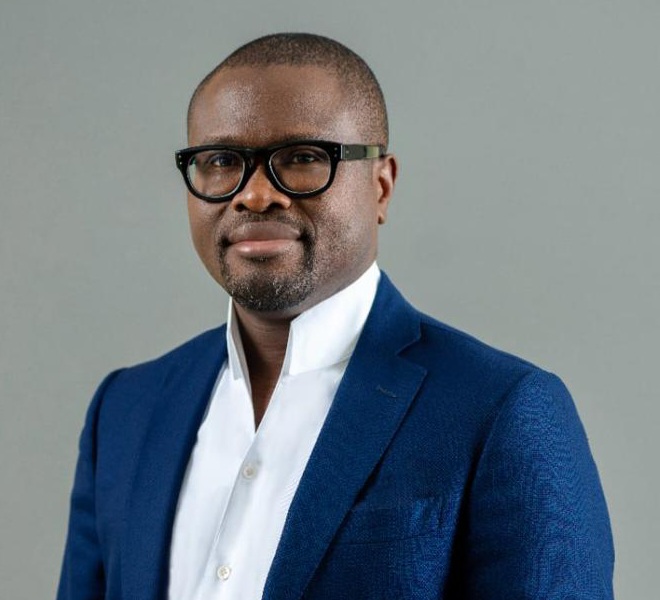
Wadagni is a handful in service delivery, transformation and economic re-engineering. He is the best suited for the presidency of Benin Republic as election holds on Sunday, April 12, 2026

Continue Reading

Featured

ADC Raises Alarm over INEC’s Plot to Prevent Party from Fielding Candidates

Published

on

By

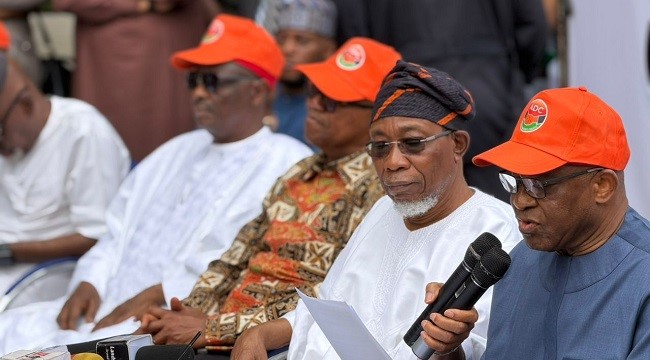
The African Democratic Congress (ADC) has revealed the deliberate administrative landmines being deployed by the Independent National Electoral Commission (INEC) to prevent the Party from fielding candidates in the upcoming elections.

In a statement signed by its National Publicity Secretary, Mallam Bolaji Abdullahi, the party stated that at the heart of this emerging crisis is INEC’s stated position that it will no longer receive any correspondence from the ADC pending the determination of a matter before the Federal High Court. On its face, this may appear procedural. In reality, it creates a direct and dangerous conflict with the clear timelines imposed by the Electoral Act (2026), which provides defined windows, including the mandatory 21-day notice period and subsequent submission requirements, within which political parties must complete critical electoral processes.

The full statement reads:

We are compelled to raise serious concerns about a developing situation that appears designed to prevent the African Democratic Congress (ADC) from fielding candidates in the upcoming elections. It is based on documentary evidence which we are now placing before the Nigerian public, including certified INEC records, attendance logs, monitoring reports, and excerpts from the Commission’s own sworn affidavit. Taken together, these documents establish a clear and consistent record of events.

INEC received formal notice of the July 29, 2025 National Executive Committee (NEC) meeting of the ADC. It deployed officials to monitor that meeting. It documented the proceedings and received formal reports from its field officers. Following this, INEC updated its internal records and uploaded the names of the new leadership, including Senator David Mark as National Chairman and Ogbeni Rauf Aregbesola as National Secretary.
These are not claims. They are facts contained in INEC’s own records.

In addition, the Commission’s sworn affidavit before the Federal High Court, in its response to Nafiu Bala Gombe on 12 September 2025, particularly in Clauses 14 to 19, affirms key legal principles: that the leadership transition had already been completed and recognized, that such internal party matters fall outside the scope of judicial interference, that completed acts cannot be reversed by injunction, and also recognizes the David Mark-led NWC.

Yet, despite this clear documentary trail, INEC has now taken the position that it will no longer receive any correspondence from the ADC pending the determination of a matter before the Federal High Court. This is where the contradiction becomes dangerous.

The Electoral Act imposes strict timelines on political parties, including the 21-day notice requirement and submission deadlines. INEC itself has fixed May 10 as the deadline for the submission of relevant documents. However, by refusing to receive communication from the ADC within this same period, the Commission is effectively preventing the Party from complying with the law.

In simple terms, INEC is effectively threatening that unless the courts deliver judgment on the ADC leadership issue by May 10, it will prevent the ADC from producing candidates.

This places the ADC in an impossible position and creates a clear pathway to artificial non-compliance, which can then be used to justify excluding the Party from fielding candidates. That is the landmine.

INEC has claimed that its April 1 decision was taken to avoid rendering the proceedings before the Federal High Court nugatory. The reality is the opposite. By intervening in a matter already before the court and issuing a pronouncement with clear legal and operational consequences, the Commission has itself undermined the very process it claims to protect.

What is even more concerning is that this position contradicts INEC’s own prior conduct and legal stance. The same Commission that monitored, documented, recognized, and swore to an affidavit confirming the ADC leadership is now acting in a way that contradicts its earlier position.
We therefore call on the Commission to immediately reverse this position, resume the acceptance of all lawful correspondence from the ADC, and uphold its constitutional responsibility to ensure a level playing field for all political parties.

We also call on Nigerians to be wary and remain vigilant about these dangerous machinations to subvert Nigeria’s democracy and impose a civilian dictatorship on the country.

Continue Reading

Trending