By Hon. Femi Kehinde
On the 6th of March 1979, Chief Jeremiah Oyeniyi Obafemi Awolowo attained a septuagenarian status of 70 years. The Military government of General Olusegun Obasanjo in 1978 lifted ban of party politics, and Obafemi Awolowo and his Committee of Friends had formed the Unity Party of Nigeria (UPN), perhaps as an off-shoot of the defunct Action Group (AG). At a campaign rally in Mapo Hall Ibadan, attended by a mammoth crowd of jubilant party stalwarts, Awolowo was erouded into the campaign rally with deafening shouts of the usual “Awo! Awo!! Awo!!!’. The impressed Obafemi Awolowo in appreciation of the large attendance decreed that being now a septuagenarian i.e. as a 70 year old man, he should now be addressed as “Papa Awo”, and the crowd instantly changed the tune to “Papa Awo! Papa Awo!! Papa Awo!!!” in ecstasy and frenzy.
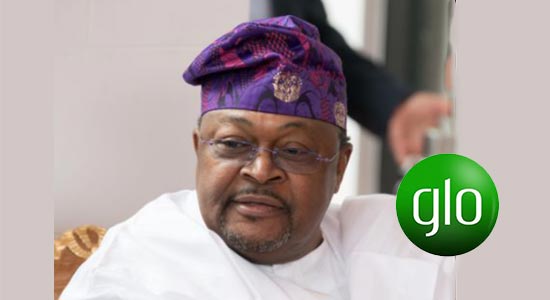
Micheal Adeniyi Agbolade Ishola Adenuga, a Nigerian successful business man, a philanthropist and an entrepreneur attained the septuagenarian status age of 70years on the 29th of April, 2023, and thus like Obafemi Awolowo at 70, has now become “Papa Mike Adenuga”. What a sweet elevation in God’s grace, splendor and magnificence.
Yoruba epistemology and mores believe that whatever happens to Man, whatever happens in life, has already been predestined. Man chooses his destiny -‘AYANMO’ while coming into the world, and man knees down to choose his lot – ‘AKUNLEYAN’ before the presence of God. The great music maestro and philosopher – Chief Ebenezer Obey, had sung in a beautiful lyrics – “Ayanmo mi latowo oluwa ni, eda aiye kan ko le yi mi ni po pada…”
Man’s destiny is Unalterable. Navigating through the labyrinths of Mike’s destiny is certainly “Ori olowo, Ori olola, Ori oloro” – The head that has a Midas touch – a Greek myth in which King Midas turned anything he touched to gold.
Here is the chronicle;
Micheal Adeniyi Agbolade Ishola Adenuga Jr. was born on wednesday, 29th of April, 1953 to Oloye Micheal Agbolade Adenuga Sr. who was a school teacher, and Omoba Juliana Oyindamola Adenuga (nee Onashile) who was a business woman. They were both natives of Ijebu-Igbo in Ogun State. Micheal grew up in Ibadan where he had his early life (infancy and adolescence) in Oke-Ado Ibadan, which was then Ibadan’s epicenter before the advent of Bodija Estate in 1958.
Oke-Ado was the home of Ibadan elites, academicians, entrepreneurs, business men and women of the moments. It was the home of the first sets of Indegenous intelligentsias – the men and women who would eventually shape the cause of Nigeria’s history. Oke-Ado was where the noveaux riches who arrived with independence lived, it was home to Chief Obafemi Awolowo – First Premier of the Western Region, Pa T. L. Oyesina – Foremost Educationist, Proprietor of Ibadan Boy’s High School and Ibadan City Academy Eleta, Ibadan, Akin Deko, S.A Tinubu of Iresi, Justice Morgan – Chief Justice of the Western Region who succeeded the Ghanian Quarshie Idun as Chief Justice, Justice Olujide Somolu – Chief Awolowo’s best man on the 26th of December 1937, Daniel Olorunfemi Fagunwa on Ajanla street – Author of “Ogboju Ode Ninu Igbo Irumole”, Amos Tutuola – Author of
“the palm wine drunkard”, The Otudekos, J. B. Oye (GoodWear Tailors), Chief Ogunsola – Premier Ladoke Akintola’s private secretary, the Craigs, the Italian Construction Firm of L. Dalberto, the home of popular textile trader and woman activist, Alhaja Humoani Alaga built in 1951, Bola Babalakin, Surveyor Ososami, Bola Ige, Wole Soyinka, Chief Isamosta Ashiru, Victor Esan – one of Ibadan’s first early lawyers, while his wife Wuraola Esan was the founder of People’s Girls Grammer School, Molete-Ibadan and Ibadan first woman senator, Chief T.A Oni (Oni and Sons) – the popular Ibadan Construction giant, Omololu Olunloyo, Duro Ogundiran – Lawyer and First Republic Minister in the Werstern Region, and a host of others. Oke-Ado was also then the fleet street of legal practice in Ibadan that had the law firms of Obafemi Awolowo and Abiodun Akerele, Bola Babalakin and Co, Olu Ayoola and Co, Duro Ogundiran and Co, Rosiji and Co, Ogunkeye and Co and a host of other legal titans. Many entrepreneurs thrived on this popular road – Titi Oke Ado. There was the popular Ogunkoya Stores, the Osibodu’s House, the Rab and Lally Chemist of the Irabors, the Toye Chemists, the Palms Chemist of the Akinkugbes, the Trumed Chemist, Mama Oyin Adenuga Stores – the mother of the communication guru, Micheal Adenuga. It was behind Dr. Doherty’s hospital, which was also close to the Owuru family house, the Ladega Family House.
Ladega later became the Ayangburen of Ikorodu. Not very far was the home of Rev. T. T. Solaru, whose wife was the leader of the Action Group Women Association. In the belly of Oke-Ado was the Palm Tree Club, almost opposite the Odeon Cinema and also Rex Cinema that kept Oke-Ado bubbling. Shortly before the Odeon Cinema was the Seven Sisters Club and Independence Club. Oke-Ado then bubbled with actions and activities. This is a reflection of the environment Mike grew up. He attended Ebenezer African Church Primary School, Oke-Ado Ibadan, between 1959 and 1964. The school was a grade one primary school under the headmastership of Mr. F. Owo Adekoya, a stern disciplinarian. The school was the elementary school of the children of popular Ibadan elites at the time – The likes of Gabriel Rusewe (Rusewe Motors), Theophilus Adediran Oni (Oni & Sons), Chief Z. A. Koya (CEO Abiodun Printing Works), the Agbejas, the Fagunwas, and the Sanyaolus, among others. Also, children of Top Civil Servants, Politicians and “who is who” in Ibadan and within the Oke-Ado neighbourhood attended Ebenezer African Church Primary School. Interestingly, Oni & Sons would bring his children of about 15 to school in a bus. The school apart from its seasoned and highly disciplined headmaster, had good teachers – Mr. Akinpelu, Mrs. Makinde, Mrs. Onafuwa, Mr. Ojosipe, Mr. Odeyemi, and Mr. Olorunisomo (the games master).
After successful completion of his primary education in December 1964, Micheal Adeniyi Agbolade Adenuga was admitted to Ibadan Grammar School in January 1965 to begin another phase of life.
Ibadan people value and treasure education. In 1901, the Baale of Ibadan, Baale Fajinmi (1897-1902) made a proclamation that made it compulsory for every household to send at least one child to school or pay a fine of 5 pounds; following the example of the Akinyele Brothers – Alexander Babatunde Akinyele (1875 -1968) and Isaac Babalola Akinyele (1882 -1964). The two brothers bestowed the environment of Ibadan in the field of education, religion, tranditional monarchy, social responsibility and politics, each like a colossus. Alexander Babatunde Akinyele was the first Ibadan university graduate in 1911, having graduated at the Fourah Bay College in Sierra leone with a Bachelor of Arts degree of the University of Durham in England. He was a clergyman and later became a bishop. Bishop Alexander Akinyele on the 31st of March 1913 founded the Ibadan Grammar School single-handedly, he was its first principal until 1933. Whilst as principal, he encouraged wealthy men and Ibadan elites to take their children to school. Two of Sanusi Adebisi Idikan’s children – Azeez Zakariyyah and Salawu Adebisi attended Ibadan Grammar School under the principalship of Bishop Alexander Akinyele. There were no higher educational institutions then in Ibadan after Ibadan Grammar School. Bishop Akinyele visited Sanusi Adebisi Idikan to encourage him and also intimate him on the prospects of gaining a university admission for his two sons in Europe, who had just left his college, with the hope that it would be an encouragement to other Ibadan wealthy men and elites. But Adebisi whilst thanking Bishop Akinyele for his concern and also acknowledging his episcopal visit, told the Bishop and Principal, that he would not like to expose his children to the danger associated with schooling abroad. According to him, the man of means would always employ the man of Knowledge. Sanusi Adebisi Idikan – First Ibadan notable entrepreneur and philanthropist born in 1882, died in 1938 at the age of 56years. Following his elevation to the position of Assistant Bishop of Lagos Diocese, Alexander was succeeded by Reverend Latunde, later Reverend E.A Odunsanwo, and later his son in-law, the legendary Archdeacon (then Reverend) E.O Alayande in 1948. Archdeacon E.O Alayande was the principal until 1968, when he was succeeded by Rev. Ayo Labiyi, former Principal of Lagelu Grammar School, Ibadan who assumed duty in January 1969, when Mike Adenuga was in his final year.
Ibadan Grammar School started in 1913, in the first 31years of its establishment, it only admitted boys, it officially became co-educational in 1941, and later 1966. It moved from Alekuso, later to Oke-Are, and permanently moved to its present site in Molete, Ibadan. It was at the molete site that the school blossomed. In 1965, Mike joined his senior brother, Ademola Adenuga who was already a top senior student of the school. He was admitted into Form 1C. His school hostel was at the Olubadan house. There were four (4) hostels – Akinyele House, Olubadan House, Irefin House and Olubi House.
One of Mike’s classmates, a Russian trained Medical Doctor and retired Permanent Secretary in the Osun State Civil Service, Dr. Olufemi Adefioye has a fond memory of their studentship in Ibadan Grammar School between 1965 and 1969. According to Dr. Adefioye, among Mike’s roommates in Olubadan House were – Olagoke (Bros Jenko) who was the House Captain, Late. Olusegun Kokumo Agagu (former Governor of Ondo State), Prof. Seye Odebiyi (Late) – Prof. of Biochemistry at the Obafemi Awolowo University, Ile-Ife, (the school headboy, 1965), Titus Ajayi, Dr. Adeola Mohammed (now Pastor (Dr.) Adeola Bankole), Adewale Akinloye, Abiodun Abodunwa (Retired Banker), Engr. Siji Oluwole, Shipeolu. Mike’s classmates were – Dr. Oladapo Samuel (Orthopaedic Surgeon, Newcastle in UK), Dr. Adeola Mohammed (now Bankole), Arch. Alexander Adedotun Dedeke, Arch. Sasore (Late.), Muyiwa Kupoluyi, Titus Ajayi, Bolaji Fowler, Chief Femi Lanleyin (Solan) (son of Chief Owoola Lanleyin) – A First Republic top Politician, Femi Peace Ojaere, Nwosu Effiong, Muyiwa Esan, Prof. Archdeacon Kolawole Jayeoba (former Vice Chancellor, Ajayi Crowther University). Prof. Kolawole Jayeoba has an interesting story, his grandfather and his father, himself and his two children attended Ibadan Grammar School. The school again became a mixed school with the admission of girls into the school in early 1966. The girls who joined them in class were – Ibiyemi Fakunle (now Prof. Mrs Ogunlade) a retired Professor of Chemistry, Nurse Kehinde Ladapo (now Mrs. Arojojoye), Elizabeth D’Amelda, Omowunmi Owolabi (now Mrs. Ogundele), Taiwo and Kehinde Olomojobi. Mike was a friend to everyone in school, but was personally close to James Babatunde Daudu (JayBeeDee) and Titus Ajayi. Mike’s teachers who turned out to be old boys were – Prof. Fakuade (Mathematics), Bode Alalade (Literature), Bayo Akinnola, Mr. Adekanmbi, Mr. Akinbanji (English), Mr. Adepeju (Geography), Late. Pa Wusu (Fine Art), and Saka Bamidele (Physics). The school sponsored Saka Bamidele and Bode Alalade for Post Graduate Diploma in England in 1969. There were also many expatriate teachers – Mr & Mrs Wood Robbinson (Biology), Mr. Tyler (Physics), Mavin Powell (Geography), Late Rev. Fletcher (Economics) who was also the Football Coach and Vice Principal in 1965, Mrs. Fletcher (French), Miss Jackson (French), Miss Bull (Basic french and Latin), Mr. Aigbokai (Geography), Mr. Schurff (Chemistry). Mike’s Seniors in school then were – Olusegun Kokumo Agagu (5years ahead), Late. Col. Alalade (4years ahead), Engr. Foluseke Somolu who was Chairman Nigerian Society of Engineers (5years ahead), Ademola Adenuga (5years ahead).
The students of Ibadan Grammar School during Mike Adenuga’s time were under a stern mentorship, training and discipline of their Principal, Archdeacon Alayande. He knew the students could be rascally, and that the boys could be boisterous, and he was ready for them. Most times, Archdeacon Alayande would drive to Ibadan City hangouts in the night to fish out some of his boys who sneaked out of the school hostel, usually slanged ‘Gbofe’. He would catch some and a few of them would escape before driving them back to school. There was a story of a son of a foremost Nigerian politician that was caught at the popular Mokola hangout with some of his friends, he caught them, and asked them to sit at the back of the Pick-up Van. Rev. Alayande drove them back to the school, only to discover that the boys had disappeared, jumping out of the Pick-up van. The students ran to the hostel, Rev. Alayande found out that they were already asleep on their beds, he denied ever being caught by Baba Alayande at any Mokola hangout. Abdulahi, an albino was sighted in town by the Principal, Baba Alayande. The school bell rang, and Baba Alayande asked Abdulahi to come out, that he saw him at Molete some moments ago, Abdulahi denied ever moving out of the school premises, that the principal probably saw an Albino who was his look alike in Molete, but he was actually the one the principal saw, he had ran back to school before the school bell rang. Some boys upon the sight of the Principal would dive into the nearby Kudeti River (popularly called River Jordan by the students) close to St. Luke’s Teachers Training College. They would swim across the river, and landed straight at the back of Irefin House. A prolific and fruitful mango tree in front of the office block was a forbidden tree. Baba Alayande would say “man plucks mango, man goes” that is, immediate suspension from the school for whoever plucks mango. Boys would sneak out of the hostel in the night to eat Itele (cow foot), and there were city hangouts, clubs and cinemas that were patronized by the boys – Skala in Sabo, Odeon Cinema in Oke-Ado, Queen Cinema in Adamasingba, Rex Cinema in Okebola, Premier Hotel swimming pool, Seven Sisters Club and Independence Club in Oke-Ado, Chrisboh Garden in Odo-Ona.
Ibadan Grammar School was of great delight and patronage with sufficient and well trained teachers and adequate staff quarters in a serene environment, well mowed and luscious lawns that were of horticultural delights, sufficient classrooms and laboratories, halls, dinings, libraries and so many other facilities that made learning very conducive. Those were the good days of public schools. No wonder, Mike Adenuga’s set did outstandingly well in the School Certificate Examination of 1969. Ibadan Grammar School was really cosmopolitan with students from all over Nigeria. The likes of children of Audu Bako (former Governor of Kano State), Nwosu Effiong made the school register. Amongst Ibadan Grammar School products are – Justice Franklin Atake, Chief Ayo Rosiji (a consummate first republic politician and lawyer), Prof. Micheal Omolewa, Oba. Adedotun Aremu Gbadebo III (Alake of Egba Land), Chief Bola Ige (former Governor of Oyo State), Prof. Akinmaboogunje – Emeritus Professor of Geography, Urban and Regional Planning, Justice Atinuke Ige, Chief Gbadegesin Ajeigbe, Chief K.O. Latunji, Chief Odelana, Justice Ayotunde Phillips (former Chief Judge of Lagos State), Ken Nnamani, Alfred Diete-Spiff (former Governor of Rivers State), Alex Ibru, Abdul Hamid Adiamoh, Olusegun Agagu (Former Govenor of Ondo State), Barr. Yinka Ogungbemi and Dimeji Mako (Late.) – Immediate past president, Ibadan Grammar School Old Students Association.
After a sterling performance in his Secondary School Certificate Examination, Micheal Adeniyi Adenuga proceeded to Comprehensive High School, Ayetoro, Ogun State for his Higher School Certificate (HSC). Comprehensive High School, Ayetoro was established in 1963 by the United State Agency for International Development (USAID), the Ford Foundation, the defunct Western Region Government, through the ideas of the founding fathers, Chief B. Shomade and Dr. Adams Skepson. He did very well in his A-level studies, and proceeded to the United States of America for further studies. He attended Northwestern Oklahoma State University and Pace University, New York, with degrees in Business Administration. Whilst in America, as an undergraduate, he drove taxi cab to augment his income to support his university education aside from parental supports from home.
After completion of his university education, a world of business in Nigeria attracted him, having been a son of a very successful business woman, Chief Mrs. Juliana Oyindamola Adenuga. He came back to Nigeria to follow the footsteps of his hugely successful business woman mother by selling soft drinks and lace materials amongst many other business ventures, and made his first million at a young age of 26 years. In his early days, Mama Adenuga had shown her children (Olu, Folashade, Ademola, Yetunde and Mike Adenuga) the way of commerce. According to Mike’s immediate senior sister, Chief Mrs Yetunde Olubunmi Adegbola, “We all remember selling special bags mama brought from London, and sold by all the children with Niyi making more profit than all of us. We didn’t actually come from a poor family, the money was there, but our parents made us to work and value hard-work and money. We were made to appreciate money; that it is not easy to get money. In those days, Niyi was a very good footballer as a child. They called him goalkeeper. Our mother made us to hawk chaff after school. I would go and hawk mine, he would be playing football, after selling mine, I would come and take his and help him to sell”.
Money is like a ravishing vapor, whenever it smiles on you, you must hold it with a hand of steel, hence it disappears, beautifully conceptualized in Yoruba myth as “Alejo lowo”. Mike did just that, following the Adenuga’s philosophy of money and financial husbandry and made it when mother luck smiled on him. As soon as Mike Adenuga completed his studies in the United States, he returned to Nigeria. Mama Adenuga was fully entrenched in business and it was under Mama’s tutelage that he began trading. Mike Adenuga began by selling removable car stereos, ran the family sawmill factory in Ogun State, grew the business, and included importation of sawmill equipments, most especially, CD machine’s bandsaws, circular machines, etc. He also veered into importation of beer and lace materials (fabrics) where he made it big. It was a business he picked up through chance, destiny and mother luck. He had missed his British Airways flight when returning home from a trip in the United States and had to fly Swiss Air. On the flight, he was lucky to sit next to the owner of one of the biggest lace manufacturing companies in Austria. It was the man who convinced him before the flight touched down to give lace importation a shot. He took his advice and he made it big. He also later ventured into tomato puree and vegetable oil.
Success begets success. Success like life itself could be an aphrodisiac. When life is pleasant and pleasurable, it could be an aphrodisiac, spurring you to more successes and greater heights. But when life is sad, hard, and sordid; everyday looks like a gloom and apocalypse.
Micheal Adenuga at the age of 26 years had seen success and made money, which he wanted to sustain. He decided to re-brand and reshape his business enterprise into a conglomerate – Micheal Adenuga Group of Companies, where he is the chairman. Trading, importation, banking & finance, oil & gas, real estate, investments in critical sectors of the economy and all sorts were his avidity.
General Ibrahim Babangida as the President of Nigeria at a time, decided to break the monopoly of foreign operators in the oil and gas business in Nigeria by encouraging indigenous operators to come on board and apply for license. Micheal Adenuga applied for one (Mike Adenuga’s company) – Consolidated Oil applied and was granted some oil blocs. It was a very risky and novel decision that even the business guru mentor, his mother, Mama Oyin Adenuga advised against throwing money into the Atlantic. Mike’s company spent over $100million on evaluation, interpretation and drilling. This courage, tenacity, aciduity and audacity paid off at the long run, nothing ventured, nothing gained. This unique courage paid when Consolidated Oil became the first Nigerian company to explore, discover, and produce oil in large commercial quantities, now known as Conoil Producing Limited, which is currently the leading Indigenous oil and gas exploration and producing company in Africa. Mike Adenuga’s venture into the oil and gas sector became successful as one of the wells that was being drilled struck oil on Tuesday, December 24, 1991 making his company the first Indigenous company to discover oil in commercial quantities.
Before the advent of Consolidated Oil, Micheal Adenuga had also forayed into the banking sector by founding and promoting Equitorial Trust Bank Nigeria Limited and Devcom Merchant Bank Nigeria Limited. In the year 2000, Micheal Adenuga’s Consolidated Oil bought over National oil of the Federal government by acquiring majority shares and renamed the company “Conoil Plc” after injecting fresh funds. Conoil Plc has over 450 retail outlets all over the country. Interestingly, Senator Abiola Ajimobi (Late.) (former Governor of Oyo State) before he ventured into politics was once Managing Director of National Oil and Conoil Plc respectively.
Adenuga ventured into telecommunications and mother luck also smiled on him but not without some bruises, skirmishes and hiccups. He had applied for the first GSM license and lost money, but was persistent until he made it the second time. He however ran into heavy power play by men of the moments at the time. The Awujale of Ijebu-Land – Oba Sikiru Kayode Adetona acknowledged the pivotal role of his maternal aunt, Chief Mrs Oyindamola Adenuga who according to him was the force behind his mother – Chief (Mrs.) Wulemotu Ajibabi Adetona’s determination to see him educated. In his growing up years, Oba Sikiru had lived at various points in time with Mike’s mother, Chief (Mrs.) Oyin Adenuga in Ibadan. In reciprocating this motherly love and affection of his mother’s younger sister in his early upbringing, Oba Sikiru had always been protective of her interest and that of her children. On the 9th of July, 2006, according to the Awujale, the Economic and Financial Crimes Commission (EFCC) had come brusquely on Mike Adenuga; they broke his gate and swarmed into his house, and also kept him under house arrest. The Awujale swung into action and raised a legal team to defend him. Consequently, Mohammed, son of Ibrahim Babangida (former Head of State) was also quizzed, because of an allegation that Atiku Abubakar, the Vice President of Nigeria and Chairman of Petroleum Trust Development Fund (PTDF) had placed some of PTDF’s funds in Mike Adenuga’s Equitorial Trust Bank which had assisted Mike in paying for the Globacom license. Mike debunked this and showed evidence of payment for the license through a loan from the BNP Paribas Bank of France. Former President, Ibrahim Babangida was also suspected to be a shareholder in Globacom. Mike subsequently went on exile to London and whilst in London went on vacation with the Awujale to France. Coincidentally, President Olusegun Obasanjo was also in France to attend a Conference of African Presidents on the invitation of President Chirac of France. The Awujale used this opportunity to visit Chief Obasanjo to further explain Mike’s case and how he was just being a pawn in a political chess game and conundrum. At the lobby of the Embassy Hotel where Mike had waited for the Awujale who had gone for a private meeting with Chief Obasanjo, he told Mike that he had nothing against him and a clever Mike, replied back to the Man of Power “Your Excellency, I understand, thank you”. Through thick and thin the Awujale fought for Mike’s cause until it was finally resolved. The Globacom later became a big brand and a big player in Nigeria and African Continent.
Globacom is now the second largest telecommunications in the country. Despite the fact that he was 2 years behind the others when he launched the network his entry strategy was to wage a price war by introducing per second billing rather than per minute billing of earlier operators; it was a master stroke. He demystified Telecommunications Services by making his services available and affordable by slashing the price of Sim Cards. Mike Adenuga now earns income per second. Glo innovately was the only operator in Africa to launch his operation on 2.5G network which now enables the convergence of voice, data, and multimedia technologies. Globacom now has a network base of about 60.7million subscribers as at January 2023 in a country with a population of about 200 million. It has a vast network already laid fiber crisscrossing all parts of the country. It has highly successful subsidiary networks operating in other West African Countries: GLO-1 (Globacom-1) – This is the only solely-owned high capacity submarine with connection to the USA and running from the UK through African and European countries. It has been and continues to be a huge commercial success at the heart of the socio-economic development of Nigeria.
Mama Oyin Adenuga – Mike’s mother was a hugely successful business woman of her time, who apparently nurtured and encouraged her children (Olu, Folashade, Ademola, Yetunde and Micheal Adenuga) to be successful in life. She could certainly be placed alongside Ibadan business women of her time. In the women folks were the likes of Alhaja Humoani Alaga, Madam Janet Alatede Aboderin (Mother of Moyosore Aboderin, Olu Aboderin and Ajibola Ogunsola), Alhaja Rabiatu Adedigba Akindele (Mother of Chief Bode Akindele) and the first Ibadan woman to go on holy pilgrimage; these were great Ibadan women of great business acumen in the early days. Mama HID Awolowo was also prominent in the textile business and her textile store was located in Gbagi, Ibadan known as “Awolowo Corner”. As resentment to non-admission of non-christian girls to a Girls Mission School in Ibadan, Alhaja Humoani Alaga single-handedly established Isabatudeen Girls Grammar School in Ibadan in 1964. She established her textile trading business in 1928 and by 1933 she had become one of the most successful merchants who had properties in the United Kingdom. In 1961, Mama Oyin Adenuga had built a magnificent four (4) flats storey building somewhere in Molete, Ibadan ready for occupation. Alhaji Jimoh Odutola of Ijebu-Ode, a great Nigerian business pathfinder and industrialist had come to claim that the land was his and that she should remove her building from the land. The visibly disturbed business woman – Mama Oyin Adenuga visited the Governor of the Western Region, who was also the Ooni of Ife – Oba (Sir.) Adesoji Tadeniawo Aderemi, to report this incident to him and ask for his Royal intervention. Oba (Sir.) Adesoji Aderemi had then succeeded Olola Sir. John Rankine as the Governor of the Western Region in 1960. The Adenugas had lived in Ile Ife before relocating to Ibadan and had courted a friendly relationship with the Royal Palace and more particularly, Mama had been friends with Olori Rebecca Morenike Aderemi – mother of the Late Justice Aderoju Aderemi and Prince Towo Aderemi. Olori Rebecca Morenike Aderemi took the visiting business woman and friend to see the Governor and the Ooni of Ife at the Government House, Agodi, Ibadan. She narrated her story. The Ooni immediately called Alhaji Jimoh Odutola who also had once lived in Ile-Ife and Royally advised him to leave Mama Oyin Adenuga alone. He admonished him to forget about the land dispute. That was the end of the matter.
Otunba Ademola Adenuga, an Elder brother of Micheal Adenuga nourishes and relishes a fond memory of their mother. According to him “My mother had one credo, that what she had in her lifetime should go to all her children. She bought houses for all of us apart from the ones we shared after her death. She bought houses and warehouses in Ibadan for her children. For Christmas, she normally gave us fat cheques to help us in our lives and in our businesses. I remember there was a time each child got forty thousand pounds, which was a very big amount. There was a time each child got 1.5million before she died. Even when she died, we shared money too. She was the best mother ever. We cannot forget her and our father; may their souls continually rest in peace”. Otunba Ademola Adenuga is a graduate of Biochemistry from the University of Ibadan, also, an old student of Ibadan Grammar School and an accomplished business man. He is the Chairman of Demus Mayor Group of Companies and was once the Chairman, National Salt Company Plc. In March 1974, he was employed by the Nigerian Breweries and according to him “My Sister (Mrs Folashade Akande) and Mama, without telling my father bought me a brand new Toyota Corona. I started work in the Nigerian Breweries with the brand new Toyota Corona, courtesy of my sister and mum”.
Micheal Adeniyi Adenuga enjoys a close-knit relationship with his siblings, even till date.
Mike’s immediate elder sister, Mrs Olubunmi Yetunde Adegbola also reminisces on her growing up years with her younger brother and last child of their parents. She said “I keep going back to Mike’s years as a kid growing up, because that is the part I am very nostalgic about. As a kid, his favorite food was eba. I remember we had this radio announcer next to us called Brother Dipo, he was so close to Deniyi – you all call him Mike, I call him Deniyi. Deniyi loved this I.K Dairo song, Osupa roro loju orun (meaning the moon is shining in the night sky). On coming on air he would put on that record and Deniyi would stand by the rediffusion box like he wanted to enter it. He loved singing. He enjoyed the music of Victor Uwaifo and I.K Dairo. They were his favorites when he was young. The radio announcer would play that record and he would be so happy. Let me end by saying, “I am proud to be his sister”. I love him for his person not for his name, not for his achievements, but what he has been to me. We are not talking about today. He has always been generous from his childhood. He would spend all his money on his friends. He had so many friends he was looking after. “That’s Deniyi for you. He is still childish at heart”.
A childhood friend of this writer and former staff, and later Executive Director of Equitorial Trust Bank nourishes a sweet memory of his work relationships with his boss – Mike Adenuga for about 18 years. I informally and briefly asked him to give me a brief narration of his working experience, and quite unprepared for my question, after exchanging some social banters and our own early days memorabilias, he went into sweet eulogies and down memory lane, and he said “some of the things I can tell you about him is that “he’s a very hardworking man, a workaholic, he works till 1.00 am, 2.00 am and he could have his meeting up to 2.00 am. He’s just somebody that doesn’t joke with his business. Most of the office work passes through his table. He knows virtually all the subjects: banking, commerce, economics, etc; he knows everything. You can’t beat him in all the subjects. If you know your job, you know your onions, and if he notices you to be very hard-working, you will be seriously rewarded. He doesn’t hesitate to reward his staff for excellent Job done and his reward system should I say is strange or funny, because it is uncommonly surprising and usually unexpected. You know sometimes they will just call you from his office as a staff, saying you have something waiting for you in the Chairman’s office. Mike Adenuga listens, he seeks opinion of people before taking decisions. I remember before I became Executive Director, I never expected it; it was the time we had issues with Lamido during the administration of President Yaradua. I thought the issue was taken to him and President Yaradua pleaded that CBN should regulate us, I was about the most senior person in the bank then. Most of the people had left; those who were GM and above were relieved of their jobs while some resigned because of the crisis, but I decided to stay back. He sought opinion on who he could use as E.D., so some people suggested me. So, on one Saturday afternoon, I was called to hold on for the Chairman (I was even at a party then, so I told the person to hold on because I was in a noisy place). The next voice I had was from my boss (Mike Adenuga). He said, Sola how’re you? Ah! It‘s been a while. Did you eat anything left for us? Very humorous and pleasant character. I replied, “not at all, Sir, we are just managing, Sir”. Then he said “You know this problem we have with the CBN and I have been trying to resolve it. We have just decided to make you one of the Executive Directors; just keep it to yourself. Don’t tell anybody; congratulations!”. That was it. My hand was shaking. I came out of the car. A friend, Kunle who was with me at the party asked me, what happened? I told him not to worry, that it was something good that was coming. Before long, I was asked to submit my CV and it was taken to CBN. Approval was received by CBN. Behold, that was how I and one other guy represented him at the board for two years. Mike Adenuga values integrity and transparency. He is a man of morals and mores, he respects culture a lot. He is blessed and he blesses people. I remember when I did my father’s burial, he gave me money. The following year, my mother died, he also gave me money. I didn’t spend anything because the money was more than sufficient enough for me. He is an indoor person, very shy, but if you have an opportunity to go out with him, you will not be tired. Infact, he will serve you whatever you want to eat or drink. If you’re talking about someone who likes to hide himself, he is. He is very kind and generous. I’ve stayed in one of his houses in Ibadan free of charge despite paying my housing allowance as a component of my salary. He recognizes people doing something special. He doesn’t forget his helpers. He is very warm and affable, he is fun to be with; very jovial. He’s a special person. You know sometimes, you can’t also be successful if you’re not very strict in Nigeria. Some of the things we learnt from him is that he is serious minded and result oriented. In the meeting, if you don’t have anything reasonable to say, you better keep quiet. Once he knows you’re good, then you’re good. If you are focused and committed, you will steal his heart. He gives room for development for his staff. He is happy at everyone’s progress. Then in terms of pay package, he does us well. If he finds out you’re going because of the pay you’re receiving, he will just tell you to go find out the top three paying banks in Nigeria. He will ensure no one is shortchanged but instead his staffs are better paid than their counterparts. He has this unique style of operation which puts his staff at an advantage over colleagues in other organisations.
A very prominent Nigerian and Legend, told this writer of Mike’s benefaction; and gleefully said “Whenever I wake up every morning, I report him to God to continually bless him and uphold him for his numerous act of kindness and benefaction towards me”.
Another Childhood friend and brother of this writer – Akinrogun Dele Momodu has the following sweet words on Mike Adenuga when he was 70 years old last year – “every man should wake up and pray to meet and become good friend with the spirit of Africa. Trust me, it is worth every second of it. Just imagine a man who dashes out the same kind of cars he drives to his friends. He buys his expensive cars in multiples. I have a friend who got a Range Rover, while his wife got another jeep. How nicer and kinder can one be? No amount of money is too much for Adenuga to shell out on his family and friends. And he really does not expect anything in return. If you have done him a favor, then you are truly triply (not doubly) blessed. Dr. Adenuga never forgets such favours and offers recompense even beyond your wildest dreams. He believes that his friends are entitled to the same kind of material things that he wishes for and buys for himself. He has no jealous or mean streak in him in that respect”.
Micheal Adeniyi Adenuga has certainly dispelled the popular Yoruba aphorism “Owo ko niran”- Money has no pedigree. Money certainly has pedigree if it is well tended. Culturally, the Oak tree is a symbol of strength.
Wishing Dr. Micheal Agbolade Adeniyi Ishola Adenuga further successes in his chosen and destined Journey of creating wealth for the benefits of mankind, on his 71st Birthday Anniversary.
Hon. (Barr.) Femi Kehinde, former Member, House of Representives, National Assembly, Abuja 1999-2003 representing Ayedire/Iwo/Olaoluwa Federal Constituency of Osun State. Principal Partner Femi Kehinde & Co (Solicitors).









 News5 days ago