Connect with us

News

Tinubu’s Economic Team’s Flawed, Say Experts

Published

on

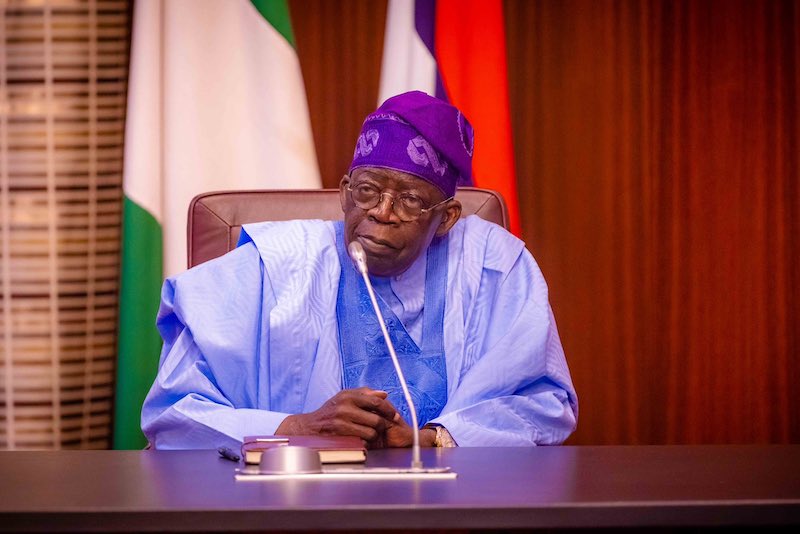
Some economic experts have picked holes in the composition of the economic team set up by President Bola Tinubu, describing it as flawed.

Tinubu, on Wednesday, approved the establishment of the Presidential Economic Coordination Council (PECC) and the Economic Management Team Emergency Taskforce (EET) to tackle the prevailing economic challenges in the country.

The PECC is made up of President Bola Tinubu as Chairman and Vice President Kashim Shettima as Vice Chairman.

Other members are, President of the Nigerian Senate, Chairman, Nigeria Governors’ Forum, Coordinating Minister for the Economy and Minister of Finance, Governor of the Central Bank of Nigeria and other relevant Ministers.

The council will also have some members of the organized private sector, joining for a period not exceeding one (1) year, subject to the President’s directive

They are Alhaji Aliko Dangote, Mr. Tony Elumelu, Alhaji Abdulsamad Rabiu, Ms. Amina Maina, Mr. Begun Ajayi-Kadir among others.

But economic experts who spoke with Daily Trust on Thursday said the composition was flawed, saying it was composed of stakeholders with vested interests.

A Professor of Economics and the Director, Centre for Economic Policy Analysis and Research, at the University of Lagos, Ndubisi Nwokoma, argued that a professional body such as the Nigeria Economic Society would have made a greater impact in the committee.

He said: “The composition of that team is somewhat flawed because these are stakeholders who all have interest in the economy. If you bring in people who have interest, they would protect their own interest; they would protect their own businesses.

“They would be thinking of policies that actually would favour them, nobody would go into a discussion that would work against him.

“I think bringing professional bodies like the Nigerian Economic Society, these are purely intellectuals, people that don’t have any stake who are not business men, who are just looking at the contextual issues and looking at the direction of government and find out where the government ought to take the economy to and what should be done to get there.”

He expressed concern that the country’s economy has been consumption based, saying: “In terms of where the economy should go, I think fundamentally we have gotten it wrong as a country, I think we need to look at the fundamental issues in terms of the structure of the economy.”

Also speaking, Professor Adeola Adenikinju of the Department of Economics, University of Ibadan and Vice President of the Nigerian Economic Society (NES) while hailing the composition of the committee as timely, however raised issues with its composition.

According to him, the committee is composed of largely government assisted people, who are going to benefit from the expected policies they are coming up with.

“Every government needs to have a body of experts to advise them on the efficacy of policies put in place and what are the new policies to ensure the economy works better.

“In terms of the composition, the intellectuals, the experts who are working in this area are not there. What you see are largely government assisted people who are interested in one contract or the other. So they are not going to be neutral in terms of the advice they are going to give. There is a likelihood that they would want to protect their interest. You don’t have lecturers; you don’t have the Nigerian Economic Society, who are on the intellectual side of the society,” he submitted.

Continue Reading
Click to comment

Leave a Reply

Your email address will not be published. Required fields are marked *

News

Disu Inaugurates Committee for Implementation of State Police

Published

on

By

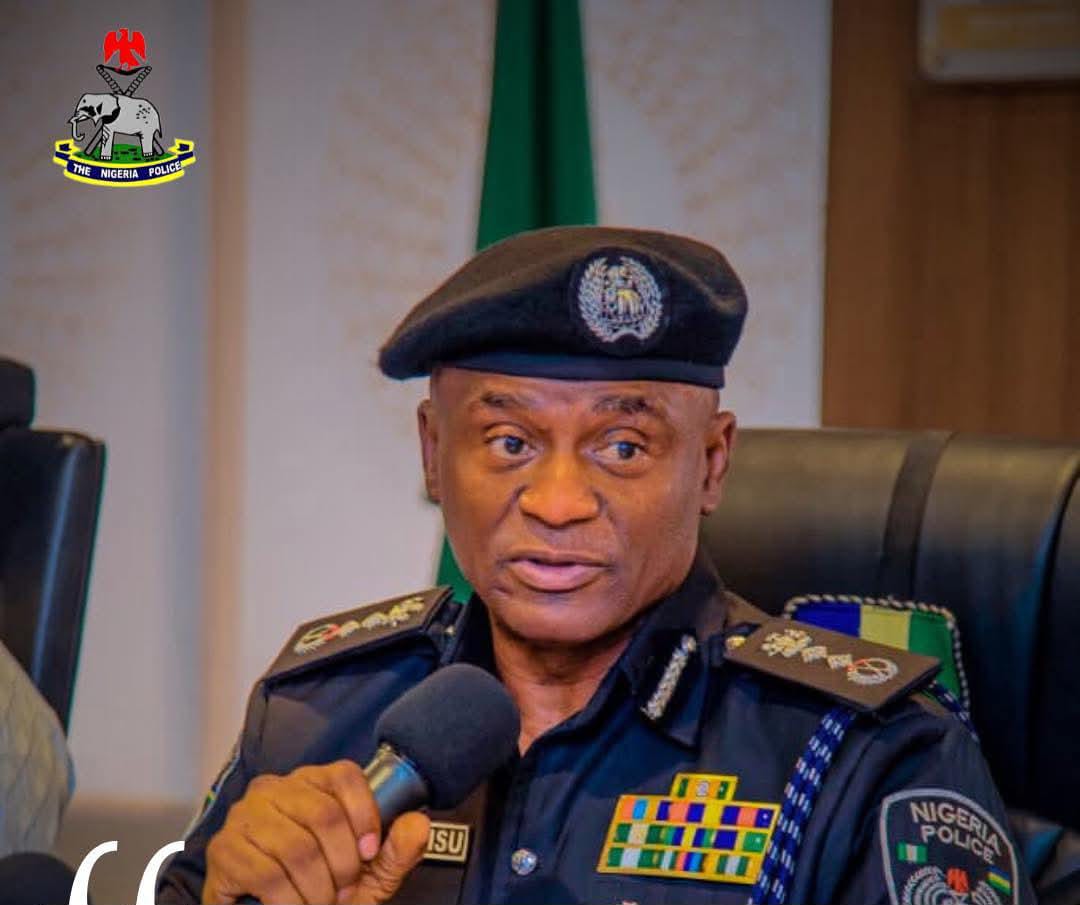
The Inspector-General of Police, Tunji Disu, on Wednesday inaugurated an eight-member committee to oversee the implementation of state police and the rollout of his policing vision, following his confirmation as the 23rd indigenous IGP.

TVC reports that Disu held his first formal engagement with senior police officers since his confirmation, days after the Nigeria Police Council unanimously ratified his appointment, clearing the way for his swearing-in by President Bola Tinubu at the Presidential Villa.

Professor Olu Ogunsakin was appointed to lead the eight-member state police committee.

Addressing the top hierarchy of the force, the IGP said leadership is “not about position but responsibility,” stressing that professionalism and accountability must guide conduct and operations across commands nationwide.

He emphasised that authority is strongest when exercised with restraint and that respect for human rights must remain fundamental, adding that every Nigerian should be treated with dignity, fairness, and justice, regardless of status or background.

Disu also announced plans to strengthen internal oversight, directing that the Public Complaint Unit and X-Squad be empowered to operate independently.

On decentralisation, he said the move would allow different levels of government to play an active role in security.

The inauguration of the state police implementation committee comes at a critical time for the Nigeria Police Force, following a leadership change at the top.

President Bola Tinubu appointed Disu as the Acting Inspector‑General of Police on February 24, 2026, after the resignation of his predecessor, Kayode Egbetokun.

Disu’s elevation followed a meeting between the outgoing IGP and the President at the Presidential Villa in Abuja, and his appointment was later unanimously endorsed by the Nigeria Police Council.

He is expected to be formally sworn in as substantive IGP during the Federal Executive Council meeting on Wednesday.

Disu’s appointment comes amid heightened concern over security challenges across the country, including rising cases of kidnappings, banditry, and community attacks.

The state police initiative championed by the current administration is part of broader security sector reforms aimed at decentralising policing powers to enhance responsiveness at local levels.

Continue Reading

News

Senate Rescinds Resolution Seeking Sack of Magaji As CAC Registrar-General

Published

on

By

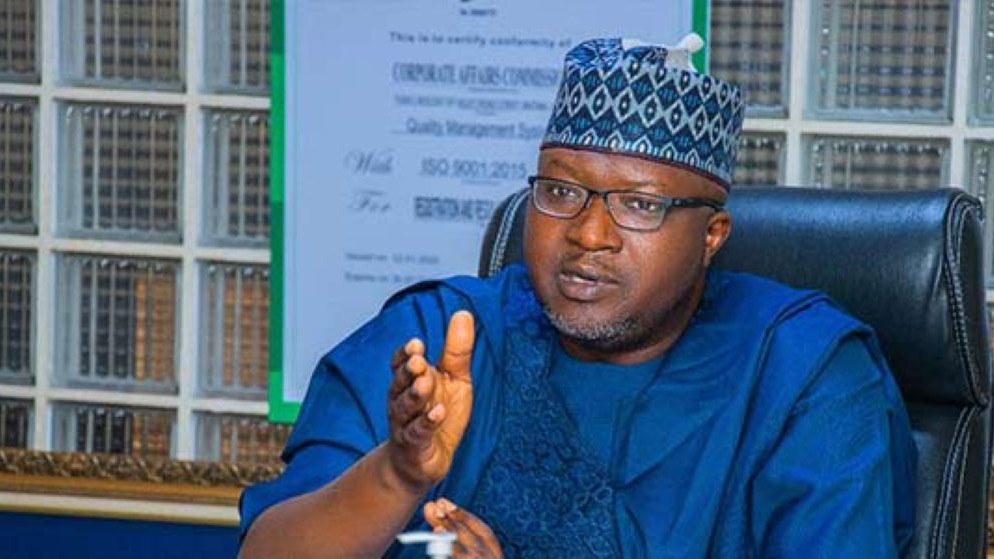
The Senate Committee on Finance, on Monday, rescinded its resolution seeking to remove the Registrar-General of Corporate Affairs Commission (CAC) Mr. Hussaini Ishaq Magaji (SAN), from office.

The committee, which is chaired by Senator Sani Musa, had on Thursday last week called on President Bola Tinubu to sack Magaji for ignoring parliamentary invitations to give an account of the operations of his agency.

But, at its resumed sitting in Abuja on Monday, the committee reversed itself after Magaji showed up, expressing remorse for his actions and apologising to the lawmakers.

It was the Chairman of Senate Committee on Customs, Senator Jibrin Isa (Kogi-East), who came to Magaji’s rescue by moving a motion, urging the committee to rescind the earlier resolution.

He was seconded by Katsina-North senator Nasir Musa Zango Daura.

However, before he got a reprieve, Musa criticised Magaji over his conduct, noting that he had no regard for the Legislature.

He stated, “This committee is not happy with you for your persistent refusal to appear before it in the past or sending junior officers to it. That’s not acceptable.

“The constitution grants us oversight powers over all revenue-generating agencies. At our last sitting, the committee recommended your removal, but you appeared shortly after our pronouncement.

“We want an explanation.”

Magaji immediately apologised for his behaviour, pleading that such would not be repeated again.

He blamed the development on communication breakdown, which he would address by establishing a liaison office at the National Assembly to improve interactions between the two sides.

“Mr Chairman, I sincerely apologise to the committee. I was returning from Lagos and asked my team to inform the committee ahead of time. Unfortunately, I arrived late.

“We have now created a dedicated liaison office to handle interactions with the National Assembly. I assure you this will not happen again. I take full responsibility and hold this committee in high esteem,” he added.

His show of remorse led to the withdrawal of the resolution with a warning not to ignore legislative invitations next time.

During last Thursday’s sitting, the committee had accused Magaji of failing to honour the Senate’s invitations to account for the finances of his agency.

“He refused on so many occasions to honour our invitation to appear before this committee.

“We have issues with the reconciliation of the revenue of CAC.

Each time we invite him, he gives us excuses,” Musa said as the committee passed the resolution.

A former Governor of Abia State, Senator Orji Uzor Kalu, had moved the motion for his removal.

Continue Reading

News

NELFund Extends Deadline for Student Loan Applications Nationwide

Published

on

By

The Nigerian Education Loan Fund (NELFund) has extended the deadline for student loan applications following a surge in nationwide interest driven by its ongoing sensitisation campaign across the country.

The extension comes after an earlier notice issued by the Fund announcing that the student loan application portal would close on February 27, 2026.

The Director, Strategic Communications of NELFund, Mrs. Oseyemi Oluwatuyi, who conveyed this in a statement on Monday in Abuja, said growing feedback from students, tertiary institutions, and other stakeholders prompted the management to grant additional time to enable more eligible applicants to complete the process.

NELFund explained that the decision was informed by the sharp increase in applications and inquiries recorded in recent weeks, as awareness of the Federal government’s student loan scheme continues to expand nationwide.

According to the Fund, the extension is aimed at accommodating students who require additional time to finalise their applications, as well as prospective beneficiaries who only recently became aware of the programme during nationwide sensitisation engagements.

The additional window would also support institutions newly commencing their 2025/2026 academic session and those yet to submit verified student data required for processing applications.

The Managing Director and Chief Executive of NELFund, Mr. Akintunde Sawyerr, reaffirmed the agency’s commitment to inclusivity and equitable access to tertiary education financing.

He noted that the extensive sensitisation campaigns conducted across the six geopolitical zones significantly boosted awareness and participation in the scheme.

“Our sensitisation efforts have increased nationwide participation.
In line with our mandate to expand access to tertiary education financing, we have approved an extension to ensure all eligible students have a fair and equal opportunity to apply,” he said.

NELFund further advised institutions that have not commenced the 2025/2026 academic session to formally request an extension, accompanied by their approved academic calendar, for consideration by the Fund.

Students were strongly encouraged to utilise the extended period to complete their applications through the official NELFund portal before the final closure date.

The Fund reiterated its commitment to transparency, accountability, and sustainable student financing initiatives aimed at removing financial barriers to higher education in Nigeria.

Continue Reading

Trending