Connect with us

Featured

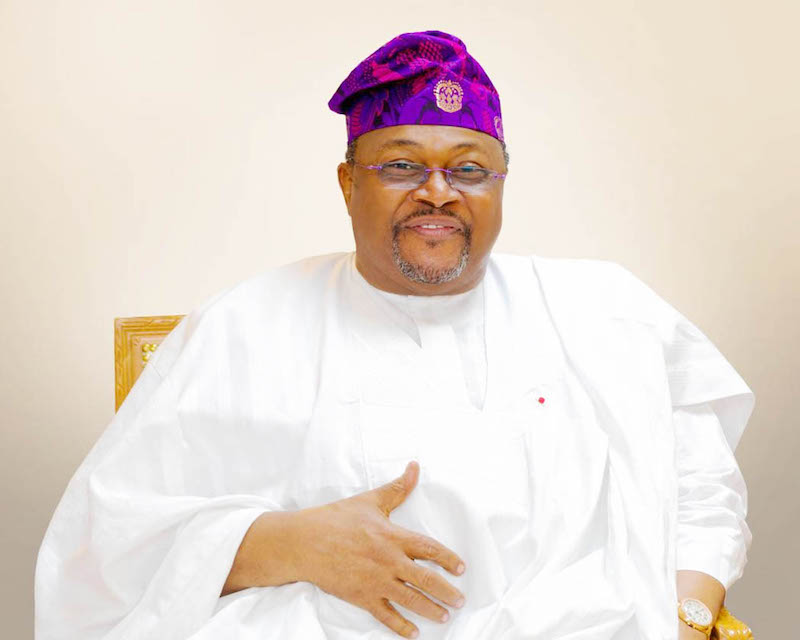
Mike Adenuga’s Gift of Foresight

Published

on

One major asset that has practically stood Dr. Mike Adenuga Jnr apart is his ability to see the big picture ahead before most people do. His ability and readiness to take any risk —as seen in his foray into oil exploration and later, telecommunications— has made his business prowess and foresight.

He always tread where other investors are afraid to try. Before Adenuga’s foray into the telecom ecosystem, other companies who launched ahead of him claimed a per second billing system would not allow return on investment. But the billionaire debuted with it and changed the landscape. This is because Adenuga believes in the power of possibilities.

That Adenuga’s chutzpah gave birth to the audacious 9,800km-long Glo 1 submarine cable project.

Not a few would remember when in October 2010, against all odds, Adenuga singlehandedly brought the submarine cable initiative to bear in Nigeria.

At that time, it was an extremely intricate and expensive investment which broke the monopoly of the only epileptic one in existence owned by NITEL.

It was technology at its highest as it entailed laying submarine cables under the belly of the ocean from Europe to Lagos with landing stations in 14 African countries and further extending connectivity to all major countries in the world with a dedicated extension to the United States of America.

Adenuga, fondly called ‘The Bull’, boasted then that ‘things are no longer going to be the same again’ and indeed, things has never stayed the same ever since as Glo 1 roared to life.

Aside becoming the pivotal in propelling Glo to its enviable position and giving the telecoms giant a head start over competition, many other companies in the ICT, financial industry and other allied sectors rely on Glo 1 to boost their operations.

It’s pertinent to admit that in recent times, Adenuga’s daring move has encouraged few others to plunge into the same venture —including global brands such as Meta and Google— but Glo 1 remains the doyen.

His gift of foresight came to bear recently when Nigeria and some other African countries experienced massive internet outages following damage to international undersea cables supplying the country with connectivity.

The damage affected major undersea cables —owned by about four other companies— near Abidjan in Côte d’Ivoire and led to internet downtime across West and South African countries. Many telecom companies and a number of banks which rely on those affected cables for internet services were badly affected by the outage.

However, Adenuga’s Glo 1 was not affected by the damage as data users, internet service providers and financial institutions which run on Glo 1 have continued to operate normally.

Industry analysts believe the sturdy nature and resilience of Glo 1 International Submarine Cable is the reason the damage did not affect the cable.

Source: http://opr.news/2477ef1e240323en_ng?link=1&client=news

Continue Reading
Click to comment

Leave a Reply

Your email address will not be published. Required fields are marked *

Featured

Dangote Launches Historic ₦1trn Scholarship Scheme for 1.3m Students

Published

on

By

The Chairman of the Aliko Dangote Foundation (ADF), Aliko Dangote, has launched a ₦1 trillion scholarship programme targeting more than 1.3 million Nigerian students over the next decade.

The initiative, the largest private-sector education support scheme in Nigeria’s history, will begin in 2026 with ₦100 billion disbursed annually across all 774 local governments.

The programme focuses on vulnerable learners, supporting undergraduate STEM students, technical trainees, and secondary school girls through tuition aid, study materials, and essential learning supplies.

It will be implemented through a fully digital, merit-based system in partnership with NELFUND, JAMB, NIMC, NUC, NBTE, WAEC and NECO.

Dangote said the intervention is a strategic investment in Nigeria’s future, stressing that financial hardship—not lack of talent—is the major barrier keeping many young people out of school. He added that 25 percent of his wealth has been committed to sustaining the Foundation’s long-term programmes.

Vice President Kashim Shettima described the scheme as a transformative act of nation-building, noting that it complements government reforms in basic, tertiary and technical education.

Education Minister Tunji Alausa said the programme aligns with the administration’s goal of transitioning Nigeria into a knowledge-driven economy, while Lagos State Governor Babajide Sanwo-Olu, speaking on behalf of his colleagues, pledged the governors’ full support.

Traditional rulers including the Emir of Lafia, Justice Sidi Dauda Bage, who chairs the programme’s steering committee, and the Ooni of Ife, Oba Adeyeye Ogunwusi, praised the initiative as unprecedented in scope and impact.

UN Deputy Secretary-General Amina Mohammed also commended the scheme, saying it will create conditions for children to learn and families to thrive.

The scholarship initiative reinforces the Aliko Dangote Foundation’s mission to expand opportunities, drive social impact and improve the wellbeing of communities across Nigeria.

Continue Reading

Featured

Yakubu, Fani-Kayode, Ikpeazu, Others Scale Senate Screening Hurdle for Ambassadorial Positions

Published

on

By

The Senate Committee on Foreign Affairs, on Thursday, approved the nomination of former Minister of Aviation, Femi Fani-Kayode, for appointment as ambassador.

Other nominees cleared by the committee include former Minister of Interior Abdulrahman Dambazau, ex-special adviser on new media to former President Goodluck Jonathan, Reno Omokri, former presidential aide, Senator Ita Enang, and Senator Grace Bent.

Also confirmed were former INEC Chairman, Mahmood Yakubu; former Governor of Enugu, State Ifeanyi Ugwuanyi, and former Governor of Abia State, Victor Okezie Ikpeazu, among others.

The screening session, conducted in batches of five nominees each, experienced a mild drama during Omokri’s turn.

Senators Mohammed Ali Ndume and Adams Oshiomhole openly disagreed on how his clearance should proceed.

After Omokri’s batch had introduced themselves, Ndume moved a motion to allow the nominees to take a bow and leave.

Some senators, including Oshiomhole, indicated they wanted to comment.

The Committee Chairman, Senator Abubakar Sani Bello, recognised Oshiomhole to speak, but Ndume insisted that his motion should be seconded before allowing further interventions.

This led to a sharp disagreement between the two senators.

Continue Reading

Featured

Tinubu Reiterates Directive on Withdrawal of VIP Police Protection

Published

on

By

President Bola Tinubu has insisted on his earlier directive ordering the withdrawal of police officers from very important persons (VIPs) in the country.

On November 23, Tinubu ordered the immediate withdrawal of police officers attached to VIPs across the country during a security meeting with the inspector-general of police (IGP), the chiefs of army and air staff, and the director-general of the Department of State Services (DSS).

The president said the move was aimed at boosting police presence in communities, especially remote areas where stations are understaffed and citizens remain vulnerable to attacks.

Speaking at the opening of the federal executive council (FEC) meeting on Wednesday, Tinubu warned against non-compliance and directed Nuhu Ribadu, national security adviser (NSA); Ibrahim Gaidam, minister of police; and Kayode Egbetokun, the IGP, to follow up on the implementation of the order.
The president noted that police officers were trained to protect the lives and property of citizens, particularly the most vulnerable in society, adding that the protection of a select group of VIPs is not their responsibility.

The president ordered Olubunmi Tunji-Ojo, the minister of interior, to make arrangements for the replacement of police officers by civil defence corps.

“If you have any problem because of the nature of your assignments, please contact the IGP and get my clearance,” he said.

“The National Security and Civil Defence Corps are trained for VIP protection, and they are armed too.

“We face challenges here and there of kidnapping, banditry and terrorism. We need all forces utilised. I know some people are exposed; we will make the exceptions. The civil defence is very much around.”

Tinubu said there is a need to mobilise the police appropriately due to the country’s security challenges.

Continue Reading

Trending