
Opinion
Panorama: 2023: Khalipha Muhammadu Sanusi II and Overwhelming Political Influence

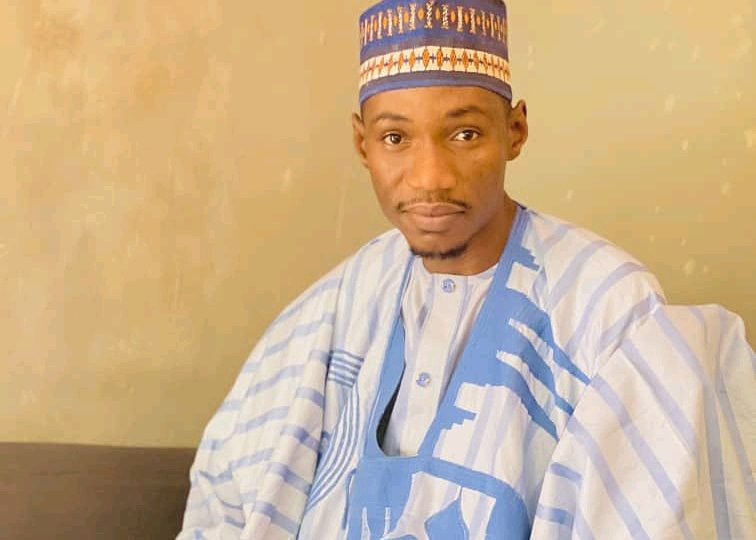

By Sani Sa’idu Baba
My dear country men and women, permit me to begin in earnest today, with a strong confession, which dwells on the influence of the revered and influential royal father, HRH Khalipha Muhammadu Sanusi II (CON), who doubles as the leader of the Tijjaniyya Sufi order in Nigeria, bestowed on him by one of the most respected Islamic leaders in the world.
My confession is not because he is a politician, but he is a factor in the political equation of Nigeria come 2023. Perhaps, some people especially my dear brothers and sisters from the South might not know the magnanimity and influential capacity of the position he occupies in addition to his existing pedigree and value that has made him unique.
In fact, as a leader of the Tijjaniyya sect of Nigeria’s Sufi Muslim community, Sanusi is now the second-most-important and most respected Islamic leader in Nigeria after the Sultan of Sokoto. My opinion today is due to several reasons rolled into one. You will discover why in a jiffy.
But the topic has to do with the recent discussion that I had with a patient, Malam Abdullahi Maikano who I later got to know was a chief servant of the late Emir Khalipha Muhammadu Sanusi I in his Wudil palace where he lived. He was narrating how Wudil-Maiduguri road became extremely busy, especially when he was appointed the Khalipha due to the large number of different sets of people visiting him on daily basis, and the influence he had in almost every aspects of life of the people of Kano, and the members of the Tijjaniyya Sufi order in Nigeria.
As he was narrating, I was reflecting on the historical repetition that happened and the one about to occur with his protégé, his grandson HRH Khalipha Muhammad Sanusi II. And that informed my writeup today.
Before I go into my primary focus today, let me introduce briefly the history of Tijjaniyya Sufi order in Nigeria. It is a Sufi Muslim order that is distinguished by the simplicity of its followers, the premium placed on the virtue of tolerance, and the religious scholarship and promotion of education by its founder, Shaykh Ahmad Tijjani, and succeeded by Sheikh Ibrahim Niass (1902-1975), who maintained its core values and mission. These attributes have given the Niassene Tijjaniyya a degree of flexibility and openness to innovation that is lacking among more conservative branches of Sufism and many other forms of Islam. The Tijjaniyya Ibrahimiyya is now the largest and fastest growing Sufi religious order in Nigeria. The logic that informs the behavior of Tijjani religious leaders as they interact with other Muslim groups, compete for religious followers, and engage the state in a pluralistic political arena, is subtle and complex. Shaykh Ahmad Tijjani, the founder of the Tijjaniyya Sufi order between 1809 and 1815CE predicted that Divine flood would occur on his Sufi disciples when people would be joining his Sufi order in multiples. Today, the number of Tijjaniyya Sufi order followers in Nigeria has been estimated to be about fifty millions, dispersed across every nooks and crannies of Northern part of the country and the South especially Southwestern part Yoruba dominant region of the country. The implication is that, at a certain period of time, someone among the Tijjaniyya members would emerge as the Flag-bearer of the divine flood. Through him, people of multifarious backgrounds would be embracing the Tijjaniyya order. In 1929, Shaykh Ibrahim Inyass made proclamation of the status, Flag-bearer of the divine flood and a Khalipha (successor) of Shaykh Ahmad Tijjani.

He made the proclamation during the annual maulud celebration of his father’s family at a village called Kosi near Kaolack (Kaulaha) in the Republic of Senegal. He was eventually recognized by the people as such, to the extent that the leadership of the Central Zawiyah of the Tijaniyyah in Fez, Morocco under the headship of Sayyid Abdus-Salam Sayyid in 1930s went to Kaolack, Senegal on a homage visit where all the insignia of office of Khilafah were submitted to him. These include a walking stick, a pair of sandals, a book of special prayers and awrād. Through the invitation of Emir of Kano, Al-hajj Abdullahi Bayero, Shaykh Ibrahim visited Kano, Nigeria for the first time in 1937. Although, Rüdiger Seesemann suggests that the visit took place in 1945. Whatever may be the date of the visit, the Tijaniyyah Sufi order through Shaykh Ibrahim Inyass spread from Kano to other cities in Nigeria.
We could recall that, many Nigerians of all faiths cheered in June 2014 when Sanusi was chosen to become the Emir of one of the country’s largest cities, to succeed his great uncle, the late Emir Ado Abdullahi Bayero. Six months earlier, he had clashed with former President Goodluck Jonathan after he questioned and adamantly insisted on the missing oil money. Emir Sanusi’s antecedents seems to be a reoccurrence of history. His grandfather, Emir (Sir) Muhammad Sanusi I was also dethroned by Sir Ahmadu Bello in the year 1963 as a result of power tussle between them, same way that his grandson was after 57 years by Governor Abdullahi Ganduje, a situation that many believed from the perspective of the fact that the Sanusi’s family has always been stand for the truth irrespective of that might cause them. You can imagine someone sacrificing one of the most prestigious royal sit in Nigeria, just to maintain his legacy of being honest and truthful? That was when Emir Muhammad Sanusi I, was appointed the Khalipha of Tijjaniyya Sufi order of the whole country after his dethronement as the Emir of Kano in 1963. It was after his death that the late Alhaji Isyaka Rabiu, the father of Abdussamad Isyaka Rabiu succeeded Emir Sanusi Lamido’s grandfather to occupy the high position as the Khalipha. This is exactly where the history has done its part, by repeating itself on the historic emergence of Sanusi as the substantive Khalipha in May, 2021. There were lot of rumors surrounding the issue before his appointment, only to discover that some of his detractors were doing all they could to halt the occurrence of the inevitable. One thing they failed to understand is that, greatness is inherent. When one door closes, another one immediately opens, probably a much better one.

Let me comeback to my primary focus of today. I am not the first and I will not be the last to demonstrate the influential potential and capacity of HRH Khalipha Sanusi Lamido Sanusi II. His uncommon pedigree and reputations has sold him beyond Nigeria, Africa but the world at large. In 2011, New York based Time Magazine has named him in the 2011 TIME 100, the magazine’s annual list of the most influential people in the world when he was the Governor, Central Bank of Nigeria. The full list and related attributes appear in the May 2 issue of the magazine. The Time 100 list recognizes the innovation, activism and achievement of the world’s most influential individuals. According to TIME Managing Editor, Richard Stengel; “The TIME 100 is not a list of the most powerful people in the world, it’s not a list of the smartest people in the world, it is a list of the most influential people in the world. They’re scientists, thinkers, philosophers, leaders, icons and visionaries; people who are using their ideas, their visions and their actions to transform the world and have an effect on a multitude of people.” Sanusi Lamido Sanusi, who can easily be described by any of these attributes, was named to the 2011 TIME 100 list alongside world renowned Nobel Laurel in Economics, Prof. Joseph Stiglitz, the German Chancellor Angela Merkel, U.S. President, Barack Obama, British Prime Minister, David Cameron, U.S. Secretary of State, Hilary Clinton, Lionel Messi, FIFA Footballer of the year among others.
This is the second time in the history of the TIME 100 that a Nigerian is named, and Sanusi is one of the only two Africans to have made the then list. It will come as no surprise to those, both at home and abroad, who have come to respect Sanusi’s astute, conscientious and courageous leadership of the Central Bank of Africa’s most populous nation, at a time when the sector required tough and decisive intervention. His vision and actions earned him the reputation as one of the most respected and authoritative voices on financial and economic matters on the continent, including a special invitation in November 2010 by the US Congressional Sub-Committee on International Monetary Policy and Trade, to give testimony at a congressional hearing titled “The Global Financial Crisis and Financial Reforms in Nigeria.” In January 2011, Sanusi was named African and Global Central Bank Governor of the Year by the Banker Magazine, a publication of the Financial Times.
This time around it will not be any different I believe. Many people thinks that the victory of APC in Kano during the 2015 presidential election was only attributed to the then Kano State Governor, Engr Dr Rabiu Kwankwaso only. Although he played a significant role in the polity, but I strongly believe that one factor had immensely helped in securing the victory. We could recall that, just before the elections, there was bomb blast in the Kano State central mosque on November 28, a mosque that is located in the emir’s palace. The tragic event had claimed many lives and left many injured. From that day, a lot of people decided that they would never come out to exercise their franchise due to the fear of similar attacks and rumors of reoccurrence. Because it seems the insurgents were just at the midst of the people at the time. Suddenly, Emir Sanusi climbed a pulpit and miraculously reversed the decision of most of the people on exercising their franchise just a day to the election. That had contributed immensely to the massive victory of the opposition. But let me make it categorically clear that he did not asked his people to specifically vote for this or to reject that because our Emir is not a politician. Many has misinterpreted a legacy standing for the truth as being political opposition, certainly no. This is exactly what happened in 2019 when Emir Sanusi stood firmly with the people and insisted that justice be adhered to, to ensure peace reign. A situation that consequently metamorphosed into what has culminated to led to his unjust removal, which is not the focus of my piece, but a different topic for another day.

Another issue that justifies my assertion on the inevitable influence of Khalipha Sanusi on the fate of political aspirants at both states and national level is the uncommon loyalty of the millions of members of the Tijjaniyya Sufi order that he now leads in Nigeria. The usual norm is that both leaders and followers of the movement does not associate themselves with politics and politicians at whatever level. But as one that belongs to the sect, I must confess that the dynamic nature of the situation will certainly reshape how it goes, especially in the next coming election. In recent times, millions of members reversed the longstanding practice of remaining aloof from politics and are actively ready to showcase their loyalty to Khalipha at all levels of government in Nigeria should he indicate directly or indirectly where he prefers. But everyone knows that his love for good governance is non-negotiable, and that he always supports at all levels that he attained in his carrier. His recently launched book, titled for the good of the nation is indeed a must read. He is probably the first Nigerian to have ever embarked on the commendable massive fund raising for girls child education in Nigeria, and that could not be unrelated to his uncommon influence. He cut across almost every tribe and every religion in Nigeria. He’s a true unifier. When he was in Kano, uncountable number of Nigerians from every nooks and crannies of Nigeria visited him. And its the same today. The influx of people from the North to his Lagos residence is overwhelmingly high, not to talk of when he comes to Kaduna. That was even before he became the Khalipha. You can imagine millions of people waiting for his directives! I am not saying HRH Khalipha can give power. Only GOD does. But we must confess that GOD has equipped him to be influential enough to change narratives. Period.
Sani Sa’idu Baba writes from Kano, and can reached via drssbaba@yahoo.com




Iran Has Given Up on Nuclear Weapons, Trump Claims

IGP Disu Redeploys Top Police Officers in Major Shake-up

FG Helpless over Power Outages, Minister Adelabu Admits, Apologises to Nigerians

Obi Condemns Arrest of Sheikh Ahmad Shortly after Meeting in Kaduna

Dangote Warns of Dire Consequences for Nigeria If Iran War Continues

N868m Fraud: Court Jails Ex-AGF Nwabuoku 72 Years

Trump Announces 5-Day Ceasefire on Strikes Against Iran, Opts for Talks

AFCON 2025: George Weah Urges CAS to Overrule CAF’s Verdict

My Dear Brother, Dele Momodu by Segun Adeyemi

The Oracle: The New Digital Colonialism: Navigating AI Policy Uunder Foreign Tech Dominance (Pt. 3)

Why Investing in People Outperforms Every Resource on Earth

2027: Peter Obi Raises Doubt About Clinching ADC Presidential Ticket

AI and Neurodiversity: The Future Must Work for Everyone
Trump Announces 5-Day Ceasefire on Strikes Against Iran, Opts for Talks
-
 Sports4 days ago
AFCON 2025: George Weah Urges CAS to Overrule CAF’s Verdict
-
 Opinion4 days ago
My Dear Brother, Dele Momodu by Segun Adeyemi
-
 The Oracle5 days ago
The Oracle: The New Digital Colonialism: Navigating AI Policy Uunder Foreign Tech Dominance (Pt. 3)
-
 Opinion4 days ago
Why Investing in People Outperforms Every Resource on Earth
-
 Headline6 days ago
2027: Peter Obi Raises Doubt About Clinching ADC Presidential Ticket
-
 Tech and Humanity5 days ago
AI and Neurodiversity: The Future Must Work for Everyone
-
 World2 days ago
Trump Announces 5-Day Ceasefire on Strikes Against Iran, Opts for Talks
-

 Featured5 days ago
TEF Entrepreneurship: Tony Elumelu Foundation Sets March 22 to Announce 2026 Cohort