Islam
Friday Sermon: Excursions in Islam 2: Occasions of the Revelations
Published
6 years agoon
By
Eric
By Babatunde Jose
In the Islamic representation, the Quran is the scripture containing the revelations received by Muhammad and later preserved in a fixed, written form. The majority view among Muslim authorities is that Quran, an Arabic verbal noun, comes from qara a, ‘to recite’, ‘to declaim’, ‘to read aloud’. Some Western scholars, however, think that it is derived from the Syriac qeryana (reading, scripture, and lectionary). That the origin of the word is not Arabic seems to be confirmed by the interpretation given by an ancient exegete of Jewish origin, Abu Ubayda (d.824–5), who understands what could have been the first revelation delivered by Muhammad: iqra bismi rabbika, Quran 96:1; which the majority of the exegetes understand as ‘Read/recite: in the name of your lord’), as ‘Proclaim/Call upon the name of your lord’ (cf. Hebrew: qra bshem adonai; Syriac: qra b-shem marya).
In the centuries after the life of the prophet, Muslims developed a whole science, called asbab al-nuzul or ‘occasions of the revelation’, whose goal was to identify the historical context of Quranic passages. In general terms, Muslim scholars categorized each surah as being either ‘Meccan’ or ‘Medinan’; depending on when they thought it was revealed. They also strove to define much more precisely the exact moment in Muhammad’s life during which each Quranic verse or passage had been revealed. The Quran and Muhammad’s prophetic experience are very closely linked. Often the text responds explicitly to Muhammad’s historical situation and even sometimes to his domestic problems.
The underlying implication is that knowing the context in which a verse was revealed will tell us something important about how to understand the verse. What specific situation in the Prophet’s life was it revealed to address? So, for example, Quran 8 (Surat al-Anfal, ‘The Spoils’) was said by exegetes to have been revealed immediately after the Battle of Badr, to deal with the questions raised by the booty seized in that battle.
The famous verse 3 in Quran 4 (Surat al-Nisa ‘The Women’), which allows Muslims to take up to four wives, is related to the aftermath of the Battle of Uhud, when the heavy losses among the men left many women orphaned or widowed. Quran 2(Surat al-Baqara, ‘The Cow’), verses 142–5, comment on the change of direction from Jerusalem to Mecca and verses 11–20 of Quran 24 (Surat al-Nur, ‘Light’) are said to address the scandalous rumors circulated by some of the‘ hypocrites’ against Muhammad’s wife Aisha. The biographical information provided is thus intimately tied to the text of the Quran itself.
The early exegetes placed one apparently aggressive verse firmly in its historical context, explaining that it was revealed during the Treaty of Hudaybiyyah, when Muslims were commanded thus: Do not commit aggression [wa la ta tadu](Quran 2:190). Kill them wherever you encounter them, and drive them out from where they drove you, for persecution is more serious than killing. Do not fight them in the Sacred Mosque unless they fight you there. If they do fight you, kill them – this is what such disbelievers deserve – but if they stop, then God is most forgiving and merciful. Fight them until there is no more persecution and worship is devoted to God. (Quran 2:191)
Far from seeing this verse as justifying aggressive warfare, the early exegetes insisted that it was obsolete because it applied only to the extraordinary circumstances at Hudaybiyyah.
Similarly, the Tanwir al-Miqbas or Tafsir Ibn Abbas interprets the verse ‘Fighting is ordained for you, though it is hard for you’ (Quran 2:216) as restricted to the time of Muhammad.
These early interpreters also contextualized the oft-quoted ‘Sword Verse’: ‘When the four “forbidden months” are over, wherever you encounter the idolaters [mushrikin], kill them, seize them, besiege them, wait for them at every lookout post.’(Quran 9:5). This verse, critics claim approves the killing of non-Muslims anywhere at any-time. This is simply not true. This passage has always been quoted out of context. They never post other verses 9:1-14, for if they did, people would find out that it says the opposite of what they claim. For the sake of brevity, the reader is directed to peruse Quran 9:1–14. When we read from verse 1, it states that there was a treaty which the pagan Arabs broke. Thus, Allah in the Quran says, that He gave them four months. Verse 9:4 states that Allah will punish those who broke the treaty. This verse is only aimed at those who broke the treaty; it did not affect those who abided by the treaty. When we read the passage (9:5), it is evident it’s talking about a war with the pagan Arabs. This was a historical event that took place in the lifetime of Prophet Muhammad. Furthermore, verse 9:13 provides proof that it was the pagans who started this war. The verse states, “Would you not fight a people who broke their oaths and determined to expel the Messenger, and they had begun to attack you first?” This is proof that Prophet Muhammad did not start this war, but it was those pagan Arabs that started to expel and fight the Messenger.
For the first 400 years of Islamic history, this verse, quoted so frequently today by critics of Islam, was seldom discussed. Those exegetes who did address it did so perfunctorily, explaining that the mushrikin referred to the Quraysh and that the verse was now irrelevant because there were no longer any Arab ‘idolaters’. It is worth noting that even the ferocious ‘Sword Verse’ ends with a call to reconciliation: 9:5. . . .But if they should repent, establish prayer, and give zakah, let them [go] on their way. Indeed, Allah is Forgiving and Merciful. The full verse therefore, gives a different meaning to the so-called ‘Sword Verse’.
Today, terrorist atrocities committed in the name of Islam have led many people in the West to assume that the Quran is an inherently violent scripture and addicted to jihad, which, they believe, means ‘holy war’. In fact, jihad means ‘struggle’, ‘striving’ or endeavor’. Unfortunately, many forget that the God of the Old Testament is a God of war’ but spoke specifically to the exegesis of the time.
Many of the hadith that militarized the Quranic notion of jihad originated in imperial circles. Some of these claimed that fighting was the Sixth Pillar of Islam, since it was God’s way of spreading the faith, while others argued that fighting was far more precious in God’s sight than praying all night beside the Kaaba or fasting during Ramadan. They predicted that in paradise the martyr will wear silk clothes, drink wine and bask in the sexual delights he had forsaken when he joined the Umayyad army by being married to seventy-two of the women of paradise; these hadith were traditionally judged to be ‘weak’ but they have acquired special notoriety since Islam’s encounter with the West especially America and its role in the Middle East. In our next Sermon we will examine hadith in relation to the Quran.
This aggressive exegesis became more pronounced under the Abbasids, who defeated the Umayyads in 750 and moved the Muslim capital to Baghdad. The celebrated Abbasid jurist Muhammad Idris al-Shafii (d.820) formulated what would become the classical doctrine of jihad: humanity was divided into the Dar al-Islam (‘the Abode of Islam’) and the Dar al-Harb (‘the Abode of War’) and there could be no final peace between the two, though a temporary truce was permissible. The goal of jihad was not to convert the subject peoples, since the umma was only one of many divinely guided communities; its purpose was to extend the values of the Quran to the rest of humanity, liberating all peoples from the tyranny of states run on worldly principles. There is nothing to this effect in the Quran. This division of the world into two potentially hostile camps – the rulers and the ruled – is a typical imperialist ideology. It would become even more prominent in later centuries, when Muslims were surrounded by hostile enemies. It started with the Crusade (which essentially was a Christian Jihad), a series of religious wars between Christians and Muslims, started primarily to secure control of holy sites considered sacred by both groups. In all, eight major Crusade expeditions occurred between 1096 and 1291. At the heart of the confrontation was the city of Jerusalem. It is still in contention today and forms a major issue in the Middle East imbroglio.
Barka Juma’at and Ramadan Kareem
+2348033110822
Related
You may like
Islam
Friday Sermon: Death: Malignant Disease and Related Matters
Published
19 hours agoon
April 11, 2026By
Eric
By Babatunde Jose
Today’s sermon touches on a very sad development which tends to verge on the spiritually disturbing. According to my friend Tatalo Alamu of Gbogan, it is a morbid oncology at its most classic and benumbing.
We all know that death comes with different attendant issues; short or prolonged illness, accident, both domestic or external including plane crash or automobile, altercation with spirits or even church leaders, not to talk of curse from Isese adherents. Sometimes, death comes visiting in the early hours of the morning when we are not fully awake to acknowledge its presence or late at night when we have entered the twilight zone.
Our people regard death as a debt we all owe our Creator. My friend’s mother said: *Gbese niku Baba Moradeun, ko se niti o nisan. Aiye o nipekun o ba je nje die ki nto ma lo:* Death is an obligatory debt that every living person must pay. Life is an endless feast. Let me just take my own bite before I am recalled.
Death is no respecter of gender, age or definition. It takes the child and leaves the parents, it takes the Taiwo and leaves the Kehinde, it takes the mother and leaves the new born, it takes the strong and leaves the weakling.
Our Quran says in *Surah Al Imran, 3:185: Every soul will taste death, and you will only be given your [full] compensation on the Day of Resurrection. So he who is drawn away from the Fire and admitted to Paradise has attained [his desire]. And what is the life of this world except the enjoyment of delusion.*
There are so many diseases that lead to death. The most common is cancer. However, there are many variants of cancer, one of which is Cancer of the Pancreas.
What follows is a prima on pancreatic cancer; a malignant disease where abnormal cells grow uncontrollably in the pancreas, often diagnosed at an advanced stage due to minimal early symptoms.
Pancreatic cancer occurs when abnormal cells in the pancreas grow uncontrollably, affecting either the cells which produce digestive enzymes or endocrine cells (which produce hormones like insulin). About 70% of pancreatic cancers develop in the head of the pancreas, with exocrine tumors, particularly adenocarcinomas: Adenocarcinomas are a type of cancer that can affect various organs, including the lungs, stomach, pancreas, and colon. Adenocarcinomas are the most common form of breast cancer and account for a significant percentage of other cancers, such as 99% of prostate cancers and 85% of pancreatic cancers.
Several factors can increase the risk of pancreatic cancer, including age (average diagnosis at 72 years), smoking, obesity, family history, genetic mutations, diabetes, and excessive alcohol consumption. Inherited genetic mutations account for approximately 5–10% of cases – Cancer Council.
Early-stage pancreatic cancer often causes no symptoms, making early detection difficult. When symptoms appear, they may include: Jaundice (yellowing of the skin and eyes, dark urine); unexplained weight loss; abdominal or back pain; new-onset diabetes (10–20% of cases); digestive issues such as nausea or loss of appetite.
According to the Cancer Council, diagnosis typically involves a combination of blood tests, imaging scans (ultrasound, CT, MRI, PET), and tissue sampling (biopsy via fine-needle aspiration, endoscopy, or laparoscopy) to confirm the presence and stage of cancer. Genetic testing may also be performed to identify inherited mutations.
According to MedicineNet, Pancreatic cancer is often diagnosed at a late stage, which contributes to its high lethality. Survival rates vary by stage.
The only potentially curative treatment is surgical removal of the tumor, sometimes involving partial or total removal of the pancreas. Additional treatments include: Chemotherapy, Radiation therapy, Targeted therapies for specific genetic mutations and Supportive care to manage symptoms and improve quality of life.
Ongoing research focuses on genetic mapping, targeted therapies, and early detection methods to improve outcomes. Support is available through cancer organizations, providing guidance for patients and families coping with the disease.
Pancreatic cancer remains challenging due to its rapid progression and aggressive metastasis.
Life expectancy for pancreatic cancer varies widely by stage, ranging from several years for early-stage tumors to only a few months for advanced stage 4 disease.
Johns Hopkins Medicine says the overall five-year survival rate for pancreatic cancer is approximately 12–12.5 percent, reflecting the fact that most cases are diagnosed at advanced stages when treatment is more difficult. Early detection significantly improves outcomes, but pancreatic cancer often shows few symptoms until it has metastasized.
Factors affecting prognosis include Tumor resectability: Resectable pancreatic cancer refers to tumors that can be completely removed through surgery, typically when they are confined to the pancreas and have not invaded nearby blood vessels.
The term resectable indicates that the pancreatic tumor can be surgically removed. It is usually diagnosed in the early stages when the cancer is localized and has not spread significantly.
Resectability could be borderline when the cancer may have spread to nearby blood vessels but is still considered potentially removable after treatment, such as chemotherapy or radiation, to shrink the tumor.
In contrast, unresectable pancreatic cancer cannot be completely removed due to extensive spread to surrounding tissues or distant organs.
The primary treatment for resectable pancreatic cancer is surgical intervention. The type of surgery depends on the tumor’s location within the pancreas.
According to the American Cancer Society, the prognosis for patients with resectable pancreatic cancer is generally better than for those with unresectable disease, as complete surgical removal of the tumor can lead to improved survival rates. However, the overall outcome depends on various factors, including the tumor’s size, location, and the patient’s overall health.
In conclusion, resectable pancreatic cancer is a critical classification that allows for surgical intervention, which is the most effective treatment option available. Early detection and appropriate treatment planning are essential for improving patient outcomes.
Patients diagnosed before metastasis may become disease-free in up to 10 percent of cases.
Pancreatic neuroendocrine tumors (PNETs) have a better prognosis, with a five-year survival rate of 54 percent for certain subtypes, compared to the more common pancreatic adenocarcinomas.
Access to high-volume centers and multidisciplinary care can improve outcomes through advanced surgical techniques and personalized therapy.
Pancreatic cancer prognosis is highly dependent on stage at diagnosis. Early-stage, resectable tumors offer the best chance for longer survival. Advanced-stage pancreatic cancer has a very limited life expectancy, emphasizing the importance of early detection and specialized care.
The onset of advanced stage pancreatic cancer is what happened to our friend, Alhaji Moshood Olatunde Bello 1951-2026, whose health took a rapid deterioration after he was diagnosed with advanced, metastasized pancreatic cancer. He gave up the fight on the night of Monday 6th April and being a Muslim and an Alfa, was buried on Tuesday 7th April at Ijebu Ode, where he hailed from. Inna lillahi wa ina ilehi rajiun.
Latunde, as friends used to call him, came from a deeply religious Islamic home and was deeply religious until he fell into the satanic trap of happy-go-lucky friends after his university years. A graduate of pharmacy at Great Ife, Latunde attended Adeola Odutola College and Muslim College (Museduco) both in Ijebu Ode. He was a quiet and studious fellow; hence, I did not know him at Museduco Varsity, where I did my higher school in Ijebu Ode. His life took a trajectory for the speed lane after our friend served with Dele Fajemirokun and his gang in Jos.
Latunde and another friend will later team up with Dele in their various business deals, leading to Latunde forming Mobell Trading Company, which grew into a major paper importer.
After retirement, Latunde lived a quiet life in his sprawling home in VGC. Like all of us, he has had his taste of health challenges, one of which culminated in his going as far as India for a prostate operation. Since then he had been pissing well and reduced his drinking to the less harmful H2O. But, no matter how we take precaution, death will always find a cause. It was his time to go and meet his Maker.
I understand there is always a welcoming party in the beyond where discussions center around the state of things here on earth. He would have met other departed friends like Akin Fasakin, Dele Adeola, Goke Omisore, Femi Adegoke, Tunde Dawodu, and others too numerous to name here.
Unfortunately, he would not have glowing stories to tell. These are not the best of times down here. War everywhere, kidnappings, terrorism and all forms of insecurity and Trump messing around, there is nothing good to relate to the people up there.
May the Almighty Lord forgive all his sins and shortcomings and may the Lord comfort his loved ones, grant them the fortitude to bear the irreplaceable loss. We pray that Allah in His compassion will grant Olatunde Bello, Jannatul Firdous, and preserve those he left behind – his wife and children and we his friends and compatriots. Inna lillahi wa ina ilehi rajiun.
Until we meet in the Resurrection, Latunde, sun re oo!
Barka Juma’at and a happy weekend
Related
Islam
Friday Sermon: Hopefulness Hopelessness and Renewed Hope
Published
1 week agoon
April 3, 2026By
Eric
Hopefulness is an important characteristic of believers and, at the same, an indication of their faith. Knowing that everything happens according to Allah’s will, believers do not fall into despair or become hopeless and pessimistic. And, since believers know that Allah will accept their prayers, they do not doubt, even for a second, that a seemingly terrible event is simply a part of their test and that eventually it will work out for the best.
Hope in Allah’s mercy and Paradise greatly influence a person’s whole life, attitude toward life, sincerity of worship, and resolve. Those who hope for Allah’s mercy cannot do anything that He has forbidden, ignore something that He has commanded, say a bad word, or neglect the voice of their conscience. They advise people to good and right, discourage them from evil, and carry out with enthusiasm many other forms of worship Allah has commanded.
Even if they have lost everything, believers can start fresh without the slightest feeling of hopelessness, and with patience and enthusiasm; that is renew hope. Their enthusiasm arises from their faith, their trust in and love for Allah, their Quranic morals, and their certain realization of this world’s transience.
It is the hope of a bountiful harvest that motivates a farmer to work hard on his farm; it is also the hope of a profitable trade that propels a merchant to travel far afield in search of merchandise; the student who burns the midnight oil does so in the hope of a good result in his exams; it is equally hope of victory in war that pushes the soldier to endure the hardship of war; and as for the believer, it is the hope of gaining the pleasure of paradise that motivate him to obey Allah’s injunctions and shun the advances of Satan.
Hope, then, is a motivating power that makes one feel delighted when working, that provides the stimulus for struggling for the sake of duty and which enlivens body and soul. Hope is the elixir of life. Most people fall into despair when they do not get what they want, lose something, or when some unexpected dreadful event befalls them. (Quran 12:87) (Quran 15:56)
Everything that happens comes about through Allah’s command of “Be”, see Quran 3:46-48; 3:58-60; 19:34-36; 2:116-118. At every second, everything and scene that appears before us is created through Allah’s will. Nothing is left to its own devices, for everything is created for the destiny that Allah has determined for it. Several Quranic verses mention how Allah gives believers a good reward and offers them glad tidings of grace, favor, and mercy:
Those who believe and work righteous deeds, –from them shall We blot out all evil (that may be) in them, and We shall reward them according to the best of their deeds. (Quran 29:7) See also (Quran 42:26) (Quran 2:268) (Quran 32:16).
Since prayer itself is both a form of worship and an indication of a hopeful attitude toward Allah, believers pray in the hope that our Lord will answer their prayers. Hope befits reason and rationale, while despair is utterly against it. Allah makes it clear that people are tested by their souls and possessions.
In one of his sayings, our Prophet (SAW) made this clear: “Whatever Allah takes is for Him, and whatever He gives is for Him. Everything with Him has a limited fixed term (in this world), and so people should be patient and hope for Allah’s reward.” (Sahih Bukhari) It is vital to fully comprehend the importance of being hopeful and to be patient in order to gain Paradise.
Being positive is obligatory, as the following verse shows:“O my sons! Go ye and enquire about Joseph and his brother, and never give up hope of Allah’s soothing Mercy: Truly no one despairs of Allah’s soothing Mercy, except those who have no faith.” (Quran 12: 87)
Majority of people are ungrateful and do not submit to Him completely, and thus fall into despair. This type of attitude is apparent in Quran 14: 34.
Allah makes it clear that He is not pleased with those who attach themselves to this world, worry about the future, are ambitious, arrogantly think that they are in control but then despair at the slightest setback, and are ungrateful: See (Quran 11:9-11)
The secret behind the believers’ trust in Allah in all situations, as well as their continual joy and enthusiasm, lies in their belief in and reliance upon Allah. They understand that Allah is behind every apparently difficult situation, as well as the fact that only He gives and takes.
In very simple terms, the believer has hope and trust in the goodness of Allah. Allah has promised believers great bounties in both this life and the Hereafter, and people may hope to obtain them according to the degree of their faith in and closeness to Allah, as well as their submission and sincerity.(Quran 29:7) (Quran 42:26)
There is no doubt that Allah’s Will shall prevail. However, this does not preclude us from praying, supplication and making efforts. There is a very pertinent assertion by a man of God who said that ‘blessing is not free’. We must work for it and then ask God to bless our efforts. According to the gentleman of God, when Isaac wanted to bless Jacob, he asked him to prepare a very delicious meal for him. After partaking of the meal, he blessed Jacob.
Allah does not require a delicious meal from us, but our prayers and faithfulness. Like they say, ‘nothing goes for nothing’! ‘Those who come to equity, must come with clean hands.’ Righteousness exalteth a nation: but sin is a reproach to any people. Proverbs 14:34. May Allah give us the renewed hope we desire!
Rabbana atina fid-dunya hasanatan wa fil ‘akhirati hasanatan waqina ‘adhaban-nar. Our Lord! Grant us good in this world and good in the Hereafter, and save us from the chastisement of the fire. (Q2:201)
Barka Juma’at and Easter Greetings
EASTER: RENEWED HOPE IN THE LORD
Easter is a time of profound spiritual renewal and hope. It is a celebration of the resurrection of Jesus Christ, which brings new life and hope to believers. During Easter, prayers and messages are shared that reflect on the love and mercy of God, reminding us of His enduring presence and the promise of eternal hope. There are some ways to experience renewed hope in God’s love at Easter:
Prayers of Thanksgiving: Expressing gratitude for the miracle of resurrection and the gift of salvation.
Messages of Renewal: Sharing messages that resonate with the themes of rebirth and transformation.
Blessings and Wishes: Offering blessings for joy, peace, and new beginnings.
Reflecting on quotes that capture the essence of Easter and the power of God’s love.
Easter is a time to reflect on the empty tomb, the tears turned into joy, and the promise of spiritual renewal. It is a time to remember that the risen Savior still brings light to every shadow and peace to every weary soul.
Every year, Christians around the world celebrate the resurrection of Jesus Christ during the sacred celebration of Easter. This holy day is not just about traditions, family gatherings, or festive meals it is a powerful reminder of victory over sin, hope beyond suffering, and the promise of new life.
For believers, Easter is a moment to reconnect with God through heartfelt prayer and Scripture. The resurrection story found in the Bible teaches us that no darkness is permanent, no failure is final, and no broken heart is beyond healing.
Happy Easter!!!
Related
Islam
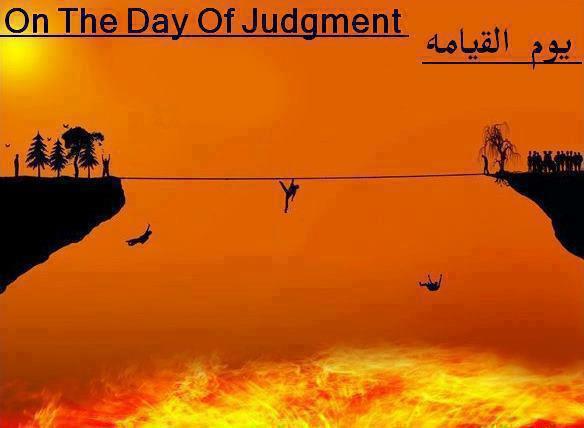
Friday Sermon: Accountability on the Day of Judgment
Published
2 weeks agoon
March 27, 2026By
Eric
Accountability on the Day of Judgment is an interesting topic following the passing of the holy month of Ramadan and its demonstration of piety by the Umma. It was also the interesting topic of the Ramadan lecture by Dr. Christopher Otayemi, the Chief Imam of the Crescent Bearers, during their March 15th monthly meeting at my residence.
There is no gainsaying the fact that man must account for his sojourn on earth at the end of the day. Good or bad, we will all account for how we spent our time on this divide of spiritual consciousness. There will be no escape, no parental intercession on behalf of their children, and no intersession of husband for his wife and vice versa. Those who have done well will reap the reward of their acts and the villains will reap the reward of their iniquities. That is why the there is need for all to do well with a view towards a pass on the Day of Qiyyamah.
It is interesting to know that many people have asked about the nature of that day. How will Allah assemble all those he had created in one place to question them and judge them accordingly? The answer to this and other questions are offered in several places in the Quran.
In Surah Al Baqara, Allah exemplified with the story of Uzair: Or like the one who passed by a town and it had tumbled over its roofs. He said: “Oh! How will Allah ever bring it to life after its death?” So Allah caused him to die for a hundred years, then raised him up (again). He said: “How long did you remain (dead)?” He (the man) said: “(Perhaps) I remained (dead) a day or part of a day”. He said: “Nay, you have remained (dead) for a hundred years, look at your food and your drink, they show no change and look at your donkey! And thus We have made of you a sign for the people. Look at the bones, how We bring them together and clothe them with flesh “. When this was clearly shown to him, he said, I know (now) that Allah is Able to do all things”. (Al-Baqarah, Quran 2:259)
See also Surah Al-Kahf, 9-26, People of the Cave, a people who were made to die for 400 years and then rose again.
The most important events that will happen on the Day of Judgment are when we will be held accountable for our deeds and when we will be questioned by our Lord, Allah (S.W.T.). There are many Quranic verses and Hadiths that tell us about these events so that the believers will prepare themselves for the most important, final test. They can prepare for this test with their strong faiths and with their righteous deeds. But are we prepared?
Allah (S.W.T.) says: For to Us will be their Return; Then it will be for Us to call them to account. (Quran 88: 25-26)
He also says: Then shall We question those to whom Our message was sent and those by whom We sent it. And verily We shall recount their whole story with knowledge, for We were never absent (at any time or place). (Quran 7:6-7)
Allah (S.W.T.) describes that Day: On the Day when every soul will be confronted with all the good it has done, and all the evil it has done, it will wish there were a great distance between it and its evil. But Allah cautions you (to remember) Himself. And Allah is full of kindness to those that serve Him.” (Quran 3:30)
The good believer will have an easy reckoning and Allah (S.W.T.) will cover up his sins after He reminds him about them. Then He will forgive him for his sins, and allow him to enter paradise. This is concluded from a Hadith reported by Imams Bukhari and Muslim in which the Prophet (SAW) said: “Allah will bring the believer very close and privately and ask him “Do you know this sin? Do you know that sin? The believer’s reply will be, “Yes Oh Lord,” until he is reminded about all of his sins, and he thinks he will perish. Then Allah will say “I covered up your sins during your life, and I will forgive your sins today. Then he will be given his book of good deeds. But the unbelievers and hypocrites will be asked about their deeds loudly in front of the creatures.
If We delay the penalty for them for a definite term, they are sure to say, “What keeps it back?” Ah! On the day it (actually) reaches them, nothing will turn it away from them, and they will be completely encircled by that which they used to mock at! (Quran 11:18)
Allah will confront His servant directly, without a mediator. The Messenger (SAW) said: “Allah will talk to everyone directly, without a translator. The person will look to his right, and will not see anything but his deeds. Then the person will look in front of himself and will see nothing but the hellfire facing him. So protect yourself from Hellfire even by giving a charity of half a date.” Reported by Imam Bukhari
Prayer will be the first thing a person will be questioned about on the Day of Judgment. The Messenger (SAW) told us in an authentic Hadith: “The first thing the people will be accountable for on the Day of Judgment is prayer, Allah will say to His angels (even though he already knows): “Look at my servant’s prayers. Were they complete or not?” If they were complete, it will be written as complete. If they were not fully complete Allah will say: “See if my servant has voluntary prayers, If he has them Allah will say: Complete his obligatory prayers shortage with his voluntary prayers.” Then the rest of his deeds will be dealt with in the same manner.” Reported by Imams Ahmad, Abu Dawood, An-Nisa’i, and Al-Hakim
We will be asked on the Day of Judgment about all of the blessings and bounties that Allah gave us in this life. Some of these blessings may include our good health, our wealth, our food and drink, our ride and our home, etc. Allah (SWT) says in the Noble Quran: Then, shall ye be questioned that Day about joy (ye indulged in!) (Quran 102:8)
Allah (SWT) describes that situation: On the Day when their tongues, their hands, and their feet will bear witness against them as to their actions. (Quran 24:24).
They will say to their skins: “Why bear ye witness against us?” They will say: “Allah hath given us speech, –(He) Who giveth speech to everything: He created you for the first time, and unto Him were ye to return. (Quran 41:21)
Also Allah (SWT) will ask us on the Day of Judgment about all of our covenants and promises that have been made in our lives. Those promises may be made to Allah (SWT) or made to people. Like the failed promises our leaders make to us about providing us electricity, water, healthcare, education, employment and security. Like the ‘Hope’ and ‘Renewed Hope’ hoax. Then they will know that ‘hope is not in a bag of rice, or vegetable oil. Hope is in a better life and life more abundant.
And so Allah (SWT) says: Come not nigh to the orphan’s property except to improve it, until he attains the age of full strength; and fulfill (every) engagement, for (every) engagement will be inquired into (on the Day of Reckoning).Quran 17:34)
Whoever they are, that are responsible for our woes should not forget that there will be a day of reckoning. A Day of Judgment when they would have to account for their stewardship.
The prophet Muhammad (SAW.) said: “The son of Adam will not pass away from Allah until he is asked about five things: how he lived his life, and how he utilized his youth, with what means did he earn his wealth, how did he spend his wealth, and what did he do with his knowledge?” – Reported by Imam At-Tirmidhi.
The sins and iniquities of our leaders have risen to high heaven and certainly, God will visit his wrath on them. It was a Catholic Bishop who once said that God will have to apologize to Sodom and Gomorrah, if he fails to punish the iniquities of our leaders.
It is out of the Mercy of Allah (SWT), that he told us about these important questions ahead of time so that we can prepare ourselves. The good believer is the one who prepares himself for those difficult events by getting closer to Allah (SWT), by doing good deeds, and by staying away from what Allah has forbidden, and by fulfilling promises and covenants, so that he will be among those who receive their book of deeds on the Day of Judgment in their right hand and Allah will enter them into paradise.
As for those who have visited woes on their people, a special place in hell shall be reserved for them. Those who have ears, let them listen now, for, No sinner shall go unpunished.
Barka Juma’at and a happy weekend
Related


Nation Building Reimagined: Integrated Principles and Strategies for Sustainable Growth
Dear CDS, NSA, Your Prodigal Sons, Brothers Have Killed General Braimah
Voice of Emancipation: Lessons from the Iran/USA War
Ovation @30: A Triumph of Vision, Courage and African Excellence
ADC National Convention: To Be or Not to Be?
Israel Questions Pakistan’s Credibility in Mediating over US-Iran Ceasefire Agreement
Osun 2026: INEC Planning to Recruit APC Members As Electoral Officials, Lawmakers Allege
‘ADC Membership Hits 500,000 after INEC Derecognition of Leadership’
Trump Delays Iran’s Strike by 2-Weeks As Pakistani Leaders Intervene
FG Expels US Missionary Alex Barber
Benin Republic 2026: Romuald Wadagni, The President in Waiting
Prominent ADC Leaders Storm INEC Hqrs in Protest Against Dictatorship
ADC Raises Alarm over INEC’s Plot to Prevent Party from Fielding Candidates
Iran’s Intelligence Chief Killed in US-Israeli Strikes
Trending
-
News6 days ago‘ADC Membership Hits 500,000 after INEC Derecognition of Leadership’
-
World4 days agoTrump Delays Iran’s Strike by 2-Weeks As Pakistani Leaders Intervene
-
National4 days agoFG Expels US Missionary Alex Barber
-
Featured3 days agoBenin Republic 2026: Romuald Wadagni, The President in Waiting
-
News4 days agoProminent ADC Leaders Storm INEC Hqrs in Protest Against Dictatorship
-
Featured5 days agoADC Raises Alarm over INEC’s Plot to Prevent Party from Fielding Candidates
-
World5 days agoIran’s Intelligence Chief Killed in US-Israeli Strikes
-
Middle East2 days agoAgain, Iran Blocks Strait of Hormuz, Alleges Ceasefire Violation