Connect with us

Featured

…Elections Will Test Nigeria’s Democracy…What The Economist Said of Nigeria’s 2015 Election

Published

on

The national and state elections due to begin in Nigeria on March 28th are likely to be the closest and most fiercely contested since the restoration of democracy in Africa’s most populous nation in 1999. There is a lack of confidence in the poll organisers, concern about the volatile environment in which voting will take place and anxiety about the undemocratic and belligerent tendencies of Nigerian politicians. It is virtually impossible to envisage an outcome to the election period that does not involve significant instability. Although we think Nigeria will just about negotiate the election period without a complete breakdown in security, there is a real possibility that the instability will be serious enough to break Nigeria’s democracy, or even split the country apart.

The run-up to the vote has been intense with provocative campaigning by politicians in both the ruling People’s Democratic Party (PDP) and the main opposition, the All Progressives Congress (APC). Cause for concern has also come from the poor preparation by the Independent National Election Commission (INEC) for the crucial polls, which has undermined public confidence in the state agency’s ability to conduct smooth and fair voting in presidential and National Assembly polls on March 28th, followed by governorship and state assembly ballots on April 11th. A six-week postponement of the elections, announced a week before the original February 14th start date, stemmed from security concerns, particularly the Islamist insurgency in the north-east, and also INEC’s failure to distribute sufficient numbers of electoral cards to voters on time. The unease and apprehension has also affected the financial markets where share prices have been subdued and the Nigerian currency, the naira, has taken a battering as investors feel nervous about the impact of the ensuing power struggle on the stability of Africa’s largest economy.

Election-related instability is not a new phenomenon

Pre-elections jitters are not new in Nigeria. Virtually every major election in the country since independence from the UK in 1960 was preceded by some level of political turmoil, often owing to grandstanding by rent-seeking politicians. Furthermore, the nation’s electoral agency has on most voting occasions shown an incredible lack of preparedness, which in 2011 resulted in a week-long postponement of the polls, announced on the day voting was supposed to start. In addition, the aftermath of every major election has featured allegations of rigging and fraud, as well as some violence, which led to military coups in 1966 and 1983; and rioting that cost hundreds of lives in 2011.

Despite the drama and mayhem that have accompanied the four general elections held so far under the Fourth Republic, this current period of civilian governance has survived and arguably become more resilient and adept at weathering political storms. Indeed, this 15-year-old civilian republic has lasted longer than the preceding spell of army rule, although overall Nigeria has still been under military rule for more years than it has enjoyed democracy.

The stakes are higher than usual

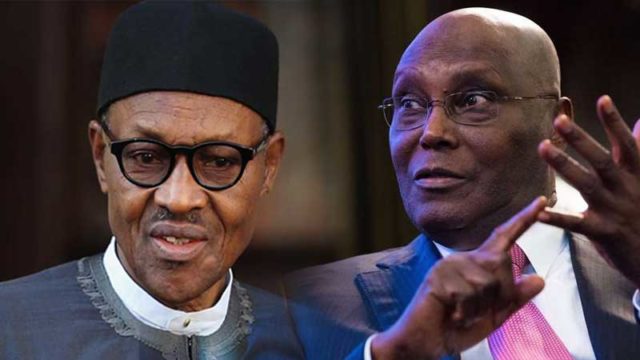
Nonetheless, a number of factors make this year’s elections riskier than previous ones. This is the first time that the ruling party, which has won every presidential vote since 1999, faces an opposition that has broad support and reasonable prospects of victory. PDP candidates easily won past presidential contests, largely because they faced challengers who lacked broad support across Nigeria’s diverse ethnic and regional groupings. However, a former military ruler, Muhammadu Buhari, the candidate of the APC making his fourth consecutive attempt at the presidency, should this time benefit from the wider support of a party created in 2013 from a merger of three main opposition parties, with the prime purpose of wresting power from the PDP. Mr Buhari, a northern Muslim, took 32% of the overall vote in 2011, sweeping the largely Muslim north-west and north-east but performing poorly in the predominately Christian south. On March 28th the 72‑year‑old retired general is likely to do well in the south-west, a stronghold of one of the parties that make-up the APC, and do better in parts of the south-east. As for the 57‑year‑old president, Goodluck Jonathan, a southern Christian who won 59% of the 2011 vote, he is likely to once again get the support of his kinsmen in the oil-producing south and probably maintain strong performances in the south-east and in the ethnically mixed north-central zones. However, it is unclear to what extent the emergence of the APC alliance will erode his support in south-west, where in the past many voters have opted for opposition candidates in state elections while casting for the ruling party in the presidential ballot.

As with the 2011 elections, the 2015 polls are taking place against the background of the insurgency of Boko Haram, a Sunni Islamist fundamentalist group seeking to carve out an Islamic state in northern Nigeria. But the group has become stronger and poses a greater threat to democracy than it did four years ago. The mayhem it has caused in the north-east, including capturing several towns and villages, has raised doubts about the possibility of holding free elections in the worst-affected parts of the north-east. Since the postponement of the polls in mid-February, the Nigerian military, with the assistance of troops from Niger, Cameroon and Chad, have pushed to retake most of the territories under the militants’ control. Nonetheless, the security situation in the region remains precarious, with militants probably still able to strike with guerrilla attacks during the elections and to exacerbate any post-election violence in the country.

Neither side will willingly concede defeat

The flipside of concerns about Boko Haram and fears of a repeat of rioting in the north if Mr Buhari loses on March 28th is worry about a resurgence of ethnic nationalist militancy in the oil-producing Niger Delta if Mr Jonathan is defeated. Militants, who waged armed struggles for local control of mineral resources up until 2009, have threatened to resume their insurgency in the event of a Buhari presidency. Threats made by hardliners on both sides of the political divide to unleash catastrophe if their side loses is probably mostly sabre rattling that has come to be associated with election seasons in Nigeria. Nonetheless, the stakes are high. If Mr Buhari suffers a fourth presidential election defeat, he will probably not get another chance to achieve his ambition of returning to power through the ballot box. The retired general’s supporters will be less likely to accept defeat graciously if, as widely expected, the results of his latest bid for power are close, even if the courts back the PDP victory. On the other hand, if Mr Jonathan is defeated, Nigeria may enter uncharted territory, in which the ruling party, still in control of the state security apparatus, disputes the outcome of the presidential election.

There is not a feasible scenario in which Nigeria avoids significant post-election unrest. The question is over the magnitude of that unrest. Nigeria has shown a high threshold for remaining intact through previous periods of significant instability and this will probably remain true this time. However, the risk of a more substantial breakdown—precipitating a period of ungovernability, a coup or even civil war—are the highest of any time since the return to civilian rule in 1999.

Continue Reading
Click to comment

Leave a Reply

Your email address will not be published. Required fields are marked *

Featured

Sunny Irakpo Launches SILEC International Magazine in America

Published

on

By

Drug Use Prevention Advocate, Founder and President of SILEC Initiatives, and U.S. Department of State Exchange Alumnus, Ambassador Sunny Irakpo, has unveiled SILEC International Magazine (SIM), a groundbreaking media platform exclusively dedicated to reporting drug-related issues across Africa, the United States, and the global community.

The announcement was made during a strategic meeting with partners in New Jersey, where Ambassador Irakpo is currently participating in a series of community-based and public-safety initiatives to deepen his expertise in combating substance use disorders and illicit drug trafficking both in the United States and worldwide.

A First-of-Its-Kind Platform for Drug-Focused Journalism

Ambassador Irakpo emphasized that SIM is designed to shape public consciousness by promoting value-driven storytelling and providing credible information on the rising tide of drug abuse and illicit trafficking—a crisis he describes as “a looming danger destroying the vibrant youth populations of many nations.”

He noted that the magazine will spotlight the work of NGOs, CEOs, advocates, and policymakers, churches, and companies with strong social responsibility particularly from African perspectives, while amplifying influential voices and advancing global understanding of effective anti-drug efforts.

Drawing inspiration from media leaders such as Dele Momodu, Chairman of Ovation Media Group, and Dr. John Momoh, Chairman of Channels Television, Irakpo described SIM as “a beacon of hope and a tool for societal transformation.”

Recognizing U.S. Efforts Against Drug Abuse and Trafficking

Ambassador Irakpo commended the United States for its continued commitment to combating drug trafficking and addiction—efforts strengthened under previous and current administrations. He particularly noted that the U.S. government under President Donald Trump demonstrated “exceptional courage, political will, and capacity in confronting the opioid crisis and the destructive forces fueling illicit drug trade,” encouraging world leaders to emulate such resolve.

He reiterated that addressing substance abuse requires a combination of drug-demand reduction, citizen sensitization, international collaboration, and sustained public education.

A Platform With Social Impact and Youth Empowerment at Its Core

Irakpo highlighted SIM as a top-tier media platform that will not only drive awareness but also create employment opportunities for young people and support underprivileged students—particularly in Nigeria, where more than 20 million children remain out of school due to financial hardship.

He added that SIM will serve as a sustainability engine for the ongoing anti-drug overdose campaigns of SILEC Initiatives, a leading nonprofit that has educated and sensitized communities for nearly two decades.

Experienced Editorial Leadership

As SIM prepares for its U.S. take-off, Irakpo announced the appointment of veteran journalist Julius Eto as Chairman of the Editorial Board. Eto brings more than four decades of experience across Nigeria’s premier news organizations, including The Guardian, ThisDay, The Punch, Daily Times, and The Trumpet.

He will be joined by distinguished academics including Prof. Oscar Odion Odiboh and other seasoned professionals committed to advancing the magazine’s mission.

A Call for Media Reawakening and Global Collaboration

Ambassador Irakpo called for a media renaissance in Nigeria to strengthen societal values and elevate African leadership in global discourse. SIM, he said, intends to claim its rightful place as “an African voice on the world stage.”

With the official launch of SILEC International Magazine (SIM) scheduled for the first quarter of 2026 in the United States, Ambassador Irakpo extended an invitation to corporate organizations, development partners, and well-meaning individuals worldwide to support this far-reaching vision.

“With hope, determination, and the resilience symbolized by the eagle, SIM is prepared to soar across the globe. Members of the public are respectfully enjoined to visit our friendly, rich anti-drug abuse website, www.silecinitiatives.org.ng,” he added.

Continue Reading

Featured

How Tinubu Helped to Crush Military Coup in Benin Republic – Presidency

Published

on

By

The Presidency, on Sunday night, said acting on the two requests by the authorities of Benin Republic, President Bola Tinubu ordered Nigerian Air Force fighter jets to enter the country and take over the airspace to help dislodge the coup plotters from the National TV and a military camp where they had regrouped.

The Presidency, in a statement by Special Adviser to the President on Information and Strategy, Bayo Onanuga, said President Tinubu commended the swift response of the gallantry of Nigeria’s military.

The statement read: “President Bola Tinubu has commended the gallantry of Nigeria’s military on Sunday for responding swiftly to the request by the Government of Benin Republic to save its 35-year-old democracy from coup plotters who struck at dawn today.

“Acting on two separate requests from the Government of Benin, President Tinubu first ordered Nigerian Air Force fighter jets to enter the country and take over the airspace to help dislodge the coup plotters from the National TV and a military camp where they had regrouped.

“The Republic of Benin, through its Ministry of Foreign Affairs, in a Note Verbal, requested immediate Nigerian air support “in view of the urgency and seriousness of the situation and to safeguard the constitutional order, protect national institutions and ensure the security of the population.”

“In the second request, the authorities in Benin requested the deployment of Nigerian Air Force assets within Beninoise airspace for surveillance and rapid intervention operations under Benin-led coordination.

“The Benin government also requested Nigerian ground forces, “strictly for missions approved by the Beninese Command authority in support of the protection of constitutional institutions and the containment of armed Groups.”

“Nigeria’s Chief of Defence Staff, General Olufemi Oluyede, said all the requests have been fulfilled, with Nigerian ground forces now in Benin.

“Ours is to comply with the order of the Commander-in-Chief of our armed forces, President Tinubu,” he said.

He further stated: “Constitutional order was upended in the Republic of Benin, Nigeria’s neighbour, when some soldiers led by Colonel Pascal Tigri announced a coup on Sunday morning. The putschists seized the National TV and claimed they had toppled President Patrice Talon and suspended all democratic institutions.

“It took some hours before the government’s loyal forces, assisted by Nigeria, took control and flushed out the coup plotters from the National TV.

“In his remarks after the restoration of the democratic and constitutional order, President Tinubu saluted the Nigerian armed forces for standing firm as a protector and defender of democracy.

“Today, the Nigerian armed forces stood gallantly as a defender and protector of constitutional order in the Republic of Benin on the invitation of the government. Our armed forces acted within the ambit of the ECOWAS Protocol on Democracy and Good Governance.

“They have helped stabilise a neighbouring country and have made us proud of their commitment to sustaining our democratic values and ideals since 1999. Nigeria stands firmly with the government and people of the Republic of Benin.”

Continue Reading

Featured

Ozekhome, Wife Josephine, Celebrate 34 Years of Marital Bliss

Published

on

By

By Eric Elezuo

Popular Constitution lawyer and renowned human rights activist, Prof Mike Ozekhome, and wife, Lady Josephine Ozekhome, has celebrated 34 years of living together as husband and wife.

The couple took time out to shower love, encomium and affection on each other, celebrating the goodness of Godd upon their lives and home in the last 34 years.

Speaking exclusively to The Boss, Ozekhome noted that on a day like this “I remember how we started; how we weathered the storm together, and conquered together. She is the best companion anyone can have, and I’m very proud of her, and to be her husband.”

Ozekhome once stated that his wife is “a great woman of uncommon virtues and humanity; my jewel of inestimable value, soulmate, sister, best friend and mother.”

While the wife is identified as Lady (Dr) (Senior High Chief) Josephine Mike Ozekhome LL.M, LSM, LL.D. D.Sc., the renowned constitution lawyer, a dotting and loving husband, and  firebrand pro-masses Advocate, os identified as Prof Mike Ozekhome SAN, CON, OFR, Ph.D, LL.D, D.Litt,D.Sc., among a host of other watering achievements.

Mike and Josephine have built a family of lawyers, producing wonderful children, who are also lawyers, and doctors.

Happy 34th anniversary, Mike and Josephine!

Continue Reading

Trending