Connect with us

Featured

Opinion: How Nigerians May Vote, State by State: Buhari, Atiku in Tight, Tough Race as Feb 16 Closes in

Published

on

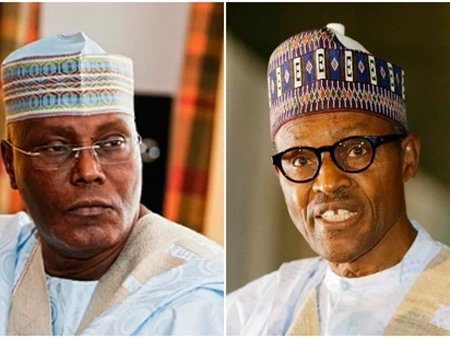
With just 13 days to the February 16 presidential election, the dynamics of the race for the nation’s top job indicate an interestingly tight and tough contest between the two leading candidates of the Peoples Democratic Party (PDP), Alhaji Atiku Abubakar and the ruling All Progressives Congress (APC), Muhammadu Buhari.

This latest development is not only evidenced by the frenzy of their campaigns, which has seen both candidates traverse many states and across the geo-political zones, but more strongly connected to the degree of acceptability that the two candidates enjoy, in what is fast becoming a popularity contest.

THISDAY’s recent field intelligence gathering, which reports a tight and tough contest, however, presents both state-by-state and geo-political zone analyses of what is obtainable by each of the two front-runners in the states, thus giving an evolving picture of what might ultimately be the regional standing of the candidates and their parties.

North-west
In the Kano, for instance, the race pictures a 65 per cent victory for Buhari and 35 per cent for Atiku, In Kaduna, while Buhari is likely to get 55 per cent of the votes cast, Atiku may post just 45 per cent. The race in Katsina is a no-contest as Buhari is sure to secure 70 per cent to Atiku’s 30 per cent.
In Sokoto, Buhari manages an edge over Atiku with 55 to 45 per cent sharing, but in Zamfara, the contest promises a 50-50 contest. Kebbi looks comfortable for Buhari with a 60 per cent advantage over Atiku’s 40 per cent.

Thus, in the North-west, Buhari is sure of victory in at least five states, albeit with varying winning percentages, with a draw in one with Atiku.
Buhari is certain to prevail in Jigawa with a 60/40 mergin over Atiku.

North-east
The dynamics in North East varies differently from the North West, because here, in Bauchi for example, Buhari is sure of some 60 per cent to Atiku’s 40, while in Borno and in spite of the growing insurgency, the votes will still go the way of Buhari, also with 60 to 40 per cent voting.

Atiku will put up a good showing in Adamawa with a 65 per cent advantage, leaving Buhari with 35 per cent. Moving on to Yobe, Buhari is positioned to score 60 per cent, leaving 40 for Atiku and the same equation is shared in Gombe – 60/40 – also in favour of Atiku. But the Taraba contest is a different one as it sees Atiku coasting home with 70 per cent and 30 for Buhari.

Here in the North East, both candidates would have a very tight race with the states shared three each.

North -central
The battle for North Central appears an all-Atiku affair, because Benue is determined to deliver Atiku with 70 per cent, while leaving 30 per cent for Buhari. Plateau, although slightly tough, would also deliver Atiku with 55 per cent, while conceding 45 per cent to Buhari. A repeat of this is likely in Nasarawa, where Atiku might go home with 55 per cent and Buhari, 45 per cent.
Kogi State’s battle also looks good for Atiku even though with the same 55/45 sharing formula. But Niger might go the way of Buhari with 55 per cent to Atiku’s 45 per cent. However, Kwara is solidly PDP and would deliver Atiku but with 55 per cent to Buhari’s 45 per cent.
The summary here is five states for Atiku and one for Buhari.

South-west
Considered the real battleground because of the number of votes that is up for grab, the race in South-west is unavoidably tight. In Oyo, for example, Buhari will certainly top with 55 per cent, while Atiku gets the remaining 45 per cent of the vote count. But in Osun, the situation is too close to call and might flip either way. Is a 50/50 chance. The Osun equation is unlikely to be repeated in Ondo, which may give Buhari 55 per cent and Atiku 45 per cent.

Buhari appears comfortable in Ekiti, where he may likely get his highest votes in the zone with 60 per cent to Atiku’s 40 per cent. Interestingly, however, Ogun too may go the way of Atiku with 55 per cent to Buhari’s 45 per cent, because of the many factors that are currently playing out in the state. But the Lagos battle is a 50-50 ratio. The dynamics are quite intricate.

Curiously, the South-west goes the way of Atiku with three states to Buhari’s two, while drawing in one, Lagos.

South-east
Further South, the battle for the soul of South-east is almost predictable even without the enabling field work. This is because the entire zone would go the way of PDP, although with different percentages accruable to each state.

Starting with Imo, the heartland of the South-east, Atiku is sure of at least 60 per cent of the votes with 40 per cent concession to Buhari. The same ratio is obtainable in Abia, God’s own state: 60-40 in favour of Atiku. Ebonyi too is sharing her votes in the same 60-40 pattern, also in favour of Atiku, while Enugu, which is South-east safest state for the PDP, boasts 70 per cent for Atiku and 30 per cent for Buhari. In Anambra, where Peter Obi’s home-zone advantage is certain to work for Atiku, the PDP candidate stands to get 60 per cent votes to Buhari’s 40 per cent. The final analysis in this zone sees Atiku clearing all the five states.

South-south
Similar to what obtains in South-east, the entire South-south too might go the way of PDP, with votes contingent on their voting strengths.

Rivers promises to deliver the PDP with a percentage of 80 to 20 in favour of Atiku, while Cross River will post 70 per cent for Atiku and 30 per cent for Buhari. Akwa Ibom, despite the current state of play, will still deliver PDP with 60 per cent and concede 40 to Buhari.

Edo will deliver the PDP with 55 per cent, leaving Buhari with the remaining 45 per cent. In Delta too, the PDP will post some 75 per cent for Atiku and 25 per cent for Buhari, while Bayelsa, though with a relatively small voting strength, will hugely deliver Atiku’s PDP with 80 per cent, leaving the remaining 20 per cent for Buhari.

The South-south analysis also sees Atiku clearing the entire six states. As for the Federal Capital Territory, FCT, it looks like a 50/50 chance for the two candidates. And may go either way.

Continue Reading
Click to comment

Leave a Reply

Your email address will not be published. Required fields are marked *

Featured

Delta Govt Confirms Death of Senator Nwaoboshi at 68

Published

on

By

Senator Peter Onyelukachukwu Nwaoboshi, the former lawmaker who represented Delta North Senatorial District in the National Assembly, has passed away. He was 68.

Reports said that Nwaoboshi died on Friday in Abuja following a brief illness.

His demise was confirmed in a condolence statement issued by the Delta State governor, Rt. Hon. Sheriff Oborevwori.

Expressing sorrow, the governor described Nwaoboshi’s passing as a monumental loss to Delta State, the Anioma nation, and the Nigerian federation.

In the statement by his Chief Press Secretary, Sir Festus Ahon, Governor Oborevwori hailed the late Senator as a “fearless advocate” of the Anioma cause whose contributions to nation-building remain indelible.

The governor recalled Nwaoboshi’s impactful tenure in the Red Chamber, particularly his role as Chairman of the Senate Committee on Niger Delta Affairs.

He noted that Nwaoboshi’s consistent advocacy for the development of the oil-rich region distinguished him as a passionate and committed leader.

“On behalf of the government and people of Delta State, I mourn the passing of my dear friend, Senator Peter Onyelukachukwu Nwaoboshi,” the governor said.

“I extend my heartfelt condolences to his immediate family, the people of Anioma nation, members of the All Progressives Congress (APC), and all those whose lives he touched. I pray that Almighty God grant his soul eternal rest.”

Before his elevation to the Senate in 2015, he served meritoriously as a two-term Chairman of the Peoples’ Democratic Party (PDP) in Delta State, where he was instrumental in consolidating the party’s grip on the State.

Continue Reading

Featured

Ribadu’s Office Denies Arming Miyetti Allah in Kwara

Published

on

By

The National Counter Terrorism Centre (NCTC), under the office of the National Security Adviser Mallam Nuhu Ribadu, has refuted claims that it armed members of the Miyetti Allah group for counter-terrorism operations in Kwara State.

The Head of Strategic Communication at NCTC, Mr. Michael Abu, issued the rebuttal on Wednesday in Abuja.

Abu described the reports circulated by some online platforms as false and misleading, saying they misrepresented ongoing security operations in forested areas of the state.

He said that in line with the Terrorism Prevention and Prohibition Act, 2022, it continued to coordinate and support law enforcement, security and intelligence agencies in countering all forms of terrorism across the country.

NCTC spokesman explained that Nigeria’s counter-terrorism efforts guided by the National Counter Terrorism Strategy (NACTEST), involved the deployment of hybrid forces comprising regular security personnel and trained auxiliaries such as hunters and vigilante elements, particularly in difficult terrains.

According to him, the hybrid approach, which was previously deployed with the Civilian Joint Task Force in the North-East, is currently being applied in parts of the North-West and North-Central, including Kwara State, and has recorded several successes against banditry and other criminal activities.

He stressed that the Federal government was not conducting kinetic operations with any socio-cultural group, adding that claims that the Office of the National Security Adviser provided arms to such organisations are unfounded and should be disregarded.

According to him, all auxiliary personnel involved in hybrid operations were recruited directly by authorised security and intelligence agencies after due diligence, and that all operations were conducted strictly in line with the law and established standard operating procedures.

He urged the media to exercise responsibility by protecting sensitive security information and seeking clarification through designated official spokespersons, while advising the public to ignore unverified reports capable of undermining ongoing operations.

He reaffirmed the centre’s commitment to transparency and stakeholder engagement to deepen public understanding of Nigeria’s counter-terrorism efforts.

Continue Reading

Featured

Respite As Court Stops Police, IGP from Enforcing Tinted Glass Permit Nationwide

Published

on

By

A Delta State Court sitting in Orerokpe has restrained the Inspector General of Police (IGP) and the Nigeria Police Force from resuming the enforcement of the tinted glass permit policy nationwide.

Justice Joe Egwu, while ruling on a motion ex-parte in a suit marked HOR/FHR/M/31/2025 filed by Isreal Joe against the IGP and two others, through his counsel, Mr. Kunle Edun (SAN), who led other lawyers, restrained, stopped and barred the respondents from resuming the enforcement of the tinted glass permit policy nationwide.

The order was sequel to the announcement by the Nigeria Police of its decision to resume the tinted glass permit enforcement on January 2, 2026.

Aside from the IGP, the court also restrained the Nigeria Police Force and the Commissioner of Police, Delta State Police Command, from resuming the enforcement of the tinted glass permit policy nationwide.

Justice Egwu also barred the police from harassing, arresting, detaining or extorting citizens and motorists on account of the said policy, pending the hearing and determination of the substantive suit.

The case has also reignited a dispute between the Nigeria Police and the Nigerian Bar Association (NBA). The NBA has maintained that the matter remains before the courts and warned that enforcement could constitute contempt.

The association said a suit challenging the constitutionality of the policy had been filed at the Federal High Court, Abuja, and that a judgment had been reserved following the conclusion of hearings.

The NBA further cited a Federal High Court order in Warri directing parties to maintain the status quo pending an interlocutory injunction. The association accused the police of disregarding the rule of law and urged President Bola Tinubu to intervene. “Any contrary executive action amounts to overreaching the Court and undermines the rule of law,” NBA President Mazi Afam Osigwe (SAN) said.

The police, through Force Public Relations Officer CSP Benjamin Hundeyin, insisted that no court order barred enforcement and defended its planned resumption on grounds of public security. Hundeyin noted a rise in crimes facilitated by vehicles with unauthorised tinted glass, citing incidents ranging from armed robbery to kidnapping.

“The Inspector-General of Police, out of respect and understanding, temporarily suspended enforcement to give Nigerians additional time to regularise their tinted glass permits.

That decision was not based on any court order but was a discretionary move to accommodate public concerns,” he said.

The announcement prompted warnings from the NBA that enforcement could trigger committal proceedings against the IGP and the Force spokesperson. The police, however, maintained that enforcement continues until directed otherwise by a court, highlighting recent incidents in which occupants of vehicles with tinted glass allegedly attacked officers.

The ruling by the Delta State High Court now legally bars the police from implementing the tinted glass permit policy nationwide while litigation on the policy’s constitutionality continues.

Continue Reading

Trending