Opinion
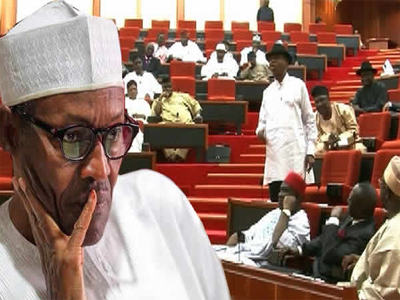
Opinion: Interrogating President Muhammadu Buhari’s Oversized Integrity
Published
7 years agoon
By
Eric
By Raymond Nkannebe
It has become a pastime of sorts for the APC crowd to inundate anybody who wants to listen, how the so called Integrity of President Muhammadu Buhari is the best thing to have happened to post-colonial Nigeria. They do this with a certain air of arrogance elevating Buhari to something of a Saint without a single foible.
As the 2019 general elections draw near, the craze has reached even new proportions, and the latest scheme (but which is bound to fail), is to make “personal integrity” ( or the lack of it), a defining factor in the forthcoming elections as against the score card of the administration and it’s impact on the welfare of the generality of Nigerians. The target, understandably of this defeatist campaign strategy is candidate Atiku Abubakar, who have forced a disquiet in the camp of the ruling APC on account of his towering popularity which looks certain to guarantee his victory by the 16th of February, 2019 so as to Get Nigeria Working Again. The modus operandi of the strategy is simple: emphasize Buhari’s so called integrity, and contrast same with Atiku’s.
At the official launch of the APC Presidential campaign in Uyo, Akwa-Ibom state last Friday, this chorus of integrity was chanted with reckless abandon by the numerous party members who mounted the rostrum reiterating the vaunted integrity of candidate Buhari, and why that is a quality enough to earn him a hard-sought re-election. From the Director General of the Campaign Organization-Rotimi Amaechi to Adams Oshiomole amongst others, the so-called Integrity of President Muhammadu Buhari was adumbrated notwithstanding the fact that many of them sounded like a broken record.
Controversial party chairman, Comrade Adams Oshiomole in an interview with The Daily Sun Newspapers some three weeks ago put it in black and white thus, “I believe the president will be re-elected on the basis of his personal integrity”. Even the president himself seem to be playing the part. At a religious function in Kano a fortnight ago, he told his audience to elect only candidates with credibility and integrity in 2019. Making a veiled reference to his overrated integrity.
When the spokesman of the Buhari Campaign Organization, Mr. Festus Keyamo played host to a political programme on Channels TV the other day, he was also seen singing this swan song. Ditto Garba Shehu, Femi Adesina and the numerous other image makers of this president. With the manner in which they go about it, it gives away the impression of a well rehearsed plot behind the scene namely, to present president Muhammadu Buhari to Nigerians once again, as the only chief priest before whom divination to the ifa Oracle is possible, as they did in the run up to the 2015 polls.
The reason for this however is not hard to seek. There is nothing the government of the day has to show for its stewardship three and a half years after it promised Nigerians a Change that has proven to be a mirage. Whereas it campaigned at the time on the three pillars of Fighting Corruption, Improving the Economy and Enhancing our National Security, a one-off look at these heads of campaign thrust shows that we have only progressed in retrogression under its watch. And the facts out there bear us out that they need no demonstration in this intervention.
Having come to this realisation, the only alternative is to latch on to the time worn “mai gaskiya” narrative, and re-present him as the last of the ‘saints’ without who the survival of Nigeria will be forgotten. Hence why Nigerians are inundated every other day with rhetorics around an overpriced integrity that is not supported by verifiable facts. I shall return to this soon.
Now, it is not that this writer discounts “integrity” as an integral quality of leadership. No serious person should be heard advancing such proposition. Indeed ancient scientist and Greek philosopher, Aristotle underscored the importance of same in leadership when he intsructively observed, “because rulers have power, they’ll be tempted to use it for personal gain. It is important that politicians withstand this temptation, and that requires integrity”. He concluded by delimiting it’s fundamentals thus, “integrity is about having the right ethical values that become visible in a pattern of behaviour”. Our own professor Chunua Achebe (May he rest well), weighed in on the matter in latter years, and defined the truest test of integrity as the blunt refusal to compromise, writing on the subject in his pamphletter, The Trouble with Nigeria.
A common denominator to be seen in the quality of integrity as laid down by the two great men, is that it is not a feat attained by undue repetition informed by prejudice of political party megaphones. On the contrary it is a serious character-trait whose visibility must flesh out from a consistent pattern of behaviour to paraphrase Aristotle. A deeper insight into the matter would also reveal that it is not synonyms with ascetism, or the ability to hold extreme religious views. Quite to the contrary it is the quality of being honest and having strong moral values.
But how has president Muhammadu Buhari fared in his much vaunted claim to being the very paragon of integrity? A closer look at the behavioural pattern of the Daura born septuagenerian since he found himself as a democratically elected president, shows that he is anything but a man of high integrity as the APC crowd tries to force down our throats. There is nothing in the behavioural pattern of this president three and a half years since after he took on the “Babar Riga”, that suggests he has a distaste for suspicious, nay “improper behaviour”. Up until today, even the most ardent APC supporter cannot point to a peculiar and distinctive conduct of this president that supports these outlandish claims to integrity. Unlike as was seen in the leadership choices of say, Burkina Faso’s Thomas Sankara who typifies integrity, President Muhammadu Buhari’s claim to integrity have been more of an exercise in cosmeticism. And the indications are there for all to see.
First of, any keen observer would notice that this president has observed in the breach the sort of lifestyle he promised to lead if elected into power pre-2015. From maintaining the number of jets in the presidential fleet, to traveling abroad to treat headache and sore throat, and what not, president Muhammadu Buhari has proven to be a turn coat, whose word is not his bond. A character trait which should not be seen in a man that lays so much claim to having integrity. But that is not all.
If compromise as pointed out by Achebe is the yardstick for measuring integrity, then president Muhammadu Buhari should not be decorated as a man of integrity by Keyamo and friends. This is because we have seen him condone corrupt behaviour right under his nose, and even received into his party, persons who are flagged for corruption by the anti-graft agency, EFCC. In this connection, the particular case of the former SGF, Babachir Lawal sticks out like the proverbial sore thumb. While he was reluctantly shoved aside for the infamous grass cutting scandal, he remains until today un-prosecuted and was even rumoured to have single-handedly nominated his successor. In the wake of the scandal rocking the Kano State governor, who promised to deliver some 2 million votes towards his re-election, President Muhammadu Buhari told a stunned world, that Governor Abdullahi Umar Ganduje was the best thing to have happened to governance. Long before this time, he had absolved late General Sani Abacha of any financial impropriety. Referring to him as a good man. But up until today, continues to purportedly recover the Abacha loots from every corner of the world.
Through and through, he has been a typical party man condoning the rot from within his party and calling out those outside his party. As at today, at least three of his appointees are alleged to have been involved in a certificate forgery scandal. Yet this Mr. “integrity” has not summoned the balls to ask them to take a walk from his government pending when they are able to clear their names with the appropriate authorities. Here, we speak of Mr. Okoi- Obono Obla and the minister of communications, Abdur-raheem Adebayo Shittu. If the former minister of finance, Kemi Adeosun resigned, it is widely believed that it was on her honour and not informed by signals from the presidential quarters.
In the context of financial prudence and management, president Muhammadu Buhari’s “integrity” have also been caught flat footed. Beyond the fact that no one has told Nigerians how much was expended in the campaign that brought PMB to power in 2015, the much talked about recovered Abacha loot, have been enmeshed in secrecy that it is only rational to conclude that they have been re-looted as pointed out by critics. Ditto the recoveries made by the EFCC and other anti graft agencies.
Even inside PMB’s “Oza Room”, we have heard tales from his wife of a certain cabal that runs the show from behind the scene. Buhari’s closest attempt at debunking same was to ask his detractors to point out the cabals. Describing his wife’s remonstrations as “her business”. Such an easy and simplistic obfuscation of the real issue. But we know that it will be fool hardy for anybody to dismiss Aisha’s consistent criticisms with a wave of the hand given the position she occupies in Buhari’s life.
While chewing with that, consider the sudden and alarming rate at which old friends, relatives and acquaintances of this president have risen into stupendous wealth since he came to power! Of course we have the fire eating Buba Galadima to thank for this earth shaking revelations. At a Channels TV program last week, the veteran politician (and an old acquaintance of Buhari), called out the president specifically and put his much vaunted “integrity” in the ‘dock’ before eventually passing a vote of “Zero Integrity” on him on account of how he has corruptly enriched his old friends and associates who are today living in eye popping mansions scattered in and about Daura-GRA.
While it may be contested that these are mere allegations, the fact that the Presidency have not officially reacted to Galadima’s allegations suggests their truism. Nobody knows if Buhari’s handlers are afraid of being sent to the “market square” as Alhaji Buba Galadima threatened at that program.
One could go on and on to chronicle the different behavioural pattern of this president that robs him of any claim to integrity. Upon a further look, one notices that this has been so since in his days as the military head of state. And the particular episode of the 53 notorious suit cases, and General Muhammadu Buhari’s role in same bear us out here. If one might also add, the unresolved case of $2.8 billion allegedly looted while he served as petroleum minister in 1977 further casts a doubt on this vaunted integrity.
If President Muhammadu Buhari has anything, it is a cult following in his North Western political base pre-2015. A followership which it must be mentioned, was not anchored on any proven integrity, but on ideological/religious sentiments.
Assuming, but without conceding however that this president has the wealth of integrity that have been arrogated to him, it is submitted that integrity as a leadership quality is not of itself, determinative of performance. Nations become great not on the dry bones of a leader’s integrity, but their ability to make core decisions and choices that impact the overall well-being of the state. What is more, while it is good for a leader to have personal integrity, there are no guarantees that members of his administration will also be of equal integrity. Hence the need for leadership not to be based on the moral credentials of one man, but through the building and sustenance of strong institutions that will deliver, independent of the driver of the process. In essence therefore, nations do not need SAINTS. They need PERFORMERS to grow and become developed. Adams Oshiomole was therefore in the wrong when he professed that Buhari’s “personal integrity” is enough to earn him another slice of the pie. If indeed Buhari has integrity, it is however not in doubt that he has failed to transform same into any meaningful developmental impact on Nigeria and Nigerians.
Which brings us finally to the forthcoming elections. Assuming Buhari has all the integrity as credited to him, we have seen the limits of what could be achieved with that: the annexation of towns and communities in Borno state by Boko Haram; the overbloated debt profile of the nation running into a staggering 22 Trillion Naira; the high rate of unemployment that has reached an all-time-high of 23%; double digit inflation at the rate of 18.8%; the shut down of our tertiary institutions for upwards of two months due to strike action by academic staff; the threatened shut down of the economy by the organised labour; the mindless killings from Zamfara to Benue, Plateau and elsewhere; a wobbling stock market and an economy headed for the rocks from the analysis of financial experts.
With this score card, no leader should merit a second bite at the cherry. Including President Muhammadu Buhari. His so called integrity is a fraud, a wool over the eyes to further hoodwink Nigerians to repeat the mistake of 2015. This is more so when the facts out there suggests that this over priced “integrity” cannot withstand any serious stricture as Alhaji Buba Galadima demonstrated the other day.
Raymond Nkannebe is a legal practitioner and public affairs commentator based in Lagos. Comments and reactions to raymondnkannebe@gmail.com.
Related
You may like
Opinion
How Dr. Fatima Ibrahim Hamza (PT, mNSP) Became Kano’s Healthcare Star and a Model for African Women in Leadership
Published
2 days agoon
December 6, 2025By
Eric
By Dr. Sani Sa’idu Baba
My dear country men and women, over the years, I have been opportune to watch numerous speeches delivered by outstanding women shaping the global health sector especially those within Africa. Back home, I have also listened to towering figures like Dr. Hadiza Galadanci, the renowned O&G consultant whose passion for healthcare reform continues to inspire many. Even more closer home, there is Dr. Fatima Ibrahim Hamza, my classmate and colleague. Anyone who knew her from the beginning would remember a hardworking young woman who left no stone unturned in her pursuit of excellence. Today, she stands tall as one of the most powerful illustrations of what African women in leadership can achieve when brilliance, discipline, and integrity are brought together.

Before I dwell into the main business for this week, let me make this serious confession. If you are a regular traveler within Nigeria like myself, especially in the last two years, you will agree that no state currently matches Kano in healthcare delivery and institutional sophistication. This transformation is not accidental. It is the result of a coordinated, disciplined, and visionary ecosystem of leadership enabled by Kano State Governor, Engr Abba Kabir Yusuf. From the strategic drive of the Hospitals Management Board under the meticulous leadership of Dr. Mansur Nagoda, to the policy direction and oversight provided by the Ministry of Health led by the ever committed Dr. Abubakar Labaran, and the groundbreaking reforms championed by the Kano State Primary Health Care Management Board under the highly cerebral Professor Salisu Ahmed Ibrahim, the former Private Health Institution Management Agency (PHIMA) boss, a man who embodies competence, hard work, honesty, and principle, the progress of Kano’s health sector becomes easy to understand. With such a strong leadership backbone, it is no surprise that individuals like Dr. Fatima Ibrahim Hamza is thriving and redefining what effective healthcare leadership looks like in Nigeria.
Across the world, from top medical institutions to global leadership arenas, one truth echoes unmistakably: when women lead with vision, systems transform. Their leadership is rarely about theatrics or force; it is about empathy, innovation, discipline, and a capacity to drive change from the inside out. Kano State has, in recent years, witnessed this truth firsthand through the extraordinary work of Dr. Fatima at Sheikh Muhammad Jidda General Hospital.
In less than 2 years, Dr. Fatima has emerged as a phenomenon within Kano’s healthcare landscape. As the youngest hospital director in the state, she has demonstrated a style of leadership that mirrors the excellence seen in celebrated female leaders worldwide, women who inspire not by occupying space, but by redefining it. Her performance has earned her two high level commendations. First, a recognition by the Head of Service following a rigorous independent assessment of her achievements, and more recently, a formal commendation letter from the Hospitals Management Board acknowledging her professionalism, discipline, and transformative impact.
These acknowledgements are far more than administrative gestures, they place her in the company of women leaders whose influence reshaped nations: New Zealand’s Jacinda Ardern with her empathy driven governance, Liberia’s Ellen Johnson Sirleaf with her courageous reforms, and Germany’s Angela Merkel with her disciplined, steady leadership. Dr. Fatima belongs to this esteemed lineage of women who do not wait for change, they create it.
What sets her apart is her ability to merge vision with structure, compassion with competence, and humility with bold ambition. Staff members describe her as firm yet accessible, warm yet uncompromising on standards, traits that embody the modern leadership model the world is steadily embracing. Under her stewardship, Sheikh Jidda General Hospital has transformed from a routine public facility into an institution of possibility, demonstrating what happens when a capable woman is given the opportunity to lead without constraint.
The recent commendation letter from the Hospitals Management Board captures this evolution clearly: “Dr. Fatima has strengthened administrative coordination, improved patient care, elevated professional standards, and fostered a hospital environment where excellence has become the norm rather than the exception”. These outcomes are remarkable in a system that often battles bureaucratic bottlenecks and infrastructural limitations. Her work is proof that effective leadership especially in health must be visionary, intentional, and rooted in integrity.
In a period when global discourse places increasing emphasis on the importance of women in leadership particularly in healthcare, Dr. Fatima stands as a living testament to what is possible. She has demonstrated that leadership is never about gender, but capacity, clarity of purpose, and the willingness to serve with unwavering commitment.
Her rise sends a powerful message to young girls across Nigeria and Africa: that excellence has no gender boundaries. It is a call to institutions to trust and empower competent women. And it is a reminder to society that progress accelerates when leadership is guided by competence rather than stereotypes.
As Kano continues its journey toward comprehensive healthcare reform, Dr. Fatima represents a new chapter, one where leadership is defined not by age or gender, but by impact, innovation, and measurable progress. She is, without question, one of the most compelling examples of modern African women in leadership today.
May her story continue to enlighten, inspire, and redefine what African women can, and will achieve when given the opportunity to lead.
Dr. Baba writes from Kano, and can be reached via drssbaba@yahoo.com
Related
Opinion
Book Review: Against the Odds by Dozy Mmobuosi
Published
4 days agoon
December 4, 2025By
Eric
By Sola Ojewusi
Against the Odds is an ambitious, deeply personal, and unflinchingly honest memoir that traces the remarkable rise of Dozy Mmobuosi, one of Nigeria’s most dynamic and controversial entrepreneurs. In this sweeping narrative, Mmobuosi reveals not just the public milestones of his career, but the intimate struggles, internal battles, and defining moments that shaped his identity and worldview.
The book is both a personal testimony and a broader commentary on leadership, innovation, and Africa’s future—and it succeeds in balancing these worlds with surprising emotional clarity.
A Candid Portrait of Beginnings
Mmobuosi’s story begins in the bustling, unpredictable ecosystem of Lagos, where early challenges served as the furnace that forged his ambitions. The memoir details the circumstances of his upbringing, the value systems passed down from family, and the early encounters that sparked his desire to build solutions at scale.
These foundational chapters do important work: they humanize the protagonist. Readers meet a young Dozy not as a business figurehead, but as a Nigerian navigating complex social, financial, and personal realities—realities that millions of Africans will find familiar.
The Making of an Entrepreneur
As the narrative progresses, the memoir transitions into the defining phase of Mmobuosi’s business evolution. Here, he walks readers through the origins of his earliest ventures and the relentless curiosity that led him to operate across multiple industries—fintech, agri-tech, telecoms, AI, healthcare, consumer goods, and beyond.
What is striking is the pattern of calculated risk-taking. Mmobuosi positions himself as someone unafraid to venture into uncharted territory, even when the cost of failure is steep. His explanations offer readers valuable insights into:
• market intuition
• the psychology of entrepreneurship
• the sacrifices required to build at scale
• the emotional and operational toll of high-growth ventures
These passages make the book not only readable but instructive—especially for emerging
African entrepreneurs.
Triumphs, Crises, and Public Scrutiny
One of the book’s most compelling strengths is its willingness to confront controversy head-on.
Mmobuosi addresses periods of intense scrutiny, institutional pressure, and personal trials.
Instead of glossing over these chapters, he uses them to illustrate the complexities of building businesses in emerging markets and navigating public perception.
The tone is reflective rather than defensive, inviting readers to consider the thin line between innovation and misunderstanding in environments where the rules are still being written.
This vulnerability is where the memoir finds its emotional resonance.
A Vision for Africa
Beyond personal history, Against the Odds expands into a passionate manifesto for African transformation. Mmobuosi articulates a vision of a continent whose young population, natural resources, and intellectual capital position it not as a follower, but a potential leader in global innovation.
He challenges outdated narratives about Africa’s dependency, instead advocating for
homegrown technology, supply chain sovereignty, inclusive economic systems, and investment in human capital.
For development strategists, policymakers, and visionaries, these sections elevate the work from memoir to thought leadership.
The Writing: Accessible, Engaging, and Purposeful
Stylistically, the memoir is direct and approachable. Mmobuosi writes with clarity and intention, blending storytelling with reflection in a way that keeps the momentum steady. The pacing is effective: the book moves seamlessly from personal anecdotes to business lessons, from introspection to bold declarations.
Despite its business-heavy subject matter, the prose remains accessible to everyday readers.
The emotional honesty, in particular, will appeal to those who appreciate memoirs that feel lived rather than curated.
Why This Book Matters
Against the Odds arrives at a critical moment for Africa’s socioeconomic trajectory. As global attention shifts toward African innovation, the need for authentic narratives from those building within the system becomes essential.
Mmobuosi’s memoir offers:
• a case study in resilience
• an insider’s perspective on entrepreneurship in frontier markets
• a meditation on reputation, legacy, and leadership
• a rallying cry for African ambition
For readers like Sola Ojewusi, whose work intersects with media, policy, leadership, and social development, this book offers profound insight into the human stories driving Africa’s new generation of builders.
Final Verdict
Against the Odds is more than a success story—it is a layered, introspective, and timely work that captures the pressures and possibilities of modern African enterprise. It challenges stereotypes, raises important questions about leadership and impact, and ultimately delivers a narrative of persistence that audiences across the world will find relatable.
It is an essential read for anyone interested in the future of African innovation, the personal realities behind public leadership, and the enduring power of vision and resilience
Related
Opinion
Redefining Self-leadership: Henry Ukazu As a Model
Published
4 days agoon
December 3, 2025By
Eric
Related


Ozekhome, Wife Josephine, Celebrate 34 Years of Marital Bliss
Breaking: FG Secures Release of 100 Pupils of Saint Mary’s School
Akpabio, Natasha Renew Roforofo Fight
Loyal Soldiers Foil Military Coup in Benin Republic
Voice of Emancipation: When Will Nigeria Ever Have a New Constitution?
Full Text of Gen Chris Musa’s Speech on Assumption of Office As Defence Minister
Fight Against Insecurity: The Second Coming of General Christopher Gwabin Musa
US Moves to Impose Visa Restrictions on Sponsors, Supporters of Violence in Nigeria
Just In: Defence Minister Abubakar Badaru, Resigns, Tinubu Accepts
Atiku Abubakar Remains Only Person Tinubu Govt is Afraid Of – Dele Momodu (Full Interview)
Davido Hails Uncle, Gov Adeleke on Resignation from PDP
US Lawmakers Meet Today over Reported Christian Genocide
Tinubu Names Immediate Past CDS Chris Musa As New Defence Minister
Redefining Self-leadership: Henry Ukazu As a Model
Trending
-
World4 days agoUS Moves to Impose Visa Restrictions on Sponsors, Supporters of Violence in Nigeria
-
News6 days agoJust In: Defence Minister Abubakar Badaru, Resigns, Tinubu Accepts
-
USA5 days agoUS Lawmakers Meet Today over Reported Christian Genocide
-
National5 days agoTinubu Names Immediate Past CDS Chris Musa As New Defence Minister
-
Featured3 days agoAtiku Abubakar Remains Only Person Tinubu Govt is Afraid Of – Dele Momodu (Full Interview)
-
Featured4 days agoDavido Hails Uncle, Gov Adeleke on Resignation from PDP
-
Opinion4 days agoRedefining Self-leadership: Henry Ukazu As a Model
-
Boss Of The Week3 days agoOlubukola Adubi: Entrepreneurial Amazon of Immeasurable Value