Connect with us

Opinion

Opinion: Interrogating President Muhammadu Buhari’s Oversized Integrity

Published

on

By Raymond Nkannebe

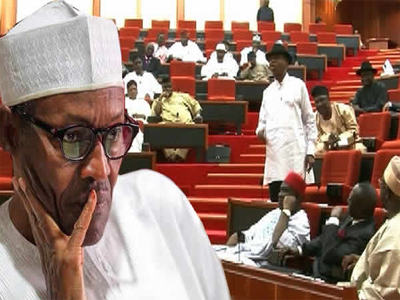
It has become a pastime of sorts for the APC crowd to inundate anybody who wants to listen, how the so called Integrity of President Muhammadu Buhari is the best thing to have happened to post-colonial Nigeria. They do this with a certain air of arrogance elevating Buhari to something of a Saint without a single foible.

As the 2019 general elections draw near, the craze has reached even new proportions, and the latest scheme (but which is bound to fail), is to make “personal integrity” ( or the lack of it), a defining factor in the forthcoming elections as against the score card of the administration and it’s impact on the welfare of the generality of Nigerians. The target, understandably of this defeatist campaign strategy is candidate Atiku Abubakar, who have forced a disquiet in the camp of the ruling APC on account of his towering popularity which looks certain to guarantee his victory by the 16th of February, 2019 so as to Get Nigeria Working Again. The modus operandi of the strategy is simple: emphasize Buhari’s so called integrity, and contrast same with Atiku’s.

At the official launch of the APC Presidential campaign in Uyo, Akwa-Ibom state last Friday, this chorus of integrity was chanted with reckless abandon by the numerous party members who mounted the rostrum reiterating the vaunted integrity of candidate Buhari, and why that is a quality enough to earn him a hard-sought re-election. From the Director General of the Campaign Organization-Rotimi Amaechi to Adams Oshiomole amongst others, the so-called Integrity of President Muhammadu Buhari was adumbrated notwithstanding the fact that many of them sounded like a broken record.

Controversial party chairman, Comrade Adams Oshiomole in an interview with The Daily Sun Newspapers some three weeks ago put it in black and white thus, “I believe the president will be re-elected on the basis of his personal integrity”. Even the president himself seem to be playing the part. At a religious function in Kano a fortnight ago, he told his audience to elect only candidates with credibility and integrity in 2019. Making a veiled reference to his overrated integrity.

When the spokesman of the Buhari Campaign Organization, Mr. Festus Keyamo played host to a political programme on Channels TV the other day, he was also seen singing this swan song. Ditto Garba Shehu, Femi Adesina and the numerous other image makers of this president. With the manner in which they go about it, it gives away the impression of a well rehearsed plot behind the scene namely, to present president Muhammadu Buhari to Nigerians once again, as the only chief priest before whom divination to the ifa Oracle is possible, as they did in the run up to the 2015 polls.

The reason for this however is not hard to seek. There is nothing the government of the day has to show for its stewardship three and a half years after it promised Nigerians a Change that has proven to be a mirage. Whereas it campaigned at the time on the three pillars of Fighting Corruption, Improving the Economy and Enhancing our National Security, a one-off look at these heads of campaign thrust shows that we have only progressed in retrogression under its watch. And the facts out there bear us out that they need no demonstration in this intervention.

Having come to this realisation, the only alternative is to latch on to the time worn “mai gaskiya” narrative, and re-present him as the last of the ‘saints’ without who the survival of Nigeria will be forgotten. Hence why Nigerians are inundated every other day with rhetorics around an overpriced integrity that is not supported by verifiable facts. I shall return to this soon.

Now, it is not that this writer discounts “integrity” as an integral quality of leadership. No serious person should be heard advancing such proposition. Indeed ancient scientist and Greek philosopher, Aristotle underscored the importance of same in leadership when he intsructively observed, “because rulers have power, they’ll be tempted to use it for personal gain. It is important that politicians withstand this temptation, and that requires integrity”. He concluded by delimiting it’s fundamentals thus, “integrity is about having the right ethical values that become visible in a pattern of behaviour”. Our own professor Chunua Achebe (May he rest well), weighed in on the matter in latter years, and defined the truest test of integrity as the blunt refusal to compromise, writing on the subject in his pamphletter, The Trouble with Nigeria.

A common denominator to be seen in the quality of integrity as laid down by the two great men, is that it is not a feat attained by undue repetition informed by prejudice of political party megaphones. On the contrary it is a serious character-trait whose visibility must flesh out from a consistent pattern of behaviour to paraphrase Aristotle. A deeper insight into the matter would also reveal that it is not synonyms with ascetism, or the ability to hold extreme religious views. Quite to the contrary it is the quality of being honest and having strong moral values.

But how has president Muhammadu Buhari fared in his much vaunted claim to being the very paragon of integrity? A closer look at the behavioural pattern of the Daura born septuagenerian since he found himself as a democratically elected president, shows that he is anything but a man of high integrity as the APC crowd tries to force down our throats. There is nothing in the behavioural pattern of this president three and a half years since after he took on the “Babar Riga”, that suggests he has a distaste for suspicious, nay “improper behaviour”. Up until today, even the most ardent APC supporter cannot point to a peculiar and distinctive conduct of this president that supports these outlandish claims to integrity. Unlike as was seen in the leadership choices of say, Burkina Faso’s Thomas Sankara who typifies integrity, President Muhammadu Buhari’s claim to integrity have been more of an exercise in cosmeticism. And the indications are there for all to see.

First of, any keen observer would notice that this president has observed in the breach the sort of lifestyle he promised to lead if elected into power pre-2015. From maintaining the number of jets in the presidential fleet, to traveling abroad to treat headache and sore throat, and what not, president Muhammadu Buhari has proven to be a turn coat, whose word is not his bond. A character trait which should not be seen in a man that lays so much claim to having integrity. But that is not all.

If compromise as pointed out by Achebe is the yardstick for measuring integrity, then president Muhammadu Buhari should not be decorated as a man of integrity by Keyamo and friends. This is because we have seen him condone corrupt behaviour right under his nose, and even received into his party, persons who are flagged for corruption by the anti-graft agency, EFCC. In this connection, the particular case of the former SGF, Babachir Lawal sticks out like the proverbial sore thumb. While he was reluctantly shoved aside for the infamous grass cutting scandal, he remains until today un-prosecuted and was even rumoured to have single-handedly nominated his successor. In the wake of the scandal rocking the Kano State governor, who promised to deliver some 2 million votes towards his re-election, President Muhammadu Buhari told a stunned world, that Governor Abdullahi Umar Ganduje was the best thing to have happened to governance. Long before this time, he had absolved late General Sani Abacha of any financial impropriety. Referring to him as a good man. But up until today, continues to purportedly recover the Abacha loots from every corner of the world.

Through and through, he has been a typical party man condoning the rot from within his party and calling out those outside his party. As at today, at least three of his appointees are alleged to have been involved in a certificate forgery scandal. Yet this Mr. “integrity” has not summoned the balls to ask them to take a walk from his government pending when they are able to clear their names with the appropriate authorities. Here, we speak of Mr. Okoi- Obono Obla and the minister of communications, Abdur-raheem Adebayo Shittu. If the former minister of finance, Kemi Adeosun resigned, it is widely believed that it was on her honour and not informed by signals from the presidential quarters.

In the context of financial prudence and management, president Muhammadu Buhari’s “integrity” have also been caught flat footed. Beyond the fact that no one has told Nigerians how much was expended in the campaign that brought PMB to power in 2015, the much talked about recovered Abacha loot, have been enmeshed in secrecy that it is only rational to conclude that they have been re-looted as pointed out by critics. Ditto the recoveries made by the EFCC and other anti graft agencies.

Even inside PMB’s “Oza Room”, we have heard tales from his wife of a certain cabal that runs the show from behind the scene. Buhari’s closest attempt at debunking same was to ask his detractors to point out the cabals. Describing his wife’s remonstrations as “her business”. Such an easy and simplistic obfuscation of the real issue. But we know that it will be fool hardy for anybody to dismiss Aisha’s consistent criticisms with a wave of the hand given the position she occupies in Buhari’s life.

While chewing with that, consider the sudden and alarming rate at which old friends, relatives and acquaintances of this president have risen into stupendous wealth since he came to power! Of course we have the fire eating Buba Galadima to thank for this earth shaking revelations. At a Channels TV program last week, the veteran politician (and an old acquaintance of Buhari), called out the president specifically and put his much vaunted “integrity” in the ‘dock’ before eventually passing a vote of “Zero Integrity” on him on account of how he has corruptly enriched his old friends and associates who are today living in eye popping mansions scattered in and about Daura-GRA.

While it may be contested that these are mere allegations, the fact that the Presidency have not officially reacted to Galadima’s allegations suggests their truism. Nobody knows if Buhari’s handlers are afraid of being sent to the “market square” as Alhaji Buba Galadima threatened at that program.

One could go on and on to chronicle the different behavioural pattern of this president that robs him of any claim to integrity. Upon a further look, one notices that this has been so since in his days as the military head of state. And the particular episode of the 53 notorious suit cases, and General Muhammadu Buhari’s role in same bear us out here. If one might also add, the unresolved case of $2.8 billion allegedly looted while he served as petroleum minister in 1977 further casts a doubt on this vaunted integrity.

If President Muhammadu Buhari has anything, it is a cult following in his North Western political base pre-2015. A followership which it must be mentioned, was not anchored on any proven integrity, but on ideological/religious sentiments.

Assuming, but without conceding however that this president has the wealth of integrity that have been arrogated to him, it is submitted that integrity as a leadership quality is not of itself, determinative of performance. Nations become great not on the dry bones of a leader’s integrity, but their ability to make core decisions and choices that impact the overall well-being of the state. What is more, while it is good for a leader to have personal integrity, there are no guarantees that members of his administration will also be of equal integrity. Hence the need for leadership not to be based on the moral credentials of one man, but through the building and sustenance of strong institutions that will deliver, independent of the driver of the process. In essence therefore, nations do not need SAINTS. They need PERFORMERS to grow and become developed. Adams Oshiomole was therefore in the wrong when he professed that Buhari’s “personal integrity” is enough to earn him another slice of the pie. If indeed Buhari has integrity, it is however not in doubt that he has failed to transform same into any meaningful developmental impact on Nigeria and Nigerians.

Which brings us finally to the forthcoming elections. Assuming Buhari has all the integrity as credited to him, we have seen the limits of what could be achieved with that: the annexation of towns and communities in Borno state by Boko Haram; the overbloated debt profile of the nation running into a staggering 22 Trillion Naira; the high rate of unemployment that has reached an all-time-high of 23%; double digit inflation at the rate of 18.8%; the shut down of our tertiary institutions for upwards of two months due to strike action by academic staff; the threatened shut down of the economy by the organised labour; the mindless killings from Zamfara to Benue, Plateau and elsewhere; a wobbling stock market and an economy headed for the rocks from the analysis of financial experts.

With this score card, no leader should merit a second bite at the cherry. Including President Muhammadu Buhari. His so called integrity is a fraud, a wool over the eyes to further hoodwink Nigerians to repeat the mistake of 2015. This is more so when the facts out there suggests that this over priced “integrity” cannot withstand any serious stricture as Alhaji Buba Galadima demonstrated the other day.

Raymond Nkannebe is a legal practitioner and public affairs commentator based in Lagos. Comments and reactions to raymondnkannebe@gmail.com.

Continue Reading
Click to comment

Leave a Reply

Your email address will not be published. Required fields are marked *

Opinion

Faith, Power, and the Art of Diplomacy: Nigeria Must Respond to Trump’s Threat with Strategy, Not Emotion

Published

on

By

By Joel Popoola

Nigeria’s President Bola Tinubu has never worn religion as a badge and never been defined by religious identity. Though a Muslim, married a Christian Pastor, he has long been known for his ability to balance Nigeria’s complex religious landscape. As former governor of Lagos State, he founded the Lagos State Annual Thanksgiving Service, a remarkable initiative that became one of the largest Christian gatherings in the Southwest Region. That gesture was not political theatre; it was an act of statesmanship that celebrated Nigeria’s diversity. He attended as a servant leader of all people, Christian, Muslim, and otherwise setting a tone of unity that our federation still needs today.

Today, that inclusive spirit, and legacy of tolerance faces, a renewed wave of external scrutiny, and a new kind of test- one not from within, but from abroad. The U.S. President Donald Trump’s decision to designate Nigeria as a “Country of Particular Concern” over alleged Christian persecution was more than a foreign policy statement. It was a calculated political signal. His subsequent threat to “use the military to defend Christians in Nigeria” crossed a dangerous line, suggesting that America could unilaterally intervene in our internal affairs based on a distorted interpretation of Nigeria’s religious dynamics.

A Complex Reality Misunderstood
There is no denying that Nigeria faces violent flashpoints where religion is entangled with ethnicity and poverty. But it is intellectually lazy and diplomatically reckless to label these crises as “Christian persecution.” Successive Nigerian governments, both Muslim- and Christian-led, have condemned extremism and taken act against those who inflame division. Trump’s posture, however, ignored the facts. It reframed Nigeria’s domestic challenges as a global crusade, inviting a moral panic that oversimplifies and endangers. The real tragedy is that such mischaracterizations can embolden extremists, fracture communities, and damage Nigeria’s reputation on the world stage.

Diplomacy Is Strength, Not Submission
As a corporate diplomacy expert, I have seen how scenario-based-strategy, not outrage determines outcomes. Whether in global business negotiations or international relations, power is not exercised only through might; it is asserted through credibility, alliances, and skilful communication. Nigeria must resist the temptation to respond defensively and instead deploy smart diplomacy to reframe the narrative. History offers compelling evidence of how diplomacy can avert even the gravest conflicts. During the 1962 Cuban Missile Crisis, the world stood seconds away from nuclear war. Yet, through quiet negotiation between U.S. President John F. Kennedy and Soviet Premier Nikita Khrushchev, a peaceful resolution emerged: the Soviet Union withdrew missiles from Cuba, and the U.S. reciprocated by removing its own from Turkey. Dialogue, not force, saved the world.

Nigeria can apply the same principle today. The path forward lies in strategic engagement, leveraging bilateral relations, regional blocs like ECOWAS and the African Union, and international platforms to clarify its realities. Nigeria must lead the conversation, not react to it.

A Lesson from Leadership

When a Muslim governor created a Christian thanksgiving celebration, he embodied what diplomacy looks like at home: listening, inclusion, and respect. Nigeria’s leaders must now display those same qualities abroad. We cannot control how others view us, but we can control how we present ourselves. That is the essence of diplomacy, proactive communication grounded in national dignity. Trump’s rhetoric may have been provocative, but Nigeria’s best response is composure, not confrontation. Power is never just about weapons or wealth; it is about narrative, legitimacy, and alliances.

The Diplomat’s Way Forward

Nigeria stands at a defining moment. The challenge is not to prove that Christians are safe, Muslims are fair, or that America is wrong, it is to prove that Nigeria is capable of solving its own problems with balance and foresight. True diplomacy is not silence; it is strategic communication. It is the ability to turn political provocation into an opportunity for partnership. If Nigeria channels its response through professionalism, restraint, and intelligent diplomacy, it will not only protect its image, but it will also strengthen its global standing.

As someone who has studied and practiced the intersection of corporate influence and international relations, I know these same principles that sustain global brands, trust, transparency, and consistency, also sustain nations.

And in this moment, Nigeria must choose those principles, not fear, and not anger- to defend its sovereignty and its soul.

Joel Popoola, a Corporate Diplomacy Expert, and Managing Partner at Anchora Advisory, specialising in corporate diplomacy and internationalisation, writes from United Kingdom 

Continue Reading

Opinion

Beyond the Headlines: R2P, Sovereignty, and the Search for Peace in Nigeria

Published

on

By

By Tolulope A. Adegoke, PhD

“In the face of complex crises, true leadership is measured not by the clarity of one’s critique, but by the courage to enact responsible solutions that bridge the gap between sovereign duty and our global responsibility to protect” – Tolulope A. Adegoke, PhD

If you follow global news, you have likely encountered alarming headlines about Nigeria. Terms like “religious violence” and even “genocide” are often used to describe a complex and devastating crisis. But beyond the headlines lies a critical international dilemma: when a state struggles to protect its own people, what is the world’s responsibility?

This is not a new question. It lies at the heart of a global principle adopted after the horrors of Rwanda and Srebrenica (Town in Bosnia and Herzegovina): The Responsibility to Protect (R2P).

Let us break down what R2P means, why it is so relevant in Nigeria, and what proposed international responses—like those from the United States—reveal about the difficult pursuit of peace in a complicated world.

R2P in a Nutshell: A Three-Pillar Promise

Imagine R2P as a three-legged stool, with each leg representing a fundamental obligation:

  1. Pillar I: The State’s Primary Duty. Every sovereign nation has the foremost responsibility to shield its populations from genocide, war crimes, ethnic cleansing, and crimes against humanity.
  2. Pillar II: International Assistance. The global community has a duty to assist states in building this protective capacity through aid, training, and diplomatic support.
  3. Pillar III: The Decisive Response. If a state is “manifestly failing” to protect its people, the international community must respond decisively—first through peaceful means like sanctions and diplomacy, and only as an absolute last resort, with authorized military force.

The protracted crisis in Nigeria tests this very framework to its limits.

The Nigerian Labyrinth: It’s More Complex Than It Seems

Labeling the situation in Nigeria as a simple religious war is a profound misunderstanding. The reality is a tangled web of several overlapping conflicts:

  • Jihadist Insurgency: Groups like Boko Haram and ISWAP in the Northeast target both Muslims and Christians who oppose their rule. However, Christian communities have endured specific, brutal attacks on churches and schools, marking them for violence based on their faith.
  • Clashing Livelihoods: In the fertile Middle Belt, competition over dwindling land and water resources has ignited violent clashes between predominantly Muslim Fulani herders and Christian farmers. Climate change and desertification have intensified this struggle, layering economic desperation over religious and ethnic identities.
  • Criminal Banditry: Widespread kidnappings and violence in the Northwest, often driven by profit, exploit the fragile security situation, further destabilizing the region.

This intricate complexity is why the term “Christian genocide” is so hotly debated. While there is undeniable, systematic violence against Christians, the legal definition of genocide requires proof of a specific intent to destroy the group. Many analysts point to the confluence of political, economic, and criminal motives, arguing that the situation, while atrocious, may not meet this strict legal threshold.

The R2P Test: Is Nigeria “Manifestly Failing”?

A widespread perception holds that the Nigerian government is failing in its Pillar I responsibility. Despite possessing a powerful military, issues of corruption, a slow institutional response, and allegations of bias have left millions of citizens vulnerable.

This failure activates the world’s role under Pillar II. The United States, United Kingdom, and other partners have provided significant aid, military training, and intelligence sharing. Yet, it has not been enough. The persistent violence pushes the necessary conversation toward the more difficult Pillar III: the “Responsibility to Respond.”

The U.S. Proposition: A Case Study in Coercive Care

What does a “timely and decisive response” entail? Proposed U.S. actions offer a clear case study. Focusing on coercive measures short of force, they include:

  • Targeted Sanctions: Visa bans and asset freezes against specific Nigerian officials accused of corruption or atrocities.
  • Diplomatic Pressure: Officially designating Nigeria as a “Country of Particular Concern” for religious freedom.
  • Conditioned Aid: Linking further military assistance to verifiable improvements in human rights and accountability.

The Pros and Cons: A Balanced View

  • The Upside: These actions send a powerful message of solidarity to victims, potentially deter perpetrators, and uphold the global norm that national sovereignty entails a responsibility to protect, not a license for atrocity.
  • The Downside: These measures are fiercely rejected by the Nigerian government and many within the country as a violation of sovereignty. There is a risk that cutting military aid could weaken the fight against Boko Haram and ISWAP, and a narrow focus on the religious dimension could oversimplify the conflict’s root causes, potentially inflaming tensions further.

Key Takeaways for a Global Audience

This situation is not merely a problem for politicians; it offers critical lessons for all of us:

  • For Global Citizens: Seek nuanced understanding. Effective advocacy requires moving beyond simplistic labels to grasp the underlying root causes—such as climate change, governance failures, and economic despair—that fuel the violence.
  • For Businesses Operating Abroad: You have a vital role to play. Conduct human rights due diligence and use your economic influence to support stability, conflict resolution, and ethical practices within your operations and supply chains.
  • For the International Community: This case exposes R2P’s greatest weakness: its reliance on a UN Security Council often paralyzed by geopolitics. The future demands more robust and empowered regional leadership from bodies like the African Union.

Conclusion: An Unfinished Conversation for Lasting Peace

The crisis in Nigeria and the proposed international responses are not about easy answers. They represent the difficult, ongoing work of making the promise of “Never Again” a tangible reality.

R2P remains an unfulfilled ideal, caught between the urgent need to protect human life and the complex realities of national sovereignty. The conversation it forces is itself a constructive step forward. It challenges Nigeria to reclaim its primary duty to protect all its citizens, challenges the world to move beyond rhetoric to meaningful action, and challenges us all to remember that our common humanity is the most important border we share. The demand for peace, both within Nigeria and beyond, requires nothing less than our collective and unwavering commitment.

Dr. Tolulope A. Adegoke, AMBP-UN is a Doctor of Philosophy (PhD) in History and International Studies, Fellow Certified Management Consultant & Specialist, Fellow Certified Human Resource Management Professional, a Recipient of the Nigerian Role Models Award (2024), and a Distinguished Ambassador For World Peace (AMBP-UN). He has also gained inclusion in the prestigious compendium, “Nigeria @65: Leaders of Distinction”.

Continue Reading

Opinion

From Chibok Girls to Christian Genocide: How 2015’s U.S Script is Replaying in 2027

Published

on

By

By Dr. Sani Sa’idu Baba

In my own opinion, history is on the verge of repeating itself, this time, in a more dangerous and manipulative form. When U.S. President Donald Trump recently made his provocative remarks about “Christian genocide” in Nigeria, many around the world interpreted them as a moral call to defend persecuted Christians. But to the politically conscious, Trump’s words are not just about faith, they are about power, influence, and attention seeking.

Trump’s sudden interest in Nigeria’s internal affairs is neither noble nor spontaneous. It mirrors a familiar conspiracy, one that Nigeria painfully witnessed in 2014/2015, when then U.S. President Barack Obama and his administration turned world opinion against the innocent President Goodluck Jonathan under the emotional shadow of the Chibok girls’ abduction. That global outrage was cleverly used to weaken a sitting government and shape Nigeria’s political direction.

Today, the same playbook is being dusted off, but with a new slogan. In 2015, the rallying cry was “Bring Back Our Girls.” In 2027, it’s “Stop Christian Genocide.” Different words, same machinery and the same foreign interest in controlling Nigeria’s political outcome.

At the center of this new narrative lies Nigeria’s Muslim–Muslim presidential ticket, a decision that has stirred deep unease among many Christians. For a nation long divided by religion and ethnicity, having both the president and vice president share the same faith inevitably triggered distrust, especially among Christians who form the country’s second-largest population bloc. This sentiment, amplified through social media and Western lenses, has given birth to the idea of an orchestrated “Christian persecution” under the current administration.

However, what many foreign commentators fail or refuse to acknowledge is that both Christians and Muslims are victims of terrorism in Nigeria. Research and on-ground realities have shown that Muslim communities in the North-East, North-West and parts of North-Central have actually suffered even more from terrorist attacks, displacement, and loss of livelihood. The killing fields of Borno, Yobe, Zamfara, Katsina, Niger, parts of Sokoto and Plateau States all in the North are filled with innocent Muslims who have lost everything to the same extremists who disguised as Muslims and now being branded as “defenders of Islam.”

Let’s be clear: terrorism has no religion. Those who kill in the name of any faith are not followers of that faith. Terrorism is not the monopoly of Islam, Christianity, or any religion, it is a global cancer that thrives on hatred, poverty, and manipulation. Around the world, from the Middle East to Europe, Asia to Africa, criminals and terrorists exist in every society. They have no true religious identity, only political and ideological motives. Linking terrorism with Islam is not only misleading, it is blackmail, and it fuels further division in a world that desperately needs understanding.

And this is where Trump’s rhetoric becomes politically dangerous. By invoking religion, he taps into global sympathy while subtly positioning himself as the “defender of Christians”, a role that serves his conservative political base in the United States and simultaneously destabilizes Nigeria’s government ahead of the 2027 elections. His statement, therefore, is not just moral posturing; it’s a strategic geopolitical move disguised as compassion.

Let me be clear: I am not defending the Tinubu administration. I am not a member of the ruling APC, nor am I blind to the country’s economic challenges, insecurity, and social discontent. But as a Nigerian who leans more toward the opposition, I cannot pretend not to see the dangerous manipulation of our nation’s religious fault lines by foreign interests for political gain.

When Obama’s America turned against Jonathan in 2015, it claimed to stand for human rights and accountability. But what followed that “moral intervention”? The Chibok girls were not rescued. Insecurity spread across new regions. The country became more polarized. And yet, the world simply moved on.

Now, Trump’s America seems to be rebranding the same agenda. The “Christian genocide” narrative has become the new international weapon used to portray Nigeria as a failed state and its government as morally illegitimate. The risk is enormous: such a narrative not only undermines Nigeria’s sovereignty but could ignite new religious tensions between Muslims and Christians, who have coexisted, however imperfectly for decades.

What’s even more troubling is the deafening silence of the African Union (AU).
Where is the AU’s collective voice in defense of Nigeria, one of its largest and most influential member states? Why is there no statement condemning Trump’s reckless rhetoric? Africa cannot afford to sit idly by while its most populous nation is once again drawn into the web of Western political manipulation.

The AU’s silence is not neutrality, it is complicity. It sends a dangerous message that Africa’s sovereignty can still be traded cheaply on the altar of Western approval.

Nigerians must remember the lessons of 2015.
The Chibok tragedy was real, but it was also exploited. The world’s sympathy helped unseat a president, but it did not solve Nigeria’s problems. Today, the “Christian genocide” narrative risks repeating that same cycle using religion as a weapon of influence and elections as collateral damage.

We must be wiser this time.
Whether you stand with Tinubu or the opposition, Nigeria’s dignity and independence must come first. The African Union must break its silence. African leaders must speak with one voice to reject any external interference under the guise of humanitarian concern.

Because if history repeats itself in 2027 as it is beginning to do, the consequences will not only be political. They could shatter the fragile threads that hold this nation together.

Dr. Sani Sa’idu Baba can be reached via drssbaba@yahoo.com

Continue Reading

Trending