Connect with us

Featured

IBB Terrorises Buhari as Saraki Transmits I-G

Published

on

Tunde Odesola

You can call me a fool for all you care, I won’t bat an eyelid. I have the right to be foolish, anyway. But move away from my arm’s length if you call me stupid, for stupidity is mental retardation simplified. Foolishness is a choice. Stupidity is not, it’s endowed. It’s wired to the DNA. As adjectives, ‘foolish’ is lacking a good sense or judgment but ‘stupid’ is lacking in intelligence or the inability to think. Stupidity is the crown on an empty skull. Foolishness is the obstinacy that dares the lamb to look at the tiger in the eyes. With a little more caution, the lamb could, by keeping silent in hiding, escape a bloody journey into the belly of the black-striped, gold-furred tiger with flaming eyes, stalking the jungle.

Then Maj. Gen. Muhammadu Buhari blazed into power in the very last minute of 1983. His coup was a welcome blow that broke the spine of the inept and corrupt Shehu Shagari administration which was more popular for wearing long caps on idle heads than arresting the debilitating inflation crippling the economy. Fire bellowed down the nostrils of the Buhari tiger, clawing, tearing and mauling perceived impediments to national greatness. Everybody feared the tiger until a certain lamb from the largest state in the country, Niger, came to tame it two years after. This Niger lamb was beautiful and pleasing to the eyes, its baaing was melodious to the ears; everybody who feared the tiger loved the iamb of the lamb. The furry lamb was a paradox that unnerved and reassured simultaneously. Not very long after being crowned king, however, the corrupt-wind of genetic mutation blew the way of the lamb, which sloughed its fur for scales and metamorphosed into a snake. The lamb’s harmless mouth turned into striking serpentine jaws of poison, savagery replaced genteelness, and evil stalked the land unstoppably. Sometime in the August of 1985, the snake chased out the tiger from the lair, taking over the kingdom.

I’ve never set my eyes on a scrotal sac with one ball. But I’ve often heard the Yoruba describe any man wailing meaninglessly as having only one ball in his sac. What’s the link between wailing and one scrotal ball? Does wailing complement a missing ball? Does wailing alleviate the pains or absence of a missing ball? With the way Nigerians wail meaninglessly on social media, compulsory medical check on scrotal sacs across the country won’t be a bad idea. However, it’s not only Nigerian proletariats that wail, Nigerian leaders wail, too. Last week, former man of steel, President Buhari, lamented in Abuja during the inauguration of the Economic and Financial Crimes Commission’s headquarters in Abuja. He said he was ousted in 1985 and detained for three years by Brig Gen Ibrahim Babangida because he (Buhari) was fighting corruption as of the time. The President said, “I was removed as the head of state, detained for three years and people whom we recovered stolen money from were given back their money and I remained in detention up until my mother had to die to save me from detention.”

Mr President, you’re free to think Nigerians are fools, but don’t you think we are stupid. In our foolishness, we can clearly see the lie in your statement that your mother waited three years to save you from detention. Why would a mother wait for 1, 095 days to save her son? What if death had knocked on your soul before her intervention? Oh, your media aides would say, “The President was speaking figuratively.” Yes, he was speaking politically, too. When a figure of speech borders on representing an idea better or worse than it really is, it is called an exaggeration. So, is the President blowing issues out of proportion in order to gain political sympathy? The President said he was toppled 33 years ago because of corruption and that the money he retrieved from corrupt politicians were returned to them, right? And Babangida, who toppled him, is still alive. Please, where should the anti-corruption war of Buhari begin from, if it is only to set the records straight and debunk the claims that his military administration was vindictive? So, Buhari knows some individuals with stolen public wealth, and he keeps quiet and feels comfy about it? What manner of leader is he? A weakling? There, surely, exists a difference between foolishness and stupidity.

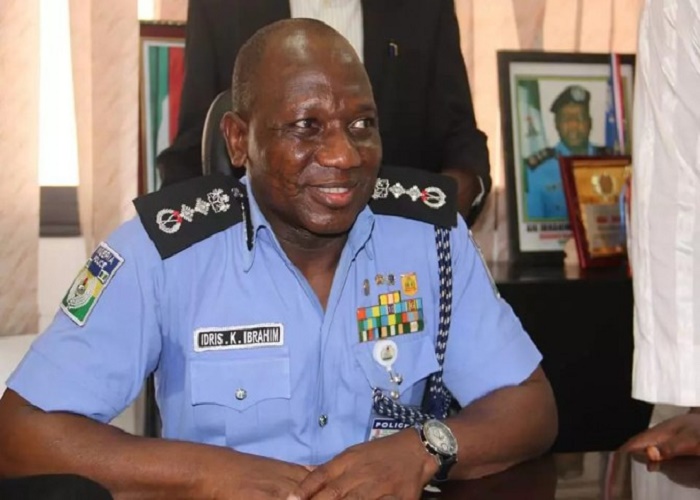
Foolishness and stupidly rule the Nigerian online political space where innumerable people talk inanities all at once. Some talk and say nothing. Some applaud roguish politicians defecating on our collective sensibilities. In Animal Farm, George Orwell depicts the proletariats as stupid. Are Nigerian proletariats better? Foolishness and stupidity went round the bend last week as another President, Bukola Saraki, tackled the Inspector-General of Police, Ibrahim Idris. Saraki, the President of the Nigerian Senate, last Wednesday, accused the IGP of planning to implicate him in the trial of some suspected hired killers arrested in Kwara State. Hitherto, there was no love lost between Saraki’s flimsy Senate and the unmeet police boss as Saraki and his gang of senators had repeatedly invited Idris to appear before the Red Chamber futilely. If the Senate was planning not to pass the budget of the police – in retaliation of the I-G’s scorn, a quick rethink wasn’t unlikely as Idris wouldn’t think twice before withdrawing police orderlies from our self-serving senators. Who wan die? Not these senators gulping billions of naira in taxpayers’ funds monthly with nothing to show for it.

In the heat of the back-and-forth kafuffle between the senate and the I-G, a video clip went viral. In the video, Idris, who was reading an address at a public function, was portrayed as being unable to coherently read his address, needlessly repeating the word ‘transmission’. A man in a dark suit and blue shirt stepped in to help with the speech which being ruffled by the wind while Idris bungled on. A closer look at the video, however, shows that Idris’ lips and the audio don’t sync. The IG, though a lawyer, doesn’t possess the gift of the garb. He speechifies the English Language in a laborious way. With its back pinned against the wall, the police force released its version of the video showing the IGP reading an error-free address. The two versions were from the same Kano event, but the part wherein the man in suit stepped in to offer a helping hand was excised from the version released by the police – suggesting that Idris truly made a couple of mispronunciations while delivering his speech. His traducers, however, fanned the embers of the innocuous error into a horrible conflagration by manipulating the audio to make the I-G sound as repeating himself. The Presidency later joined in the fray by describing the video as doctored. I’m not a fan of the IGP as I consider many of his actions unbecoming since he was appointed by Buhari on March 21, 2016. But a fool worth his salt would see through the deft doctoring of the video. That a lot of Nigerians believe that the IG could, in a two-minute, 18-second video, publicly repeat ‘transmission’ 13 times, and ‘I mean’ six times, shows why the political class continues to manipulate us with the stupidest of ploys. A bosom friend, Shola Ogunjimi, however, has a different opinion. He said Nigerians knew that the video was doctored, but that they believed it because of the brainlessness that attended some of Idris’ past actions. A former Chairman, Nigeria Union of Journalists, Osun State Council, Prince Ayoade Adedayo, who felt no pity for Idris, believes there is more to the video than what the police are claiming.

I ask, why is Idris suddenly being portrayed as deficient in speech and reading now that some powerful people are being linked to some suspected hired killers? Why?

The Punch

Continue Reading
Click to comment

Leave a Reply

Your email address will not be published. Required fields are marked *

Featured

How Glo Network Became the Lifeline That Saved Two Lives: A True Story from Sallari

Published

on

By

By Dr. Sani Sa’idu Baba

It was one of those calm, bright mornings in Sallari, a town in Tarauni Local Government Area of Kano State. I had gone to visit my longtime friend and colleague, Dr. Muhammad Umar Abdullahi, at his private facility, Rauda Clinic and Maternity. We were in his office discussing research, the usual challenges of medical practice, and other issues when the sound of hurried footsteps and anxious voices broke the calm. A young man rushed in, calling for the doctor.

Without hesitation, Dr. Muhammad sprang into action. I followed him instinctively. Within moments, two people burst through the gate, one man carrying a weak, heavily pregnant woman in his arms. Her breathing was shallow and wheezy, her face pale, and her body trembling between labor contractions and an asthma crisis. The scene was intense, we both knew that every second counted.

The team quickly moved her to the emergency bed. The Chief Medical Director Dr. Muhammad and his nurses worked swiftly to stabilize her breathing and monitor the baby. Oxygen was connected, IV lines were set, and within minutes, her breathing began to steady. The baby’s heartbeat was strong. After a short but tense period, she delivered a healthy baby girl. Relief filled the room like a gentle wind.

At that moment, I couldn’t help but admire the efficiency and dedication of Rauda Clinic and Maternity. The facility operated with the precision and compassion of a modern hospital. Every member of the team knew their role, every piece of equipment was in place, and the environment radiated calm professionalism. It reminded me that quality healthcare is not only about infrastructure, but about commitment and readiness when it truly matters. Rauda Clinic stood out that day as a quiet pillar of excellence and hope for patients and families alike.

The following day, I placed a call to Dr. Muhammad to ask about the condition of the woman who had been brought in the previous morning. He sounded cheerful and relieved. “Both mother and baby are fine now,” he said. Then, with deep reflection in his voice, he narrated the extraordinary story behind their survival, a story that showed how a single phone call, made at the right moment, became the bridge between life and death. As I listened to him recount the events, I couldn’t help but marvel at how sometimes, survival depends not only on medicine but also on connection.

Her name was Amina, a mother of three. That morning, she was alone at home, her husband was in Dutse, the capital of Jigawa state where he works, and her children had already gone to school. The first wave of pain came suddenly, followed by a tightening in her chest. Within minutes, she was gasping for air, her asthma worsening with every breath. She reached for her phone to call her husband, but the call wouldn’t go through. She tried again and again, each time, “Network error.”

Her strength was fading fast. She tried to reach her neighbors, but again, no connection. Alone, frightened, and struggling to breathe, she said she felt her end was near. Then, a thought crossed her mind, her maid had left her phone in the sitting room that morning. Gathering the last of her strength, Amina crawled toward the television stand where the phone lay.

When she reached it, she noticed the green SIM icon, it was a Glo line. Hope flickered. But when she tried to make a call, she saw there was no airtime. That could have been the end until she remembered Glo’s Borrow Me Credit service. With trembling fingers, she dialed the Glo borrow me code and she got the credit instantly, and that small credit became her lifeline.

Her first attempt to reach her husband failed. Then she dialed her younger brother, Umar. This time, the call went through immediately. Interestingly, Umar is a Glo user too. Without delay, Umar and his wife rushed to her house, found her collapsed on the floor, and carried her into their car.

On their way, Umar called ahead to alert the doctor, and again, the call went through clearly. By a remarkable coincidence, Dr. Muhammad was also using a Glo line. That seamless connection meant the hospital team was fully prepared by the time they arrived. Within minutes, Amina was stabilized, and both she and her baby were safe.

The next morning, Dr. Muhammad told me that Amina had smiled faintly and said to him, “Doctor, when every other network failed me, Glo answered. If that call hadn’t gone through, I wouldn’t be here today.”

Her words carried a truth that stayed with me. It wasn’t just a patient’s gratitude, it was a testimony about the power of reliable connection. At that moment, Glo wasn’t just a telecommunications network, it was the bridge between life and death, between despair and hope.

In today’s world, a simple phone call can determine whether someone lives or dies. That day reminded me that technology, when dependable, is not just about data speed, it’s about human connection at its most critical. Glo proved to be that connection: steady, available, and trustworthy when it mattered most.

Before she was discharged, she laughed and told the doctor she had already chosen a nickname for her baby “Amira Glo.” They both laughed, but deep down, Dr. Muhammad understood the meaning behind that name. It symbolized gratitude, faith, and survival.

As I ended the call with Dr. Muhammad that day, I felt a quiet pride. I had witnessed not just the miracle of life, but the harmony of medicine, compassion, and reliable technology. Through Rauda Clinic and Maternity, I saw what true service means, dedication without boundaries, and connection that saves.

Amina’s story isn’t an advert, but living proof that sometimes, when every other signal fades, Glo stands firm, and when every other facility seems far away, Rauda Clinic and Maternity remains a beacon of care and excellence.

For patients, families, and health workers alike, Glo is proven to be a network of necessity. It connects life to hope, when every second truly counts…

Dr. Sani Sa’idu Baba writes from Kano, and can be reached via drssbaba@yahoo.com

Continue Reading

Featured

Delta Govt Confirms Death of Senator Nwaoboshi at 68

Published

on

By

Senator Peter Onyelukachukwu Nwaoboshi, the former lawmaker who represented Delta North Senatorial District in the National Assembly, has passed away. He was 68.

Reports said that Nwaoboshi died on Friday in Abuja following a brief illness.

His demise was confirmed in a condolence statement issued by the Delta State governor, Rt. Hon. Sheriff Oborevwori.

Expressing sorrow, the governor described Nwaoboshi’s passing as a monumental loss to Delta State, the Anioma nation, and the Nigerian federation.

In the statement by his Chief Press Secretary, Sir Festus Ahon, Governor Oborevwori hailed the late Senator as a “fearless advocate” of the Anioma cause whose contributions to nation-building remain indelible.

The governor recalled Nwaoboshi’s impactful tenure in the Red Chamber, particularly his role as Chairman of the Senate Committee on Niger Delta Affairs.

He noted that Nwaoboshi’s consistent advocacy for the development of the oil-rich region distinguished him as a passionate and committed leader.

“On behalf of the government and people of Delta State, I mourn the passing of my dear friend, Senator Peter Onyelukachukwu Nwaoboshi,” the governor said.

“I extend my heartfelt condolences to his immediate family, the people of Anioma nation, members of the All Progressives Congress (APC), and all those whose lives he touched. I pray that Almighty God grant his soul eternal rest.”

Before his elevation to the Senate in 2015, he served meritoriously as a two-term Chairman of the Peoples’ Democratic Party (PDP) in Delta State, where he was instrumental in consolidating the party’s grip on the State.

Continue Reading

Featured

Ribadu’s Office Denies Arming Miyetti Allah in Kwara

Published

on

By

The National Counter Terrorism Centre (NCTC), under the office of the National Security Adviser Mallam Nuhu Ribadu, has refuted claims that it armed members of the Miyetti Allah group for counter-terrorism operations in Kwara State.

The Head of Strategic Communication at NCTC, Mr. Michael Abu, issued the rebuttal on Wednesday in Abuja.

Abu described the reports circulated by some online platforms as false and misleading, saying they misrepresented ongoing security operations in forested areas of the state.

He said that in line with the Terrorism Prevention and Prohibition Act, 2022, it continued to coordinate and support law enforcement, security and intelligence agencies in countering all forms of terrorism across the country.

NCTC spokesman explained that Nigeria’s counter-terrorism efforts guided by the National Counter Terrorism Strategy (NACTEST), involved the deployment of hybrid forces comprising regular security personnel and trained auxiliaries such as hunters and vigilante elements, particularly in difficult terrains.

According to him, the hybrid approach, which was previously deployed with the Civilian Joint Task Force in the North-East, is currently being applied in parts of the North-West and North-Central, including Kwara State, and has recorded several successes against banditry and other criminal activities.

He stressed that the Federal government was not conducting kinetic operations with any socio-cultural group, adding that claims that the Office of the National Security Adviser provided arms to such organisations are unfounded and should be disregarded.

According to him, all auxiliary personnel involved in hybrid operations were recruited directly by authorised security and intelligence agencies after due diligence, and that all operations were conducted strictly in line with the law and established standard operating procedures.

He urged the media to exercise responsibility by protecting sensitive security information and seeking clarification through designated official spokespersons, while advising the public to ignore unverified reports capable of undermining ongoing operations.

He reaffirmed the centre’s commitment to transparency and stakeholder engagement to deepen public understanding of Nigeria’s counter-terrorism efforts.

Continue Reading

Trending