Connect with us

Featured

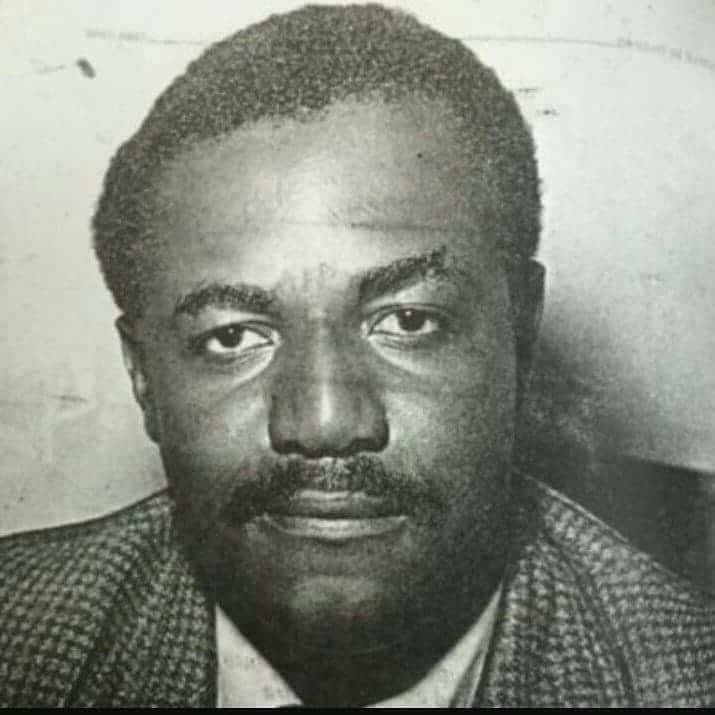
The Legend of Kakawa Street Lagos Island Millionaire, Candido da Rocha

Published

on

Have you ever asked any of your parents for money, especially continuously, and they gave you this reply: “Do you think I’m Da Rocha?”

Candido Da Rocha, the Ilesha man was born in 1860, and he live through to 1959. He was the first millionaire in Nigeria.

A historian narrates: “Well, I experienced it and growing up, I never knew the meaning of the statement, until I came across a book a friend gave me, when I stumbled on the name ‘Candido da Rocha’.

“He was a rich man who would, from the balcony of his one-storey building, throw down coins to children who would, in a tangle of bodies and flapping hands, struggle for them. So, I remembered vividly why my parents deny being “a da Rocha” anytime I ask for money I don’t literally need as a child,” he said.

Da Rocha was a rich entrepreneur, businessman, landowner and creditor who owned Water House or Casa d’Agua on Kakawa Street, Lagos Island, Lagos. It was named Water House because it was the first and only house in Lagos in those days to have a borehole and in turn sells water to residents.

He was born to the family of Joao Esan Da Rocha, who was captured as a slave when he was 10 years old on his way to school in Ilesha. Candido was born in the Bahia region of Brazil.

His mother was Angelica Josephina da Rocha. His father returned to Lagos, Nigeria in the 1870’s where he built his wealth and passed it to his son, Candido.


Due to his wealth, his friend, Herbert Macaulay nominated him as a candidate in one of the elections of the time. And when da Rocha met the electorate, he told them: “I am Candido da Rocha, your candidate into the House. Vote for me if you like. And if you don’t, all well and good.”

That statement ended his sojourn in politics as he lost the elections, acquiring only 20 votes. Indeed, Da Rocha was a very modest and generous capitalist. During the Second World War (1939 – 1945), when the authorities of Kings College were looking for a place to relocate the students in the boarding house – among whom were Tiamiyu Bello-Osagie, who would become one of Nigeria’s most celebrated gynaecologist; Adenekan Ademola, son of Nigeria’s first indigenous Chief Justice, Adetokunbo Ademola; Dapo Aderemi, son of Sir Adesoji Aderemi, the legendary Ooni of Ile-Ife, Da Rocha volunteered his Bonanza Hotel on Customs Street, Lagos, and did not collect a dime for the period it was used.


Even after the war, when government asked influential Nigerians to contribute to the rehabilitation fund, he made substantial donations and he instructed that the amount should not be disclosed to the public.

Despite his wealth and political clout, no street in Lagos is named after him. Candido Da Rocha died on March 11, 1959 and his remains are interred at the Ikoyi Cemetery.

Among many of his businesses is the now defunct Bonanza Hotel in Lagos.

He collaborated with Lagos businessmen J. H. Doherty and Sedu Williams on a money lending business established under the name of the Lagos Native Bank. He was a founding member of the Lagos auxiliary to the Anti Slavery and Aborigines Right Society which was headed by James Johnson and had Samuel Pearse and Sapara Williams as members.

Among his children were Alexander Da Rocha, Adenike Afodu, Angelica Folashade Thomas and Louissa Turton.

Continue Reading
Click to comment

Leave a Reply

Your email address will not be published. Required fields are marked *

Featured

Strategy and Sovereignty: Inside Adenuga’s Oil Deal of the Decade

Published

on

By

By Michael Abimboye

In global energy circles, the most consequential deals are often not the loudest. They unfold quietly, reshape portfolios, recalibrate value, and only later reveal their full significance.

The recent strategic transaction between Conoil Producing Limited and TotalEnergies belongs firmly in that category. A deal whose implications stretch beyond balance sheets into Nigeria’s long-troubled oil production narrative.

For Mike Adenuga, named The Boss of the Year 2025 by The Boss Newspapers, the agreement is more than a corporate milestone. It is the culmination of a long-term upstream strategy that is now translating into hard value barrels, cash flow, and renewed confidence in indigenous capacity.

At the heart of the transaction is a portfolio rebalancing agreement that sees TotalEnergies deepen its interest in an offshore asset while Conoil consolidates full ownership of a producing block critical to its medium-term growth trajectory. The parties have not publicly disclosed the monetary value, industry analysts place similar offshore and shallow-water asset transfers in the high hundreds of millions of dollars, depending on reserve certification and development timelines. What is indisputable, however, is the deal’s structural clarity: each partner exits with assets aligned to its strategic strengths.

For Conoil, the transaction represents something more profound than asset shuffling. It is the validation of an indigenous oil company’s ability to operate, produce, and partner at scale. That validation was already underway in 2024, when Conoil achieved a landmark breakthrough: the successful production and export of Obodo crude, a new Nigerian crude blend from its onshore acreage.

In a country where new crude streams have become rare, Obodo’s emergence signalled operational maturity. More importantly, it shifted Conoil from being perceived primarily as a downstream and marginal upstream player into a full-spectrum producer with export-grade assets.

The commercial impact was immediate. Obodo crude enhanced Conoil’s revenue profile, strengthened cash flows, and materially improved the company’s asset valuation.

For Mike Adenuga, Obodo represented something else entirely: oil income with scale and durability. Producing crude shifts wealth from theoretical to realised. It is the difference between potential and proof.

That momentum was reinforced by Conoil’s acquisition of a new drilling rig, a move that underscored its intent to control not just resources, but execution. In an industry where rig availability often dictates production timelines, owning modern drilling capacity gives Conoil a strategic advantage lowering costs, reducing dependency, and accelerating development cycles. It also enhances the company’s bargaining power in partnerships such as the one with TotalEnergies.

Taken together, the Obodo crude success, the rig acquisition, and the TotalEnergies transaction, these moves materially expand Conoil’s enterprise value. While private company valuations remain opaque, upstream assets with proven production, infrastructure control, and international partnerships typically command significant multiple expansion. For Adenuga, all of these represents a stabilising and appreciating pillar of wealth.

As The Boss Newspapers honours Mike Adenuga as Boss of the Year 2025, the recognition lands at a moment when his oil ambitions are no longer peripheral to his legacy. They are central. In Obodo crude, in steel rigs, and in carefully negotiated partnerships, Adenuga is shaping a version of Nigerian capitalism that privileges patience, scale, and execution over spectacle.

In the end, the most powerful statement of wealth is not net worth rankings or headlines. It is the ability to convert strategy into assets, assets into production, and production into national relevance. On that score, the Conoil–TotalEnergies deal may well stand as one of the most consequential chapters in Mike Adenuga’s business story and in Nigeria’s evolving oil future.

Continue Reading

Featured

Peter Obi, Only Life in ADC, Says Fayose

Published

on

By

Former Governor of Ekiti State, Ayodele Fayose, says the former presidential candidate of the Labour Party, Peter Obi, is the only life in the African Democratic Congress, ADC.

Fayose made this statement on Friday while fielding questions in an interview on ‘Politics Today’, a programme on Channels Television.

He also said that the Peoples Democratic Party, PDP, is technically no more, adding that it is dead.

The former governor equally said that Oyo State governor, Seyi Makinde, should not be dragged into the woes of the PDP.

He said: “Obi is the only life in ADC; all other people in ADC are semi-existent. If Obi had remained in Labour Party or has gone to Accord Party, he is the only life there. All the other people there, they are not existing. They are old-forces.

“Openly, I supported Tinubu in 2023. I didn’t hide it. Till now I’m still there. I don’t jump. I have said it to you I’m not a member of APC and I will never be.”

DailyPost

Continue Reading

Featured

More Troubles for Ahmed Farouk: Dangote Drags Ex-NMDPRA Boss to EFCC over Corruption Claims

Published

on

By

The Chairman of Dangote Industries, Aliko Dangote, through his legal representative, has filed a formal corruption petition against the former Managing Director of the Nigerian Midstream and Downstream Petroleum Regulatory Authority, Farouk Ahmed, at the headquarters of the Economic and Financial Crimes Commission.

This was disclosed in a statement made available to our correspondent by the Dangote Group media team on Friday.

Recall that Dangote had earlier petitioned the Independent Corrupt Practices and Other Related Offences Commission to investigate Ahmed for allegedly spending $5 million on his children’s secondary education in Switzerland. He withdrew the petition a few days ago, even as the ICPC vowed to continue with its investigation.

The statement on Friday said Dangote’s petition to the EFCC followed “The withdrawal of the same petition from the Independent Corrupt Practices and Other Related Offences Commission, a strategic decision aimed at accelerating the prosecution process.”

In the petition, signed by Lead Counsel Dr O.J. Onoja, Dangote urged the EFCC to investigate allegations of abuse of office and corrupt enrichment against Ahmed, and to prosecute him if found culpable.

The petition further stated that Dangote would provide evidence to substantiate claims of financial misconduct and impunity.

“We make bold to state that the commission is strategically positioned, along with sister agencies, to prosecute financial crimes and corruption-related offences, and upon establishing a prima facie case, the courts do not hesitate to punish offenders. See Lawan v. F.R.N (2024) 12 NWLR (Pt. 1953) 501 and Shema v. F.R.N. (2018) 9 NWLR (Pt.1624) 337,” the petition read.

Onoja further urged the commission, under the leadership of Mr Olanipekun Olukoyede, “To investigate the complaint of abuse of office and corruption against Engr. Farouk Ahmed and to accordingly prosecute him if found wanting.”

Continue Reading

Trending