Connect with us

Featured

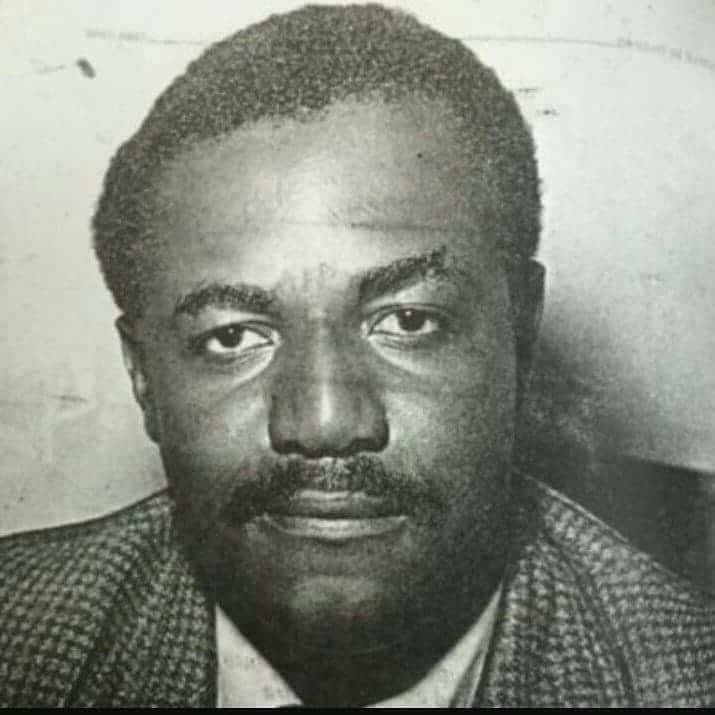
The Legend of Kakawa Street Lagos Island Millionaire, Candido da Rocha

Published

on

Have you ever asked any of your parents for money, especially continuously, and they gave you this reply: “Do you think I’m Da Rocha?”

Candido Da Rocha, the Ilesha man was born in 1860, and he live through to 1959. He was the first millionaire in Nigeria.

A historian narrates: “Well, I experienced it and growing up, I never knew the meaning of the statement, until I came across a book a friend gave me, when I stumbled on the name ‘Candido da Rocha’.

“He was a rich man who would, from the balcony of his one-storey building, throw down coins to children who would, in a tangle of bodies and flapping hands, struggle for them. So, I remembered vividly why my parents deny being “a da Rocha” anytime I ask for money I don’t literally need as a child,” he said.

Da Rocha was a rich entrepreneur, businessman, landowner and creditor who owned Water House or Casa d’Agua on Kakawa Street, Lagos Island, Lagos. It was named Water House because it was the first and only house in Lagos in those days to have a borehole and in turn sells water to residents.

He was born to the family of Joao Esan Da Rocha, who was captured as a slave when he was 10 years old on his way to school in Ilesha. Candido was born in the Bahia region of Brazil.

His mother was Angelica Josephina da Rocha. His father returned to Lagos, Nigeria in the 1870’s where he built his wealth and passed it to his son, Candido.


Due to his wealth, his friend, Herbert Macaulay nominated him as a candidate in one of the elections of the time. And when da Rocha met the electorate, he told them: “I am Candido da Rocha, your candidate into the House. Vote for me if you like. And if you don’t, all well and good.”

That statement ended his sojourn in politics as he lost the elections, acquiring only 20 votes. Indeed, Da Rocha was a very modest and generous capitalist. During the Second World War (1939 – 1945), when the authorities of Kings College were looking for a place to relocate the students in the boarding house – among whom were Tiamiyu Bello-Osagie, who would become one of Nigeria’s most celebrated gynaecologist; Adenekan Ademola, son of Nigeria’s first indigenous Chief Justice, Adetokunbo Ademola; Dapo Aderemi, son of Sir Adesoji Aderemi, the legendary Ooni of Ile-Ife, Da Rocha volunteered his Bonanza Hotel on Customs Street, Lagos, and did not collect a dime for the period it was used.


Even after the war, when government asked influential Nigerians to contribute to the rehabilitation fund, he made substantial donations and he instructed that the amount should not be disclosed to the public.

Despite his wealth and political clout, no street in Lagos is named after him. Candido Da Rocha died on March 11, 1959 and his remains are interred at the Ikoyi Cemetery.

Among many of his businesses is the now defunct Bonanza Hotel in Lagos.

He collaborated with Lagos businessmen J. H. Doherty and Sedu Williams on a money lending business established under the name of the Lagos Native Bank. He was a founding member of the Lagos auxiliary to the Anti Slavery and Aborigines Right Society which was headed by James Johnson and had Samuel Pearse and Sapara Williams as members.

Among his children were Alexander Da Rocha, Adenike Afodu, Angelica Folashade Thomas and Louissa Turton.

Continue Reading
Click to comment

Leave a Reply

Your email address will not be published. Required fields are marked *

Featured

ICYMI: I Did Not Steal Nigeria’s Money – Former Minister, Diezani Cries Out

Published

on

By

By Dele Momodu

What you are about to read is probably the most anticipated story of the year birthed in the long awaited authoritative investigative newspaper of the future. This pregnant saga fell into labour last week in the pre-natal wing of Pendulum ward of Thisday clinic and it has now given birth to a big bouncing baby christened The Boss.

This is an apt metaphor for the melodramatic scoop which is the cover of the first edition of what I believe will be a catalyst for unbiased investigative reporting in Nigeria. The Boss had long been conceptualised as a Leadership newspaper to occupy the void created by lack of true and credible investigative journalism in some traditional and online media. The original plan was to launch in December or early January.

But the Diezani Alison Madueke story changed all that. It was too compelling to restrict to the Pendulum column alone. And here we are with what promises to be an exciting addition to the media landscape in Nigeria and beyond featuring an enthralling cover story that will educate and entertain the readers.

After that effervescent introduction in Thisday, in which Nigeria’s most influential newspaper published the meeting between this reporter and the embattled former Minister of Petroleum Resources, Mrs Diezani Alison-Madueke, everyone requested for details of the encounter. Some unbelieving Thomases even suggested the story was pure fiction, or at the very best “faction” to borrow Kole Omotoso’s coinage.

They wondered why a more comprehensive interview could not be published, garnished with clear crispy pictures of Madame Diezani. It was obvious many had read the story in a hurry and did not assimilate the carefully worded tale of a woman in deep pain and anguish for variety of reasons. Of course there were insinuations that it was a public relations stunt but mercifully most readers thought it was a well-balanced story. It even went viral.

At any rate, those who took their time would have noticed that I had to settle for such gripping monologue because it was virtually impossible to extract more information from a cancer patient who had spent her day with her medical team in a private London hospital. Our protagonist had also probably taken the risk of meeting this reporter in order to check if he was going to play the quintessential antagonist or do his job professionally and dispassionately.

That meeting obviously impacted on her decision to open up eventually, two days after episode one. A call came through on Friday November 6, 2015, from a female aide of Mrs Alison-Madueke to request for a meeting the following day at 2.30pm at a location yet to be determined.

The appointment was immediately approved. Later in the evening, this ubiquitous aide made yet another call shifting the appointment forward by a few hours to 11am the same Saturday. My response again was yes. The pot that would eat pepper must endure some heat, says a Yoruba proverb. The Diezani story was worth all the sacrifice in the world. In other climes, journalists would have shown more than cursory in chasing that super exclusive chat. Her copyrighted picture would have fetched a few million dollars, probably. Anyway…

A text message flew into my phone very early Saturday morning. It contained the address and full postcode of a new venue different from the one of two days earlier. Not to worry. My wife offered to chauffeur me again but without her sister this time around. While on our way, the female aide called to ask if we were going to make the 11 o’clock time pronto or arrive late. I replied we would arrive earlier rather than later. I would soon understand the import of her question. Madam Diezani was apparently on her way and I was expected to be comfortably seated prior to her arrival. Presumably, so I would not know how and from what direction she had come. There was no sign this time of any overbearing or anxious security man. Mrs Alison-Madueke had laughingly dismissed as funny my James Bond imagination of Thursday, in any event. Since the meeting was supposed to be strictly one-on-one, my wife had to wait in the car while I was away. The venue turned out to be a popular restaurant near Regent’s Park, famous for its breakfast.

I was a bit surprised and disappointed at the choice of location. I was hoping she was going to give me access to her now famous apartment which was said to have been bought at a most staggering amount, or the new multi-billion dollar home that was rumoured to have triggered the alarm leading to her arrest, claims she would dismiss as tales by moonlight.

I called the mobile number I had been given as I approached the doorway of the restaurant, and her female aide emerged from the bowel of the restaurant to lead me to a somewhat secluded corner where a table has been reserved. I was seated facing the entrance, and hoping I could catch her glimpse whenever she arrives.

After waiting for about 20 minutes or so, I heard some footsteps and the once most powerful woman in Nigeria surfaced. She looked slightly better than at our last meeting and I sprang to my feet as we exchanged pleasantries. I mentioned to her that she looks better and she said she’s been resting and gaining strength in preparation for her radiotherapy. She ordered full English breakfast while I settled only for cappuccino. But when the meal arrived she didn’t eat it because she has lost appetite for food generally and was more on fluids. She then asked for American coffee, water and fresh lime instead. She also ordered for tea at some point. Most of the time we spent talking, she coughed intermittently into a napkin and dabbed her mouth with it but she was clearly determined to pour out her obviously heavy mind despite the discomfort I could notice she was struggling to endure.

Let me reiterate for the sake of those who missed the first part of this story that our two meetings took place on Thursday, November 5 and Saturday, November 7, 2015 at different locations. The first was in a private apartment while the second was in this restaurant. Unlike the first which lasted less than half an hour, we were able to spend more time together this time. Indeed, we were at it for for over a total of just over four hours, and I believe she spoke from the heart, I believe, but the reader is always the judge.

There were several off-the-record interludes. More than anything we were both careful not to discuss in detail matters which might impact on the cases and legal problems now bedevilling her.

Nigeria’s former oil minister Diezani Alison-Madueke leaves Westminster Magistrates Court in London, Britain, October 02, 2023. REUTERS/ Belinda Jiao

I did not expect otherwise. Mrs. Alison-Madueke is a smart and intelligent woman and had recently benefitted from being advised by lawyers both in UK and Nigeria in connection with her arrest in the UK and the search of her Abuja home.

Getting and persuading her to talk in detail about a lot of issues was therefore very difficult. There were other reasons. First, was her obvious paranoia of the Nigerian press. She’s been bruised, battered and blistered, especially in print and on social media. She’s been scandalised, summarily tried and precipitously convicted by the media, according to her. She did not expect anyone to lend her an ear or listen to her now muffled voice.

On top of her problems, she’s having a running battle with the most dreaded form of cancer of the breast and she’s had to undergo surgeries to remove the lumps and later some chunky tissue. The treatments have not been that successful and it’s been a ding-dong affair for this once ebullient and elegant lady.

We had to give assurances of not sensationalising her story if granted access. Of course it has never been our practice to do so and thus this was not a problem. We promised not to embellish her stories in any way or reveal off-the-record discussions which were truly personal and confidential and had nothing to do with her travails. There was a strict proviso that no form of recording would be allowed and we had to adopt the novelistic style. The result of that covenant is what you’re reading today.

We must note that we were highly restricted and encumbered by strings of events as well as existing litigation and other possible future developments. We could not get as much revelations as we expected but the little we managed to get provided enough insight into a woman who had achieved so much and enjoyed substantial accolades before the sad turn of events. Had she remained in Shell, where she became the first and only female Director, and shunned the murky water of Nigerian politics, maybe she would have savoured the klieglights forever.

We knew it was going to be very difficult getting pictures in her present not too genial or glamorous condition. That was practically tough on our first meeting as she was just returning from her hospital rounds and looked totally exhausted. We however succeeded in getting a few pictures this time some of which we are revealing for the first time today.

The Diezani Alison-Madueke story is a classic study in the intrigues of power-play. Barely months ago, she was at the pinnacle of the temple as Minister of one of the biggest oil-producing nations on earth. She was elected the President of the powerful Organisation of Petroleum Exporting Countries (OPEC). And the world was at her feet. The cancer issue had crept in, like a thief in the night, but was being treated and managed by the best doctors available in England. There was that optimism that all shall be well at the end until everything that could go wrong started going wrong, like in Murphy’s Law.

Madame Diezani confirmed that she she and the government she served loyally and passionately never thought for one second that Nigerian general elections could turn out the way it did or that they would suffer the crushing and devastating defeat that they did. The first and major casualty would be the woman who controlled the destiny of Nigerians as Petroleum Resources Minister. Under her care, a whopping $20 billion was alleged to have vamoosed into thin air. Till this day, no one has come forward to authenticate the veracity or otherwise of such mind-boggling claims. Instead we’ve received conflicting figures on the supposed infractions.

This is a story like no other and it cannot be told like any other. It is a tale from the super highway of power and the fast lane of confusion. Nothing is sweeter than power and money, in no particular order, as long as you have both you are in the rarefied company of national decision-makers. And nothing is sadder than having both and falling from grace to grass or from fame to infamy. Mrs Alison-Madueke had the world not just at her feet but firmly in her palm. She could apparently turn a certified pauper into a certificated billionaire within the twinkle of an eye. In short, she could make and unmake. Diezani was the subject of many fables. And this is the crux of the matter. Her closeness to President Jonathan and the influence she wielded on him was never a hidden matter. This lent credence to the mystical power over the Nigerian economy that it was claimed she possessed. I fired my first shot from that direction and it was as if she expected it:

“Is it true that a sister of yours has a kid or kids for President Jonathan?” I asked. “That is totally untrue as I don’t have any such sister or relative!” she said. She wondered how people could fabricate such blatant lies.

I soon followed with what I regarded as an upper-cut: “It was said that you and the former First Lady, Dame Patience Jonathan were in permanent conflict; why was it so?” She responded that their relationship was cordial enough and she gave the former First Lady the respect she should give the wife of her boss. She went further to say that “What people don’t know is that we’ve been family friends for long. My mum, Mrs Beatrice Agama, has always played the role of a godmother in the Niger Delta and all the militants love and respect her. I come from a royal and privileged background and lacked nothing.”

She said she was not unaware of certain insinuations about an intimate relationship with the former President but she never bothered her head about them because some people had made up their minds to spread those ugly tales about her. “If you are in the corridor of power, you must expect anything, including mud and even bricks being thrown at you.”

Now wait for the next shot! “You’ve been linked to so many young guys who made so much money from you and later absconded or turned against you… What was between you and Chris Aire, Kola Aluko, Jide Omokore, Tonye Cole, Dapo Abiodun, Wale Tinubu, Igho Sanomi and others?” I queried her.

Madame Diezani’s response was calm and unruffled: “I vehemently deny any intimacy or liaison with any of these gentlemen.” She noted that she is happily married like most of them are happily married and asserted that she is not the Scarlet Lady that people paint her to be. She sees those rumours as insults on accomplished women who cannot be seen in sensitive positions without running riotous with some men. She said it was important to put in context how she met most of them:


“I was the Chairman of the Nigerian Content Development & Monitoring Board and I did my job to the best of ability and intentions. My boss and I were determined to empower Nigerians, especially the young ones, who had the brains and guts to dare.” She pointed out that her firm belief and desire to empower Nigerians stemmed from the manner that she and her parents and siblings were unceremoniously dumped out of Shell Camp where her father worked and lived while she was young.

The memory was apparently traumatic as I could notice her wiping her eyes with another handkerchief. She said “I remember that day vividly.  It was definitely one of the worst days of my life.  We were not even allowed to finish eating before they hurriedly packed our belongings, threw them into trucks and drove us into an uncertain, unknown future.”

She continued “I was determined that what my father fought for, which was to ensure that Nigerians had a greater say in the scheme of things in Shell and thus in the petroleum industry would be championed and achieved by me in Government.”

She noted that in every government, some people must land the big jobs which every human being would love to have. She said “I chose to empower mostly Nigerians and took the power away from foreigners who used to dominate the sector. That was why we pushed for the Nigerian Content Bill, which mercifully we got through. So you cannot expect some forces not to hate me but I was shocked that Nigerians themselves were ready to crucify me mostly on rumours and not verifiable facts. Most leaders before me have suffered a similar fate so I take some comfort from that experience.”

She added that people seem to forget that she is happily married to Rear Admiral Alison Madueke and would not do anything to jeopardise her marriage or smear herself in the eyes of her husband, children and family. She also said that some of these men were unknown to her until she became a Minister and that although, in some cases, they later enjoyed a cordial relationship with her, it was no more than the kind of relationship she enjoyed with other successful Nigerian businessmen who respected and admired her for the way she was bringing Nigerians to the forefront of the industry:

“It is unfortunate that things didn’t work perfectly all the time as expected and as a leader I take the blame for those imperfections, but I’m certainly not a demon as being portrayed. I have no doubt that I served my nation well, the reason my colleagues at OPEC supported me despite the opposition from my own people. I still maintain that level of relationship with my former colleagues despite not being in government.“

I then asked why is she so controversial? “Controversy has nothing to do with your qualifications or performance. As a matter of fact, people often hate you for knowing so much and for being efficient and confident which they mistake for arrogance. We had to confront so many challenges, including oil theft and general insecurity but we did very well even if we did not succeed 100 percent. I must say that some of our own people delivered responsibly while a few of them breached the faith and wasted the opportunities handed to them by my boss, President Jonathan. Unfortunately, no one ever remembers the things that went right but everyone remembers and tends to emphasise the things that went wrong…”

We soon moved the discussion to the many allegations of financial impropriety under her tenure, especially the alleged disappearance of $20billion and other wasteful spending authorised by her. She observed that she could not go into any real details because of the criminal investigations in Nigeria and England as well as the civil case here. However, she told me she would try and provide general details about these matters because it was important to shed some light on her own involvement from the vantage point of someone actually in Government who believes these things simply cannot happen.

She was visibly angry at the mention of the $20billion: “If there is one issue I must pursue in this world it is the biggest lie of this money. How can $20billion disappear just like that? Where did it disappear to? Is it possible that such an amount would not be traceable? This is more painful coming from someone I considered a good friend who should appreciate the gravity of such allegation. I challenge anyone to come forward with facts showing that I stole government or public money. I’ve never stolen Nigeria’s money…”

“Rather I worked hard to halt the rampant business of round-tripping. When I brought in Reginald Stanley to clean up the place, I requested for a list of the defaulters. There were about 92 of them and I made sure we sanctioned them. You can imagine the threat to my life but I was ready to defend the economic interests of my country. In fact, we were able to reduce the oil subsidy by about half. No one has applauded our effort.

“There were those who said the then Governor of Central Bank must have been angry at me because of the way the Presidency treated him. In all honesty, he was being blocked from seeing the President by some of Oga’s people (presidential aides) but it had nothing to do with me. I was the one who even told Oga about the development and Oga said he would meet him in London on one of his trips. Unfortunately my boss fell ill and was rushed to King Edward Hospital and the meeting was aborted.”

“Sanusi and I had been friends. There was no way I would have done anything bad to him. He even came to my house to inform me about his interest in heading the African Development Bank and we discussed for about two hours. I promised to support him and I spoke to Oga about it. We were together on the Reconciliation Committee that looked into the accounts of NNPC. Yes there were gaps but not on the alarming scale being circulated. Markafi (former Governor of Kaduna State) did a thorough job. You know he is a very sound accountant.”

What about the allegations that she owns choice properties everywhere? “It is so sad that anyone could say such about me. Let me say something to you, I live with my husband in the same house we’ve lived since we married in 1999. Ask anyone who knows us. Our house in Abuja was bought in 2007 by my husband and as an architect and lover of interior décor I did it up to our own taste. It is not over the top because I have good taste and appreciate bargains. I shop in regular shops like B & Q to do up all the places where I live. Anyone who tells you I have houses anywhere should feel free to publish them. That was how they said I bought an expensive property in Vienna. I went to court and I won the case. I never saw the house before except in picture. The house I stay in London is rented. As a woman I love to look good. Some of my dresses and jewelleries are often dumped on me by those I buy from and I pay them when I can…”

She went on to explain that virtually all the transactions in respect of which allegations of corruption are being levelled against her went through due process and that the Group Managing Director of NNPC was actively involved in ensuring that the best international practices were maintained. She added that her involvement in the conclusion of these transactions was limited and that some of the contracts had been executed before she became Minister of Petroleum Resources. In some other cases she only got details after the contracts had been concluded when approached by some businessmen who complained about the terms. She usually admonished them to forego the contracts if they felt they were not profitable and seek other ventures within the industry.

But she emphasised that her boss neither discriminated against nor favoured anyone. She claimed some of those who benefited the most were even in opposition and mentioned how a renowned opposition leader and vocal critic of the Government at the time met her on about three occasions to discuss his interests in the business of oil.

“My boss didn’t want Nigerians to suffer because of politics so we agreed to offer certain support to a company we knew was owned by the opposition once we were satisfied they controlled the market substantially and have what it takes to deliver the goods nationwide. We were that tolerant…”

Continue Reading

Featured

Who Gets the Blame When Opportunities Disappear? The South Africa Example

Published

on

By

By Anjorin Fehintola Stella

As South Africa approaches June 30, the date set by certain anti-immigrant groups as deadline for undocumented migrants to leave the country, tensions surrounding immigration have once again captured national and international attention. These groups have argued forcefully and publicly that foreigners are responsible for rising unemployment, escalating crime, and increasing pressure on already overstretched public services such as hospitals, schools, and housing. The debate has sparked strong and deeply divided reactions across the continent, raising urgent concerns about xenophobia, social cohesion, human rights, and the future of African unity at a time when continental cooperation has never been more necessary.

Yet beneath the headlines and the heated rhetoric lies a deeper and more unsettling question; Why do immigrants so often become targets during periods of economic and social uncertainty? And what does the persistence of this pattern tell us about how societies respond when the gap between expectation and reality becomes too painful to confront honestly?

The current tensions in South Africa are not simply about immigration. They reflect broader and far more complex struggles over identity, opportunity, belonging, and the distribution of scarce resources in a society still grappling with the deep and unresolved legacies of apartheid and structural inequality. To reduce the debate to a question of who should or should not be in the country is to miss what is truly at stake, both for South Africa and for the wider African continent.

Throughout history, societies facing economic hardship have repeatedly searched for visible and identifiable groups to blame for problems that are in reality deeply structural and systemic. This is not a uniquely South African phenomenon. It is a recurring pattern in human social behaviour that has appeared across cultures, continents, and centuries. In post-World War One Germany, economic devastation and national humiliation were channelled into blame directed at Jewish communities, with catastrophic consequences. In the aftermath of the 2008 global financial crisis, rising unemployment across parts of Europe fuelled hostility toward immigrant communities in countries including Greece, Hungary, and the United Kingdom. In the United States, periods of economic contraction have historically coincided with surges in anti-immigrant sentiment directed at whichever group happened to be most recently arrived and most visibly different from the majority. The pattern is consistent, when jobs become scarce, living costs rise, and opportunities diminish, frustration seeks an outlet, and that outlet is rarely the complex institutional and policy failures that actually caused the hardship.

This phenomenon is commonly and usefully referred to as scapegoating. Rather than confronting the structural causes of social and economic challenges, which are difficult to understand, slow to change, and rarely produce a satisfying emotional response, public frustration is redirected toward groups that are politically vulnerable, socially distinct, and easy to identify. Immigrants fit this profile in almost every society where they are present in significant numbers. They look different, speak differently, worship differently, and occupy a social position that makes them easy to portray as outsiders who do not belong and therefore do not deserve the resources they are perceived to be consuming.

South Africa’s situation reflects many of these dynamics with particular intensity, shaped by a history that makes its current crisis both understandable and deeply tragic.

Despite being one of Africa’s most industrialized and developed economies, South Africa continues to experience some of the highest levels of unemployment on the continent and indeed in the world. Official unemployment figures have consistently exceeded thirty percent in recent years, with youth unemployment reaching even more alarming levels. Economic inequality, as measured by the Gini coefficient, remains among the highest of any country on earth. Millions of South African citizens continue to live in poverty, in informal settlements without adequate sanitation or electricity, with limited access to quality healthcare, education, and economic opportunity. These are not new problems. They are the accumulated product of centuries of colonial exploitation and decades of apartheid, a system that was specifically designed to concentrate wealth, land, and opportunity in the hands of a small racial minority while deliberately excluding the majority from the formal economy.

For many South Africans, the promise of economic transformation that accompanied the end of apartheid in 1994 and the dawn of democracy remains painfully and visibly unfulfilled. While political freedom was achieved, and while the legal architecture of racial discrimination was dismantled, economic inclusion has proven far more difficult and far slower to realize. Land remains heavily concentrated. Corporate ownership remains skewed. Access to capital, education, and professional networks continues to reflect the inequalities of the past. This disconnect between the political promises of liberation and the economic realities of daily life has contributed to growing frustration and disillusionment, particularly among younger South Africans who were born after apartheid ended and who cannot understand why freedom has not yet translated into opportunity.

In such an environment, immigrants often become symbols of broader anxieties that have little to do with immigration itself. Many foreign nationals living in South Africa come from Nigeria, Zimbabwe, Mozambique, Somalia, Ethiopia, and other parts of the continent. They operate small businesses in townships and urban centers, work in informal sectors, provide services, and seek economic opportunities that are unavailable or severely constrained in their home countries. Their presence within local communities creates visibility. And that visibility, in a context of scarcity and frustration, can generate the perception that they are taking jobs, occupying business spaces, or accessing services that rightfully belong to citizens.

This perception, however, frequently diverges significantly from the evidence. Research on the economic impact of immigration in South Africa and elsewhere consistently shows that immigrants do not simply take jobs from citizens. They also create jobs, start businesses that employ local workers, fill skills gaps in sectors where domestic supply is insufficient, and contribute to local economies through their spending, taxation, and economic activity. A Nigerian shopkeeper in a township is not stealing an opportunity from a South African. In many cases, that shopkeeper has created a service, employed assistants, and provided affordable goods in a community that was previously underserved. The relationship between immigration and unemployment is complex, contested among economists, and cannot be reduced to the simple arithmetic of more people competing for fewer jobs.

Consider, for example, the experience of a Zimbabwean trader who crossed into South Africa after Zimbabwe’s economic collapse in the late 2000s. Having lost his savings and his livelihood to hyperinflation and political instability, he arrived with little more than skills and determination. Over years of persistent effort, he built a small clothing stall, then a shop, then a small enterprise employing three South African workers. He pays rent to a South African landlord, buys stock from South African suppliers, and contributes to the local economy in ways that are invisible in anti-immigrant rhetoric but very real in the daily life of his community. His story is not exceptional. It is representative of countless immigrants whose contributions are routinely overlooked in debates that reduce their presence to a threat.

The reality is that unemployment, poverty, and inequality in South Africa cannot be meaningfully explained by immigration. These challenges are the product of historical dispossession, inadequate education infrastructure, insufficient investment in skills development, failures of governance and service delivery, and the structural features of an economy that has not succeeded in creating opportunities fast enough to absorb its growing population. These are the real causes of South Africa’s economic distress. They are difficult to address, require sustained political will, and do not lend themselves to simple solutions or satisfying emotional narratives.

However, complex explanations rarely generate the same emotional response as simple ones. When people experience prolonged hardship, when they watch their children go hungry, when they cannot afford school fees or medical care, when they have applied for jobs repeatedly and been rejected, the desire for immediate and identifiable answers becomes overwhelming. In that state of distress, a narrative that points to a visible group of outsiders as the source of the problem offers something that structural analysis cannot, a clear villain and the emotional relief of righteous anger. This is not a failure of intelligence. It is a very human response to pain. But it is a response that, when translated into policy or action, produces injustice rather than solutions.

The consequences of xenophobic sentiment extend far beyond those who are directly targeted. When anti-immigrant hostility becomes normalized in public discourse, it weakens the social trust upon which functioning communities depend. It creates fear and suspicion where cooperation and mutual support are needed. It divides communities along lines of origin and nationality at precisely the moment when shared challenges require collective response. In South Africa, where the wounds of racial division already run deep, the addition of nationality-based hostility adds another layer of fracture to a society that is still in the long process of healing.

For the immigrants themselves, the impact of this hostility can be devastating and sometimes fatal. South Africa has experienced multiple episodes of deadly xenophobic violence over the past two decades, including the widespread attacks of 2008 in which over sixty people were killed, and subsequent outbreaks in 2015 and beyond. Shops and homes were looted and burned. Families were displaced. People who had built lives over years lost everything in days. Many of those targeted had lived in South Africa for decades, raised children there, built businesses, and considered it home. In moments of mob violence, none of that mattered. What mattered was that they were perceived as foreign.

The South African experience raises uncomfortable but necessary questions about African solidarity and the meaning of continental unity in practice. Africa has a long and rich tradition of intra-continental migration. People have moved across the continent in search of pasture, trade, education, employment, and safety for thousands of years. These movements have contributed to cultural exchange, the spread of knowledge, economic growth, and the complex and vibrant diversity that characterizes African societies today. The idea that Africans should be hostile to other Africans seeking opportunity within the continent sits in painful tension with the values of solidarity and shared humanity that African political and cultural traditions have long celebrated.

As African countries continue to pursue greater economic and political cooperation through frameworks such as the African Continental Free Trade Area, which envisions the free movement of goods, services, and eventually people across the continent, the challenge will be to translate those institutional commitments into genuine cultural and social acceptance at the community level. Trade agreements and policy frameworks matter enormously. But they cannot achieve their full potential in societies where ordinary people view fellow Africans as threats rather than as partners and neighbors.

None of this means that governments should ignore legitimate concerns about border management or the pressures placed on public services by large-scale immigration. Every sovereign nation has both the right and the responsibility to manage its borders and regulate the flow of people entering its territory. Immigration policy is a legitimate area of governance, and there are real and valid questions about how to ensure that public services are adequately funded to serve growing populations, how to manage informal settlements, and how to create pathways to legal status for long-term residents. These are proper subjects for policy debate and democratic deliberation. However, there is a fundamental and morally significant difference between addressing immigration through careful, rights-respecting policy and assigning blame for complex, historically rooted societal problems to people who had nothing to do with creating them.

The current debate in South Africa serves as a sobering reminder that economic hardship tests the strength of social order in ways that prosperity rarely does. It reveals how quickly frustration can be redirected toward those perceived as different, and how easily social divisions can deepen when the competition for scarce resources becomes acute. It also reveals the critical importance of leadership in such moments. When political leaders and public figures validate scapegoating narratives for short-term political gain, they legitimize hostility and make violence more likely. When they speak honestly about structural causes and call for solidarity, they create space for more constructive responses. The role of leadership in shaping how societies respond to economic stress cannot be overstated.

Media also bears significant responsibility in these moments. The way immigration is framed in news coverage, in social media discourse, and in public commentary shapes how ordinary people understand the issue and where they direct their frustration. Reporting that reduces immigrants to numbers and threats, that amplifies the most extreme anti-immigrant voices without context or counter-narrative, and that fails to humanize the people at the center of the debate contributes to the very climate of hostility that makes violence possible. Responsible journalism on migration requires not only accuracy but empathy and context.

Ultimately, the question confronting South Africa is larger than immigration itself. It is about how societies respond when expectations collide painfully with reality, when the promises of the past remain unfulfilled in the present, and when the future looks uncertain. Do they find the political courage and social will to confront the structural challenges that limit opportunity and perpetuate inequality? Or do they retreat into the easier and more emotionally satisfying path of finding groups to blame? History offers a sobering and consistent lesson. When opportunities disappear, someone is almost always held responsible. The real measure of a society’s maturity, its justice, and its humanity lies in whether it has the honesty and the courage to ensure that blame does not become a substitute for solutions. For South Africa, and for many societies navigating similar pressures across the world, the path forward will not be found in the targeting of the vulnerable. It will be found in the difficult, unglamorous, and absolutely necessary work of addressing the deeper inequalities and structural failures that give rise to public frustration in the first place. That work cannot wait, and it cannot be avoided. The people living at the sharp edge of these tensions, both citizens and immigrants alike, deserve nothing less.

Continue Reading

Featured

What’s the Proof That Bandit Kingpin’s Mother, Sister Got 40-Years Combined Jail Term?

Published

on

By

By Ekunode Ayomipo Jolaoluwa

A claim circulating online alleging that the mother and sister of a notorious bandit kingpin were sentenced to 40 years imprisonment for aiding terrorism activities has continued to generate public interest and reactions.

A review of the claim shows that Nigeria’s security agencies and judicial authorities have, in recent years, intensified efforts to dismantle criminal networks by targeting not only suspected bandits and terrorists but also individuals accused of providing logistical, financial or operational support to such groups. This approach forms part of broader efforts to curb insecurity across affected regions of the country.

However, despite the widespread circulation of the claim, available information does not provide sufficient evidence to independently confirm that the individuals depicted in the image were convicted and sentenced to a combined 40-year jail term for terrorism-related offences. No official court documents, statements from relevant authorities, or verifiable judicial records were readily available to substantiate the specific details presented in the image.

The absence of key information, including the identities of the accused persons, the location of the trial, the date of conviction, and the court that allegedly handed down the sentence, makes it difficult to establish the authenticity of the claim. Such details are critical in verifying reports of criminal convictions, particularly in cases involving terrorism and national security.

Experts in media verification advise that claims relating to criminal prosecutions should be supported by official records and credible sources before being accepted as factual. Without such supporting evidence, there remains a possibility that the information may have been presented without adequate context or may be inaccurate.

While the Nigerian government has maintained a firm stance against terrorism, banditry and related crimes, and courts have handed down significant penalties in proven cases, the specific claim regarding the alleged conviction of a bandit kingpin’s mother and sister could not be independently verified at the time of this review.

Continue Reading

Trending