Opinion
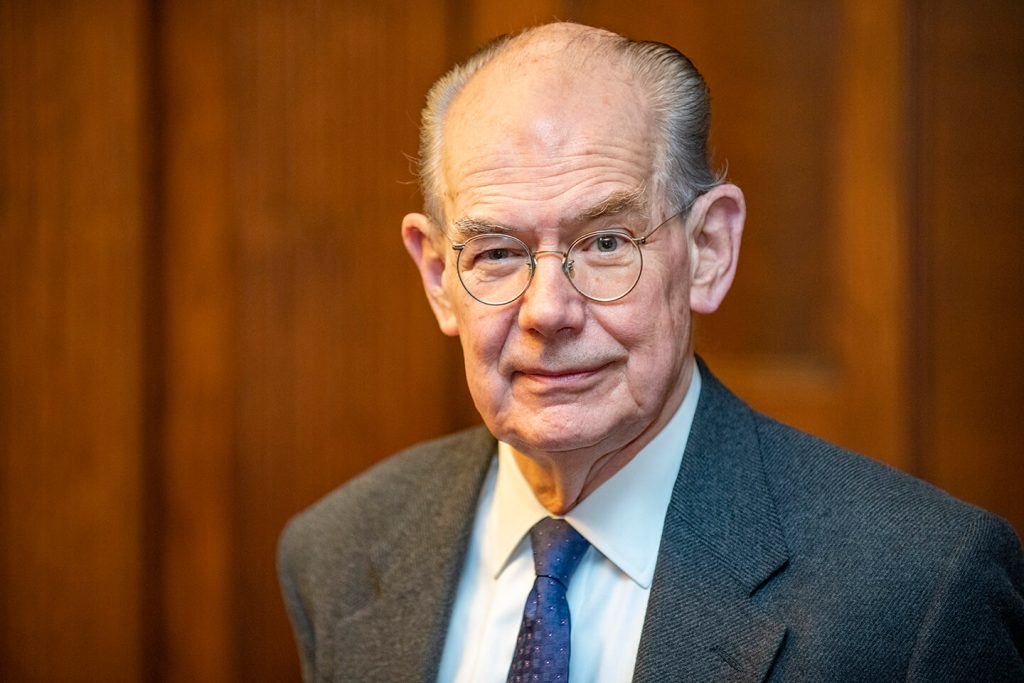
Prof. John Mearsheimer: America’s Strike in Nigeria is a Fatal Trap – Strategic Suicide Has Begun
Published
3 hours agoon
By
Eric
Hello to all the independent thinkers out there, and welcome back.
We need to cut through the noise immediately. If you open your newspapers today or scroll through your feeds, you are being bombarded with a very specific, very seductive narrative. You are reading about American power on display. You are reading that President Trump has ordered a powerful and deadly strike against Islamic militants in Nigeria to protect Christians.
You are hearing Defense Secretary Pete Hegseth declare that the killing of innocents must end and that the Department of War is always ready.
The media paints this as a righteous thunderbolt, a demonstration of resolve, a reassertion of American strength. Let me be blunt: this is not strength. This is a strategic hallucination.
What we are witnessing in West Africa is not the reawakening of a superpower. It is the strategic convulsion of a hegemon that has lost its mind. We are watching the United States once again fall into the trap of liberal hegemony, or in this case, a strange hybrid of moralistic crusading where we believe we have the right, the duty, and the capacity to socially engineer outcomes in a region that is of zero strategic importance to the vital national interests of the United States.
Let’s look at the mechanism of what actually happened. Stripped of the emotional rhetoric, the United States Navy fired more than a dozen Tomahawk cruise missiles from the Gulf of Guinea. These are premier, high-end assets. Each one of those missiles costs roughly $2 million.
And what did we hit? We hit two camps in Sokoto State in northwestern Nigeria. We hit insurgents who drive pickup trucks and hide in the bush.
Think about the cost-exchange ratio here. It is clinically insane. We are using multi-million-dollar munitions to destroy targets that are worth, at best, a few thousand in material assets.
But the financial cost is the least of our worries. The real cost is the strategic opportunity cost. I have been arguing for decades that the world is anarchic. There is no night watchman. States must prioritize their survival above all else.
And in the 21st century, the United States faces one and only one true existential threat. That threat is a rising China. China is a peer competitor. It has the population, the wealth, and the technological sophistication to dominate Asia and push the United States out of the Western Pacific. That is where the history of this century will be written.
Every hour that U.S. Africa Command, AFRICOM, spends planning strikes in Nigeria, every Tomahawk missile we fire into the Sahel, and every ounce of political capital we spend coordinating with the Nigerian military is a resource that is not being focused on the Indo-Pacific. It is a distraction.
And in the ruthless world of great power politics, distraction is death.
Beijing is watching this. They are looking at us firing cruise missiles into the Nigerian scrubland to avenge sectarian violence, and they are laughing. They see a superpower that is easily baited, easily distracted, and incapable of ruthless prioritization.
Now, let’s dissect the justification. The president stated explicitly that this was to protect Christians from Islamic slaughter. While the sentiment may be humanely understandable, relying on it for foreign policy is a recipe for disaster.
This is the logic of the Crusades, not the logic of realpolitik.
When the United States explicitly frames a military intervention in Africa as a defense of one religious group against another, we are not putting out a fire. We are pouring gasoline on it. We are validating the very propaganda of groups like ISIS and al-Qaeda, who claim the West is at war with Islam, by stepping into this sectarian quagmire where the conflict is driven by deep-seated ethnic divisions, competition for land, and economic banditry in the Northwest.
We are Americanizing the conflict. We are turning a local insurgency into a global target. Those Tomahawk missiles did not solve the problem. They just ensured that the next bomb that goes off might be aimed at an American embassy or an American business.
We are manufacturing enemies in a region where we should have no enemies because we should have no presence.
Furthermore, consider the moral hazard we are creating with the Nigerian government. We are told this was done in coordination with the Nigerian military. The Nigerian government, of course, loves this.
Why?
Because it allows them to buck-pass. In the offense of realism, buck-passing is when a state tries to get another state to fight its battles for it.
Nigeria is the most populous nation in Africa. It has immense oil wealth. It should be the regional hegemon of West Africa. It should be capable of policing its own borders and dealing with internal bandits. But for over a decade, their military has struggled against Boko Haram and ISWAP. Corruption is endemic. Incompetence is rife.
When Uncle Sam steps in with cruise missiles to do the job for them, what incentive does the Nigerian military have to reform? None. What incentive do they have to fix their own broken command structures? Zero.
We are effectively telling them, “Do not worry about your failure to govern. The United States Navy will act as your air force.” We are fostering dependency. We are underwriting a dysfunctional state. And just like in Afghanistan, just like in Vietnam, we will eventually realize that no amount of American firepower can substitute for a functioning local government.
We are building a castle on a foundation of quicksand.
Let’s go deeper into the structural forces at play here. The violence in Nigeria is not just about terrorist scum, as the president put it. It is a complex web. In the northeast, you have the jihadists like ISWAP. But in the northwest, where these strikes happened, the violence is largely driven by bandits and gangs kidnapping for ransom. These are criminal enterprises mixed with communal violence.
Does Washington really believe that a dozen cruise missiles can solve the socioeconomic collapse of northern Nigeria?
This is the hubris of the American elite. They believe there is a military solution to every political problem. They believe that if we just kill enough bad guys, peace will break out. It is a childish delusion. We killed thousands of Taliban. We killed thousands of insurgents in Iraq. And what happened? The structure of the conflict remained. The underlying political realities did not change.
The moment we leave—and we always leave—the void returns.
And look at the timing. Defense Secretary Hegseth mentions this happened on Christmas. It is theatrical. It is designed for domestic consumption. But foreign policy should never be a performance art.
When you launch missiles to send a message or to satisfy a domestic political constituency that is angry about the persecution of Christians, you are decoupling action from strategic interest.
The hard truth, the tragic truth that no one in Washington wants to admit, is that the slaughter of Christians in Nigeria, while horrific, does not affect the balance of power in the international system. It does not threaten the territorial integrity of the United States. It does not threaten our prosperity. Therefore, purely from a survival standpoint, it is not our fight.
But we cannot help ourselves. We have this liberal impulse, even in a Republican administration, to be the savior. We see a monster and we want to slay it. But in the international arena, there are monsters everywhere. If we chase them all, we will exhaust ourselves.
We are currently overstretched in Europe, propping up Ukraine in a lost war. We are entangled in the Middle East, protecting Israel and fighting proxies in Syria. And now we are opening a new kinetic front in West Africa. This is imperial overstretch in real time.
Meanwhile, the Chinese are building islands. They are securing supply chains. They are not firing missiles into Nigeria.
They are building infrastructure there to extract resources. They are playing the long game of realpolitik while we are playing the short game of moralistic whack-a-mole.
We must understand the concept of limits. The United States is powerful, but it is not omnipotent. We cannot impose our will on every corner of the globe. The more we intervene in these peripheral theaters, the more we weaken our core. We are bleeding credibility. We are bleeding resources. And we are bleeding focus.
What will happen next? It is predictable. The strikes will be hailed as a success today, but next week or next month, the violence will return. The bandits will regroup. ISIS will recruit the survivors. The Nigerian government will ask for more help.
“We need drones,” they will say. “We need advisors.”
And slowly, imperceptibly, the mission will creep. We will get sucked in. Five years from now, we will be asking ourselves why American soldiers are dying in the Sahel.
We have seen this movie before. We saw it in Mogadishu. We saw it in the Niger ambush in 2017. We act shocked when it goes wrong. But the mechanism for failure is baked into the very decision to intervene.
If we were serious—truly serious—about American security, we would pack up AFRICOM’s kinetic ambitions and bring those resources home or send them to the Pacific. We would tell the Nigerian government, “This is your country. These are your borders. You fix it.”
That is what a ruthless, rational great power does. It passes the buck. It conserves its strength for the decisive battle.
But we are not acting like a rational great power. We are acting like a crusader state, drunk on its own righteousness, flailing blindly in the dark. And in the unforgiving structure of international politics, such behavior is not just a mistake. It is a tragedy waiting to happen.
The tragedy is not just that we will fail in Nigeria. The tragedy is that, in our obsession with the periphery, we are losing the center. We are losing the ability to distinguish between what feels good and what is necessary.
So as you listen to the cheers from the establishment about these air strikes, I want you to keep your eyes on the horizon. Do not look at the smoke rising from Sokoto. Look east. That is where the storm is gathering.
And we are woefully unprepared for it because we are too busy playing policemen in a neighborhood that we do not understand and cannot control.
Stay safe, stay skeptical, and never stop asking the hard questions about where your blood and treasure are actually going. The truth is usually uncomfortable, but it is the only thing that matters.
I will see you next
Related
You may like
Opinion
When Subsidy Removal Meets Responsible Leadership: How Gov Abba Saved President Tinubu in Kano
Published
5 hours agoon
December 27, 2025By
Eric
By Dr. Sani Sa’idu Baba
My dear country men and women, I feel compelled to express my views plainly, unburdened by any sentiment, but as a citizen who has watched, questioned, and reflected deeply on the state of our nation. In moments like this, honesty becomes a duty rather than a choice, because sometimes, the loudest truths are not spoken, they are lived.
Since the removal of fuel subsidy in May 2023, Nigerians have endured crushing hardships like soaring transport fares, unbearable food prices, rising rents, and shrinking hope. Yet while citizens struggled, states began receiving unprecedented revenues. What separates today’s Nigeria is simple: how that money is used. And as a Kano indigene watching keenly and traveling widely across the country, I can say this without hesitation: Kano is the clearest proof that subsidy removal can work when leadership works.
Last month, I read an article by Hadiza Nasir Ahmad titled “Abba Kabir Yusuf: Learn from Ganduje before Kano collapses.” The title struck me as deeply misleading. I asked myself: what exactly should Governor Abba learn, and from whom? A governor delivering people-centered projects almost like magic? As I read further, I realized her major concern was security. Ironically, perhaps unknown to her at the time, Governor Abba was already set to inaugurate a 2,000-member neighborhood Watch Corps, deployed across all 44 local government areas, a bold, grassroots, multi billion naira security initiative worthy of national emulation. In any case, that is not the focus of this piece.
Let us return to the bigger picture. The removal of PMS subsidy is not just an economic adjustment, it is a revenue event. My assumption and sincere hope were that removing the subsidy would free up fiscal resources to rebuild Nigeria’s broken infrastructure and educate the millions of children roaming the streets. Today, that hope is no longer theoretical. It is happening in Kano.
Across Nigeria, governors openly admit that subsidy removal has boosted their allocations. In 2024 alone, states received trillions more from the Federation Account. Sadly, in many places, the funds disappeared into so-called “legacy projects” that impress billboards but barely touch lives. Kano chose a different path.
Health care is the most striking example. At Hasiya Bayero Paediatric Hospital, thousands of children, both outpatients and inpatients are treated completely free of charge, not with inferior drugs, but with quality medications many families could never afford under normal circumstances, a service from which my family and the overwhelming majority of Kano people have benefited directly or indirectly.
Moreover, Governor Abba’s outstanding performance in health is no accident. The quality and expertise of those leading the sector are exceptional. Dr. Abubakar Labaran, the Commissioner for Health, Dr. Mansur Nagode, Executive Secretary of the Hospital Management Board, and Professor Salisu Ahmad Ibrahim, Executive Secretary of the Primary Health Care Board, are professionals whose integrity and competence are second to none. The results are evident across facilities in the state. A shining example is Dr. Fatima Ibrahim Hamza, Zonal Director of Sheikh Muhammad Jidda General Hospital, where patients are treated with respect, dignity, and affordability regardless of status or background, something increasingly rare in Nigeria.
Education, humanitarian services, and infrastructure projects are equally visible across Kano’s urban and rural communities. Very recently, the Governor performed the groundbreaking ceremony for the establishment of a polytechnic in Gaya Local Government Area. Development here is not cosmetic; it is deliberate, spread across the state, and focused on ordinary people.
Let me be clear: I am not a politician, neither do I wear red caps. But truth demands honesty. Governor Abba Kabir Yusuf is an unsung hero, quietly demonstrating what responsible governance looks like in a difficult time.
Having traveled extensively across Nigeria, I can confidently say that very few states can match Kano’s level of development relative to its resources. Some may point to Lagos, but any serious economist or taxation expert will admit that when outputs are weighed against revenues, Kano stands remarkably tall.
In retrospect, my initial criticism of President Bola Ahmed Tinubu’s subsidy removal policy was understandable, given the uncertainty and harsh circumstances surrounding it. Today, I see things more clearly. The policy itself is not the main problem. The failure lies with governors who refuse to do the right thing. Kano has shown that when leadership is people-focused, even painful reforms can yield meaningful progress.
In fact, President Tinubu should honestly thank Governor Abba Kabir Yusuf of Kano. At the very least, Governor Abba has represented the President excellently. Kano has become a living model of what the President envisioned by removing the fuel subsidy. The state has made it possible for Nigerians to see, practically, what they should ideally be getting in their respective states. More importantly, Kano has given Nigerians a genuine reason to hold their governors accountable, to demand transparency, and to ask hard questions about how subsidy derived funds are being spent. In essence, Governor Abba’s performance has spilled the beans. It has exposed the volume of excess money generated from subsidy removal money every state benefits from, whether citizens feel it or not.
Finally, it must be said, that the performance of the Kwankwasiyya government in Kano is not unusual. It is consistent with a philosophy that prioritizes the masses over media hype and service delivery over political noise. If Nigeria truly wants to understand what the effect of subsidy removal should look like, it should stop listening to excuses and start studying Kano.
Dr. Baba wrote from Kano, and can be reached via drssbaba@yahoo.com
Related
Opinion
The Hand of God: I Pause to Say Thank You!
Published
16 hours agoon
December 27, 2025By
Eric
By Tolulope A. Adegoke PhD
“In an age of ceaseless disruption, the wisest pause is to acknowledge the Unchanging Hand—the divine grace that guides our progress, steadies our systems, and writes our story of possibilities with a wisdom no trend can outpace.” – Tolulope A. Adegoke, PhD
We are living through an age of acceleration. Technological advancements, from generative artificial intelligence to biotechnology, are not just evolving; they are fundamentally rewriting the rules of human enterprise on a near-daily basis. Concurrently, the global community faces layered, systemic challenges—climate volatility, geopolitical fragmentation, economic precarity, and a pervasive sense of institutional distrust. This relentless churn of innovation and crisis can foster a worldview dominated by pure mechanistic cause and effect, where outcomes are seen solely as the result of data-driven strategy, relentless hustle, or fortunate access to capital.
Yet, within the complex tapestry of human progress—across personal biographies, corporate histories, and the annals of nations—there persists a recurring, almost whispered, narrative. It speaks of moments that defy straightforward analysis: the serendipitous encounter that alters a career trajectory, the breakthrough insight that arrives after all logical solutions are exhausted, the organizational resilience that emerges from a crisis in ways no risk-management model predicted, or the diplomatic breakthrough that occurs against all odds when conflict seemed inevitable. For millennia, across diverse faiths and philosophies, this dimension of experience has been attributed to a higher guiding force—often termed the Hand of God. It represents the divine interaction where diligent human effort intersects with transcendent grace, producing outcomes that feel orchestrated, purposeful, and imbued with a meaning beyond mere happenstance.
In our contemporary context, recognizing this force is not an act of intellectual retreat. On the contrary, it is an exercise in profound clarity and emotional intelligence. It provides the essential counterbalance to the hubris of absolute human control and the anxiety bred by uncertainty. It compels us to a vital, transformative pause—a sacred interval for introspection on our core values, retrospection on the journey thus far, and a heartfelt posture of gratitude for the grace that navigates our collective voyage through these uncharted waters. This pause is not an empty space; it is the fertile ground from which wiser action, more sustainable leadership, and deeper hope can grow.
For the Individual: Cultivating Purpose in an Age of Digital Determinism
The modern professional landscape is increasingly mediated by algorithms that curate opportunities, assess productivity, and even suggest career paths. Personal worth is often unconsciously tied to metrics of digital engagement and visible output, leading to a quiet epidemic of burnout and existential doubt. In this environment, the most meaningful developments frequently occur outside these digital parameters.
Consider the pattern: a sudden redundancy, initially a devastating blow, becomes the forced catalyst for launching a purpose-driven venture that aligns with a long-held passion. A chance conversation during a delayed flight leads to a mentorship that shapes a leader’s ethical compass for decades. A period of enforced stillness, perhaps due to illness or family need, creates the mental space for a creative or spiritual insight that reorganizes one’s entire life priorities. These are not merely random events; to the perceptive heart, they bear the hallmark of intentional guidance.
The ancient wisdom of Proverbs 19:21 observes, “Many are the plans in a person’s heart, but it is the Lord’s purpose that prevails.” This is not a dismissal of ambition or strategic planning. Rather, it is an invitation to hold our plans with open hands. It suggests that our detailed life maps are subject to benevolent divine cartography that can see beyond our immediate horizon. The practice of pausing to acknowledge this reality does several things: it replaces anxiety with a sense of guided adventure, it converts envy of others’ paths into contentment with one’s own unique journey, and it fosters a humility that makes us lifelong learners. Gratitude, in this personal realm, is the conscious acknowledgment that our skills, opportunities, and even our recoveries from failure are gifts to be stewarded, not just assets we have self-manufactured.
For the Organization: Building Legacy in an Era of Stakeholder Capitalism
The 21st-century corporation operates under a blinding spotlight. Stakeholders—including employees, customers, investors, and communities—now demand authentic purpose, ethical transparency, and demonstrable social and environmental stewardship alongside financial performance. This shift from shareholder primacy to stakeholder capitalism represents a profound change in the rules of engagement.
In this new paradigm, principles often relegated to “corporate social responsibility” documents are now central to long-term viability. Organizations that operate with integrity—prioritizing fair wages, sustainable sourcing, and genuine community partnership—often experience a form of capital that cannot be listed on a balance sheet: the capital of trust. This trust manifests as customer loyalty during a misstep, employee advocacy in competitive talent markets, and investor patience during necessary transitions. While these outcomes can be analyzed through the lens of sociology or economics, many faith-informed leaders perceive the outworking of a timeless principle.
The Psalmist notes, “The Lord’s blessing brings wealth, without painful toil for it” (Proverbs 10:22). This is not a promise of effortless profit, but a profound observation that sustainable abundance is often tied to alignment with divine principles of justice, honesty, and generosity. When a company avoids a lucrative but unethical deal, it may be protected from future scandal. When it invests in employee well-being, it cultivates innovation and dedication that drives organic growth. The guiding hand here is seen in the provision of wisdom for complex decisions, the fostering of a cohesive culture amid diversity, and the unexpected market opportunities that align with a company’s core values. The necessary corporate pause involves leadership teams reflecting not only on key performance indicators but on their foundational ethos. Gratitude is expressed by acknowledging that success is a collaborative endeavor with a moral dimension and by reinvesting prosperity into the common good.
For the Nation and the Global Community: Steering the Ship of State with Moral Navigation
The arena of geopolitics and national governance is perhaps where the illusion of pure human control is most dangerous and most easily dispelled. Leaders wield immense power, yet they are constantly confronted by the limits of that power—facing natural disasters, global economic tides, and the unpredictable currents of human history. The rise and fall of empires, the sudden emergence of peace movements, and the avoidance of global catastrophes often contain elements that baffle historians and political scientists.
Instances where conflict is de-escalated through a last-minute change of heart, where scientific collaboration across rival nations yields a solution to a shared threat like a pandemic, or where a society makes a collective turn toward justice and reconciliation after generations of oppression—these moments carry a weight of significance that suggests more than shrewd political calculus. They hint at a moral fabric to history itself.
The prophet Jeremiah, addressing a nation in turmoil, conveyed this divine perspective: “For I know the plans I have for you… plans to give you hope and a future” (Jeremiah 29:11). This promise, made in a context of exile and despair, underscores a foundational belief: that the ultimate trajectory of a people is held within a providential narrative of hope and redemption. National pauses for thanksgiving, days of reflection, or calls for collective prayer are not merely ceremonial. They are acts of humility that can reorient a society’s focus from fear and division to shared destiny and mutual responsibility. Gratitude on this scale is a powerful antidote to nationalistic arrogance. It reminds a citizenry of its blessings, fosters a spirit of stewardship over its resources, and cultivates a posture of compassion toward other nations and future generations.
Synthesis: Gratitude as the Foundational Posture for a Future of Meaning
Ultimately, to perceive and acknowledge the guiding hand of God is to choose a narrative of profound hope and partnership. It liberates us from the exhausting burden of believing we are the sole authors of our fate. It protects our souls from the corrosive effects of pride in success and despair in failure. This awareness transforms gratitude from a fleeting emotion into a disciplined posture—a foundational lens through which we view our past, engage our present, and anticipate our future.
This posture of gratitude is eminently practical. It makes individuals more resilient and adaptable leaders. It fosters corporate cultures of ethical innovation and long-term thinking. It encourages nations to pursue policies of justice, peace, and environmental care. In a world intoxicated by speed and disruption, the deliberate, heartfelt pause to say “thank you” may be the most strategic and humanizing act available to us. It grounds our frenetic activity in meaning, connects our personal struggles to a larger story of grace, and equips us to build a future that is not only smarter or richer, but wiser and more deeply human. We pause, we recognize, we give thanks—and from that place of humble acknowledgment, we find the clarity and courage to move forward.
When the world moves faster than our understanding, true wisdom is found in the sacred pause: to recognize the Guiding Hand that has written our story of progress, to give thanks for the grace in our journey, and to find courage for the path ahead.
Dr. Tolulope Adeseye Adegoke is by God’s grace a distinguished scholar-practitioner specializing in the intersection of African security, governance, strategic leadership and effective management. His expertise is built on a robust academic foundation—with a PhD, MA, and BA in History and International Studies focused on West African conflicts, terrorism, and regional diplomacy—complemented by high-level professional credentials as a Distinguished Fellow Certified Management Consultant and a Fellow Certified Human Resource Management Professional. He can be reached via: tolulopeadegoke01@gmail.com
Related
Opinion
The Synergy Imperative: Integrating Transformative Leadership and Strategic Management for Africa’s Ascent
Published
1 week agoon
December 20, 2025By
Eric
By Tolulope A. Adegoke, PhD
“The bridge from Africa’s potential to its preeminence is built with the twin pillars of visionary leadership, which dares to imagine the impossible, and disciplined management, which masters the possible” – Tolulope A. Adegoke, PhD
Africa’s journey from a continent brimming with untapped potential to a unified global powerhouse is arguably the defining narrative of our century. This transformation, however, hinges on a critical catalyst: a new paradigm of leadership. To dismantle the persistent architecture of poverty and transcend the historical cycle of mediocrity, African nations require more than administrators; they need visionary architects and master builders. This necessitates a powerful fusion of transformative leadership—which sets the daring direction—and strategic, execution-focused management—which paves the road to get there. The synergy between these two forces is non-negotiable for unlocking the innovative capacity needed to deliver tangible possibilities for Africa’s people, its dynamic corporations, and its sovereign nations.
I. The Essence of Transformative Leadership: Architecting a New Continental Consciousness
True transformative leadership moves beyond maintaining the status quo. It is an audacious practice of reimagining futures, challenging deeply embedded narratives, and mobilizing collective will toward a shared, audacious horizon.
1. Crafting a Unifying and Aspirational Narrative: The transformative leader’s first task is to be a master storyteller for the future. This involves articulating a vision that moves past diagnoses of poverty to paint a vivid, compelling picture of continental success—a Africa renowned for its innovation, quality, and strategic influence. This narrative must replace a mindset of scarcity with one of boundless opportunity, fostering a new identity where “Made in Africa” signifies excellence, reliability, and cutting-edge solutions. It is about making the idea of a continental giant not a distant dream, but an inevitable destination in the public imagination.
2. Demonstrating Unshakeable Ethical Fortitude: The battle against mediocrity is fundamentally a battle for integrity. Transformative leaders must embody and enforce an ironclad commitment to governance that is transparent, accountable, and institutionally robust. This requires the political courage to depersonalize state institutions, empowering independent judiciary, audit authorities, and anti-corruption commissions not just on paper but in practice. By becoming the chief guardian of institutional integrity, a leader builds the essential currency of trust—without which long-term investment and social cohesion are impossible.
3. Championing Radical Inclusivity: No single entity holds a monopoly on innovative ideas. Transformative leaders actively dismantle top-down governance silos to create participatory ecosystems. They facilitate sustained dialogues that bring together the pragmatic insights of the private sector, the grassroots realities understood by civil society, the foresight of academia, and the voices of marginalized communities. This inclusive approach does more than improve policy; it fosters a profound sense of collective ownership over the continent’s destiny, building a resilient coalition for sustained change.
II. The Discipline of Strategic Management: Building the Engine of Execution
A vision without a rigorous mechanism for implementation remains a mere hallucination. Transformative leadership must be operationalized through management systems characterized by precision, adaptability, and results.
1. Engineering a Performance-Obsessed Public Sector: The public administration must be fundamentally redesigned into a lean, data-driven delivery machine. This demands:
o Integrated Outcome Frameworks: Adopting systems like the Balanced Scorecard to cascade the national vision into clear departmental objectives, measurable Key Performance Indicators (KPIs), and individual accountability metrics for civil servants.
o Evidence-Based Policy Orchestration: Investing in robust data analytics units and real-time monitoring dashboards. Resource allocation and program adjustments must be driven by hard evidence of what works, moving policymaking from political intuition to strategic science.
o Relentless Process Innovation: Launching comprehensive digital governance initiatives to automate and streamline bureaucratic processes—from business licensing to customs clearance. This eliminates friction, reduces opportunities for graft, and dramatically improves the user experience for citizens and investors alike.
2. Cultivating Dynamic Innovation Ecosystems: Management’s role is to create the fertile ground where creativity and enterprise can flourish. This is a deliberate, managerial function:
o Establishing Agile Policy Laboratories: Creating regulatory sandboxes in key sectors like fintech, renewable energy, and logistics allows startups to test breakthrough ideas in a controlled environment with temporary regulatory relief, fostering innovation without compromising systemic stability.
o Orchestrating Strategic Alliances: Building structured platforms for public-private-research collaboration. Government can de-risk pioneering R&D in areas like vaccine manufacturing or artificial intelligence for agriculture, with clear pathways for commercialization led by the private sector and fueled by academic research.
o Safeguarding Intellectual Creation: Modernizing and rigorously enforcing intellectual property regimes managed by efficient, trustworthy institutions. This protects African innovators, attracts R&D investment, and ensures that breakthroughs conceived on the continent yield prosperity for its people.
3. Mastering Capital: Human and Financial:
o Strategic Human Capital Development: Aligning national education and vocational training curricula with the future skills demanded by the continental transformation agenda requires active management through a permanent skills council, ensuring a seamless pipeline of talent for the industries of tomorrow.
o Pioneering Financial Architecture: Beyond domestic revenue mobilization, management excellence is key to structuring and accessing innovative finance. This includes developing bankable project pipelines for green bonds, diaspora investment instruments, and blended finance models to fund the massive infrastructure required for integration, all while maintaining impeccable sovereign debt management.
III. The Tangible Dividend: Delivering Expanded Possibilities for All
The ultimate metric for this leadership-management model is the tangible impact on the ground.
· For Africa’s Citizens: The outcome is expanded human agency and dignity. This manifests as access to meaningful, future-oriented employment; quality, affordable healthcare and education delivered efficiently; and social protections that empower rather than create dependency. Citizens experience a state that is a capable partner in their aspirations.
· For Africa’s Enterprises: The outcome is a predictable, enabling, and competitive operating environment. Corporations and entrepreneurs benefit from reliable infrastructure, seamless administrative processes, access to capital, and a fair, transparent market. This enables them to scale, innovate, and compete confidently on regional and global stages.
· For Africa’s Nations and Continental Body: The outcome is sovereign capability and collective strategic influence. Individually, nations evolve into resilient, adaptive economies. Collectively, a strategically managed and integrated Africa transforms into a formidable negotiating bloc, capable of shaping global rules on trade, climate, and digital governance, and moving from being a subject of global dynamics to a definitive shaper of the world order.
Conclusion: The Imperative of Synergy
The path from poverty to preeminence is paved by the dual forces of transformative leadership and strategic management. Leaders must provide the spark of vision, the moral compass, and the political will to embark on an audacious journey. The management apparatus must provide the meticulous map, the engine, and the metrics to navigate it successfully. When these elements align in harmony—when the architect’s dream is matched by the engineer’s precision—Africa will ignite a self-sustaining cycle of innovation, inclusive growth, and shared prosperity. This is the pathway that turns the latent potential within its people, the ambition of its corporations, and the sovereignty of its nations into a manifested reality. It is how the continent will cease to be perpetually “rising” and will firmly stand, a realized giant, shaping the century ahead.
Dr. Tolulope Adeseye Adegoke is a distinguished scholar-practitioner specializing in the intersection of African security, governance, strategic leadership and effective management. His expertise is built on a robust academic foundation—with a PhD, MA, and BA in History and International Studies focused on West African conflicts, terrorism, and regional diplomacy—complemented by high-level professional credentials as a Distinguished Fellow Certified Management Consultant and a Fellow Certified Human Resource Management Professional.
Related


Prof. John Mearsheimer: America’s Strike in Nigeria is a Fatal Trap – Strategic Suicide Has Begun
When Subsidy Removal Meets Responsible Leadership: How Gov Abba Saved President Tinubu in Kano
The Oracle: The University As a Catalyst for Societal Development (Pt. 3)
Adding Value: Life is a Mystery by Henry Ukazu
Transformation College Celebrates Excellence at Its 2025 Virtual Graduation Ceremony
The Hand of God: I Pause to Say Thank You!
SGF Akume Marries Ooni’s Former Wife, Zainab
Tinubu Strips Finance Minister Edun of Critical Powers
Trump Recalls US Ambassador to Nigeria, Others
Chuks AI Launches NAICOM Aligned Insurance Services on WhatsApp in Nigeria
Superiority War: I’ve Exclusive Authority to Confer Titles Across Yorubaland, Says Alaafin
Six Rivers PDP House of Reps Members Defect to APC
Jake Paul Lands in Hospital with Broken Jaw after Anthony Joshua Trashing
Heirs Energies Executes $750m Afreximbank Financing to Drive Long-Term Growth
Trending
-
National4 days agoTinubu Strips Finance Minister Edun of Critical Powers
-
National5 days agoTrump Recalls US Ambassador to Nigeria, Others
-
Featured3 days agoChuks AI Launches NAICOM Aligned Insurance Services on WhatsApp in Nigeria
-
Featured5 days agoSuperiority War: I’ve Exclusive Authority to Confer Titles Across Yorubaland, Says Alaafin
-
News4 days agoSix Rivers PDP House of Reps Members Defect to APC
-
Sports5 days agoJake Paul Lands in Hospital with Broken Jaw after Anthony Joshua Trashing
-
Business6 days agoHeirs Energies Executes $750m Afreximbank Financing to Drive Long-Term Growth
-
Headline2 days agoUS Launches ‘Powerful and Deadly’ Airstrikes Against Terrorists in Northwest Nigeria