The Oracle
The Oracle: The Place of Education in a Crisis-Ridden Nigeria (Pt. 1)
Published
3 months agoon
By
Eric
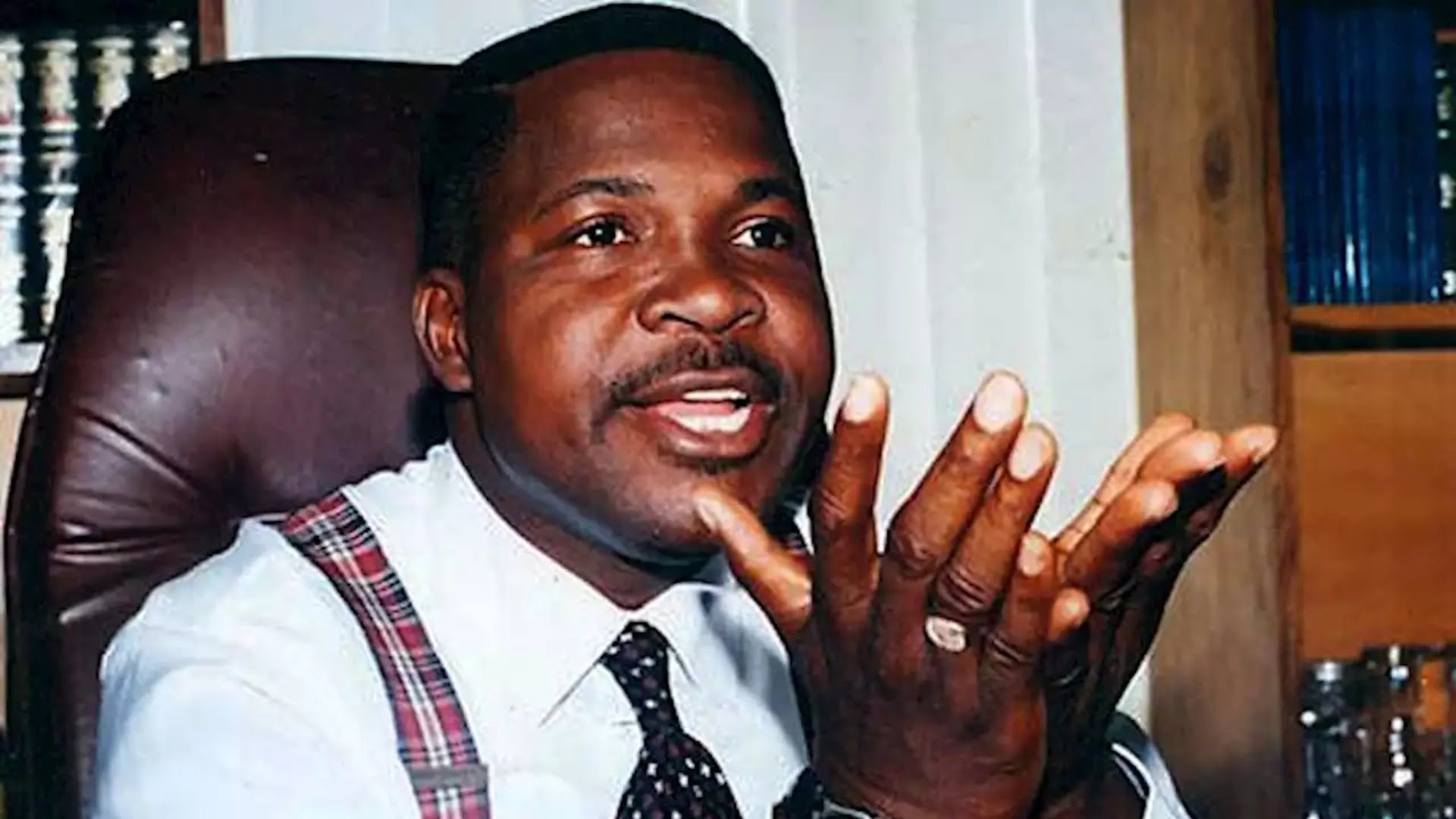
By Prof Mike Ozekhome
INTRODUCTION
In the words of Robert Frost, Education is the ability to listen to almost anything without losing your temper or your self-confidence. Education, being the process of giving and receiving systematic enlightenment, could be formal or informal. It could also be in a formal setting (e.g. classes in school); or in an informal setting. Education allows for the acquisition or impacting of general knowledge, skills, the powers of reasoning and judgement. It enables intellectual development and maturity.
The online medium www.dictionary.com (https://www.dictionary.com, accessed on 1st October 2022) defines ‘education’ as “the act or process of imparting or acquiring general knowledge, developing the powers of reasoning and judgment and generally of preparing oneself or others intellectually for mature life; the act or process of imparting or acquiring particular knowledge or skills, as for a profession; a degree, level or kind of schooling (e.g., university education); the result produced instruction, training or study (e.g. to show ones education); the science or art of teaching; pedagogies”.
Similar definitions are contained in the Longman Online Dictionary (https://www.ldoceonline.come; Accessed on 1st October 2022), where it is rendered as “the process of teaching and learning, usually at school, college or university; the institutions and people involved with teaching”.
THE IMPORTANCE OF EDUCATION
Our ancestors and forefathers may not necessarily have received formal education in a school setting; they were nonetheless “educated” in folklores, values, ethics and deep knowledge of their environment and ways of life.
So important is education that Malcolm X once described education as “the passport to the future, for tomorrow belongs to those who prepare for it today”. Indeed, George Washington Carver saw education as “the key that unlocks the golden door to freedom”. Not only did John Dewey believed “education is not preparation for life; education is life itself”; Albert Einstein, insisted that “education is what remains after one has forgotten what one has learned in school”. Thus, Einstein, the man who once famously told us that “we cannot solve our problems with the same thinking we used when we created them”, viewed education beyond the mere knowledge acquired in schools. It is what remains with a person – the ideals, ideas, knowledge, ethos, after he forgotten what he was actually taught in school.
CRISIS – DEFINITION AND MEANING
DEFINITION
The word ‘crisis’ also does not require lengthy elaboration for our discourse. The Cambridge Online English Dictionary (https://dictionary.cambridge.org) defines it as “a time of great disagreement, confusion or suffering; an extremely difficult or dangerous point in a situation; a moment during a serious illness when there is the possibility of suddenly getting better or worse”.
WHAT CRISIS CONNOTES
Crisis represents intense distress, pain, difficulty or danger, a time when a difficult or important decision must be made. A crisis is a difficult or dangerous time in which a solution is needed, and very quickly too. Synonyms of crisis are emergency, exigency, pinch, strict juncture, etc.
It is suffice therefore to assume that education still exists in Nigeria, albeit in a crisis-ridden environment. How does it fare in these trying times that actually try men’s souls? That is our duty to unravel in this article. But, first, a little history.
A SHORT HISTORY OF EDUCATION IN NIGERIA
According to an online source, afribary.com (https://afribary.com/works/the-history-education-of-nigeria-5180 Accessed on 5th October, 2022.), “Before the British arrived in the early nineteenth century, there were two major types of education in Nigeria. In the Islamic North, education was strictly religious in nature. In each Muslim community, a mallam drilled children as young as five years old in the teachings of the Qur’an and the Arabic alphabet. During the colonial era, larger cities set up more expansive Islamic schools that included subjects such as math and science. In 1913, these Islamic schools, almost all in the north, numbered 19,073 and enrolled 143, 312 students. In the 1970s the government took control of the Islamic schools, but in the 1990s, the schools were allowed to operate independently again.
The indigenous system was the second type of education before the British occupation. Students were taught the practical skills needed to function successfully in traditional society. Usually children within two or three years of age belonged to an age-group. Together, they learned the customs of their community and were assigned specific duties around the village, such as sweeping lanes or clearing brush. As the children grew older, the boys were introduced to farming and more specialized work, such as wood carving or drumming. Girls would learn farming and domestic skills. Boys would often enter into apprenticeship-type relationships with master craftsmen.
Even in the twenty-first century, this kind of education is common. Formal, Western-type of education was introduced by British missionaries in the 1840s. The Anglican Church Missionary Society (CMS) started several schools in the mid-1800s. The colonial government gave the church financial aid, but in the early twentieth century the government began building primary and secondary schools. By the time the British combined the northern and southern regions into one colony in 1914, a total of 11 secondary schools were in operation, all but 1 run by missionaries. There were also 91 mission and 59 government elementary schools. Nigeria has made considerable progress in the domain of education. The education system in the country is supervised by the state. There are 27 federal and state-owned polytechnics in Nigeria. The first 6 years of primary education are mandatory in Nigeria.”
EDUCATION AND DEVELOPMENT
An exposition of the role education can play in addressing the many challenges plaguing the Nigerian Nation implies that the education sector is properly positioned, or is, itself, crises-free, and thus, able to perform that function of addressing the problems. This cannot but be so, because, as we say in law, nemo dat quod non habet- you cannot give what you do not have. Accordingly, the pre-eminent question is: what is the status of education in Nigeria? Is it, itself, crisis-free? Can it be an enabler of the solutions to the myriad of problems besetting us? Alas, I am afraid, the answer is a firm ‘No’. The reasons are not far-fetched or hard to decipher. We shall examine them anon. Suffice it to say that any serious discussion of the place of education in a crisis-ridden Nigeria, must start by addressing the systemic crisis in the education sector itself.
BEFORE THE CRISIS AND CHALLENGES IN THE EDUCATIONAL SECTOR
In this regard, it is no exaggeration that the 9-month long (and still counting) of industrial action by University lecturers (ASUU) is but symptomatic of the crisis which has been plaguing our educational sector for at least the past 40 years. From a time since political independence in 1960 to about two decades afterwards, Nigerian education – with the benefit of hindsight – never had it better. Teachers were well-trained and motivated. School environments were clean and well kept. Educational institutions were better funded and equipped; and students were, on the whole better behaved and disciplined. Industrial actions by staff were relatively rare. The school handbook which showed dates of resumption of schools, holidays, examinations and ends of sessions were religiously kept.
The yawning mismatch between the excellence of products of Nigerian education institutions and the then decent environment which produced them has been well-documented.
SOME OF THE IDENTIFIED PROBLEMS
OUT-DATED CURRICULAR AND INFRASTRUCTURAL DECAY: LACK OF QUALITY EDUCATION
One of Nigeria’s most pressing educational issues is the lack of access to quality education. Whether it’s about college essay writers or any other field, it always ends up the same. Because of this, Nigeria is trailing behind other African countries due to innovation, growth, prosperity, and access to information. Many a time, Nigerian universities and students use obsolete and out-of-date textbooks and lab equipment. It is sad to observe that as against nations, including South Africa, Germany, Canada, the United States, France, and the United Kingdom, most Nigerian instructors are actually illiterate on ICT matters. They lag behind their global school compatriots, even on publications and journals.
TOTAL NEGLECT OF SCHOOLS
Total neglect by the government has led to the demise of many schools in the last 4 decades. Our academic institutions are in utter disrepair. Students who graduate from them aren’t given the skills they need to compete globally. Many institutions lack basic science equipment, while those that pretend to have, are still using outdated ones. Students are thus solely exposed to the mere academic aspects of their course of studies rather than the hands-on activities.
DEARTH OF QUALIFIED TEACHERS
Aside the hydra-headed technical difficulties most of the universities are also in crises because they only rely on foreign and government subventions, for sedans and upkeep. They now troop abroad for better salaries. Online education in sub Saharan Africa is also affected because professors who could have stayed back to teach online programs now live abroad. Yet, the population number of students keeps growing hugely day by day (Adeyinka, 2013). In Nigeria, for instance, we have many online universities, but no qualified teachers are available to efficiently teach the courses.
Notes (Adeyinka, 2002), it is interesting to note that a few decades after the publication of the Phelps-Stokes and Advisory Committee Reports, particularly after World War II, slight adjustments were made in schools’ curriculum which was slightly oriented towards African life. But the progress in this direction was not remarkable, for as late as the 1960s, education in African schools, particularly in Nigerian Universities, was still “too literary, not practical, not adapted to the needs of a developing agricultural nation,” (Adeyinka, 2002). The strong words of Ajayi and Obidi (2005).
TEACHERS’ POOR WORKING CONDITIONS
The poor working conditions, poor remuneration and allowances teachers are subjected to have discouraged capable and qualified teachers from taking up teaching jobs. Many of them apply for other better paying jobs, even as drivers, while some migrate abroad in drones. This leads to low level of dedication as they are always on the lookout for greener pastures.
INSUFFICIENT FUNDING BY GOVERNMENT
Financing is the most pressing issue in the educational industry. Not just in Nigeria, but globally. It discourages educators and students to fight for grades. Nigeria’s education budget is greatly meagre and much lower than the 26% recommended by the United Nations. Education has become one particularly difficult industry to navigate. The educational sector, which has a greater impact on society, does not receive the type of attention due to it. The 2022 budget for education which stands at 5.4% of the total budget has been faulted by UNICEF ought to have been N1.14 trillion naira, representing 8.4%. With a miserly 470 billion just proposed for universities and other tertiary institutions in the 2023 budget, the sector is in more dire strain. To be continued).
THOUGHT FOR THE WEEK
“The function of education is to teach one to think intensively and to think critically. Intelligence plus character – that is the goal of true education”. (Martin Luther King, Jr).
Related
You may like
The Oracle
The Oracle: When a Nation Undermines Citizens’ Rights (Pt. 4)
Published
2 days agoon
December 5, 2025By
Eric
By Prof .Ike Ozekhome SAN
INTRODUCTION
In our last outing on this treatise, we addressed the operational weaknesses and structural mismanagement of the Police; the failure of internal accountability; collusion of its men with criminal networks; erosion of civil liberties by its illegitimate enforcement practices; and cycle of impunity. And later followed by analysis of the abuse of judicial power as well as executive lawlessness directed at the Bench. We then concluded with suggested pathways and recommendations. Today, we shall continue with the same theme focusing on strengthening judicial independence; institutionalizing a comprehensive anti-corruption framework; enhancing the protection of civil liberties; community-based security initiatives; electoral integrity; transparency in the public sector; protecting vulnerable and marginalized groups as well as institutionalizing a culture of consequences. Enjoy.
Judicial Strengthening and Independence
The Judiciary should be insulated from political interference through secure tenure, adequate remuneration, and independent budgetary control. Court processes must be digitized to reduce delays and enhance transparency. Special courts should be created to fast-track cases of corruption, rights violations, and electoral offences so as to prevent them from being lost in a backlog of other matters.
Comprehensive Anti-Corruption Framework
Anti-corruption agencies must operate without political bias. Investigations and prosecutions should be based solely on evidence, regardless of the political or social standing of the suspect. Asset recovery processes should be transparent, and recovered funds must be channeled directly into public services such as healthcare, education, and infrastructure.
Strengthening of Civil Liberties Protections
Security laws and policies must be reviewed to remove provisions that allow arbitrary arrests, prolonged detention without trial, and excessive surveillance. The rights to free expression, peaceful assembly, and privacy should be reaffirmed through legislation, judicial precedent, and administrative directives. Security personnel should receive specific training on respecting these rights in the course of their duties.
Enhanced Community-Based Security Initiatives
Community policing structures should be developed in partnership with local stakeholders, including traditional leaders, civil society, and youth groups. These initiatives should focus on early conflict detection, intelligence sharing, and non-violent dispute resolution. Proper integration of community policing into the national security architecture can improve trust and cooperation between citizens and the State.
Electoral Integrity and Protection of the Political Process
To reduce politically motivated violence, security forces must adopt a neutral stance in elections and enforce the law impartially. Electoral offenders, including those within security agencies, must face swift prosecution. The deployment of technology in elections, such as biometric verification, should be protected by strong legal safeguards to prevent manipulation. More importantly, the Electoral Act must be urgently amended to include the use of BIVAS, electronic voting and real time transfer of results into IReV.
Public Sector Transparency and Open Data
Transparency in governance can significantly reduce opportunities for abuse of power. All government agencies should be required to publish regular reports on budgets, procurement, and performance indicators. Public access to information should be enhanced through stronger Freedom of Information laws and proactive disclosure of records.
Protection of Vulnerable and Marginalized Groups
Special attention should be given to protecting women, children, marginalized vulnerable persons and minorities and communities, who are disproportionately affected by rights violations and insecurity. Law enforcement and judicial olicers should be trained to handle cases involving such vulnerable groups with sensitivity. Dedicated units within security agencies should be tasked with preventing and responding to gender-based violence, child labour, human trafficking and exploitation.
Institutionalizing a Culture of Consequence
The single most important factor in ending impunity is ensuring that misconduct always attracts consequences. Disciplinary actions, criminal prosecutions and public reporting of case outcomes should become the norm. Political leaders must set the example by submitting themselves to the rule of law. They must lead by example and not by precepts.
CONCLUSION
The challenges confronting Nigeria in the areas of security, protection of citizens’ rights and enforcement of the rule of law are deeply rooted in a pattern of institutional neglect and governance failure. Throughout this work, it has become evident that insecurity in the country is not only result of violent crime or terrorism but also a product of weak and compromised institutions that allow such threats to flourish. When the very institutions tasked with safeguarding the people become unreliable or complicit, the result is a petrified environment where justice is selective, rights are precarious, and the social contract between citizens and the State is broken.
The evidence is clear that insecurity in Nigeria is a multi-dimensional crisis. Political violence undermines democratic processes. Economic hardship is exacerbated by corruption and the diversion of resources. Physical insecurity in many regions persists because law enforcement is either absent or compromised. The deterioration of education and healthcare further exposes the population to long-term instability. Each of these problems is interconnected and magnified by the failure of the justice and enforcement systems to function impartially and effectively.
Civil liberties, guaranteed by the Constitution and supported by international treaties, are repeatedly undermined by arbitrary arrests, unlawful detentions, and the suppression of free expression. When citizens live in fear of those entrusted to protect them, the legitimacy of the State is called into question. A society where speaking out invites retaliation and where wrongdoing by the powerful is met with silence or even approbation cannot claim to uphold the principles of democracy and justice.
The normalization of impunity is perhaps the most dangerous of all the trends identified. Impunity corrodes public trust, emboldens offenders, and creates a culture where breaking the law is not an aberration but an accepted norm of political and social life. Without decisive action to reverse this culture, every other reform will be weakened before it begins to take root.
Nigeria’s peculiar security realities demand a holistic approach. This includes rebuilding law enforcement into a professional, rights-respecting institution, ensuring the judiciary is free from political interference, and creating genuine accountability mechanisms that apply to everyone regardless of status. It also requires an investment in transparency, community trust, and the protection of vulnerable groups who suffer most from both insecurity and rights violations.
The task is undeniably challenging, but it is not impossible. The pathway to a more secure and just Nigeria begins with the recognition that true security cannot exist without justice, and justice cannot thrive without the rule of law. By committing to comprehensive reforms and by holding both leaders and institutions accountable, Nigeria can reclaim the promise of a society where rights are protected, laws are respected, and security is the shared foundation for national progress. In all these, one may ask, where is the Bar and what is its historic role? A once vibrant Association feared by the corrupt and dreaded by all successive governments has since become comatose, hardly responsive to societal needs. Aside many lawyers now professionally practising Bar instead of practising law by oscillating from one office to another over a period of decades, what has the Bar got to show for its continued relevance in terms of interrogating the status quo and challenging impunity? How has the Bar fared in holding governments responsible and accountable to the Nigerian people? Aside converging every year at designated venues for the annual ritual of the AGC, what dividends have we yielded from our usual banal communiqué?
How have we pushed to ensure we engaged the three arms of government to overhaul or at least improve on the status quo? Can we now blame some lawyers who are increasingly feeling disenchanted with the status quo and seek alternative platforms such as the Nigerian Law Society (NLS)? I think not. Colleagues, let us as lawyers and Judges wake up from our deep slumber of complicit silence and stop seeing law solely as a bread-and -butter profession. We must see law from the prism of Professor Dean Roscoe Pound-an instrument of social engineering. Anything short of this is not befitting of the legal profession. (Concluded).
THOUGHT FOR THE WEEK
“We cannot reform institutional racism or systemic policies if we are not actively engaged. It’s not enough to simply complain about injustice; the only way to prevent future injustice is to create the society we would like to see, one where we are all equal under the law”. (Al Sharpton).
Related
The Oracle
The Oracle: When a Nation Undermines Citizens’ Rights (Pt. 3)
Published
1 week agoon
November 28, 2025By
Eric
By Prof Mike Ozekhome SAN
INTRODUCTION
The last installment of this series continued from where the inaugural one stopped: the analogy of each corpse buried without justice being a clause in the Constitution buried in effigy. It then explained how inequality breeds violence, before moving onto how systemic lapses in law enforcement is the hidden engine of insecurity and erosion of rights. Later, it examined the contrast between constitutional mandate and institutional reality, followed by the politicization and weaponization of law enforcement; corruption as operational culture; and finally operational weaknesses and structural management. The week, we shall continue with same theme, after which we shall delve into the failure of internal accountability; collusion with criminal networks; erosion of civil liberties through enforcement practices; the cycle of impunity; abuse of judicial power and executive lawlessness targeted at the Bench. Thereafter, we shall consider various pathways and recommendations for addressing insecurity, rights protection and institutional weakness. Enjoy.
OPERATIONAL WEAKNESSES AND STRUCTURAL MISMANAGEMENT
Nigeria’s police-to-population ratio remains alarmingly low. With about 371,800 officers serving a population of over 236 million people, the country is well below the United Nations’ recommended benchmark of 222 officers per 100,000 people. This manpower gap severely hampers the Force’s capacity to tackle crime, especially in volatile areas plagued by insurgency and communal violence. To make matters worse, many of the limited officers available are deployed to safeguard high-profile politicians and elites rather than serving the broader public. In rural communities, especially in conflict-affected northern states, residents report waiting hours, sometimes days, for police to respond to distress calls, if they ever respond at all.
Compounding this problem is inadequate training. Many recruits receive minimal exposure to forensic methods, human rights protocols, or community policing principles. As a result, investigative work relies heavily on confessions, which are frequently extracted through coercion or torture. This not only violates constitutional guarantees against inhuman treatment but also produces unreliable evidence that weakens prosecutions.
Logistical deficits are equally damaging. Many police divisions operate without functioning patrol vehicles, secure communication equipment, or modern crime labs. The Inspector General of Police has acknowledged that, outside of Lagos, forensic capability is virtually non-existent. Without scientific investigation, crimes are either left unsolved or result in wrongful arrests, further undermining public trust
FAILURE OF INTERNAL ACCOUNTABILITY
In a functioning democracy, law enforcement personnel are subject to robust oversight, both internally and through independent bodies. In Nigeria, oversight mechanisms exist in name but not in consistent practice. The Police Service Commission (PSC), which is meant to handle recruitment, promotion, and discipline, is itself politically influenced and suffers from inadequate funding. Complaints of misconduct often disappear into opaque disciplinary processes, and there is little transparency about the outcomes.
When abuses are too public to ignore, as with the October 2020 End SARS protests, Commissions of Inquiry are established, testimonies are heard, and reports are submitted. Yet, implementation of recommendations remains rare. In Lagos, for example, despite the panel’s findings implicating specific officers in excessive force and unlawful killings, few have been prosecuted. Instead, many have returned quietly to duty. This pattern sends a dangerous message to the rank-and-file officers: violations carry reputational risk but rarely legal consequence.
COLLUSION WITH CRIMINAL NETWORKS
Perhaps the most alarming dimension of enforcement failure is the documented collusion between security personnel and criminal actors. In the Niger Delta, security forces have been implicated in illegal oil bunkering, the very crime they are deployed to prevent. In parts of the North-West, reports from Amnesty International and local media allege that bandit groups pay “protection fees” to avoid military or police raids.
Such collusion transforms law enforcement from an adversary of crime into a stakeholder in it. This is not merely passive negligence; it is active participation in the shadow economy of insecurity. In these areas, communities quickly learn that reporting crimes may not only be futile but dangerous, as information shared with authorities can be leaked to perpetrators.
EROSION OF CIVIL LIBERTIES THROUGH ENFORCEMENT PRACTICES
The systemic lapses in law enforcement also directly erode civil liberties. Arbitrary arrests, prolonged detentions without trial, suppression of lawful assembly, and harassment of journalists are not isolated acts but part of an entrenched enforcement culture. The constitutional right to personal liberty under Section 35 is regularly violated under the guise of maintaining public order.
Protesters face preemptive crackdowns, often justified by vague references to national security. During the #Revolution Now protests in 2019, dozens of demonstrators were detained, some for weeks, without formal charges. In many cases, court orders for their release were ignored by security agencies, underscoring the absence of legal consequence for disobedience of judicial authority.
This disregard for civil liberties creates a chilling effect on political participation and civic engagement. Citizens learn that speaking out carries personal risk, and self-censorship becomes a survival strategy. Over time, this quietens public dissent, enabling further abuses by both government and non-state actors.
THE CYCLE OF IMPUNITY
The combination of politicization, corruption, operational weakness, and lack of accountability feeds into a self-reinforcing cycle of impunity. Officers learn that their actions are judged not by legality but by political expediency. Politicians, in turn, see law enforcement as a tool to protect themselves and punish adversaries. Criminal networks exploit these gaps, securing protection through bribery or political patronage.
Once entrenched, this cycle is difficult to break. Each unpunished violation becomes a precedent, normalizing the idea that power grants immunity from the law. This normalization spreads beyond law enforcement to other institutions, eroding the very foundations of democratic governance.
THE ABUSE OF JUDICIAL POWER AND EXECUTIVE LAWLESSNESS AGAINST THE BENCH
In a functioning democracy, the judiciary serves as the impartial referee between the powerful and the powerless. It is the last line of defence for the citizen and the final hope for justice. But what happens when that sacred institution itself becomes the object of aggression? What happens when the enforcers of state power turn their weapons not on criminals, but on the judges who interpret the law? Nigeria confronted these very questions in October 2016, when the homes of senior judges across the country were invaded by heavily armed operatives of the Department of State Services under the cover of night.
These raids, carried out in Abuja, Gombe, and Port Harcourt, targeted some of the most senior members of the judiciary, including Justices Walter Onnoghen and Sylvester Ngwuta of the Supreme Court, and Federal High Court judges Adeniyi Ademola and Nnamdi Dimgba. The DSS claimed they were investigating corruption, yet their conduct betrayed a more sinister motive. Homes were stormed in Gestapo fashion, judges were treated like fugitives, and search warrants reportedly carried incorrect names or were not presented at all. The judiciary was under siege. In Rivers State, Governor Nyesom Wike arrived at the residence of one of the judges to intervene and was reportedly shoved, injured, and threatened by DSS operatives. It was not an arrest. It was a constitutional assault.
I spoke firmly and publicly against this invasion. I said then what I still affirm now: the DSS acted outside the bounds of the law. As I told journalists and as reported by Premium Times, the operation was not only illegal and unconstitutional but a dangerous desecration of the rule of law. No agency of government, including the DSS, has the authority to arrest or search the premises of serving judicial officers without going through the National Judicial Council, which is constitutionally empowered to discipline judges. If there are allegations of corruption, there is a process. That process was willfully ignored. What we saw instead was a show of force meant to intimidate and humiliate. It was executive lawlessness under the guise of anti-corruption.
The greatest tragedy, however, was not merely that these events occurred. It was the manner in which they were received. The Bar, which ought to have risen as a united force, was sluggish in its response. Statements were issued, but no real action followed. There were no mass protests, no urgent court filings to challenge the illegality. The judiciary itself offered little more than murmurs of disapproval. That silence was deafening. It spoke to a larger issue: the slow death of institutional courage. When judges are raided in their homes and lawyers look away, then the entire legal profession stands indicted. If we cannot defend our own, how then can we defend the people?
This unfortunate episode also calls into question the internal health of the judiciary. The Nigerian Law Society recently criticized the widespread abuse of power within judicial institutions, pointing to opaque appointments, poor welfare, and inconsistent rulings. According to their statement reported by the Guardian, the lower courts remain underpaid and under-respected, leaving many judicial officers vulnerable to compromise. It is undeniable that some within the judiciary have failed in their duties, and that corruption has indeed crept into its chambers. However, even in the face of that, the remedy is never brute force. It is lawful accountability, constitutional procedure, and institutional reform. The rule of law must never be sacrificed on the altar of expediency.
When security agents raid the homes of judges without due process, they are not upholding the law, they are undermining it. And when the legal community reacts with silence or justification, it invites a repeat. What began with judges will not end there. Such violations set a precedent that can easily extend to journalists, lawmakers, academics, and eventually, ordinary citizens. Today it is the gavel. Tomorrow it will be the pen, the vote, the voice. That is how authoritarianism begins not always with a declaration, but often with silence.
It is not too late to reset the balance. But we must remember that a judiciary that submits to fear is no judiciary at all. A legal profession that only whispers in the face of injustice is unworthy of its robes. We must return to our roots, as defenders of liberty and protectors of due process. Let the judiciary regain its independence, and let the Bar reclaim its courage. Only then can we begin to restore the broken faith between the Nigerian people and the system that was meant to serve them.
PATHWAYS AND RECOMMENDATIONS FOR ADDRESSING SECURITY, RIGHTS PROTECTION, AND INSTITUTIONAL WEAKNESS IN NIGERIA
The challenges outlined in this paper reveal a complex web of governance failures, enforcement gaps and systemic disregard for constitutional rights. Addressing these issues requires deliberate and sustained action across multiple fronts. The following ten pathways provide a practical blueprint for reform.
Reform of Law Enforcement Institutions
The Nigerian Police Force, the Department of State Services, and related agencies need deep structural reforms. Recruitment should be based on merit and integrity rather than political patronage. Training should include human rights education, forensic investigation, and conflict-sensitive community policing. The practice of diverting a large proportion of officers to serve political elites must be stopped so that policing resources are redirected toward public safety.
Creation of Independent Oversight and Accountability Mechanisms
A civilian-led oversight authority should be established with the power to investigate and prosecute cases of misconduct by law enforcement officials. This body must have full access to records, the ability to compel testimony, and legal safeguards for whistleblowers. Its findings should be made public to ensure transparency and build trust. (To be continued).
THOUGHT FOR THE WEEK
“Money and corruption are ruining the land, crooked politicians betray the working man, pocketing the profits and treating us like sheep, and we’re tired of hearing promises that we know they’ll never keep” – Ray Davies
Related
The Oracle
The Oracle: When a Nation Undermines Citizens’ Rights (Pt. 2)
Published
3 weeks agoon
November 14, 2025By
Eric
By Prof Mike Ozekhome SAN
INTRODUCTION
The inaugural installment of this treatise dealt with the scope of insecurity in Nigeria and examined its dimensions. It was followed by a discussion of the constitutional framework of the right to life graphically depicting it as “each corpse buried without justice” being a clause in the Constitution burned in effigy.
This week’s episode will continue with same theme, followed by an in-depth analysis of how inequality breeds violence as well as how systemic lapses in law enforcement are the hidden drivers of insecurity and the erosion of rights. Thereafter, we shall discuss the contrast between constitutional mandate and institutional reality of law enforcement; its politicization and weaponization; the incidence of corruption as operational culture in law enforcement and its inherent operational weakness and challenges in its structural management. Enjoy.
EACH CORPSE BURIED WITHOUT JUSTICE IS A CLAUSE OF THE CONSTITUTION BURNED IN EFFIGY (Continues).
Even the criminal justice system, meant to operationalize the Constitution, has virtually collapsed into spectacle. The police extort with impunity. The courts delay justice until justice becomes irrelevant. Prisons overflow with awaiting trial inmates while politicians accused of looting billions of our common patrimony stroll freely through airport lounges, attending graduation events where they are conferred with purchased honorary doctorate degrees. A man who steals bread is lynched. A senator who steals a nation is given a chieftaincy title. Is this the rule of law, or the rule of rot?
Let us not forget Chapter II of the Constitution, the so-called Directive Principles of State Policy. These are the clauses that outline a vision for a just and egalitarian society free education, affordable healthcare, equal opportunity, protection of the vulnerable, decent wages, access to housing, food security, and the equitable distribution of national wealth. But here lies the deception: these provisions are rendered non-justiciable under Section 6(6)(c). In plain terms, they are promises the people cannot enforce. The Constitution dreams on their behalf, but denies them the legal means to wake that dream into action.
When a State says to its citizens, “we guarantee you food, education, and health,” and then adds a footnote saying, “but you may not ask us for it,” what emerges is not democracy it is deception. And deception is the mother of despair. Despair, when left to fester, breeds defiance. And defiance, when met without justice, becomes insurrection. That is the cycle Nigeria is now trapped in a spiral of constitutional promises turned into societal wounds.
The Constitution becomes a parody in the mouths of politicians who have never read it and judges who are too timid to enforce it. For the powerful, it is a shield; for the poor, a sword turned inward. The elite recite its sections during legal battles over electoral fraud. But where are these recitations when 652 children die of hunger in Katsina? Where are the legal arguments when a woman in Makurdi loses all her children to a communal massacre? When the man in Sokoto can no longer afford petrol, food, or peace of mind, what legal relief can he seek?
It is also worth noting the performative constitutionalism that plagues Nigeria’s legislative process. Lawmakers gather to amend the Constitution every four years like surgeons with blunt scalpels. They debate the minutiae of electoral timelines, federal character quotas, and party primaries. But no one rises to demand justiciability for Chapter II. No one proposes constitutional protections for internally displaced persons. No one fights to enshrine the right to a living wage. They adjust the frame while the house is on fire.
In the final analysis, a Constitution that cannot be felt in the body of the poor, in the belly of the child, in the safety of the mother, and in the labour of the working man, is a document not of power but of pretense. A parchment without protection. A creed without consequence.
Yet, it is not too late. What is written may still be made flesh. But first, we must acknowledge the gap. We must look the failure in the face and name it for what it is: a breach of trust, a betrayal of covenant, a blood-soaked irony. For the Constitution, like the prophets of old, still cries out: “Will you honour me with your lips and deny me with your deeds?” The answer, for now is a crass denial of deeds.
HOW INEQUALITY BREEDS VIOLENCE
Poverty is not just a condition; it is an accelerant of conflict. There is a direct and growing body of empirical evidence linking economic inequality with national insecurity. A 2024 study revealed that in Benue State, each 1% rise in insecurity led to a 0.211% drop in crop production and a 0.311% drop in livestock output. This data translates into a disturbing truth: insecurity is not only the consequence of poverty it is its co-creator. In rural communities, farmers flee their land not because of market pressures, but because of fear of bandits, herdsmen, and armed militias who now prowl agricultural heartlands, maiming, killing, raping and burning.
In the same year, Reuters reported that over 31 million Nigerians nearly 15% of the population were pushed into acute food insecurity, largely due to a combination of rising prices, mass displacement, and insecurity in farming regions. Nigeria, once a net food exporter, is now reliant on imports for survival. This is not just an economic regression; it is a national humiliation, a betrayal of the very right to life itself.
Without access to these basic social services, rights such as freedom of expression, political participation, and even the right to vote become illusory. The weaponization of poverty in Nigeria is not simply an unfortunate byproduct of mismanagement. It is a system. A structure. A design. It is the very architecture of modern power. In this architecture, deprivation is used to secure obedience, silence dissent, and eliminate competition. The economically excluded are not merely poor they are disempowered, voiceless, and disposable. That is the Stalin philosophy: impoverish and demean the people and their obedience is guaranteed in the form of Stockholm Syndrome.
This is a direct affront to the Constitution, which promises in its Preamble to promote “the welfare of the people.” It is a betrayal of the African Charter on Human and Peoples’ Rights, ratified by Nigeria, which enshrines the right of all peoples to the satisfaction of economic, social and cultural rights essential to development (Article 22). It is a violation of the United Nations’ Sustainable Development Goals, especially Goal 1 (No Poverty) and Goal 10 (Reduced Inequality).
SYSTEMIC LAPSES IN LAW ENFORCEMENT: THE HIDDEN ENGINE OF INSECURITY AND RIGHTS EROSION
The crisis of insecurity in Nigeria cannot be understood without confronting the institutional collapse of its law enforcement architecture. While terrorism, banditry and economic collapse dominate headlines, these phenomena are but symptoms; the underlying illness is a chronic and systemic failure of the bodies meant to enforce the law. This failure is not simply operational, a matter of inadequate equipment or insufficient manpower, it is structural, political, and cultural. It shapes the relationship between the citizen and the State, corrodes the rule of law, and serves as the silent engine powering the erosion of civil liberties and the normalization of impunity.
CONSTITUTIONAL MANDATE VS. INSTITUTIONAL REALITY
Under Section 214 of the 1999 Constitution, the Nigeria Police Force (NPF) is established “for the maintenance of law and order, and for the protection of lives and property.” Supplementary security agencies such as the Department of State Services (DSS), Nigeria Security and Civil Defence Corps (NSCDC), and specialized military units exist to support this mandate. In theory, these agencies stand as the custodians of safety and justice, sworn to uphold both constitutional rights and statutory law.
In practice however, these institutions are often the very conduit pipes through which laws are brazenly violated. The gulf between the constitutional ideal and the operational reality is vast. A system intended to serve the people now often serves power, wealth and political expediency against the very people. The principle of equality before the law has been replaced by a hierarchy of enforcement, where the reach and rigour of the law depend on the identity of the suspect.
POLITICIZATION AND WEAPONIZATION OF LAW ENFORCEMENT
One of the most corrosive dynamics in Nigerian policing is its politicization. Rather than functioning as neutral enforcers of the law, security agencies are frequently deployed as instruments of partisan advantage. Opposition protests are met with rapid deployment of armed police, teargas and mass arrests. In contrast, political rallies for ruling party figures proceed with minimal security interference, but with reinforced security protection even when they breach public safety and order regulations.
This political double standard is not a matter of perception alone; it is reality evidenced by documented patterns. During the 2019 and 2023 general elections, numerous observers including the Transition Monitoring Group and international missions reported instances where law enforcement personnel either failed to intervene during ballot snatching episodes, or were directly complicit. Police units habitually provide cover for armed gangs removing election materials. In many of such cases, no officers have been disciplined, further embedding the perception that law enforcement loyalty is to political patrons, not the law or the country.
The politicization extends beyond elections. Journalists investigating corruption or security failings have been arrested and detained under dubious charges, often invoking broadly worded laws such as the Cybercrimes Act or Terrorism Prevention Act. Meanwhile, known political figures implicated in large-scale embezzlement routinely enjoy “soft landing” agreements or indefinite delays in prosecution.
CORRUPTION AS OPERATIONAL CULTURE
Corruption within Nigerian law enforcement is neither sporadic nor isolated; it is systemic. The 2019 Global corruption Barometer for Africa found that Nigerians rate the police the most corrupt institution in the country. Half of those surveyed reported paying a bribe to the police in the previous 12 months.
This corruption operates at multiple levels. At street level, officers extort motorists at checkpoints, detain individuals without charge to compel “bail” payments, and demand fees before registering complaints. At higher levels, investigators may bury case files in exchange for cash; prosecutors may dilute charges; and senior officers may shield their subordinates from accountability if they share in illicit proceeds.
Even operational deployments are shaped by rent-seeking. Officers are routinely assigned to guard private residences, businesses and political figures for unofficial payments, leaving ordinary citizens with limited police presence in their communities. This practice distorts the deployment of resources, creating a policing landscape where protection is essentially commodified.
OPERATIONAL WEAKNESSES AND STRUCTURAL MISMANAGEMENT
Nigeria’s police-to-population ratio remains alarmingly low. With about 371,800 officers serving a population of over 236 million people, the country is well below the United Nations’ recommended benchmark of 222 officers per 100,000 people. This manpower gap severely hampers the Force’s capacity to tackle crime, especially in volatile areas plagued by insurgency and communal violence. To make matters worse, many of the limited officers available are deployed to safeguard high-profile politicians and elites rather than serving the broader public. In rural communities, especially in conflict-affected northern states, residents report waiting hours, sometimes days, for police to respond to distress calls, if they ever respond at all. (To be continued).
THOUGHT FOR THE WEEK
“Money and corruption are ruining the land, crooked politicians betray the working man, pocketing the profits and treating us like sheep, and we’re tired of hearing promises that we know they’ll never keep”. (Ray Davies).
Related


The Incredible World of Capt. Segun Sotomi @45
Adding Value: Heal and Move On by Henry Ukazu
Open Letter to Global Leadership: Forging New Intergenerational Partnership for Sustainable Governance
Meet Muhammad Ashfaq Hussain, CEO at Profound Realtors
How Dr. Fatima Ibrahim Hamza (PT, mNSP) Became Kano’s Healthcare Star and a Model for African Women in Leadership
Era of Nationwide Fuel Queues Has Come to An End, Says Dangote
The Oracle: When a Nation Undermines Citizens’ Rights (Pt. 4)
Kidnapped Kwara Monarch, Six Others Escape from Bandits’ Custody Amid Vigilante Onslaught
Alex Otti Pays Solidarity Visit to Nnamdi Kanu in Sokoto Prison
After Weeks of Incarceration, Cameroon Opposition Leader Dies in Detention
US Moves to Impose Visa Restrictions on Sponsors, Supporters of Violence in Nigeria
Just In: Defence Minister Abubakar Badaru, Resigns, Tinubu Accepts
US Lawmakers Meet Today over Reported Christian Genocide
Tinubu Names Immediate Past CDS Chris Musa As New Defence Minister
Trending
-
News6 days agoKidnapped Kwara Monarch, Six Others Escape from Bandits’ Custody Amid Vigilante Onslaught
-
Featured6 days agoAlex Otti Pays Solidarity Visit to Nnamdi Kanu in Sokoto Prison
-
Featured6 days agoAfter Weeks of Incarceration, Cameroon Opposition Leader Dies in Detention
-
World4 days agoUS Moves to Impose Visa Restrictions on Sponsors, Supporters of Violence in Nigeria
-
News5 days agoJust In: Defence Minister Abubakar Badaru, Resigns, Tinubu Accepts
-
USA5 days agoUS Lawmakers Meet Today over Reported Christian Genocide
-
National5 days agoTinubu Names Immediate Past CDS Chris Musa As New Defence Minister
-
Opinion4 days agoRedefining Self-leadership: Henry Ukazu As a Model