Connect with us

National

Tinubu Hails Nigeria’s Military at TICAD 9 As Japanese PM Pledges $5.5bn Support for Africa

Published

on

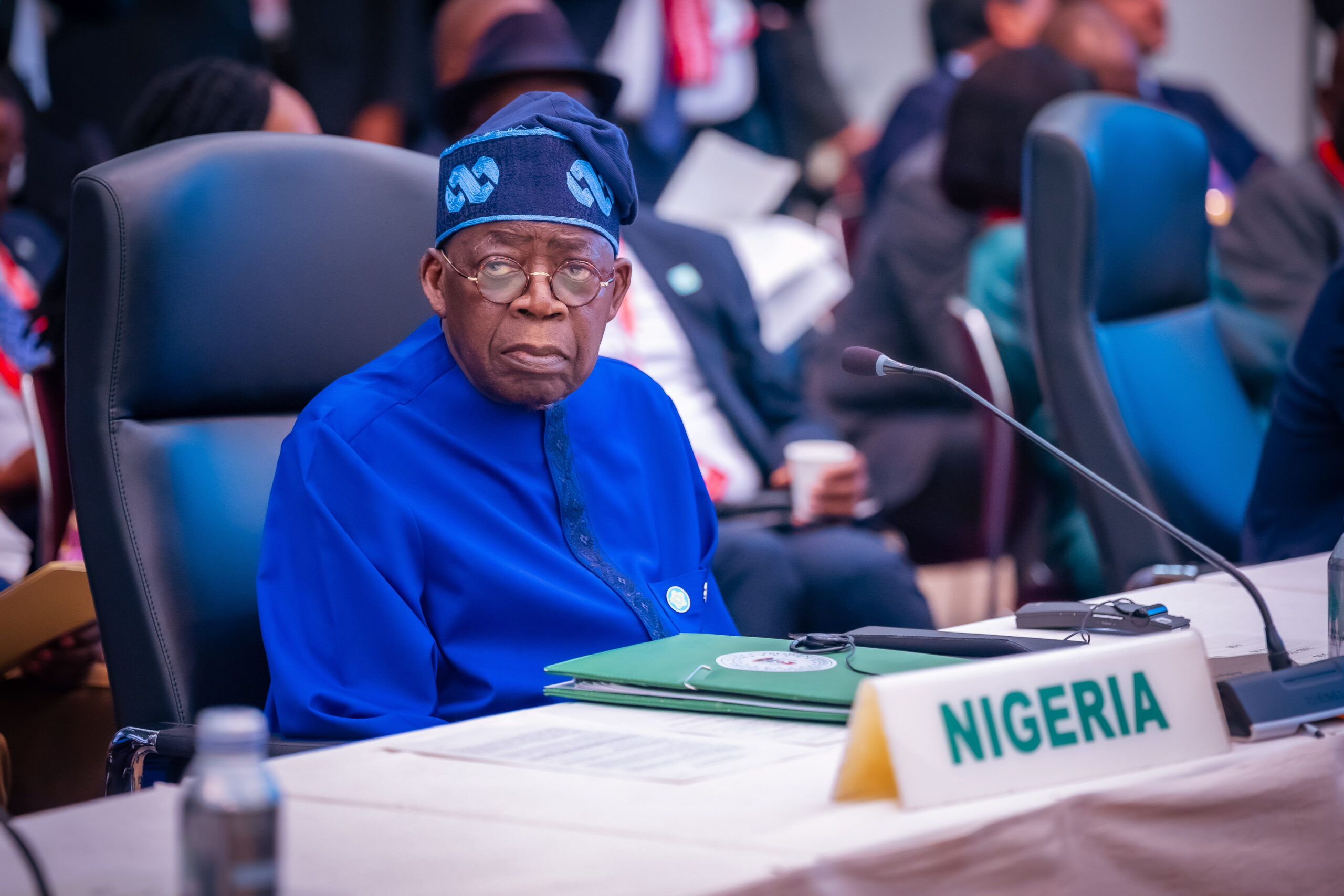
President Bola Ahmed Tinubu, on Wednesday in Yokohama, Japan, lauded the Nigerian armed forces for their successes in the war against insurgency and criminality while emphasising his administration’s commitment to addressing the root causes of insecurity through strengthening the government security apparatus and ongoing economic reforms.

President Tinubu made the remarks during his intervention at the plenary session on Peace and Stability at the 9th meeting of the Tokyo International Conference for African Development (TICAD9).

He reaffirmed that inclusivity, diversity, and the rule of law remain Nigeria’s greatest strengths.

He described the current momentum in the Nigerian Armed Forces as a springboard for national development and stability.

He spoke after the opening ceremony, during which the Japanese Prime Minister Shigeru Ishiba emphasised the importance of mutual understanding, local solutions, and collaborative efforts for Africa’s development.

The Prime Minister outlined Japan’s focus on private sector-led sustainable growth, youth and women empowerment, and regional integration.

Prime Minister Ishiba announced a collaborative economic framework between Japan and the African Development Bank that will see a maximum of $5.5 billion disbursed to Africa, utilising Japan International Cooperation Agency (JICA) private sector investment finance as a catalyst.

President Tinubu emphasised the ongoing investments in infrastructure, institutional reforms, and collaboration with civil society and international partners to improve the living standards of all Nigerians.

“Nigeria’s brave armed forces can win any number of battles, but we do justice to their heroism only when we, as government, are courageous in tackling not just terror, but also the underlying causes,” the President said.

President Tinubu stressed the essence of peace and stability to meaningful development, lamenting that conflicts are still ongoing in many African countries despite some progress.

However, he highlighted recent peace pacts brokered in the Congo as evidence that a new model of mediation and economic considerations can yield success.

“We should be under no illusions about the scale of our task. But neither should we underestimate the successes we have had. In the past, competition for resources has weakened states and triggered conflict. Now, we see mediators directly linking outcomes to investment in Congo. It is working and underlines the need for fresh thinking in everything we do to deliver peace and stability.

“Nigeria understands this process well. We believe inclusivity and diversity under the rule of law are our strengths. We have argued for this vision, and we have fought for it. We are still fighting for it today. We have learned that our brave armed forces can win many battles. But we can do justice to their heroism and sacrifice only when we, as governments, display the courage to be tough, not only on terror, but on the causes of terror,” he said.

President Tinubu appealed for market-driven cooperation and partnerships across nations rather than the hackneyed appeals for aid and handouts.

President Tinubu seized the opportunity to call on the Japanese government to support the campaign for reforms in the United Nations’ organs, especially the United Nations Security Council, to give African countries a greater voice.

“It is the view of Nigeria that Africa’s quest for fair and equitable representation in the UN Security Council is a just and fair demand. Indeed, Africa deserves two seats in the Permanent Category, with all its prerogatives and privileges, including the Right of Veto. Africa also deserves additional seats in the non–permanent seat category of the Security Council, as encapsulated in the Ezulwini Consensus and the Sirte Declaration.”

Addressing the role of information and technology, President Tinubu called for international cooperation to ensure technology becomes a tool for peace and trust, not division and alienation.

Prime Minister Ishiba emphasised that locally rooted solutions are essential for Africa’s development.

“Japan is providing various cooperation and support for Africa. But first of all, Japan needs to know more about Africa. So, in creating solutions together, this co-creation at the TICAD 9, we focus on three important areas: private sector-led sustainable growth, Youth and Women, and Regional integration and connectivity within and beyond Africa”.

He appealed to African countries to assist Japan as it grapples with the challenges of a declining population and shrinking agricultural land.

“In 75 years from now, the population of Japan would have been halved. In the local communities, the population continues to decline; this is one big challenge Japan is facing. All agricultural land is being reduced, another major challenge for Japan.

Ishiba underscored the positives of Africa’s youthful population:

“There is another potential in Africa; there is so much growing young population in Africa, but for the power of young people in Africa to flourish, you need to create a manufacturing industry and create employment, and that, I believe, is very important.

“In Africa, there is a primary industry, agriculture, forestry, and industries, and then it jumped over to the tertiary sectors and the services industries.

“There is a jump in economic growth that Japan and other Asian countries have experienced and they have tried to move from the primary, the Agriculture, fisheries, forestry to the secondary, that is a necessary process because the power of the youth could be realised fully in the manufacturing industry to improve the productivity of Africa’s manufacturing sector.”

Courtesy: Statehouse

Continue Reading
Click to comment

Leave a Reply

Your email address will not be published. Required fields are marked *

National

ICPC Vows to Continue Probe As Dangote Withdraws Petition Against Ahmed Farouk

Published

on

By

Independent Corrupt Practices and Other Related Offences Commission (ICPC) on Wednesday, said that Aliko Dangote has withdrawn his petition against Ahmed Farouk, the former head of Nigeria’s downstream petroleum regulator, even as investigations into the allegations continue.

Dangote, chairman of the Dangote Group, submitted the petition to the ICPC in December 2025 through his lawyer, Ogwu Onoja, accusing Farouk of corruption and financial impropriety. The petition called for Farouk’s arrest, investigation and prosecution.

In the filing, Dangote alleged that Farouk lived beyond his means as a public official, claiming he spent more than $7 million on the education of his four children in Switzerland over six years without lawful income to support such expenses.

ICPC spokesperson Okor Odey said the withdrawal was communicated in a letter from Dangote’s lawyer. He added that the petition was withdrawn in full and that another law enforcement agency had taken over the case.

However, Odey said the ICPC would proceed with its own investigation despite the withdrawal.

“The petitioner has withdrawn the petition dated 16 December 2025… in its entirety,” the statement said.

“Nevertheless, in line with sections 3(14) and 27(3) of the ICPC Act, investigations have already commenced and are ongoing.”

He said the commission would continue its inquiry in the interest of transparency, accountability and the fight against corruption.

Farouk resigned as chief executive of the Nigerian Midstream and Downstream Petroleum Regulatory Authority less than 24 hours after the petition was submitted, following a meeting with President Bola Tinubu.

Continue Reading

National

Egbetokun Rejigs Police Hierarchy, Redeploys DIG, 17 CPs

Published

on

By

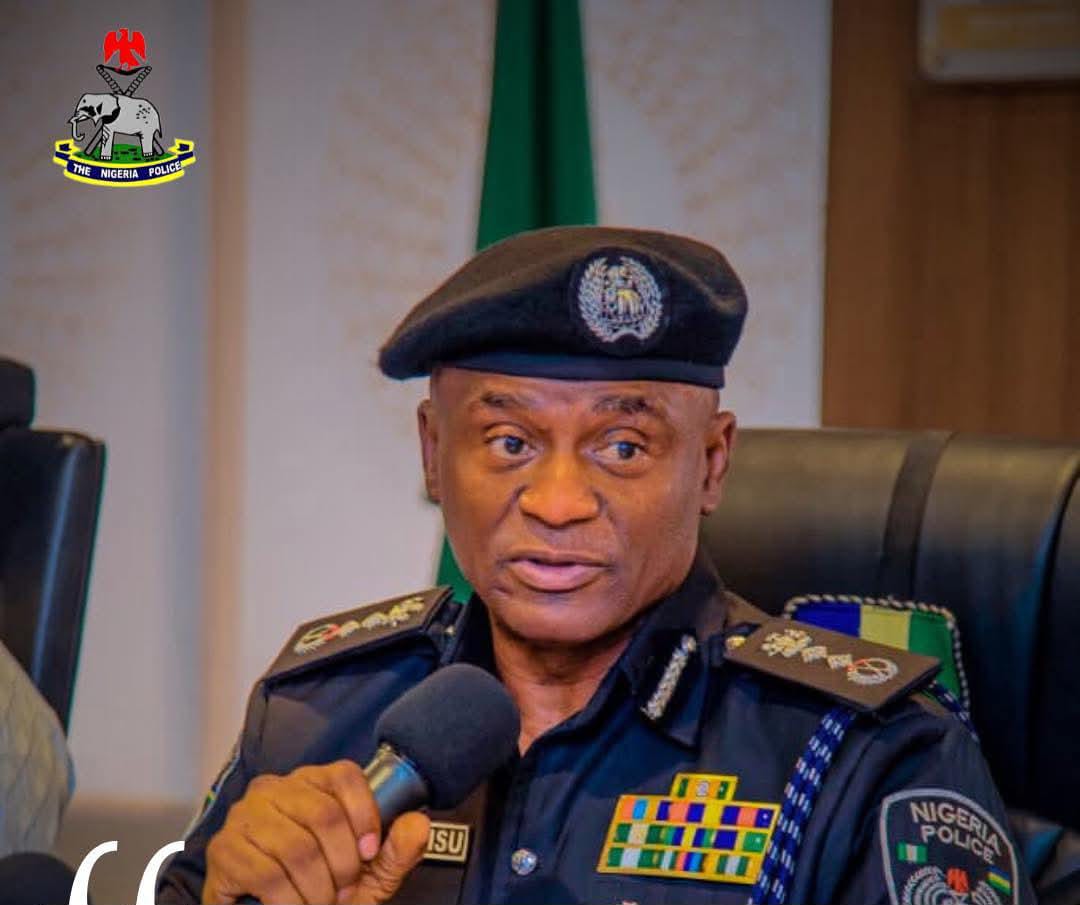
The Inspector-General of Police (IGP), Kayode Egbetokun, has approved a major redeployment of senior officers, posting a Deputy Inspector-General of Police (DIG) and 17 Commissioners of Police to key operational departments and State commands across the country in what the Force described as a move to strengthen leadership and service delivery.

According to the Force Public Relations Officer, Chief Superintendent of Police (CSP) Benjamin Hundeyin, the redeployments are aimed at reinforcing intelligence gathering, improving operational efficiency and enhancing public safety nationwide.

“The deployments are intended to strengthen operational capacity, effective leadership, enhance public safety, and improve service delivery,” Hundeyin said in a Tuesday post on the Nigeria Police Force’s official X handle.

Under the new arrangement, Deputy Inspector-General of Police Mohammed Usaini Gumel has been assigned to head the Force Intelligence Department, placing him at the centre of the police’s intelligence coordination and analysis.

At the command level, Commissioner of Police Aina Adesola has been posted to Delta State, Umar Mohammed Hajedia to Kebbi State, and Iyamah Daniel Edobor to Bayelsa State, as part of efforts to reinforce leadership in strategic states.

Several commissioners have also been deployed to specialised units and formations.

Osagie John Agans-Irabor was assigned to the Anti-Human Trafficking Unit at the FCID Annex in Lagos, while Johnson Ayodeji Babalola will head the Special Enquiries Bureau at the FCID in Abuja. Adepegba K. Adetoye was posted to the Marine Unit at Force Headquarters, Abuja, and Tabitha Bako and Umar Ali Fagge were appointed deputy commandants at the Police Colleges in Kaduna and Ikeja respectively.

Others include Audu Garba Bosso to General Investigation at the FCID Annex in Kaduna, Edwin Esiunnoh Ogbeghagha to Community Policing at Force Headquarters, Arikpo Ofem Ikpi to the Investment Office of the Department of Logistics and Supply, and Cyril Uchenna Obiozo to the Maritime Command in Lagos. Samuel Yerima was named Coordinator of Courses at the Police Staff College, Jos, while Alhaji Mohammed Danlandi was deployed to the X-Squad at the FCID Annex in Kaduna.

Further postings saw Richard Bala Gara assigned to the Inspectorate Department of Training and Development, Lasisi A. Titilola to the Railway Command in Lagos, and Obuagbaka C. John to the Safer Highway Unit in the Department of Operations at Force Headquarters, Abuja.

Egbetoku urged the redeployed officers to justify the confidence reposed in them, charging them to draw on their experience to deliver results. He emphasised the need to “uphold professionalism, integrity, and ethical standards” and to ensure strict adherence to the rule of law in the discharge of their duties.

The redeployment comes amid ongoing efforts by the police leadership to reposition the Force for more effective crime prevention, intelligence-led policing and improved engagement with the public.

Continue Reading

National

Tinubu Strips Finance Minister Edun of Critical Powers

Published

on

By

The Minister of Finance and Coordinating Minister for the Economy, Mr. Wale Edun, may have been stripped of critical powers in the nation’s financial activities in the wake of President Bola Tinubu’s latest directive.

The president’s decision to strip Edun of certain responsibilities was contained in a State House memo to the Secretary to the Federal Government, Senator George Akume, dated December 4, 2025.

The memo is titled: “Re: Updated Responsibilities of the Honourable Minister of State for Finance” and signed by the Private Secretary to the President, Mr. Damilotun Aderemi, was, according to reports, personally delivered by the SGF, Senator George Akume, to the Minister of Finance.

The memo read: “I write on the directive of His Excellency, President Bola Ahmed Tinubu, GCFR, to forward the attached document on the above subject matter to you and to request that you issue a necessary memorandum implementing same as updated responsibilities of the Honourable Minister of State finance.”

The attached document, referenced supra, entitled “UPDATED Responsibilities of the Honourable Minister of State for Finance” reads in extenso: “The office will be specifically responsible for domestic finances of the Federation including revenue generation, revenue distribution and all domestic debt management.

“Additional specific mandates and oversight: in addition to the existing mandate of the office: (a) Home Finance, (b) Technical Services, (c) Cash Management, (d) Revenue Sharing amongst the tiers of Government and Federation Account, (e) All Domestic Debt Management, (f) Nigerian Customs Service, (g) Development Finance.”

The directive is meant to take immediate effect.

There are insinuations that the minister is displeased with the development, but that claim could not be independently verified.

Continue Reading

Trending