By Hon. Femi Kehinde
Ibadan being the epicenter of several firsts in Nigeria, blazed the trail in several strides and endeavors in Nigeria’s early growth and development.
It was in Ibadan in 1950 that the first Pan Nigeria Conference on evolution of federalism and regionalism emerged. Hitherto there were no regions, until the emergence of the Mcpherson Constitution of 1951, that true governance to political elites as against the hitherto traditional institutions. Three regions emerged; Western Region, Eastern Region and the Northern Region, and the Westminster Parliamentary System of government also emerged. There was a regional election in December 1951 to the Western Region House of Assembly, and the Action Group (AG) of Obafemi Awolowo emerged as the party with majority members in the newly inaugurated parliament of January 1952. Obafemi Awolowo became the leader of the Action Group (AG) in the parliament, leader of government business, and Minister of Local Government and Chieftaincy Affairs until 1954 when his status was further recognized and enhance as premier of the Western Region until December 15, 1959 when he left the position of premier to become a federal legislator and leader of the opposition in the Federal Parliament. The Deputy Leader of the party and federal legislator – Hon. Samuel Ladoke Akintola succeeded him.
Olola Sir. John Rankine from 1952 became the Governor of the Western Region, and the first occupier of a newly built Government House, Agodi Ibadan in 1954. The Government house, Agodi Ibadan is a three-bedroom apartment with three rooms on the first floor whilst the ground floor has the sitting area, the dining and the kitchen. A modest British house by all standards. He was in this exalted position until 1960 when he was succeeded by the great Yoruba potentate and highly revered and exalted monarch, Oba Sir. Titus Martins Adesoji Tadeniawo Aderemi – The Ooni of Ife.
During his stint as Governor of the Western Region, Oba Adesoji Aderemi also lived in the Government House, Agodi Ibadan until the eruption of the Western region crisis in 1962. At the heat of the Western Region turmoil, the Chief Justice of Nigeria placed a call from Lagos to the Ooni of Ife and Governor of the Western Region – Oba Adesoji Aderemi, and politely advised him to move out of the Government House, Agodi Ibadan to forestall embarrassment as a foremost Yoruba traditional monarch. Oba Adesoji Aderemi actually heeded the advise and moved his bags and baggages from the government house, Agodi Ibadan back to his palace in Ile-Ife, and also his guest house at the Jericho Government Reservation Area (GRA), Ibadan.
There was a declaration of a state of emergency in the Western Region from May 29, 1962 to December 31, 1962. The administrator of the Western Region during this emergency period was Dr. Moses Adekoyejo Majekodumi who also lived in the Government House, Agodi Ibadan during his stint as administrator of the Western Region. He was succeeded by Sir Odeleye Fadahunsi (NCNC), an Ilesa High Chief as Governor of the Western Region who also lived at the Government House, Agodi Ibadan.
The Government House, Agodi Ibadan is a place of History. The military took over the government of the Federation of Nigeria on the 15th of January 1966, through a military coup and thus signaled the end of the First Republic. Major General Johnson Thomas Aguiyi-Ironsi became the military Head of State of the Federal Republic of Nigeria, and Col. Francis Adekunle Fajuyi became the Military Governor of the Western Region.
On the 29th of July 1966, Major General Aguiyi-Ironsi visited Ibadan in the evening to attend an organized meeting with the traditional rulers and some leaders of thoughts in the Western Region to explain the essence and purports of his Unification Decree No. 34 of 1966. He was received in Ibadan by his host, the military Governor of the Western Region – Col. Adekunle Fajuyi, who also hosted him at the Government House, Agodi Ibadan where he was scheduled to stay before leaving for Lagos the following morning. Around mid-night of that day, some military officers from the Alamala Military Barracks, Abeokuta forcibly invaded the Government House, Agodi Ibadan and arrested the visiting Head of State – Gen. Aguiyi Ironsi. The host military Governor – Col. Adekunle Fajuyi insisted that he must be arrested alongside the visiting Head of State. The Governor and the Head of State were arrested, whisked out of the Government House, Agodi Ibadan, and driven to a point around Lalupon on Iwo Road, Ibadan where they were brutally murdered and buried in shallow graves. Adekunle Fajuyi through this exemplary conduct displayed the omoluabi nature of a thorough bred Yoruba man. The assassination of the Head of State to a counter coup of July 29, 1966 heralded a new military government of Gen. Yakubu Gowon as Head of State of Nigeria, and Col. Robert Adeyinka Adebayo as the new Military Governor of the Western Region, who later became the next occupier of the Government House, Agodi Ibadan.
Agodi Ibadan holds a primal place in the centrality of Ibadan’s early growth, essence, development, modernity and government architecture. Agodi-Ibadan belongs to the popular Agodi family of Ibadan – a great land-owning family, and had given a substantial portion of its vast land to the government at various times. Amongst its bequeathals were the Agodi prisons, Agodi-Gate Market, Government House – Agodi Ibadan, the government GRAs – Agodi Ibadan, the entire government secretariat – Agodi Ibadan that houses all the ministries of government, the Western Region House of Assemblies, Western Region House of Chiefs, the Premier’s office (later Governor’s office) and many other departments and agencies of government. On the fringe is the Agodi zoological garden, the Agodi fisheries department and its expansive lake, and also the great University College Hospital (UCH) that was declared opened in 1956 by Queen Elizabeth II (Queen of England) during her maiden visit to Nigeria. The first television station in Africa – WNTV/WNBS – Agodi Ibadan established and declared opened on the 30th of October 1959 by the Awolowo government is part of the Agodi family endowments to humanity and modality. As a matter of fact, the Agodi family compound is not too far from the WNTV/WNBS station. WNTV is now NTA – Agodi Ibadan.
Chief Alli Oloko, father of the late. Justice Atinuke Ige, a great Ibadan patriot, early educationist and first president of the Ibadan Progressive Union was a shining star and early pathfinder as a foremost and distinguished member of the Agodi family.
It is now mind boggling and amazing that the Oyo State Government in its executive council decisions has approved the sum of “N63,479,858,000 for the overhauling of the Government House structures” which is an equivalent USD41,346, 875.53 at the current exchange rate of N1,535.
According to High Chief Lekan Alabi, the Maye Olubadan of Ibadanland – a seasoned veteran journalist, archivist, preservationist and cultural enthusiast who had served as Chief Press Secretary to four successive Governors of Oyo State. First as Chief Press Secretary to the late. Chief Bola Ige, and was equally taken over by the succeeding military government of Col. Oladayo Popoola, Col. Tunji Olurin, and Col. Sasa Eniyan Adedeji Oresanya. He has a fond and affectionate memory of what the Government House, Agodi Ibadan and its precinct looks like, and in a recent piece had this to say – “That the colonial British-government built Oyo State Government House at Agodi GRA, Ibadan is under the hammer (not the notorious hammer of mortgaging companies, thank heavens) is already public. As if you haven’t heard the OYS Governor and other officials say “the GH, Ibadan is to be upgraded”. But, before the pulldown/buildup, I wish to lend my voice as a progressive conservationist, that the originality/records of the official residence of His Excellency, the state governor and his family be kept and preserved for generations unborn. I am not a loner in this preservation stand. The current King of England, His Imperial Majesty Charles III, long before ascending the throne of the House of Windsor, has been a strong campaigner that vintage structures be preserved in their natural/original forms, without prejudice to modernization. He suggested further that new/modern edifices, if need be, could be built, if possible, on water or in the air. I sĥared, and still share the views of King Charles III.”
The government house as the name implies is a symbol of government, its apparatus, powers and allures to dreamers and men of ambition. The government house in all climes remains a symbol of inspiration. Harold Wilson at the age of ten dreamt of the office of the Prime Minister of Great Britain. At the same age, he posed for a photograph with his father at the entrance of No. 10 Downing Street, the official residence of the Prime Minister of Great Britain, and prophetically told his father that he would one day live in the residence as the Prime Minister of Great Britain. That was a wish, a mission, a goal and a vision. He prepared for it and accomplished it. He fought the general election for the seat of Orminsk; he won and he became the Parliamentary Secretary to the Minister of Works at the age of 29 years while he eventually became the Prime Minister of Great Britain at the age of 48 years. Harold Wilson prepared for this office and ended up one of the best Prime Ministers of Great Britain.
No. 10 Downing Street has been the residence of British Prime Ministers since 1735. It is an incredible two (2) bedroom apartment. Whilst the No. 8 Downing Street, the official residence of the Chancellor of the Exchequer is also a three (3) bedroom apartment, and modernity has found it difficult to displace these structures, and has remained vintage. Some of the most famous political figures of modern history have lived and worked in Number 10 Downing Street, including Robert Walpole, Pitt the Younger, Benjamin Disraeli, William Gladstone, David Lloyd George, Winston Churchill, Margaret Thatcher, John Major and Tony Blair.
It is also now incredible that a whooping sum of N63,479,858,000 has now been budgeted by the Oyo State Government to overhaul the Government House, Agodi Ibadan, when its budget on health is N59,411,385,714.68, and N18,760,243,348.45 has been budgeted for Agriculture, and hitherto the mainstay of the Western Region economy. In the Western Region olden days of yore, there had been fiscal and ethical financial discipline, with a strict adherence to the Western Region economic development plan of 1955 to 1960.
In 1958, the Western Region government of Obafemi Awolowo conceptualize the construction of a twenty-six storey building skyscraper in Ibadan, and the first of its kind in West Africa, known as Cocoa House. Its cost of construction was not mind boggling. The Cocoa House building was awarded to a firm of contractors – Messrs, Cappa and D’Alberto. The firm of Cappa and D’Alberto, a leading building and civil engineering firm established in 1932. Cocoa House like several others were prime ingenuities, political sagacity, economic wizardry of the early pathfinders of our regional growth ably led by Chief Obafemi Awolowo. The Twenty-Six Storey building was proposed by Chief Obafemi Awolowo with proceeds from cocoa exportation. Cocoa House was completed in 1965 at a height of 105 meters. The initial name given to the Twenty-Six Storey building was “Ile Awon Agbe” translated from Yoruba to English to mean “House of Farmers”. The name was later changed to Cocoa House because it was built from the proceeds of cocoa exportation and also it was bult in front of a cocoa tree just in front of a water fountain. It was once the tallest building in Nigeria and the first skyscraper in West Africa.
Similarly, the Western Region government of Obafemi Awolowo in 1958, conceptualize and developed the building and construction of Liberty Stadium – a Thirty-Five thousand seater capacity stadium that was patterned after the popular Wembley Stadium in London to mark Nigeria’s independence in 1960, at a cost that was not prohibitive or exorbitant. According to Chief Obafemi Awolowo; leaders must maintain high fiscal and ethical standards and financial discipline, and must refrain from enjoying in office what they would not be able to enjoy whilst outside the government.
Throughout his tenure as leader of government from 1952-1954 and premier of the Western Region (1954 – 1959), Awolowo lived in his Oke Bola residence, and shares a fence with the popular Ibadan Boys High School, Oke Bola, Ibadan founded by Ibadan’s foremost educationist – Pa. T.L. Oyesina.
Awolowo displayed his fiscal discipline and strict management of the Western Region economy and finance when in 1957 some leaders of the Western Region government attended the London constitutional conference. Alfred Rewane was a member of the AG delegation to the 1957 Constitutional Conference in London. At the conference, Alfred became indisposed; he had no choice but to visit a hospital. The Western Region Agent General in London, Chief M.E.R. Okorodudu took Alfred to the Royal Free Hospital in London, where he was admitted and treated for Vestibular Neurosis billed at 160 pounds sterling. Chief Okorodudu sent the bill to Chief Awolowo’s hotel for approval for payment from the delegation’s vote; Chief Awolowo declined vehemently to authorize the payment. He said; “Afredo, among all the delegates to this conference, you are the closest to me. Your indisposition is not as a result of your attendance at this conference.” He added in jest; “If I authorize the payment of the bill, it will create a dangerous precedent. How am I sure that some of our colleagues who may be suffering from chronic gonorrhea would not ask me to approve payment of the bills for their treatment?”. At that point, Chief Awolowo gave Rewane 50 pounds from his personal purse to pay part of the bill with further support from Chief S.O. Sonibare and Chief Arthur Prest. Alfred made up the money.
This is now a clarion call for the Governor of Oyo State, Gov. Oluseyi Abiodun Makinde to have a second look at this huge budget proposal of N63,479,858,000 to overhaul the government house, Agodi Ibadan with the possibility of scaling it down drastically and very considerably. In any of government actions, Governors should always ask themselves the latin question – Qui Bono (In whose interest)? That question now stares us in the face. Otherwise, the society may end up like the Bourbon Rulers of France who had learnt nothing, and forgotten nothing, or we may all echo the words of Prof. Ola Rotimi in his epic play – Our Husband Has Gone Mad Again!
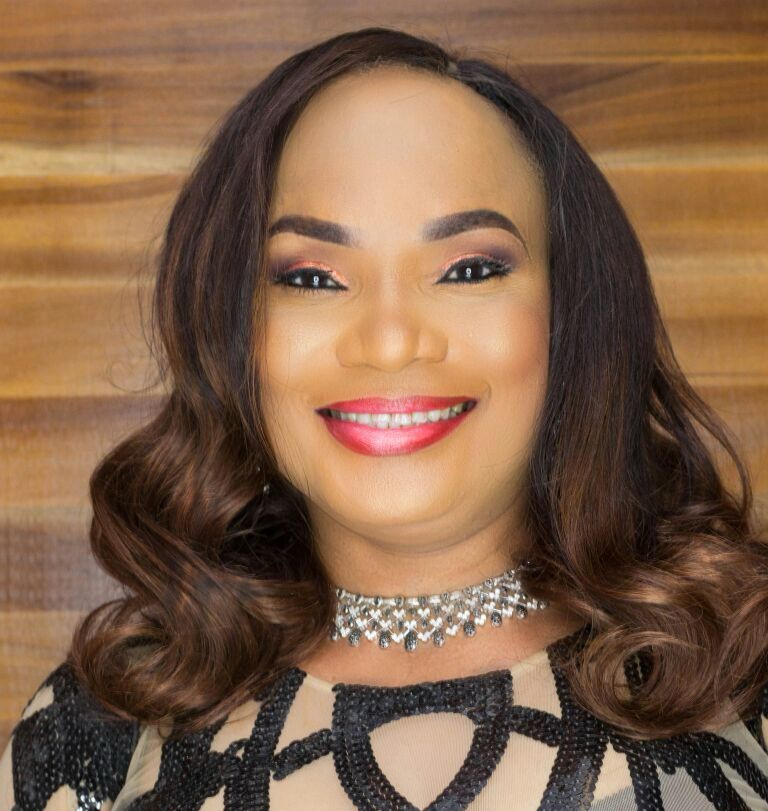
Hon. (Barr.) Femi Kehinde is the
Principal Partner, Femi Kehinde & Co (Solicitors) and Former Member, House of Representatives National Assembly, Abuja, representing Ayedire/Iwo/Ola-Oluwa Federal Constituency of Osun State, (1999-2003).







 Featured5 days ago