Featured
The Enduring Significance of June 12
Published
6 months agoon
By
Eric
By Prof Mike Ozekhome SAN
INTRODUCTION
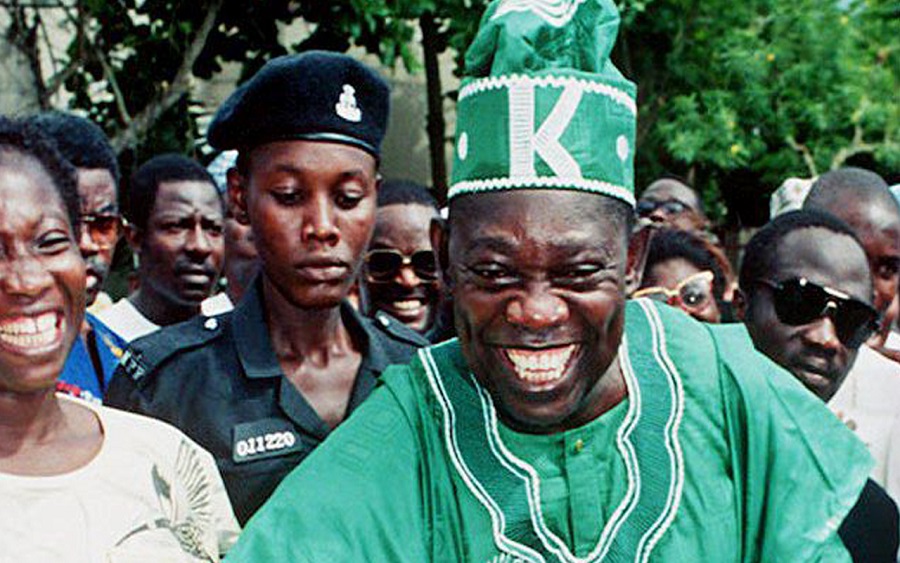
June 12 holds an indelible place in Nigeria’s political consciousness, a date now officially designated as the nation’s “Democracy Day”. More than just a public holiday, it serves as a sad reminder of a defining moment in Nigeria’s quest for democratic governance, intricately linked to the struggles of Chief Moshood Kashimawo Olawale Abiola. His electoral victory in the 1993 presidential election, widely acclaimed as the freest and fairest in Nigeria’s history even as at today, and its subsequent annulment, unleashed a torrent of political and legal crises that profoundly shaped the trajectory of the nation. Understanding June 12 therefore requires delving into the idealism it represents, the betrayal it embodied, and its enduring political and legal importance.
THE GENESIS OF HOPE: THE JUNE 12, 1993 PRESIDENTIAL ELECTION
By the early 1990s, Nigeria was tired of protracted military rule. Decades of coups, counter-coups, and authoritarian regimes had subdued political development, entrenched corruption, and fostered deep-seated distrust between the populace and the government. General Ibrahim Babangida’s military regime, having promised a transition to civilian rule, had embarked on a seemingly elaborate program. Some people dubbed it “transfixion programme” This program culminated in the presidential election of June 12, 1993.
The election itself was unique. Unlike previous multi-party contests, the Babangida regime had streamlined the political landscape to just two government-sanctioned parties: the Social Democratic Party (SDP) (“a little-to-the-left”) and the National Republican Convention (NRC) (“a little-to-the-right”). This binary choice forced a broader alignment across Nigeria’s often-fractious ethnic and religious lines. The SDP presented an unusual ticket: Chief M.K.O. Abiola, a wealthy Yoruba businessman and philanthropist from the South-West, as its presidential candidate, paired with Ambassador Babagana Kingibe, a Muslim from the North-East, as his running mate. This Muslim-Muslim ticket was unprecedented and signaled a potential shift from Nigeria’s traditional ethno-religious political divisions.
The NRC fielded Alhaji Bashir Tofa (a Kanuri) and Sylvester Ugoh (an Igbo). The electoral process on June 12, 1993, unfolded remarkably smoothly. Despite initial logistical challenges, Nigerians turned out in large numbers to vote, demonstrating an undeniable enthusiasm for democracy. The results, though never fully announced by the National Electoral Commission (NEC), began to seep in, indicating a clear and decisive victory for MKO Abiola. Independent observers, both domestic and international, hailed the election as exceptionally free and fair, devoid of the widespread rigging and irregularities that had plagued previous Nigerian elections. It was a moment of genuine national unity and optimism, a powerful affirmation of the Nigerian people’s desire for self-governance. Abiola ostensibly won across Nigeria, beating Bashir Tofa even in his Gyadi-Gyadi, Albassa ward in Kano.
THE ANNULMENT: A BETRAYAL AND THE DAWN OF NATIONAL CRISIS
The ecstasy of the June 12 election was tragically short-lived. In a move that shocked the nation and the international community, the Babangida regime, on June 23, 1993, unilaterally annulled the results of the presidential election. The reasons cited were vague, ranging from “irregularities” to the need to “save the Judiciary.” This annulment was widely perceived as a direct affront to the democratic will of the Nigerian people and a cynical betrayal of the transition program.
The annulment ignited a profound political crisis. Protests erupted across the country, particularly in the South-West, Abuja and other major cities across Nigeria. Civil society organizations, human rights activists, pro-democracy groups (such as the National Democratic Coalition – NADECO), CLO, UDD and student unions galvanized public opposition. The country was plunged into a period of intense civil unrest, strikes, and widespread condemnation from international bodies and foreign governments. The annulment not only shattered public trust, but also deepened existing ethnic and regional fault lines, as many viewed the action as a deliberate attempt by the military-Northern establishment to deny the South-West its legitimate turn at the presidency.
THE STRUGGLE FOR VALIDATION AND THE FIGHT FOR DEMOCRACY
The annulment of the June 12 election led to a prolonged period of agitation and repression. MKO Abiola declared himself the rightful president and was eventually arrested and detained in 1994 after declaring his intention to reclaim his mandate. He remained in detention for four years and died in custody on July 7, 1998, under suspicious circumstances that had the finger of the government, even as the country was transitioning to another civilian government.
The June 12 movement inspired a generation of pro-democracy activists, journalists, students, and labour leaders who risked their lives to challenge military dictatorship. It became a rallying point for advocating civil liberties, electoral justice, and the return to democratic governance. I was, with all humility, one of the frontline torch bearers of our fight against military dictatorship.
MKO ABIOLA’S STRUGGLE: A SYMBOL OF RESISTANCE
At the heart of the June 12 struggle was Chief M.K.O. Abiola himself. Having clearly won the election, he rightly refused to accept the annulment. He embarked on a courageous and ultimately self-sacrificing campaign to reclaim his mandate. On June 11, 1994, exactly one year after the election, Abiola declared himself president-elect in the Epetedo area of Lagos Island, asserting his rightful claim to the presidency. This act of defiance was a direct challenge to the authority of the military regime, which by now was headed by General Sani Abacha.
Abiola was subsequently arrested on June 23, 1994, on charges of treason. His incarceration became a central focus of the pro-democracy struggle. Despite immense national and international pressure, Abiola remained resolute, refusing to renounce his mandate in exchange for his freedom. His continued detention and unwavering stance served as a powerful symbol of resistance against military tyranny and a constant reminder of the unfinished democratic business. His wife, Kudirat Abiola, also became a prominent voice in the struggle, actively campaigning for her husband’s release and the revalidation of the June 12 mandate. She was tragically assassinated in 1996 in broad daylight.
Abiola’s prolonged struggle ended tragically with his death in detention on July 7, 1998, just weeks after the sudden death of General Abacha in equally sinister circumstances in Aso villa. His death, under suspicious circumstances extinguished the immediate hope for the revalidation of his mandate but solidified his place as a martyr for democracy in Nigeria who paid the ultimate supreme price for redemptive messiahnism.
THE POLITICAL IMPORTANCE OF JUNE 12
The political importance of June 12 in Nigeria cannot therefore be overstated. Symbol of Democratic Will: June 12 stands as the most potent symbol of the Nigerian people’s unequivocal desire for democratic governance. It demonstrated that Nigerians, across ethnic and religious divides, could unite and vote freely, rejecting the imposition of leadership.
Symbol of Electoral Integrity
June 12, 1993, remains a benchmark for free and fair elections in Nigeria. The transparency and credibility of that election are often cited as the gold standard against which future elections are measured.
2. National Unity
MKO Abiola’s victory cut across ethnic, religious, gender, status and regional divisions, proving that national unity and collective political will were possible in Nigeria. It challenged the long-standing narrative that Nigeria could not overcome its deep-seated ethno-religious differences.
Catalyst for Sustained Pro-Democracy Struggle: The annulment fueled a sustained and relentless pro-democracy movement. Groups such as NADECO, CLO, UDD, DA, other civil society organizations and various activists relentlessly agitated against military rule, sacrificing personal liberty and, in some cases, their lives. This pressure, both internal and external, played a significant role in ultimately forcing the military to hurriedly relinquish power in 1999.
Exposure of Military’s Ills: The June 12 saga laid bare the inherent contradictions and self-serving nature of military rule. It exposed the military’s disdain for popular will and its willingness to undermine the very transition it claimed to oversee.
Shaping the Fourth Republic: The experiences of June 12 profoundly influenced the design and character of Nigeria’s Fourth Republic, which began in 1999. The framers of the new constitution and the political elite were keenly aware of the need to prevent a repeat of such an annulment.
National Healing and Recognition: For decades, June 12 remained a contentious issue, primarily celebrated in the South-West as a “Democracy Day.” However, in a significant move towards national healing and historical recognition, President Muhammadu Buhari, on June 6, 2018, officially declared June 12 as Nigeria’s Democracy Day, replacing May 29. This act posthumously honored MKO Abiola with the Grand Commander of the Federal Republic (GCFR), Nigeria’s highest national honour reserved only for Presidents and Heads of State. This official recognition was a crucial step in acknowledging the historical injustice and unifying the country around a shared democratic ideal.
4. Rejection of Military Rule
June 12 represents the collective will of Nigerians to reject military dictatorship. The years following the annulment saw increased pressure on the military, culminating in the return to civilian rule in 1999 after the death of General Sani Abacha.
5. Restoration of Democratic Values
The recognition of June 12 as Democracy Day affirms Nigeria’s commitment to democratic governance, civil liberties, the rule of law, and the right of the people to choose their leaders.
FROM MAY 29 TO JUNE 12: A SHIFT IN NATIONAL NARRATIVE
Before 2018, Nigeria’s Democracy Day was celebrated on May 29—the day the military handed over power to a civilian government in 1999. I argued repeatedly like many Nigerians that May 29 was merely symbolic of military benevolence rather than popular sovereignty. In contrast, June 12 embodied the people’s struggle, sacrifice, and demand for democracy. Its restoration was therefore a long held dream.
LEGAL IMPORTANCE OF JUNE 12
Beyond its political ramifications, June 12 also carries significant legal importance.
Judicial Independence and Integrity Tested: The annulment of the election, supposedly to “save the Judiciary,” ironically exposed the Judiciary’s vulnerabilities under military rule. The Judiciary was drawn into the political fracas, with conflicting court orders and legal battles that ultimately highlighted the limitations of the legal system when confronted by raw military power. The Judiciary infamously failed the country during the crisis.
Questions of Sovereign Will vs. Military Decrees: The annulment raised fundamental legal questions about the supremacy of the people’s sovereign will, expressed through a free and fair election, versus the arbitrary power of military Decrees and Edicts. The military junta argued its Decrees were supreme, but the legal community largely condemned the annulment as an illegal act, devoid of any legitimate legal basis.
Focus on Electoral Reforms: The flaws and vulnerabilities exposed by the June 12 experience spurred subsequent efforts at electoral reforms in Nigeria. There was a clear understanding of the need for robust electoral laws, transparent processes, and an independent electoral commission capable of withstanding political pressure.
Reinforcement of Constitutionalism: The struggle underscored the importance of constitutionalism and the rule of law. The arbitrary nature of the annulment reinforced the argument for a return to civilian rule governed by a written constitution that guarantees rights and limits arbitrary power.
Precedent for Popular Mandate: While the mandate was not revalidated, the June 12 experience set a powerful precedent: a free and fair election outcome, reflecting the will of the people, holds immense moral and legal weight that cannot be easily dismissed without significant repercussions. It became a benchmark against which future elections would be measured.
CONCLUSION:
June 12 is far more than just a date on the calendar; it is a national narrative woven with threads of hope, betrayal, struggle, and eventual recognition. It stands as a powerful testament to the resilience of the Nigerian people and their unwavering commitment to democratic ideals. The MKO Abiola struggle, characterized by his electoral victory, the subsequent annulment of the freest election in Nigeria’s history, and his ultimate sacrifice, served as a catalyst for a sustained pro-democracy movement that eventually led to the end of military rule.
Its political importance lies in its role as a unifying symbol of democratic will, a catalyst for political transition, and a critical lesson in the perils of authoritarianism. Legally, June 12 exposed the fragility of institutions under military rule, underscored the imperative of robust electoral laws, and reinforced the sanctity of the popular mandate. By designating June 12 as Democracy Day, Nigeria has officially acknowledged this painful yet pivotal chapter of its history, honoring the sacrifices made and reaffirming its commitment to the principles of freedom, justice, and democratic governance. The echoes of June 12 continue to echo, serving as a constant reminder that the voice of the people, expressed through the ballot box, must always be respected and upheld. Whether Nigerians have imbibed or exhibited lessons learnt from June 12 is another matter altogether.
Related
You may like
Featured
Trump’s Envoy, Riley Moore: There’re over 600,000 Christians Languishing in Benue IDP Camps
Published
5 days agoon
December 13, 2025By
Eric
United States Congressman Riley Moore has alleged that more than 600,000 Christians are currently living in internally displaced persons’ camps across Benue State, following years of violent attacks that have forced communities from their homes.
In a post on X on Wednesday, Moore recounted testimonies he said were shared with him during a visit to several camps in the state.
The congressman said he met “dozens of Christians” who had survived deadly assaults and were now seeking refuge in makeshift shelters.
According to him, the displaced residents described “horrific violence” that wiped out families and emptied entire villages. Moore cited the account of a woman who, he said, “was forced to watch as they killed her husband and five children,” escaping with her unborn child.
Another woman, he added, told him her family “was murdered in front of her and her baby was ripped from her womb.”
He also referenced a survivor who claimed “his family was hacked to death in front of his eyes,” leaving him permanently injured.
Moore described the scale of displacement as alarming and accused “genocidal Fulani” of driving indigenous Christian communities from their ancestral lands. He said the situation demands heightened international attention.
“These Christians should be able to live in their ancestral homeland without fear of genocidal Fulani,” he said.
During his visit, Moore also met Tiv and Catholic leaders, including Bishop Wilfred Anagbe, Bishop Isaac Dugu, and Tiv traditional ruler, His Royal Highness James Ioruza. He said discussions centred on what he called an “ongoing genocidal campaign” in Benue.
The congressman noted that his trip to Nigeria included meetings with National Security Adviser Nuhu Ribadu and other senior officials. He said the talks focused on terrorism in the North-East, the killings in the Middle Belt, and security priorities he shares with President Donald Trump.
Ribadu confirmed meeting the US delegation, noting that the discussions followed earlier engagements in Washington and covered counter-terrorism, regional stability, and efforts to strengthen the strategic partnership between both countries.
President Donald Trump had on November 30 redesignated Nigeria a Country of Particular Concern over alleged religious freedom violations, while warning of possible US military intervention.
The Nigerian government has repeatedly rejected claims of systemic persecution of Christians, arguing that insecurity affects Nigerians of all faiths and ethnic groups.
He maintained that the experiences shared by displaced communities “will not be ignored,” and vowed to brief the White House as ordered by President Trump.
Related
Featured
There’s No Govt in Nigeria, Tinubu is the Person in Power – Dele Momodu
Published
5 days agoon
December 13, 2025By
Eric
Media entrepreneur and former presidential aspirant, Chief Dele Momodu, in this interview by SAM NWAOKO, does a thorough examination of the Nigerian polity and comes to the conclusion that the country is on the cusp of a one-man rule.
Some people have said that the issue involving Nigeria’s First Lady, Senator Oluremi Tinubu and the governor of Osun State, Senator Ademola Adeleke, was a convivial episode between two former colleagues in the Senate. Do you agree with this contention by some observers of the matter?
You know that spin doctors will spin anything no matter how unreasonable it is. Everybody, including Mrs Tinubu, acknowledged that what happened was wrong. Whether she now apologised or not, I am not aware, but she herself said it was a minor misstep and that we should not escalate it. So let us not debate what is not debatable.
When my favourite writer, Uncle Dare Babarinsa, said that the video of the incident in Ile-Ife was AI-generated on Facebook, I replied to him and said it was not. I gave them the original video that was shot by Ovation TV and said: “This is an original video that was shot by Ovation TV and not AI-generated, Sir. The governor was clearly disrupted and momentarily lost composure.”
The whole saga looks like it is not going away. What would you advise the First Lady to do at a time like this?
It is not going away because we are all prone to mistakes – nobody is perfect, I am not perfect, the First Lady is not perfect and when we are wrong either knowingly or unknowingly, we should just apologise. That is all. The thing would have gone down immediately. However, the thing is that her spin doctors are busy trying to window-dress the incident which is ordinarily a scandal because you embarrassed Governor Adeleke in his own state because you momentarily got him confused. If you look at the video, you will see that she disrupted him and the governor was momentarily confused. The governor was flustered because he was not expecting such an intrusion during his speech. Even if you were in a hurry to leave the palace and all that, you could have sent someone or just asked someone to write something on a small paper that ‘We are running late, please hurry up’. It is not that you will now stand up on your own. The First Lady stood up, and we saw her conversing with the Ooni of Ife before then, reporting that ‘I want to go and tell this man to stop singing’.
However, I know the reason she is angry, because she used to enjoy his singing and music when they used to dance together in Osogbo and all that. I have video evidence of that. She is angry because the governor refused to join the All Progressives Congress (APC). You know, APC has this entitlement syndrome afflicting it. APC believes that every governor should be in APC. The only thing that will give them joy and comfort is for every governor in Nigeria whether from the North, or from the East or from the West – wherever – should join APC. Then Tinubu can become an emperor in word and indeed. That is what they seek to do. They succeeded in Lagos and they wish to succeed at the national level. That is what is going on. Anybody who does not join them is considered an enemy.
Don’t you think that he has succeeded in doing that in many other places too because we only have one governor of PDP left in the South, so to say?
To me, this does not matter. Some people will choose to be voluntary slaves while some people will choose to act like freeborn. Everybody has a choice, that is what democracy is all about. Some people are coerced; some people are cajoled. When they get there, I hope they get whatever they are looking for.
Could this thinking be the reason Governor Ademola Adeleke did not go to APC but chose to go to Accord instead?
They tried to woo him into APC but he decided that he would rather leave his fate in the hand of God instead the hand of man. He didn’t get to where he is today by himself, it is God that made it possible. In his first attempt, he claimed that they stole his votes. He went away quietly. He didn’t destroy Nigeria, he didn’t destroy anything. He didn’t even fight Tinubu. He went away and he came back stronger. In fact, this Mrs. Tinubu incident has played to his favour because he has been trending since Sunday. Governor Adeleke has been trending because of this “little mishap” according to Mrs. Tinubu. And, can you imagine that it coincided with the time he was joining his new political party, Accord. Everything in life works perfectly once God has a hand in it. I see Governor Adeleke as a very lucky man and that is why he is always singing. He said nobody can stop him from singing and praising his God.
Now that the PDP has all its flanks broken, what would you advise the party as an observer, when you remember what it used to be in the Peoples Democratic Party?
I left the party much earlier because we already saw where it was headed. It is not the fault of the party, it is the fault of the fifth columnists within the party who sought to keep the party in ICU and hope to switch off the ICU machine and kill the party if it is no longer useful to them, or keep it alive in the ICU until the day they will need the party. So, what those people have been doing is to gradually kill the party on behalf of Tinubu, because it is Tinubu that has that kind of power. It is not people like Nyesome Wike that are wielding that kind of power.
From your thinking, you seem to agree with Nigerians who are of the opinion that the problem with PDP and the other opposition political parties is the handiwork of the government, Tinubu himself and his people?
There is no government in power. Tinubu is the person in power, no other person is in power. Tinubu does not share power with anybody. I had predicted in 2022 that if he gets power we have a potential dictator in our hands. This was in October 2022, I said it on a TV programme and it has come to pass. When I speak, people would react and abuse me but I don’t mind. My body is that of a porcupine, nothing worries me that much, I don’t even bother. I saw this because I was trained in Ife on how to conduct research and I am conversant with how to go about postulations, permutations and all that. I might not be able to use it effectively for myself to win elections because I don’t have the resources, but I can tell you what will happen in 2027 and give you different scenarios.
So that is what is going on right now. Tinubu is a one-man mafia and all the other people under him are afraid because of that. Paulo Freire, a Brazilian author, wrote “The Pedagogy of the Oppressed,” in which he contends that the oppressed man respects and loves only one man: his oppressor. So, it is a theory in political psychology. So, all the people you see rushing to Tinubu are doing so out of fear in advance. Tinubu does not even need to tell them that if you don’t join me something is going to happen to you because of the reputation of Tinubu as a one-man mafia. So nobody wants to cross the line and even dare to try. So, it is in the nature of the oppressed to be fearful in the presence or in front of the oppressor. The oppressor does not need to say anything, just his eye-look alone is enough to scare them, so they are all scared and you know that the average Nigerian does not joke with power, position and wealth.
So, this second term nonsense is as if, if you don’t have a second term, you will die. That is the attitude of an average politician. But Donald Trump was defeated by Joe Biden. He went away. Is he not back today? President John Mahama was defeated by Nana Akufo-Addo in Ghana. Is he not back today? So, I don’t know why people are so desperate. If Tinubu will not allow you to come back, for as long as you have life there is hope. You can go away and come back later.
So, the fear of a one-party Nigeria is real – the fear that Nigeria is drifting into a one-party state is not unfounded?
We are not drifting, we are there already. The situation in which the entire South-South has been captured by one man… and a lot of them who didn’t even need to go there are running into the APC. Look at Akwa Ibom State. Akwa Ibom has no business in APC, Akwa Ibom is a traditional PDP state. It can survive on its own, it does not even need the Federal Government. Akwa Ibom is so blessed with resources that every governor of the state has always been considered very important in Nigeria. But when you have a man who was brought in by PDP and he ran away from the PDP even by the second year… What is chasing him? And now he is saying that only APC people can get jobs in Akwa Ibom, it is unprecedented. History is awaiting all of us. Was it APC that worked for him to become governor? If he wanted to give everything to APC, then he should have waited for APC to vote him for a second term then he can transfer everything to APC. But for, what he is enjoying is from PDP, it is not from APC, so why are you now shutting out those who brought you to power? And he is a pastor, he knows that God will judge him. I know it is his democratic right to go wherever he chooses but he cannot use what you have gained from someone else to give to another person.
Look at my home state, Edo State. There, if you are not a member of APC, you are declared a persona non grata. That is not right. The governor is free to choose his friends and so on, at least there the APC brought him to power unlike Akwa Ibom, where PDP brought him to power and suddenly you want to kill PDP in your state. I think that is ungodly.
The contention out there is that you are for Atiku Abubakar and not for any political party, including the ADC. How true is this and can you throw light on this assumption sir?
I have always chosen candidates that I admire and believe can deliver. I am not one of those who would do otherwise because of some parochial considerations. I have been very fortunate because God brought me from different backgrounds, my father came from Edo State while my mother came from Osun State. So I am very detribalised and I am a full Nigerian. I fought the military alongside other people for Nigeria to remain one. So, I would not allow any politician to brainwash me into seeing any Nigerian as my enemy. This is a ploy by some politicians to use us, and use divide and rule to continue to dominate the country and dominate our life, I am not involved in it. If I like you, I like you. I see Atiku as a shining star and I saw it from 1993 when he stepped down for Chief Abiola at the SDP convention, I have always admired him since then in 1993, it is not because of today. To me, whether he becomes president or not is not the issue, if I wanted a president as my friend then I would have chosen Bola Tinubu because I am one million times closer to him than to Atiku. But I am a principled man, I have chosen to support Atiku. If you don’t like him, support your own candidate. I cannot force anybody to support Atiku. There are democratic traits which I see in him, he is a thorough democrat, a man who will never promote thuggery, a man who had been Vice President and delivered outstandingly and spectacularly. When he was the Vice President, he was able to assemble some of the brightest stars in Nigeria wherever they came from. He did not populate his office with Fulani or Hausa or any tribe in particular. A man who left governance in 2007 and till today he is successful as a businessman investing in education, in agriculture, in health and so on and so forth. If every politician has a job or a business like Atiku, we will not be where we are as a country today. An average Nigerian politician has no job, has no business, and has nothing doing other than to feed on the government. That is part of my admiration for Atiku. Atiku has been able to elevate and upgrade himself intellectually by going back to school as a student. He has been able to maintain and carry himself gracefully at his age. So, Atiku’s experience is not something that we can throw away and he is one of those people who have contributed to the growth and development of Nigeria. So, why should I not express my support for him if he chooses to run?
Is he going to run in 2027 or is he going to back a candidate?
Definitely, he will run if he gets the ticket of the party. If he doesn’t get the ticket of the party then he will have to join someone else and support the person. He has always been a very forthright person and he was the first person to bring Peter Obi on the national platform, but people forget that.
But the ADC seems to have been largely quiet. It might be strategic, but the party is seeing the onslaught on the PDP and has been quiet. What would you say has been happening in the ADC and what should Nigerians expect in the near future?
ADC has not been quiet. They are working from state to state. Even in Edo State where the governor did not expect any opposition, we have worked hard in Edo State and we are gaining ground. In Adamawa, and I saw how people from different walks of life are joining ADC. Recently, Alhaji Atiku Abubakar went to Jalingo to launch ADC with them there. So, we are working and I am sure a lot of people who are leaving PDP now to join APC, when they finally get frustrated by especially Tinubu, they will come over to ADC. ADC is the only national platform that is available and it offers Nigerians better and credible options.
So what would be your advice to Nigerians considering the changing political landscape of the country?
They must resist a one-party dictatorship in the country and they must resist Tinubu. Tinubu’s ambition to have Nigeria entirely to himself the same way he has Lagos should not be allowed. I assure Nigerians that if he is allowed to get away with it then we shall all end up in servitude.
But he is said to be managing the economy better, and that the security situation is improving under his administration. Don’t you see these?
When people love you they will love you blindly; that is what is happening with those saying that Tinubu is performing and that the economy has improved. The situation in Nigeria now is far worse. What we have seen are statistics; statistics that do not have effect on the people or reflect in their standard of living. We have removed the petroleum subsidy which has thrown most homes in Nigeria into the worst poverty, yet we are not seeing what they have done with the money and they said the economy is improving. They should come out and tell us what they are doing with the money. Now, we have incurred unprecedented debts globally and we are still acquiring more almost on a daily basis. What exactly are we doing with the money? So, those who are talking about the economy improving don’t know what they are saying, they are just talking for the sake of talking or because, maybe they hope they will also benefit from the largesse of the government.
Culled from The Trubune
Related
Featured
2027: Nigeria Sliding into ‘Fanatical Governance’, Momodu Blasts APC, Submissive Legislature and Weak Opposition
Published
6 days agoon
December 12, 2025By
Eric
By Eagle Radio
Journalist and politician Aare Dele Momodu has raised alarm over what he calls Nigeria’s drift into “a fanatical, unrestrained form of governance” where oversight institutions have become subordinate to the executive.
Momodu made the remarks during an exclusive interview on Frontline, a current afairs programme on Eagle 102.5 FM Ilese, Ijebu, on Wednesday, where he discussed national security, the wave of defections to the APC, internal party crises and the build-up to the 2027 elections.
Momodu reviewed recent political events including the Senate’s swift approval of President Bola Ahmed Tinubu’s request to deploy Nigerian troops to Benin Republic, the removal of police escorts from some VIPs, the widespread collapse of opposition structures and the ongoing tug-of-war within the PDP and Labour Party.
Momodu said the chamber’s unanimous and speedy approval of the president’s request did not surprise him, arguing that the National Assembly now operates as an extension of the presidency.
“There is no request President Bola Ahmed Tinubu sends to the National Assembly that they will not promptly approve. Even if it goes against national interest, they will approve it. Nigeria is virtually running a fanatical government the way we operate today. Checks and balances are gone. “I wasn’t expecting anything new from the Senate. They are not confrontational to a ruler. Some people are coerced, some cajoled, and some just cannot place the interests of the country above their own personal interests.”
He noted that while some Nigerians worry that the military is overstretched due to internal security operations, he disagrees.
“Our military is not overstretched. I’ve seen them in action in different countries from Liberia to Zimbabwe. We have some of the best officers on the continent. What is troubling is the politicisation of their work at home. That is the real danger.”
Gale of Defections: ‘Opposition is in the ICU’
Speaking on the wave of defections that has hit opposition parties, including the high-profile defection of Rivers State Governor Siminalayi Fubara to the APC, Momodu said the ruling party has strategically crippled rival platforms.
“I cannot blame all the people defecting. Some of them did not leave voluntarily. They were coerced. The ruling party made sure the PDP was crippled, tied down and kept in the ICU. The Labour Party is battling factions everywhere. The opposition has never been this weak.”
According to him, this systematic collapse is part of a grand strategy for the 2027 elections.
“The plan is simple: keep the opposition in a permanent coma. If the PDP or Labour tries to rise, another crisis will erupt. You can see the pattern.”
“I Am ADC Not Official Yet”
Momodu confirmed that although he has not completed his formal registration, he now aligns politically with the ADC.
“Yes, I am ADC. Not officially yet, but I am with the party. I still need to go to my village to register formally. But politically, that is where I am standing now.”
He explained that the current political reality makes the APC the most dominant platform heading into 2027.
ADC’s Internal Strength and Why He Believes APC Will Lose Members Soon
Responding to a caller who asked whether the African Democratic Congress (ADC) is facing internal crises similar to the PDP and Labour Party, Momodu disagreed.
ADC is growing stronger every day. Some of the most seasoned politicians in Nigeria are part of it. Once it becomes obvious that there are no more appointments in government, you will see politicians leaving the ruling party in droves.”
“The interest of the president now is all about him. We are frustrated because this is not the democracy we envisaged. Leaders are too focused on their image and position rather than serving the nation.”
He suggested that the defections into APC are largely transactional and may reverse as soon as people realise appointments are limited.
Insecurity: ‘Our Military Can End Banditry If Allowed to Work’
On Nigeria’s worsening security situation, Momodu insisted that political interests, not military weakness, hinder progress.
“The Nigerian military can end this insecurity in months if allowed. They know where the bandits are. We have videos of bandits riding on motorcycles in convoys. Why can’t they be stopped?”
He referenced Nigeria’s successful peacekeeping records abroad.
“In Liberia, our soldiers controlled 10 of the 15 regions under ECOMOG. They were called the backbone of the mission. How can the same military now be helpless at home? Something is wrong.”
“Everything is politically motivated. Our army can enter forests, flush out bandits, and achieve results in days or weeks. I’ve seen them operate in Sierra Leone and Liberia. The challenge at home is politics, not military weakness.”
He accused government officials of playing politics with national security.
Ambassadorial List, Global Perception and the President’s Legacy
On questions about President Tinubu’s international reputation, especially following debates over the ambassadorial list and restructuring of foreign missions, Momodu said he is not convinced the president prioritises global perception.
“I don’t know if the president cares about perception or legacy right now. The focus seems to be proving political strength, not building institutions. But the world is watching.”
He expressed concern that Nigeria’s diplomatic system is losing credibility due to political interference.
‘Politicians Have Abandoned Service for Personal Luxury’
Momodu criticised political elites for living extravagantly while ordinary citizens struggle.
“Politicians behave as if they are in a permanent entertainment state. Someone who had nothing yesterday suddenly flies jets and lives in luxury. People will naturally ask questions.”
He said Nigerians feel deeply betrayed by leaders who appear disconnected from the reality of poverty.
“People are bitter because leaders are not serving them. They lord over them. When citizens are hungry and insecure, leaders shouldn’t be gallivanting everywhere.”
‘Silence from Leaders Is Killing Democracy’
Momodu noted that prominent elders who once spoke boldly now remain silent due to fear or personal interest.
“During Obasanjo’s time, Yoruba leaders criticised him. They were not afraid to speak truth to power. Today, many people are too scared or too benefitted to say anything. That silence is dangerous.”
He warned that history will judge those who fail to speak up.
“Tomorrow will come. What will we say we stood for? This is not the democracy we fought for.”
A Call for Courage and National Renewal
Momodu urged citizens, elites and opposition politicians to find the courage to rebuild democratic values.
“Nigeria needs courage right now. Courage to criticise. Courage to correct. Courage to rebuild institutions. If we lose that courage, we will lose our democracy.”
Related


Mike Adenuga, Emmanuel Macron Hold High-Powered Meeting in Paris
Free at Last: Burkina Faso Releases 11 Nigerian Soldiers, Aircraft
Corruption Allegations: NMDPRA Boss Farouk Ahmed Meets Tinubu, Resigns
I’m Ready for Probe, NMDPRA Boss Farouk Ahmed Responds to Dangote’s Corruption Allegation
No Court Order Against Tinted Glass Permit Enforcement, Police Insist
Alleged Corrupt Practices: Dangote Petitions ICPC Against NMDPRA MD Farouk
US Congressman Recounts Harrowing Experience in Nigeria, Confirms ‘Systematic Genocidal Campaign’
2027: Nigeria Sliding into ‘Fanatical Governance’, Momodu Blasts APC, Submissive Legislature and Weak Opposition
There’s No Govt in Nigeria, Tinubu is the Person in Power – Dele Momodu
Rebuilding the Pillars: A Comprehensive Blueprint for Overcoming Nigeria’s Leadership Deficit
Corruption! Tinubu Tackles ‘Buhari Boys’
Voice of Emancipation: Nicolas Maduro is a Goner
Threat Against Nigeria’s Multi-Party Democracy: Atiku, Obi, George, Others Accuse Tinubu of Plot to Annihilate Opposition
OAU: MicCom Institutes Financial Awards for Best Graduating Student, Producing Dept
Trending
-
Featured6 days ago2027: Nigeria Sliding into ‘Fanatical Governance’, Momodu Blasts APC, Submissive Legislature and Weak Opposition
-
Featured5 days agoThere’s No Govt in Nigeria, Tinubu is the Person in Power – Dele Momodu
-
Opinion5 days agoRebuilding the Pillars: A Comprehensive Blueprint for Overcoming Nigeria’s Leadership Deficit
-
Headline4 days agoCorruption! Tinubu Tackles ‘Buhari Boys’
-
Voice of Emancipation4 days agoVoice of Emancipation: Nicolas Maduro is a Goner
-
Headline4 days agoThreat Against Nigeria’s Multi-Party Democracy: Atiku, Obi, George, Others Accuse Tinubu of Plot to Annihilate Opposition
-
News4 days agoOAU: MicCom Institutes Financial Awards for Best Graduating Student, Producing Dept
-
Adding Value6 days agoAdding Value: Model Success to Be Successful by Henry Ukazu