Connect with us

World

World Leaders Expected As Vatican Sets Saturday for Pope Francis’ Funeral

Published

on

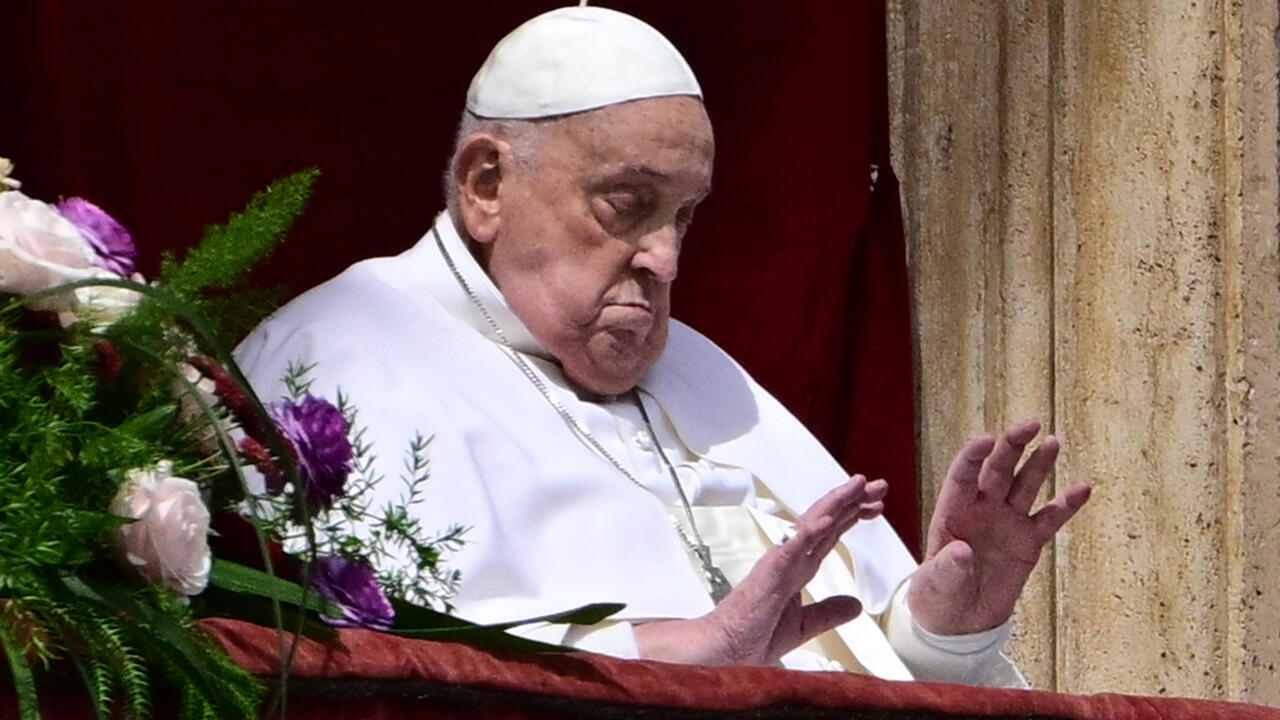
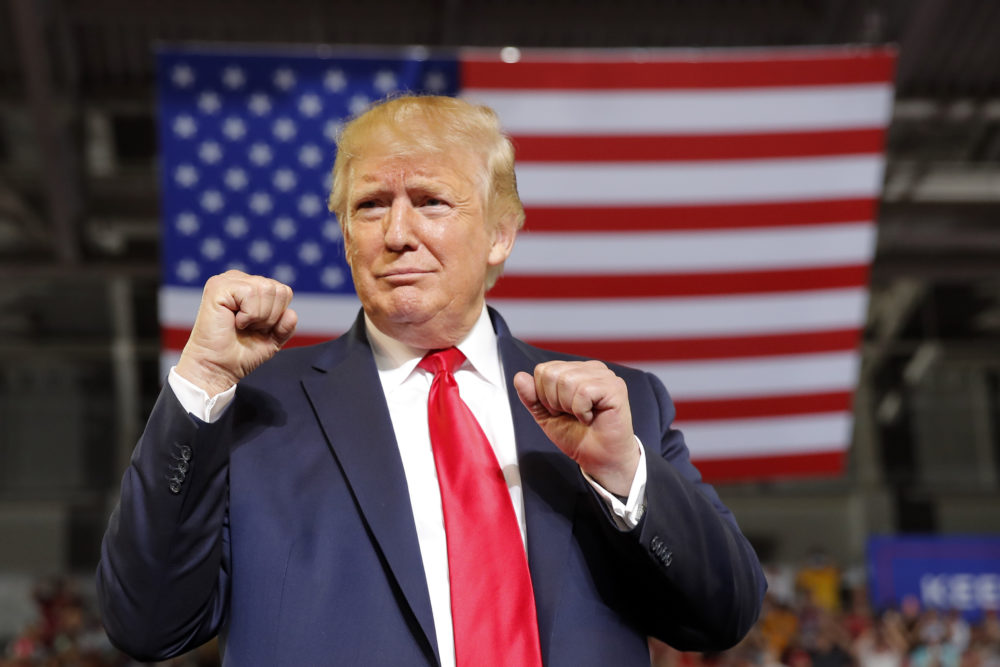
The funeral for Pope Francis will be held on Saturday, the Vatican announced on Tuesday, as world leaders from US President Donald Trump to Ukraine’s Volodymyr Zelensky said they would attend to honour the Catholic leader.

The Argentine pontiff, 88, died on Monday from a stroke, less than a month after returning home from five weeks in hospital battling double pneumonia.

His funeral, which is expected to draw huge crowds, will take place at 10:00 am (0800 GMT) on Saturday in the square in front of St Peter’s Basilica at the Vatican.

Francis’s coffin — which he previously ordered should be of wood and zinc — will then be taken inside the church and from there to the Rome basilica of Santa Maria Maggiore for burial.

The date was set by the first so-called “general congregation” of cardinals on Tuesday morning, which kicked off a centuries-old process that culminates in the election of a new pontiff within three weeks.

Earlier, the Vatican published the first images of the pontiff in his open coffin, ahead of its transfer to St Peter’s Basilica on Wednesday at 9:00 am (0700 GMT), to lie in state.

The pope’s body was photographed during a service Monday evening in the chapel of Casa Santa Marta, the Vatican residence where he lived during his 12-year papacy, and where he died.

Francis was wearing his red papal vestments, a mitre on his head and had a rosary between his fingers.

Tributes have poured in from around the globe for Francis, a liberal reformer who took over following the resignation of German theologian Benedict XVI in 2013.

His home country, Argentina, prepared for a week of national mourning while India began three days of state mourning on Tuesday — a rare honour for a foreign religious leader in the world’s most populous nation.

Heads of state and royalty are expected for his funeral, due to be held at St Peter’s Basilica, with Trump and France’s Emmanuel Macron the first to announce they would attend.

On Tuesday, a source at the Ukrainian presidency told AFP that Zelensky, too, would come to Rome.

Cardinals of all ages are invited to the congregations, although only those under the age of 80 are eligible to vote for a new pope in the conclave.

The conclave should begin no less than 15 and no more than 20 days after the death of the pope.

Simple tomb

The pope’s body was moved into the Santa Marta chapel on Monday evening, and his apartment formally sealed, the Vatican said.

Francis, who wore plain robes and eschewed the luxury of his predecessors, has opted for a simple tomb, unadorned except for his name in Latin, Franciscus, according to his will released Monday.

In chosing to be buried in Rome’s Santa Maria Maggiore basilica, he will become the first pope in more than 100 years to be laid to rest outside the Vatican.

His death certificate released by the Vatican said Francis died of a stroke, causing a coma and “irreversible” heart failure.

He had been discharged from Rome’s Gemelli hospital on March 23 and ordered to spend at least two months resting.

But Francis, who never took a holiday and delighted in being among his flock, made numerous public appearances in recent days.

He appeared exhausted on Sunday during the Easter celebrations, but nevertheless greeted the crowds in his popemobile in St Peter’s Square.

Argentine football great Lionel Messi hailed his compatriot — himself a huge fan of the beautiful game — for “making the world a better place”.

On Monday evening, thousands of faithful, some bringing flowers or candles, flocked to St. Peter’s Square at sunset to pray for Francis.

He “tried to get people to understand it doesn’t matter your sexual orientation, your race, it doesn’t matter in the eyes of God”, Mateo Rey, 22, a Mexican student, told AFP.

“I think that’s the closest to what Jesus intended.”

Born Jorge Bergoglio, Francis was the first pope from the Americas and the first Jesuit to lead the worldwide Catholic Church.

An energetic reformer, he sought to open the Church to everyone and was hugely popular — but his views also sparked fierce internal opposition.

In 12 years as pope, Francis advocated tirelessly for the defence of migrants, the environment, and social justice without questioning the Church’s positions on abortion or priestly celibacy.

Outspoken and stubborn, Francis also sought to reform the governance of the Holy See and expand the role of women and lay people, and to clean up the Vatican’s murky finances.

Faced with revelations of widespread child sex abuse in the Church, he lifted pontifical secrecy and forced religious and lay people to report cases to their superiors.

However, victims’ groups said he did not go far enough.

AFP

Continue Reading
Click to comment

Leave a Reply

Your email address will not be published. Required fields are marked *

World

US Congressman Recounts Harrowing Experience in Nigeria, Confirms ‘Systematic Genocidal Campaign’

Published

on

By

United States Congressman, Riley Moore, has described his recent visit to Nigeria as distressing, recounting harrowing encounters with victims of violent attacks, particularly in the Middle Belt region.

Moore last week led a congressional delegation on a fact-finding visit to Nigeria over killings in the northern part of the country.

The five-member team arrived in Nigeria last Sunday and spent several days in Benue State, meeting internally displaced persons, survivors of attacks, Christian leaders, traditional rulers, and communities affected by violence.

They also held meetings in Abuja with the National Security Adviser, Nuhu Ribadu, and the Attorney General of the Federation, Lateef Fagbemi.

The delegation expected to brief President Donald Trump on their findings before the end of the month.

Speaking in an interview with Fox News, Moore said his trip exposed him to the human cost of insecurity in Nigeria, particularly among vulnerable communities affected by terrorism and communal violence in the North.

The West Virginia lawmaker posted the interview on his X handle on Saturday.

Speaking on his experience, Moore said he met women who had survived brutal assaults that claimed the lives of their families.

He recalled meeting a woman who watched all five of her children murdered in her presence.

“It is really heartbreaking. I met a woman who unfortunately had to witness all five of her children murdered right in front of her. I met another woman in an internally displaced persons camp who lost her husband and her two daughters, and the Fulani Islamic radicals had murdered her unborn child—they took it out of her. She survived that, and they are all living in these IDP camps.

“There is a systematic genocidal campaign by the Fulani Muslim radicals in the Middle Belt of this country to push these Christians off their ancestral land,” he said.

The US lawmaker alleged that the violence in parts of the Middle Belt amounted to a coordinated campaign against Christian communities, claiming they are being driven off their ancestral lands.

“There is a systematic genocidal campaign by the Fulani Muslim radicals in the Middle Belt of this country to push these Christians off their ancestral land,” he reiterated.

Despite the grim accounts, Moore said his delegation held what he described as a positive meeting with the Nigerian government, expressing optimism that concrete steps could follow.

“We did have a positive meeting with the Nigerian government. There are positive things coming out of that government that I think will put us on a path toward a strategic security framework and a cooperative agreement to start addressing these issues,” he said.

Moore added that the protection of Christians facing violence remained a top concern for both him and the US President, noting the broader security challenges posed by terrorist groups in other parts of the country.

“First and foremost, my concern, and the President’s concern, is for these Christians, our brothers and sisters who are being slaughtered,” he said. “But there is also the terrorist threat in the North East from Boko Haram and ISIS, who are responsible for the unwanted deaths of Christians, non-Christians, and Muslims alike,” he added.

The Congressman described Nigeria’s security crisis as multi-layered, stressing the need for a comprehensive approach that addresses both terrorism in the North East and what he termed persecution in the Middle Belt.

“The problem is two-tier, and we have to address this Christian persecution and genocide that is happening in the Middle Belt of this country,” he said.

Source: The Punch

Continue Reading

Africa

Nigerian Soldiers Still Trapped in Burkina Faso – Foreign Affairs Minister

Published

on

By

The Minister of Foreign Affairs, Yusuf Tuggar, says the Nigerian soldiers who were on an aircraft that made a forced landing in Burkina Faso are still in trapped in that country.

Tuggar made this disclosure during a press briefing with his Beninese counterpart, Olushegun Bakari, on Thursday at the ECOWAS Commission in Abuja.

The Confederation of Sahel States (AES), on Monday, accused an aircraft carrying 11 Nigerian soldiers of violating Burkinabe airspace.

AES is a breakaway West African regional union made up of Burkina Faso, Mali and Niger Republic.

The Mali junta leader, Assimi Goita, described the landing as an unfriendly act carried out in defiance of international law.

The AES said it authorised its member states to neutralise any aircraft violating its airspace.

The development came at the same time Nigerian troops carried out air strikes in Benin to help foil a coup.

Commenting on the situation, the Nigerian Air Force, NAF, said the C-130 aircraft was on a ferry mission to Portugal.

Continue Reading

Africa

Leader of Failed Benin Republic Coup Reportedly Seeks Refuge in Togo

Published

on

By

The leader of a failed coup in Benin Republic, Colonel Tigri Pascal, has reportedly sought refuge in neighbouring Togo.

Soldiers briefly took control of Benin’s State television station on Sunday morning and claimed they had deposed President Patrice Talon, though Benin’s armed forces, backed by Nigerian firepower and French intelligence and logistical support, thwarted the attempt.

The soldiers identified Colonel Pascal as the coup leader, while his whereabouts had previously been unknown.

However, a senior Benin government official told Reuters on Wednesday that the soldier is in Togo.

The government, however, called for Pascal’s immediate extradition.

Togo’s foreign ministry did not immediately respond to a request for comment.

A Benin government statement on Monday said coup plotters attempted to seize Talon, and came close enough for the president to witness violent clashes first-hand.

The statement added that they also managed to kidnap two senior military officials who were released on Monday morning.

A Benin Republic government’s spokesperson, Wilfried Leandre Houngbedji, said on Sunday that 14 people had been arrested in connection with the coup attempt.

Reuters

Continue Reading

Trending