Connect with us

The Oracle

The Oracle: Nigeria’s Political Leadership Since 1960 and Rhythms of Corruption (Pt. 8)

Published

on

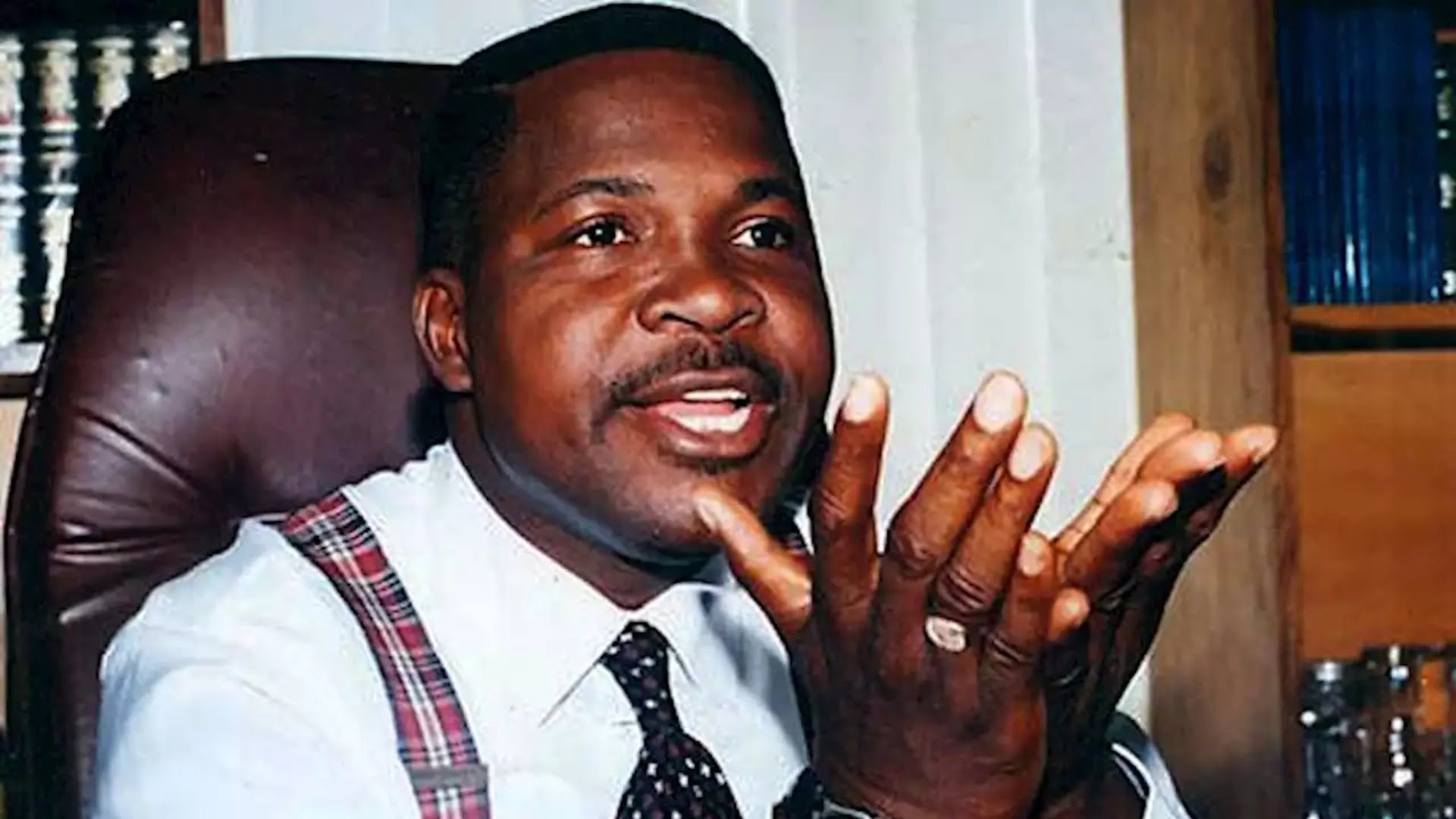
By Prof Mike Ozekhome SAN

INTRODUCTION

In last week’s installment, we dealt with the controversy over the removal of fuel subsidy; corruption’s unyielding gripe and perennial event for change after which we suggested several pathways that can be taken by our political leadership in its fight against corruption. We continue with same theme in this week’s feature with emphasis on how the people’s constitution can make the decisive difference. Enjoy.

FROM SHACKLES TO STRENGTH: FORGING A PEOPLE’S CONSTITUTION TO BREAK NIGERIA’S ENDLESS CYCLE OF CORRUPTION AND MISRULE

Since Nigeria gained independence in 1960, the country has been on a turbulent political trajectory. Each leadership era has grappled with its share of challenges such as corruption, economic stagnation, political instability, and ethnic tensions. Beneath these issues lies a structural flaw embedded in Nigeria’s constitutional framework. The 1999 Constitution, a product of military imposition, has hindered the evolution of a truly democratic Nigeria. To move forward, Nigeria must embrace a new, people-driven constitution that reflects the hopes and aspirations of its citizens, addresses systemic corruption, and empowers governance structures for sustainable development.

It is often said, “A chain is only as strong as its weakest link,” and in Nigeria’s case, the weakest link has long been the constitution, a framework that, despite claiming supremacy, fails to embody the will of the people. The current constitution is akin to a vessel built to sail in turbulent waters but without a captain who understands the journey’s purpose. As we embark on this voyage towards political reform and true federalism, Nigeria’s citizens must be at the helm, steering their nation towards a brighter future.

THE ILLEGITIMACY OF THE 1999 CONSTITUTION: A ROOT CAUSE OF LEADERSHIP FAILURES

To understand Nigeria’s persistent leadership challenges, one must first grasp the inherent problems with the 1999 Constitution. Enacted through Decree 24 of 1999 under the military regime of General Abdulsalami Abubakar on the 5th of May, 1999 (Commonwealth Legal Information Institute. (1999). Constitution of the Federal Republic of Nigeria (1999). Commonwealth Legal Information Institute. <http://www.commonlii.org/ng/legis/num_act/cotfrond596/.> Accessed on the 26th of September, 2024.), the document was imposed on the Nigerian people without consultation, debate, or referendum. It begins with the words, “We the People,” a phrase that rings hollow because, in reality, the people were never involved. The constitution, rather than being a product of a democratic process, was drafted by a select few military officers, a classic case of the tail wagging the dog.

The lack of legitimacy of the 1999 Constitution has had far-reaching consequences. As the legal foundation of Nigeria’s political system, it has created an environment where power is concentrated in the hands of a few, fostering a culture of impunity and corruption. The constitution’s centralization of authority, particularly the excessive powers vested in the executive branch, has encouraged political leaders to view public office as a vehicle for personal enrichment rather than public service. This has led to the rise of what can only be described as “strong men in weak institutions,” where political leaders wield immense influence while the institutions meant to check their excesses remain fragile and ineffective.

To quote Aristotle, “The law should govern, and those in power should be servants of the law.” However, in Nigeria, the law, as it stands in the 1999 Constitution, serves the powerful more than the people. This imbalance has perpetuated a cycle of poor governance, with each successive administration more concerned with maintaining control than addressing the nation’s deep-seated issues. Nigeria’s leadership has been trapped in a game of musical chairs, where the players change, but the song remains the same corruption, nepotism, and ineptitude continue to play loudly in the background.

One of the most significant flaws in the 1999 Constitution is the concentration of power at the federal level. Sections like 162(1)-(6) of the 1999 Constitution of the Federal Republic of Nigeria, which govern the distribution of national revenues, heavily favour the federal government, leaving states and local governments dependent on the centre for funding. This structure creates a scenario where political leaders, rather than focusing on developing their regions, are more concerned with gaining control of federal power because that is where the wealth lies.

“Power corrupts, and absolute power corrupts absolutely,” (Liberty Fund. (1887). Lord Acton writes to Bishop Creighton that the same moral standards should be applied to all men, political and religious leaders included, especially since power tends to corrupt, and absolute power corrupts absolutely. Liberty Fund. <https://oll.libertyfund.org/quotes/lord-acton-writes-to-bishop-creighton-that-the-same-moral-standards-should-be-applied-to-all-men-political-and-religious-leaders-included-especially-since-power-tends-to-corrupt-and-absolute-power-corrupts-absolutely-1887>. Accessed on the 26th of September, 2024.) Lord Acton famously said. In Nigeria, the centralization of power has indeed corrupted the political process, making public office a prize to be won rather than a responsibility to be honoured. The pursuit of federal control has turned elections into high-stakes contests, often marred by violence, vote rigging, and judicial manipulation. Political actors are willing to do whatever it takes to ascend to positions of power, knowing that once they are there, they can siphon off resources with little to no accountability.

This centralization has also weakened Nigeria’s institutions, as power-hungry politicians bypass institutional checks and balances. The Constitution, which vests executive powers in the president (Section 5 of the 1999 Constitution of The Federal Republic of Nigeria), has effectively allowed successive Nigerian presidents to act with near impunity, unchecked by the judiciary or legislature. The overreach of the executive has weakened the rule of law, as institutions like the judiciary and the National Assembly struggle to assert their independence in the face of an all-powerful executive.

A constitution that allows for such unchecked power is like a dam with a crack eventually, the waters of corruption and misgovernance will break through. Nigeria’s constitution must be redesigned to ensure that power is not concentrated in one place but is distributed across all levels of government, fostering accountability and strengthening democratic institutions.

A PEOPLE-DRIVEN CONSTITUTION: RECLAIMING NIGERIA’S POLITICAL DESTINY

To break the cycle of poor leadership and systemic corruption, Nigeria needs a new constitution; one that is not imposed from above but emerges from the people themselves. The phrase “We the People” must not merely be symbolic but a genuine reflection of the constitution’s origins. A people-driven constitution would be one that reflects the diverse aspirations of Nigeria’s citizens, ensuring that governance is inclusive, participatory, and transparent.

Creating such a constitution requires more than just amending the current one. The Nigeria Constitution allows for amendments (Section 9(1) of the 1999 Constitution of The Federal Republic of Nigeria), but amending a fundamentally flawed document is akin to placing a band-aid on a festering wound. What Nigeria needs is not reform, but a complete overhaul, a constitution that is autochthonous, meaning it derives its legitimacy directly from the people.
A new Constitution must be drafted through a Constituent Assembly, which would include representatives from every part of Nigeria ethnic groups, civil society organizations, labour unions, religious leaders, and youth groups. This assembly would serve as the platform for a national conversation about the type of governance Nigeria needs. Once the draft is completed, it should be subjected to a national referendum, allowing Nigerians to vote on whether they approve of the new Constitution. This process would give the new constitution the legitimacy it needs to succeed, as it would truly reflect the will of the people.

At the heart of the new Constitution must be the principle of devolution of power. Nigeria is a vast and diverse nation, with each region having its unique challenges and opportunities. A “one-size-fits-all” approach to governance has proven ineffective, as the federal government is too far removed from the daily realities of the people. The new constitution must therefore embrace true federalism, where power is devolved to the states and local governments, giving them the autonomy to manage their affairs akin to that in the first republic (1963-1966).

Sections 44(3) and 162(3) of the 1999 Constitution of the Federal Republic of Nigeria, which vest control of mineral resources and revenue allocation in the federal government, need to be reformed. States should have the authority to control their resources, whether oil, agriculture, or minerals, and use the revenue generated to develop their regions. In return, they would pay a reasonable percentage of their income to the federal government. This model of resource control would incentivize states to become more productive and self-sufficient, reducing their dependence on the centre and fostering a more balanced approach to national development.

State and local governments must also be empowered to take charge of security. Section 214(1) of the 1999 Constitution, which creates a centralized police force, should be re-examined. A decentralized police force would allow states and localities to respond more effectively to security challenges, as they would have a better understanding of local issues and could act swiftly to address them. A system of local policing would also promote greater accountability, as police officers would be more closely connected to the communities they serve.

As the famous African proverb goes, “A man who uses force is afraid of reasoning.” In Nigeria, force has often been the method of governance, with little attention paid to strengthening institutions that promote reason, justice, and fairness. For Nigeria to break free from the grip of corruption, its institutions must be fortified. Strong institutions, not strong men, should be the pillars of governance. (To be continued).

THOUGHT FOR THE WEEK

“There are three essentials to leadership: humility, clarity and courage” – Chan Master Fuchan Yuan.

LAST LINE

God bless my numerous global readers for always keeping faith with the Sunday Sermon on the Mount of the Nigerian Project, by humble me, Prof Mike Ozekhome, SAN, CON, OFR, FCIArb., LL.M, Ph.D, LL.D, D.Litt, D.Sc, DHL, DA. Kindly come with me to next week’s exciting dissertation.

Continue Reading
Click to comment

Leave a Reply

Your email address will not be published. Required fields are marked *

The Oracle

The Oracle: When a Nation Undermines Citizens’ Rights (Pt. 4)

Published

on

By

By Prof .Ike Ozekhome SAN

INTRODUCTION

In our last outing on this treatise, we addressed the operational weaknesses and structural mismanagement of the Police; the failure of internal accountability; collusion of its men with criminal networks; erosion of civil liberties by its illegitimate enforcement practices; and cycle of impunity. And later followed by analysis of the abuse of judicial power as well as executive lawlessness directed at the Bench. We then concluded with suggested pathways and recommendations. Today, we shall continue with the same theme focusing on strengthening judicial independence; institutionalizing a comprehensive anti-corruption framework; enhancing the protection of civil liberties; community-based security initiatives; electoral integrity; transparency in the public sector; protecting vulnerable and marginalized groups as well as institutionalizing a culture of consequences. Enjoy.

Judicial Strengthening and Independence
The Judiciary should be insulated from political interference through secure tenure, adequate remuneration, and independent budgetary control. Court processes must be digitized to reduce delays and enhance transparency. Special courts should be created to fast-track cases of corruption, rights violations, and electoral offences so as to prevent them from being lost in a backlog of other matters.

Comprehensive Anti-Corruption Framework
Anti-corruption agencies must operate without political bias. Investigations and prosecutions should be based solely on evidence, regardless of the political or social standing of the suspect. Asset recovery processes should be transparent, and recovered funds must be channeled directly into public services such as healthcare, education, and infrastructure.

Strengthening of Civil Liberties Protections
Security laws and policies must be reviewed to remove provisions that allow arbitrary arrests, prolonged detention without trial, and excessive surveillance. The rights to free expression, peaceful assembly, and privacy should be reaffirmed through legislation, judicial precedent, and administrative directives. Security personnel should receive specific training on respecting these rights in the course of their duties.

Enhanced Community-Based Security Initiatives

Community policing structures should be developed in partnership with local stakeholders, including traditional leaders, civil society, and youth groups. These initiatives should focus on early conflict detection, intelligence sharing, and non-violent dispute resolution. Proper integration of community policing into the national security architecture can improve trust and cooperation between citizens and the State.

Electoral Integrity and Protection of the Political Process

To reduce politically motivated violence, security forces must adopt a neutral stance in elections and enforce the law impartially. Electoral offenders, including those within security agencies, must face swift prosecution. The deployment of technology in elections, such as biometric verification, should be protected by strong legal safeguards to prevent manipulation. More importantly, the Electoral Act must be urgently amended to include the use of BIVAS, electronic voting and real time transfer of results into IReV.

Public Sector Transparency and Open Data
Transparency in governance can significantly reduce opportunities for abuse of power. All government agencies should be required to publish regular reports on budgets, procurement, and performance indicators. Public access to information should be enhanced through stronger Freedom of Information laws and proactive disclosure of records.

Protection of Vulnerable and Marginalized Groups

Special attention should be given to protecting women, children, marginalized vulnerable persons and minorities and communities, who are disproportionately affected by rights violations and insecurity. Law enforcement and judicial olicers should be trained to handle cases involving such vulnerable groups with sensitivity. Dedicated units within security agencies should be tasked with preventing and responding to gender-based violence, child labour, human trafficking and exploitation.

Institutionalizing a Culture of Consequence
The single most important factor in ending impunity is ensuring that misconduct always attracts consequences. Disciplinary actions, criminal prosecutions and public reporting of case outcomes should become the norm. Political leaders must set the example by submitting themselves to the rule of law. They must lead by example and not by precepts.

CONCLUSION

The challenges confronting Nigeria in the areas of security, protection of citizens’ rights and enforcement of the rule of law are deeply rooted in a pattern of institutional neglect and governance failure. Throughout this work, it has become evident that insecurity in the country is not only result of violent crime or terrorism but also a product of weak and compromised institutions that allow such threats to flourish. When the very institutions tasked with safeguarding the people become unreliable or complicit, the result is a petrified environment where justice is selective, rights are precarious, and the social contract between citizens and the State is broken.

The evidence is clear that insecurity in Nigeria is a multi-dimensional crisis. Political violence undermines democratic processes. Economic hardship is exacerbated by corruption and the diversion of resources. Physical insecurity in many regions persists because law enforcement is either absent or compromised. The deterioration of education and healthcare further exposes the population to long-term instability. Each of these problems is interconnected and magnified by the failure of the justice and enforcement systems to function impartially and effectively.

Civil liberties, guaranteed by the Constitution and supported by international treaties, are repeatedly undermined by arbitrary arrests, unlawful detentions, and the suppression of free expression. When citizens live in fear of those entrusted to protect them, the legitimacy of the State is called into question. A society where speaking out invites retaliation and where wrongdoing by the powerful is met with silence or even approbation cannot claim to uphold the principles of democracy and justice.

The normalization of impunity is perhaps the most dangerous of all the trends identified. Impunity corrodes public trust, emboldens offenders, and creates a culture where breaking the law is not an aberration but an accepted norm of political and social life. Without decisive action to reverse this culture, every other reform will be weakened before it begins to take root.

Nigeria’s peculiar security realities demand a holistic approach. This includes rebuilding law enforcement into a professional, rights-respecting institution, ensuring the judiciary is free from political interference, and creating genuine accountability mechanisms that apply to everyone regardless of status. It also requires an investment in transparency, community trust, and the protection of vulnerable groups who suffer most from both insecurity and rights violations.

The task is undeniably challenging, but it is not impossible. The pathway to a more secure and just Nigeria begins with the recognition that true security cannot exist without justice, and justice cannot thrive without the rule of law. By committing to comprehensive reforms and by holding both leaders and institutions accountable, Nigeria can reclaim the promise of a society where rights are protected, laws are respected, and security is the shared foundation for national progress. In all these, one may ask, where is the Bar and what is its historic role? A once vibrant Association feared by the corrupt and dreaded by all successive governments has since become comatose, hardly responsive to societal needs. Aside many lawyers now professionally practising Bar instead of practising law by oscillating from one office to another over a period of decades, what has the Bar got to show for its continued relevance in terms of interrogating the status quo and challenging impunity? How has the Bar fared in holding governments responsible and accountable to the Nigerian people? Aside converging every year at designated venues for the annual ritual of the AGC, what dividends have we yielded from our usual banal communiqué?

How have we pushed to ensure we engaged the three arms of government to overhaul or at least improve on the status quo? Can we now blame some lawyers who are increasingly feeling disenchanted with the status quo and seek alternative platforms such as the Nigerian Law Society (NLS)? I think not. Colleagues, let us as lawyers and Judges wake up from our deep slumber of complicit silence and stop seeing law solely as a bread-and -butter profession. We must see law from the prism of Professor Dean Roscoe Pound-an instrument of social engineering. Anything short of this is not befitting of the legal profession. (Concluded).

THOUGHT FOR THE WEEK

“We cannot reform institutional racism or systemic policies if we are not actively engaged. It’s not enough to simply complain about injustice; the only way to prevent future injustice is to create the society we would like to see, one where we are all equal under the law”. (Al Sharpton).

Continue Reading

The Oracle

The Oracle: When a Nation Undermines Citizens’ Rights (Pt. 3)

Published

on

By

By Prof Mike Ozekhome SAN

INTRODUCTION

The last installment of this series continued from where the inaugural one stopped: the analogy of each corpse buried without justice being a clause in the Constitution buried in effigy. It then explained how inequality breeds violence, before moving onto how systemic lapses in law enforcement is the hidden engine of insecurity and erosion of rights. Later, it examined the contrast between constitutional mandate and institutional reality, followed by the politicization and weaponization of law enforcement; corruption as operational culture; and finally operational weaknesses and structural management. The week, we shall continue with same theme, after which we shall delve into the failure of internal accountability; collusion with criminal networks; erosion of civil liberties through enforcement practices; the cycle of impunity; abuse of judicial power and executive lawlessness targeted at the Bench. Thereafter, we shall consider various pathways and recommendations for addressing insecurity, rights protection and institutional weakness. Enjoy.

OPERATIONAL WEAKNESSES AND STRUCTURAL MISMANAGEMENT

Nigeria’s police-to-population ratio remains alarmingly low. With about 371,800 officers serving a population of over 236 million people, the country is well below the United Nations’ recommended benchmark of 222 officers per 100,000 people. This manpower gap severely hampers the Force’s capacity to tackle crime, especially in volatile areas plagued by insurgency and communal violence. To make matters worse, many of the limited officers available are deployed to safeguard high-profile politicians and elites rather than serving the broader public. In rural communities, especially in conflict-affected northern states, residents report waiting hours, sometimes days, for police to respond to distress calls, if they ever respond at all.

Compounding this problem is inadequate training. Many recruits receive minimal exposure to forensic methods, human rights protocols, or community policing principles. As a result, investigative work relies heavily on confessions, which are frequently extracted through coercion or torture. This not only violates constitutional guarantees against inhuman treatment but also produces unreliable evidence that weakens prosecutions.

Logistical deficits are equally damaging. Many police divisions operate without functioning patrol vehicles, secure communication equipment, or modern crime labs. The Inspector General of Police has acknowledged that, outside of Lagos, forensic capability is virtually non-existent. Without scientific investigation, crimes are either left unsolved or result in wrongful arrests, further undermining public trust

FAILURE OF INTERNAL ACCOUNTABILITY

In a functioning democracy, law enforcement personnel are subject to robust oversight, both internally and through independent bodies. In Nigeria, oversight mechanisms exist in name but not in consistent practice. The Police Service Commission (PSC), which is meant to handle recruitment, promotion, and discipline, is itself politically influenced and suffers from inadequate funding. Complaints of misconduct often disappear into opaque disciplinary processes, and there is little transparency about the outcomes.

When abuses are too public to ignore, as with the October 2020 End SARS protests, Commissions of Inquiry are established, testimonies are heard, and reports are submitted. Yet, implementation of recommendations remains rare. In Lagos, for example, despite the panel’s findings implicating specific officers in excessive force and unlawful killings, few have been prosecuted. Instead, many have returned quietly to duty. This pattern sends a dangerous message to the rank-and-file officers: violations carry reputational risk but rarely legal consequence.

COLLUSION WITH CRIMINAL NETWORKS

Perhaps the most alarming dimension of enforcement failure is the documented collusion between security personnel and criminal actors. In the Niger Delta, security forces have been implicated in illegal oil bunkering, the very crime they are deployed to prevent. In parts of the North-West, reports from Amnesty International and local media allege that bandit groups pay “protection fees” to avoid military or police raids.

Such collusion transforms law enforcement from an adversary of crime into a stakeholder in it. This is not merely passive negligence; it is active participation in the shadow economy of insecurity. In these areas, communities quickly learn that reporting crimes may not only be futile but dangerous, as information shared with authorities can be leaked to perpetrators.

EROSION OF CIVIL LIBERTIES THROUGH ENFORCEMENT PRACTICES

The systemic lapses in law enforcement also directly erode civil liberties. Arbitrary arrests, prolonged detentions without trial, suppression of lawful assembly, and harassment of journalists are not isolated acts but part of an entrenched enforcement culture. The constitutional right to personal liberty under Section 35 is regularly violated under the guise of maintaining public order.

Protesters face preemptive crackdowns, often justified by vague references to national security. During the #Revolution Now protests in 2019, dozens of demonstrators were detained, some for weeks, without formal charges. In many cases, court orders for their release were ignored by security agencies, underscoring the absence of legal consequence for disobedience of judicial authority.
This disregard for civil liberties creates a chilling effect on political participation and civic engagement. Citizens learn that speaking out carries personal risk, and self-censorship becomes a survival strategy. Over time, this quietens public dissent, enabling further abuses by both government and non-state actors.

THE CYCLE OF IMPUNITY

The combination of politicization, corruption, operational weakness, and lack of accountability feeds into a self-reinforcing cycle of impunity. Officers learn that their actions are judged not by legality but by political expediency. Politicians, in turn, see law enforcement as a tool to protect themselves and punish adversaries. Criminal networks exploit these gaps, securing protection through bribery or political patronage.

Once entrenched, this cycle is difficult to break. Each unpunished violation becomes a precedent, normalizing the idea that power grants immunity from the law. This normalization spreads beyond law enforcement to other institutions, eroding the very foundations of democratic governance.

THE ABUSE OF JUDICIAL POWER AND EXECUTIVE LAWLESSNESS AGAINST THE BENCH

In a functioning democracy, the judiciary serves as the impartial referee between the powerful and the powerless. It is the last line of defence for the citizen and the final hope for justice. But what happens when that sacred institution itself becomes the object of aggression? What happens when the enforcers of state power turn their weapons not on criminals, but on the judges who interpret the law? Nigeria confronted these very questions in October 2016, when the homes of senior judges across the country were invaded by heavily armed operatives of the Department of State Services under the cover of night.

These raids, carried out in Abuja, Gombe, and Port Harcourt, targeted some of the most senior members of the judiciary, including Justices Walter Onnoghen and Sylvester Ngwuta of the Supreme Court, and Federal High Court judges Adeniyi Ademola and Nnamdi Dimgba. The DSS claimed they were investigating corruption, yet their conduct betrayed a more sinister motive. Homes were stormed in Gestapo fashion, judges were treated like fugitives, and search warrants reportedly carried incorrect names or were not presented at all. The judiciary was under siege. In Rivers State, Governor Nyesom Wike arrived at the residence of one of the judges to intervene and was reportedly shoved, injured, and threatened by DSS operatives. It was not an arrest. It was a constitutional assault.

I spoke firmly and publicly against this invasion. I said then what I still affirm now: the DSS acted outside the bounds of the law. As I told journalists and as reported by Premium Times, the operation was not only illegal and unconstitutional but a dangerous desecration of the rule of law. No agency of government, including the DSS, has the authority to arrest or search the premises of serving judicial officers without going through the National Judicial Council, which is constitutionally empowered to discipline judges. If there are allegations of corruption, there is a process. That process was willfully ignored. What we saw instead was a show of force meant to intimidate and humiliate. It was executive lawlessness under the guise of anti-corruption.

The greatest tragedy, however, was not merely that these events occurred. It was the manner in which they were received. The Bar, which ought to have risen as a united force, was sluggish in its response. Statements were issued, but no real action followed. There were no mass protests, no urgent court filings to challenge the illegality. The judiciary itself offered little more than murmurs of disapproval. That silence was deafening. It spoke to a larger issue: the slow death of institutional courage. When judges are raided in their homes and lawyers look away, then the entire legal profession stands indicted. If we cannot defend our own, how then can we defend the people?

This unfortunate episode also calls into question the internal health of the judiciary. The Nigerian Law Society recently criticized the widespread abuse of power within judicial institutions, pointing to opaque appointments, poor welfare, and inconsistent rulings. According to their statement reported by the Guardian, the lower courts remain underpaid and under-respected, leaving many judicial officers vulnerable to compromise. It is undeniable that some within the judiciary have failed in their duties, and that corruption has indeed crept into its chambers. However, even in the face of that, the remedy is never brute force. It is lawful accountability, constitutional procedure, and institutional reform. The rule of law must never be sacrificed on the altar of expediency.
When security agents raid the homes of judges without due process, they are not upholding the law, they are undermining it. And when the legal community reacts with silence or justification, it invites a repeat. What began with judges will not end there. Such violations set a precedent that can easily extend to journalists, lawmakers, academics, and eventually, ordinary citizens. Today it is the gavel. Tomorrow it will be the pen, the vote, the voice. That is how authoritarianism begins not always with a declaration, but often with silence.

It is not too late to reset the balance. But we must remember that a judiciary that submits to fear is no judiciary at all. A legal profession that only whispers in the face of injustice is unworthy of its robes. We must return to our roots, as defenders of liberty and protectors of due process. Let the judiciary regain its independence, and let the Bar reclaim its courage. Only then can we begin to restore the broken faith between the Nigerian people and the system that was meant to serve them.

PATHWAYS AND RECOMMENDATIONS FOR ADDRESSING SECURITY, RIGHTS PROTECTION, AND INSTITUTIONAL WEAKNESS IN NIGERIA

The challenges outlined in this paper reveal a complex web of governance failures, enforcement gaps and systemic disregard for constitutional rights. Addressing these issues requires deliberate and sustained action across multiple fronts. The following ten pathways provide a practical blueprint for reform.

Reform of Law Enforcement Institutions
The Nigerian Police Force, the Department of State Services, and related agencies need deep structural reforms. Recruitment should be based on merit and integrity rather than political patronage. Training should include human rights education, forensic investigation, and conflict-sensitive community policing. The practice of diverting a large proportion of officers to serve political elites must be stopped so that policing resources are redirected toward public safety.

Creation of Independent Oversight and Accountability Mechanisms

A civilian-led oversight authority should be established with the power to investigate and prosecute cases of misconduct by law enforcement officials. This body must have full access to records, the ability to compel testimony, and legal safeguards for whistleblowers. Its findings should be made public to ensure transparency and build trust. (To be continued).

THOUGHT FOR THE WEEK

“Money and corruption are ruining the land, crooked politicians betray the working man, pocketing the profits and treating us like sheep, and we’re tired of hearing promises that we know they’ll never keep” – Ray Davies

Continue Reading

The Oracle

The Oracle: When a Nation Undermines Citizens’ Rights (Pt. 2)

Published

on

By

By Prof Mike Ozekhome SAN

INTRODUCTION

The inaugural installment of this treatise dealt with the scope of insecurity in Nigeria and examined its dimensions. It was followed by a discussion of the constitutional framework of the right to life graphically depicting it as “each corpse buried without justice” being a clause in the Constitution burned in effigy.

This week’s episode will continue with same theme, followed by an in-depth analysis of how inequality breeds violence as well as how systemic lapses in law enforcement are the hidden drivers of insecurity and the erosion of rights. Thereafter, we shall discuss the contrast between constitutional mandate and institutional reality of law enforcement; its politicization and weaponization; the incidence of corruption as operational culture in law enforcement and its inherent operational weakness and challenges in its structural management. Enjoy.

EACH CORPSE BURIED WITHOUT JUSTICE IS A CLAUSE OF THE CONSTITUTION BURNED IN EFFIGY (Continues).

Even the criminal justice system, meant to operationalize the Constitution, has virtually collapsed into spectacle. The police extort with impunity. The courts delay justice until justice becomes irrelevant. Prisons overflow with awaiting trial inmates while politicians accused of looting billions of our common patrimony stroll freely through airport lounges, attending graduation events where they are conferred with purchased honorary doctorate degrees. A man who steals bread is lynched. A senator who steals a nation is given a chieftaincy title. Is this the rule of law, or the rule of rot?

Let us not forget Chapter II of the Constitution, the so-called Directive Principles of State Policy. These are the clauses that outline a vision for a just and egalitarian society free education, affordable healthcare, equal opportunity, protection of the vulnerable, decent wages, access to housing, food security, and the equitable distribution of national wealth. But here lies the deception: these provisions are rendered non-justiciable under Section 6(6)(c). In plain terms, they are promises the people cannot enforce. The Constitution dreams on their behalf, but denies them the legal means to wake that dream into action.

When a State says to its citizens, “we guarantee you food, education, and health,” and then adds a footnote saying, “but you may not ask us for it,” what emerges is not democracy it is deception. And deception is the mother of despair. Despair, when left to fester, breeds defiance. And defiance, when met without justice, becomes insurrection. That is the cycle Nigeria is now trapped in a spiral of constitutional promises turned into societal wounds.

The Constitution becomes a parody in the mouths of politicians who have never read it and judges who are too timid to enforce it. For the powerful, it is a shield; for the poor, a sword turned inward. The elite recite its sections during legal battles over electoral fraud. But where are these recitations when 652 children die of hunger in Katsina? Where are the legal arguments when a woman in Makurdi loses all her children to a communal massacre? When the man in Sokoto can no longer afford petrol, food, or peace of mind, what legal relief can he seek?

It is also worth noting the performative constitutionalism that plagues Nigeria’s legislative process. Lawmakers gather to amend the Constitution every four years like surgeons with blunt scalpels. They debate the minutiae of electoral timelines, federal character quotas, and party primaries. But no one rises to demand justiciability for Chapter II. No one proposes constitutional protections for internally displaced persons. No one fights to enshrine the right to a living wage. They adjust the frame while the house is on fire.

In the final analysis, a Constitution that cannot be felt in the body of the poor, in the belly of the child, in the safety of the mother, and in the labour of the working man, is a document not of power but of pretense. A parchment without protection. A creed without consequence.

Yet, it is not too late. What is written may still be made flesh. But first, we must acknowledge the gap. We must look the failure in the face and name it for what it is: a breach of trust, a betrayal of covenant, a blood-soaked irony. For the Constitution, like the prophets of old, still cries out: “Will you honour me with your lips and deny me with your deeds?” The answer, for now is a crass denial of deeds.

HOW INEQUALITY BREEDS VIOLENCE

Poverty is not just a condition; it is an accelerant of conflict. There is a direct and growing body of empirical evidence linking economic inequality with national insecurity. A 2024 study revealed that in Benue State, each 1% rise in insecurity led to a 0.211% drop in crop production and a 0.311% drop in livestock output. This data translates into a disturbing truth: insecurity is not only the consequence of poverty it is its co-creator. In rural communities, farmers flee their land not because of market pressures, but because of fear of bandits, herdsmen, and armed militias who now prowl agricultural heartlands, maiming, killing, raping and burning.

In the same year, Reuters reported that over 31 million Nigerians nearly 15% of the population were pushed into acute food insecurity, largely due to a combination of rising prices, mass displacement, and insecurity in farming regions. Nigeria, once a net food exporter, is now reliant on imports for survival. This is not just an economic regression; it is a national humiliation, a betrayal of the very right to life itself.

Without access to these basic social services, rights such as freedom of expression, political participation, and even the right to vote become illusory. The weaponization of poverty in Nigeria is not simply an unfortunate byproduct of mismanagement. It is a system. A structure. A design. It is the very architecture of modern power. In this architecture, deprivation is used to secure obedience, silence dissent, and eliminate competition. The economically excluded are not merely poor they are disempowered, voiceless, and disposable. That is the Stalin philosophy: impoverish and demean the people and their obedience is guaranteed in the form of Stockholm Syndrome.

This is a direct affront to the Constitution, which promises in its Preamble to promote “the welfare of the people.” It is a betrayal of the African Charter on Human and Peoples’ Rights, ratified by Nigeria, which enshrines the right of all peoples to the satisfaction of economic, social and cultural rights essential to development (Article 22). It is a violation of the United Nations’ Sustainable Development Goals, especially Goal 1 (No Poverty) and Goal 10 (Reduced Inequality).

SYSTEMIC LAPSES IN LAW ENFORCEMENT: THE HIDDEN ENGINE OF INSECURITY AND RIGHTS EROSION

The crisis of insecurity in Nigeria cannot be understood without confronting the institutional collapse of its law enforcement architecture. While terrorism, banditry and economic collapse dominate headlines, these phenomena are but symptoms; the underlying illness is a chronic and systemic failure of the bodies meant to enforce the law. This failure is not simply operational, a matter of inadequate equipment or insufficient manpower, it is structural, political, and cultural. It shapes the relationship between the citizen and the State, corrodes the rule of law, and serves as the silent engine powering the erosion of civil liberties and the normalization of impunity.

CONSTITUTIONAL MANDATE VS. INSTITUTIONAL REALITY

Under Section 214 of the 1999 Constitution, the Nigeria Police Force (NPF) is established “for the maintenance of law and order, and for the protection of lives and property.” Supplementary security agencies such as the Department of State Services (DSS), Nigeria Security and Civil Defence Corps (NSCDC), and specialized military units exist to support this mandate. In theory, these agencies stand as the custodians of safety and justice, sworn to uphold both constitutional rights and statutory law.

In practice however, these institutions are often the very conduit pipes through which laws are brazenly violated. The gulf between the constitutional ideal and the operational reality is vast. A system intended to serve the people now often serves power, wealth and political expediency against the very people. The principle of equality before the law has been replaced by a hierarchy of enforcement, where the reach and rigour of the law depend on the identity of the suspect.

POLITICIZATION AND WEAPONIZATION OF LAW ENFORCEMENT

One of the most corrosive dynamics in Nigerian policing is its politicization. Rather than functioning as neutral enforcers of the law, security agencies are frequently deployed as instruments of partisan advantage. Opposition protests are met with rapid deployment of armed police, teargas and mass arrests. In contrast, political rallies for ruling party figures proceed with minimal security interference, but with reinforced security protection even when they breach public safety and order regulations.

This political double standard is not a matter of perception alone; it is reality evidenced by documented patterns. During the 2019 and 2023 general elections, numerous observers including the Transition Monitoring Group and international missions reported instances where law enforcement personnel either failed to intervene during ballot snatching episodes, or were directly complicit. Police units habitually provide cover for armed gangs removing election materials. In many of such cases, no officers have been disciplined, further embedding the perception that law enforcement loyalty is to political patrons, not the law or the country.

The politicization extends beyond elections. Journalists investigating corruption or security failings have been arrested and detained under dubious charges, often invoking broadly worded laws such as the Cybercrimes Act or Terrorism Prevention Act. Meanwhile, known political figures implicated in large-scale embezzlement routinely enjoy “soft landing” agreements or indefinite delays in prosecution.

CORRUPTION AS OPERATIONAL CULTURE

Corruption within Nigerian law enforcement is neither sporadic nor isolated; it is systemic. The 2019 Global corruption Barometer for Africa found that Nigerians rate the police the most corrupt institution in the country. Half of those surveyed reported paying a bribe to the police in the previous 12 months.

This corruption operates at multiple levels. At street level, officers extort motorists at checkpoints, detain individuals without charge to compel “bail” payments, and demand fees before registering complaints. At higher levels, investigators may bury case files in exchange for cash; prosecutors may dilute charges; and senior officers may shield their subordinates from accountability if they share in illicit proceeds.

Even operational deployments are shaped by rent-seeking. Officers are routinely assigned to guard private residences, businesses and political figures for unofficial payments, leaving ordinary citizens with limited police presence in their communities. This practice distorts the deployment of resources, creating a policing landscape where protection is essentially commodified.

OPERATIONAL WEAKNESSES AND STRUCTURAL MISMANAGEMENT

Nigeria’s police-to-population ratio remains alarmingly low. With about 371,800 officers serving a population of over 236 million people, the country is well below the United Nations’ recommended benchmark of 222 officers per 100,000 people. This manpower gap severely hampers the Force’s capacity to tackle crime, especially in volatile areas plagued by insurgency and communal violence. To make matters worse, many of the limited officers available are deployed to safeguard high-profile politicians and elites rather than serving the broader public. In rural communities, especially in conflict-affected northern states, residents report waiting hours, sometimes days, for police to respond to distress calls, if they ever respond at all. (To be continued).

THOUGHT FOR THE WEEK

“Money and corruption are ruining the land, crooked politicians betray the working man, pocketing the profits and treating us like sheep, and we’re tired of hearing promises that we know they’ll never keep”. (Ray Davies).

Continue Reading

Trending