By Magnus Onyibe
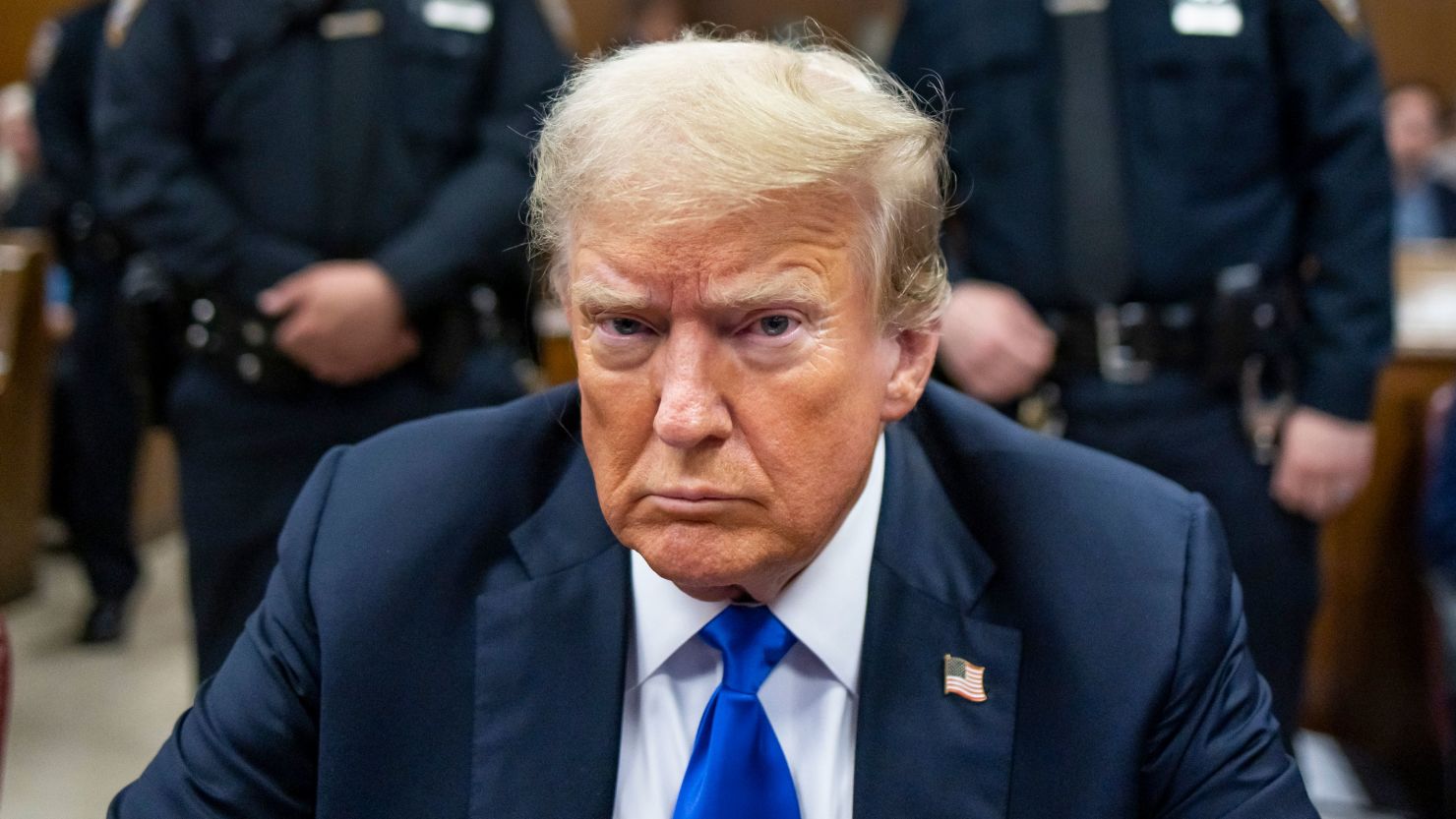
A peek into Canadian, Mexican, Chinese, European, Japanese, and Korean media platforms reveals palpable angst, driven by strong expressions of nationalistic passion against the 47th President of the United States, Donald J. Trump, and his administration. Citizens of these countries are expressing indignation due to the ongoing trade war—especially regarding the 10% across-the-board tariff on imports from 180 countries and, in some cases, additional tariffs of up to 54% on imported vehicles and other goods into the US from around 60 nations.
The tariffs took effect on April 2, a date President Trump has dubbed Liberation Day—drawing a parallel to July 4, 1776, when the original 13 American colonies declared independence from Britain after a brutal war.
In line with America’s foundational respect for freedom of speech and association, it’s remarkable—and indeed ironic—that, unlike other nations whose media are responding with patriotic fervor, the American media have not rallied behind their president. Instead of pushing back against foreign hostility, the highly vibrant US media have joined the global chorus in criticizing President Trump’s “America First” policies. In some quarters, they are even vilifying or outright demonizing their own president.
Such is the potency of free speech in the United States—a feature perhaps best captured by the concept of American Exceptionalism.
Despite a tumbling stock market and widespread protests fueled by fears of inflation and an impending recession—as predicted by anti-Trump politicians—President Trump appears unperturbed by the tumultuous effects his tariff policies are having on US trading partners. In fact, he has threatened to raise tariffs even further if Canada and European countries attempt to collude against the US. Although this has yet to happen, China—arguably the hardest hit—has retaliated with a 34% tariff on US imports.
In my view, these developments are reshaping the global trade ecosystem. As countries seek alternative trade partners to avoid the constraints of trading with the US on Trump’s terms, they may carve out entirely new trade pathways. Thus, the net effect of President Trump’s sweeping tariff hikes—targeting both allies and rivals—can be likened to the Big Bang.
The Big Bang theory, the leading explanation for the origin and evolution of the universe, posits that the universe began as an infinitely hot and dense singularity about 13 billion years ago. According to its proponents, this singularity expanded rapidly, cooling and giving rise to subatomic particles, atoms, stars, and galaxies. The universe, they say, is still expanding—accelerated by the mysterious force known as dark energy.
President Trump’s “bang” can be seen through a similar lens: an explosive policy shift—rooted in an unconventional America First ideology—that has disrupted all previous global trade arrangements. Like a singularity, his approach is transforming the established order, replacing it with an untested but highly consequential framework. Though unproven in the modern era, it already appears to be generating seismic changes across the global economy.
Trump is leveraging tariffs as a strategy to boost job creation and repatriate manufacturing to the US. He also views them as a tool to generate revenue to reduce the national budget deficit, which stands at a staggering $36 trillion and continues to grow.
Given the global upheaval triggered by this astronomical tariff increase, it is difficult to find a better metaphor for Trump’s trade policy than the Big Bang. The ripple effects are so powerful that fear has gripped not only North and South American neighbors, but also Europeans, Asians, Arabs, and Africans—on both sides of the Atlantic and Pacific oceans.
The only country that might remain untouched or unaffected by the far-reaching Trump effect is one operating in complete autarky—such as the reclusive regime of Kim Jong Un in North Korea.
While the Big Bang theory provides a comprehensive explanation for the origins of the universe, many unanswered questions remain—such as what caused the universe to begin expanding in the first place, and what is the true nature of dark matter and dark energy.
Similarly, what explains President Trump’s determination to upend the old world order remains an enigma to his opponents. At this point, not even his staunchest devotees can convincingly argue that his motives are purely patriotic, driven by the Make America Great Again (MAGA) ideology with the primary aim of correcting trade imbalances and closing the deficit gap that has led to a massive budget shortfall.
Of course, as is typical in opposition politics, Trump’s high tariffs and efforts to reduce the size of the US government—driven by the newly created Department of Government Efficiency (DoGE) under the leadership of Elon Musk, the world’s richest man—are being framed as a gambit to cut taxes for billionaires. That narrative seems to have resonated, as Americans have taken to the streets in protest, in ways that suggest resistance to what former President Joe Biden described as an “oligarchic regime,” citing the number of billionaires in Trump’s cabinet.
The reality, however, is that Trump’s “bang” is not a one-size-fits-all solution. It affects different countries and regions in different ways.
Starting with Africa, where aid is critically needed to manage persistent social and public health challenges like HIV/AIDS, the suspension of USAID funding by President Trump is deeply concerning. USAID has been a vital source of funding for health and humanitarian initiatives, and its absence poses a significant threat. This is especially so because many African leaders have practically abdicated their responsibilities in this area, relying heavily on donor countries—led by the US—to provide for their citizens.
With USAID funding now cut off, many African countries are left scrambling to fill the gap. In Nigeria, the government has made an extra-budgetary provision of $200 million for healthcare services, while the Central Bank of Nigeria (CBN) has injected almost $200 million into the foreign exchange (FX) market to help cushion the volatility and uncertainty resulting from the tariff hikes.
In Europe, the 25% tariff imposed on vehicles and alcoholic beverages—particularly from France and Scotland—poses a massive economic challenge. Many European economies are either already in recession or teetering on the brink. Even more alarming is the US threat to withdraw from its heavy financial commitment to NATO, coupled with demands that member nations pay up their dues. This creates a sense of vulnerability, especially as fears rise that Vladimir Putin may turn his attention to another European country after Ukraine.
From my perspective, the European Union’s support for Volodymyr Zelensky and Ukraine is less about altruism and more about self-interest—the first rule of nature. This is evidenced by the show of unity by European leaders around Zelensky after he was snubbed at the White House by President Trump and Vice President J.D. Vance. This strategic interest is also why Europe is now planning to set up a joint European military force as an alternative to NATO—an initiative already underway. But given the current economic strain on European economies, is the formation of a standing European force feaseable?
Regarding the high tariffs, Europe appears to have adopted a measured response, likely in line with the counsel of Ngozi Okonjo-Iweala, Director-General of the World Trade Organization (WTO).
Hence it seems to have adopted a studied approach.
The Arab world is also not left out. President Trump’s “drill, baby, drill” mantra means that the US will reduce its dependence on oil imports from countries like Saudi Arabia, the UAE, Kuwait, Qatar, and Oman. Instead of preserving strategic oil reserves, the US will now focus on domestic drilling. Trump’s rationale appears to be that if fossil fuels are eventually being phased out due to the rise of Electric Vehicles (EVs), then it makes sense to exploit the existing oil reserves before combustion-engine vehicles become obsolete.
In any case, Trump has never embraced climate change in the way it is currently framed. The world is alarmed that he has once again pulled the US out of the Paris Climate Accord, after former President Biden had rejoined during his administration. With oil prices crashing due to the tariff shock, an OPEC strategy meeting may soon be on the horizon.
China, currently celebrated as the world’s foremost manufacturing hub and the second-largest economy, has borne the brunt of Trump’s trade war. The 54% tariff imposed on goods ranging from vehicles to washing machines has essentially locked China out of the US market. These items were previously taxed at 10–25%, but after Trump’s April 2 Rose Garden announcement, the tariff soared to 54%. In response, China has imposed a 34% tariff on US exports. That has excerbated the chaos already wracking the global economy in the past couple of days.
The rationale behind these tariffs, according to Trump, is to bring manufacturing back to the US from Mexico, Canada, China, and Europe, where it had migrated due to what he deems as unfair trade practices. His strategy is designed to reverse this trend.
By understanding how President Trump’s influence is shaping events across Western, Asian, Middle Eastern (Arab), and African regions, we can better grasp the phenomenon—The Trump Effect—that I am likening to the Big Bang. Hopefully, this will encourage a more balanced perspective and lead to negotiations rather than a tit-for-tat trade war.
One irrefutable fact is that Trump is rewriting the global trade rulebook, and he is doing so by squelching globalization—a phenomenon that began between the late 18th and early 19th centuries. Placing this into historical context, the Silk Road and the Industrial Revolution—which began in Great Britain following the invention of the steam engine and the mechanical loom—kickstarted global trade by enabling mass production for markets beyond local demand.
In the modern era, global trade received a significant boost from the establishment of the World Economic Forum (WEF) in 1971, in Davos, Switzerland. Since then, global trade has been guided by the Davos Manifesto, which champions ethical entrepreneurship, responsible governance, and the neutral ideals of Swiss diplomacy—underpinning the spirit of globalization. A formal charter for this vision was adopted in 1973 and renewed in 2020.
History shows that global trade thrives when protected—and falters when it is not. For instance, trade in silk and spices between China and Rome during the first century BC flourished when protected by powerful empires. Once those empires declined, so did the trade routes and their prosperity.
Now, as President Trump—the leader of the current global hegemon—takes a protectionist stance, it is consistent with his past. He has long used tariffs as a tool for economic leverage. Even back in 1988, in an interview with Oprah Winfrey, Trump,then a real estate mogul criticized China for what he saw as exploitation of the US economy.
Trump is not alone in this. A resurfaced video from 1996 shows Nancy Pelosi, then a Congresswoman from California, opposing a bill that would give China a special trade status. She argued against tariff exemptions for Chinese products—effectively advocating for the same policy Trump now champions.
In summary, the use of tariffs as a strategic tool in global trade has bipartisan roots in the US. What has changed is the scale and audacity of the Trump administration’s approach, which has sent shockwaves across the global economic landscape—earning it the moniker of a Big Bang moment in trade history.
So, Trump is literally echoing Pelosi’s sentiments with his current introduction of high tariffs. The only difference is that the tariff hike is not limited to China but has been extended to roughly 180 countries, with an estimated 60 nations significantly affected.
Even more interestingly, reports suggest that as recently as 2019, Vermont Senator Bernie Sanders was also on record proposing the use of tariffs as a defense against unfair trade practices—an argument now forming the basis of Trump’s ongoing global tariff war, which has placed the world on edge.
Experts familiar with the history and current application of tariffs reveal that about $400 billion worth of U.S. products were tariffed during Trump’s first term. In his current second term, projections suggest that up to $1 trillion worth of goods may fall under U.S. trade tariffs.
According to estimates by economists, approximately $3.3 billion worth of imports arrive in the U.S. annually.
President Trump is convinced that his high-tariff regime will generate more wealth for the United States through increased domestic production, which would, in turn, boost employment for working-class Americans. Another key objective is to create fairness in trade between the U.S. and its trading partners, whom Trump has accused of benefiting unfairly at America’s expense.
Ultimately, President Trump aims to use the proceeds from these high tariffs to help close the $36 trillion budget deficit currently facing the world’s largest and most powerful economy.
In light of this, Mr. Peter Navarro, Trump’s trade adviser, believes that high tariffs have the potential to generate over $6 trillion for the U.S. in the short term.
In all of this, my main concern and interest ly in how Africa can benefit from the reimagining of the global socioeconomic ecosystem, as President Trump upends the old world order.
With a 14% tariff now imposed by the U.S. on Nigerian goods and 10% across most of the 54 nations continent , Nigeria’s exports to the U.S.—valued at between $5–$6 billion (with oil and gas making up over 90% and non-oil/gas exports accounting for less than 10%)—are under threat.
Even among non-oil/gas exports, the bulk comprises raw materials such as urea/fertilizer, ammonia, flower plants, and cashew nuts, which make up about 8%.
It is disappointing that value-added or processed exports from Nigeria to the U.S. are so minuscule—just 2%.
Despite this low figure, the imposition of a 14% tariff on Nigerian goods—despite the trade balance favoring the U.S.—should serve as a wake-up call for Nigeria, and indeed all of Africa, to begin adding value to their exports. If non-oil exports, facing a 10% tariff, are to be competitive in the U.S. market, they must move up the value chain.
The dominance of raw materials in Nigeria’s exports reflects the country’s continuing role as a supplier of raw materials to the industrialized nations of Europe, North America, and Asia. Among the six continents, only South America and the Arab world have yet to fully exploit Africa as a raw material source and dumping ground for finished products. So, for too long Africa has remained the weeping child as it has held the wrong end of the stick and it must make strategic and intentional efforts to change the negative narrative.
What the Trump tariffs spells in my mind is deglobalization as economic trade and investments between countries go on decline. But the global tariff war is also an opportunity for the continent to reposition herself on the global stage by taking a collective stance on how African countries can trade amongst themselves who to trade with in global south or west and even Asia based on her terms not the Berlin, Germany type of framework and agreement when she was not at the table when her resources were being shared as war spoils amongst Europeans who transformed from African slave traders into colonialists exploiting the resources of the continent.
Although, stocks have been crashing worldwide since the hike in tariffs by Trump it may be recalled that stock prices also rose sharply upon the innauguration of Trump on 20th January and has fallen therafter. Similarly, the stocks that have tanked globally in the past few days may rise again once clarity is achieved. With barely 100 days into his four (4) years tenure those projecting that President Trump and the Republican party may be punished by the electorate during mid -term elections that comes up 100 days shy of two (2) years, may be too hasty in their judgement.
That is because in politics a lot could still happen in the lifespan of Trump’s administration which is still 100 days shy of the 730 days(two years ) tenure to change course if the reciprocal high tariffs imposition on trading partners does not pan out well with high inflation wrecking the economy or unemployement rising astronomically to the point that US economy stagnates or goes into recession as being predicted by those against Trump’s unorthodox policies.
In the event that the unique approach defies the logic of economists, Trump may turnout to be the a hero of the new world order.
Magnus Onyibe, an entrepreneur, public policy analyst, author, democracy aadvocate, development strategist, alumnus of the Fletcher School of Law and Diplomacy, Tufts University, Massachusetts, USA, and a former commissioner in the Delta State government, sent this piece from Lagos, Nigeria.
To continue with this conversation and more, please visit www.magnum.ng.









 Featured3 days ago