Connect with us

Africa

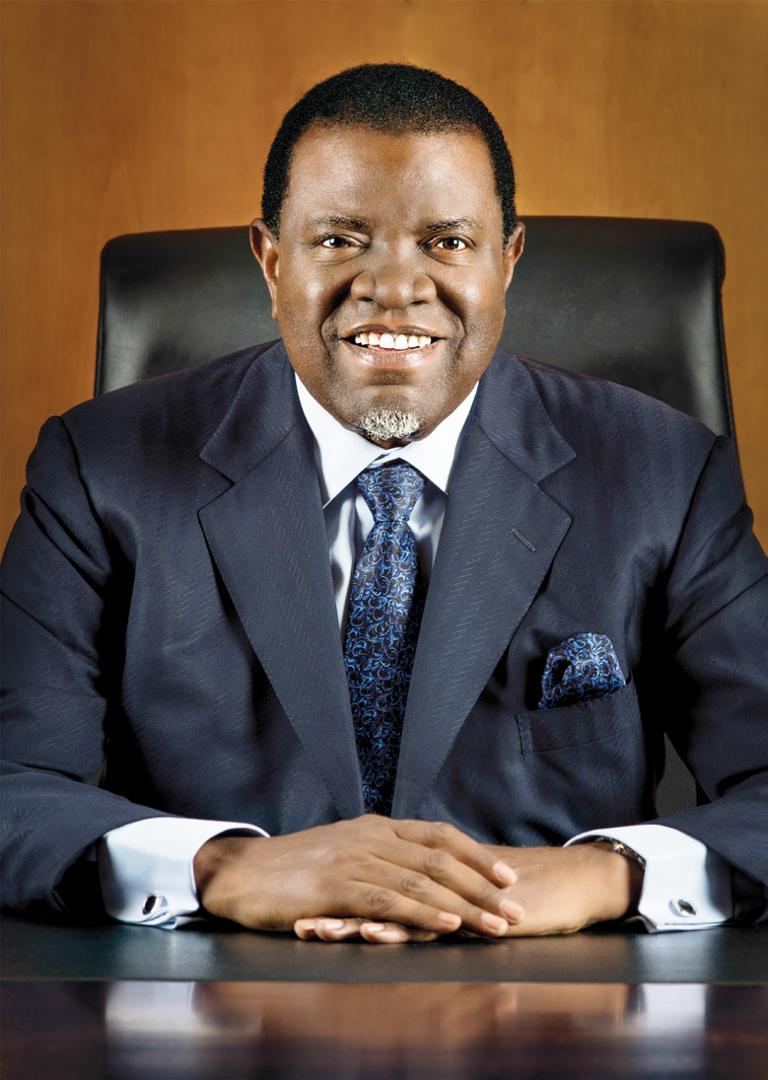
President Hage Gottfried Geingob: A Nigerian’s Tribute to the Remarkable Pan-African Leader

Published

on

By Dolapo Aina

When great men and women pass away, you pretty much remember with clarity where you were when you heard the news. Same goes for monumental historical events. You would recollect and not forget where you were or what you were up to. Sunday, the 4th of February 2024 was one of those days for Namibians, friends of Namibia and Namibians, Africa and the entire world.
I commence this long piece with a question. Where were you when you heard about the death of President Hage G. Geingob of Namibia on February 4th, 2024?
I was getting ready and preparing to attend church service in Kigali, Rwanda.

Considering that I had been following President Geingob’s health status since the last week of January 2024 when the Presidency revealed the President’s condition and his subsequent trip to the United States of America; like everyone else, I was of the opinion that President Geingob would get better. Alas, the sudden news on that fateful Sunday. Like everyone else, I was so certain the President would pull through that I sent in a letter requesting for an interview (later on in 2024 to talk about his life after office et al) to the Office of the Presidency ahead of President Geingob’s recovery. Alas, the sudden news of President Geingob’s demise.

On Saturday, the 24th of February 2024, I spent the large part of my Saturday watching people line up the streets from Parliament Gardens to Robert Mugabe Avenue, Sam Nuyoma drive; as the casket carrying the late President of Namibia; Dr Hage G. Geingob made a vehicular procession to the independence stadium in Windhoek.

Namibians loved their President and you could see it from people who came out in their thousands to pay their last respects to their beloved President. He was truly the people’s President.

He regaled me with historical happenings which were not only stories to him because he knew the actors on a personal level. I knew I had met more than my match when it comes to Pan Africanism and stories when he told me of stories of Castro, Che Guevera etc. From the global perspective, America and Africa were the regions to be in the 1960s and he saw it all as he was in the thick of things in that era. I came out of the State House in Windhoek realising I had interacted with an African witness of historical events in Africa and America, Latin and Central Americas. A sincere man. An internationalist. A Pan Africanist. When you met and spoke with the President, the connection is always deep.

That day, I left State House in Windhoek, went back to the venue of the event I was to attend and, in the evening, I did a lot of research on some of the things he told me to research on which was about his Nigerian mentor of 40 years, Professor Adebayo Adedeji. Professor Adedeji was the Under- Secretary-General and Executive Secretary of the United Nations Economic Commission for Africa (ECA) from 1975 to 1991. Speaking of Nigeria and President Geingob’s excellent memory, when I realised his strong connection to Nigeria, I remember during our conversation, I asked him if he knew some prominent diplomats whom I knew personally like Ambassador Olusegun Olusola who was Nigeria’s Ambassador to Ethiopia in the 1980s. He remembered him. Same response to Professor Bolaji Akinyemi but a faint recollection of General Ike Nwachukwu. Both were Nigeria’s Foreign Affairs Ministers in the 1980s and 1990s.
Liverpool FC defeated Chelseas FC to win the EPL Cup on the same day President Geingob was being buried. The President was a strong supporter of Liverpool as I got to know during my interview with him. Considering African countries like Rwanda have partnerships with some football clubs, I asked during our conversation before the interview why cannot Namibia do likewise since The Land of The Brave had vast array of tourism locations. President Geingob replied that President Paul Kagame was on a State Visit in August 2019 and had been seen the beautiful country. President Geingob’s response to my question of sports cum country branding was that there would be an uproar in Namibia by Namibians. This made me realise the myriad of complexities faced by African Presidents steering their citizens for the collective good of the country.

Sitting down with President Hage G. Geingob and discussing at length, I remember the joke he cracked when he walked in. He stated; “You are a very tall man and taller than me. I don’t grant interviews to people taller than me.” I wasn’t expecting that joke which got everyone in stitches. My response was that I was still getting taller. I remember I had to inform him about his impeccable dress sense complete with pocket square, President Geingob smiled and complimented me too. I remember what struck me when I came out of the State House was that leadership is not a tea party. Presidents of Governments go through a lot which they don’t usually divulge to the public and their citizens. They carry that burden and usually keep sealed lips. My circa two-hour interaction with President Hage Geingob, I came to see the responsibilities of being an African President from a different perspective thereafter. He was a Pan African storyteller and orator with receipts (as Generation Zs would say).

During my interview with President Geingob, my final question to him was; “What is the title of the book you are currently reading?” His response commenced with his trademark infectious laugh and he went on to inform me that he was writing a book on a collection of subject matters.

My hope is that his book would be published and the world would have more than a glimpse into the brilliant mind of President Hage Geingob of Namibia. A President whose untimely demise revealed Namibia’s democracy. A seamless transition of governance. A beacon of democracy.
Watching the ceremonial route procession entourage of military vehicles (High Mobility Multipurpose Wheeled Vehicles aka Humvees) drive through the roads of Windhoek, and seeing the camera angle of the national broadcaster NBC which focused on the military vehicle towing the casket draped in the flag of Namibia, as an African who met Namibia’s President Geingob and who was welcomed into his office and felt welcomed, chatted, spoke and interviewed the President; at 1.04pm on that Saturday, I had to raise my hand for a 2 minute salute and thereafter looked for some tissue papers. The side view angle of the NBC camera of the military Humvee and the casket was very poignant and would remain embedded in my memory (not an image I would share).

Those who knew President Hage G. Geingob personally or met him during the time he spent on this earth and to those whom he decided to pour wisdom (Presidential, fatherly, diplomatic or Pan-African) into; they never remain the same. You are awakened with a lifelong responsibility and you know what it is. Like former First Lady Monica Geingos said, President Geingob left a clear road map for his family and nation. Those who met him and spoke with him extensively would know they were also given a road map.

To all those who would visit Namibia in the near future, I would implore you to pay your respects by visiting the Heroes’ Acre which is an official war memorial of the Republic of Namibia. Built into the uninhabited hills ten kilometres south of the city centre of Windhoek. This is the final resting place of Namibia’s President Hage Gottfried Geingob. May his gentle soul rest in peace. Amen.

Dolapo Aina writes from Kigali, Rwanda

Continue Reading
Click to comment

Leave a Reply

Your email address will not be published. Required fields are marked *

Africa

Loyal Soldiers Foil Military Coup in Benin Republic

Published

on

By

Benin’s government said on Sunday its armed forces had foiled a coup attempt after a group of soldiers in the West African nation claimed on national television to have seized power.
The attempted coup was the latest threat to democratic rule in the region, where militaries have in recent years seized power in Benin’s neighbours Niger and Burkina Faso, as well as in Mali, Guinea and, only last month, Guinea-Bissau.
At least eight soldiers, several holding weapons, went on state television on Sunday morning to announce that a military committee led by Colonel Tigri Pascal had taken over and was dissolving national institutions, suspending the constitution and closing air, land and maritime borders.
“The army solemnly commits to give the Beninese people the hope of a truly new era, where fraternity, justice and work prevail,” said a statement read by one of the soldiers.
A few hours later, Interior Minister Alassane Seidou said the West African country’s armed forces had thwarted the attempted coup.
“Therefore, the government urges the population to go about their business as usual,” he said.
A government spokesperson, Wilfried Leandre Houngbedji, said that 14 people had been arrested in connection with the coup attempt as of Sunday afternoon, without providing details.
Foreign Minister Olushegun Adjadi Bakari had earlier told Reuters that “a small group” of soldiers had attempted to overthrow the government but that forces loyal to President Patrice Talon were working to restore order.
He said the coup plotters had only managed to take control of state television, which was cut after the soldiers read out their statement. It resumed broadcasting shortly afterwards, allowing the interior minister to read his statement saying the coup bid had been foiled.
West Africa’s regional bloc ECOWAS and the African Union condemned the coup attempt.
The coup attempt came as Benin was preparing for a presidential election in April that would mark the end of the tenure of incumbent Talon, in power since 2016.
In their TV statement, the soldiers mentioned the deteriorating security situation in northern Benin “coupled with the disregard and neglect of our fallen brothers-in-arms.”
Talon has been credited with reviving the economy, but the country has also seen an increase in attacks by jihadist militants that have wreaked havoc in Mali and Burkina Faso.
In April, the government said that 54 soldiers were killed in an attack in the north by an affiliate of Al Qaeda.
Last month, Benin adopted a new constitution creating a Senate and extending the presidential mandate from five to seven years, in what critics said was a power grab by the ruling coalition, which has nominated Finance Minister Romuald Wadagni to be its candidate.
The opposition Democrats party, founded by Talon’s predecessor Thomas Boni Yayi, saw its proposed candidate rejected because of what a court ruled was insufficient backing from lawmakers.
Benin experienced several military coups and coup attempts in the first decades after independence from France in 1960. But there has not been a power grab by force in the country since it held multi-party elections in 1991.
Source: Reuters

Continue Reading

Africa

Soldiers Strike in Benin Republic, Removes Talon, Takes over Govt

Published

on

By

Military personnel in Benin on Sunday announced that they had ousted President Patrice Talon, although his entourage said he was safe and the army was regaining control.

Soldiers calling themselves the “Military Committee for Refoundation” (CMR), said on state television that they had met and decided that “Mr Patrice Talon is removed from office as president of the republic”.

The announcement follows two coups in Madagascar and Guinea-Bissau in as many months. Benin is bordered in the north by Niger and Burkina Faso, which have also seen military takeovers.

The French Embassy said on X that “gunfire was reported at Camp Guezo” near the president’s official residence in the economic capital.

It urged French citizens to remain indoors for security.

But Talon’s entourage said Talon, who has been president of the west African nation for 10 years and is due to step down in April, was safe.

“This is a small group of people who only control the television. The regular army is regaining control. The city and the country are completely secure,” his office told AFP.

Benin’s political history has been marked by several coups and attempted coups.

Talon, who came to power in 2016, is due to reach the end of his second term in 2026, the maximum allowed by the constitution.

The main opposition party has been excluded from the race to succeed him, and instead the ruling party will vie for power against a so-called “moderate” opposition.

Talon, a 67-year-old former businessman dubbed the “cotton king” of Cotonou, has been praised for bringing economic development to Benin but is regularly accused by his critics of authoritarianism.

AFP

Continue Reading

Africa

World’s Oldest President, Paul Biya, Wins Cameroon Election at 92

Published

on

By

Cameroon ’s top court on Monday declared incumbent Paul Biya, the world’s oldest president, the winner of the Oct. 12 election. Clashes with security forces left at least four protesters dead ahead of the announcement as opposition supporters rallied to demand credible results.

Biya, 92, has led the central African nation since 1982. The Constitutional Council said he received 53.66% of votes while former ally-turned-challenger Issa Tchiroma Bakary got 35.19%. The turnout was 57.7%.

In a social media post after the declaration, Tchiroma said that there was gunfire directed at civilians and two people were shot dead in his hometown in Garoua.

He said: “Toll of their attack: two dead. I wonder what will be said this time? Shooting point-blank at your own brothers — I can’t help but wonder if you’re mercenaries. Kill me if you want, but I will liberate this country by any means necessary. What blatant impunity.”

The four protesters were shot dead in Douala, the economic capital, on Sunday, as hundreds of people stormed streets in several cities. Tchiroma had claimed victory days before Monday’s announcement, citing results he said were collated by his party. Biya dismissed the claim.

According to Samuel Dieudonne Ivaha Diboua, governor of the Littoral Region that includes Douala, several members of the security forces were injured by protesters. He said at least 105 protesters were arrested.

Videos online showed protesters clashing with security forces, who fired tear gas and tried to disperse people barricading major roads in Douala and other cities, including Garoua and Maroua in the north.

Dozens of opposition supporters, activists and leaders have been arrested in recent days. Paul Atanga Nji, minister of territorial administration, said on Saturday the government arrested several people plotting violent attacks.

One protester, Oumarou Bouba, a 27-year-old trader in Maroua, said: “I am ready to stake my life to defend my vote. I voted for Tchiroma because I want change.”

Following the announcement of the results, Sani Aladji, a 28-year-old who works in a hotel in Maroua, said: “Nothing will change. I expected that Issa Tchiroma would bring change, which is why I voted for him. There’s rampant corruption under Biya’s regime. We are tired of that. We don’t have roads.”

Biya has ruled Cameroon longer than most of its citizens have been alive. Over 70% of the country’s almost 30 million population is below 35. The election has been the latest dramatic example of tension between Africa’s youth and the continent’s many aging leaders.

He first came to power in 1982 following the resignation of Cameroon’s first president and has ruled the country since then, later benefiting from a constitutional amendment that abolished term limits.

Critics accuse Biya of leading Cameroon from a period of relative stability into one of crisis and conflict. The country in recent years has faced attacks by Boko Haram militants in the north and a secessionist insurgency in the country’s English-speaking North West and South West regions.

That crisis, triggered by the government’s attempts to impose French in English-speaking schools and courts, has killed nearly 7,000 people, displaced more than one million more internally and sent thousands fleeing to neighboring Nigeria.

Despite Cameroon being an oil-producing country that is experiencing modest economic growth, young people say the benefits have not trickled down beyond the elites. According to World Bank data, the unemployment rate stands at 3.5%, but 57% of the labor force aged 18 to 35 works in informal employment.

“Many young people across the country and in the diaspora had hoped for change, but that their hopes have been dashed. It feels like a missed opportunity,” said Dr Emile Sunjo, a senior lecturer in international relations at the University of Buea. “Cameroon could potentially slide into anarchy.”

Source: AP

Continue Reading

Trending