
Featured
Opinion: My Unrivaled Experience Flying Value Jet-Seun Oloketuyi



By Seun Oloketuyi
For many reasons, I don’t enjoy flying. Most importantly, it puts you at the mercy of another person whom you know nothing about, and just like drivers, there are good and bad ones. With flying, you can never tell which you have, and you do not have the option of deplaning at your pleasure.
When it was time to begin the planning for the Best of Nollywood (BON) Awards 2020, the Ekiti edition, it was the peak of the beginning of the kidnapping season, and many people did not want to travel through the densely populated express towns that littered the road from Lagos to Ekiti.
It was at this point I began to consider flight options from Lagos to Akure. The shorter drive between Akure to Ado-Ekiti would be bearable if we could fly. This realisation brought with it another problem.
Our budget for that edition was very small, and we had a dearth of sponsors, especially because we were just coming out of the COVID-19 pandemic economic shutdown.
Also, even though we had a lot of quality actors and filmmakers on board the project whom we needed to get to Ekiti, we were still a small party, and many would be supporting airlines did not consider our number significant.
As a final effort, I reached out to Mr Kunle Soname, Chairman, ValueJet, and I requested a meeting. He granted my request immediately and I drove down to Ikenne with all hopes to pitch my need.
My hope was not dashed. Not only did Mr Soname solve my logistics problem by immediately putting me in touch with the right people to make an aircraft available on my needed date, he staked his name on the awards by giving us access  use an aircraft and crew to shoot a skit with the hosts, Tana Adelana and Debo Macaroni.
When the skit was released about a month or two to the awards, it gave Best of Nollywood newer credibility and access to even more industry support.
On our departure date, the excitement was palpable as many were excited to be flying with ValueJet. That excitement bled into my subconscious and my fears of flying automatically eased.
From the point of boarding, something felt pleasantly strange about the airline.
While the cabin crew ushered passengers on board, I noticed every one of them, including the captain, had a whole new level of warmth and decorum. I had initially thought it was simply because we had big industry names on the trip, but I noticed the patience and deliberate effort not just to please but to get everyone settled in well and in time.
Then I got comfy in my seat, and my criticism antenna quickly springing up. I began to pay deliberate attention to everything about the airplane and the quality of service to prove my bias that the excellent customer service we enjoyed at boarding was a fluke.
A few minutes later, we were all settled in and right on schedule, the plane taxied for a takeoff and the following 40minutes became an impressionable experience in my years of local travel in Nigeria.
First, the hostesses continued to maintain that high level of professionalism throughout the flight devoid of the ‘owambe’ atmosphere that most local airlines create. You could feel their genuine resolve to be of help and make the flight enjoyable.
I particularly remember a female member of my staff, an intern, who struck up a conversation with one of the hostess before takeoff. The young girl had never flown before and wondered why the hostess had to stand close to her seat at the back. I had expected a standoffish response from the mixed-race hostess, but instead, she bent to whisper in her ears words I could not catch. The less than a minute interaction left my staff grinning from ear to ear throughout the flight.
I realised that this was not a desperate attempt to look good to some spotted ‘big men’ on board. Every single passenger was treated with the highest level of respect. Strangely also, the in-flight announcements and address of the captain were rather less monotonous and audible. It had some modest sense of humour and clarity, not a display by an overzealous hostess trying too hard to pull a British-American-Nigerian accent.
I took time to evaluate the comfort of the seat, how less cramped up they are; the freshness of the headrest covers, which is a departure from those of some airlines that sometimes smell like they need a change. This mid-size aircraft somehow had good enough legroom and my six-foot-self had a truly comfy ride.
Then, refreshment came, and it was an improvement to the handouts of pastries and school-children snacks that I have come to terms with on local flights.
The aircraft itself looked exceptionally clean and smelled even better. I am certain it is not above 15 years and bears resemblance to the class of Europe’s EasyJet.
The entire flight was seamless. Take-off, mid-air turbulence handling, landing, and all, only point to the fact that we must have been piloted by experienced professionals.
At no point did I remember that I did not like flying.
Shortly after we landed, I started making further enquiries about the airline. I figured they were new and I garnered some more pleasant information about their business model, which makes reason for the level of excellence that we were served with on that flight.
I stumbled on a report that the airline was founded in 2018, in the middle of the aviation crisis, which saw some major airlines closing up. It was started as a virtual airline brokering flights through other airlines. I immediately spotted the ace factor, which is the fact that the business is founded on the resolve to solve the industry’s core challenges, not some big-budget illicit-money cleanup business kind of thing.
The carrier’s business model seeks to make aviation accessible to all Nigerian citizens through competitive pricing, according to local media. ValueJet comes on the heels of a dire situation with the outrageous flight cost, where one-way flight from Lagos to Abuja costs around $227, almost twice the average monthly salary in the country.
One of ValueJet’s management staff, Temitope Ajijola captures their essence in an interview, “ValueJet’s vision is ambitious. We see a world where everybody can fly. Our aim is to add value from the very first flight once we are set for business operations. Currently, only about 5% of Nigeria’s population can afford a flight ticket, according to available statistics, and ValueJet is looking to increase this number significantly through creative fare pricing.”
Adding the exceptional quality of service that I enjoyed on my flight with ValueJet to the laudable mission to build a formidable low-cost carrier, I realise that we are about to witness the explosive growth of a Nigerian aviation company that will easily become passengers’ favourite. The value of this kind of brand is that success will no longer be measured in monetary terms, but in the numbers of happy, loyal customers, and the entire economy will be better for it.
This singular experience made it a tradition for me to always look out for Valuejet whenever I’m doing my local runs by air.
Their dedication to passengers speaks of an organisation that is less focused on the bottom-line business objective of profit maximisation and is driven towards providing excellent value that in turn makes them the preferred team.
Seun Oloketuyi is Executive Producer
Best of Nollywood Awards



By Eric Elezuo
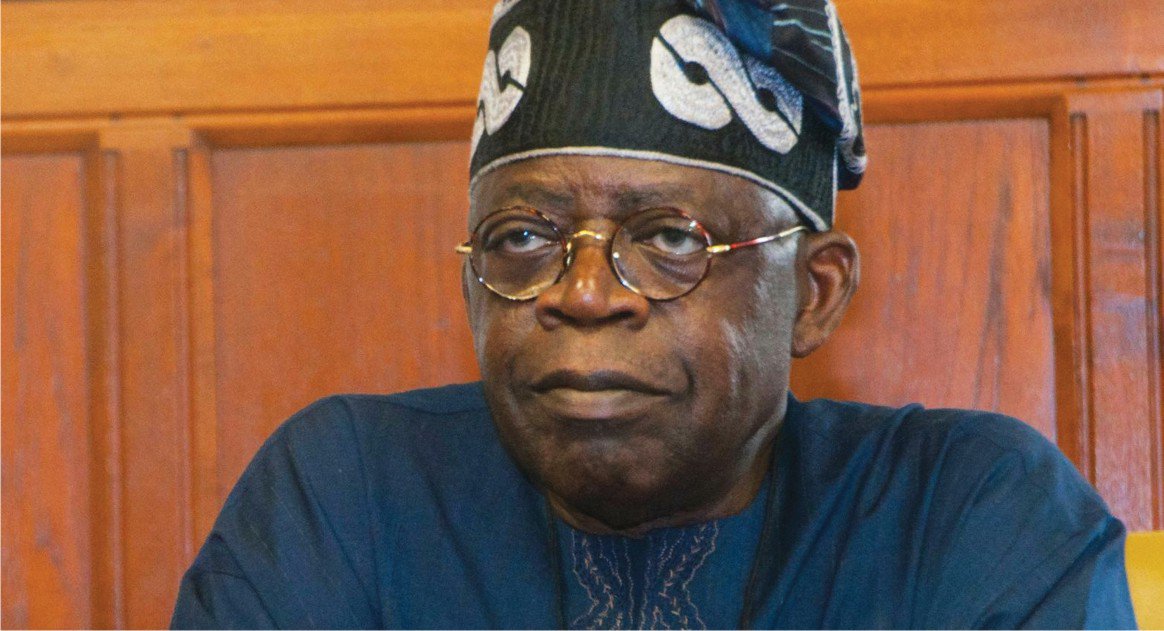
As the presidential election draws very close, one man stands taller than most of the candidates that would be on the ballot paper, or may have been on the ballot paper as far as the presidential election in Benin Republic is concerned. He is the hard working and most Indefatigable achiever, Monsieur Romuald Wadagni.
He us young, able and full of experience, having practiced positive and sincere politics for a very long in his young existence.
Wadagni comes across as the typical chip off the old block, when it comes to genuine leadership qualities and agenda. He has been tested, trusted and ready to take up the mantle of leadership towards providing genuineness and purposeful living condition for the people of Benin Republic.

In 10 consecutive years, since he was 39, Wadagni, has supervised the Finance and Economy ministry without blemish, and has received accolades from far and wide.
It is therefore not a fluke as the 49 years old, Romuald Wadagni was nominated as the ruling majority’s candidate for the upcoming presidential election in Benin.
Consequently, listed below are three things to know about him: 1:he has been the Minister of Finance for nearly 10 years. Romuald Wadagni was appointed Minister of Economy and Finance in April 2016. He was reappointed to the position in 2021 with the rank of Minister of State. He is considered one of the main architects of Benin’s economic recovery.

At the end of January 2025, he welcomed “average growth of more than 6.5% in recent years.” In 2018, Financial Afrik magazine ranked him among the 100 African personalities transforming the continent. In December 2024, the same media outlet named him “Best Finance Minister in Africa,” praising Benin’s macroeconomic stability in the face of international crises. 2: He is an expert in finance and accounting. Romuald Wadagni is a chartered accountant. After studying finance, private equity, and venture capital, he began his professional career in 1998 at Deloitte, one of the largest audit and consulting firms in the world.


At Deloitte, Romuald Wadagni rose through the ranks and successively held several positions of responsibility in France, the United States, and then in Francophone Africa. In 2012, at the age of 36, he became a partner at Deloitte. He later led the firm’s expansion across the African continent. After 17 years, he left the firm in April 2016 when he was appointed Minister of Economy and Finance of Benin.
He is the heir apparent of Patrice Talon. After two consecutive terms, President Patrice Talon, who can no longer run again, had promised to play an active role in choosing his successor. On August 31, 2025, he officially endorsed his Minister of Finance, Romuald Wadagni, as the candidate of the presidential majority.
This designation was confirmed in a joint statement by the Union Progressiste le Renouveau (UPR) and the Bloc Républicain (BR), the two main parties of the majority. On October 4, 2025, in Parakou, Romuald Wadagni and Mariam Chabi Talata, the current Vice President, were officially nominated during a major rally of the presidential majority. In his speech, the candidate minister promised to “consolidate the achievements” of his predecessor.

Prior to entering politics, Wadagni worked for the consulting firm Deloitte for 17 years. He was first appointed the minister of economy and finance on 7 April 2016, in the first Talon government, and subsequently reappointed in 2021 with the rank of senior minister.
In 2021, the financial newspaper Financial Afrik named Romuald Wadagni “Best African Minister of Economy and Finance”.
In 2024, the financial newspaper Financial Afrik named him “Finance Minister of the Year” for the 4th time in its ranking of “The 100 who are transforming Africa”.
ROMUALD WADAGNI AT A GLANCE

Romuald Wadagni is Senior Minister in charge of Economy and Finance of Benin. He was appointed on April 7, 2016, in the first government of President Patrice Talon and reappointed to this position in May 2021.
Romuald Wadagni is a public accountant certified in France and the USA. He also holds a master’s degree in finance and has completed specialized training in private equity and venture capital.
Before being appointed Minister of Economy and Finance in 2016, Romuald Wadagni had a leading international experience within Deloitte. In France from 1998, then in the United States from 2003, he developed cutting-edge expertise in several fields, serving customers in various sectors of activity (Mining, TMT, Financial Sector, Public Sector, Retail) and various governments and donors.





Nation Building Reimagined: Integrated Principles and Strategies for Sustainable Growth

Dear CDS, NSA, Your Prodigal Sons, Brothers Have Killed General Braimah

Voice of Emancipation: Lessons from the Iran/USA War

Ovation @30: A Triumph of Vision, Courage and African Excellence

ADC National Convention: To Be or Not to Be?

Israel Questions Pakistan’s Credibility in Mediating over US-Iran Ceasefire Agreement

Osun 2026: INEC Planning to Recruit APC Members As Electoral Officials, Lawmakers Allege

‘ADC Membership Hits 500,000 after INEC Derecognition of Leadership’

Trump Delays Iran’s Strike by 2-Weeks As Pakistani Leaders Intervene

Is Amupitan’s INEC Complicit?

FG Expels US Missionary Alex Barber

ADC Raises Alarm over INEC’s Plot to Prevent Party from Fielding Candidates

Benin Republic 2026: Romuald Wadagni, The President in Waiting

I Won’t Be Intimidated, Seun Okinbaloye Replies Wike
-
 News5 days ago
‘ADC Membership Hits 500,000 after INEC Derecognition of Leadership’
-
 World3 days ago
Trump Delays Iran’s Strike by 2-Weeks As Pakistani Leaders Intervene
-
 Headline6 days ago
Is Amupitan’s INEC Complicit?
-
 National3 days ago
FG Expels US Missionary Alex Barber
-
 Featured5 days ago
ADC Raises Alarm over INEC’s Plot to Prevent Party from Fielding Candidates
-
 Featured2 days ago
Benin Republic 2026: Romuald Wadagni, The President in Waiting
-
 Featured5 days ago
I Won’t Be Intimidated, Seun Okinbaloye Replies Wike
-

 Headline5 days ago
Amnesty Condemns Wike’s ‘Shoot’ Remark Against Seun Okinbaloye