
Headline
Ooni of Ife Announces Erelu Abiola Dosunmu As Yeye Oodua



By Eric Elezuo
The atmosphere in Lagos State even as the campaigning season and the 2027 Governorship election draw closer, is nothing in the neighborhood of tense or expectation among the electorate as the aspirants have little or no need of the acceptance of the masses to solidify their aspirations or acceptance. Everyone, who harbors the ambition to be the landlord of Alausa and replace Governor Babajide Sanwo-Olu in 2027, only has one duty, and that is to impress President Bola Tinubu, who has lord it over the state since the return to democracy in 1999.
The Boss investigation reveals that not a few of Lagos politicians are interested in occupying the Lagos House, home of the Governor, come 2027 as loyalist permutations rather than flashback to communal achievements continue to dominate the frontline.
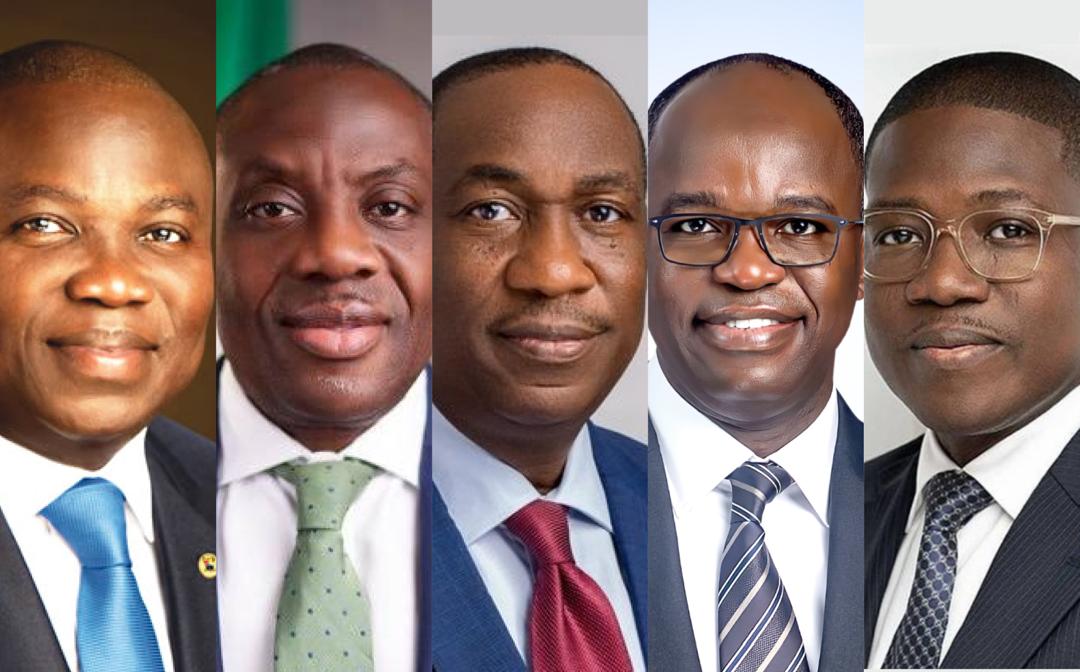
Among aspirants, whose body language or unspoken gesculations have hinted their intentions to take over the administration of Lagos State in 2027 include but not limited to the present Deputy Governor, Femi Hamzat, immediate past Governor of Lagos, Akinwumi Ambode, Education Minister, Tunji Alausa, Senator Tokunbo Abiru, and Muri Okunola.
But as usual, someone, who is not initially seen as the frontrunner, is capable of securing the ticket because the power of decision lies with one, who has come to be known as the be all and end all of Lagos politics, and presently, the All Progressives Congress (APC) as a party.
It is believed that Tinubu has been solely instrumental to the nomination of all the governors, most especially, and another political office holders that have occupied rulership positions in the state since 1999. And that posit the question as 2027 approaches; who would Tinubu choose?
Stakeholders have reasoned that nomination or outright selection of the governorship candidate of Tinubu’s party, who, from precedence, has always gone ahead to become the Governor of the state, is largely not on the strength of their political sagacity, not on the strength of their political and career achievements, neither is it on the strength of their impetuousity.
Accordingly, observers have said based on reccurent events in the last almost three decades, the selection is based on the strenght of the aspirant’s docility and weak resistance; on the strength of their blind loyalty to the ultimate kingmaker, and not forgetting on the strength of the whims and caprice of Bola Tinubu.
Everything basically resolves on who Tinubu chooses, and so the question again; who would Tinubu choose?
FEMI HAMZAT

Dr Femi Hamzat
The president Deputy Governor of Lagos State, Femi Hamzat, was born into a politics-oriented family, and that explains his political sagacity, which may be a threat to the kingmaker(s)
His parents were Late Oba Mufutau Olatunji Hamzat and Late Alhaja Kehinde Hamzat from Iga Egbe, Lagos State. His father served as a member of the Lagos State House of Assembly and as a Commissioner for Transportation in the state (1979–1983) before becoming the Vice-chairman (South West) of then Alliance for Democracy (AD). He became the Lagos West Senatorial District leader of the Action Congress and a crowned king through his maternal royal lineage.
Hamzat is rooted in grass-roots politics, and missed becoming the anointed candidate in 2015 when Ambode was unceremoniously chosen. He was also sidelined in 2023 when Sanwo-Olu took over, but many believe his time is now if Tinubu will consider his patience. Hamzat will be 62 in September.
AKINWUMI AMBODE

Ambode is the immediate past governor of Lagos State, whose tenure ended after his first four years, having fallen out of favour with the proverbial kingmaker, Tinubu. It was believed that the rejection Ambode suffered in the hands of party stalwarts was at the instance of now President Tinubu. He overwhelmingly lost at the primaries to Sanwo-Olu, who was practically ‘anointed’ to replace him.
A career civil servant, who rose to become the state’s accountant-General, Ambode, presented 62, was chosen to replace Tunde Fashola in 2015. It was rumored that Ambode ‘deviated’ from the ‘yes sir’ programme, and dared to be his own boss, initiate his own programmes and run the state as he and his cabinet deem fit. That was not acceptable to the powers that be, and Ambode never made it to the ballot paper in 2015
Though he eventually supported Sanwo-Olu’s campaign, after he was humbled, and brought about a smooth transition in the state, Ambode was kept at arms length in Lagos politics thereafter. But in retrospect, he has found his way back to the good books of Tinubu, and a lot of people are believing he may be given an opportunity to be at the helm of affairs again for another four years to conclude a supposedly unconcluded tenure. Ambode, however, is Christian just as the outgoing governor. But things of that nature doesn’t matter to Tinubu, when he wishes to made a decision.
MURI OKUNOLA

The 54 years Hakeem Muri Okunola, popularly known as HMO, is one aspirant, whom everyone believe is probably the anointed one for the governorship position come 2027.
Of privileged heritage in Lagos, being the first son of the late respected Justice Muritala Okunola, HMO is a trained lawyer, public administrator, technocrat and currently the Principal Secretary to President Bola Tinubu. He also served as the 22nd Lagos State Head of Service, a service he joined in 2001.
It would be proper to say that HMO has served and expressed loyalty to Tinubu for the better of his life. Between 2003 2005, he was personal assistant to Tinubu, until he was appointed as Executive Secretary to the Governor, Land Use and Allocation Committee. Afterwards, he was promoted to the position of Permanent Secretary in the Lagos State Public Service in 2011.
A reputed family man, HMO is seen as the closest person to Tinubu in official relationship, maybe after Femi Gbajabiamila, who is presently the Chief of Staff to the President.
TOKUNBO ABIRU

A seasoned banker, who is currently representing Lagos East Senatorial district in the Senate since 2020, Abiru has served as Commissioner for Finance, where he is touted as having performed creditably.
Abiru is also a member of the Lagos HOMs Committee, which is in charge of the Lagos State Home Ownership Mortgage Scheme (HOMs) instituted to reduce the housing deficit in the state.
He was named the chairman, Senate Committee on Banking of the 10th Senate on 8 August 2023.
Abiru was privileged to be to go to the Senate in 2020 following expressed permission granted by Tinubu. It is hoped that his luck may shine again as the drums of 2027 beat.
TUNJI ALAUSA

Alausa is trained medical doctor, who presently heads Nigeria’s Education Ministry – a position, he assumed in 2024. He was previously the Minister of State for Health and Social Welfare before Tahir was dismissed, creating a vacancy in the Ministry of Education.
Little is known of Alausa until he was invited to serve in the administration of Bola Tinubu.
Many has criticised Alausa’s policies since he assumed the office of senior minister in Education, but those can be overlooked if Tinubu stretch his radar his way.
Like many of the privileged ones, Alausa is also is also in his 60s, and will turn 61 in April.
FEMI GBAJABIAMILA

Former Speaker of the House of Representatives, Gbajabiamila is presently the Chief of Staff to the President – a privileged office. He is assumed to be the closest person to the President by virtue of his office.
Gbajabiamila was first elected to the House of Representatives in 2003, representing the Surulere I constituency of Lagos State, and was consistently re-elected and served for six consecutive terms before he was invited by Tinubu to be his CoS, spending a total of 20 years in the Green Chamber.
Everyone, who knows Tinubu is aware that he can sprung a surprise any time. He chooses is his exclusive preserve, close to his chest and may come as a shock, when eventually announced.
So, who would Tinubu choose?




FG Issues Security Advisory to Nigerians in South Africa

Yusuf Tuggar Resigns As Foreign Affairs Minister

2027: ADC’ll Lose Presidential Poll If Obi is Not Fielded, Fayose Warns

Wike-led PDP Faction Holds Convention, Reelects Abdulrahman, Anyanwu

Tinubu Celebrates ‘Low-Key’ 74th Birthday Amid Economic, Security Challenges

Lagos 2027: Who Would Tinubu Choose?

Aristos Band Unveils Ambitious 2026 Plans

AFCON 2025: CAS Overturns CAF Verdict

The Candidate of Necessity: Why Gawuna Could Be Kwankwaso’s Trump Card in 2027

Characterisation of Biomass Feedstocks Relaxation Properties Using Visco Elastic Models

ADC Unveils Approved Timetable for Congresses, Convention

Intentional Progressive Leadership and Disciplined Security: Catalysts for Unlocking Possibilities

Dangote Refinery, Fuel Price and the Principle of Back of Forth

WAEC Releases Results of CB-WASSCE 2026-First Series for Private Candidates
-
 Sports6 days ago
AFCON 2025: CAS Overturns CAF Verdict
-
 Opinion3 days ago
The Candidate of Necessity: Why Gawuna Could Be Kwankwaso’s Trump Card in 2027
-
 Opinion3 days ago
Characterisation of Biomass Feedstocks Relaxation Properties Using Visco Elastic Models
-
 News5 days ago
ADC Unveils Approved Timetable for Congresses, Convention
-
 Opinion3 days ago
Intentional Progressive Leadership and Disciplined Security: Catalysts for Unlocking Possibilities
-
 Featured3 days ago
Dangote Refinery, Fuel Price and the Principle of Back of Forth
-
 News4 days ago
WAEC Releases Results of CB-WASSCE 2026-First Series for Private Candidates
-

 The Oracle4 days ago
The Oracle: The New Digital Colonialism: Navigating AI Policy Under Foreign Tech Dominance (Pt. 4)