
Headline
Mayor Akinpelu Speaks: “The Truth About How Fame Was Born”

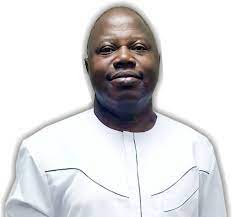

First, was his assertion that I assumed the “headship” of FAME because I was the oldest among the three founders (Mayor Akinpelu, Kunle Bakare and Femi Akintunde-Johnson) and no one was ready to drag the headship with me.
The other was the argument that the Ojukwu/Bianca story triggered the birth of FAME. That was a ridiculous assertion.
Before the Ojukwu/Bianca story, I had written the Tejuoso/ Okoya wedding story that started what is known today as celebrity journalism. Prior to that story, most of the lead stories in Prime People magazine at the time were strange or unusual stories. I also did the Akeem Olajuwon story titled ‘The Dream and His Millions’. That was when the NBA superstar came to Nigeria on a visit. So the Ojukwu/Bianca story couldn’t have triggered the formation of FAME.
When the story was confirmed later, C.C.Onoh was devastated. He sent Bianca’s mother packing from the house when he discovered that Bianca’s mum was in the know all along. C.C . Onoh never accepted the union till he died even when Ojukwu and Bianca got married in an elaborate wedding in Abuja.
So what is the story of FAME? As society editor and later news editor in Vintage People, I used to write a lot of columns. Vintage People and Parties, Silverspoon, Grass to Grace, Why I Wear What I Wear, Most Embarrassing Moment. The most popular among these columns was Silverspoon, where I interviewed children of successful people born with the proverbial silver spoon. One day, I got a letter from Benin City informing me that Dr. Iyayi, the son of the owner of Iyayi and Sons, just came back from America to join the family business. The person who wrote the letter argued that he believed Dr. Iyayi was qualified to feature in Silverspoon. I agreed.
I travelled to Benin City to interview Dr. Iyayi. Later in the evening, he came to visit me at the hotel I was staying. Over drinks, he asked casually how much it would cost to do a magazine like Vintage People. I told him N2m. He said he was interested in going into partnership with me. He would provide the N2m and I would put the magazine together. The share structure would be 50-50. I was excited. He promised to get in touch and I left for Lagos.
I shared that discussion with Kunle Bakare and told him we should start preparing for the magazine. My choice was National Enquirer, the largest circulating newspaper in America at the time. Its uniqueness was that it was a magazine in a newspaper format anchored on celebrities in the entertainment industry. There was nothing like that on the newsstand. Luckily for us, we culled stories from Enquirer regularly at Vintage People especially as it affects Hollywood stars. Kunle, at the time, used to buy Esquire regularly. He had a particular agent that sold foreign magazines that he patronized. We decided we should start buying Enquirer.
I waited to hear from Dr. Iyayi but he didn’t get in touch. While waiting for him, there was a crisis in Quality, a general interest magazine under the Newswatch stable edited by May Ellen Ezekiel (MEE). Later, Mrs. MEE Damijo left and started Classique magazine. They had their office at number 3, Allen Avenue, Ikeja. MEE sent for me and asked me to join Classique. I declined because I was waiting for Dr. Iyayi. She later asked Kunle Bakare to join Classique and Kunle left us to join her.
One day, I went for an assignment at Federal Palace Hotel, Victoria Island. On my way back, MEE graciously agreed to give me a ride to Ikeja. While we were coming to Ikeja she said she admired my loyalty to my boss, Mr. Muyiwa Adetiba and she was impressed that I refused to leave Vintage People to join Classique. I confided in her that I didn’t leave because I was working on a magazine that would be different from any other magazine on the newsstand. It would be a magazine in a newspaper format.
MEE was excited. She said we should go to her office so that I could tell her more about the project. When we got to her office, I explained what I had in mind. She said she was interested and how much it would cost to do the magazine. Because I mentioned N2m to Dr. Iyayi, I thought maybe that was the reason he didn’t get in touch so I told MEE I could do the magazine with N1m. I said I would need five investors to bring N200, 000 each and I would have the 50% for me and Kunle Bakare.
MEE said she would bring N200, 000. She also called her friend, Folake Doherty, now Mrs. Wole Soyinka, to invest in the project. There was a snag though, she told me. Kunle Bakare was very important to her in Classique and I had to look for another partner. She suggested that since entertainment was very prominent in the magazine, I should talk to FAJ who was then the entertainment editor at the Punch.

Kunle Bakare
As fate would have it, there was an album launch at the old Niteshift in Opebi and I knew FAJ would be there. I met FAJ at the album launch and I asked to speak with him. I told him about the project and that I wanted him to join me. He asked what I was offering. I said we would have the same shares and the same salary. There and then he told me he was in. It is surprising though, that FAJ conveniently forgot this encounter while writing his book.
After that, I went all out looking for investors. I spoke to Tayo Ayeni of Skymit Motors and he said he was interested. I spoke to a very rich man who was also in the car business. He agreed to take the remaining two slots but others said they couldn’t do business with the man. He was involved in a controversy that had to do with the death of a Central Bank official at the time.
When Kunle Bakare heard that he wouldn’t be part of the project because MEE was not ready to release him, he got angry. He wondered why he would be denied being part of what he had been working on for some time. He started rebelling in Classique. At a point, MEE called me and said she wouldn’t want to stop anybody from realizing his dream and Kunle could join us. That was how we became three. FAJ got involved in the project because MEE didn’t want to release Kunle initially.
It was after this that we started having meetings about the project, first at Kunle’s Ijesha, Surulere home. The first issue was what to call the magazine? I wanted to call the magazine ‘Celebrities’. One of us mentioned that he had seen the name ‘Celebrities’ somewhere and we should be careful so that we were not accused of plagiarism. Kunle then brought out his Thesaurus to check for other names for ‘Celebrities’. That was where we got FAME, Encomium and Ovation. We decided to call the magazine FAME. We discussed different aspects of the magazine and asked FAJ to write the proposal.
Because other investors didn’t want to do business with the last investor, I had to hit the road again looking for investors. The project got stuck while looking for investors. Meanwhile, we still met to fine-tune the project. As society editor in Vintage People and later news editor, I used to represent my publisher, Mr. Adetiba, at events. He had asked me to represent him at an event in Rank Xerox in Matori Industrial Estate in Mushin. As I was entering the building for the event, MEE was stepping out. She asked me about the project and I said “my sister, I’m tired, I’m still looking for investors”. She encouraged me and said I should see her later in the office so that she could give me a note to one of her directors. I went to see her and she gave me a note to Mr Tayo Adesanya. His office was in Victoria Island, not far from Eko Hotel.
I went to see Mr Adesanya on a Friday. As I entered his office, he was preparing to go for Jumat prayer. When I told him I had a note for him from MEE, he thought I was there for a media assignment. Mr Adesanya at the time wanted to open a high-rise building in Ikoyi, financed by Alpha Merchant Bank. His cousin, Jimi Lawal, was the M.D of the bank at the time.
The land for the high-rise building was leased to Mr Adesanya through his friend, Mr Tunde Savage of Miss Nigeria fame by Ondo State government. Commodore Olabode George was the governor of the state at the time. The official opening of the building was just some weeks away so he thought I was there for publicity. He then asked me to see his GM.
When the GM read the note he said I should come back to see the chairman since the message was private. I left the office and I was walking towards Eko Hotel to pick a cab when Mr Adesanya was coming back from Jumat. He saw me and asked if I had been attended to. I told him I was asked to come back. He then told me to follow him back to the office. When we entered his office, he collected the note and read it “MEE said you have a brilliant idea that I may be interested in. Let’s hear it”.
I started talking about this unique concept of a magazine in a newspaper format and that there was nothing like it. He listened attentively and when I was done, he asked if I have a proposal. I said yes and gave it to him. I left. I got to my office in Vintage People one day long after I had given him the proposal and I got a message that ‘Mr Adesanya would be expecting to see you by 12pm tomorrow’.
I went to his office in Victoria Island full of expectation. As I walked in, he waved to me to sit, and in an offhanded manner without really looking at me, he said “young man, I have looked at your proposal, it can’t work”. I was young and short tempered at the time. I just exploded in rage. I said “Sir, I may be a journalist but I don’t like people insulting me especially rich men who think they can do whatever they like. You mean you summoned me from Ikeja to Victoria Island just to tell me that my proposal cannot work”? I stood up and wanted to leave.
Mr Adesanya said “young man, sit down. I didn’t say I’m not interested, I said the proposal can’t work“. He then explained. He said because I was desperate to do the project, the N1m budget cannot work. You didn’t make provisions for circulation vans; there was no provision for cars, even generator.” He continued; “what I am going to do is to provide everything that you need and N200,000 as running cost.” I was elated. I said “I am not interested in disbursing cash, provide everything that we need and we are ready to hit the street.”
That was when he said he would have 60% holding of the company, 30% for him and 30% for his wife and that he would give me 40%. I refused. I said we were three partners on the project and we have resolved that we wouldn’t give any investor majority shares. Mr Adesanya said “I don’t know your friends, and you can do whatever you like with your own shares.” I said “Sir, we come as a package.” That was how he went on this lecture about helping people and that he didn’t need the magazine. He just wanted to assist.
He told me he would increase our shareholding to 45%, 30% for him and 25% for his wife and that was the final offer. I was in a dilemma. This might be the final opportunity to realize this dream. I felt I had no choice. I said I would agree on one condition. It would be ‘one man one vote’ for the five of us on the board. He agreed. In my naivety, I didn’t know that whoever has the majority shares owns the company. I thought the three of us collectively could always out vote him and his wife.

Femi Akintunde-Johnson (FAJ)
To show goodwill, he told me that the share capital of the new company would be N1m and that he would pay the N450,000 for our shares. So instead of our shares being concessionary shares it would be fully paid up shares. He told me to go to work while I give him time to put the funding in place. I broke the good news to my colleagues and everybody was happy. None of them was there when I closed the deal. It was only Mr Adesanya and myself.le le
True to his words, Mr Adesanya gave us the best we could hope for. He first gave us a Mitsubishi Charade for us to use while working on the magazine. It was Mr Adesanya that bought Jetta Executive for me and Hyundai Excel each for Kunle and FAJ. He bought three circulation vans, generator and everything we needed. The only thing we bought ourselves was the computer from Task Systems. We also got the building we used for FAME from my cousin, Dewunmi Ogunsanya at Wemabod Estate off Adeniyi Jones, Ikeja.
We started FAME in 1991 and things were going on well. Then I realized that the chairman wanted control. The first sign was that he summoned us one day and gave us letters of employment to sign. I refused, saying we were not employees and that FAME was our company. My partners agreed with me and we refused to sign. That was the first sign of trouble for me. But what sealed my fate was not the betrayal by my friends but my naivety in not knowing the source of my strength.
Chairman summoned me one day and in the course of our discussion he got angry and started abusing me. While doing that, he mentioned that we were nobodies until he made it possible for us to realize our dream. He then referred to me in Yoruba asking what was my antecedent and that of my family. That was when I made the mistake that sealed my faith. I flew up in rage and told him he was not in a position to insult my family. I told him that my father, Fasasi Ayinde Akinpelu Olowobusanbusan, was a man of means and far richer than him. I added that his uncle, Haruna Ishola, who brought him from America to establish Phonodisk used to perform for my father to dance. He was stunned. He dismissed me and the battle line was drawn. I regretted that outburst and I knew he would come for me but I deluded myself that if we stuck together, Mr Adesanya could not have control in the company.
Contrary to what FAJ wrote in his book we never discussed the issue of rotation of titles. That was broached at the boardroom coup that was planned against me. The next board meeting after my problem with the chairman was when the coup was executed. They had met behind me and perfected everything. I read the ‘State of The Company as the editor/chief executive and when we got to ‘Matters Arising’, the coup was executed.
Kunle Bakare raised his hand and was recognized by the chairman. He said after two years, it is important for us to rejig the magazine for greater efficiency. He posited that instead of combining the post of editor with the chief executive, we should create the post of managing director so that the editor can concentrate on the magazine and the MD the business aspect of the company. The chairman supported him. He asked if I had any abjection. I said I didn’t complain about the workload but if that was the consensus, I would go along with it. Kunle then suggested that FAJ should be the editor, it was adopted. FAJ then raised his hands and suggested Kunle as managing director. I was shocked. The chairman said no objection. He now asked me if I had any objection. I said if FAJ was made editor and Kunle managing director, what would be my position. FAJ said ‘executive editor’.
I argued that there was no magazine that rotated its editorship. That if an editor did not deliver, you remove him; you don’t rotate. The chairman said we should put it to vote. There were four of us and I was alone. That was how the coup was executed. I came back to the office and assessed my options. I told myself I needed time to consider my options. So I said I was going on leave and I travelled to London. I spent three weeks in London. I wanted to resign but my sister, Bisi Okeowo (Shaba), advised that I should not resign.
I resumed after my leave and I was marginalized in decision making. But one incident caused me to make up my mind to leave FAME. One day, FAJ came to me and said he wanted to move into my office since he was the new editor. I told him that it was unnecessary since the two offices (mine and his) were of the same size. The difference was the furniture and he could buy the furniture he needed. He grumbled and I thought we had settled that. I used to drop my key with the security. So when I resumed the following Monday I asked for my key. The security man told me FAJ came over the weekend to move his personal effects into my office and moved mine into his office. He also changed the locks. I was shocked. Has it got to that level? I entered and took the decision to leave FAME for them.
About a week after, I asked someone to tell both of them that I wanted to see them. While seated, I told the story of how FAME was conceived and how it was me that invited everybody into the project including the chairman. I told them they betrayed the friendship with what they did and they just made a huge mistake. I told them that what they have achieved was not only pushing me aside but making it possible for the chairman to get the control he wanted. I told them they would regret this act of betrayal but most importantly they should not write me off because I would be back. I stood up and left the company without looking back. I didn’t even take personal effects.
I got home and considered my options. I registered a company, Celebrities Communications and I also took a decision to find a platform to continue to write. I went to Today’s Choice to meet Mr Coker Onita and he graciously agreed that I could join them as a contributing editor.
He gave me a desk at the newsroom. When my partners heard that I was in Today’s Choice, they were delighted. They kept making fun of me; “he would be walking around as if he owns the world, so he can be humbled?” A ti fuck e up (we’ve messed him up)” was their fun line.
I remember that three members of staff came to my house at Dideolu Estate, Ogba. One of them was crying. Why would I go to Today’s Choice? They asked. You should have started another magazine, they counseled. They are making fun of you, they told me. I calmed them down and assured them that I knew what I was doing. I said it was important for me to have a platform, if not I would be forgotten in no time.
While in Today’s Choice I did an interview, in it, one prominent lady who is the daughter of a prominent Nigeria was accused of something grave. Mr Coker Onita and I discussed it and we felt we could be liable if we publish it so we removed the lady’s name. After we had published, my partners got to know that we removed the name of the lady. They saw it as an opportunity to attack me. For weeks, they used the magazine that I led to form, where I owned 15% share to attack me. The attack was so vicious that Mr Coker Onita reached out to them to ask why they were doing this. They told him that the only way they would stop attacking me and Today’s Choice was if Mr Coker Onita asked me to leave the magazine. Coker Onita refused. He told them what they were doing was not right and that he would stand by me.
That was not enough for them. FAJ wrote a petition to NUJ accusing me of ethical misconduct and that I should be investigated. NUJ constituted a panel to investigate and I was told to prepare a defense. I did. At the end of it all I was exonerated. That was the most trying moment of my life. It was their vicious attacks in the magazine that I once headed that made my former wife leave me believing I had messed up my life.
Three years after the crisis in FAME erupted, the chairman accused them of embezzlement and decided to move against them. Surprisingly, they turned to me. They said we should come together to hunt the chairman and insisted that the chairman should pay us off since our shares were fully paid up shares. I knew the chairman played a major role in my removal so I decided to go along with them. We attended several meetings with their lawyers. Then I learnt that while meeting with me they had planned to do another magazine. I decided to stop attending their meetings.
They later convinced the staff to resign enmasse to start another magazine, Encomium. Everybody left so FAME could not come out. They had a meeting with circulation agents and told them FAME was now Encomium. I knew it was a mistake. Mr Adesanya that I knew is a warrior. He wouldn’t take it lying low. I brought out my popcorn, relaxed and started enjoying the drama. Mr Adesanya was vicious. Kunle and FAJ kept moving from court to police stations, to Kirikiri Prison. At a time they had to be on the run.
FAME never came out from this. One day, Mr Adesanya sent for me. He told me to look for a top editor with newspaper background to help put FAME back. I went to see him with a top editor who was a former commissioner. Mr Adesanya told the guy that “I didn’t know these people, Mayor brought them. They convinced me to remove Mayor without knowing this is what they were planning. I will spend whatever it takes to stop Encomium. This betrayal wouldn’t stand”.
I left believing I had done my bit. I didn’t know what happened but when FAME couldn’t come out by the fourth month, Mr Adesanya sent for me again. As I sat in his office he threw the blackmail at me; “Mayor, are you going to stand idly and allow your baby to die?” I told him “Sir, you don’t like me and I don’t like you. You colluded with my partners to push me out of the company. I would agree to come back not because of you but to prove a point to my partners. But I would come back on two conditions. The first is that you must give me a car as compensation for pushing me out of the company. The second condition is that I don’t want to sign any cheque. Bring your accountant who would be in charge of the finances. He agreed. He asked which car I wanted and I said Honda Accord. He gave me the car but a Tokunbo instead of the brand new he promised.
I started recruiting staff and we brought FAME back. We also organized the best music award ever, FAME Music Awards (F.M.A). Alhaji Teju Kareem of Zmirage put together a wondrous stage that has not been replicated. The awards held at the National Arts Theatre, Iganmu.
At exactly two years after, I left to start Global Excellence magazine. Mr Adesanya wrote me a personal letter when I was leaving thanking me for bringing back FAME, my integrity and sense of forgiveness. I still have the letter.
FAJ made it look in his book that I was the problem of the partnership. I was not. He wrote brilliantly about his time in Punch, Climax, FAME and Encomium. He did not write about why he left Encomium to start Treasure and what he did afterwards. FAJ used his magazine, Treasure, to write a vicious article about Kunle Bakare that bothers on his integrity and professionalism. Kunle was livid. He is yet to forgive FAJ for that terrible article. When Treasure died and things became difficult for FAJ, he wanted to go back to Encomium. Kunle refused and told him there was no way back for him in Encomium.
I’m one of those who appealed to Kunle to forgive and let bygone be bygone. Despite the betrayal and all that was done to me, I still remain a friend to Kunle and FAJ. I don’t harbour grudges.
My mother who is now 96 yrs old told me in the heat of the FAME crisis never to look back. She told me that the best way to punish those who don’t like you is to excel. If people want you down, when you do well, it is enough punishment for them.
I was not the problem of the partnership. That is the story of FAME. Truth is sacred.
Headline
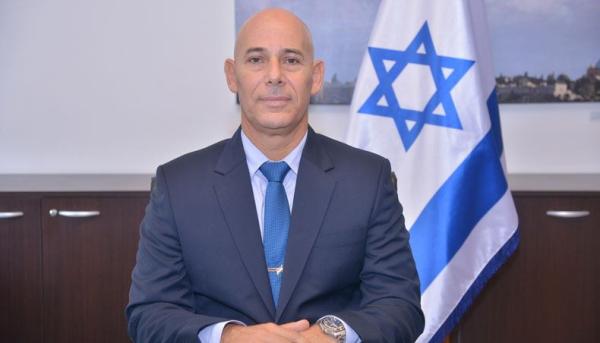
Israeli Ambassador Accuses Iran of Spreading Terror, Sponsoring Extremist Activities in Nigeria





The Oracle: The New Digital Colonialism: Navigating AI Policy Under Foreign Tech Dominance (Pt. 1)

Presidency Releases Postings of Ambassadors-designate

Court Grants Malami, Family N200m Bail

Israeli Ambassador Accuses Iran of Spreading Terror, Sponsoring Extremist Activities in Nigeria

Mike Ozekhome Celebrates Obasanjo at 89, Says Former President Wiser with Age

Friday Sermon: Reflections on Ramadan 3: Spiritual Stocktaking

Akinwumi Adesina Celebrates Obasanjo at 89

NELFund Extends Deadline for Student Loan Applications Nationwide

Iran Confirms Supreme Leader Ali Khamenei Dead after US-Israeli Attacks

Shiites Protest in Kano over Killing of Iran’s Supreme Leader

Saudi Arabia Shuts Down One of World’s Largest Oil Refinery after Iran’s Drone Strike

FIFA Strikes Out Nigeria’s Petition, Okays DR Congo for 2026 World Cup Play-Off

Trump Claims 48 Iran Leaders Killed in US-Israeli Operations

Voice of Emancipation: The Rise and Fall of Iran’s Supreme Leader Ayatollah Khamenei
-
 News4 days ago
NELFund Extends Deadline for Student Loan Applications Nationwide
-
 Middle East6 days ago
Iran Confirms Supreme Leader Ali Khamenei Dead after US-Israeli Attacks
-
 Featured5 days ago
Shiites Protest in Kano over Killing of Iran’s Supreme Leader
-
 Middle East4 days ago
Saudi Arabia Shuts Down One of World’s Largest Oil Refinery after Iran’s Drone Strike
-
 Sports2 days ago
FIFA Strikes Out Nigeria’s Petition, Okays DR Congo for 2026 World Cup Play-Off
-
 World5 days ago
Trump Claims 48 Iran Leaders Killed in US-Israeli Operations
-
 Voice of Emancipation6 days ago
Voice of Emancipation: The Rise and Fall of Iran’s Supreme Leader Ayatollah Khamenei
-

 Featured3 days ago
Tinubu Nominates Oyedele As Minister of State for Finance, Moves Anite-Uzoka to Budget Ministry