Connect with us

Business

Cooking Gas Price Rises by 20% As Naira Weakens

Published

on

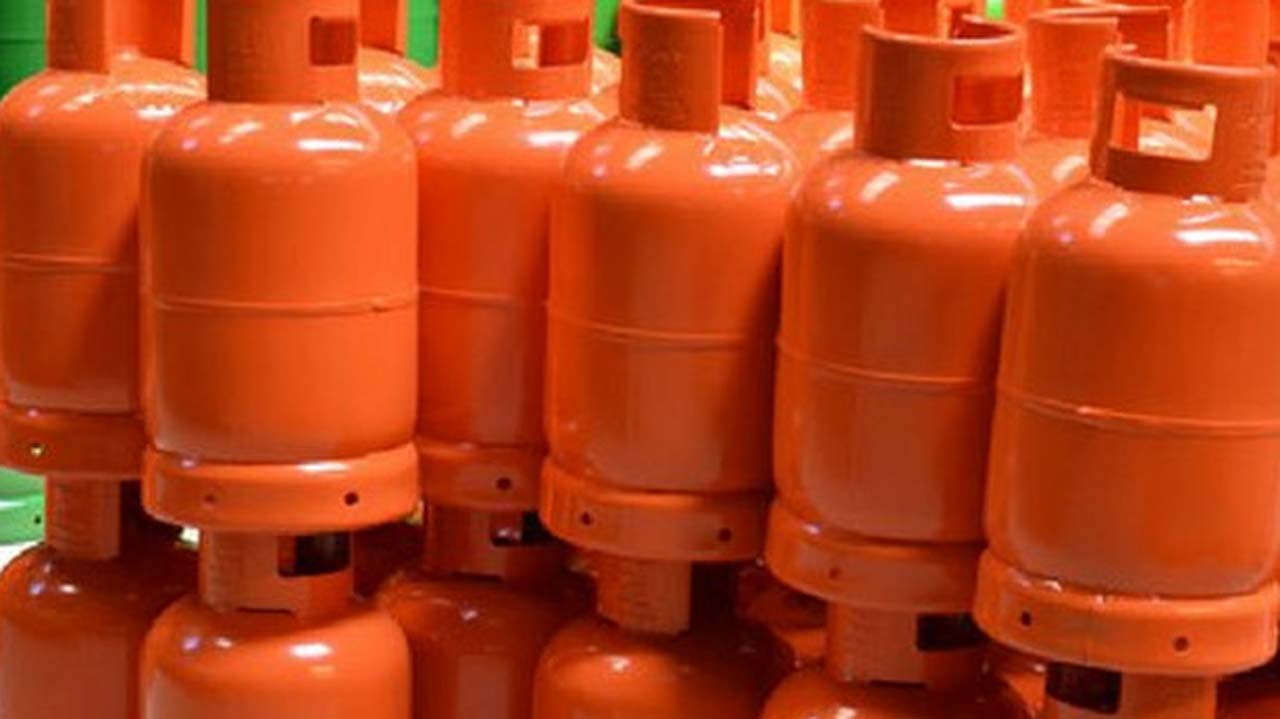
The price of Liquefied Petroleum Gas, popularly known as cooking gas, sold to marketers in the country has risen by over 20 per cent in the past one month, with consumers paying more for the product.

The naira plunged on November 30 to 500 per dollar at the parallel market, its lowest level in more than three years, from around N462/$1 at the start of the month. It traded at 476 against the greenback on Tuesday.

Our correspondent gathered that terminal operators and importers increased the price of 20 metric tonnes of LPG to N5.3m on Monday from an average of N4.4m a month ago.

A gas plant in Lagos visited by our correspondent refilled a 12.5kg cylinder for LPG for N4,000 on Tuesday, up from N3,200 in November. Our correspondent gathered that the plant had refilled a 12.5kg cylinder for N3,500 on Monday.

Some of the retail shops visited by our correspondent put the price for refilling a 12.5kg cylinder at between N4,000 and N4,500 on Tuesday.

Marketers said the price of cooking gas had continued to increase in recent months as the depreciation of the naira against the dollar and increased global demand pushed up the cost of importing the product into the country amid inadequate local supply.

Nigeria, which is home to the largest natural gas reserves in Africa and the ninth largest in the world, imports a chunk of the cooking gas being consumed in the country.

Terminal operators sold 20 tonnes of LPG at between N5.2m and N5.3m on Tuesday, up from N4.9 to N5m at the start of December and N4.25m to N4.45m on November 20, according to LPG in Nigeria, an advocacy organisation championing the use of LPG in the country.

“International prices continue to go up, which is a major factor in our local LPG pricing. LPG price just hit $400 per MT for the first time since February 2019. We expect that prices will ride the winter demand, then begin a steep fall,” it said.

The Executive Secretary/Chief Executive Officer, Nigerian Association of LPG Marketers, Mr Bassey Essien, told our correspondent that the association had noticed the gradual increase in cooking gas price in recent months.

According to Essien, about 35 per cent of the LPG consumed in the country is from domestic supply while 65 per cent is imported.

He said many privately-owed terminals had to depend on importation because they could not get supply from the Nigeria LNG Limited.

“In the process of importing LPG, the CBN does not have any particular foreign exchange window for LPG importers like it has for other sectors. So, they find their own forex whatever way they can. At a point, the naira was 500 per dollar,” he said.

Essien said another factor responsible for the price hike was the increased global demand for gas during winter.

“Since a greater chunk of what we consume is imported, we have to face the problem of foreign exchange dynamics. It is not something we are happy about,” he added.

The NLNG said in September that its board of directors had approved an increase in its dedicated volume of LPG supplied to the domestic market from 350,000 metric tonnes per annum to 450,000 mtpa.

The Punch

Continue Reading
Click to comment

Leave a Reply

Your email address will not be published. Required fields are marked *

Business

2025: UBA Group Dominates, Wins Banker Awards, Emerges Africa’s Bank of the Year, Third Time in Five Years

Published

on

By

Africa’s Global Bank, United Bank for Africa (UBA) Plc, has once again, reaffirmed its leadership as one of the continent’s most innovative and resilient financial institutions, as the bank has, for the third time in five years, been named the African Bank of the year 2025 by the Banker.com.

UBA also won the Best Bank of the Year awards in nine of its 20 African subsidiaries, bringing its total awards this year to ten as UBA Benin, UBA Chad, UBA Republic of Congo (Congo-Brazzaville), UBA Liberia, UBA Mali, UBA Mozambique, UBA Senegal, UBA Sierra Leone, and UBA Zambia, all came out tops as the best banks in their respective countries, underscoring the bank’s strength across West, Central and Southern Africa and highlighting the depth of its Pan-African franchise.

The Banker.com, a leading global finance news publication published by the Financial Times of London, organises the annual Bank of the Year Awards, and this year’s edition was held at a grand ceremony at the Peninsula, London, on Wednesday.

The Chief Executive Officer, UBA UK, Deji Adeyelure, received the awards on behalf of the bank, representing the Group Managing Director/CEO, Oliver Alawuba, and was accompanied by the bank’s Head Business Development, Mark Ifashe, and Head, Financial Institutions, Shilpam Jha.

The Banker’s awards are widely regarded as the most respected and rigorous in the global banking industry, celebrating institutions that demonstrate outstanding performance, innovation and strategic execution.

In its remarks on UBA’s winnings, the banker.com said, “For the third time in five years, UBA Group has won the coveted Bank of the Year award for Africa. UBA Group time after time punches above its weight against its larger African rivals. The bank this year also takes home nine separate country awards (one more than it gained for its last continental win in 2024), equivalent to around a quarter of the awards for the continent, and more than any of its continent-wide rivals.”

Continuing, it said, “Perhaps even more impressive is the fact that the awards were won across a broad geographic spread, going to lenders based in the Economic Community of West African States (Benin, Liberia, Senegal, Sierra Leone, and former member Mali), the Central African Economic and Monetary Community (Chad, Republic of Congo) and the Southern African Development Community (Mozambique, Zambia). Its award wins were particularly notable in the highly competitive categories for Benin and Mozambique.”

The Banker also highlighted UBA’s strong financial performance and commitment to future growth. In 2024, the Group recorded a 46.8 per cent increase in assets and a 6.1 per cent rise in pre-tax profits in local currency terms, while continuing to invest significantly in talent and technology. West Africa remains UBA’s heartland, with operating revenue and profit increasing by 87 per cent and 89 per cent respectively in H1 2025.

The bank’s digital and innovation leadership was equally recognised. During the year under review, and launched its Advance Top-Up buy-now-pay-later feature on the *919# USSD platform, expanding financial access for customers, while the bank’s chatbot Leo continued its strong growth trajectory, with transaction volumes rising by 29 per cent year-on-year in H1 2025. Notably, in August, Leo became the first African banking chatbot to enable cross-border payments via the Pan-African Payment and Settlement System (PAPSS).

UBA’s Group Managing Director/Chief Executive Officer, Oliver Alawuba, while reacting to the achievement, said the recognition affirms the bank’s long-term strategy and customer-first philosophy.

“This honour reflects the strength of our Pan-African network, the trust of our customers, and the dedication of our people. Winning Africa’s Bank of the Year for the third time in five years is not by chance; it is a testament to disciplined execution, innovation, and a deep understanding of the markets we serve,” Alawuba said.

“Our nine country awards across diverse regions of Africa show that UBA is not just growing, but growing with impact. We remain committed to driving financial inclusion, supporting economic development, and deploying technology that makes banking simpler, faster, and more accessible to Africans everywhere,” he added.

United Bank for Africa is one of the largest employers in the financial sector on the African continent, with 25,000 employees group-wide and serving over 45 million customers globally. Operating in twenty African countries, the United Kingdom, the United States of America, France and the United Arab Emirates, UBA provides retail, commercial and institutional banking services, leading financial inclusion and implementing cutting-edge technology.

Continue Reading

Business

ConOil, TotalEnergies Sign Massive Production Contract to Boost Nigeria’s Oil and Gas Output

Published

on

By

By Eric Elezuo

In a bid to boost Nigeria’s oil and gas output, Conoil Producing Limited has partnered Total Energies Limited to sign a massive production contract.

The contract-signing ceremony, which took place on Thursday, at LA DEFENSE, in Paris, France, saw the Chairman of Conoil Producing, and Commander of the French Légion d’Honneur (CdrLR), Dr. Mike Adenuga Jr., signing on behalf of Conoil while the Chairman and Chief Executive Officer of TotalEnergies, Mr. Patrick Pouyanné, signed for TotalEnergies, in whose headquarters office served as the venue of the event.

Details soon…

Continue Reading

Business

Tinubu’s 15% Import Duty on Petrol is Good for Nigeria, Says Rewane, Marketers Disagree

Published

on

By

Popular economist and chief executive of Financial Derivatives Company Limited, Bismark Rewane, has explained that President Bola Ahmed Tinubu’s approval of a 15 per cent import duty on petrol and diesel is good for the country.

Rewane, speaking in an interview on Channels TV, said the import tariff is designed to encourage local production of petroleum products.

According to the policy, it is aimed to discourage imports and retain jobs in Nigeria.

“Petrol import duty is good for the country. Why is it good? Because it encourages domestic production. Anytime you import, you are actually creating jobs for other countries rather than your own country. Basically, import protection is good,” he said.

The move means that Nigerians would have to pay more for fuel consumption when it is implemented.

Recently, data from the Nigerian Midstream and Downstream Petroleum Regulatory Authority showed that 69 per cent of petrol consumed in Nigeria is imported, while 31 per cent is locally produced.

The policy places Dangote Refinery in an advantageous position in the country’s oil and gas sector.

However, Nigerians have kicked against the move, saying it would cause more hardship in the country.

This comes as an All Progressives Congress chieftain in Delta State, Ayiri Emami, on Thursday urged President Tinubu to withdraw the 15 per cent import duty tariff because it will bring more hardship for Nigerians.

Meanwhile, Petroleum marketers have warned that the pump price of Premium Motor Spirit, popularly called petrol, could exceed N1,000 per litre following the 15 per cent ad valorem import tariff on fuel imports.

The new policy, which takes effect after a 30-day transition period expected to end on 21 November 2025, is part of the government’s strategy to protect local refiners and reduce the influx of cheaper imported products that threaten domestic refining investments.

However, marketers say the move could backfire and push retail prices beyond the reach of average Nigerians.

Commenting in a telephone interview on Thursday, multiple depot operators with knowledge of the matter, who spoke on condition of anonymity, said the decision could further raise the price of petrol, which already sells for around N920 per litre, in many parts of the country.

“As it is, the price of fuel may go above N1,000 per litre. I don’t know why the government will be adding more to people’s suffering,” one of the depot operators said.

Another depot operator added, “Unfortunately, some of the importers are working in alignment with Dangote, which is why the last price increase was general; all players raised their prices at once. Let’s just wait and see what happens next.”

Another operator added that without a clear framework to stabilise market forces and ensure fair competition, the new import duty could trigger another round of price hikes and worsen the hardship faced by consumers.

The National Vice-President of the Independent Petroleum Marketers Association of Nigeria, Hammed Fashola, also agreed that the tariff had its implications, saying it might lead to a price surge.

Fashola said the policy had both positive and negative effects, adding that it could discourage importation while promoting local refining.

The IPMAN leader opined that some marketers moght perceive it as an opportunity to monopolise the sector in favour of Dangote and a few other refineries.

“The 15 per cent tariff on imported fuel has its own implications. Maybe the price will go up, and equally, it will discourage importers from bringing in fuel if it becomes too costly.

“But it has both negative and positive effects on the sector. I see that the government is trying to protect local refiners, but it will have its own implications because people will see it as a way of monopolising the industry for certain people. At the same time, the government aims to protect the local refiners.”

However, Fashola stressed that the failure of the local refiners to supply enough fuel into the domestic market could trigger a fuel crisis.

“If the local refiners fail, it will have its own implications. It may lead to scarcity, and people will not have an alternative. So, it has both positive and negative effects. That’s the way I see it,” he added.

Continue Reading

Trending