
Boss Picks
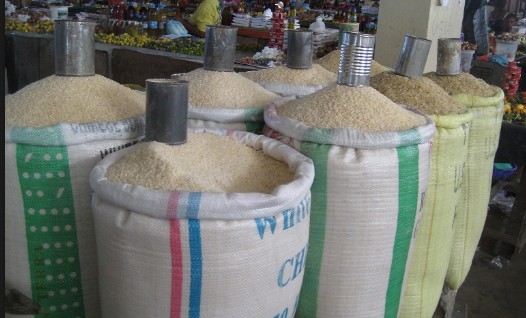
Rice: The New Edible Gold


By Eric Elezuo
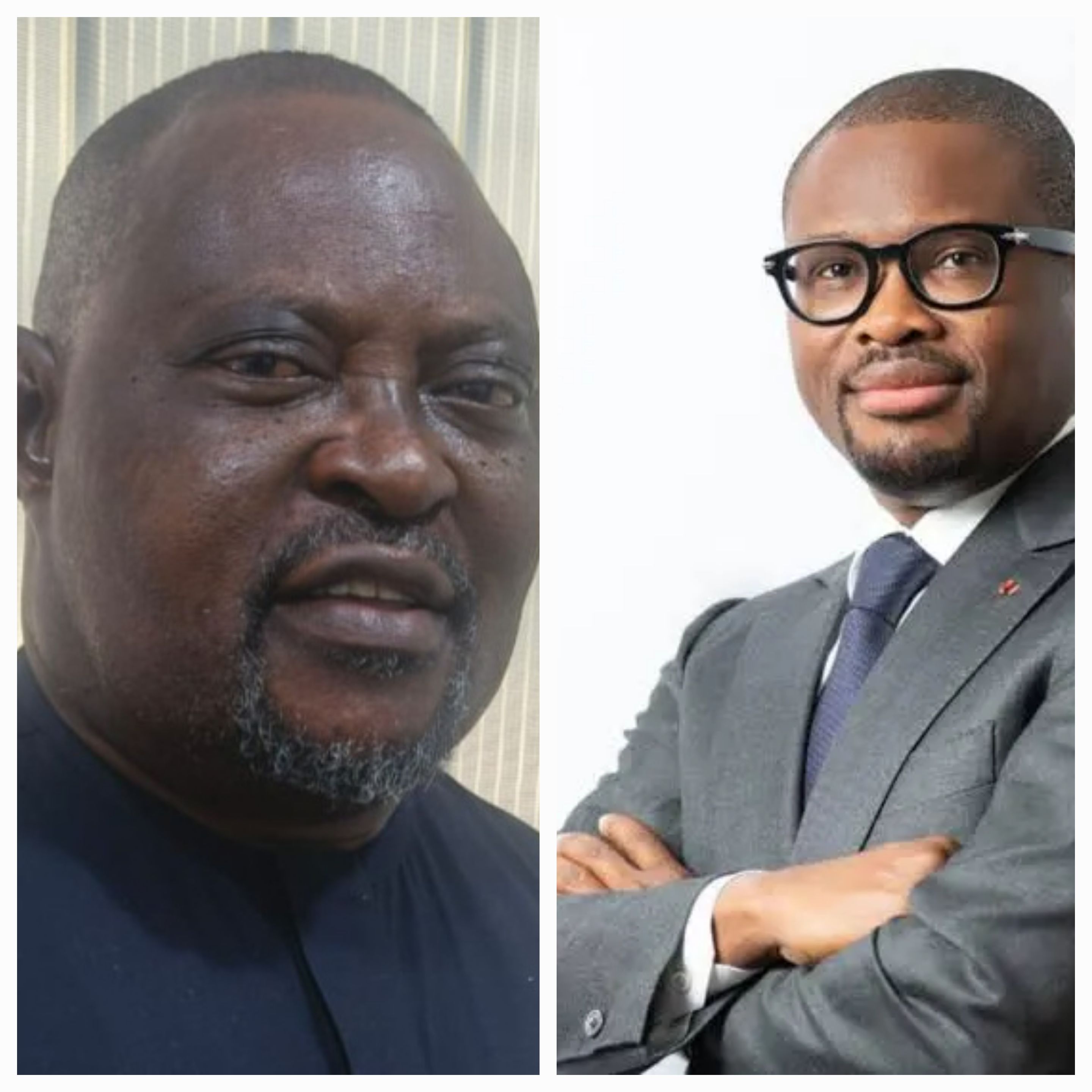
The Koumagnon Family and Allied Families of Seme-Kpodji, of the Republic of Benin, led by Monsieur Alberto Koumagnon, has declared their unflinching support for the candidacy of Romuald Wadagni as he steps out on Sunday to vie for the presidential seat of the Republic of Benin.
In statement of declaration, the families observed that Wadagni is propelled by a ‘vision embodied in this ambitious, realistic project, resolutely focused on the future of our country’.
The declaration is presented in full:
DECLARATION OF SUPPORT BY THE GREAT KOUMAGNON FAMILY AND ALLIED FAMILIES OF SÈMÈ-KPODJI FOR CANDIDATE ROMUALD WADAGNI

The great KOUMAGNON family and allied3 families of Sèmè-Kpodji, deeply committed to the values of peace, progress, and development, followed with particular interest the presentation, on Saturday, March 21, 2026, of the “Further Together” (Plus loin ensemble) social project by our dear candidate, President Romuald WADAGNI.
Following this important political event, and gathering on this day, 04/04/2026, we wish to express our full support for the vision embodied in this ambitious, realistic project, resolutely focused on the future of our country.
From the outset, we, descendants of the KOUMAGNON family and allied families, commend the enlightened leadership of President Patrice TALON who, faithful to his commitment to building a modern and prosperous Benin, has been able to propose to the presidential majority a competent, credible candidate who brings hope for consolidating achievements.
In this dynamic of continuity and progress, the candidacy of President Romuald WADAGNI is fully in line with the continuation of the structural reforms undertaken over several years in all sectors, particularly in infrastructure.
In this regard, we recognize and commend the many achievements of the government, especially road infrastructure, which has significantly improved mobility and living conditions for the populations of the communes of Sèmè-Kpodji and surrounding areas.
Moreover, these remarkable efforts reflect a constant determination to connect localities, stimulate economic exchanges, and sustainably strengthen the attractiveness of our territories.
Building on these achievements and firmly oriented toward the future, we are convinced of the relevance of the “Further Together” project.
Therefore, the great KOUMAGNON family and allied families of Sèmè-Kpodji give their firm, committed, and unconditional support to candidate Romuald WADAGNI, as well as to his running mate, Mrs. Mariam Chabi Talata Zimé Yérima.
In the same spirit, we call on all daughters and sons of Sèmè-Kpodji, as well as all citizens committed to peace and development in our country, Benin, to mobilize massively in support of this hopeful momentum by turning out in large numbers on April 12.
We also wish to assure our dear candidate of our commitment to mobilize widely to ensure a high voter turnout in the commune of Sèmè-Kpodji.
Together, let us continue the efforts undertaken.
Together, let us consolidate our achievements.
Together, let us go further.
Long live Benin on its path toward progress!
Long live the WADAGNI–TALATA ticket!
Thank you.
Done at Sèmè-Kpodji, on 04/04/2026
The great KOUMAGNON family and allied families
By Eric Elezuo
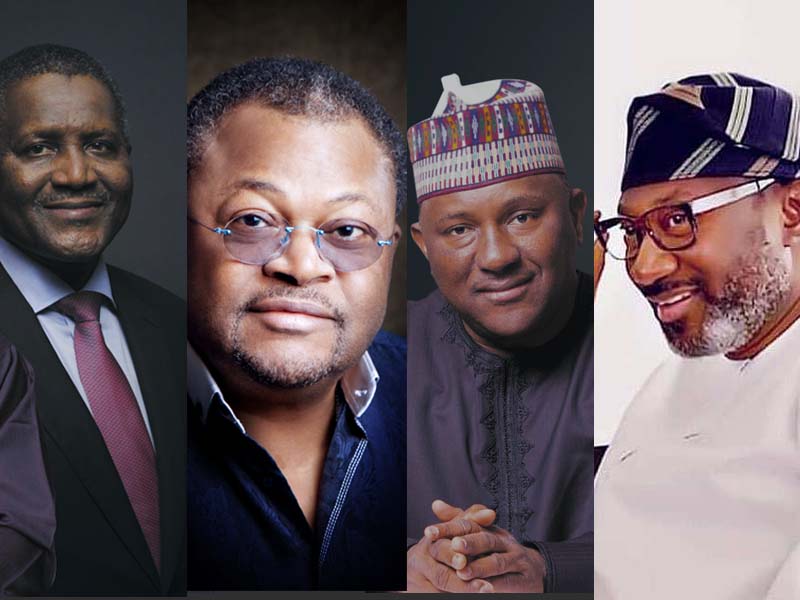
With a loud ovation, Nigerians reveled at the announcement of its billionaire-quartet, Aliko Dangote, Mike Adenuga, Femi Otedola, and Abdulsamad Rabiu as among Africa’s richest individuals in 2026.
The four has constantly put Nigeria in the limelight, ensuring that Forbes is never complete without a mention of the giant of Africa, Nigeria
According to the latest Africa Billionaires ranking released by Forbes, Dangote retained his position as Africa’s richest man, with an estimated net worth of $28.5 billion. He added about $4.6 billion to his fortune over the past year, largely driven by the strong performance of Dangote Cement on the Nigerian Exchange Limited.
Telecommunications magnate Adenuga also retained his place among Africa’s billionaires.
The founder of Globacom and chairman of Conoil Producing remains one of Nigeria’s most influential entrepreneurs with diversified interests spanning telecoms, oil and gas, and banking.
Otedola, chairman of Geregu Power Plc, also featured on the list despite a slight dip in his wealth over the past year. Forbes estimates that the billionaire investor lost about $200 million following the sale of a majority stake in the power generation company at a discount to its market price.
The increase in Rabiu’s net worth was largely driven by the performance of BUA Cement, whose shares rose 135% over the past year, outperforming the broader rally on the Nigerian stock market.
The 23 billionaires on the continent are now worth a combined $126.7 billion, representing a 21% increase from 2025 after they collectively added $20.3 billion to their net worth.
Across the continent, billionaire fortunes were boosted by strong equity market performance, record corporate profits, and improving currency stability in several African economies.
South Africa remains the highest number of billionaires on the list, with seven individuals, followed by Egypt with five, Nigeria with four, and Morocco with three.
Here is a peep into the world of Nigeria’s Billionaire-Quartet.
ALIKO DANGOTE

For the President of the Dangote Group, Alhaji Aliko Dangote, and his multifaceted group, playing second fiddle has never been an option. Both the enterprise and the entrepreneur have maintained market leadership to the extent that Dangote himself has appropriated the richest man in Africa status to himself, and has hardworkingly sustained the tag for as long as anyone can remember.
Since 2014, when Forbes magazine named him the world’s 23rd billionaire, jumping 20 spots on the scale from his previous 43rd position among the elite club of the world’s richest people. Aliko Dangote has not looked back, winning back to back the accolade among African billionaires, and never slipping from the world ranking.
Again, as expected, the famous Forbes has proclaimed the soft spoken businessman as Africa’s richest man for the 12th time in a row; a proof that the name Dangote is synonymous with consistency. He is a businessman, who understands that no man rest on his oars if turnovers have to continue to turn over. With marked differentiation, he has demystified the business terrain, and proved that if it can be done, then it must done. His establishment of the humongous fertilizer and sugar plants and the ambitious refinery in Lekki, Lagos, Nigeria, are testimonies of the trajectory of one who knows his onions.
Worth $13.4 by the last Forbes ranking, which sustained him as the richest man in African for the 11th time, entrepreneur extraordinaire has the following points to his name:
- Aliko Dangote, Africa’s richest person, founded and chairs Dangote Cement, the continent’s largest cement producer.
- He owns 85% of publicly-traded Dangote Cement through a holding company.
- Dangote Cement has the capacity to produce 48.6 million metric tons annually and has operations in 10 countries across Africa.
- After many years in development, Dangote’s fertilizer plant in Nigeria began operations in mid-2021.
- Dangote Refinery, under construction since 2016, hit the public space since 2024, and is one of the world’s largest oil refineries, with a capacity of 650,000 barrels per day production.
The above and many has remained the factors that have made it easy for the billionaire to remain in the top echelon of world’s money men, and the supremo among African businessmen. Little wonder he is one of the few recipients of the GCON national honours reserved for top politicians of vice president ranking and top government appointees.
Born in Kano in 1957, Dangote proudly shuttles between three wonderful tags as the richest man in Nigeria; the richest man in Africa and the richest Black man in the world. He has paid his dues, and mankind is the better for it.
Releasing impacts, Aliko Dangote Foundation (ADF), the private charitable foundation of Alhaji Aliko Dangote. Incorporated in 1994, as Dangote Foundation, is saddled with the mission to enhance opportunities for social change through strategic investments that improve health and wellbeing, promote quality education, and broaden economic empowerment opportunities. 20 years later, the Foundation has become the largest private Foundation in sub-Saharan Africa, with the largest endowment by a single African donor.
The primary focus of ADF is child nutrition, with wraparound interventions centered on health, education and empowerment, and disaster relief. The Foundation also supports stand-alone projects with the potential for significant social impact.
The Foundation works with state and national governments and many highly reputable international and domestic charities, non-governmental organizations and international agencies to advance its humanitarian agenda.
In one of its biggest collaboration to date, Aliko Dangote Foundation started working in partnership with the Bill and Melinda Gates Foundation and key northern State Governments in Nigeria from 2013 to eradicate polio and strengthen routine immunization in Nigeria.
Worthy of praise is the fact that nearly a decade, the Foundation has spent over N7 Billion in the course of feeding, clothing and the general welfare of the Internally Displaced Persons in the Northeast.
To make his host communities feel at ease, and the impact of his presence, Dangote has embarked on an initiative to provide further support to improving educational systems in Ibeju-Lekki and Epe locality. The educational support initiative is a tripartite programme consisting of scholarship, capacity building for teachers and school infrastructure projects.
In addition, Scholarships have been awarded to 52 secondary school students whilst some financial support was provided to their parents and/or guardians. Tertiary students will be included in the next batch of the scheme.
Furthermore, about 100 teachers, principals and school administrators were trained in teaching techniques for the 21st century. After which they were monitored in class on how they were using the skills acquired.
There is hardly any sector that has not felt the milk of human kindness running through Aliko Dangote; the military, media, politicians, governments across boards and more.
Dangote is surely an asset to this world!
As at today, there is no space for slowing down for Dangote as he continues to trudge on, creating firsts after first for himself and for humanity. He is blessed with three wonderful daughters, who have followed the rewarding footprints of entrepreneurship, and is looking forward to hitting the richest man in the world status. And very soon too.
ABDULSAMAD RABIU

Abdulsamad Rabiu’s consistent climb on the ladder of success has become phenomenal. The unassuming Chairman at BUA Group has become a study in entrepreneurial discipline, focus, philanthropy and intentional sacrifice. But what can actually be said of a man who has steadily evolved as one of Africa’s biggest investors, in fact, the biggest in the order of reckoning on the Nigerian Exchange. He has graciously used his BUA Foundation and the phenomenal Abdul Samad Rabiu Africa Initiative to not only affect lives, but ensured that the people of the world, especially his native Nigeria, live in better comfort. The Chairman/Chief Executive Officer, Bua Group, makers of quality cement, sugar, flour among other wonderful household items has been a epitome of enterprise. He is presently by divine and entrepreneurial orchestration one of Nigeria’s richest investor. He is also the third richest man in the Africa, by Forbes calculation behind Nigeria’s Aliko Dangote, South African billionaire, Johann Rupert.
In 2023, via a list compiled by Billionaires in Africa revealed the rankings on the Nigerian Exchange, NGX, showing that Abdulsamad Rabiu, the billionaire businessman and industrialist, overtook Aliko Dangote as the richest investor in the country, albeit temporarily.
According to data tracked by Billionaires.Africa, Rabiu’s holdings in his publicly-listed businesses on the local bourse were valued at an impressive $6.01 billion, making him the only investor with an investment portfolio worth over $6 billion then. This is a feat that can only be achieved through wholesome business acumen and dedication.
Born August 4, 1960, in Kano, to one of Nigeria’s foremost industrialists in the 1970s and 1980s, Khalifah Isyaku Rabiu, Abdul Samad Isyaku Rabiu CON is a perfect combination of many things in one.
It was in his native Kano that he kick-started his academic pursuit, carousing through elementary education with ease as a gifted child, and obtained his First School Leaving Certificate. He was later admitted into the Federal Government College, Kano, where he had his secondary education, and gradually with honours.
With a combination of fate, brilliance and determination, Abdulsamad was catapulted to Capital University in Columbus, Ohio, where he studiously studied Economics, and acquired his tertiary education before returning to Nigeria, all before his 24th birthday, to oversee his family business. He was that much sought after, and highly brilliant, and considered capable of holding fort for his father, who was being detained by the administration of General Muhammadu Buhari over matters concerning import duties.
In 1988, just after learning the ropes of entrepreneurial excellence, Abdul Samad Rabiu established BUA International Limited, for the sole purpose of commodity trading. The company followed after the footsteps of his father, and imported rice, edible oil, flour, iron and steel.
In 1990, having exhibited the character worthy of a world class entrepreneur, and the ability to execute classical projects, Rabiu’s BUA was invited by the government, which owned Delta Steel Company to supply its raw materials in exchange for finished products. This provided a much-needed leverage for the young company, and consequently expanded further into steel, producing billets, importing iron ore, and constructing multiple rolling mills in Nigeria.
Rabiu’s dexterity showed further a few years later, when the company acquired Nigerian Oil Mills Limited, the largest edible oil processing company in Nigeria, and there erupted the company’s and BUA’s influence and care over the people in the provision of affordable edible oil. His passion to see people excel in comfort has continued to make him churn out one great tiding after another, and endearing him in the hearts of the generality of the public.
A man with a vision for tomorrow, Rabiu, in 2005, started two flour-milling plants, in Lagos and in Kano, and by 2008, had broken an eight-year monopoly in the Nigerian sugar industry by commissioning the second-largest sugar refinery in sub-Saharan Africa. This was a feat only a bravest of hearts could wroth. As a result, in 2009, the company went on to acquire a controlling stake in a publicly-listed Cement Company in Northern Nigeria and began to construct a $900 million cement plant in Edo State, completing it in early 2015. Rabiu’s passion for expansion is unequalled.
BUA Group has since concentrated and excelled in manufacturing, infrastructure and agriculture and producing a revenue in excess of $2.5 billion. This is in addition to being the chairman of the Bank of Industry (BOI).
The Group, in 2019, announced plans to merge its privately owned BUA Cement with the publicly traded Cement Company of Northern Nigeria Plc (CCNN), to create Nigeria’s second largest cement producer thereby consolidating the grip on the cement market and breaking its monopolistic status.
MICHAEL ADENUGA

Michael Adenuga Jr. is one entrepreneur, who has proved over the decades that he is not the regular billionaire. He is of the stock that is not regulated by stock market figures, but by liquid cash. And that explains why his wealth and net worth supercedes whatever figures churned out by any institution, or any position he is placed in the billionaires’ list.
Adenuga is, for all intent and purpose, in a world and class of his own. This is because his business trajectory and personal philosophy are uniquely his, and therefore worthy of emulation.
Sitting atop one of the most cherished and subscribed network, Glo, Adenuga has not only inspired lives, but practically lifted not a few to enviable heights.
Known for his diverse investments in oil, gas, telecommunications, banking, construction, and real estate, Mike Adenuga notably shook up the African telecom sector with the launch of his telecommunications network, Globacom Limited (Glo), in August 2003.
Also referred to as The Guru, Adenuga is like the proverbial Iroko tree, who is unlike any other. In terms of humility, pedigree, magnanimity, wealth and portfolio of investments, he is one of a kind.
“As of Jan. 1, 2024, Forbes, the U.S.-based business magazine renowned for tracking global billionaire fortunes, estimated Adenuga’s wealth at $6.1 billion. By Dec. 31, 2024, his net worth had grown to $6.8 billion, ranking him as the 448th richest person in the world. Adenuga’s wealth is anchored in his control of Globacom, Nigeria’s second-largest mobile telecommunications and digital services provider, which boasts over 60 million subscribers,” according to Billionaires.Africa
Adenuga is fondly remembered for launching operations on Per Second Billing, thus ensuring subscribers only pay for actual time spent on a call instead of the practice of billing customers N50 per minute even when the call cuts off at just 2 seconds. It also crashed the cost of SIM card from N30,000 to N6,999 and later N100, thereby making it possible for low income earners, students and artisans to own GSM lines today. It is now one of the most recognizable brands across the continent.
Love him or hate him, you can’t fault him. He is an enigma. A definition of class, humanity, intellectual discipline and entrepreneurial acumen. He is the very epitome of when the going gets tough, the tough gets going. And of course, a reference point and research material when it comes to philanthropy. Dr. Mike Adenuga doesn’t give little or give just for giving sake. He gives to sort and solve a lasting challenge. Yes, he is Dr. Michael Adenuga Jr., ‘The People’s Billionaire,’ and without introduction, the brain behind the increasingly success stories recorded at the Globacom Group, among his many other conglomerates and subsidiaries.
Known by many appellations, such as the Spirit of Africa, a rare gem, walking kindness, moon amongst the stars, owner of wealth beyond money, the mighty oak, the man with the gift of Foresight, the Bull, Pillar of sports among a whole lot more, Adenuga’s image looms large. He appears little, and achieves so much more. Hardly seen, but gracefully and consistently felt.
Born on April 29, 1953 to Oloye Michael Adenuga Sr and Chief (Mrs) Juliana Oyindamola Adenuga, the Yeyeoba of Ijebuland, Otun Gbadebo of Ikija and Iyalaje of Ijebu-Igbo, Dr. Mike Adenuga Jnr was not a silver spoon kid, but his parents were comfortable.
The indigene of Oru, Ijebu-Igbo, Ogun State was born and schooled in Ibadan. He attended the famous Ibadan Grammar School. He had his university education in the United States. He majored in Business administration with emphasis on Marketing.
While in school, to augment the allowance sent by his parents, he worked as a cabbie (Taxi Driver), putting in many hours of work a week. This culture of back-breaking hard work shaped him for his ambitious business adventures later in life.
Dr. Mike Adenuga Jr is married to Mrs. Titi Adenuga (nee Adewale). She provides the comfort and stability that such an incredibly busy man requires. His children are Oyin, Babajide (Bobo), Paddy, Bella, Eniola, Bimbo, Sade and ‘Niyi Jnr. He also has grandchildren.
FEMI OTEDOLA

Billionaire businessman, and Chairman, Geregu Power Plc, simply addressed as Femi Otedola (CON), is a focused and determined man. He made his choice from day one, and has refused to be derailed. This explains his prolific nature in the world of entrepreneurship, which has directed his life.
One thing is very obvious before all and sundry, and that is the fact the dotting father of four adorable children is really an Epicurus son, and has no place for half measures when it comes to giving himself, his business and of course everyone around him the good life.
It won’t be forgotten in a hurry how the philanthropist spent a whopping Three Million Pounds to rent a cruise boat in celebration of his 60th birthday in 2022.
Born on November 4, 1962, in Ibadan to the family of the late Sir Michael Otedola, a former governor of Lagos State, Otedola is a definition of everything good, positive and encouraging. He has lived his 60 years representing the very essence of living, affecting lives as a philanthropist, developing careers and manpower as a businessman, industrialists and entrepreneur, and raising biological children, who has stood their own in the society. There is hardly anywhere this tall, handsome phenomenon of a personality can be faulted.
The billionaire businessman started his education at the University of Lagos Staff School before attending Olivet Baptist High School from where he was admitted into Obafemi Awolowo University in 1980. He graduated in1985.
A former chairman of Forte Oil Plc, the Chancellor of St Augustine University, Epe, Lagos, is the founder of Zenon Petroleum and Gas Ltd, and the owner of a number of other businesses across shipping, real estate and finance. He has recently invested in power generation as part of the liberalisation of the sector in Nigeria.
The author of the bestseller, MAKING IT BIG, who has homes in Lagos, Abuja, Dubai, London and New York City has a much impressive existence since he set out to take the bull by the horns in the field of enterprise. This is as chronicled by wikipedia. In 2003, having identified an opportunity in the fuel retail market, Otedola secured the finance to set up Zenon Petroleum and Gas Ltd, a petroleum products marketing and distribution company.
As owner and chairman of Zenon, in 2004 he invested N15 billion in downstream infrastructure development and acquired storage depots at Ibafon, Apapa as well as four cargo vessels, amounting to a combined total storage capacity of 147,000 metric tonnes. The same year he acquired a fleet of 100 DAF fuel-tanker trucks for N1.4 billion.
By 2005, Zenon controlled a major share of the Nigerian diesel market, supplying fuel to most of the major manufacturers in the country including Dangote Group, Cadbury, Coca-Cola, Nigerian Breweries, MTN, Unilever, Nestle and Guinness.




FIFA Lists Six Females Among 52 Referees for 2026 World Cup

Terrorists Kill Nigerian Brigadier-General – AFP Report

Again, Iran Blocks Strait of Hormuz, Alleges Ceasefire Violation

Why Tinubu Was Absent at Commissioning of Sanwo-Olu’s Projects in Lagos – Presidency

Koumagnon Family Pledges Unalloyed Support for Romuald Wadagni As President

Trump Accuses Nigeria of Spreading Fake News on Iran Ceasefire Deal

Benin Republic 2026: Romuald Wadagni, The President in Waiting

Effective Strategic Leadership: Resolving Nigeria’s Contemporary Challenges and Unlocking Inclusive Possibilities

‘ADC Membership Hits 500,000 after INEC Derecognition of Leadership’

The Ponnles Honour Parents With N150m Memorial Endowment at OAU

Evangelist Ebenezer Obey: Celebrating a Music Maestro at 84

Sorrow, Tears, Love As Ex-Ovation Editor, Mike Effiong, Buries Wife, Kemi in Lagos

ADC Raises Alarm over INEC’s Plot to Prevent Party from Fielding Candidates

Is Amupitan’s INEC Complicit?
-
 Opinion6 days ago
Effective Strategic Leadership: Resolving Nigeria’s Contemporary Challenges and Unlocking Inclusive Possibilities
-
 News4 days ago
‘ADC Membership Hits 500,000 after INEC Derecognition of Leadership’
-
 Events6 days ago
The Ponnles Honour Parents With N150m Memorial Endowment at OAU
-
 Boss Of The Week6 days ago
Evangelist Ebenezer Obey: Celebrating a Music Maestro at 84
-
 Events6 days ago
Sorrow, Tears, Love As Ex-Ovation Editor, Mike Effiong, Buries Wife, Kemi in Lagos
-
 Featured4 days ago
ADC Raises Alarm over INEC’s Plot to Prevent Party from Fielding Candidates
-
 Headline5 days ago
Is Amupitan’s INEC Complicit?
-

 World2 days ago
Trump Delays Iran’s Strike by 2-Weeks As Pakistani Leaders Intervene