Headline
Friday Sermon: The Population Bomb 2
Published
7 years agoon
By
Eric
By Babatunde Jose
“Nigeria can produce food for 600million people through the application of the right technology. Commitment is needed by stakeholders dedicated to increasing food production for the country, as well as regaining her position as a net food exporter.” Danish Ambassador
For thousands of years famine has been humanity’s worst enemy. Until recently most humans lived on the very edge of the biological poverty line, below which people succumb to malnutrition and hunger. A small mistake or a bit of bad luck could easily be a death sentence for an entire population. Misfortune or stupidity on the collective level resulted in mass famines. Human history is full of horrific accounts of famished populations, driven mad by hunger. Some say it is nature’s way of correcting the population. During such events provisions become scarce; and governments are far too weak to save the day or provide for the people. We see it happening today, especially in this our clime where governments abdicate their roles and the masses are usually left in the lurch.
At such times people cry to God to ‘Deliver them from hunger’. But God does not send down ‘manna’ anymore. The ‘sinful’ nature of man has made God to withdraw to the high heavens and we should not expect such prayers to be answered today. Now it is ‘work and eat’ as we read in Psalm 128:2 “For thou shalt eat the labour of thine hands: happy shalt thou be, and it shall be well with thee.”
What this means is that governments should look out for the welfare of their people; not the Church or the Umma. During the last hundred years, technological, economic and political developments have created an increasingly robust safety net separating humankind from the biological poverty line; except here in Africa where we are being left behind.
At the first World Food Conference held in Rome in 1974, delegates were treated to apocalyptic scenarios, particularly about China and India. Then, Deng Xiaoping just started opening up China and there were 700 million Chinese living in extreme poverty. The conference concluded that there was no way for China to feed its billion people, and that the world’s most populous country was heading towards catastrophe. But they were proved wrong; China performed the greatest economic miracle in history by lifting hundreds of millions out of poverty, not by divine intervention, occasioned by fasting at the ‘Camps’, or ‘prayer cities’ or reading copiously from Chairman Mao’s ‘Little Red Book’ but by the dint of far reaching socio-economic policies and micro-management by successive Chinese leaders. In 1974, China had only 8million university graduates: Today, she has more than 300 million graduates, roughly the entire population of the United States of America. Yet China is not an Islamic or Christian nation.
Are we prepared to do what China did to conquer the debilitating consequences of the population bomb? Are we prepared to stop the obnoxious social and cultural practices that still prevail among some sections of our society such as child marriage; a most ungodly and unholy practice which is not supported by any scripture known to man. The same goes for the institution of polygamy which the faithful usually attribute to an injunction of the Quran but which in context, is about doing justice. “If ye fear that ye shall not be able to deal justly with the orphans, Marry women of your choice, Two or three or four; but if ye fear that ye shall not be able to deal justly [with them], then only one, or [a captive] that your right hands possess, that will be more suitable, to prevent you from doing injustice.”(Quran 4:3)
Permission to have more than one wife is not a substantive law in the Holy Qur’an, but a remedial or emergency law. It should not be brought into operation unless circumstances justify it, such as times of war when many men lose their lives, women are widowed and children are orphaned. The objects of marriage are four-fold: Protection against social, moral, and spiritual maladies (2:187; 4:24); secondly, a source of progeny (4:1); thirdly, a source of a loving companion providing peace of mind and comfort (30:21); and finally, the social and economic protection of orphans and widows of war (4:127).
To discourage polygamy, the Holy Qur’an first limits the number of wives to a maximum of four, before imposing a strict condition of equality: “If you fear that you will not be able to deal equitably then (marry only) one.” Later in verse 129 we are told, “It is not within your power to maintain perfect balance between wives, even though you are so eager.” To deal equitably is an injunction; any violation of this is a significant sin and against Quranic law. Thus, this permission of a maximum of four wives nonetheless imposes considerable restriction and severe conditions on males that makes taking another wife almost impossible.
Apart from proclivity to polygamy and child marriage, there are other hindrances to concerted population control, one of which is the Christian attitude to birth control and contraception.
The Church and Population Control
Despite the changing attitude of other churches, Catholicism maintains its traditional opposition to population control. The Church holds contraception to be sinful and contrary to scriptural teaching. Thus, St. Augustine declares that “intercourse even with one’s legitimate wife is unlawful and wicked where the conception of the offspring is prevented”. Onan, the son of Juda in the Bible, did this and the Lord killed him for it. See Genesis 38:3-10. The punishment for breach of the levirate marriage law however, is laid down elsewhere in the Old Testament (see Deuteronomy 25:5-10). The Old Testament also contains the general injunction to “increase and multiply”: Licence to procreate. Contraception, Catholics maintain, is corrupting to the individual, since it reduces self-control and its employment in the majority of cases will be for selfish reasons. Marriage will be degraded to a legalized form of prostitution. Furthermore, contraceptives undermine public morality by removing the fear of pregnancy, which is a powerful deterrent against promiscuous intercourse.
There is however an argument which stands to reason and cannot be easily faulted: “We must strive to multiply bread so that it suffices for the tables of mankind, and not rather favor an artificial control of birth, which would be irrational, in order to diminish the number of guests at the banquet of life.” This imposes an immense responsibility. And whose responsibility is it to multiply the bread; our governments of course by their policies, which in the end might entail some social engineering.
Can we trust our leaders to make enough bread available on our tables? Can we guarantee schools for our children and employment after graduation? What of those who for one reason or the other could not get to the Uni, are we making provisions for them to become artisans and self-employed technicians? Are we making provisions for girl-child education, instead of sentencing them to early, premature marriage or as gifts to their father’s friends? Are we encouraging the nomads to get educated instead for roaming the forest and destroying the farms of innocent people and in the process provoking mayhem and communal strife? Are we expanding the base of healthcare for our people and making provisions for improvements? Are we investing in the future; when only 350 Nigerians are responsible for more than 80 per cent of the N5.4 trillion debt portfolio of AMCON?
Presently, the figures are not good: Rise in the number of internally displaced children and a corresponding increase in birth rates have led to a surge in the number of out-of-school children in Nigeria. A Demographic Health Survey (DHS) conducted by UNICEF and the Nigerian government revealed that the number of out-of-school children rose from 10.5 million in 2010 to 13.2 million in 2015. Terry Durnnia, education chief, at UNICEF said 45 percent of out-of-school children in West Africa are Nigerians, 60% of them are in the North and majority of them are girls due to early marriage. Azuka Menkiti, UNICEF education specialist, said 50 percent of pupils in the north do not further their education. According to Femi Falana; “Having failed to fund public education, the children of the poor are roaming the streets, hawking goods while the rich are educating their children in private schools at home and abroad. But to the detriment of the society, the abandoned children of the poor are being recruited to criminality by terrorists, kidnappers and other criminal gangs.”
By some estimates Nigerian tertiary education institutions produce up to 500,000, half of these graduates are sentenced to the unemployment queue. What will then happen when we become the third most populous country in the world? These are unimaginable scenario to contemplate.
By 2050, 80 per cent of all the poor people in the world will live on the African continent; 50% of that will be in Nigeria and the Democratic Republic of Congo. Two countries will account for 40 per cent of all the poor people in the world. Yet, in 1960, the per capital income in Nigeria was higher than what it was in South Korea, and China.
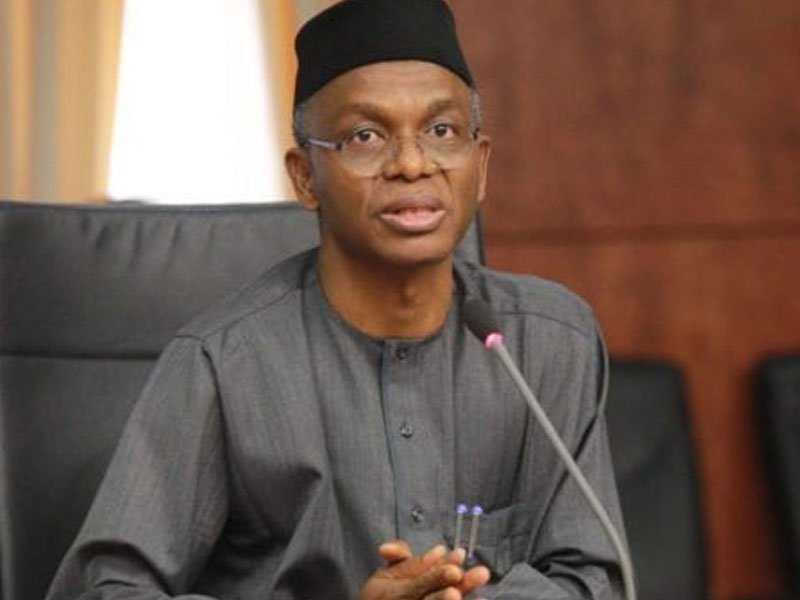
Currently we are not making serious efforts to expand and improve education and health and create enabling environment for employment nor are we making strenuous efforts to invest in the future? Yet, some people have enough money in their war chests more than some states. If care is not taken, says the Emir of Kano, we risk the chance of becoming the poverty capital of the world. Those countries that escaped the poverty trap achieved the feat because they planned for the future. We too can avert the coming eruption if we start now, but we need leaders who are committed to the Nigerian Project and not sectional and ethnic demigods and jingoists.
O Allah; “Guide us to the straight path.” Quran 1:6
Barka Juma’at and Happy weekend
+2348033110822
Related
You may like
Headline
Senate Approves Tinubu’s Request to Deploy Troops to Benin Republic
Published
3 hours agoon
December 9, 2025By
Eric
The Senate has approved President Bola Tinubu’s request to deploy troops to Benin Republic over botched coup in the West African nation, about 72 hours after Nigeria Airforce took control of Benin airspace, following the sitting president’s request for assistance.
Tinubu’s request was conveyed in a letter read by the Senate President Godswill Akpabio during plenary on Tuesday, December 9.
The president said the action was based on Section 5(5) of the 1999 Constitution, which requires presidential consultation with the Senate before sending the armed forces on combat missions outside the country.
“Pursuant to Section 5 (5) Part 2 of the Constitution of the Federal Republic of Nigeria 1999 as amended, I seek, further to consultation with the National Defence Council, the consent of the Senate for the deployment of Nigerian troops to the Republic of Benin,” he wrote.
He noted that the request followed an urgent appeal from President Patrice Talon, who sought immediate air support to repel an attempted unconstitutional seizure of power.
Tinubu further urged the lawmakers to act swiftly, citing the close relationship between Nigeria and Benin and the collective security obligations under ECOWAS.
“This request is made further to a request received from the Government of Benin Republic for the exceptional and immediate provision of air support by the Armed Forces of the Federal Republic of Nigeria.
“The distinguished Senate may wish to note that the Government of the Republic of Benin is currently faced with an attempted unconstitutional seizure of power and disruption and destabilisation of democratic institutions,” he stated.
He stressed that the situation in Benin required urgent external support to stabilise democratic institutions.
“The situation, as reported by the Government of Benin, requires urgent external intervention. The distinguished Senate considers the close ties of brotherhood and friendship which exist between Nigeria and the Republic of Benin, as well as the principles of collective security upheld within ECOWAS.
“It is our duty to provide the support as requested by the Government of the Republic of Benin. While it is my hope that the Senate will consider and approve this request expeditiously, please accept, distinguished Senate President, distinguished senators, the assurances of my highest consideration and personal regards,” he added.
The Senate consequently approved the request.
On Sunday, December 7, a group of soldiers appeared on Benin’s state television. They seized power and declared that they had dissolved the government in what appeared to be another coup in West Africa.
Identifying themselves as the Military Committee for Refoundation, they announced the ousting of the president and the dissolution of all state institutions, adding that Pascal Tigri, a lieutenant colonel, had been named as the head of the committee.
The mutiny triggered hours of tension across the country as loyal security forces worked to restore order and secure key state institutions. Authorities say several of the coup plotters were arrested, while others were being hunted.
Reacting to the development, Tinubu praised the Nigerian Armed Forces for their rapid intervention, which aided loyalist forces to dislodge the soldiers who had taken over the national television station and declared Talon’s ouster.
According to a statement signed by Tinubu’s Special Adviser on Information and Strategy, Bayo Onanuga, the Beninese government formally sought Nigeria’s military support through two separate communications after the coup plotters announced the suspension of democratic institutions.
Tinubu, said while acting on the request, he ordered Nigerian Air Force fighter jets to take control of Benin’s airspace and assist in flushing out the mutineers from strategic locations, including the national broadcaster and a military camp.
Talon, who has been in office since 2016, had been expected to leave office next April – 2026, at the end of his second term in 2026 – the maximum allowed by the constitution, after the upcoming presidential election.
The attempted coup adds to a troubling pattern of political instability in West Africa, where Niger, Burkina Faso, and Guinea-Bissau have all recently experienced military takeovers or attempted uprisings.
Following the increasing coups in the West African sub-region, the Economic Community for West African States (ECOWAS) declared a state of emergency on political situations in the region on Tuesday.
The President of the ECOWAS Commission, Omar Touray, made the declaration during the 55th session of the Mediation and Security Council, at the ministerial level in Abuja.
Source: ICIR
Related
Headline
Breaking: FG Secures Release of 100 Pupils of Saint Mary’s School
Published
2 days agoon
December 7, 2025By
Eric
By Eric Elezuo
The Federal government has announced the release of 100 pupils of Saint Mary’s School, Papiri, Niger State.
According reports monitored on Channels Television on Sunday, only 100 out of the about 250 pupils in the captivity of the terrorists were released.
Details soon…
Related
Headline
Atiku Abubakar @79: Celebrating a True Statesman + Dele Momodu’s Inspiring Tribute
Published
1 week agoon
November 29, 2025By
Eric
By Eric Elezuo
The rich cultural border town of Jada in Adamawa State, Nigeria, came briskly alive during the week, when trusted colleagues and associates, party bigwigs and immediate family members, trooped in to honour a man, whose legacies of political sagacity and entrepreneurial wizardry have become a reference point, Alhaji Atiku Abubakar, a former Vice President of the Federal Republic of Nigeria, as he celebrates his 79th birthday.
With fanfare, razzmatazz and deep-rooted joy, the about-to-become-octogenarian hosted a week-long soiree rooted in legit discourse, high profile networking and philanthropy for all and sundry.
Known for his near-impeccable public service image, Atiku is revered as the Midas of our time, converting almost nothing to something of immense value.

A former Speaker of the House of Representatives, Hon Yakubu Dogara, once described the invincibility of the Wazirin Adamawa as follows:
1. Give him pure water and he’ll turn it into Farro water
2. Show him a Primary school and he’ll turn it into a world class univeristy
3. Show him a jetty and he’ll turn it into a world class port
4. Give him a bull and a heifer and just few years and he ll give you a herd
5. Give him a bag of chaff and he’ll mill it into animal feed
6. Give him a bottle of bala blue and he’ll turn the cream to farro juice
7. Give him a home and he’ll bring Nigeria into it as family members
8. Make him walk into an environment where there is contention and fight and see how they fade into peace.
From the Nnamdi Azikiwe International Airport to the Yola Airport in Adamawa State, heartfelt accolades from supporters trailed every movement of the vice president, who absorbed all with equanimity, acknowledging greetings with finesse and humility, stopping at regular intervals for a deep hug and claspy handshake that says more friendship and camaraderie.

The grand finale of the activities was held at the Atiku Family Event Hall in Jada with a well-attended Commemoration Lecture that drew dignitaries and admirers including political associates, mentees, members of the diplomatic corps and many others from far and wide. Though it was meant to be an in-house celebration, it drew together distinct policy makers and more.
From one distinguished speaker to another, soul striking lectures and goodwill messages were delivered including tributes aimed at extolling the stateman-like qualities of His Excellency.

It is instructive to note that Atiku, as he is easily recognized, is not just another politician; he is exceptionally versatile as a detribalised, prolific entrepreneur and a practitioner of politics without bitterness. It is not a wonder therefore that he has excelled in politics, public service, and entrepreneurship, most especially.
It was in the notes of the one of the keynote speakers, Chief Dele Momodu, that the underlying greatness, humane qualities and more of Atiku Abubakar were laid bare before public scrutiny.
Momodu, in a lecture he titled Alhaji Atiku Abubakar: The Consumate Democrat, took the audience down memory lane as he highlighted the uncommon humility the Waziri Adamawa demonstrated when he stepped down for MKO Abiola in 1993.
The details of Chief Momodu’s speech are as follows:
ALHAJI ATIKU ABUBAKAR: THE CONSUMMATE DEMOCRAT

It gives me great pleasure, and I consider it a privilege, to have been invited to speak about one of the greatest Nigerians alive today. There’s no way I would have turned down this request.
Just last week, I was invited to a roundtable meeting at the British House of Lords in London, also at the behest of Alhaji ATIKU ABUBAKAR. I wish to offer my sincere gratitude to ALHAJI for his confidence in me and his demonstration of love for me at all times.
My earliest recollection of Alhaji was wayback in 1993, in the beautiful city of Jos, where three political gladiators, Alhaji Babagana Kingibe, Alhaji Atiku Abubakar, and Chief Moshood Abiola had locked horns in a world heavyweight bout to decide who picks the Presidential ticket of the Social Democratic Party. I was barely 32/33 at that time but I was politically savvy and heavily inspired and motivated by my adopted father, Chief Moshood Abiola.

The SDP primary of that year remains unprecedented till this day. I will not bore you with details of the Convention that brought these juggernauts into a three horse race, which only one of them can, and must win. But there was a logjam and the only way a winner could have emerged was for one of them to step down and quit the race. This was a tough decision for all of them.
Alhaji Babagana Kingibe enjoyed the avuncular support of most of the SDP Governors. Alhaji Atiku had access to the extensive networks of his mentor Major General Shehu Musa Yar’Adua. The Abiola team calculated well and smartly by reaching out to the godfather pronto. The incredible then happened. Without much ado, Alhaji stepped down and thus cleared the coast for the eventual victory of my adopted father, Chief Moshood Abiola. Since then, unknown to Alhaji Atiku, I have been his big fan. Alhaji did not throw tantrums or sulk endlessly like a baby. He did not seek to destroy their party. Not that he didn’t have enough reasons to be angry and bitter but he chose the path of uncommon equanimity and submitted himself to the immutable will of Allah at His appointed time.

What could have made matters worse, Alhaji Atiku failed to clinch the runningmate slot, against conventional wisdom of give and take. Again, Alhaji Atiku went back to his drawing board, and about his life peacefully without raining a tirade of insults against distinguished elders who have paid their dues to our country. Even when he had the opportunity to retaliate after the June 12 debacle, Alhaji followed a path of honor by supporting Chief Abiola, unconditionally, and for the revalidation of his mandate. Alhaji Atiku is not your common politician.
As fate would have it, he later contested the Governorship election in his home state and won. But before settling down to his Gubernatorial assignments, he was invited to be the Vice President to President Olusegun Obasanjo. He would soon become the most effective and influential Vice President ever in Nigeria. As the head of the economic team, he was able to attract and work with the best and brightest. The gentleman’s agreement was that he would Vice for the office of the President after one term, but again he was let down. He could have fought tooth and nail against his Boss, President Olusegun OBASANJO but he chose the path of absolute peace and patience. But his boss was unhappy that Alhaji and his friends ever challenged him. President OBASANJO went after them like bullets. And there were collateral damages here and there. Several of my friends in Alhaji’s office at the Presidential villa were summarily sacked.

I must confess that I have never seen a man like Alhaji before. He takes everything in his strides. Most politicians would have brought down the rooftops. His faith in Allah is unshakable. What should have been to his glory eventually became his albatross. But Allah compensated with extraordinary favor as a businessman. While his peers became parasites feeding fat on the State, Alhaji became King Midas and most businesses he touched turned to gold. Though he never abandoned his political dreams, he pursued his ambition with visionary clarity and painstaking discipline. He never engaged in violence. He rather invested unrelentingly in the rule of Law. Whenever he contested and he felt robbed of victory, he headed to the courts of the land. Many of his landmark cases have since enriched our jurisprudence and legal lexicon. He has remained a tireless fighter and defender of the rights of the common man.
It is a tragedy that such a man of sharp intellect and prodigious talents has been endlessly maligned in the name of politics.

It must be noted that many of our political icons had suffered similar persecution in the past. My sad conclusion is that when we refuse to encourage good people, the worst amongst us will continue to thrive.
I make bold to declare my maximum respect for ALHAJI ATIKU ABUBAKAR as a great man of ideas and ideals, a peacemaker, man of God, blessed family man, absolutely detribalised, very cosmopolitan, well educated, versatile, humble in spirit, unpretentious, experienced and exposed. He is without doubt a man of diversity and destiny. May Allah preserve him for the benefit of all us because in the days of tribulations, kids must run to the elders of the house. No one else is better prepared for this role at this auspicious moment.
Please, let’s all rise and give a standing ovation to a leader who has refused to give up on his goals…

Other speekers, who eulogized the celebrant in goodwill messages were former Adamawa Governor Jibrilla Bindow, Senator Ishaku Abbo, Senator Aishatu Dahiru Ahmed Binani, Senator Abdulaziz Nyako and several others.
In his traditional soft-spoken nature, Atiku expressed gratitude to all attendees, with special appreciation to the organizers, and special mention of Prof. Ahmed Shehu (Pullo Jada) for their dedicated efforts to ensure the smooth sailing of the event.
THE MAN ATIKU ABUBAKAR

Below is brief history of the former Vice President as told by himself –
I was born on the 25th of November 1946 in Jada village, Adamawa State Like many of my generation, my father was opposed to Western education and tried to keep me out of school. When the government discovered this, my father spent a few days in jail. I was then enrolled in Jada primary school.
When I was only 11 years old, my father drowned and died while trying to cross a small river. The task of raising me then fell on my mother. At that age I resolved to work hard, remain focused and be successful in life to make my her proud. In 1960, I was admitted to Adamawa Provincial Secondary School in Yola.
Academically, I did well in English Language and Literature but I struggled with Physics, Chemistry and Mathematics. I spent most holidays working to earn extra money. In 1961, when I was 15 years old, my mother’s elder brother sold the family house in Jada without her knowledge and rendered us homeless. I spent that holiday working and from my earnings, I bought a house for my mother in Ganye. I became an orphan when my mother suffered a heart attack and died in 1984.

Post Secondary School
I graduated from secondary school in 1965. After that, I studied at the Nigeria Police College in Kaduna for a short while. I left when I was unable to present an O-Level Mathematics result. I worked briefly as a Tax Officer in the regional Ministry of Finance, from where I gained admission to the School of Hygiene in Kano in 1966.
I graduated with a Diploma in 1967, having served as Interim Student Union President at the School. In 1967 I enrolled for a Law Diploma at the Ahmadu Bello University Institute of Administration, on a scholarship from regional government. After graduation in 1969, I was employed by the Nigerian Customs Service.
Family
I met nineteen year old Titilayo Albert when I was serving at Idiroko, Lagos, and in December 1971 I married her secretly, because her family was initially opposed to the union. On 26 October 1972, Titi delivered a baby girl and we named her Fatima. Titi later gave birth to Adamu, Halima and Aminu.
In January 1979 I married Ladi Yakubu as my second wife. I wanted to expand the Abubakar family. I had no siblings and I felt extremely lonely as a child. I did not want my children to feel that way.
This is why I married more than one wife. My wives are my sisters, my friends, and my advisers and they complement one another. Ladi gave birth to Abba, Atiku, Zainab, Ummi-Hauwa, Maryam and Rukayatu.

In 1983 the late Lamido of Adamawa who had become like my father made me the Turaki of Adamawa. This position was usually reserved for one of the Emir’s favorite sons and was rarely given to non-royals like me. To ensure that I met the ‘blood tie’ requirement for the title, the Lamido gave me one of his daughters, Princess Rukaiyat, to marry.
She gave birth to Aisha, Hadiza, Aliyu, Asmau, Mustafa, Laila and Abdulsalam. I married Fatima Shettima in 1986. She gave birth to Amina (Meena), Mohammed and two sets of twins Ahmed and Shehu, Zainab and Aisha and then Hafsat. Jennifer Jamila Atiku-Abubakar is my last wife. She gave birth to Abdulmalik, Zara and my youngest child, Faisal.

Customs
My Customs career commenced on 30 June 1969. My first posting was at Idi-Iroko, a border town between Nigeria and Benin Republic. My other assignments included the Lagos Airport, Apapa Ports (1974), Ibadan Customs Command (1975), Kano Command (1976), Maiduguri (Area Comptroller, 1977), Kaduna (1980) and the Apapa Ports in 1982.
In April 1984, when I was the Murtala Muhammed Airport Area Administrator, my name was associated with a scandal that made headlines. As part of efforts to cripple corrupt politicians who had stashes of stolen cash in their possession, the new military government had phased out the old naira currency and replaced it with new ones. Orders had been given to ensure that all luggage entering the country was properly screened to prevent smuggling of the old notes. The Emir of Gwangu and Ambassador Dahiru Waziri had arrived from Saudi Arabia with many suitcases. As is customary, the suitcases were supposed to pass through Custom officers for check but the Emir’s son, who was a Major in the Army and also ADC to Head of State Gen Buhari drove straight to the Tarmac with soldiers, off-loaded the suitcases there, picked up his father and the Ambassador and drove away. The soldiers had threatened to shoot the Custom officers who had protested and tried to stop them. My officers reported in writing to me and I in turn reported the incidence to my boss, the Director of Customs. A few days later, one of the officers leaked the story to Guardian Newspapers and their correspondent called me to confirm if it was true. I did.

Soon after, Newspaper Headlines read, “Passenger with 53 suitcases leaves airport unchecked”. This scandal embarrassed the government and they tried to make me deny it happened. I refused and they threatened to throw me out of service. The Minister of Finance then, Soleye, who oversaw the Customs Service played a big role in ensuring I wasn’t dismissed. He had said it would be unfair to punish me for being honest and standing by my officers.
In 1987 I was promoted to Deputy Director of Customs and Excise in charge of Enforcement and Drugs. In April 1989, when I was 43, I voluntarily retired from Customs after 20 years of meritorious service.
Business
I’ve always had a good nose for business. In my early years as a Customs officer, I received a 31,000 naira Housing Loan, built a bungalow in Yola, and rented it out. With the rent I collected in advance, I bought a second plot and built another house. I continued building new houses with rent from completed ones and after a few years I had built 8 houses in choice areas in Yola. When I was transferred to Kaduna, I continued this process and in a few years I had 5 houses there.
In 1981, I moved into agriculture. I became the largest maize farmer in the whole of Gongola state. Unfortunately, due to Government policies that increased the cost of production, the business fell on hard times and closed in 1986.

The most successful business I ever ventured into was with Gabrielle Volpi, an Italian businessman. He intimated me about how profitable Oil and Gas Logistics business could be and, trusting his abilities, I partnered with him to form NICOTES which started operating from a container office at Apapa ports.
When the business began to grow, we relocated to Onne, Rivers State. The company, now known as INTELS (Integrated and Logistics Services) is a multi-billion naira company that has a staff of over 15,000 people and pays huge dividends to its shareholders. My other businesses include agriculture, feed making, plastics, printing, TV/radio media, and beverages.
Politics
I met Shehu Musa Yar’Adua towards the end of my Customs career. He invited me to the political meetings that were happening regularly in his Lagos home; and that was how my foray into politics began.
In 1989 the political meetings became Peoples Front of Nigeria and I was elected as the National Vice- Chairman.
We wish the Wazirin Adamawa a happy birthday, and many fruitful years ahead!
Related


Senate Approves Tinubu’s Request to Deploy Troops to Benin Republic
Governor Adeleke Celebrates First Lady, Titilola Adebusola Adeleke @60
Airspace Violation: Burkina Faso Detains 11 Nigerian Soldiers, Seizes NAF Aircraft
FirstBank Elephant Girls Win in Zone 3, Qualify for WBLA Final Round
CPC: Ribadu Holds Security Talks with US Delegates in Abuja
Court Rejects Nnamdi Kanu’s Request to Be Transfered Out of Sokoto Prison
Sunny Irakpo Launches SILEC International Magazine in America
Open Letter to Global Leadership: Forging New Intergenerational Partnership for Sustainable Governance
Atiku Abubakar Remains Only Person Tinubu Govt is Afraid Of – Dele Momodu (Full Interview)
Olubukola Adubi: Entrepreneurial Amazon of Immeasurable Value
The Oracle: When a Nation Undermines Citizens’ Rights (Pt. 4)
Soldiers Strike in Benin Republic, Removes Talon, Takes over Govt
Meet Muhammad Ashfaq Hussain, CEO at Profound Realtors
Loyal Soldiers Foil Military Coup in Benin Republic
Trending
-
Uncategorized3 days agoOpen Letter to Global Leadership: Forging New Intergenerational Partnership for Sustainable Governance
-
Featured5 days agoAtiku Abubakar Remains Only Person Tinubu Govt is Afraid Of – Dele Momodu (Full Interview)
-
Boss Of The Week5 days agoOlubukola Adubi: Entrepreneurial Amazon of Immeasurable Value
-
The Oracle4 days agoThe Oracle: When a Nation Undermines Citizens’ Rights (Pt. 4)
-
Africa2 days agoSoldiers Strike in Benin Republic, Removes Talon, Takes over Govt
-
Boss Picks3 days agoMeet Muhammad Ashfaq Hussain, CEO at Profound Realtors
-
Africa2 days agoLoyal Soldiers Foil Military Coup in Benin Republic
-
Opinion3 days agoHow Dr. Fatima Ibrahim Hamza (PT, mNSP) Became Kano’s Healthcare Star and a Model for African Women in Leadership