Connect with us

News

Lagos Land Use Charge Against Democratic Ideals – LCCI Boss

Published

on

Sanctions to defaulters under the Reviewed Land Use Charge Law of Lagos are too severe and not in tandem with democratic ideals.

The President of Lagos Chamber of Commerce and Industry, Mr. Babatunde Ruwase, made the observation in Lagos on Friday during a stakeholders’ forum on Lagos Land Use Charge Law, 2018.

He said that while the chamber would not encourage or support any form of infractions of the law, the sanctions must be proportional and fair.

The News Agency of Nigeria reports that the Land Use Charge law stipulates a 25 per cent increase in charge if payment is not made between 45 and 75 days.

It also prescribed a 50 per cent increase after 105 days and a 100 per cent increase if payment is not made between 75 and 105 days.

The law further prescribed that a property shall be liable to enforcement if payment is not made after 135 days of notice.

“There would be instances where the citizens are willing to pay but just do not have the capacity to pay, given the state of the economy.

“The Nigerian economy is only just gradually recovering from recession. Many companies are yet to return to profitability.

“Industrial capacity utilisation has declined, purchasing power is still very weak, occupancy rate in many commercial and residential properties are still very low.

“All of these have adversely impacted the returns on investment in property market and points to the fact that current market value of property may not necessarily reflect the rental income for the property,” Ruwase said.

He said that only 300,000 property were paying the charge, while 700, 000 property were identified for tax payment.

According to him, emphasis should be on getting more property into the tax net, rather than imposing additional burden on those currently on the database.

He urged government to explore the platform presented by VAIDS to capture more property owners into the net.

Ruwase suggested that implementation of the law be suspended, while the grey areas should be sorted out in the interest of fairness, equity and natural justice.

According to him, there is no evidence to show that adequate dissemination of information to critical stakeholders had been done; noting that the conditions stipulated for law review occurred before its implementation.

He said that stakeholders were concerned that assessed value used for computation of the law was high and difficult to justify.

According to him, the business community appreciates government’s efforts in investing in infrastructure and security and businesses are willing and ready to pay their tax.

He appealed to the government to create a tax environment that would be fair, equitable, inclusive, transparent and investment friendly.

Lagos State Commissioner for Finance, Mr. Akinyemi Ashade, said the law was aimed at entrenching a regime of self assessment that would allow property owners to make their own calculation and know their rate with the help of professional valuers.

Ashade said various reliefs had been made available to payers, including a general 40 per cent relief for all property liable to LUC payment.

According to him, property of N10m and below constitute 75 per cent of property owners in the state and are expected to pay N5,000 per annum as land use charge.

Ashade said the new law also established an Assessment Appeal Tribunal which authorises the adoption of Alternative Dispute Resolution in resolving disputes concerning LUC, provided the appeal was lodged within 30 days after the receipt of the notice.

(NAN)

Continue Reading
Click to comment

Leave a Reply

Your email address will not be published. Required fields are marked *

News

I Won’t Surrender Rivers N700bn IGR to Anyone, Fubara Vows

Published

on

By

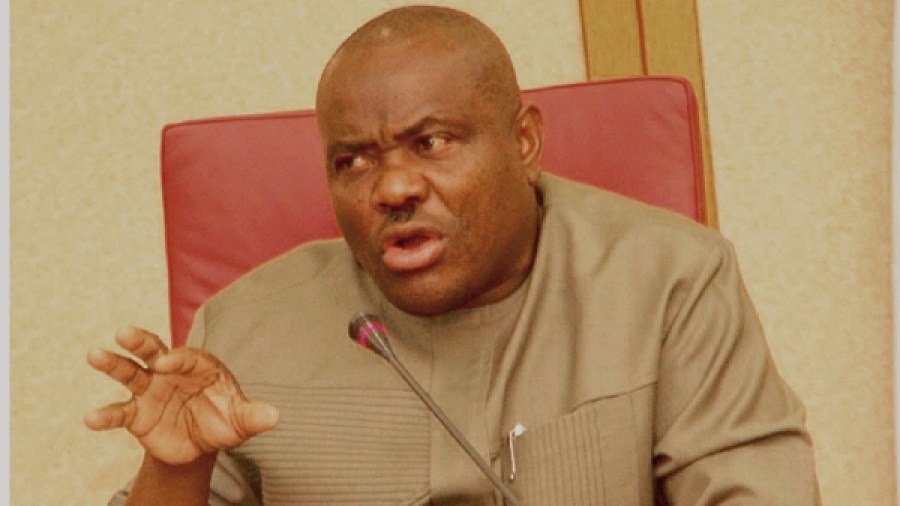
Rivers State governor, Siminalayi Fubara, has resisted alleged pressure to hand over N700 billion, representing 35% of the State’s internally generated revenue (IGR), to anyone, sparking a heated power struggle with former Governor Nyesom Wike, now Federal Capital Territory (FCT) minister.

The dispute has raised concerns about the welfare of Rivers State residents, with 4.4 million people living in multidimensional poverty.

The feud between Fubara and Wike, who unilaterally chose Fubara as his successor, has escalated into violent confrontations, defections, and legal battles.

Wike has threatened to make Rivers State “ungovernable” if Fubara fails comply, while his supporters have vowed to “deal with” Fubara.

In response, Fubara has warned that he cannot be intimidated, saying: “Rivers State is not a playground” and that he’s prepared to defend the state’s interest.

His supporters have also threatened to mobilise protests against Wike and his allies.

The crisis had paralysed governance, prompting President Bola Tinubu to declare a six-month emergency rule in the State last year.

The situation remains tense, with both sides maintaining their respective stance.

The outcome will have significant implications for Rivers State and Nigerian politics.

The dispute highlights concerns about godfatherism in Nigerian politics and its impact on governance.

Wike has accused Fubara of ingratitude, while Fubara sees the former’s demands as an attempt to undermine his authority.

Continue Reading

News

Rivers Assembly Begins Impeachment Proceedings Against Fubara

Published

on

By

The Rivers State House of Assembly has commenced impeachment proceedings against Governor Siminalayi Fubara.

The legislature kicked off the process at plenary on Thursday.

The lawmakers are accusing Fubara and his deputy of gross misconduct.

Speaker of the House, Martin Amaewhule, is presiding over the session.

The day’s proceedings bear the imprimatur of renewed hostilities between Fubara and his predecessor Nyesom Wike, minister of the Federal Capital Territory (FCT).

On December 5, 2025, a horde of the Rivers assembly lawmakers led by the speaker, announced their defection from the Peoples Democratic Party (PDP) to the All Progressives Congress (APC).

Days later, Fubara formalised his own switch from the PDP to the APC.

However, the sabre-rattling and thinly veiled remarks between Wike and Fubara, which culminated in the declaration of emergency rule in the state in March 2025, have persisted.

Most of the Rivers lawmakers have stayed loyal to Wike.

TheCable

Continue Reading

Featured

US Imposes $15,000 Visa Bond on Visiting Nigerians

Published

on

By

The United States has introduced new travel restrictions that may require Nigerians applying for B1/B2 business and tourism visas to post financial bonds of up to $15,000, as Washington tightens entry conditions for nationals of countries it classifies as high risk.

Under the new policy announced by the U.S. State Department on Tuesday, applicants from 38 countries, 24 of them in Africa, including Nigeria, may be required to provide visa bonds of $5,000, $10,000, or $15,000, depending on the assessment made during their visa interview. The measures will take effect on different dates, with Nigeria’s implementation scheduled to begin on January 21.

According to the State Department notice, “any citizen or national traveling on a passport issued by one of these countries, who is found otherwise eligible for a B1/B2 visa, must post a bond for $5,000, $10,000, or $15,000.” Applicants will also be required to submit a Department of Homeland Security Form I-352 and agree to the bond terms through the U.S. Treasury Department’s Pay.gov platform, regardless of where the visa application is submitted.

The department stressed that payment of a bond does not guarantee the issuance of a visa, warning that fees paid without the direction of a consular officer will not be refunded.

Nigerians who post the required bonds and obtain visas will also be restricted to entering the United States through designated airports, including Boston Logan International Airport, John F. Kennedy International Airport in New York, and Washington Dulles International Airport in Virginia.

Refunds of the bonds will only be made if the Department of Homeland Security confirms that the visa holder departed the United States on or before the authorised date of stay, if the applicant does not travel before the visa expires, or if the traveller applies for entry and is denied admission at a U.S. port of entry.

The development comes barely a week after partial U.S. travel restrictions on Nigeria took effect. On December 16, Nigeria was listed among 15 mostly African countries placed under partial travel suspensions, alongside Angola, Antigua and Barbuda, Benin, Côte d’Ivoire, Dominica, Gabon, and The Gambia.

Explaining Nigeria’s inclusion, U.S. authorities cited the continued activity of extremist groups such as Boko Haram and the Islamic State in parts of the country, which they said created “substantial screening and vetting difficulties.” The U.S. also referenced visa overstay rates of 5.56 percent for B1/B2 visas and 11.90 percent for F, M, and J visas.

As a result of the designation, the suspension covers both immigrant visas and several non-immigrant categories, including B1, B2, B1/B2, F, M, and J visas.

Continue Reading

Trending