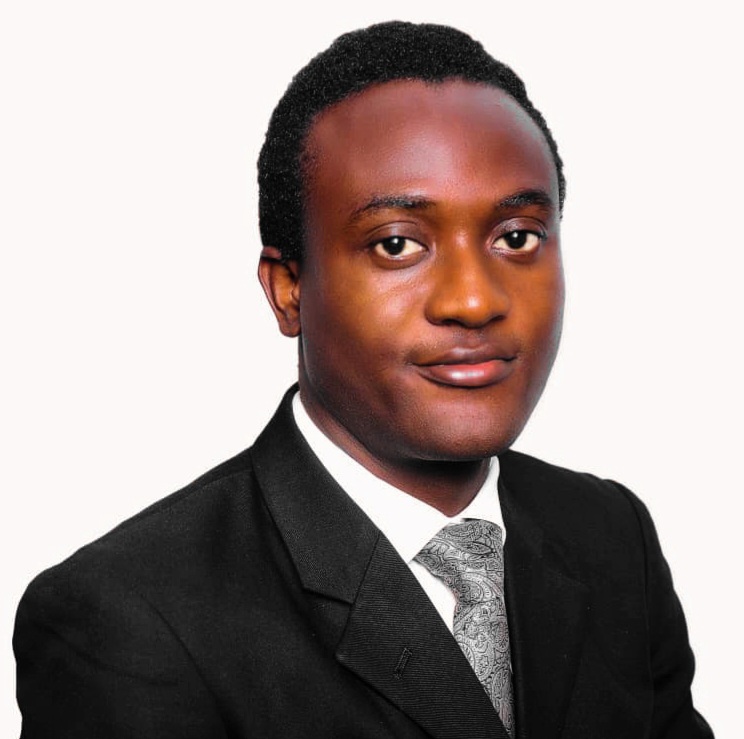
By Tolulope A. Adegoke, PhD
“The truest measure of a nation’s riches lies not in the depths of its mines or the breadth of its fields, but in the minds, hearts, and hands of its people—created in divine image, called to steward creation, and destined to multiply possibilities through faithful cultivation and wise leadership.” – Tolulope A. Adegoke, PhD
In an era defined by finite natural resources, rapid technological change, and global interdependence, a profound truth resonates across philosophy, faith, economics, and management: the greatest wealth is not buried beneath the earth in minerals, oil, or soil, but stands upon it in the form of human beings. This perspective challenges the traditional fixation on extractive riches and redirects attention to the living, creative, and relational capacity of people. Far from a poetic sentiment, it represents a divinely ordained reality, empirically validated across nations, and strategically indispensable for unlocking possibilities at every level of human endeavor—among individuals and communities (peoples), within corporations, and across entire nations.
This comprehensive examination draws upon timeless biblical revelation, rigorous empirical data from global institutions such as the World Bank and the Institute for Economics and Peace, and established principles from strategic management theory to demonstrate that humans constitute the ultimate resource. As stewards created in the image of God, people possess inherent dignity, creativity, and dominion that no mineral deposit or fossil fuel can replicate. Investing in human potential—through education, health, skills, and ethical empowerment—yields exponential returns that transcend material extraction and deliver sustainable prosperity, innovation, and resilience.
Biblical Foundations: Humans as God’s Image-Bearers and Vicegerents
The scriptural narrative establishes human beings as the pinnacle of creation and the greatest earthly asset long before modern economics articulated the concept. In Genesis 1:26–28, God declares, “Let us make man in our image, after our likeness. And let them have dominion over the fish of the sea and over the birds of the heavens and over the livestock and over all the earth and over every creeping thing that creeps on the earth.” This declaration is not incidental; it links the imago Dei—the image of God—with the mandate of dominion. Humans are entrusted with responsible stewardship over creation precisely because they reflect divine attributes: rationality, creativity, relationality, moral agency, and purposeful productivity.
This truth is echoed in Psalm 8:4–6, where the psalmist marvels, “What is man that you are mindful of him, and the son of man that you care for him? Yet you have made him a little lower than the heavenly beings and crowned him with glory and honor. You have given him dominion over the works of your hands.” Humanity’s crowning with glory underscores intrinsic worth that far surpasses any natural resource. Unlike oil reserves that deplete or mineral veins that exhaust, human potential compounds through generations when nurtured.
The New Testament reinforces this dignity. Jesus’ teachings, such as the Parable of the Talents in Matthew 25:14–30, portray God as entrusting resources to servants for multiplication through faithful stewardship—symbolizing the investment in human capacity rather than hoarding material wealth. The apostle Paul further affirms in Colossians 3:10 that believers are renewed “in knowledge after the image of its creator,” emphasizing ongoing development of the mind and spirit. These passages collectively reveal that God ordained humans—not the ground beneath them—as the primary vehicle for realizing creation’s possibilities. Dominion is exercised not through exploitation but through creative cultivation, innovation, and relational justice, making every person a living repository of divine potential.
Empirical Evidence: Human Capital as the Driver of Productivity and National Prosperity
Contemporary data unequivocally validate this ancient insight. The World Bank’s Human Capital Index Plus (HCI+) 2026 report provides compelling global evidence that human development accounts for up to two-thirds of cross-country income differences. The index measures the expected productivity of a child born today based on health, education, and employment outcomes extending to age 65. Striking disparities emerge: GDP per hour worked in the world’s ten most productive countries exceeds that of the ten least productive nations by more than thirty times. These gaps stem not primarily from natural resource endowments but from deficits in nutrition, learning, and workforce skills.
The report reveals sobering realities: 86 out of 129 low- and middle-income countries experienced stagnation or regression in key human capital components between 2010 and 2025. Deficits in these areas are projected to cost children born today approximately half of their potential future earnings. Conversely, countries that prioritize human investment outperform expectations relative to their GDP per capita. High relative performers include Vietnam, India, Malaysia, Jamaica, Kenya, and the Kyrgyz Republic—nations that have leveraged education, health, and skills to drive growth despite modest natural resources.
This pattern refutes the “resource curse” documented in seminal studies, such as Jeffrey Sachs and Andrew Warner’s 1997 analysis, which found that economies heavily dependent on natural resource exports in 1970 grew more slowly over subsequent decades. In contrast, resource-scarce yet human-rich nations have achieved remarkable transformations. South Korea’s economic miracle from 1960 to 1979 was propelled by massive investments in education and productivity rather than physical capital alone. Human capital and total factor productivity explained growth per worker comparably to physical investments, enabling the country to rise from post-war poverty to global industrial leadership without significant mineral wealth.
Singapore offers an equally compelling case. With virtually no natural resources, it achieved a 2023 Human Development Index of 0.946 (ranking among the world’s highest) through deliberate policies in education, healthcare, and skills development. Its transformation from a trading port to a knowledge-based economy illustrates how human ingenuity creates value where raw materials cannot. Japan and Israel similarly demonstrate resilience: Japan rebuilt after World War II through human capital intensity, while Israel—often called the “Start-Up Nation”—thrives on innovation ecosystems fueled by educated citizens despite arid land and limited conventional resources.
Longitudinal cross-country analyses, including Robert Barro’s 1991 study on economic growth, consistently show that higher human capital (measured by schooling and health) correlates with elevated investment rates, lower fertility (enabling demographic dividends), and sustained GDP growth. These empirical patterns confirm that humans are not merely consumers of resources but creators who multiply value exponentially.
Professional Management and Strategic Evidence: Humans as the VRIO Source of Competitive Advantage
Strategic management theory elevates this empirical reality into actionable frameworks. Gary Becker’s pioneering Human Capital (1964, expanded 1975 and 1993) treated education, training, and health as investments analogous to physical capital. Becker demonstrated that such investments yield measurable returns in earnings, productivity, and national growth—explaining the “residual” in economic models that physical capital and labor alone could not account for. Organizations and societies that systematically enhance human capabilities realize compounding advantages.
Peter Drucker, the father of modern management, famously observed in the late 20th century that “the most valuable assets of a 20th-century company were its production equipment. The most valuable asset of a 21st-century institution… will be its knowledge workers and their productivity.” Drucker foresaw the shift to a knowledge economy where human intellect, creativity, and adaptability become the decisive factors. In today’s context of artificial intelligence and digital transformation, this insight has only intensified: technology amplifies human potential but cannot replace the judgment, innovation, and relational intelligence that define knowledge work.
The Resource-Based View (RBV) of the firm, formalized by Jay Barney in his 1991 seminal paper “Firm Resources and Sustained Competitive Advantage,” provides the strategic capstone. According to RBV, resources deliver sustained advantage when they are Valuable, Rare, Inimitable, and Organized (VRIO). Human capital frequently satisfies all four criteria: it is valuable for generating economic rents; rare in its unique combinations of skills and experience; difficult to imitate due to path-dependent development and tacit knowledge; and organizable through culture, leadership, and systems. Empirical assessments of RBV confirm that firms prioritizing talent development outperform peers reliant on tangible assets. Companies such as Microsoft under Satya Nadella or Google (Alphabet) have achieved market dominance not through superior physical infrastructure but through relentless investment in attracting, developing, and retaining exceptional human talent.
Indispensable Roles: Delivering Possibilities Across Peoples, Corporations, and Nations
At the level of peoples (individuals and communities), humans as the greatest resource translate divine image-bearing into personal agency and collective uplift. Education and health investments empower individuals to exercise dominion creatively—innovating solutions, building families, and fostering communities. Empirical returns are clear: each additional year of schooling can increase individual earnings by 8–10 percent globally, while healthy populations contribute to demographic dividends that accelerate societal progress.
In corporations, strategic human capital management drives innovation, adaptability, and stakeholder value. Talent-centric organizations cultivate cultures of continuous learning, psychological safety, and ethical purpose. They outperform asset-heavy competitors by leveraging knowledge workers to navigate disruption, as evidenced in Deloitte’s 2026 Global Human Capital Trends, which highlight that competitive advantage increasingly depends on human-edge scaling amid AI proliferation. Corporations that treat employees as investments rather than costs achieve higher engagement, retention, and long-term profitability.
For nations, human resource development constitutes the foundation of sovereignty, resilience, and inclusive growth. Policies that prioritize universal health, quality education, and lifelong skills—aligned with the World Bank’s HCI+ recommendations—reduce inequality, mitigate shocks (from pandemics to climate events), and position countries for participation in the global knowledge economy. Nations ignoring this reality risk stagnation, while those embracing it, as Singapore and South Korea have, convert human potential into geopolitical influence and shared prosperity.
Relevance to All-Round Leadership and Global/National Security: Empirical Foundations and Strategic Imperatives
The recognition of humans as the greatest wealth extends profoundly into the realm of all-round leadership and security, where human capital emerges as the indispensable foundation for holistic governance, resilience, and sustainable peace. All-round leadership—integrating self-mastery, visionary foresight, relational wisdom, strategic execution, team alignment, and ethical integrity—cannot flourish in isolation from a well-nurtured populace. Biblical leadership models, such as Nehemiah’s reconstruction of Jerusalem’s walls (Nehemiah 4–6), illustrate this synergy: wise, prayerful, and inclusive leadership combined with empowered citizens to restore both physical and spiritual security. Proverbs 29:18 reinforces the principle: “Where there is no vision, the people perish,” underscoring that visionary leaders depend on developed human potential to translate ideals into enduring stability.
Empirically, the Institute for Economics and Peace’s Global Peace Index 2025 and its Positive Peace framework provide robust international-standard evidence. Positive Peace comprises eight interconnected pillars that build resilience and prevent conflict, one of which is explicitly “High Levels of Human Capital.” This pillar—centered on education, skills, and health—shows one of the strongest positive correlations with overall peacefulness, well-functioning government, low corruption, and equitable resource distribution. Countries ranking high on the Human Capital Index consistently occupy the top positions in the Global Peace Index: Iceland, New Zealand, and the Nordic nations demonstrate how sustained investment in people generates not only economic vitality but also societal cohesion and institutional trust that underpin national security.
In contrast, nations trapped in the resource curse—rich in minerals yet deficient in human capital—exhibit heightened insecurity, including internal conflict, governance fragility, and vulnerability to external shocks. The IEP data reveal that improvements in human capital are among the most powerful predictors of sustained Positive Peace, enabling societies to absorb geopolitical, cyber, or environmental disruptions without descending into violence. The World Economic Forum’s Global Risks Report 2026 and Global Cybersecurity Outlook 2026 further corroborate this: human talent gaps exacerbate cyber vulnerabilities, supply-chain fragility, and leadership deficits in crisis response. Organizations and nations with robust human capital pipelines, by contrast, exhibit superior resilience through adaptive leadership and collective intelligence.
Strategically, all-round leadership thrives when human resources are cultivated as the primary asset. Harvard Business Impact’s 2025 Global Leadership Development Study highlights that organizations prioritizing human capital development produce leaders who excel in navigating volatility, fostering innovation, and upholding ethical standards—precisely the qualities required for 21st-century security challenges. At the national level, this translates into comprehensive security: not merely military defense but human security encompassing economic stability, food sovereignty, cyber defense, and social harmony. Singapore’s transformation and Israel’s innovation-driven defense ecosystem exemplify how human-centered strategies convert potential vulnerability into strategic strength. Investing in people thus becomes both a divine mandate and a pragmatic security imperative, creating resilient leaders and societies capable of stewarding peace amid uncertainty.
Conclusion: A Divine and Strategic Imperative for Investment
The greatest wealth is indeed not in the ground but on the ground—embodied in every human life created in God’s image. Biblical revelation affirms this dignity and dominion; empirical data from the World Bank’s HCI+ 2026, the Institute for Economics and Peace’s Global Peace Index 2025, and decades of econometric research demonstrate its productivity, leadership, and security dividends; and strategic frameworks from Becker, Drucker, and Barney prove its competitive necessity. Across individuals, corporations, nations, leadership, and security architectures, humans deliver possibilities that no extractive industry can match: innovation that solves intractable problems, relationships that build trust and cohesion, visionary governance that prevents conflict, and stewardship that sustains creation for future generations.
The call to action is both spiritual and pragmatic: invest sacrificially in people through education, healthcare, ethical leadership development, inclusive opportunity, and Positive Peace-building initiatives. In doing so, societies honor their Creator, unlock exponential value, fulfill the dominion mandate responsibly, and fortify all-round leadership and security in an interdependent world. In a world tempted by short-term extraction, the timeless truth endures—true riches walk upon the ground, bearing the image of God and the potential to transform everything they touch. Nations, organizations, and communities that recognize and cultivate this reality will not merely survive but flourish, leaving legacies of abundance, wise leadership, and enduring peace for generations yet to come.
Dr. Tolulope A. Adegoke, AMBP-UN is a globally recognized scholar-practitioner and thought leader at the nexus of security, governance, and strategic leadership. His mission is dedicated to advancing ethical governance, strategic human capital development, and resilient nation-building, and global peace. He can be reached via: tolulopeadegoke01@gmail.com, globalstageimpacts@gmail.com









 Voice of Emancipation4 days ago