Connect with us

Islam

Friday Sermon: Which of the Favours of Your Lord Will You Deny? Surah Ar-Rahman

Published

on

By Babatunde Jose

The teachings of Al- Qur’an are universal, addressed to all people throughout the world regardless of their creed and colour. They enlighten man’s soul, purify his morals, condemn all wrongs, order good deeds and call for the establishment of justice and fraternity through obeying Allah as the supreme authority. Surah Ar-Rahman has benefits in education, indicating that the properties of educators are generous, compassionate, gentle, polite and morality to their students and anyone (Personal Competence).

Surah Rahman is the 55th chapter of the Quran and has 78 verses. It is often referred to as “The Beneficent.” It highlights the attributes of Allah, particularly His mercy and generosity. The surah is notable for its repeated refrain, “Fabi ayyi ala’i rabbikuma tukaththiban?” (So, which of the bounties of your Lord will you deny?), which serves to remind and awaken the listener to the blessings they receive from Allah.

The repetition of this question challenges those who deny the existence or power of Allah and invites them to reflect on their own limited abilities in comparison to the infinite power of Allah.

Surah Rahman also contains other instances of repetition. For example, the phrase “Then which of the blessings of your Lord will you both (jinns and men) deny?” is repeated six times in the surah.

Similarly, the phrase “So which of the favors of your Lord would you deny?” is repeated five times in the surah. This repetition further emphasizes the importance of gratitude and encourages the listener or reader to reflect on the countless blessings that Allah has bestowed upon them.

Another example is the repetition of the phrase “Which of the powers of your Lord can you (people) deny?” This phrase is repeated nine times in the surah, and it serves to highlight the power and might of Allah.

Overall, the repetition in Surah Rahman serves to emphasize key points and make them more memorable for the listener or reader. The repetition of the question “Which of your Lord’s blessings would you deny?” throughout the surah reminds us of Allah’s countless blessings and encourages us to express gratitude to Him. It also serves as a rhetorical device to challenge those who deny or reject the existence of Allah, inviting them to reflect on the blessings that are evident in the world around them.

The repetition of this question, along with other phrases such as “Then which of the blessings of your Lord will you both (jinns and men) deny?” and “So which of the favors of your Lord would you deny?” further emphasizes the importance of recognizing and acknowledging Allah’s blessings and encourages us to think about the ways in which we may be ungrateful or unaware of these blessings.

Finally, the repetition of the phrase “Which of the powers of your Lord can you (people) deny?” serves to highlight the power and might of Allah and challenges those who deny His existence or power to reflect on their own limited abilities in comparison to the infinite power of Allah.

Surah Rahman also includes other forms of repetition, such as parallelism and refrains. Parallelism is a literary device in which similar ideas are expressed using different words or phrases. For example, in verse 13, the phrase “Then which of the favors of your Lord will you deny?” is repeated twice, with slightly different wording: “Which of the favors of your Lord will you deny? He created man from clay.” This repetition creates a sense of rhythm and balance and helps to drive home the message of gratitude and recognition.

In the great astronomical universe there are exact mathematical laws, which bear witness to Allah’s Wisdom and also to His favors to His creatures; for we all profit by the heat and light, the seasons, and the numerous changes in the tides and the atmosphere, on which the constitution of our globe and the maintenance of life depend.

To be taken both literally and figuratively. A man should be honest and straight in every daily matter, such as weighing out things which he is selling: and he should be straight, just and honest, in all the highest dealings, not only with other people, but with himself and in his obedience to Allah’s Law. Not many do either the one or the other when they have an opportunity of deceit.

Justice is the central virtue, and the avoidance of both excess and defect in conduct keeps the human world balanced just as the heavenly world is kept balanced by mathematical order.

How can Allah’s favors be counted? Look at the earth alone. Life and the conditions here are mutually balanced for Allah’s creatures. The vegetable world produces fruit of various kinds and corn or grain of various kinds for human food. The grain harvest yields with it fodder for animals in the shape of leaves and straw, as well as food for men in the shape of grain. The plants not only supply food but sweet-smelling herbs and flowers.

The whole Surah is a symphony of Duality. The things and concepts mentioned in this Surah are in pairs: man and outer nature; sun and moon; herbs and trees; heaven and earth; fruit and corn; human food and fodder for cattle; things nourishing and things sweet-smelling; and so on throughout the Surah. Then there is man and Jinn. “Will ye deny?” that is, fail to acknowledge either in word or thought or in your conduct. If you misuse Allah’s gifts or ignore them that is equivalent to ingratitude or denial or refusal to profit by Allah’s infinite Grace.

The ships-sailing ships and steamers, and by extension of analogy, airplanes and airships majestically navigating the air-are made by man, but the intelligence and science which made them possible are given by man’s Creator; and therefore the ships also are the gifts of Allah.

The most magnificent works of man-such as they are – are but fleeting. Ships, empires, the wonders of science and art, the splendors of human glory or intellect, will all pass away. The most magnificent objects in outer Nature – the mountains and valleys, the sun and moon, the Constellation Orion and the star Sirius – will also pass away in their appointed time. But the only One that will endure forever is the “Face” of Allah. Tekbir!

Every single creature depends on Allah for its needs: of all of them the Cherisher and Sustainer is Allah. “Seek (its needs)”: does not necessarily mean ‘seek them in words’: what is meant is the dependence: the allusion is to the Source of supply.

Allah is still the directing hand in all affairs. He does not sit apart, careless of mankind or of any of His creatures. But His work shows new splendor every day, every hour, every moment.

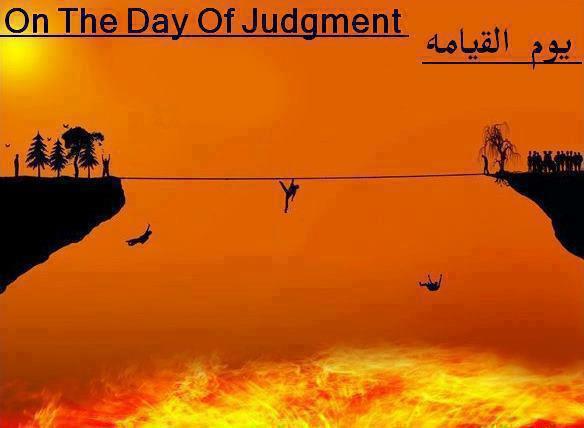
Allah gives to both good and evil men a chance in this period of probation; but this period will soon be over, and Judgment will be established. To give you this chance, this probation, this warning, is itself a favor, by which you should profit, and for which you should be grateful.

If you think that because you do things in secret, or because some of your sins do not seem to meet their inevitable punishment or some of your good deeds seem to go unnoticed, do not be deceived. Judgment will soon come. You cannot possibly escape out of the zones in which your lives have been cast, without authority from Allah. Be grateful to Allah for the chances He has given you.

Blessed be the name of thy Lord, Full of Majesty, Bounty and Honor.

The question in Surah Rahman is a wake-up call for all of us. It reminds us that our time in this world is short. We don’t know when we will die or when the Day of Judgment will come. So, we need to make the most of every moment and every blessing. We need to use our time and energy to do good and get closer to Allah. We need to change our bad habits and develop good ones. We need to be kind and generous to others. And we need to remember that everything we have is a gift from Allah. It is not because of our own efforts or abilities. This should make us humble, and it should also make us more grateful.

At this hour, we pray to Allah to grant divine healing to the sick as we remember our sister Sobura, who is currently afflicted. May Allah open the gate of divine healing for her and ease her pains as she currently undergoes chemotherapy.

May Allah teach us how to be grateful for all we have been given.

Barka Juma’at and a happy weekend!

Continue Reading
Click to comment

Leave a Reply

Your email address will not be published. Required fields are marked *

Islam

Friday Sermon: Apogee of Islamic Civilization 2: Contributions to Knowledge

Published

on

By

By Babatunde Jose

There is no such thing as Islamic science – for science is the most universal of human activities. But the means to facilitating scientific advances have always been dictated by culture, political will and economic wealth. What is only now becoming clear (to many in the west) is that during the dark ages of medieval Europe, incredible scientific advances were made in the Muslim world.

Geniuses in Baghdad, Cairo, Damascus and Cordoba (in Spain) took on the scholarly works of ancient Egypt, Mesopotamia, Persia, Greece, India and China, developing what we would call “modern” science. New disciplines emerged as well as major advances in medicine, astronomy, engineering and agriculture.

What the medieval scientists of the Muslim world articulated so brilliantly is that science is universal, the common language of the human race.

The mathematical sciences as practiced in the Islamic world during the apogee of Islamic civilization consisted of mathematics, algebra, and geometry as well as mathematical geography, astronomy and optics.

Muslims derived their theory of numbers (‘ilm al-a‘dad) in arithmetic from translations of the Greeks’ sources. Moreover, they acquired numerals from India (Hindu) and possibly China and made their use widespread. Mohammad Bin Ahmed in the tenth century invented the concept of zero or sifr. Thus the zero with the numerals made it possible for the simple expressions for numbers to have infinite values, thereby helping solve particular problems.

Muslims built mathematical models using the decimal system, expressing all numbers by means of ten symbols, and each symbol accorded the value of position as well as absolute value. Many creative methods of doing multiplications were developed.

The word algebra comes from the title of a Persian mathematician’s famous 9th century treatise “Kitab al-Jabr Wa l-Mugabala” which translates roughly as “The Book of Reasoning and Balancing.” Built on the roots of Greek and Hindu systems, the new algebraic order was a unifying system for rational numbers, irrational numbers and geometrical magnitudes. The same mathematician, Al-Khwarizmi, was also the first to introduce the concept of raising a number to a power.

Another famous contributor to this field was Umar Khayyam, who studied cubic equations and algebra came to be regarded as a science in its own right. Thus the Muslims not only developed the methods of solving quadratic equations they also produced tables containing sine, cosine, cotangent and other trigonometric values.

Al-Battani (d.929) systematically developed trigonometry and extended it to spherical trigonometry, with important consequences for astronomy, geography and exploration beyond the known world, thus making the construction of better maps and the reconceptualisation of the structure of the planet Earth.

The book, On the Measurements of Planes and Spherical Figures, written on Archimedean problems by the three sons of Musa bin Shakir in the ninth century became known in the West through the translation by Gerard of Cremona.

Al-Khwarizmi was one of the first scholars to produce a detailed astronomical table (zij). This astronomical table provided the means of calculating the positions of the stars and planets. Al-Farghani, in the ninth century wrote a detailed account of Ptolemy’s Almagest and his book was used throughout Europe and central Asia for the next 700 years.

Muslim philosophers and astronomers had inherited the Ptolemaic planetary system that hypothesised the principle of uniform circular motion allowing the planets to move in epicycles. However, Muslim astronomers eventually came to reject this theory in that the epicyclic movement violated the principle of uniformity of motion.

In the thirteenth century, Al-Tusi, a Persian astronomer put forward his concept known as the “Tusi Couple”, a hypothetical model of “epicyclic motion that involves a combination of motions each of which was uniform with respect to its own center”(Turner).

This model was applied by Ibn al-Shatir to the motions of the heavenly bodies in the fourteenth century. Ibn al-Shatir’s formulations were the beginnings of verifying theoretical astronomy through systematic observations. Ibn al-Shatir’s theory of lunar motion was very similar to that attributed to Copernicus some 150 years later (Sabra, 2002).

Muslim scholars worked in all major branches of astronomy: theoretical and computational planetary astronomy, spherical astronomy and time keeping, instrumentation, and folk astronomy.

Around the year 1,000, the celebrated doctor Al Zahrawi published a 1,500 page Illustrated Encyclopedia of Surgery that was used in Europe as a medical reference for the next 500 years. Among his many inventions, Zahrawi discovered the use of dissolving catgut to stitch wounds. He also reportedly performed the first caesarean operation and created the first pair of forceps.

Now the Western world’s drink du jour, coffee, our good old morning brew, was first prepared in Yemen around the 9th century after its journey across the strait from Ethiopia. In its earliest days, coffee helped Sufis stay up during late nights of devotion. Later brought to Cairo by a group of students, the coffee buzz soon caught on around the empire. By the 13th century it reached Turkey, but not until the 16th century did the beans start boiling in Europe, brought to Italy by a Venetian trader.

Abbas ibn Firnas was the first person to make a real attempt to construct a flying machine and fly.” In the 9th century he designed a winged apparatus, roughly resembling a bird costume. In his most famous trial near Cordoba in Spain, Firnas flew upward for a few moments, before falling to the ground and partially breaking his back. His designs would undoubtedly have been an inspiration for famed Italian artist and inventor Leonardo da Vinci’s hundreds of years later.

The University of al-Qarawiyyin in Fez, Morocco, founded in 859 CE by Fatima al-Fihri, is recognized by Guinness World Records and UNESCO as the world’s oldest continuously operating, degree-granting university, evolving from a mosque into a leading Islamic educational center.

“Many of the most important advances in the study of optics come from the Muslim world.” Around the year 1000 Ibn al-Haytham (965-1041) proved that humans see objects by light reflecting off of them and entering the eye, dismissing Euclid and Ptolemy’s theories that light was emitted from the eye itself. This great Muslim physicist also discovered the camera obscura phenomenon, which explains how the eye sees images upright due to the connection between the optic nerve and the brain. This is what would produce the ubiquitous ‘pin-hole camera.

According to Hassani, the Prophet Mohammed (SAW) popularized the use of the first toothbrush in around 600. Using a twig from the Meswak tree, he cleaned his teeth and freshened his breath. Substances similar to Meswak are used in modern toothpaste.

Many of the basics of modern automatics were first put to use in the Muslim world, including the revolutionary crank-connecting rod system. By converting rotary motion to linear motion, the crank enables the lifting of heavy objects with relative ease. This technology, discovered by Al-Jazari in the 12th century, exploded across the globe, leading to everything from the bicycle to the internal combustion engine.

“Hospitals as we know them today, with wards and teaching centers, come from 9th century Egypt.” The first such medical center was the Ahmad ibn Tulun Hospital, founded in 872 in Cairo. Tulun hospital provided free care for anyone who needed it — a policy based on the Muslim tradition of caring for all who are sick. From Cairo, such hospitals spread around the Muslim world.

Muslim scientists and inventors, including Arabs, Persians, and Turks, were probably hundreds of years ahead of their counterparts in the European Middle Ages. They drew influence from Aristotelian philosophy and Neo-Platonists, as well as Euclid, Archimedes, Ptolemy, and others. The Muslims made innumerable discoveries and wrote countless books about medicine, surgery, physics, chemistry, philosophy, astrology, geometry and various other fields.

Abu Nasr Al-Farabi (872–950) also known as Alpharabius, an Arab scientist and philosopher is considered as one of the preeminent thinkers of the medieval era.

Al-Battani (858–929). Arab mathematician, scientists and astronomer who improved existing values for the length of the year and of the seasons.

Ibn Sina (980–1037) also known as Avicenna, Persian philosopher and scientist known for his contributions to Aristotelian philosophy and medicine.

Ibn Battuta (1304–1369) also known as Shams ad–Din. Arab traveler and scholar who wrote one of the most famous travel books in history, the Rihlah.

Muhammad ibn Musa Al-Khwarizmi (780–850) also known as Algoritmi or Algaurizin. His works introduced Hindu-Arabic numerals and the concepts of algebra into European mathematics.

Thabit ibn Qurra (826–901) Also known as Thebit. Arab mathematician, physician and astronomer; who was the first reformer of the Ptolemaic system and the founder of statics.

Abu Bakr Al-Razi (865–925) also known as Rhazes. Persian alchemist and philosopher, who was one of the greatest physicians in history.

Jabir Ibn Haiyan (722–804) also known as Geber. The father of Arab chemistry known for his highly influential works on alchemy and metallurgy.

Ibn Ishaq Al-Kindi (801–873). Arab philosopher and scientist, who is known as the first of the Muslim peripatetic philosophers.

Ibn Zuhr (1091–1161) Also known as Avenzoar. Arab physician and surgeon, known for his influential book Al-Taisir Fil-Mudawat Wal-Tadbeer (Book of Simplification Concerning Therapeutics and Diet).

Ibn Khaldun (1332–1406) was a groundbreaking Arab historian and philosopher, best known for his work “Muqaddimah,” which laid the foundations for modern historiography and sociology.

Ibn Al-Baitar (1197–1248) Arab scientist, botanist and physician who systematically recorded the discoveries made by Islamic physicians in the Middle Ages.

We could go on and on, but suffice to say that no people have the monopoly of knowledge, particularly where science and mathematics are concerned. Credits must always be given where it is due.

“O Allah, increase me in knowledge and understanding. O Revealer of secrets, O Knower of the unseen and hidden matters, remove the veils from the faces of knowledge and questions so that I may see their reality. Protect me from mistakes or misguidance. You are the One who grants success in all matters, and You are the All-Knowing of the unseen. O Allah, grant me the understanding of the Prophets, the memory of the Messengers, and the inspiration of the close angels, by the honor of our master Muhammad (SAW), the leader of the first and the last. May Allah send His blessings upon our master Muhammad (SAW), his family, and all his companions. Aaaameee

Barka Juma’at and a happy weekend, as we prepare earnestly for the month of Ramadan.

+234 803 311 0822

Continue Reading

Islam

Friday Sermon: Apogee of Islamic Civilization 1: Contributions to Knowledge

Published

on

By

By Babatunde Jose

In Islam, seeking knowledge is a fundamental duty, highlighted by the Quran’s first revealed word, “Iqraa” (Read). Muslims are encouraged to use their senses—sight, hearing, and intellect—to gain knowledge, which strengthens their faith and relationship with Allah. Passing on knowledge is highly rewarded, and those who seek knowledge are promised rewards in this life and the Hereafter, including closeness to Allah and entry into Paradise.

The Quran and Hadith emphasize the value of knowledge, raising the status of those who pursue it. Knowledge helps Muslims understand Allah’s creation, fostering humility and consciousness of Him. It also remains a continuous source of good deeds after death, benefiting others. The pursuit of knowledge, both religious and worldly, is seen as a praiseworthy trait, exemplified by the prophets.

The Islamic Caliphate consisted of a society that was multicultural in terms of languages, customs, traditions and religion. As Islam spread from Arabia to countries surrounding them, they encompassed vast lands with peoples of different faiths and cultures. Thus the Islamic Caliphate not only consisted of Muslims from three continents, Arabs, Persians, Turks, Africans, Indians and other Asians, but also Jews, Christians and other faiths.

Therefore, during the apogee of Islamic civilization, scholars from all faiths worked under the umbrella of Islam to produce a unique culture of knowledge and learning. Muslims gained access to the Greek medical knowledge of Hippocrates, Dioscorides, and Galen through the translations of their works in the seventh and eighth centuries.

These initiatives by Muslims could be seen in the different aspects of the healing arts that were developed. The translation movement of the twelfth century in Latin Europe affected every known field of science, none more so than medicine (Meyers, 1964).

Two Muslim physicians who became known in Europe during this period were Ibn Sina (980- 1037) and Al-Razi (865-925). Ibn Sina devoted his life to the study of medicine, philosophy and other branches of science. Renowned throughout medieval Europe as Avicenna, he established free hospitals and developed treatments for diseases using herbs, hot baths, and even major surgery. His famous book The Canon of Medicine was translated into Latin in the twelfth century and it was used in medical schools throughout Europe.

‘The Canon of Medicine’ contained all Greek medical knowledge together with Arabic interpretations and contributions. Ibn-Sina wrote some 99 books dealing with philosophy, medicine, geometry, astronomy, theology, philosophy, and art. Ibn-Sina was also known for ‘Kitab al Shifa’ (Book of Healing), in which he divided practical knowledge into ethics, economics, and politics, and theoretical knowledge into mathematics, physics, and metaphysics (Meyers, 1964).

Al-Razi, known in Latin as Rhazes, excelled in the powers of observations and wrote some 184 works on topics that he studied as a practicing doctor. One of Al-Razi’s books, Treatise on Smallpox and Measles, was translated into Latin, then English and other European languages, and “went through forty editions between the fifteenth and nineteenth century” (Turner, 1995). Furthermore, he established separate wards in hospitals for the mentally ill, thereby creating the means for clinical observations of these diseases.

Al-Razi also included in his studies ideas involving human behavior and he was a pioneer in the field of psychology, thus removing the theories of demons and witchcraft associated with these diseases in the Christian world.

By the twelfth century Muslim physicians had produced many works: encyclopedias, medical biographies, texts on medical ethics, and on specialist topics such as ophthalmology.

Ibn An-Nafīs contradicted the theories of blood circulation as put forward by Galen. He advanced a theory of blood circulation between the compartments of the heart and the lungs, and of pulmonary circulation or lesser circulation.

In 1553, three centuries later, a Spaniard Miguel Serveto (Michael Servetus) forwarded a similar theory (Meyerhof, 1935). He was among the initial precursors to Harvey’s scholarly work that revealed the circulation of blood in the human body.

Muslims using their clinical and surgical knowledge established hospitals. These institutions were far superior to any that existed in ancient times or in lands beyond the Islamic Empire.

In medieval Europe most hospitals were attached to religious orders and monasteries. In the Islamic world, during the eighth century the first hospital was built in Damascus; having separate wards for males and females, and special wards for internal diseases, surgery, orthopedics and other diseases. These hospitals were to become models for hospitals as we know them today (Turner, 1995).

Important surgical treatises were written in the tenth and the eleventh centuries in Andalusia by Abu’l-Qasim al-Zahrawi, known in Europe as Abulcais. His book Kitab al-Tasrif (Book of Concessions), a medical almanac, was translated into Latin and used by Muslims and in European medical schools.

The twelfth century physician in Muslim Spain, Ibn Zuhr, known as Avenzoar, wrote works especially in anatomy that had a great influence on medical practice in medieval Europe. Thus in the medical field scholars from the Islamic world had much to contribute both in terms of working with ancient knowledge and through the major developments of their own.

In chemistry, the works of Jaber ibn Haiyan and Al-Razi formed the basis of modern science. Jaber, known as Geber in Latin, described in his works the preparation of many chemical substances: the sulphide of mercury, oxides and arsenic compounds.

Al-Razi in his book Secret of Secrets known as Liber secretorum bubacaris, described the chemical processes and experiments he conducted. Hill (1993) has stated that Al-Razi’s book ‘Secret of Secrets‘ foreshadows a laboratory manual that deals with substances, equipment and procedures. Muslim chemists developed recipes for products that had industrial and military applications.

The discovery of inorganic acids during chemical experiments had valuable industrial applications in the centuries that followed. In the fields of pharmacology and pharmacy Muslims made notable progress. These fields involved scientific investigation into the composition, dosages, uses and therapeutic effects of drugs. Having translations of Dioscorides’ De Materis Medica, along with knowledge from Syria, Persia, India and the Far East, Muslim scholars and physicians showed great innovative skills. They developed the procedures for the manufacture of syrups and juleps, and established apothecary shops (Turner, 1995).

Ibn al-Baytar’s book Al-Jami‘fi al-Tibb (Collection of Simple Diets and Drugs) contained detailed records of the plants in the lands along the length of the Mediterranean coast between Spain and Syria. In addition, he systematically compared this knowledge with that of the scientists of previous eras. His book on botany was used until the Renaissance by Europeans.

Apart from the foregoing, it is pertinent to note that the Quran itself mentions some medicinal remedies which have become time honored. One of such remedies is honey. Honey, with its rich, golden hue and soothing sweetness, has been noted as a powerful super food and medicinal source for thousands of years. Prophet Muhammad (SAW) frequently extolled the virtues of honey. A well-known Hadith states, “Make use of the two remedies: honey and the Qur’an.” [Tirmidhi] This shows that honey was not only considered a dietary substance but was also recognized for its curative capabilities.

Honey is mentioned in the Quran and Hadith, highlighting its significance and healing properties in Islamic teachings. In Surah An-Nahl (16:69), Allah describes honey as a miraculous product of the bees: “From their bellies comes a drink of varying colors, in which there is healing for people.” This verse emphasizes honey as a natural remedy with medicinal benefits, serving as a sign for those who reflect on creation.

In Surah Muhammad (47:15), honey is also featured as one of the rivers in Paradise, symbolizing purity and sweetness. The verse paints a vivid picture of Paradise with rivers of water, milk, wine, and honey, signifying the blessings that await the righteous.

In the Hadith, honey is recognized as a source of healing. Prophet Muhammad (SAW) said: “Healing is in three things: a drink of honey, bloodletting by cupping, and cauterization by fire, but I forbid my followers to use cauterization.” This narration, reported in Sahih al-Bukhari and Sahih Muslim, reinforces the Quranic message about the medicinal properties of honey and promotes its use as a natural cure in various situations.

There are 7 Unique Health Benefits of Honey: Honey is nature’s energy booster, rich in carbohydrates, mainly fructose and glucose, which are excellent energy sources. It contains many vitamins, minerals, and antioxidants that contribute to its health-boosting properties. Among these are vitamin C, calcium, and iron, with darker honey typically possessing higher mineral contents than lighter ones.

Suppress coughing in children with honey: For children over 1 year of age, honey can act as a natural and safe cough suppressant. Some studies show that it’s even more effective than certain cough medicines.

It heals wounds: Topically applied honey effectively treats wounds, burns, and skin ulcers.

Honey has anti-bacterial and anti-fungal properties. The anti-bacterial property is more effective if the honey is diluted with water. However, honey should not be fed to infants under 12 months as it may cause botulism.

Honey’s phenolic compounds have been linked to a reduced risk of heart disease.

Honey is an old home remedy for a cough and sore throat. Its antioxidant and antimicrobial properties can soothe the throat and reduce cough frequency.

Honey promotes the formation of melatonin due to its tryptophan content which helps the body recover during sleep.

Allah’s Messenger (SAW) said: “When a son of Adam (i.e. any human being) dies his deeds are discontinued, with three exceptions: Sadaqah, whose benefit is continuous; or knowledge from which benefit continues to be reaped, or a righteous child who supplicates for him.” [Muslim].

Anyone who is seeking knowledge during his life will be rewarded for it for eternity! Isn’t that an amazing way to think about continuing to seek more knowledge? Interested readers are free to download and read: Healing With The Medicine of The Prophet (SAW) By: Imam Ibn Qayyim Al – Jauziyah

Barka Juma’at and a happy weekend.

Continue Reading

Islam

Friday Sermon: Excursion into the Inexplicable and Incomprehensible

Published

on

By

By Babatunde Jose

Allah! There is no deity except Him, the Ever-Living, the Sustainer of existence. Neither drowsiness overtakes Him nor sleep. To Him belongs whatever is in the heavens and whatever is on the earth. Who is it that can intercede with Him except by His permission? He knows what is before them and what will be after them, and they encompass not a thing of His knowledge except for what He wills. His Throne extends over the heavens and the earth, and their preservation tires Him not. And He is the Most High, the Most Great. (Quran 2:255 – Ayat-ul-Kursi)

The second sentence in the above verse is corroborated by Psalm 121:3-4 in the phrase “he doesn’t sleep nor slumber”, which emphasizes that God is a constant protector who is always vigilant over His people.

No doubt it is agreed by all, including the non-people of God, that the wonders in nature and their inexplicability has given rise to the phrase ‘the work of God is incomprehensible’. We might search but will not comprehend.

The supernatural is usually defined as that which is not explicable by the known forces of nature. Supernature knows no bounds. Too often we see only what we expect to see: our view of the world is restricted by the blinkers of our limited experience; but it need not be this way.

Albert Einstein, in the London Observer, 5 April 1964, said, ‘I cannot believe that God plays dice with the cosmos.’ There is life on earth – one life, which embraces every animal and plant on the planet. Time has divided it up into several million parts, but each is an integral part of the whole.

The enigma of creation is a profound mystery that encompasses the origins of the universe, the earth, and all living beings. It highlights the divine wisdom and power of God as the ultimate Creator. The Bible’s account of creation in Genesis 1:1, “In the beginning, God created the heavens and the earth,” sets the stage for the unfolding narrative of creation. The six days of creation describe the systematic and purposeful act of God bringing the universe into existence, culminating in the creation of humanity in His own image (Genesis 1:27).

The mystery of creation is further emphasized in passages that speak to God’s wisdom and power, such as Job 38:4-7, challenges Job’s understanding of creation and God’s omnipotence, emphasizing that God is aware of all aspects of creation and existence. Similarly, Psalm 104:24 invites us to pause and gasp at creation’s scope, its wise design, and its living abundance: Countless works and flawless wisdom. The doctrine of “creation ex nihilo,” meaning “creation out of nothing,” is a key aspect of the mystery of creation.

“And to Allah belong the unseen [aspects] of the heavens and the earth, and to Him will be returned the matter, all of it…” (Quran 11:123)

 There are ninety-two chemical elements that occur in nature, but only sixteen, forms the basis of all living matter. One of the sixteen, carbon plays a central role because of its ability to form complex chains and rings that can be built into an immense number of compounds. And yet, from the thousands of possible combinations, just twenty amino acids are singled out as the units of construction for all proteins.

Most significant of all, these proteins are produced in the right place at the right time by an ordered sequence of events governed by a code carried in just four molecules, called nucleotide bases. This is true whether the protein is destined to become a bacterium or an African elephant. The instructions for all life are written in the same simple language.

The activities of life are governed by the second law of thermodynamics which states that the state of entropy of the entire universe, as an isolated system, will always increase over time. The second law also states that the changes in the entropy in the universe can never be negative.

Why is it that when you leave an ice cube at room temperature, it begins to melt? Why do we get older and never younger? Certain things happen in one direction and not the other, this is called the “arrow of time” and it encompasses every area of science. The thermodynamic arrow of time (entropy) is the measurement of disorder within a system. Denoted as the change of entropy suggests that time itself is asymmetric with respect to order of an isolated system, meaning: a system will become more disordered, as time increases. Who created and decreed this? Allah SWT.

We learn from the Quran Verse 39:67 that God’s greatness is far beyond human comprehension – the verse states that all seven universes are “folded within God’s hand.”

Supported by the Quran’s formidable mathematical code, we are taught that our universe is the smallest and innermost of seven universes,  see Quran 41:12, 55:33, 67:5, & 72:8-12).

Meanwhile, our scientific advances have shown us that our galaxy, the Milky Way, is 100,000 light years across, and that our universe contains a billion such galaxies and a billion trillion stars, plus countless decillions (1+60 zero) of heavenly bodies. Our universe is estimated to span distances in excess of 20,000,000,000 light years.

If we take only a quintillion [1,000,000,000,000,000,000] of the stars and simply count them [from 0 to quintillion] one count per second, day and night, this will take 32 billion years (more than the age of the universe). That is how long it will take to just “count” them; but God “created” them. Such is the greatness of God.

Seven universes, each surrounding the next: Surely we can appreciate the vastness of our universe if we imagine going on a space odyssey. When we leave the planet Earth towards the sun, at the speed of light (approximately 300,000 kilometers per second or 186,282 miles per second), we reach the sun after 93,000,000 miles or 8 minutes 20 seconds. It will take us more than 50,000 years at the speed of light to exit our galaxy. From the outer limit of the Milky Way, our planet Earth is invisible. Not even the most powerful telescope can detect our tiny “Earth.”

We have to spend more than 2,000,000 years at the speed of light to reach our next-door galaxy. At least 10,000,000,000 years, at the speed of light, must be spent to reach the outer limit of our universe. From the outer limit of our universe, even the Milky Way is like a speck of dust in a large room. Allahu Akbar !!!

The second universe surrounds our universe. The third universe is larger than the second, and so on. More accurately, our universe should be considered the seventh universe, surrounded by the sixth universe, which is surrounded by the fifth universe, and so on. Can you imagine the vastness of the first, outermost universe? No number exists to describe the circumference of the first universe. This incomprehensible vastness is “within the fist of God’s hand.”

God’s greatness is represented not only by the fact that He holds the seven universes in His hand, but also by the fact that He fully controls every atom, even subatomic components, everywhere in the greater universe (Quran 6:59, 10:61, & 34:3).

Nearer us here on earth, Fish are incredibly diverse, and their survival hinges on their ability to maintain a stable internal environment, a process known as osmoregulation. They did not have to learn it; they were created that way. This is especially critical when it comes to managing water and salt levels within their bodies relative to the surrounding water. Can all fish live in both freshwater and saltwater? No.

Freshwater fish live in an environment where the salt concentration in their bodies is higher than the surrounding water. This leads to a constant influx of water through osmosis. To counteract this, freshwater fish have natural specific adjustments: They drink very little water. They produce large amounts of dilute urine to expel excess water. Their gills actively absorb salts from the surrounding water. These processes allow them to maintain a proper balance despite the constant osmotic pressure.

Saltwater fish face the opposite problem. The salt concentration in the surrounding water is higher than in their bodies, leading to a constant loss of water through osmosis. To survive in this environment, they drink large amounts of seawater. They produce small amounts of concentrated urine to conserve water. They actively excrete excess salts through their gills. Without these mechanisms, they would quickly become dehydrated and die.

While most fish are limited to either freshwater or saltwater, a small group called euryhaline fish can tolerate a wide range of salinity levels. These fish possess remarkable physiological adaptations that allow them to transition between freshwater and saltwater environments. Examples of euryhaline fish include: Salmon that migrate from freshwater rivers to the ocean to grow and mature before returning to freshwater to spawn. Also similar to salmon, eels migrate between freshwater and saltwater environments.

Euryhaline fish achieve this feat through a combination of physiological and behavioral adaptations. They can alter the function of their gill cells to either absorb or excrete salt as needed. Hormones, like cortisol, play a crucial role in regulating salt transport across the gills. Their kidneys can adjust the volume and concentration of urine they produce.

Some euryhaline fish may also seek out areas with more appropriate salinity levels during the transition period.

Salmon belong to the Salmonidae family, which includes salmon, trout, whitefish, taimen, lenok, char, and grayling. They typically swim in temperate and arctic waters in the Northern Hemisphere in large groups known as shoals, and can survive in both fresh and saline water. Whilst they spend the most of their adult lives at sea, salmon undertake an epic migration inland to the rivers in which they were born in order to reproduce.

What makes the salmon’s migration, often called a “salmon run”, so impressive is the challenge of swimming upstream against miles of rushing river water, as well as hurtling up and over rocks, waterfalls and dodging predators.

1. Salmon can leap 12 feet out of water—higher than the men’s high jump record.

2. Salmon are anadromous, meaning they migrate from oceans into rivers to reproduce.

3. They return to the same rivers in which they were born to spawn, and can even locate the specific tributary of the river they were born in.

4. Salmon migrate enormous distances to reach their spawning grounds.

5. Salmon use their eyesight to plan their jumps—they can judge distance in and out of water very well.

Salmon make their exhausting migrations back to their birth rivers because they instinctively know that water far in-land provides a safer environment than the open ocean for them to spawn.

Salmon must also lay their eggs in freshwater because their offspring are not born with the ability to survive in saline water: They develop this ability when they are ready to migrate to the ocean after birth. Whilst rivers provide safety for reproducing salmon and offspring, there is not enough food for all the salmon to eat once they mature, so they must venture out to the ocean where most salmon will live until they are ready to reproduce.

It is one of nature’s amazing phenomena that salmon can find their way back to their birthplace to spawn with such accuracy—just how they manage this has been a popular topic of research among ichthyologists. Yet, on the reversed scale is the case of the eel. Allah knows best.

Barka Juma’at and a happy weekend.

+234 803 311 0822

AKIN’S WIFE GOES HOME IN GLORY:

Abimbola Funmilola Motunriolaoba Aloba, (nee Olayinka) (68) goes home today to meet her maker.

Amiable wife of our friend and brother Akin Uwaifo Aloba, Bimbo as we all call her, died 7th January 2026, when she decided ‘it is finished’. She left, leaving behind her husband and two beautiful Aloba boys, Mayowa and Omoferimi (a child born on the fateful day when our friend miraculously missed being on the Nigerian Air Force Lockheed C-130H Hercules which crashed three minutes after take-off. All 159 people on board were killed, Akin would have been the 160th victim on that fateful 26 September 1992).

Bimbo was ever smiling. A lawyer by training but saw-miller by inherited trade and a doting mother who lavished affection on her family. She will surely be missed. It is appropriate to bid her farewell by saying: Inna lillah wa inna ilehi rajiun, from Him we come and to Him our return. May God grant her eternal rest.

Continue Reading

Trending