By Arinze Anapugars
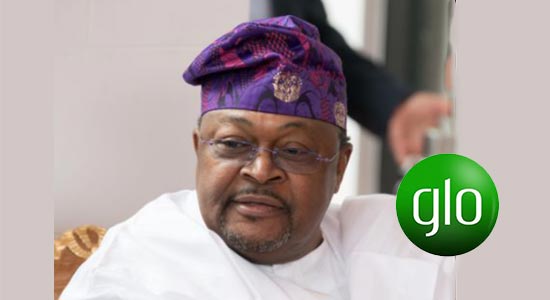
What sets him apart is not his stupendous wealth or the sprawling empire he has built. Dr. Michael Agbolade Ishola Adenuga is a man whose fortune transcends money, whose true affluence is etched in the quiet revolutions he has ignited across business, society, and the human soul.
Even as he turns 72 on April 29, Adenuga remains an enigmatic titan – inscrutable as the Sphinx, elusive as a breeze at dusk. Yet his influence echoes thunderously in boardrooms, communities, and economies, belying the quietude he so fiercely guards. “Character is like a tree and reputation like a shadow. The shadow is what we think of it; the tree is the real thing,” Abraham Lincoln once reflected. Dr. Mike Adenuga, in his silence and substance, is unmistakably the tree.
The Quiet Alchemy of a Titan
Dr Adenuga’s story is one of unwavering resilience, strategic brilliance, and disarming humility. His rise from modest origins to continental acclaim is not merely a story of wealth acquired, but of vision pursued with Spartan discipline and almost monastic restraint.
By his early twenties, he had already entered the gilded ranks of millionaires, not through inherited fortune, but through the sweat of night shifts as a New York taxi driver and security guard, braving icy streets with stoic resolve. The conditions were so tough that six of his compatriots gave up their jobs owing to what they termed life-threatening weather and adverse work conditions. But Dr Adenuga understood that adversity, like the English poet, George Gordon Byron, wrote in Don Juan “is the first path to truth.” And through such crucibles, Adenuga forged not just a fortune, but a formidable will.
Upon returning to Nigeria, eschewing the comfort of white-collar prestige, he chose instead the grit of his parents’ sawmill. There, he demonstrated his instinctive flair for transformation — installing cutting-edge equipment, multiplying efficiency, and sowing the first seeds of an empire.
From timber to oil, from banking to telecommunications, and from aviation to real estate, Adenuga’s ventures grew with the inevitability of sunrise, guided not merely by profit, but by a philosopher’s belief in purpose and permanence. They include Worldspan Holdings, Devcom Bank, Equatorial Trust Bank (later merging with Sterling Bank), Conoil Plc, Conoil Producing, Southern Airline and, eventually, Globacom — each a monument not just to enterprise, but to audacity.
The Rebel Who Drilled
In the tempestuous oil industry of the 1980s, while others bartered oil blocs for quick gain, Adenuga dug deep — literally. His foray into the business was a typically audacious one. When he acquired oil blocs through his Consolidated Oil company as part of the Babangida administration’s step to break the monopoly of foreigners in the production of crude oil in the country, Adenuga refused to tow his peers’ path of selling off the oil blocs to foreign companies. He chose to embark on drilling against monumental pressure and the risk of failure. His family had warned him that the oil business was the preserve of multinational oil companies and not for individual businessmen. The mother whom he was particularly close to preferred him to remain in the manufacturing business where he had made his mark and where Nigerians had succeeded greatly.
Dismissing warnings from family and scepticism from the industry, he pioneered Nigeria’s first indigenous oil production through Consolidated Oil. It was an act of entrepreneurial defiance that redefined the energy landscape.
Then came National Oil and Chemical Marketing Company (NOLCHEM), a dying brand he acquired for a then hefty sum of ₦7.4 billion, when no one else dared touch it. He changed the name to Conoil, and, under his stewardship, it rose phoenix-like, and is now one of Nigeria’s most profitable oil marketing firms. He is, in every sense, the Prometheus of Nigerian industry, having wrested fire from the gods of foreign monopoly and gifted it to his people.
The Voice that Gave Us Voice
Yet if oil carved his name in gold, it was telecommunications that etched it into legend. Twice he won a GSM licence auction, twice the licences were revoked. The first auction was done by the Abacha regime and cancelled by successive administrations, which opined that the exercise did not follow due process. Adenuga was to again win a GSM licence in 2000 under the President Olusegun Obasanjo regime. But the spectrum he was allotted was encumbered, as it had earlier been assigned to another company. When he insisted on certain guarantees before he would make the full payment for the licence, the Federal Government petulantly revoked it and stripped him of the $20 million mandatory deposit.
It was a massive loss which would have made lesser mortals recoil. But as Friedrich Nietzsche wrote in ‘Twilight of the Idols”, “He who has a why to live can bear almost any how.” For Adenuga, that ‘why’ was vision — of a Nigeria where communication was not a privilege but a right. He pressed on and later went on to bid for the Second National Operator (SNO) license in 2002, and deposited another $20 million. This time, he was lucky. He won the bid in August of that year, and Globacom was granted the licence to operate as a national carrier, operate digital mobile lines, serve as an international gateway for telecommunications in the country, and operate fixed wireless access services.
Even then, many did not give him a chance. They argued that the telecom sector was for the well-established foreign telecom companies and that Adenuga did not have the requisite experience in that field. And when he announced that Globacom would launch with Per Second Billing (PSB), the industry scoffed loudly at him.
Again, the Great Guru, as he is fondly called by admirers, went on to prove sceptics wrong. With the birth of Globacom in 2003, his vision of democratising communication was realised. Per Second Billing, once dismissed as folly by older operators, became the new industry standard. Call rates tumbled. SIM cards not only became accessible but also affordable. The digital revolution took root. And millions of Nigerians, once voiceless, found a voice — thanks to the tenacity of one man who would not yield.
A Legacy Forged in Silence
I do not know if he ever came across this quote by Marcus Aurelius Antoninus, Roman emperor and philosopher, “Do not seek to be known, but to be worth knowing”. But perhaps no modern Nigerian epitomises this Stoic ideal more than Dr Mike Adenuga. Reclusive almost to the point of myth, he is rarely seen, seldom heard, hardly grants media interviews, and virtually never feted in public. Even many of his employees have never glimpsed their elusive Chairman, known to them only as “The Board.”
Yet his absence is an illusion. For in businesses, homes, hospitals, and schools, Adenuga’s presence is indelible. He gives, not for applause, but from an inner compass that points unfailingly to service. His philanthropy, like his wealth, is deliberate, vast, and largely unannounced. He gives quietly, contributing generously to various causes in health, education, and poverty alleviation. He has supported initiatives that aim to improve the lives of millions, particularly those from disadvantaged backgrounds. While his peers may spend their time in the public eye, Adenuga chooses to channel his efforts into creating lasting change in people’s lives. For him, wealth is beyond money. It is how you touch people’s lives.
Adenuga’s legacy looms large – not only in the industries he transformed or the fortunes he built, but in the hearts he touched without fanfare. In an age that worships spectacle, his is a refreshing, almost ancient kind of greatness: the kind that measures success in lives changed, not headlines gained. “To give without ostentation,” said the Turkish philosopher Epictetus, “is the truest form of virtue.”
The downside to Adenuga’s giving spirit, however, is that even gratitude can be an intrusion. It is taboo to try to reach him to show appreciation, even if you are privileged to have his number. A thank-you text message for a huge cheque from him once earned this writer a stern rebuke. “Not acceptable,” he responded curtly. It did not end there. The following day, he called and spent over 10 minutes warning about the “intrusion”. Such is the paradox of the man: generous beyond measure, yet resistant to recognition and expression of gratitude.
Now, as he turns 72, Adenuga’s legacy looms large — not only in the industries he transformed or the fortunes he built, but in the hearts he touched without fanfare. In an age that worships spectacle, his is a refreshing, almost ancient kind of greatness: the kind that measures success in lives changed, not headlines gained. He prefers, in his words, “to keep my head under the parapet”.
Dr Mike Adenuga has done his work – quietly, unceasingly, and profoundly. As he reflects on the past 72 years, he can do so with the serenity of a fulfilled life. For in him we find not just a titan of business, but a philosopher in action — a man whose wealth lies not only in billions, but in the beauty of restraint, the majesty of vision, and the invisible architecture of hope he has built not only in Nigeria but also across the African continent.
His bequest is one of excellence, humility, and selflessness. He stands as a shining example of how to achieve greatness without the need for flamboyance, and how to build empires while remaining steadfastly humble.
Here’s to Mr. Chairman — Nigeria’s silent sentinel of enterprise, whose greatest fortune is not in what he owns, but in how deeply he has mattered!








 Headline4 days ago