Connect with us

The Oracle

The Oracle: Obi Alfred Nnaemeka Achebe: The Agbogidi Who Twinkles Like a Million Stars

Published

on

By Mike Ozekhome

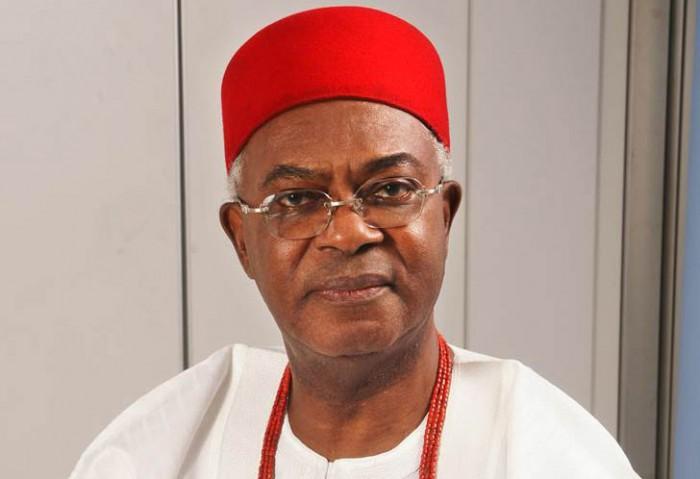
In the illustrious annals of Nigerian heritage, His Royal Majesty, Alfred Nnaemeka Achebe (Agbogidi), the Obi of Onitsha, stands as a paragon of wisdom, culture and progress, marking his 83rd year on mother Earth which is simultaneous with his 22nd year since ascending the throne. As the 21st Obi of Onitsha, his reign has been characterized not merely by the regal adornment of a crown, but by the profound stewardship of his ancestral legacy, imbued with grace and vigor. As we commemorate this dual celebration, we reflect on his profound influence both nationally and globally, showcasing a life dedicated to the welfare of his people and the enrichment of their futures.

Born into the revered Achebe family of Onitsha, Anambra State, on the 14th of May, 1941, His Majesty’s early years were distinguished by sheer brilliance and insatiable thirst for knowledge that propelled him from the banks of the River Niger to the prestigious halls of ivy league Stanford University and later, Columbia University, all in the United States of America. It was in these institutions that he developed a profound understanding of Chemistry and Business Administration skills that he would adeptly deploy in both his subsequent corporate roles and his royal duties.

After a remarkable stint in the United States of America, Obi Achebe returned to Nigeria amid the tumult of the then raging Nigeria-Biafra civil war, opting to serve his homeland rather than pursue personal goals abroad. His return marked the commencement of a distinguished tenure at Shell Petroleum Development Company of Nigeria, where he excelled in various capacities, shaping industry standards and fostering community relations until his ascension to the throne on the 14th of May, 2002.

Upon assuming the mantle of revered Obi of Onitsha, His Majesty immediately embarked on a transformative journey that interwove the threads of traditional values with the exigencies of contemporary governance. His leadership transcends the confines of administrative duties, evidencing a heartfelt commitment to the socio-economic development and upliftment of his community and his people at large. His roles as Chancellor of Ahmadu Bello University, Zaria (ABU), and as chairman of both Unilever Nigeria and International Breweries emphasizes his relentless pursuit of educational and economic empowerment for Nigerians.

His Royal Majesty’s commitment to peace and community engagements has had a spectacular positive impact on the society. Under his stewardship, Onitsha has witnessed a great renaissance of cultural pride, dignity and unity. His initiatives have skillfully bridged the gap between the old and the young, the rich and the poor; and the royals and the masses and proletarians. This has ensured that the ancient customs and traditions of Onitsha not only survive, but thrive amidst unpredictable global changes. His efforts in establishing peace and promoting dialogue have since earned him respect far beyond the borders of his kingdom to the nooks and crannies of Nigeria.

As we honour this remarkably handsome and highly travelled monarch of many parts, we do so with deep respect and sense of admiration for a first class traditional ruler whose life’s works epitomize the essence of wise leadership. The words of the legendary philosopher Plato resonate deeply when considering His Majesty’s reign: “The measure of a man is what he does with power.” Indeed, His Royal Majesty, Alfred Nnaemeka Achebe, Agbogidi, the Obi of Onitsha has wielded his power with a blend of majesty; profound benevolence and service, championing the cause of his people and leading with a vision steeped in tradition, yet forward-looking in scope.

In his 22 illustrious years on the throne, His Royal Majesty, Alfred Nnaemeka Achebe, Agbogidi, the Obi of Onitsha, has been a bastion of progress and stability for Onitsha. He has fostered a community in which traditional values are cherished, while innovation and progress are vigorously pursued. His Obiship has stood as a pillar of strength in times of turmoil; and a source of pride during periods of celebration and festivities.

The cultural festivals of Onitsha, especially the now globally recognized Ofala Festival, have flourished under his Majesty’s reign. These festivals, which he often personally oversees and leads, swaying majestically and magisterially with royal dance steps to the rhythm of traditional music are not only a showcase for the rich heritage of the Onitsha people, but also serve as a magnet for tourists from across the globe, enhancing the local economy and promoting cultural preservation. His dedication to these celebrations of Onitsha culture reflects his deep commitment to his roots and his earnest desire to share this rich cultural tapestry with the world.

As we celebrate the remarkable journey of His Royal Majesty, Obi Alfred Nnaemeka Achebe (Agbogidi), we acknowledge his profound contributions not just to Onitsha or Nigeria, but to the broader world at large. His life and legacy offer a blueprint for leadership that is rooted in wisdom, marked by a commitment to service, and aimed at the holistic development of his people. As King Solomon once put it most luminously, “Wisdom is better than weapons of war,”. Indeed, His Majesty’s reign has been a testament to the power of wisdom and wise leadership over conflict.

Happy Birthday, sartorial and luminous Agbogidi! May your reign be long. May your legacy continue to inspire and usher in greater prosperity and peace for the Onitsha people, Anambrarians and Nigerians at large. Long Live the King! Long live Obi Alfred Nnaemeka Achebe, the Agbogidi who twinkles like a million stars.

BY PROF MIKE A. A. OZEKHOME, SAN, CON, OFR, FCIArb, LL.M, Ph.D, LL.D, D.Litt, D.Sc, DA is a constitutional lawyer

Continue Reading
Click to comment

Leave a Reply

Your email address will not be published. Required fields are marked *

The Oracle

The Oracle: The University As a Catalyst for Societal Development (Pt. 2)

Published

on

By

Prof Mike Ozekhome SAN

INTRODUCTION

The inaugural installment of this treatise was foundational, commencing (suitably enough) with an overview of relevant terms (“University”, “education” “societal/human capital development”, “innovation ecosystem”, “etc). We later develved into a brief history of universities and tertiary education in general worldwide. Today, we shall continue same focusing on Nigeria as an entity. Enjoy.

THE HISTORY OF UNIVERSITIES AND TERTIARY INSTITUTIONS GLOBALLY (Continues)

Universities and the Scientific Revolution

By the 17th and 18th centuries, universities had become laboratories of scientific discovery (https://courses.lumenlearning.com/suny-hccc-worldhistory2/chapter/the-popularization-of-science/> Accessed on 8th September, 2025). Figures such as Galileo, Newton, and Descartes advanced theories that challenged established doctrines. Universities shifted from preserving old knowledge to producing new insights that fueled the Industrial Revolution. While continental universities in Italy, Germany, and Scotland became central to scientific teaching and research, the English universities of Oxford and Cambridge remained more conservative, with much of the scientific activity shifting to metropolitan institutions like the Royal Society. Nevertheless, the scientific revolution fundamentally redefined the university’s role as an engine of discovery.

The German Research University and the Modern Model

The 19th century introduced another pivotal model: the German research university, most famously represented by the University of Berlin under Wilhelm von Humboldt (https://en.wikipedia.org/wiki/Humboldt_University_of_Berlin> Accessed on 8th September, 2025). This model emphasized the unity of teaching and research, academic freedom, and the pursuit of truth for its own sake. It gave birth to the modern research university, where laboratories, libraries, and seminar systems became central. This template spread globally and remains the backbone of contemporary higher education.

Africa’s Pioneering Intellectual Heritage
Although the structures of modern higher education in Africa are often associated with European colonial frameworks (https://files.eric.ed.gov/fulltext/EJ1079222.pdf> Accessed on 8th September, 2025), it is misleading to assume that advanced learning began only with colonial intervention. Long before the imposition of Western-style universities, Africa nurtured sophisticated systems of education at multiple levels, ranging from informal community instruction to highly organized institutions that rivaled, and in some cases preceded, their European counterparts.

One of the earliest and most celebrated centers of scholarship on the continent was the Academy of Alexandria, sometimes described as the Universal Museum Library, which flourished between the 4th century BC and the 7th century AD. This institution served as both a repository of knowledge and a vibrant intellectual hub, attracting scholars from across the Mediterranean and beyond. Within its walls, philosophy, mathematics, astronomy, medicine, and literature were studied in ways that shaped intellectual developments far beyond Africa’s borders.

Africa also gave birth to universities that remain monuments of global intellectual history. The University of al-Qarawiyyin, established in 859 AD in Fez, Morocco, is widely regarded as the oldest continuously operating degree-awarding university in the world. Not long after, in 970 AD, al-Azhar University in Cairo (see: Times Higher Education, “Al-Azhar University”, https://www.timeshighereducation.com/world-university-rankings/al-azhar-university > Accessed on 8th September, 2025) was founded, growing into one of the most influential centers of Islamic learning. Both institutions not only preserved knowledge but also generated new streams of thought, producing scholars whose works shaped jurisprudence, philosophy, theology, and the sciences across Africa, the Arab world, and Europe.

In West Africa, the city of Timbuktu (see: Emnet Tadesse Woldegiorgis, “The Changing Role of Higher Education in Africa: A Historical Reflection” Higher Education Studies 3(6) ), rose to prominence between the 12th and 16th centuries as one of the world’s most important centers of learning. The famed Sankore Madrasah and other scholarly institutions attracted thousands of students who engaged in studies ranging from law and theology to astronomy, mathematics, and medicine. The thousands of surviving manuscripts from Timbuktu attest to a sophisticated academic tradition that connected Africa to a global network of learning.

Equally remarkable is the intellectual legacy of Ethiopia, which developed a distinctive scholarly tradition anchored in its unique script, Ge’ez. For over 2,700 years, Ethiopia maintained systems of elite education within monastic schools, theological academies, and royal courts . This enduring heritage emphasized literacy, history, philosophy, and religious thought, ensuring that Ethiopia remained one of the most resilient centers of indigenous knowledge on the continent.

Taken together, these examples demonstrate that Africa was by no means a passive recipient of education. Rather, it was a pioneer and custodian of intellectual traditions that shaped civilizations both within and beyond its borders.

HISTORY OF UNIVERSITIES AND TETIARY EDUCATION IN NIGERIA

The history of university education in Nigeria began with the establishment of Yaba Higher College in 1930 (Yusuf Adulrahman, “Historical-Chronological Emergence of Universities in Nigeria: The Perspectives in ‘Colomilicivilian’ Periodization” https://www.researchgate.net/publication/342247766_Historical-Chronological_Emergence_of_Universities_in_Nigeria_The_Perspectives_in_’Colomilicivilian’_Periodization accessed 7 September 2025, the first institution of its kind in the country. At the time, other forms of post-secondary training were also introduced in government departments—such as agriculture at Moor Plantation in Ibadan and Samaru near Zaria, veterinary science at Vom, and engineering in Lagos. The Yaba College offered courses in fields like civil engineering, agriculture, medicine, surveying, teaching, and later, commerce and forestry. Its main purpose was to train Africans for junior administrative and technical roles, thereby reducing reliance on expensive European expatriates.

However, the college faced criticism, particularly from Nigerian nationalists. Its goals were seen as narrow compared to a full university; its diplomas lacked international recognition; and its graduates were limited to junior posts, unlike their British counterparts who advanced to higher civil service levels. This fueled stronger agitation for a true university in Nigeria.

In response, the Asquith and Elliot Commissions of 1943 were set up to review higher education across West Africa (N.Okoji, “The History and Development of Public Universities in Nigeria Since 1914” International Journal of Education and Evaluation 2(1) 2016). While the majority recommended three new university colleges (in Ibadan, Achimota, and the Gold Coast), the minority proposed a single college at Ibadan with regional feeder institutions. With the Labour Party’s victory in Britain, the minority view was adopted. Thus, in 1948, the University College, Ibadan, affiliated with the University of London, was established as Nigeria’s first university-level institution.

Further expansion came after independence. The Ashby Commission of 1959 projected Nigeria’s manpower and educational needs and recommended broader access to higher education. Following its proposals, several universities were founded: the University of Nigeria, Nsukka (1960) (Nigeria’s first autonomous university with an American orientation) followed by the University of Ife (now Obafemi Awolowo University, 1962), Ahmadu Bello University, Zaria (1962), and the University of Lagos (1962). By the same year, the University College Ibadan became a full-fledged university. Collectively, these five institutions are known as Nigeria’s “first-generation universities.”

Expansion continued with the University of Benin in 1970, later recognized by the National Universities Commission. During the Third National Development Plan (1975–1980), the federal government created seven additional universities—at Calabar, Jos, Maiduguri, Sokoto, Ilorin, Port Harcourt, and Kano—known as the “second-generation universities.” (ThisDayLive, “Endangered Universities: The Way Out” https://www.thisdaylive.com/2022/08/29/endangered-universities-the-way-out/ accessed 07 September 2025)

By the 1980s, with the creation of 19 states, the federal government sought geographical balance by approving universities of technology in states without federal universities (see: Bolupe Awe, “Quality and Stress in Nigerian Public Universities” 2020 American Journal of Educational Research 8(12). This marked the further spread of higher education across Nigeria, solidifying the university system as a central pillar of national development.

To be continued…

Continue Reading

The Oracle

The Oracle: The University As a Catalyst for Societal Development (Pt. 1)

Published

on

By

By Prof Mike Ozekhome SAN

ABSTRACT

Universities are not merely centres of learning but pivotal institutions that shape and sustain societal transformation. Positioned at the nexus of knowledge, innovation, and culture, they serve as engines of human capital formation, research, and socio-economic development. Their influence extends far beyond academic instruction: in developing societies grappling with political instability, economic challenges, and social inequities, universities have emerged as critical actors in nurturing critical thought, producing socially responsible graduates, and driving social reform. They contribute not only to national progress but also to regional and local development, acting as hubs of expertise, employers of labour, incubators of innovation and integrators of public policy.

By influencing governance, shaping labour market and skills policies, fostering entrepreneurship, and promoting sustainable development, universities play a unique role as catalysts for inclusive growth. Yet, their transformative capacity is often constrained by structural challenges such as underfunding, weak governance, and limited research–industry linkages. Drawing on theoretical perspectives and global best practices, this paper argues that universities can be repositioned as dynamic agents of societal change if granted greater autonomy, strengthened through research investment, and embedded in robust partnerships with government, industry, and civil society. Ultimately, the vitality of a society is mirrored in the strength and responsiveness of its universities.

KEYWORDS: Universities; Societal Transformation; Human Capital Development; Innovation Ecosystems; Higher Education Policy; Governance and Autonomy; Sustainable Development; Civic Engagement; Public Policy Reform.

INTRODUCTION

Different metaphors have long been used to capture the complex relationship between higher education and societal development in concise and memorable ways. The first is mechanical (https://www.researchgate.net/publication/387801956_Universities_as_Catalysts_for_Social_Transformation_in_Developing_Countries#:~:text=The%20role%20of%20universities%20in,also%20in%20driving%20social%20reform> accessed 7 September 2025): higher education is an engine, powerhouse, driver, dynamo, booster, accelerator, or lever of growth and prosperity, suggesting that the pace of regional and national progress is set within the university. The second is biological: universities as hothouses, seedbeds, breeding grounds, spawning places, catalysts, or fermenters, sites where ideas sprout, blossom and reinvigorate society through innovation. The third is network-oriented: universities as nodes, hubs, bridgeheads, mediators, transfer points, or transmission centres, emphasising their role in disseminating knowledge and linking government, industry and communities. Finally, the temporal metaphors portray universities as the spearheads, vanguards, lighthouses, and signposts of transformation, guiding society through periods of change.

Yet the university is not merely a catalogue of metaphors. It is not a mere edifice of stone and chalk, nor simply a marketplace where degrees are traded and rituals observed. It is, in truth, the living citadel of knowledge, the intellectual furnace where the raw ore of youthful potential is refined into the gold of human capital. At its best, the university is both the conscience and the compass of society: diagnosing its maladies, prescribing its cures, and charting its course into the future. To reduce it to a certificate mill is to misunderstand its sacred function and to weaken the very foundations of national development.

Consider, for instance, the metaphor of the catalyst. In the laboratory, a catalyst accelerates transformation without itself being consumed. So too must the university serve as the silent accelerator of societal progress, shaping minds, equipping hands, and moulding character while standing as a permanent reservoir of knowledge, values, and innovation. Through it, theory becomes praxis, and research becomes a weapon against poverty, disease and ignorance.

History testifies to this catalytic role. The Renaissance was mid-wifed by the universities of Bologna, Paris, and Oxford (Wikipedia, History of European Universities, https://en.wikipedia.org/wiki/History_of_European_universities> accessed 7 September 2025); the scientific revolutions that ushered in modernity were incubated within their walls. Even today, the technological marvels that define the twenty-first century from breakthroughs in medicine to advances in engineering and digital innovation are birthed in university laboratories and lecture halls.

But beyond science and technology, the university also shapes culture and character. It produces not only doctors and engineers, but statesmen, reformers and thinkers. It tempers technical knowledge with moral vision, reminding us that wisdom without values can be destructive. It challenges assumptions, disciplines impulses and prepares future leaders not merely for making a living, but for living lives of service and sacrifice.

Thus, when we describe the university as a catalyst for societal development, we are not indulging in rhetorical flourish. We are stating a sober truth: no nation has ever risen above the quality of its universities, and none ever will. The strength of the classroom is reflected in the courtroom, the marketplace, and the parliament. The decay of the university is the decay of the nation itself. If the university rises, society advances; if the university falls, society crumbles. The stakes could not be higher.

DEFINITION OF TERMS

UNIVERSITY
A university is far more than a cluster of buildings where lectures are delivered and examinations conducted. At its core, it is an institution of higher learning and research, uniquely mandated to generate, preserve, and disseminate knowledge across disciplines (Wikipedia, “University” https://en.wikipedia.org/wiki/University#cite_ref-WordNet_Search_u476_1-0 > accessed 8th September 2025). Unlike earlier stages of education, which focus on absorbing established facts, the university emphasizes inquiry, critique, and innovation. It is here that theories are tested, discoveries made, and society furnished with the intellectual capital needed for progress. Rooted in the Latin universitas magistrorum et scholarium (meaning “a community of teachers and scholars”) (https://www.byui.edu/speeches/dallin-hansen/seeking-the-higher-view> accessed 8th September 2025
), the university represents a fellowship of minds devoted to truth, dialogue, and discovery. It is not simply a transmitter of knowledge, but a creator of it, standing as both a timeless custodian of wisdom and a timely responder to the needs of each age.

EDUCATION

Education is the systematic process of imparting and acquiring knowledge, skills, and values; formally or informally. It equips individuals with reasoning ability, judgment, and intellectual maturity. Formal education takes place in structured settings such as schools and universities, while informal education occurs through family, community, and other social interactions. At every level, education provides the foundation for personal growth and societal advancement.

SOCIETAL DEVELOPMENT

Societal development refers to the sustained improvement in a community’s well-being and collective capacity. It encompasses economic growth, improved social structures, access to quality public services, individual empowerment, and institutional strength. True development also requires social inclusion, equity, and sustainability, ensuring that progress today does not compromise the welfare of future generations.

HUMAN CAPITAL DEVELOPMENT

Human capital development is the process of enhancing individuals’ knowledge, skills, health, and productivity to unlock their potential and advance both economic and social progress. It involves deliberate investments in education, training, and healthcare, producing a workforce that is innovative, competitive, and equipped to drive sustainable national growth.

INNOVATION ECOSYSTEM

An innovation ecosystem is a dynamic network of interdependent actors such as entrepreneurs, firms, governments, universities, and investors working collaboratively to transform ideas into impactful solutions (https://share.google/awi0YhHoT1VD7aG4E > Accessed on 9th September, 2025). These ecosystems thrive on continuous interaction, resource sharing, and co-evolution, creating the environment necessary for sustained innovation, economic growth, and societal transformation.

THE HISTORY OF UNIVERSITIES AND TERTIARY INSTITUTIONS GLOBALLY

The idea of the university as we know it today did not emerge in a vacuum. It is the product of centuries of intellectual struggle, cultural refinement, and institutional development. To appreciate its role as a catalyst for societal progress, one must first understand its historical roots and the trajectory of its growth.

Ancient Foundations of Higher Learning
The earliest prototypes of the university can be traced to ancient centers of learning such as the Platonic Academy in Athens, the Library of Alexandria in Egypt, and the great schools of philosophy in India and China. These institutions were not universities in the modern sense, but they established traditions of advanced learning, debate, and preservation of knowledge that influenced later models.

Renaissance Humanism and the Scholarly Revolution

The Renaissance and Enlightenment eras transformed the university into an even more powerful agent of change. Humanism encouraged a rediscovery of classical texts, and universities became custodians of not only religious knowledge but also literature, science, and art. By the 14th and 15th centuries, figures such as Petrarch and Boccaccio began to challenge scholastic traditions, promoting grammar, rhetoric, poetry, moral philosophy, and history as central disciplines. Although humanism initially developed outside the universities—in princely courts, chancelleries, and academies—it soon penetrated academia. By the mid-15th century, humanist scholars like Lorenzo Valla were holding university professorships, and institutions such as Bologna and Florence had created chairs in Greek and humanistic studies.

This infusion of humanism altered the outlook of medicine, law, and philosophy. Medical humanists, for example, used philological techniques to critique both medieval and ancient medical texts, reshaping the discipline. While law and theology resisted transformation, natural philosophy and medicine were deeply influenced. By the 16th century, humanism and universities were intertwined, and their joint legacy paved the way for the Scientific Revolution.

The Rise of the Medieval European University

The University of Bologna, founded in 1088, is widely regarded as the first modern university . It was primarily a law school, devoted to the systematic study of Roman law, which became essential for the administration of European kingdoms. What distinguished Bologna was not merely the subjects taught but also its institutional structure: it was organized as a universitas, a guild of students and masters bound together in the pursuit of knowledge.

In 1150, the University of Paris followed, excelling in theology and philosophy, and soon after came Oxford and Cambridge in England, Salamanca in Spain, and Heidelberg in Germany. These institutions became the intellectual nerve centers of medieval Europe, training clerics, lawyers, physicians, and statesmen. The early universities were deeply intertwined with the Church, which provided both patronage and regulation. Theology was regarded as the “queen of the sciences,” while philosophy, law, and medicine were cultivated under its shadow. Yet, even within this religious framework, universities nurtured critical inquiry. It was within their walls that scholasticism: the rigorous method of logical reasoning, flourished, preparing the intellectual ground for the Renaissance.

To be continued

THOUGHT FOR THE WEEK

“All that is valuable in human society depends upon the opportunity for development accorded the individual”. (Albert Einstein).

Continue Reading

The Oracle

The Oracle: When a Nation Undermines Citizens’ Rights (Pt. 4)

Published

on

By

By Prof .Ike Ozekhome SAN

INTRODUCTION

In our last outing on this treatise, we addressed the operational weaknesses and structural mismanagement of the Police; the failure of internal accountability; collusion of its men with criminal networks; erosion of civil liberties by its illegitimate enforcement practices; and cycle of impunity. And later followed by analysis of the abuse of judicial power as well as executive lawlessness directed at the Bench. We then concluded with suggested pathways and recommendations. Today, we shall continue with the same theme focusing on strengthening judicial independence; institutionalizing a comprehensive anti-corruption framework; enhancing the protection of civil liberties; community-based security initiatives; electoral integrity; transparency in the public sector; protecting vulnerable and marginalized groups as well as institutionalizing a culture of consequences. Enjoy.

Judicial Strengthening and Independence
The Judiciary should be insulated from political interference through secure tenure, adequate remuneration, and independent budgetary control. Court processes must be digitized to reduce delays and enhance transparency. Special courts should be created to fast-track cases of corruption, rights violations, and electoral offences so as to prevent them from being lost in a backlog of other matters.

Comprehensive Anti-Corruption Framework
Anti-corruption agencies must operate without political bias. Investigations and prosecutions should be based solely on evidence, regardless of the political or social standing of the suspect. Asset recovery processes should be transparent, and recovered funds must be channeled directly into public services such as healthcare, education, and infrastructure.

Strengthening of Civil Liberties Protections
Security laws and policies must be reviewed to remove provisions that allow arbitrary arrests, prolonged detention without trial, and excessive surveillance. The rights to free expression, peaceful assembly, and privacy should be reaffirmed through legislation, judicial precedent, and administrative directives. Security personnel should receive specific training on respecting these rights in the course of their duties.

Enhanced Community-Based Security Initiatives

Community policing structures should be developed in partnership with local stakeholders, including traditional leaders, civil society, and youth groups. These initiatives should focus on early conflict detection, intelligence sharing, and non-violent dispute resolution. Proper integration of community policing into the national security architecture can improve trust and cooperation between citizens and the State.

Electoral Integrity and Protection of the Political Process

To reduce politically motivated violence, security forces must adopt a neutral stance in elections and enforce the law impartially. Electoral offenders, including those within security agencies, must face swift prosecution. The deployment of technology in elections, such as biometric verification, should be protected by strong legal safeguards to prevent manipulation. More importantly, the Electoral Act must be urgently amended to include the use of BIVAS, electronic voting and real time transfer of results into IReV.

Public Sector Transparency and Open Data
Transparency in governance can significantly reduce opportunities for abuse of power. All government agencies should be required to publish regular reports on budgets, procurement, and performance indicators. Public access to information should be enhanced through stronger Freedom of Information laws and proactive disclosure of records.

Protection of Vulnerable and Marginalized Groups

Special attention should be given to protecting women, children, marginalized vulnerable persons and minorities and communities, who are disproportionately affected by rights violations and insecurity. Law enforcement and judicial olicers should be trained to handle cases involving such vulnerable groups with sensitivity. Dedicated units within security agencies should be tasked with preventing and responding to gender-based violence, child labour, human trafficking and exploitation.

Institutionalizing a Culture of Consequence
The single most important factor in ending impunity is ensuring that misconduct always attracts consequences. Disciplinary actions, criminal prosecutions and public reporting of case outcomes should become the norm. Political leaders must set the example by submitting themselves to the rule of law. They must lead by example and not by precepts.

CONCLUSION

The challenges confronting Nigeria in the areas of security, protection of citizens’ rights and enforcement of the rule of law are deeply rooted in a pattern of institutional neglect and governance failure. Throughout this work, it has become evident that insecurity in the country is not only result of violent crime or terrorism but also a product of weak and compromised institutions that allow such threats to flourish. When the very institutions tasked with safeguarding the people become unreliable or complicit, the result is a petrified environment where justice is selective, rights are precarious, and the social contract between citizens and the State is broken.

The evidence is clear that insecurity in Nigeria is a multi-dimensional crisis. Political violence undermines democratic processes. Economic hardship is exacerbated by corruption and the diversion of resources. Physical insecurity in many regions persists because law enforcement is either absent or compromised. The deterioration of education and healthcare further exposes the population to long-term instability. Each of these problems is interconnected and magnified by the failure of the justice and enforcement systems to function impartially and effectively.

Civil liberties, guaranteed by the Constitution and supported by international treaties, are repeatedly undermined by arbitrary arrests, unlawful detentions, and the suppression of free expression. When citizens live in fear of those entrusted to protect them, the legitimacy of the State is called into question. A society where speaking out invites retaliation and where wrongdoing by the powerful is met with silence or even approbation cannot claim to uphold the principles of democracy and justice.

The normalization of impunity is perhaps the most dangerous of all the trends identified. Impunity corrodes public trust, emboldens offenders, and creates a culture where breaking the law is not an aberration but an accepted norm of political and social life. Without decisive action to reverse this culture, every other reform will be weakened before it begins to take root.

Nigeria’s peculiar security realities demand a holistic approach. This includes rebuilding law enforcement into a professional, rights-respecting institution, ensuring the judiciary is free from political interference, and creating genuine accountability mechanisms that apply to everyone regardless of status. It also requires an investment in transparency, community trust, and the protection of vulnerable groups who suffer most from both insecurity and rights violations.

The task is undeniably challenging, but it is not impossible. The pathway to a more secure and just Nigeria begins with the recognition that true security cannot exist without justice, and justice cannot thrive without the rule of law. By committing to comprehensive reforms and by holding both leaders and institutions accountable, Nigeria can reclaim the promise of a society where rights are protected, laws are respected, and security is the shared foundation for national progress. In all these, one may ask, where is the Bar and what is its historic role? A once vibrant Association feared by the corrupt and dreaded by all successive governments has since become comatose, hardly responsive to societal needs. Aside many lawyers now professionally practising Bar instead of practising law by oscillating from one office to another over a period of decades, what has the Bar got to show for its continued relevance in terms of interrogating the status quo and challenging impunity? How has the Bar fared in holding governments responsible and accountable to the Nigerian people? Aside converging every year at designated venues for the annual ritual of the AGC, what dividends have we yielded from our usual banal communiqué?

How have we pushed to ensure we engaged the three arms of government to overhaul or at least improve on the status quo? Can we now blame some lawyers who are increasingly feeling disenchanted with the status quo and seek alternative platforms such as the Nigerian Law Society (NLS)? I think not. Colleagues, let us as lawyers and Judges wake up from our deep slumber of complicit silence and stop seeing law solely as a bread-and -butter profession. We must see law from the prism of Professor Dean Roscoe Pound-an instrument of social engineering. Anything short of this is not befitting of the legal profession. (Concluded).

THOUGHT FOR THE WEEK

“We cannot reform institutional racism or systemic policies if we are not actively engaged. It’s not enough to simply complain about injustice; the only way to prevent future injustice is to create the society we would like to see, one where we are all equal under the law”. (Al Sharpton).

Continue Reading

Trending