Connect with us

Featured

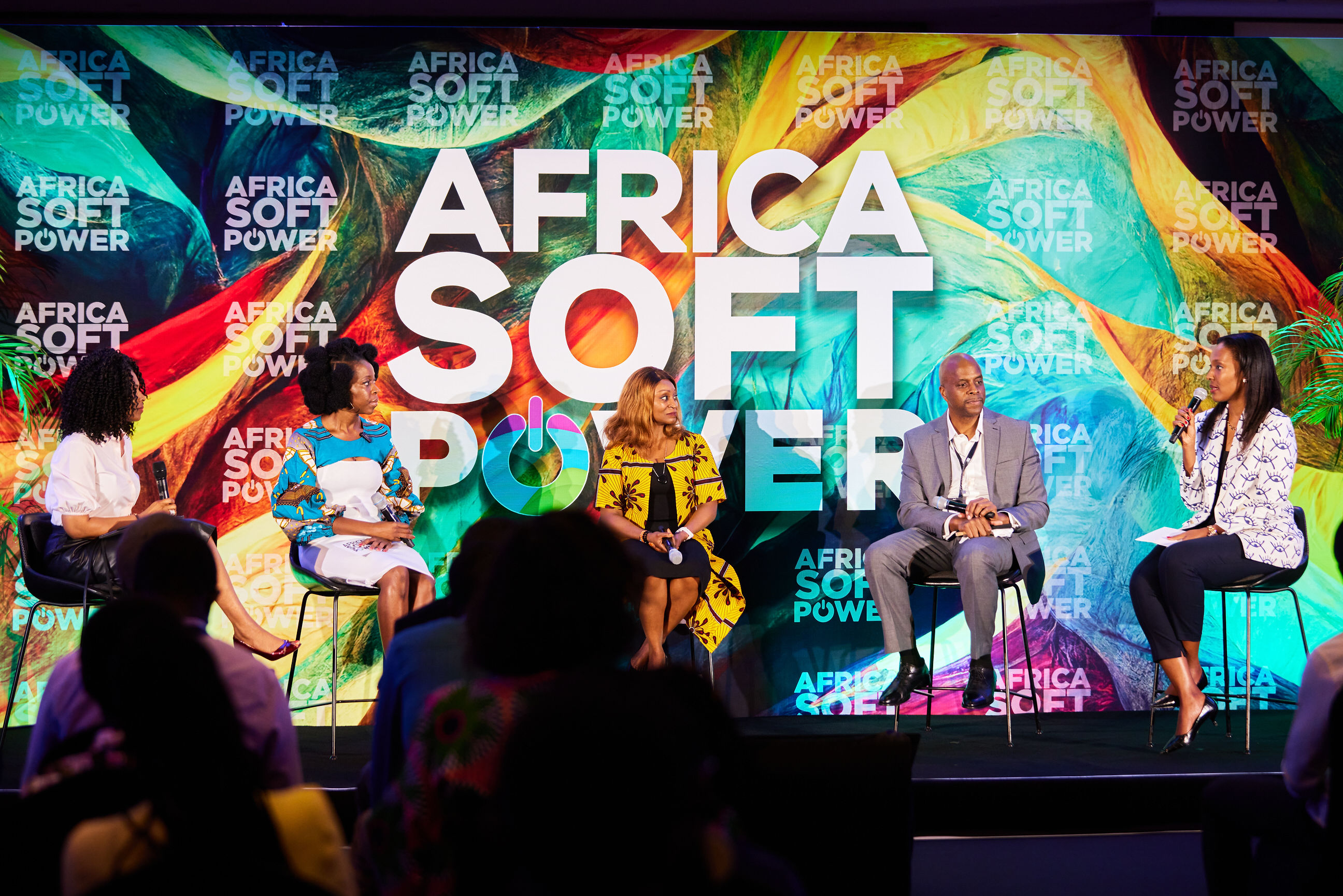
When Kigali Hosted Africa Soft Power Summit

Published

on

By Dolapo Aina

Africa Soft Power Summit which held from May 23-27 was a gathering of the crème de la crème in the creative industry on the African Continent, who converge on the city of Kigali, the capital of Rwanda to deliberate on all things in the creative space. The gathering had in attendance, practitioners, experts, government officials, diplomats, students, media and others. The plethora of sessions included; Revolutionizing Systems: Women’s Leadership as the Catalyst for Change; The Time is Now! Why the Private Sector is Key to Achieving Gender Equity; Spotlight: Made in Kenya, The story of Africa’s only running shoes company; Money Talks: Achieving Gender Parity through Funding and Investment in Women; Cannot Lead: Unravelling the Paradox of Women’s Numerical Advantage and Exercising Real Power; Hidden in Plain Sight: Knowledge Production, How Bad Data Erodes Equitable and Sustainable Growth and Culture is no Excuse – Challenging Africa

During the Money Talks Session, one of the panellists posited that one of the biggest issues women have in their careers is bearing children. How to frame maternity policies and also paternity policies, was one of the hurdles and one of the solutions proffered was for the men’s participation in women issues and policies.
The Cannot Lead session had in-depth analysis by the panellists too.

Faith Odhiambo: VP, Law Society of Kenya posited amongst several things that; women don’t know how to make noise about what they do. The prejudices that women face, are real and that women are labelled by their titles. Men think it is safer to believe in the potential of another man.

From her perspective, Loretta Aniagolu: CEO, F.I.T. Group and former Gubernatorial Candidate in Nigeria stated that across the world, anywhere you see where women aren’t engaged (for whatever reason), that country would not catch up. Anytime a part of the population is ignored, it drags the country back.

Stephanie Rawlings-Blake, Executive Director, National Basketball Players Association Foundation and former Mayor of Baltimore stated that; “Women don’t always support women. Women ought to support women. Nowadays, women have to do the work and also talk about the fact that they are doing the work. And it is important to have women at the table.”

Abosede George-Ogan, Founder, Women in Leadership Advancement Network, who was the moderator of the Cannot Lead session, asked why power is difficult for women to access? And went further to posit that; “there are genuine binding constraints to women doing the job. Women don’t have the luxury that men have to fail at the job. When women don’t have access to the table, they should create the table. When we say women cannot lead, we do a disservice to ourselves.”

The Culture is no Excuse: Challenging Africa Conversation with: Ambassador Ozonnia Ojielo, Resident Coordinator and Representative of the United Nations Secretary-General to Rwanda and His Royal Highness Nnaemeka A. Achebe, King of Onitsha.

It was a rich and lively conversation where the King of Onitsha, emphasised the need for concerted efforts from all partners to support women empowerment across the African Continent. On the question of reconstructing the role of tradition in Africa; His Majesty, Royal Highness Nnaemeka A. Achebe, King of Onitsha said that there is no one view to this and further stated that promoting women’s empowerment in Africa, requires a comprehensive approach that combines legal reforms, education, economic opportunities, and addressing other norms that might perpetuate gender inequality.

On Day Two of Africa Soft Power Summit, an address by Adefunke Adeyemi, who is the Secretary General, The African Civil Aviation Commission (AFCAC) was on the Single African Air Transport Pilot Implementation Program (SAATMPIP). In her energising address, Ms. Adefunke Adeyemi stated that connectivity is at the centre of all Africa does. Integration can only happen when you are connected. The size of Africa that we see on every map is not the true size of Africa. There is no other way that Africa can connect herself than by air. And she wondered why Africa does not give access to Africans but to outsiders? And Ms. Adefunke Adeyemi concluded by stating that; “The density of connectivity in the West is visible but very little in Africa. Without connectivity, there is no development.”

During the New Pathways: Travel, Tourism and Trade in Africa session, moderated by Tina L. Taylor, Managing Director, UNUM Capital Investment; Adefunke Adeyemi, Secretary General, The African Civil Aviation Commission (AFCAC) posited that advocacy is an important thing. She went further; “Just to fly over Democratic Republic of Congo takes over three and a half hours. Adovcacy on the scale of the problem and opportunities therein such as 5.3 billion dollars and thousands of jobs and new paths for people to go into new careers. We also have to unlock the impediments. If not, you would not know what the issues are and how to resolve the challenges. Protectionism is not a long-term strategy. You can only be protectionist and practise protectionism for a while and then, you die. What is your visa regime? What are your incentives for aviation players? When you arrive in a country, you are contributing to the overall economy of that country from the top shots to the local people in the markets.

Chief Tourism Officer of Rwanda Development Board, Ms. Michaella Rugwizangoga had a lot to say about the session, commencing thus; “Connected Africa is a visa-free Africa. The MICE and visa-free initiatives are deliberate policies by the Government of Rwanda.” She also stated that; “Your storytelling has to be authentic and true to those coming to your country and this is what Rwanda does. Africa needs to tell her stories more in their true light. The change you see in Rwanda is in initial part, part of our traditional values.

These different aspects of our identify were brought back. Tourism is one of our economic drivers. The more we know each other, the more we are likely to do more businesses. As a government, our job is to continue to improve on our services and create areas where synergies can be created. Ten percent of the tourism income goes to the communities. These communities not only benefit but they are also transformed. For instance, former poachers who become wildlife advocates.
Tariro Washe, the Filmmaker and Managing Director of Meso Maviri: viewed issues from the lenses of a cinematographer, stating that the ability to move around Africa with ease of movement is a beautiful thing. And with regards the African narrative, she went thus; “We need to be sure of what stories are being told of Africa. Storytelling is powerful in showing and uncovering different places about Africa.

Whilst Wilmot Allen, who is the founder and chairman of VentureLift Africa opined that India, China and Kenya have one thing in common, which is a strong connection with the diaspora. When intra-Africa trade begins to expand, there would be multiplier effects in all the African countries. There is a tremendous opportunity in maximising the different places in Africa but there is very limited show of the true African diverse cultures. There is a plethora of opportunities in this space. We have to be more intentional in consuming our own stories.

The Powering the Creative Economy: The Role of Private Capital in Propelling Innovation session had Ms. Juliet Yaa Asantewa Asante, CEO, National Film Authority of Ghana reeling how statistics on the African Film scene. In her words; “According to UNESCO, the creative sector is the largest employer of labour on the African Continent. But the creative sector is usually sidelined. There are several places for money to be infused in the creative space but it is not being done.” With finality, she went thus: “Return of investment is critical and it is important that investment goes into the market place. Put money in cinemas, studios etc that can ensure a reliable income stream. It is critical we invest in the sector.”

In the same panel as aforementioned, Temwa Gondwe, Senior Manager, Intra-African Trade Bank, Afreximbank alluded that; “Investors and bankers do sniff out opportunities in several sectors. In the creative space: 4 factors are looked at; human capital and the monetisation of the human capital value is not getting into African pockets. The overall gamut of creative representation. Market integration is also key. Africans should not be registering IP rights in all non-African jurisdictions. Also, financing is key. Financing at all levels. But the banks should not be the first port of call for the creative (you have angel investors etc).” Lastly, he touched on the need for infrastructure in the creative space on the African Continent.
The founder of Tiffany Amber Nigeria, Ms. Folake Akindele reeled the delegates with Tiffany Amber journey. She stated that “Tiffany Amber has grown organically and there were times we wanted to scale up by getting funding but it was difficult. As Africans we have tended to see our tangible wealth but other countries always see the cultural capital. Governments have to invest in cultural capital of their creative sector.

And to the creative people, you must be able to create a business that outlives you.”
Another enriching panel was The Economy of Sports: Driving Transformative Impact in Africa’s Sports Ecosystem session. The renowned British author Ms. Michelle Moore, who is United Kingdom’s 50 Most Influential Women in Sports posited that; “Sports has this incredible power and cultural presence. Sports teach you how to win and how to lose. It enables us to use it as a vehicle to engage with communities.

When we have athletes from the communities giving back, it has a lot of impact on the communities and the people in and from that community and sports activism is very crucial.” She asked a pertinent question: How do we connect African sports athletes to the global sports activism when appropriate?

The CEO of NBA Africa, Victor Williams stated that; “During the covid19 lockdown, people were using sports to lift themselves up. Also, during the lockdown, it was glaring how people wanted sports to get back on.

During one of the darkest periods of history in this century, sports was one of the things people used to get through mental situations, economic growth and contribution on the African Continent. As it took a lot from people. It is going to take more than what is on the ground currently pertaining to sports and basketball in particular. It would take more in government support and fast execution to build facilities. It is going to take more in terms of the local government structures. It is going to take infrastructure from the grassroots to the elite level. The African youth is multi-talented and we must give them all the avenues to express their talents. It is going to take a whole eco-system to make this work. It also has to be a story of gender equality and representation (on court and off court). Without infrastructure, which is lagging on the Continent, sports would not be at its optimum best. Another issue is data. The data of sports viewing and everything around it, is very limited and cant be accessed in a lot of African countries asides South Africa.

The two-time NBA All Star Joakim Noah who is also the founder of Noah Arc Foundation highlighted that fact that and in his own words; “When I come to the African Continent, I don’t see hoops for children. The grassroots matter. When you have hoops that are small for children to play with, you begin to see children get interested in playing basketball. One of the most important things in sports is mentorship. It doesn’t have anything to do with money, it has a lot to do with accessibility to the mentors. Who are those teaching the children? When you see Senegal winning in sports, you can see why. They are funding and investing in sports. That is the simple and honest truth.”

With the global frenzy about Artificial Intelligence, the “AI, The Future of Work and Art: Collaborator or Competitor. Where is Africa in this?” Session was revealing. James Hewes, President and CEO of International Federation of Periodical Publishers (FIPP) was of the view that; “AI tools require feeding to work; meaning humans have to continue to feed it content to churn out results. AI is disrupting several things including coding but it is a blessing as it opens opportunities for creative people in the art space on the African Continent.”

Kola Oshalusi, the Nigerian founder of Business of Photography was of the view that; “There is a lot of potential in what AI can do presently. And from a business point of view, when you look at the numbers and if it can be adapted, it would be good for business. There are concerns about AI but solutions would be found. I believe AI is giving Africa something but we believe more in what is in the ground rather than what is out of the ground. AI is creating a level playing ground for Africa but do we let the other parts of world take the lead? On her part, Julia Defabo, curatorial lead for ‘Road to 100 Million Climate Soldiers’; opined that from the art sector, “AI is a bit scary seeing what has been unfolding on social media.”

Whilst Nnenna Onyewuchi, co-Founder and Chief Growth Officer at Halo Invest concluded by stating that: “Seeing how people use Ai, it is good to know that AI aggregates, and it is important to note that Artificial Intelligence does not create data. We should be able to know how to use AI for insights. I don’t think we have lack of data; I believe the data are in several places and not centralised. Also, we have to invest in AI. The private sector has a big role to play in pushing the profitability of AI when well harnessed. When the private sector sees the money, they would convince the Governments on the African Continent to see the profitability in harnessing Artificial Intelligence. Everyone is scared, but you do it because there is a reward.

Continue Reading
Click to comment

Leave a Reply

Your email address will not be published. Required fields are marked *

Featured

Trump’s Envoy, Riley Moore: There’re over 600,000 Christians Languishing in Benue IDP Camps

Published

on

By

United States Congressman Riley Moore has alleged that more than 600,000 Christians are currently living in internally displaced persons’ camps across Benue State, following years of violent attacks that have forced communities from their homes.

In a post on X on Wednesday, Moore recounted testimonies he said were shared with him during a visit to several camps in the state.

The congressman said he met “dozens of Christians” who had survived deadly assaults and were now seeking refuge in makeshift shelters.

According to him, the displaced residents described “horrific violence” that wiped out families and emptied entire villages. Moore cited the account of a woman who, he said, “was forced to watch as they killed her husband and five children,” escaping with her unborn child.

Another woman, he added, told him her family “was murdered in front of her and her baby was ripped from her womb.”
He also referenced a survivor who claimed “his family was hacked to death in front of his eyes,” leaving him permanently injured.

Moore described the scale of displacement as alarming and accused “genocidal Fulani” of driving indigenous Christian communities from their ancestral lands. He said the situation demands heightened international attention.

“There are more than 600,000 Christians in IDP camps in Benue State alone.

“These Christians should be able to live in their ancestral homeland without fear of genocidal Fulani,” he said.

During his visit, Moore also met Tiv and Catholic leaders, including Bishop Wilfred Anagbe, Bishop Isaac Dugu, and Tiv traditional ruler, His Royal Highness James Ioruza. He said discussions centred on what he called an “ongoing genocidal campaign” in Benue.

The congressman noted that his trip to Nigeria included meetings with National Security Adviser Nuhu Ribadu and other senior officials. He said the talks focused on terrorism in the North-East, the killings in the Middle Belt, and security priorities he shares with President Donald Trump.

Moore added that both sides reviewed possible steps to improve security cooperation, pointing to what he described as an already established joint Nigeria–US task force as a sign of progress. But he emphasised that “openness has to translate to concrete action,” insisting there is still significant work to be done.

Ribadu confirmed meeting the US delegation, noting that the discussions followed earlier engagements in Washington and covered counter-terrorism, regional stability, and efforts to strengthen the strategic partnership between both countries.

President Donald Trump had on November 30 redesignated Nigeria a Country of Particular Concern over alleged religious freedom violations, while warning of possible US military intervention.

The Nigerian government has repeatedly rejected claims of systemic persecution of Christians, arguing that insecurity affects Nigerians of all faiths and ethnic groups.

Moore, meanwhile, commended recent security operations, including the rescue of more than 100 abducted Catholic schoolchildren, and said US concerns had been “positively received” in Abuja.

He maintained that the experiences shared by displaced communities “will not be ignored,” and vowed to brief the White House as ordered by President Trump.

Continue Reading

Featured

There’s No Govt in Nigeria, Tinubu is the Person in Power – Dele Momodu

Published

on

By

Media entrepreneur and former presidential aspirant, Chief Dele Momodu, in this interview by SAM NWAOKO, does a thorough examination of the Nigerian polity and comes to the conclusion that the country is on the cusp of a one-man rule.

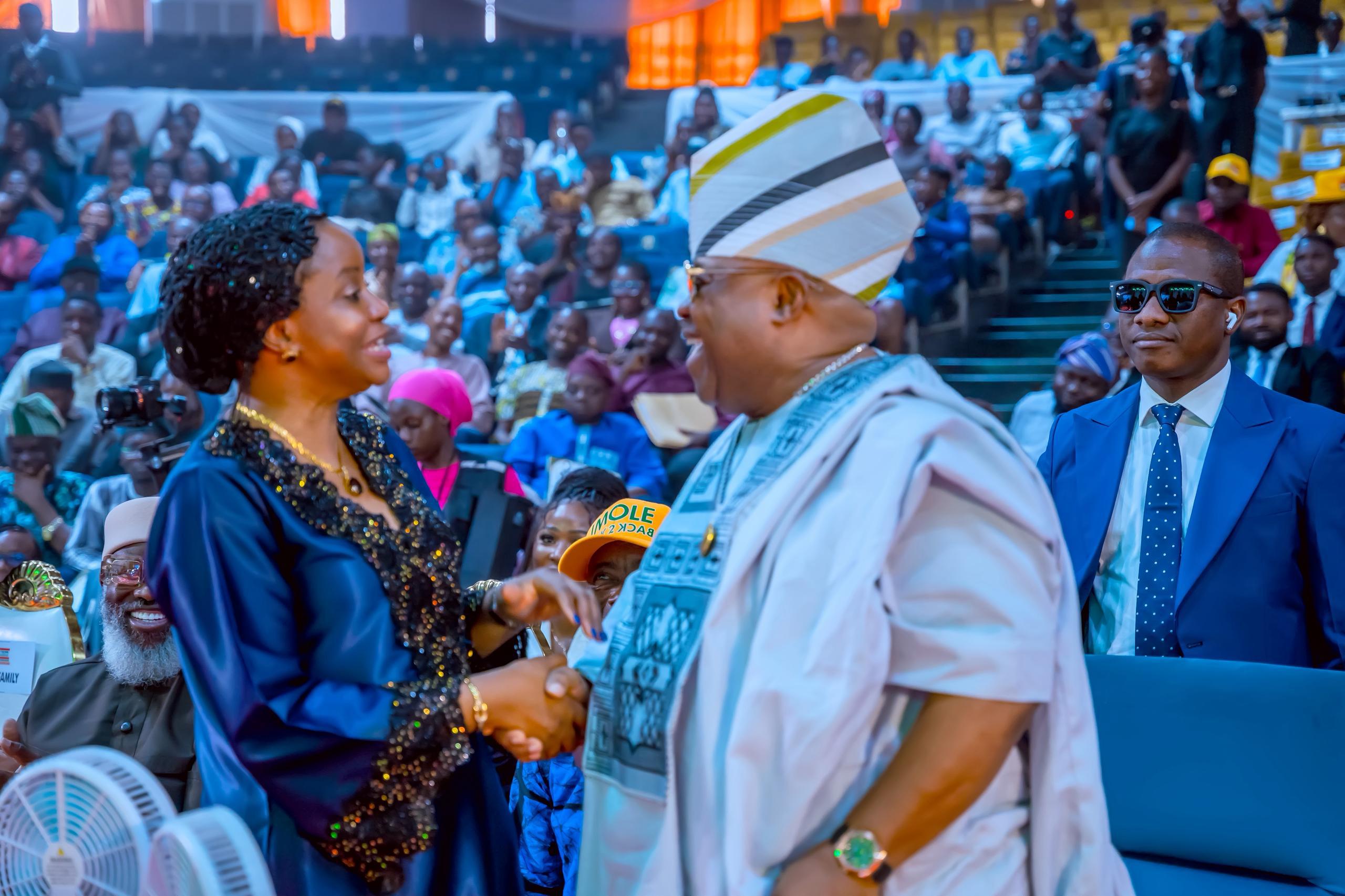
Some people have said that the issue involving Nigeria’s First Lady, Senator Oluremi Tinubu and the governor of Osun State, Senator Ademola Adeleke, was a convivial episode between two former colleagues in the Senate. Do you agree with this contention by some observers of the matter?

You know that spin doctors will spin anything no matter how unreasonable it is. Everybody, including Mrs Tinubu, acknowledged that what happened was wrong. Whether she now apologised or not, I am not aware, but she herself said it was a minor misstep and that we should not escalate it. So let us not debate what is not debatable.

When my favourite writer, Uncle Dare Babarinsa, said that the video of the incident in Ile-Ife was AI-generated on Facebook, I replied to him and said it was not. I gave them the original video that was shot by Ovation TV and said: “This is an original video that was shot by Ovation TV and not AI-generated, Sir. The governor was clearly disrupted and momentarily lost composure.”

The whole saga looks like it is not going away. What would you advise the First Lady to do at a time like this?

It is not going away because we are all prone to mistakes – nobody is perfect, I am not perfect, the First Lady is not perfect and when we are wrong either knowingly or unknowingly, we should just apologise. That is all. The thing would have gone down immediately. However, the thing is that her spin doctors are busy trying to window-dress the incident which is ordinarily a scandal because you embarrassed Governor Adeleke in his own state because you momentarily got him confused. If you look at the video, you will see that she disrupted him and the governor was momentarily confused. The governor was flustered because he was not expecting such an intrusion during his speech. Even if you were in a hurry to leave the palace and all that, you could have sent someone or just asked someone to write something on a small paper that ‘We are running late, please hurry up’. It is not that you will now stand up on your own. The First Lady stood up, and we saw her conversing with the Ooni of Ife before then, reporting that ‘I want to go and tell this man to stop singing’.

However, I know the reason she is angry, because she used to enjoy his singing and music when they used to dance together in Osogbo and all that. I have video evidence of that. She is angry because the governor refused to join the All Progressives Congress (APC). You know, APC has this entitlement syndrome afflicting it. APC believes that every governor should be in APC. The only thing that will give them joy and comfort is for every governor in Nigeria whether from the North, or from the East or from the West – wherever – should join APC. Then Tinubu can become an emperor in word and indeed. That is what they seek to do. They succeeded in Lagos and they wish to succeed at the national level. That is what is going on. Anybody who does not join them is considered an enemy.

Don’t you think that he has succeeded in doing that in many other places too because we only have one governor of PDP left in the South, so to say?

To me, this does not matter. Some people will choose to be voluntary slaves while some people will choose to act like freeborn. Everybody has a choice, that is what democracy is all about. Some people are coerced; some people are cajoled. When they get there, I hope they get whatever they are looking for.

Could this thinking be the reason Governor Ademola Adeleke did not go to APC but chose to go to Accord instead?

They tried to woo him into APC but he decided that he would rather leave his fate in the hand of God instead the hand of man. He didn’t get to where he is today by himself, it is God that made it possible. In his first attempt, he claimed that they stole his votes. He went away quietly. He didn’t destroy Nigeria, he didn’t destroy anything. He didn’t even fight Tinubu. He went away and he came back stronger. In fact, this Mrs. Tinubu incident has played to his favour because he has been trending since Sunday. Governor Adeleke has been trending because of this “little mishap” according to Mrs. Tinubu. And, can you imagine that it coincided with the time he was joining his new political party, Accord. Everything in life works perfectly once God has a hand in it. I see Governor Adeleke as a very lucky man and that is why he is always singing. He said nobody can stop him from singing and praising his God.

Now that the PDP has all its flanks broken, what would you advise the party as an observer, when you remember what it used to be in the Peoples Democratic Party?

I left the party much earlier because we already saw where it was headed. It is not the fault of the party, it is the fault of the fifth columnists within the party who sought to keep the party in ICU and hope to switch off the ICU machine and kill the party if it is no longer useful to them, or keep it alive in the ICU until the day they will need the party. So, what those people have been doing is to gradually kill the party on behalf of Tinubu, because it is Tinubu that has that kind of power. It is not people like Nyesome Wike that are wielding that kind of power.

From your thinking, you seem to agree with Nigerians who are of the opinion that the problem with PDP and the other opposition political parties is the handiwork of the government, Tinubu himself and his people?

There is no government in power. Tinubu is the person in power, no other person is in power. Tinubu does not share power with anybody. I had predicted in 2022 that if he gets power we have a potential dictator in our hands. This was in October 2022, I said it on a TV programme and it has come to pass. When I speak, people would react and abuse me but I don’t mind. My body is that of a porcupine, nothing worries me that much, I don’t even bother. I saw this because I was trained in Ife on how to conduct research and I am conversant with how to go about postulations, permutations and all that. I might not be able to use it effectively for myself to win elections because I don’t have the resources, but I can tell you what will happen in 2027 and give you different scenarios.

So that is what is going on right now. Tinubu is a one-man mafia and all the other people under him are afraid because of that. Paulo Freire, a Brazilian author, wrote “The Pedagogy of the Oppressed,” in which he contends that the oppressed man respects and loves only one man: his oppressor. So, it is a theory in political psychology. So, all the people you see rushing to Tinubu are doing so out of fear in advance. Tinubu does not even need to tell them that if you don’t join me something is going to happen to you because of the reputation of Tinubu as a one-man mafia. So nobody wants to cross the line and even dare to try. So, it is in the nature of the oppressed to be fearful in the presence or in front of the oppressor. The oppressor does not need to say anything, just his eye-look alone is enough to scare them, so they are all scared and you know that the average Nigerian does not joke with power, position and wealth.

So, this second term nonsense is as if, if you don’t have a second term, you will die. That is the attitude of an average politician. But Donald Trump was defeated by Joe Biden. He went away. Is he not back today? President John Mahama was defeated by Nana Akufo-Addo in Ghana. Is he not back today? So, I don’t know why people are so desperate. If Tinubu will not allow you to come back, for as long as you have life there is hope. You can go away and come back later.

So, the fear of a one-party Nigeria is real – the fear that Nigeria is drifting into a one-party state is not unfounded?

We are not drifting, we are there already. The situation in which the entire South-South has been captured by one man… and a lot of them who didn’t even need to go there are running into the APC. Look at Akwa Ibom State. Akwa Ibom has no business in APC, Akwa Ibom is a traditional PDP state. It can survive on its own, it does not even need the Federal Government. Akwa Ibom is so blessed with resources that every governor of the state has always been considered very important in Nigeria. But when you have a man who was brought in by PDP and he ran away from the PDP even by the second year… What is chasing him? And now he is saying that only APC people can get jobs in Akwa Ibom, it is unprecedented. History is awaiting all of us. Was it APC that worked for him to become governor? If he wanted to give everything to APC, then he should have waited for APC to vote him for a second term then he can transfer everything to APC. But for, what he is enjoying is from PDP, it is not from APC, so why are you now shutting out those who brought you to power? And he is a pastor, he knows that God will judge him. I know it is his democratic right to go wherever he chooses but he cannot use what you have gained from someone else to give to another person.

Look at my home state, Edo State. There, if you are not a member of APC, you are declared a persona non grata. That is not right. The governor is free to choose his friends and so on, at least there the APC brought him to power unlike Akwa Ibom, where PDP brought him to power and suddenly you want to kill PDP in your state. I think that is ungodly.

The contention out there is that you are for Atiku Abubakar and not for any political party, including the ADC. How true is this and can you throw light on this assumption sir?

I have always chosen candidates that I admire and believe can deliver. I am not one of those who would do otherwise because of some parochial considerations. I have been very fortunate because God brought me from different backgrounds, my father came from Edo State while my mother came from Osun State. So I am very detribalised and I am a full Nigerian. I fought the military alongside other people for Nigeria to remain one. So, I would not allow any politician to brainwash me into seeing any Nigerian as my enemy. This is a ploy by some politicians to use us, and use divide and rule to continue to dominate the country and dominate our life, I am not involved in it. If I like you, I like you. I see Atiku as a shining star and I saw it from 1993 when he stepped down for Chief Abiola at the SDP convention, I have always admired him since then in 1993, it is not because of today. To me, whether he becomes president or not is not the issue, if I wanted a president as my friend then I would have chosen Bola Tinubu because I am one million times closer to him than to Atiku. But I am a principled man, I have chosen to support Atiku. If you don’t like him, support your own candidate. I cannot force anybody to support Atiku. There are democratic traits which I see in him, he is a thorough democrat, a man who will never promote thuggery, a man who had been Vice President and delivered outstandingly and spectacularly. When he was the Vice President, he was able to assemble some of the brightest stars in Nigeria wherever they came from. He did not populate his office with Fulani or Hausa or any tribe in particular. A man who left governance in 2007 and till today he is successful as a businessman investing in education, in agriculture, in health and so on and so forth. If every politician has a job or a business like Atiku, we will not be where we are as a country today. An average Nigerian politician has no job, has no business, and has nothing doing other than to feed on the government. That is part of my admiration for Atiku. Atiku has been able to elevate and upgrade himself intellectually by going back to school as a student. He has been able to maintain and carry himself gracefully at his age. So, Atiku’s experience is not something that we can throw away and he is one of those people who have contributed to the growth and development of Nigeria. So, why should I not express my support for him if he chooses to run?

Is he going to run in 2027 or is he going to back a candidate?

Definitely, he will run if he gets the ticket of the party. If he doesn’t get the ticket of the party then he will have to join someone else and support the person. He has always been a very forthright person and he was the first person to bring Peter Obi on the national platform, but people forget that.

But the ADC seems to have been largely quiet. It might be strategic, but the party is seeing the onslaught on the PDP and has been quiet. What would you say has been happening in the ADC and what should Nigerians expect in the near future?

ADC has not been quiet. They are working from state to state. Even in Edo State where the governor did not expect any opposition, we have worked hard in Edo State and we are gaining ground. In Adamawa, and I saw how people from different walks of life are joining ADC. Recently, Alhaji Atiku Abubakar went to Jalingo to launch ADC with them there. So, we are working and I am sure a lot of people who are leaving PDP now to join APC, when they finally get frustrated by especially Tinubu, they will come over to ADC. ADC is the only national platform that is available and it offers Nigerians better and credible options.

So what would be your advice to Nigerians considering the changing political landscape of the country?

They must resist a one-party dictatorship in the country and they must resist Tinubu. Tinubu’s ambition to have Nigeria entirely to himself the same way he has Lagos should not be allowed. I assure Nigerians that if he is allowed to get away with it then we shall all end up in servitude.

But he is said to be managing the economy better, and that the security situation is improving under his administration. Don’t you see these?

When people love you they will love you blindly; that is what is happening with those saying that Tinubu is performing and that the economy has improved. The situation in Nigeria now is far worse. What we have seen are statistics; statistics that do not have effect on the people or reflect in their standard of living. We have removed the petroleum subsidy which has thrown most homes in Nigeria into the worst poverty, yet we are not seeing what they have done with the money and they said the economy is improving. They should come out and tell us what they are doing with the money. Now, we have incurred unprecedented debts globally and we are still acquiring more almost on a daily basis. What exactly are we doing with the money? So, those who are talking about the economy improving don’t know what they are saying, they are just talking for the sake of talking or because, maybe they hope they will also benefit from the largesse of the government.

Culled from The Trubune

Continue Reading

Featured

2027: Nigeria Sliding into ‘Fanatical Governance’, Momodu Blasts APC, Submissive Legislature and Weak Opposition

Published

on

By

By Eagle Radio

Journalist and politician Aare Dele Momodu has raised alarm over what he calls Nigeria’s drift into “a fanatical, unrestrained form of governance” where oversight institutions have become subordinate to the executive.

Momodu made the remarks during an exclusive interview on Frontline, a current afairs programme on Eagle 102.5 FM Ilese, Ijebu, on Wednesday, where he discussed national security, the wave of defections to the APC, internal party crises and the build-up to the 2027 elections.

Momodu reviewed recent political events including the Senate’s swift approval of President Bola Ahmed Tinubu’s request to deploy Nigerian troops to Benin Republic, the removal of police escorts from some VIPs, the widespread collapse of opposition structures and the ongoing tug-of-war within the PDP and Labour Party.
Momodu said the chamber’s unanimous and speedy approval of the president’s request did not surprise him, arguing that the National Assembly now operates as an extension of the presidency.

“There is no request President Bola Ahmed Tinubu sends to the National Assembly that they will not promptly approve. Even if it goes against national interest, they will approve it. Nigeria is virtually running a fanatical government the way we operate today. Checks and balances are gone. “I wasn’t expecting anything new from the Senate. They are not confrontational to a ruler. Some people are coerced, some cajoled, and some just cannot place the interests of the country above their own personal interests.”

He noted that while some Nigerians worry that the military is overstretched due to internal security operations, he disagrees.

“Our military is not overstretched. I’ve seen them in action in different countries from Liberia to Zimbabwe. We have some of the best officers on the continent. What is troubling is the politicisation of their work at home. That is the real danger.”

Gale of Defections: ‘Opposition is in the ICU’

Speaking on the wave of defections that has hit opposition parties, including the high-profile defection of Rivers State Governor Siminalayi Fubara to the APC, Momodu said the ruling party has strategically crippled rival platforms.

“I cannot blame all the people defecting. Some of them did not leave voluntarily. They were coerced. The ruling party made sure the PDP was crippled, tied down and kept in the ICU. The Labour Party is battling factions everywhere. The opposition has never been this weak.”

According to him, this systematic collapse is part of a grand strategy for the 2027 elections.

“The plan is simple: keep the opposition in a permanent coma. If the PDP or Labour tries to rise, another crisis will erupt. You can see the pattern.”

“I Am ADC Not Official Yet”

Momodu confirmed that although he has not completed his formal registration, he now aligns politically with the ADC.

“Yes, I am ADC. Not officially yet, but I am with the party. I still need to go to my village to register formally. But politically, that is where I am standing now.”

He explained that the current political reality makes the APC the most dominant platform heading into 2027.

ADC’s Internal Strength and Why He Believes APC Will Lose Members Soon

Responding to a caller who asked whether the African Democratic Congress (ADC) is facing internal crises similar to the PDP and Labour Party, Momodu disagreed.

ADC is growing stronger every day. Some of the most seasoned politicians in Nigeria are part of it. Once it becomes obvious that there are no more appointments in government, you will see politicians leaving the ruling party in droves.”

“The interest of the president now is all about him. We are frustrated because this is not the democracy we envisaged. Leaders are too focused on their image and position rather than serving the nation.”

He suggested that the defections into APC are largely transactional and may reverse as soon as people realise appointments are limited.

Insecurity: ‘Our Military Can End Banditry If Allowed to Work’

On Nigeria’s worsening security situation, Momodu insisted that political interests, not military weakness, hinder progress.

“The Nigerian military can end this insecurity in months if allowed. They know where the bandits are. We have videos of bandits riding on motorcycles in convoys. Why can’t they be stopped?”

He referenced Nigeria’s successful peacekeeping records abroad.

“In Liberia, our soldiers controlled 10 of the 15 regions under ECOMOG. They were called the backbone of the mission. How can the same military now be helpless at home? Something is wrong.”

“Everything is politically motivated. Our army can enter forests, flush out bandits, and achieve results in days or weeks. I’ve seen them operate in Sierra Leone and Liberia. The challenge at home is politics, not military weakness.”

He accused government officials of playing politics with national security.

Ambassadorial List, Global Perception and the President’s Legacy

On questions about President Tinubu’s international reputation, especially following debates over the ambassadorial list and restructuring of foreign missions, Momodu said he is not convinced the president prioritises global perception.

“I don’t know if the president cares about perception or legacy right now. The focus seems to be proving political strength, not building institutions. But the world is watching.”

He expressed concern that Nigeria’s diplomatic system is losing credibility due to political interference.

‘Politicians Have Abandoned Service for Personal Luxury’
Momodu criticised political elites for living extravagantly while ordinary citizens struggle.

“Politicians behave as if they are in a permanent entertainment state. Someone who had nothing yesterday suddenly flies jets and lives in luxury. People will naturally ask questions.”

He said Nigerians feel deeply betrayed by leaders who appear disconnected from the reality of poverty.

“People are bitter because leaders are not serving them. They lord over them. When citizens are hungry and insecure, leaders shouldn’t be gallivanting everywhere.”

‘Silence from Leaders Is Killing Democracy’
Momodu noted that prominent elders who once spoke boldly now remain silent due to fear or personal interest.

“During Obasanjo’s time, Yoruba leaders criticised him. They were not afraid to speak truth to power. Today, many people are too scared or too benefitted to say anything. That silence is dangerous.”

He warned that history will judge those who fail to speak up.

“Tomorrow will come. What will we say we stood for? This is not the democracy we fought for.”

A Call for Courage and National Renewal
Momodu urged citizens, elites and opposition politicians to find the courage to rebuild democratic values.

“Nigeria needs courage right now. Courage to criticise. Courage to correct. Courage to rebuild institutions. If we lose that courage, we will lose our democracy.”

Continue Reading

Trending