Connect with us

Opinion

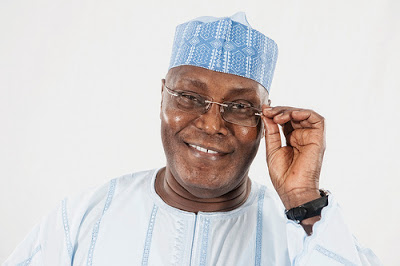
Still on the Persona of the Essential Atiku Abubakar

Published

on

By Tunde Olusunle

He contested the gubernatorial election of January 9, 1999 on the platform of the Peoples’ Democratic Party, (PDP), to be governor of the north eastern state of Adamawa and won handsomely. His closest rival was a seasoned politician, Bala Takaya, of what was then known as the All Peoples’ Party, (APP). The party would subsequently tinker with its name to make it the All Nigeria Peoples’ Party, (ANPP). The electoral demographics between him and his major competitor was over 45000 votes at the time, which was very huge. The margin between Aminu Tambuwal and Ahmad Aliyu in Sokoto State, in 2019, was as slender as 342 votes! While awaiting his inauguration scheduled for May 29, 1999, however, fate changed his political trajectory.

Olusegun Obasanjo, the retired army general who was once military head of state, emerged winner at the presidential primary of the PDP, held in Jos, Plateau State, mid-February 1999. Atiku Abubakar, the retired public servant had earned his stripes as leader of the Peoples’ Democratic Movement, (PDM). The pan-Nigerian political association was formed by Shehu Musa Yar’Adua, who was Obasanjo’s deputy when the latter was military head of state. Atiku commanded respect and adulation from his colleagues, governors-elect, who deferred to him for his experience and political savvy. Immediately after the Jos primary, a running mate had to be on the ballot with Obasanjo, who opted for Atiku Abubakar.

Atiku’s running mate on his governorship ticket, was Boni Haruna, a young political scientist whose paths had crossed Atiku’s, at several junctions. Haruna for instance, was deputy managing director of “Sub-Saharan Press Ltd,” publishers of Lagos-based news magazine, *The Week* floated by Atiku. Once he retired from the public service into politics, Atiku had been advised to own a publication which will give him a voice in the political space. Chris Mammah, a journalist and longtime acquaintance of Atiku, was the managing director of the organisation. It was from this position that Atiku plucked Haruna, a Christian like Mammah, to balance his governorship ticket. Mammah is a christian from Delta State, by the way.

Haruna was automatically upgraded governor-elect, following Atiku’s transmutation to presidential running mate. A muslim deputy, Bello Tukur, was sought for him for essential ethno-religious balance. But both from the traditional establishment and the burgeoning political class, there was murmured disaffection and dissent to the new status quo. There were indeed sponsored litigations, which tested the position of the Constitution of the Federal Republic of Nigeria, on this novel political configuration. And tried as appellants did, Atiku stood steadily and solidly behind Haruna.

As he settled down to his brief as vice president, Atiku’s even-handedness and pan-Nigerianness came to the fore. As with the president, some of his aides were assigned from the pool of public service agencies. And Atiku made no fuss about that. Baba Gana Zanna, ambassador and chief of protocol, (Borno); Azu Ndukwe, seasoned medical doctor and chief physician to the VP, (Anambra), were in this bracket. Same were Abdullahi Nyako, (principal secretary, (Adamawa) and Abdul Yari Lafiya, (Nasarawa), who was then a deputy superintendent of police, (DSP). He is now assistant inspector general of police, AIG) and was Atiku’s ADC. Mahmoud Ahmed, senior operative from the Department of State Services, (DSS) and chief security officer to the VP, also belonged to this category.

By the curious governance configuration of the Obasanjo regime, all presidential aides were first and foremost appointees of the president, who were thereafter deployed to various departments and organisations as the case may be. Atiku’s chief of staff, Olusola Akanmode, (from Kogi); media adviser, Chris Mammah, (Delta); legal adviser, Maxwell Gidado, professor and Senior Advocate of Nigeria, SAN, (Adamawa) and media assistant, Emeka Ihedioha, (Imo), were all christians. His gender-sensitivity was manifest as he appointed Tokunbo Adeola, a christian from Ogun State as special assistant on the National Economic and the National Privatisation Councils, respectively. She diluted the virtual all-male “cast” of the VP’s office.

Nath Yaduma, (Adamawa), Atiku’s longtime acquaintance also joined him on the special duties brief. Aides of the flagbearer of the PDP who were assigned various schedules, included: Onukaba Adinoyi-Ojo, (Kogi), who functioned as media adviser for a while before being appointed managing director of the Daily Times of Nigeria Plc. Usman Bugaje, (Katsina); Hamilton Isu, (Ebonyi); Ajuji Ahmed; Umar Ardo; Butrous Pembi, among others, were also appendages of the VP’s office. By the second term of the Obasanjo/Atiku administration, seasoned technocrats and professionals like Sam Oyovbaire, Emeritus professor, (Delta); Garba Shehu, (Kano); Shima Ayati, (Benue); Andy Okolie, (Imo) Adeolu Akande, (Oyo); Chike Okolocha, (Delta), all joined *Team Atiku.*

Atiku enthroned a dispensation of regular engagement between him and his aides, which they looked forward to. There was a weekly meeting between him and his principal aides to review his activities and programmes in the previous week, and to plan and prepare for the new week. Away from the serious mien, the serially misconstrued haughtiness of his public profile, you find in Atiku a genteel, regular, friendly guy, who would laughingly banter with you. You wonder how he contains these divergent sides of him in one.

Back home in Adamawa State, January 2003, the four year old democratic regime was going to stage the very first elections of the fourth republic, by itself. Boni Haruna the incumbent desired a second term as governor. There were also other aspirants. As he was yielded the microphone at the gubernatorial primary, Atiku shocked many people. There was a general assumption that with the weight of his office, he was in a position to “right the wrong” done to the state in 1999, when Haruna became governor by “default.”

Atiku pleaded with leaders and delegates of the PDP, to endorse, without equivocation, Haruna for a second term in office. According to him, democracy was just beginning to take root in the country. Haruna, he explained, did well during his first term in office and should be supported for his constitutionally allowed second term in office. Atiku explained that four years was just around the bend, so aspirants should please persevere. Those who thought the former Vice President would capitulate to religious sentiments were astounded. He reminded dissenters that they were free to exercise their democratic rights by pursuing their ambitions in other political parties.

It is very important to lay this precedence against the backdrop of the gross mismanagement of Nigeria’s ethno-religious equilibrium under the watch of the Muhammadu Buhari presidency. At every turn, Buhari has left no one in doubt about his rabid irredentism on the grounds of religion and tongue. Under him, we’ve had a government where 80 per cent of the service and intelligence chiefs, are from the president’s section of the country. What is more, they are adherents of his own faith. It is from his own geopolitical zone, the north west, where all the members of the federal executive council, are all substantive ministers, manning very strategic, maybe “juicy” ministries, as in local parlance.

These include: finance; defence; police affairs; water resources; agriculture and rural development; aviation; justice; environment; humitarian affairs and disaster management, a whopping 10, out of 44 ministers, including the president himself who is the substantive minister of petroleum! Elsewhere, we have two ministers from the south, including a Senior Advocate of Nigeria, (SAN), marooned into a minuscule ministry like we see in labour and productivity. It is under Buhari’s superintendence, that all the heads of the various arms of government, and in some instances their deputies, are adherents of the same religion.

Each time he was privileged to hoist the flag of a political party, Atiku as a matter of sensitivity and appreciation of Nigeria’s secularism, has always run with christian co-contestants. Ben Obi and Peter Obi, both christians from the south east, were his running mates in some of his earlier attempts at the presidency. Atiku has not mutated one bit, as he has once again named a southern christian, Arthur Ifeanyi Okowa, the incumbent governor of Delta State, as his sparring partner. Typically, you will find around and about Atiku, a consistent pot pourri of Nigerians from every part of the country. Bukola Saraki, Liyel Imoke, Emeka Ihedioha, Mohammed Hayatudeen, Ben Murray-Bruce, Raymond Dokpesi, Abdul Ningi, Jide Adeniji, Ehigie Uzamere, Tunde Ayeni, Biodun Olujimi, Osita Chidoka, Babangida Aliyu, Adamu Maina Waziri, Mukhtar Shagari, Ndudi Elumelu, Timi Frank are some of those you will mostly find with him. By any stretch of imagination, this is pan-Nigerian.

Atiku’s major challenger, Bola Ahmed Tinubu, on the other hand, has thrown it in the face of Nigerians, that we must contend with a same faith presidency, if he makes it. The last time Nigerians had such a ticket was the Moshood Kashimawo Olawale Abiola/Baba Gana Kingibe pairing in the historic “June 12, 1993” election. It was a much different Nigeria and Nigerians from all ethnicities, faiths, beliefs, enthusiastically and unanimously, voted for that ticket. Almost 30 years down the line, it’s a totally different Nigeria we have today. The outgoing Buhari administration has grievously accentuated and aggravated our fault lines. Year 2023 will not be the same as 1993.

Atiku Abubakar holds the promise, the key for the healing, comforting, soothing, rediscovery and resetting that Nigeria urgently and earnestly needs. This country desires and deserves genuine reunification after the multilayered dismemberment we have suffered in the vice grip of the utterly mean-spirited, insensitive, unfeeling Buhari era. If Buhari, solely, has brought to bear on us the multiplex afflictions we have endured in the last eight years, wouldn’t a joint ticket of candidates of the same faith deepen and worsen our collective predicament?

*Tunde Olusunle, PhD, is Special Adviser, Media and Publicity to Atiku Abubakar, GCON, presidential candidate of the PDP.*

Continue Reading
Click to comment

Leave a Reply

Your email address will not be published. Required fields are marked *

Opinion

How Dr. Fatima Ibrahim Hamza (PT, mNSP) Became Kano’s Healthcare Star and a Model for African Women in Leadership

Published

on

By

By Dr. Sani Sa’idu Baba

My dear country men and women, over the years, I have been opportune to watch numerous speeches delivered by outstanding women shaping the global health sector especially those within Africa. Back home, I have also listened to towering figures like Dr. Hadiza Galadanci, the renowned O&G consultant whose passion for healthcare reform continues to inspire many. Even more closer home, there is Dr. Fatima Ibrahim Hamza, my classmate and colleague. Anyone who knew her from the beginning would remember a hardworking young woman who left no stone unturned in her pursuit of excellence. Today, she stands tall as one of the most powerful illustrations of what African women in leadership can achieve when brilliance, discipline, and integrity are brought together.

Before I dwell into the main business for this week, let me make this serious confession. If you are a regular traveler within Nigeria like myself, especially in the last two years, you will agree that no state currently matches Kano in healthcare delivery and institutional sophistication. This transformation is not accidental. It is the result of a coordinated, disciplined, and visionary ecosystem of leadership enabled by Kano State Governor, Engr Abba Kabir Yusuf. From the strategic drive of the Hospitals Management Board under the meticulous leadership of Dr. Mansur Nagoda, to the policy direction and oversight provided by the Ministry of Health led by the ever committed Dr. Abubakar Labaran, and the groundbreaking reforms championed by the Kano State Primary Health Care Management Board under the highly cerebral Professor Salisu Ahmed Ibrahim, the former Private Health Institution Management Agency (PHIMA) boss, a man who embodies competence, hard work, honesty, and principle, the progress of Kano’s health sector becomes easy to understand. With such a strong leadership backbone, it is no surprise that individuals like Dr. Fatima Ibrahim Hamza is thriving and redefining what effective healthcare leadership looks like in Nigeria.

Across the world, from top medical institutions to global leadership arenas, one truth echoes unmistakably: when women lead with vision, systems transform. Their leadership is rarely about theatrics or force; it is about empathy, innovation, discipline, and a capacity to drive change from the inside out. Kano State has, in recent years, witnessed this truth firsthand through the extraordinary work of Dr. Fatima at Sheikh Muhammad Jidda General Hospital.

In less than 2 years, Dr. Fatima has emerged as a phenomenon within Kano’s healthcare landscape. As the youngest hospital director in the state, she has demonstrated a style of leadership that mirrors the excellence seen in celebrated female leaders worldwide, women who inspire not by occupying space, but by redefining it. Her performance has earned her two high level commendations. First, a recognition by the Head of Service following a rigorous independent assessment of her achievements, and more recently, a formal commendation letter from the Hospitals Management Board acknowledging her professionalism, discipline, and transformative impact.

These acknowledgements are far more than administrative gestures, they place her in the company of women leaders whose influence reshaped nations: New Zealand’s Jacinda Ardern with her empathy driven governance, Liberia’s Ellen Johnson Sirleaf with her courageous reforms, and Germany’s Angela Merkel with her disciplined, steady leadership. Dr. Fatima belongs to this esteemed lineage of women who do not wait for change, they create it.

What sets her apart is her ability to merge vision with structure, compassion with competence, and humility with bold ambition. Staff members describe her as firm yet accessible, warm yet uncompromising on standards, traits that embody the modern leadership model the world is steadily embracing. Under her stewardship, Sheikh Jidda General Hospital has transformed from a routine public facility into an institution of possibility, demonstrating what happens when a capable woman is given the opportunity to lead without constraint.

The recent commendation letter from the Hospitals Management Board captures this evolution clearly: “Dr. Fatima has strengthened administrative coordination, improved patient care, elevated professional standards, and fostered a hospital environment where excellence has become the norm rather than the exception”. These outcomes are remarkable in a system that often battles bureaucratic bottlenecks and infrastructural limitations. Her work is proof that effective leadership especially in health must be visionary, intentional, and rooted in integrity.

In a period when global discourse places increasing emphasis on the importance of women in leadership particularly in healthcare, Dr. Fatima stands as a living testament to what is possible. She has demonstrated that leadership is never about gender, but capacity, clarity of purpose, and the willingness to serve with unwavering commitment.

Her rise sends a powerful message to young girls across Nigeria and Africa: that excellence has no gender boundaries. It is a call to institutions to trust and empower competent women. And it is a reminder to society that progress accelerates when leadership is guided by competence rather than stereotypes.

As Kano continues its journey toward comprehensive healthcare reform, Dr. Fatima represents a new chapter, one where leadership is defined not by age or gender, but by impact, innovation, and measurable progress. She is, without question, one of the most compelling examples of modern African women in leadership today.

May her story continue to enlighten, inspire, and redefine what African women can, and will achieve when given the opportunity to lead.

Dr. Baba writes from Kano, and can be reached via drssbaba@yahoo.com

Continue Reading

Opinion

Book Review: Against the Odds by Dozy Mmobuosi

Published

on

By

By Sola Ojewusi

Against the Odds is an ambitious, deeply personal, and unflinchingly honest memoir that traces the remarkable rise of Dozy Mmobuosi, one of Nigeria’s most dynamic and controversial entrepreneurs. In this sweeping narrative, Mmobuosi reveals not just the public milestones of his career, but the intimate struggles, internal battles, and defining moments that shaped his identity and worldview.

The book is both a personal testimony and a broader commentary on leadership, innovation, and Africa’s future—and it succeeds in balancing these worlds with surprising emotional clarity.

A Candid Portrait of Beginnings

Mmobuosi’s story begins in the bustling, unpredictable ecosystem of Lagos, where early challenges served as the furnace that forged his ambitions. The memoir details the circumstances of his upbringing, the value systems passed down from family, and the early encounters that sparked his desire to build solutions at scale.

These foundational chapters do important work: they humanize the protagonist. Readers meet a young Dozy not as a business figurehead, but as a Nigerian navigating complex social, financial, and personal realities—realities that millions of Africans will find familiar.

The Making of an Entrepreneur

As the narrative progresses, the memoir transitions into the defining phase of Mmobuosi’s business evolution. Here, he walks readers through the origins of his earliest ventures and the relentless curiosity that led him to operate across multiple industries—fintech, agri-tech, telecoms, AI, healthcare, consumer goods, and beyond.

What is striking is the pattern of calculated risk-taking. Mmobuosi positions himself as someone unafraid to venture into uncharted territory, even when the cost of failure is steep. His explanations offer readers valuable insights into:
• market intuition
• the psychology of entrepreneurship
• the sacrifices required to build at scale
• the emotional and operational toll of high-growth ventures

These passages make the book not only readable but instructive—especially for emerging

African entrepreneurs.

Triumphs, Crises, and Public Scrutiny
One of the book’s most compelling strengths is its willingness to confront controversy head-on.

Mmobuosi addresses periods of intense scrutiny, institutional pressure, and personal trials.

Instead of glossing over these chapters, he uses them to illustrate the complexities of building businesses in emerging markets and navigating public perception.

The tone is reflective rather than defensive, inviting readers to consider the thin line between innovation and misunderstanding in environments where the rules are still being written.

This vulnerability is where the memoir finds its emotional resonance.

A Vision for Africa

Beyond personal history, Against the Odds expands into a passionate manifesto for African transformation. Mmobuosi articulates a vision of a continent whose young population, natural resources, and intellectual capital position it not as a follower, but a potential leader in global innovation.

He challenges outdated narratives about Africa’s dependency, instead advocating for
homegrown technology, supply chain sovereignty, inclusive economic systems, and investment in human capital.

For development strategists, policymakers, and visionaries, these sections elevate the work from memoir to thought leadership.

The Writing: Accessible, Engaging, and Purposeful

Stylistically, the memoir is direct and approachable. Mmobuosi writes with clarity and intention, blending storytelling with reflection in a way that keeps the momentum steady. The pacing is effective: the book moves seamlessly from personal anecdotes to business lessons, from introspection to bold declarations.

Despite its business-heavy subject matter, the prose remains accessible to everyday readers.

The emotional honesty, in particular, will appeal to those who appreciate memoirs that feel lived rather than curated.

Why This Book Matters

Against the Odds arrives at a critical moment for Africa’s socioeconomic trajectory. As global attention shifts toward African innovation, the need for authentic narratives from those building within the system becomes essential.

Mmobuosi’s memoir offers:
• a case study in resilience
• an insider’s perspective on entrepreneurship in frontier markets
• a meditation on reputation, legacy, and leadership
• a rallying cry for African ambition

For readers like Sola Ojewusi, whose work intersects with media, policy, leadership, and social development, this book offers profound insight into the human stories driving Africa’s new generation of builders.

Final Verdict

Against the Odds is more than a success story—it is a layered, introspective, and timely work that captures the pressures and possibilities of modern African enterprise. It challenges stereotypes, raises important questions about leadership and impact, and ultimately delivers a narrative of persistence that audiences across the world will find relatable.

It is an essential read for anyone interested in the future of African innovation, the personal realities behind public leadership, and the enduring power of vision and resilience

Continue Reading

Opinion

Redefining Self-leadership: Henry Ukazu As a Model

Published

on

By

By Abdulakeem Sodeeq SULYMAN
In a world filled with talents and unique gifts, nurturing oneself for an impact-filled living becomes one of the potent metrics for assuming how one’s life would unfold – either in the nearest or far future. I am sure the question you may be curious to ask is ‘what is the important quality that has shaped the life of every individual who has unleashed their ingenuity?’ Apparently, our society is filled with numerous people, who missed the track of their life. Their iniquity is boiled down to one thing – failure to lead oneself.
Realising how important it is to be your own leader has been the springboard for every transformative life. Notably, this also becomes the premise for appreciating and celebrating Henry Ukazu for setting the pace and modeling self-leadership in this era, where self-leadership is under-appreciated by our people. Self-leadership itself engineers purposeful and impactful living, turning individuals to sources of hope to others.
This is exactly what Henry Ukazu symbolises. The name Henry Ukazu is akin to many great things such as ‘Unleashing One’s Destiny,’ ‘Finding One’s Purpose’ and ‘Triumphant Living.’ Regardless of the impression one have formed about Henry Ukazu, one thing you cannot deny is his ability to be pure to nature and committed to his cause. Henry Ukazu is one of the rare people who still believed in the values of the human worth and has committed every penny of his to ensure that every human deserves to live the best life.
The trajectory of Henry Ukazu’s life is convincing enough to be choosing as an icon by anyone who chooses to climb the ladder of self-leadership. Oftentimes, Henry Ukazu always narrate how he faced the storms of life when birthing his purpose. He takes honour in his struggles, knowing full well that every stumbling blocks life throws at him helped in building himself. If not for self-leadership, he will not found honours in his struggles, let alone challenging himself to be an example of purposeful living to others.
Without mincing words, Henry Ukazu’s life has been blessed with the presence of many people, with some filling his life with disappointments, while some blessing him with immeasurable transformations. Surprisingly, Henry Ukazu has never chosen to be treating people negatively; rather he would only choose the path of honour by avoiding drama and let common sense prevail. That’s one of the height of simplicity!
Dear readers, do you know why today is important for celebrating Henry Ukazu? Today, 3rd December, is his birthday and with all sincerity, Henry Ukazu deserves to be celebrated because he has chosen the noble path, one filled with honours and recognitions for being an icon of inspiration and transformation to the mankind. As Henry Ukazu marks another year today, may the good Lord continue shielding him from all evils and guiding him in right directions, where posterity will feel his role and impacts!
Many happy returns, Sir!

Continue Reading

Trending