Connect with us

Boss Of The Week

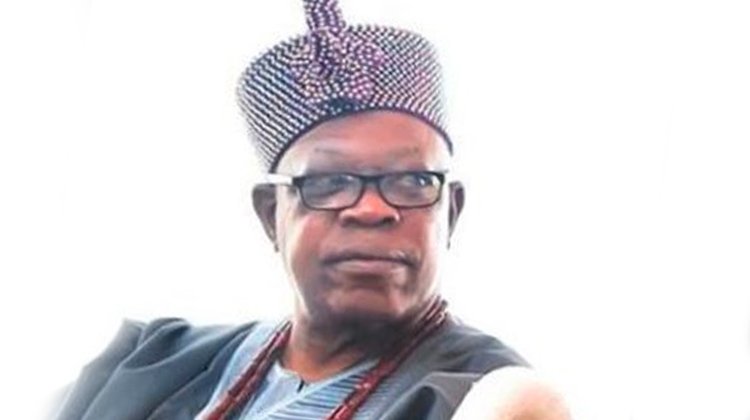
Lekan Balogun: The Making of a Much Cherished Olubadan

Published

on

By Eric Elezuo

During the week, Oyo State Governor, Engr. Seyi Makinde, approved the appointment of High Chief Lekan Balogun as the 42nd Olubadan of Ibadanland, bringing to a healthy conclusion series of skirmishes that pervaded the Ibadan chieftaincy regime at the death of The Olubadan of Ibadanland, Oba Saliu Adetunji, at 93.

Makinde’s approval followed a recommendation to that effect made by the Olubadan-in-Council and which was communicated to the governor wherein he wished the newly confirmed Olubadan a peaceful and eventful reign, according to a statement by the governor’s Chief Press Secretary, Taiwo Adisa.

“I am pleased to announce the appointment of the Otun Olubadan of Ibadanland, High Chief Lekan Balogun as the 42nd Olubadan of Ibadanland.

“The appointment is in line with the Olubadan of Ibadan Chieftaincy Declaration, as well as the unique and time-tested tradition of our people.

“On behalf of the government and good people of Oyo State, I wish the newly confirmed Olubadan a successful reign blessed with peace and unprecedented progress.”

Mr Balogun’s appointment as Olubadan came weeks after controversies and uncertainties over the successor of Saliu Adetunji, the 41st Olubadan who died January 2 at the age of 93.

Mr Balogun, 79, a former senator, is the next in line to the throne, according to the ancestral arrangement of Ibadanland.

In the same vein, Makinde also approved the revocation of the amended Ibadan Chieftaincy Declaration, which regulates the selection to the Olubadan of Ibadan chieftaincy stool.

The statement indicated that the governor made the revocation order, dated February 11, 2022, in line with the powers conferred on him by the Constitution of the Federal Republic of Nigeria, 1999 (as amended), in view of the Judgements of the Oyo State High Court on February 1 and 10 as well as Sections 7, 20,26 and 30 of the Chiefs Law of Oyo State 2000.

The four separate laws/White Papers approved for revocation were made public by the immediate past administration between 2017 and 2018.

The statement listed the laws/white papers to include the amended declaration regulating the selection to the Olubadan Chieftaincy stool, published in August 2017; the implementation of the White Paper on the review of the existing Olubadan of Ibadan Chieftaincy Declaration and other chieftaincies in Ibadan, published in August 2017; the approval of the appointment of beaded crowns for the Olubadan in Council published March 2018; and the appointment of beaded crowns and coronet wearing Obas published in March 2018.

Born in October 1942, Lekan Balogun, the man who the Olubadan cap fits, was until his pronouncement as the substantive Olubadan, the Otun Olubadan of Ibadanland, a post which places him at a vantage position to occupy the then vacant Olubadan stool. A former lawmaker, Lekan Balogun was the most senior chief from the two ruling chieftaincy lines, Egbe Agba (civil) and Balogun (military) that produce successors to the throne in the state.

Balogun, who represented the state at the red chamber, senate, and celebrated his 79th birthday last October, is not just statutorily suitable, but a bundle humanity and societal impact. He represented Oyo Central senatorial district between 1999 and 2003, where he served as the chairman Senate Committee on National Planning, and was a member of many Senate committees such as Appropriations, Security and Intelligence, Police Affairs, and Defence (Army).

A man of immense peace and good tidings, the Olubadan had found it appropriate to live in peaceful cohabitation with all and sundry, who is at fault notwithstanding. Consequently, he found it admirable to reconcile with the late Oba Adetunji, less than three years ago following his installation by former Oyo State governor, late Abiola Ajimobi, as king in Oyo. That is the vintage Lekan Balogun!

Noted as renowned, Balogun is a distinguished technocrat, transparent politician, and erudite author, who enjoyed a very humble childhood and upbringing. He had his primary education at CAC Modern School, Anlugbua. He was privileged to live with one of his brothers, late Hamzat Balogun, who was a civil servant but was studying privately for the General Certificate of Education, Ordinary Level ( GCE O’L). This rare privilege gave him an added impetus to secretly read his brother’s correspondence tutorials while he was also subscribing to Rapid Result College in the UK to enhance his performance in the examination. This, in no small measure, became very helpful to him when he wrote his qualifying tests.

Being what many will term a gifted child, Balogun, while in the second year of the three-year modern school programme, sat for the qualifying examination and passed. Therefore, he left school without completing the programme.

An avid learner, he did not stop at the acquisition of the certificate, but jetted out thereafter to the United Kingdom where he studied for his O and A levels certificates while doing a part-time job to sustain himself.

Balogun showed his thorough love for education not only by attending schools, but also by distinguishing himself in the field of study, leaving the university in 1973 with a Masters degree in Administration and Economics before having a brief stint with the Lamberth Local Government Social Services Department where he worked for one and a half years. He thereafter enrolled for his PhD.

At a glance, Balogun holds a Doctorate Degree in Public Administration; Public and Social Administration and Economics from Columbus International University, Brunel University, and Manchester University all in the United Kingdom.

A totally detribalised Nigerian, Balogun, in the same 1973, and having resumed as a research fellow at ABU Centre for Social and Economic Research also had the option of working as a lecturer at the University of Ife now Obafemi Awolowo University but chose ABU because of the desire to relate with other people other than his origin and to know their cultures and traditions.

A presidential aspirant on the platform of the Social Democratic Party (SDP) in the 1992/1993 presidential election, Balogun cut his political tooth during his sojourn in the UK, where he developed the white-black consciousness which metamorphosed into activism and the struggle for human rights. He subsequently joined the leftist Marxist movement.

It was in 1978 that he took politics headlong, joining the Peoples Redemption Party (PRP) of Late Mallam Aminu Kano. He reportedly combined dexterity, charisma, honesty and determination to speedily climb the ladder becoming a well known figure in the politics of Oyo State.

Politically, he marched forward, becoming the gubernatorial candidate of one of the major political parties in the country, the Nigerian People’s Party (NPP) led by late nationalist, Dr. Nnamdi Azikiwe. It will also be mentioned that Balogun, like many of the second Republic politicians suffered incarceration woes when the December 1983 military coup ushered in the administration of General Muhammadu Buhari.

The Baloguns’ political dexterity in Oyo State saw his younger brother, Kola Muhammed Balogun, beating the immediate past former governor of the state, late Abiola Ajimobi, to represent Oyo South Senatorial District in the red Chamber on the platform of the Peoples Democratic Party (PDP).

Balogun, who hails from Ali-Iwo compound in Ibadan North East Local Government Area, and a former Mogaji, has also shone like a million stars in the world of entrepreneurship, and sits on the board of several companies with interests in oil and gas, distributive trade, management consulting, mechanized farming, and export of non-oil items, as well as travels and tourism.

His stints at the prestigious at Shell Petroleum Development Company saw him rising to become the administrative head in Industrial Relations, Recruitment and Scholarships, and Planning and Development units. He really was a force to reckon with.

Apart from being a Research Fellow with the Ahmadu Bello University, Zaria, he was also a director with Triumph Newspaper, Kano; Editor of the monthly magazine, “The Nigerian Pathfinder” as well as a Management Consultant for multinational organisations such as Leyland, Exiat Battery, and Nigerian Breweries.

Balogun is happily married to two wives, and they are blessed with many children.

We, at The Boss wish you a healthy and peaceful reign. Congratulations sir!

Continue Reading
Click to comment

Leave a Reply

Your email address will not be published. Required fields are marked *

Boss Of The Week

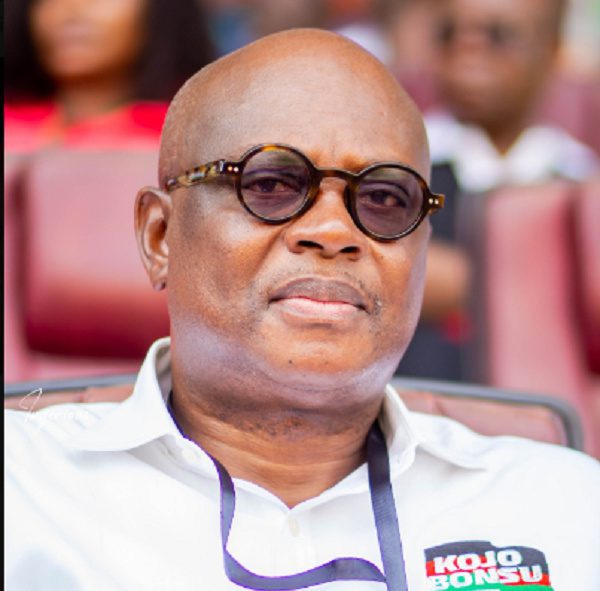
Ghana 2028: Mahamudu Bawumia Claims NPP’s Presidential Ticket

Published

on

By

By Eric Elezuo

In a keenly contested primary election, former Vice President Mahamadu Bawumia has claimed the presidential ticket of the New Patriotic Party (NPP) to fly the party’s flag in the 2028 presidential election in Ghana.

Bawumia defeated four other aspirants to clinch the ticket with a total votes of 110,643 (56.48%). They others fared as follows: Kennedy Ohene Agyapong – 46,554 (23.76%), Dr Bryan Acheampong – 36,303 (18.53%), Dr Yaw Osei Adutwum – 1,999 (1.02%) and Kwabena Agyei Agyepong – 402 (0.2%)

The votes cast were from the over 200,000 delegates from 333 polling centres across the 16 regions Ghana. From every indication, it appears obvious that the former vice president won by a landslide.

A seasoned academia-cum politician, Mahamudu Bawumia was born on October 7, 1963, and is reputed to share heritage with the Mabia (Mossi-Dagbon) ethnicity, as well as with influential figures such as Thomas Sankara, Alhassane Ouattara, Haruna Iddrisu, among many others.

He has out of a dint of hardwork, served at the highest level of politics and career, serving as seventh vice president for eight years and head of the Ghanaian central bank. He was also  the New Patriotic Party (NPP) nominee for president in the 2024 general election

A member of Mamprusi people, Bawumia was born in Tamale, Ghana, to Alhaji Mumuni Bawumia and Hajia Mariama Bawumia. He is the twelfth of his father’s 18 children and the second of his mother’s five.

A Muslim by virtue of religion, Bawumia was named after Yaa Naa Mahamadu Bila, a king of Dagbon who ruled from 1948 to 1953. The name Bawumia means “They have heard” in Dagbanli and Gmampruli languages.

Tailored through educational inclination, Mahamudu Bawumia attended the Sakasaka Primary School in Tamale, and gained admission to Tamale Secondary School in 1975.

After graduating from Tamale Secondary School, he went to the United Kingdom, where he studied Banking, and obtained the Chartered Institute of Bankers Diploma (ACIB).

While at school, he participated activity in campus politic, becoming the president of the Ghana United Nations Students’ Association (GUNSA) in 1981.

In 1987, he graduated with a First Class Honours Degree in Economics from the  Buckingham University.

He later obtained a Master’s Degree in Economics at Lincoln College, Oxford, and obtained a PhD in Economics at the Simon Fraser University, Vancouver, British Columbia, Canada in 1995. His areas of specialization include Macroeconomics, International Economics, Development Economics and Monetary Policy.

For an egghead like Bawumia, numerous publications trail his trajectory.

From 1988 to 1990, Bawumia worked as a lecturer in monetary economics and international finance at the Emile Woolf College of Accountancy in London, England. He also served as an intern at the Research Department of the International Monetary Fund in Washington, D.C. Bawumia also served as resident representative of the African Development Bank in Zimbabwe.

Between 1996 and 2000, Bawumia served as an assistant professor of economics in the Hankamer School of Business at Baylor University in Waco, Texas, USA, where he received a Young Researcher Award in 1998. He was listed in “Who Is Who Among America’s Teachers” in 1999. He also published two books on monetary policy and economic development.

Bawumia returned to Ghana in 2000 to work as an Economist at the Bank of Ghana. He rose from senior economist to head of department and subsequently served as special assistant to the governor of the bank.

In June 2006, then President John Kufuor appointed Bawumia the deputy governor of the Bank of Ghana, where he had an enviable track record of achievements across departments, sections and units.

During the run to the 2008 general elections, Bawumia resigned his position as deputy governor at the Bank of Ghana, becoming the running mate to NPP presidential candidate, Nana Akufo-Addo. Though they lost the election, Bawumia’s carriage increased the NPP’s vote count.

He was however, to return to the academic world, undertaking various assignments locally and internationally, including becoming consultant to the Economic Commission of Africa between February and March 2009, and a visiting scholar at the University of British Columbia Liu Centre for Global Studies and UBC Fisheries Centre between April and October 2009.

Owing to sterling credentials over the years, in January 2011, Bawumia was appointed resident representative of the African Development Bank for Zimbabwe by the African Development Bank. He served in this position until reappointed as the vice-presidential candidate to Nana Akufo-Addo on the ticket of the New Patriotic Party for Ghana’s 2012 presidential election. Again, they lost the election. 

But on his third attempt in 2016, he became Vice President of the Republic of Ghana with Akufo-Addo as the Presidential. For eight years, both men run the affairs of Ghana, having enjoyed a reelection in 2020.

In 2024, as Akufo-Addo completes his tenure, he signified his interest to rum for the presidency, running against the candidate of the National Democratic Congress (NDC), John Mahama, who eventually won the election. On 8 December 2024, Bawumia conceded defeat to former President John Mahama in an address to the media at his residence.

Bawumia is known for several philanthropic works:

In October 2020, he formally commissioned an ultramodern mosque built and fully funded by him for use by the people of Prang in the Bono East area. Dr. Bawumia had earlier in June same year settle over nearly 6 decades land lease arrears for the Kumasi Central Mosque.

In September 2021, he pledged GHS 1,500 monthly stipend to Psalm Adjeteyfio to take care of his rent and upkeep. In May 2022, Dr. Bawumia donated an amount of GHs 20,000.00 to a taxi driver who returned missing GHs 8,400.00 to the owner. In October 2021, Dr. Bawumia celebrated his 58th birthday with inmates of the Weija Leprosarium. In October 2022, he celebrated his birthday with cured lepers from the Weija Leprosarium and in October 2023, he celebrated his 60th birthday with the orphans at the Kumasi Children’s Home.

Bawumia is married to Samira Bawumia, and they have four children. He is expected to harness all his political and economic advantages in 2028 as he squares up against whoever the NDC will present since President John will no longer be on the ballot paper.

Continue Reading

Boss Of The Week

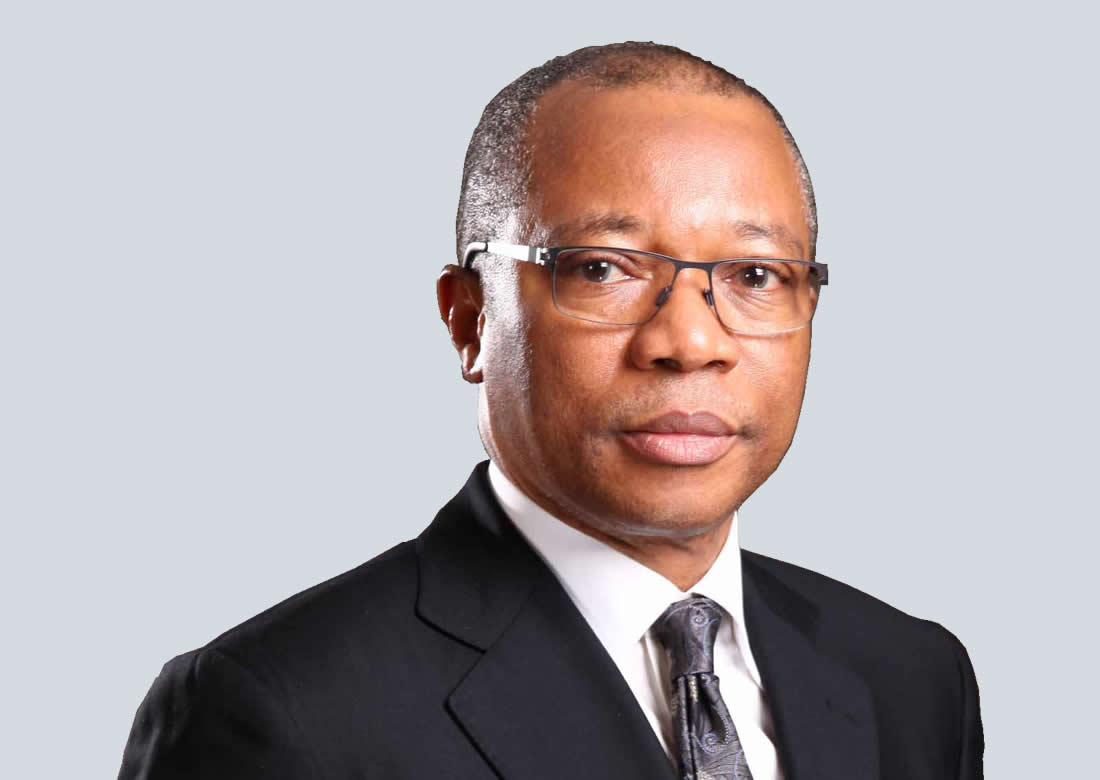
Emeka Anyaoku: When a Global Statesman Turns 93

Published

on

By

By Eric Elezuo

With each passing day, week, and year, global diplomatic icon, Chief Emeka Anyaoku, continues to grow in bounds, and wow the world with his touch of class and excellence. At a glorious 93 years, the stateman of international repute is not slowing down anytime soon if his current zeal, carriage and abundant reservoir of wealth of experience is anything to go by.

According to a classmate and contemporary of the revered nonagerian, Mr. S. I. Metu, “from all we now know of Mr. Anyaoku, it is obvious that he was destined to be a diplomat, because he had all the makings – intelligence, friendliness, the ability to get things without offending anybody.

It is worth knowing that among the world’s very and highly respected diplomats is Nigeria’s diploma extraordinaire, Chief Anyaoku. His larger than life figure is further buttressed as he slides three more years into the nonagerian cadre. The world therefore, raises a toast to an accomplished and dedicated international figure as he celebrates 93 years of continuous impact in world diplomacy, politics and humanitarian endeavours.

Chief Anyaoku, before, during and after his glorious days with the Commonwealth of Nations as its Executive Secretary, has remained in the forefront of policy makers, image changers and global builders, and he is a few of these calibre of men, who do not have any kind of scandal trailing them. He qualifies as an enigma, and served as the third Commonwealth Secretary-General.

With his signature red cap, a white collar-like attire round his neck, supporting every apparel he wears, Anyaoku is very visible in every gathering and occasion.

A multiple awards and honours winner, including the prestigious GCON, GCVO, CFR, CON, Anyaoku was born Eleazar Chukwuemeka Anyaoku, of Igbo parents and heritage, Emmanuel and Cecilia Anyaoku, on January 18, 1933, in Obosi, in the present day Anambra State. He was educated at Merchants of Light School, Oba, and attended the University College of Ibadan, then a college of the University of London, from where he obtained an honours degree in Classics as a College Scholar. Aside from his international career, Anyaoku finds ample time to fulfill the duties of his office as Ichie Adazie of Obosi, traditional Ndichie chieftainship. He is the first of his mother’s children, and had five other siblings.

At the age of seven, the young Emeka was sent to live with his father’s only brother, Egwuenu Anyaoku, at Umuahia to start schooling in a very rural school. At 10, in 1943, he was sent to stay with his father’s cousin, Nathaniel Enwezor who was Headmaster at CMS Central School at Agbor.At Merchants of Light School (MOLS), Oba, where he had his secondary education, he learnt the importance of hard work, good character and good inter-personal relations. Records have it that he was outstanding, smart and brilliant. He also showed particular signs of leadership qualities during his young age.
Anyaoku is known to have organised the first African Commonwealth Heads of Government Roundtable in early 1997, to promote democracy and good governance on the continent. As a typical Igbo man, he still honours his traditional duties, serving as a chief in the midst of his international commitments. Anyaoku continues to fulfil the duties of his office as Ichie Adazie of Obosi, a traditional Ndichie chieftaincy title.
Wikipedia further captured his trajectory as follows:

After his secondary education, Anyaoku in 1952 proceeded to teach at Emmanuel College, Owerri in the then Eastern Region, he was there until mid-1954 lecturing in mathematics, Latin and English. He was reputedly an assiduous young teacher, meticulous in preparing his lesson notes. He gave back to his students the best of what he had learned at MOLS while injecting humor into his teachings.

One of his teachers at MOLS had kindled in him an interest in the Classics. His Latin teacher had inspired in him a love for the languages, laws and culture of the ancient Greeks and Romans, and the classical roots of the English language. Anyaoku then decided to go and study Classics at the new University College of Ibadan, the premier higher institution of its kind in the country, which had been instituted in 1948 as an overseas college of the University of London.

During the mid-1950s when Anyaoku was an undergraduate at the University College, Ibadan, the Nigerian nation was embroiled in debates, discussions and demonstrations on the political future of the country. There were controversies on when Nigeria should gain independence from Britain and with what political structure it should seek independence whether as a unitary or federal state. The city of Ibadan was one of the main epicenters of these debates. And the University College, which had brought together brilliant students, lecturers and politicians from diverse parts of the country, became a centre of what was then described as national radicalism.

Catriona Laing, Chief Emeka Anyaoku & Laure Beaufils

Anyaoku was in the thick of this as a student union leader. He along with like-minds in the union leadership campaigned in favour of unitary state, against federalism. They sent petitions and delegations to the three foremost political leaders in the country then, Dr. Nnamdi Azikiwe in the Eastern region of the country, Chief Obafemi Awolowo in the Western, and Sardauna of Sokoto, Sir Ahmadu Bello in the Northern region.

Anyaoku in 1959 obtained a London University Honours Degree in classics as a college scholar and joined the Commonwealth Development Corporation (CDC) in Lagos. The corporation sent him as an Executive Trainee to the CDC headquarters in London from where he went on a course at the Royal Institute for Public Administration in London. On 1 October 1960, Nigeria was granted independence by Britain. And Anyaoku was posted back to the CDC West Africa regional office in Lagos at the end of December 1960.

In December 1961, Anyaoku then a CDC Executive Officer came in contact with a twenty year old Yoruba lady, Princess Ebunola Olubunmi Solanke, at a bachelor’s eve party which he and his flatmate hosted for a friend of theirs in Lagos. The princess, familiarly known by the diminutive “Bunmi”, was educated in England at a Christian girls boarding school, St. Mary’s School at Hastings. She thereafter attended Pitman College, London. Emeka and Bunmi were married at the Anglican Cathedral Church in Lagos on 10 November 1962.
In 1959, Emeka Anyaoku joined the Commonwealth Development Corporation. In early 1962, Anyaoku came in contact with the then Prime Minister of Nigeria, Sir Abubakar Tafawa Belewa. He had accompanied his visiting boss, Lord Howick, Chairman of the Commonwealth Development Corporation, to a meeting with the Prime Minister on the activities of the corporation in Nigeria and the West African region. The Prime Minister, impressed by Anyaoku’s answers to some of his questions on the projects supported by the CDC in West Africa, took an interest in Anyaoku’s future and persuaded him to consider joining the Nigerian Foreign Service. After a grueling interview by the Federal Civil Service Commission, he was offered an appointment in the Foreign Service in April 1962. Within a month of his entry, he was appointed Personal Assistant to the Permanent Secretary of the Ministry for External Affairs. There he was closely involved in the process that led to the establishment of the Organisation for African Unity (OAU) in May 1963. Following Nigeria’s independence, he joined Nigeria’s diplomatic service, and in 1963 was posted to its Permanent Mission to the United Nations in New York.In 1966, he joined the Commonwealth Secretariat as Assistant Director of International Affairs. In 1968-69 there was a campaign by the Nigerian military government for the recall of Anyaoku; which said he was not a suitable Nigerian nominee, and they were anxious about his loyalty “to the country of his birth”. But “Emeka had resigned from the Nigerian Foreign Service and Arnold had no difficulty in turning aside the demand”.In 1977, the Commonwealth Heads of Government elected him as Deputy Secretary-General. In 1983, Nigeria’s civilian government appointed Anyaoku to become Nigeria’s Foreign Minister. After the overthrow of the government by the military later that year, he returned to his position as Deputy Secretary-General with the support of the new government in Nigeria and the endorsement of all Commonwealth governments.

At the Commonwealth Heads of Government Meeting at Kuala Lumpur on 24 October 1989, Anyaoku was elected the third Commonwealth Secretary-General. He was re-elected at the 1993 CHOGM in Limassol for a second five-year term, beginning on 1 April 1995.

Recall that in 1998, the former President of South Africa, Nelson Mandela, in recognition of Chief Emeka Anyaoku’s antecedents concerning South Africa, and the manner in which he had championed the cause of the progressive movements around the world, afforded him the rare honour of addressing a joint sitting of the South African National Assembly. Also, former President Nelson Mandela wrote the foreword to Chief Chukwuemeka Anyaoku’s book, Eye of Fire.

Chief Emeka Anyaoku has lived, and continue to up to expectations, and merit the positive tags that trail him the world over.

Yes, when a global of Anyaoku’s magnitude turns 93, the international community rumbles in absolute cheers.

We wish the seasoned diplomat a glorious 93rd birthday, and many more years to follow, looking magnificently young in health and wealth.

Congratulations sir!

Continue Reading

Boss Of The Week

Meet Fidelity Bank’s New Board Chair, Amaka Onwughalu

Published

on

By

By Eric Elezuo

For her dexterity, hard work, commitment, achievement and integrity, excellent banker and entrepreneur, Mrs Amaka Onwughalu, has the nod of the Fidelity Bank’s family to take up the chairmanship position of its board as Mustafa Chike-Obi completes his tenure.

In a statement announcing her appointment, the Bank posted on its website as follows:

Tier one lender, Fidelity Bank Plc, has announced the completion of the tenure of Mr. Mustafa Chike-Obi as Chairman of its Board of Directors effective December 31, 2025, and the appointment of Mrs. Amaka Onwughalu as the new Chairman of the Board, effective January 1, 2026.

The board transitions are in alignment with the Bank’s policy and have been communicated to the Central Bank of Nigeria, the Nigerian Exchange Group, and other stakeholders.

Under Mr. Chike-Obi’s leadership, Fidelity Bank repaid its Eurobond, completed the first tranche of its public offer and rights issue that were oversubscribed by 237 percent and 137.73 percent respectively, expanded internationally to the United Kingdom, and received improved ratings from various agencies amongst a long list of achievements. His tenure also saw the Bank strengthen its capital position, record steady growth in customer deposits and total assets, deepen its digital banking capabilities, and enhance its corporate and investment banking proposition. The bank equally made notable progress in governance, risk management, and operational efficiency, all of which contributed to strengthened market confidence and the Bank’s sustained upward performance trajectory.

Reflecting on his tenure, Mr. Mustafa Chike-Obi said, “It has been a privilege to serve as Chairman of Fidelity Bank. The dedication of our Board, management, and staff has enabled us to reach significant milestones. I am confident that the Bank will continue to thrive and deliver value to all stakeholders.”

Mrs. Amaka Onwughalu’s appointment marks a new chapter for Fidelity Bank. She joined the Board in December 2020 and has chaired key committees. With over 30 years of banking experience, including executive roles at Mainstreet Bank Limited and Skye Bank Plc. She holds degrees in Economics, Corporate Governance, and Business Administration, and has attended executive programmes at global institutions. Mrs. Onwughalu is a Fellow of several professional bodies and has received awards for accountability and financial management.

“I am honoured to lead the Board of Fidelity Bank at this exciting time. Our recent achievements have set a strong foundation for continued growth. I look forward to working with my colleagues to drive our strategy and deliver sustainable value,” commented Mrs. Onwughalu.

Ranked among the best banks in Nigeria, Fidelity Bank Plc is a full-fledged Commercial Deposit Money Bank serving over 9.1 million customers through digital banking channels, its 255 business offices in Nigeria and United Kingdom subsidiary, FidBank UK Limited.

The Bank is a recipient of multiple local and international Awards, including the 2024 Excellence in Digital Transformation & MSME Banking Award by BusinessDay Banks and Financial Institutions (BAFI) Awards; the 2024 Most Innovative Mobile Banking Application award for its Fidelity Mobile App by Global Business Outlook, and the 2024 Most Innovative Investment Banking Service Provider award by Global Brands Magazine. Additionally, the Bank was recognized as the Best Bank for SMEs in Nigeria by the Euromoney Awards for Excellence and as the Export Financing Bank of the Year by the BusinessDay Banks and Financial Institutions (BAFI) Awards. 

Before landing the chairmanship job at Fidelity Bank Board, Amaka has been the Managing Director of Legal at Mainstreet Bank, and Deputy Managing Director at Skye Bank.

Onwughalu joined Fidelity Bank Plc in 2020, and has served as a Director at of Bank Plc.

The accomplished banker holder of the prestigious of Paul Harris Fellowship of the Rotary Club, and recipient of various prestigious awards including the National Merit Award for Accountability and Transparency, the Award of Excellence and Distinction for Financial Management and the Vocational Service Award from the Rotary Club, Enugu.

Well read, Amaka Onwughalu is a Master Degree holder of Science in Corporate Governance from Leeds Metropolitan University and a Master of Business Administration from University of Port Harcourt, Nigeria.

Onwughalu boasts of a cumulative three decades experience in the banking, and has held very senior and managerial positions before climaxing on the top level of chairmanship of Fidelity Bank.

Continue Reading

Trending