Connect with us

Featured

Amotekun Not Threat to National Unity, Tinubu Breaks Silence

Published

on

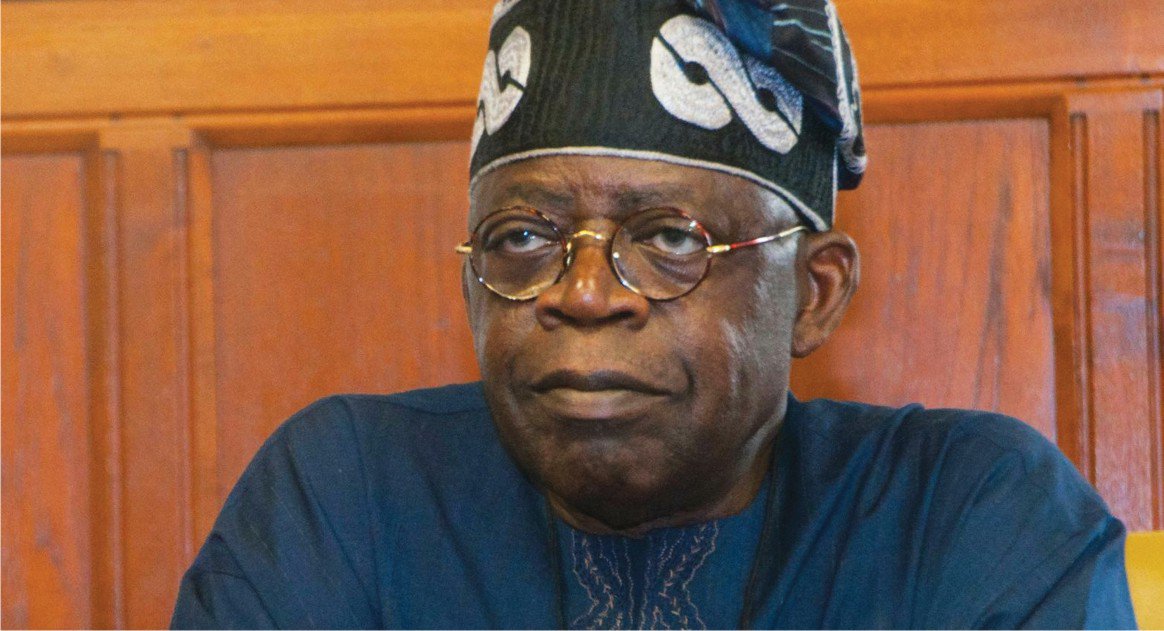
National leader of the All Progressives Congress, Bola Tinubu, has debunked claims that a security outfit launched by South-West governors, Amotekun, is a threat to national unity.

Tinubu said this in a press statement on Wednesday.

The statement reads, “Those claiming that this limited, inoffensive addition to security threatens the Republic have taken themselves upon a madcap excursion.

“Those claiming that the Federal Government seeks to terribly suppress the Southwest have also lost their compass. Those who occupy these two extremes have sunken into the dark recesses of fear and political paranoia that can undo a nation if such sentiments are allowed to gestate.”

The statement continues, “Amotekun. This issue has dominated recent discourse and media headlines. Distilled to its basics, it concerns how best state governments can assist with the safety and security of their residents. This is a matter of serious concern entitled to sober thought. However, it has been turned into a political tug-of-war. Fierce, often unthinking rhetoric, for and against, has crossed the lips of too many Nigerians. More subjective talking than objective thinking has been the fuel of this outburst.

“Question those in favour of Amotekun. Most have but the vaguest notion about it. They know few details yet vigorously attribute to its opponents the most negative intentions. Ask those who oppose Amotekun. They are equally ignorant of its provisions. They oppose the initiative not on its merits but merely because it was proposed by their political opponents or because they don’t see an avenue for personal gain from it.

“While colourful, the rhetoric has been disconcerting. How people have mishandled this matter demonstrates that we still have far to go in perfecting this democracy. Too much energy has been spent distorting this issue instead of seeking a resolution that supports local enhancement of security while keeping the constitution intact. If this becomes the standard for how we handle disagreements then we will obscure Nigeria’s path forward with our own rubbish.

“In this matter, I do not see malign intent in the differences of opinion between the SW Governors as authors of Amotekun and the Attorney-General as the primary law enforcement officer of the Federal Government. Shorn of the overly dramatic language, what lies before us is but a step in the evolution of our federalism. This is an opportunity to more clearly define that federalism; but one cannot attain this better, more functional definition through overblown, emotional language. Objectivity and calmness are required. To a significant degree, the enduring quality of our republic will be established by the sagacity with which we handle disagreements regarding the division of power between federal and state governments. Such disagreements are inevitable. This is not the first. Nor will it be the last. We must devote our energies more toward solving problems rather than amplifying them.

“Seeking to fulfil their mandates by helping protect their people, the governors of the Southwest collectively established a program to buttress existing security mechanisms. Seeking to protect the constitution as best he could, the Attorney-General offered his opinion on what he believed the governors have sought to do. No one can blame either party for seeking to fulfil what they genuinely see as their public duty.

“Until now, I have deliberately maintained a studied silence regarding Amotekun. Many have tried to goad my swift public reaction. Those who have taken this road did so not because they care about Amotekun or even the people it intends to help protect. They did so knowing this had become a delicate and emotional issue for many. These cynics did so with the adversarial hope that, in haste, I might misspeak or misstep in a manner they could twist to their political advantage.

“Such people are possessed of a mercenary aspect that permits them to sacrifice almost anything, even jeopardize the very foundations of our political unity, if they might exact personal gain from the upheaval. In that they know no nobler purpose than their own appetites, we should feel sorry for them. However, we must not allow our sympathies for their barren condition to persuade us that there is worth in their destructive misconduct. They must be left to the consequences of their own devices.

“If truly I am a political leader as I am often described, then I have not the luxury of hasty, ill-conceived utterances. There are those who will use inflamed words to spark the passions of others. This may bring transient applause. But when the cheers fade, we shall only have further descended because their words were never inclined toward resolution and long-term improvement but toward short-term popularity and perpetual confrontation.

“I believe in this nation and its benign prospects. I dearly love its people, all of them. Over the years of our existence, they have suffered much. Yet they still hold forth with heroic patience and an extraordinary optimism born of strong faith. To these people, I owe my best. I shall not treat them cheaply or bandy their emotions like some errant football. The welfare of these good and decent people is my overriding concern.

“Equally, I do not cow to the demands of those who press for me to make a premature statement on an important issue. Again, that is a game devised by those who care more about political cleverness than the quality of governance. I chose to talk when my position has been made ripe by a collection of the facts and a reasonable assessment of those facts.”

The Punch

Continue Reading
Click to comment

Leave a Reply

Your email address will not be published. Required fields are marked *

Featured

Why I Visited Nnamdi Kanu in Prison – Alex Otti

Published

on

By

By Eric Elezuo

Governor Alex Otti of Abia State has explained the reasons behind his much talked about visit to the leader of the Indigenous Peoples of Biafra (IPOB), Mazi Nnamdi Kanu, in Sokoto Correctional Centre.

Nnamdi Kanu was found guilty of all the seven count charges of terrorism brought against him by the Federal Government, and sentenced to life imprisonment, by Justice James Omotosho of the Federal High Court, Abuja, on November 20.

The governor also declared his intention to retire from partisan politics after serving as governor of the state.

Governor made these remarks in Umuahia while reacting to a viral video in which an individual berated him for visiting the IPOB leader in Sokoto Correctional Centre recently and alleged that the visit was aimed at positioning him (Otti) for either the presidential or vice presidential ticket. Otti however, denied having any presidential or vice presidential ambition after his governorship role.

According to him, he would not even contest for the senatorial position after serving as governor of Abia State.

Criticisms, he said, are part of democracy, adding that everyone is free to hold an opinion, even as he acknowledged that some criticisms, especially undue ones, are far from being the truth.

His words, “In the first place, that is the beauty of democracy. So, people should hold their opinions, and we respect people’s opinions. And that you hold a different opinion doesn’t mean you are right.

“One of the things he talked about was my ambition after being governor. And I had said it before, and I want to say it again, that by the time I’m done with governorship, I will retire.

“So, I don’t have presidential ambition, nor vice-presidential ambition. I also don’t have senatorial ambition. So, when I finish with the governorship, I’ll retire.

“I came for a mission. And when I deliver that mission, I will give way to younger people. So, he was talking of Igbo presidency. I don’t even understand what that means.

“So, I think if his thesis is based on that assumption, the assumption has collapsed, because he won’t see me on the ballot.

The Abia governor argued that it is important for a political office holder to know when to quit, especially when the politician has done what he is asked to do.

“When you have done what you have been asked to do, you clear, give way for other people. We’ve seen people here, after being governor who went to serve as Local Government Chairman. That’s not what we are. We are not cut out for those kinds of things.

Otti used the forum to explain why he visited Mazi Nnamdi Kanu at the Sokoto prison.

He said, “The second point is about Nnamdi Kanu. And I don’t want to put this matter in the public space so that it doesn’t jeopardise the discussions that I’m having.

“The truth about it is that exactly 24 months ago, I opened up discussions at the highest level on Nnamdi Kanu.

“And going to see him is the right thing to do, because he comes from my state. In fact, he comes from this local government (Umuahia North – the state capital).

“And there are always ways to solve a problem. I don’t believe that the way to solve a problem is to ignore it. And I had written extensively, even about Nnamdi Kanu and Operation Python Dance, I think in 2017 or 2018. And I condemned it.

“And I still condemn it. And some of the recordings that the gentleman put in his video, I cannot vouch for the veracity of that recording.”

Governor Otti maintained that he knows that when an issue has been approached from the legal point of view, there is also another window called the administrative point of view, stressing that, that is where he (the governor) is coming from.

“I’m not a lawyer. And if the judiciary says the man has been condemned to life imprisonment, that is the judiciary. Even that is not the end, because that’s the court of first instance. There is still an opportunity to appeal and then an opportunity to even go to the Supreme Court.

“But what we are trying to do is to intervene. I’m not a supporter of the disintegration of Nigeria.

“So, my position is that it would be insensitive of me to sit here and say one of our own who has been convicted should die when we have an opportunity to discuss, negotiate, and sue for peace. So, that is my position,” he said.

Continue Reading

Featured

How Glo Network Became the Lifeline That Saved Two Lives: A True Story from Sallari

Published

on

By

By Dr. Sani Sa’idu Baba

It was one of those calm, bright mornings in Sallari, a town in Tarauni Local Government Area of Kano State. I had gone to visit my longtime friend and colleague, Dr. Muhammad Umar Abdullahi, at his private facility, Rauda Clinic and Maternity. We were in his office discussing research, the usual challenges of medical practice, and other issues when the sound of hurried footsteps and anxious voices broke the calm. A young man rushed in, calling for the doctor.

Without hesitation, Dr. Muhammad sprang into action. I followed him instinctively. Within moments, two people burst through the gate, one man carrying a weak, heavily pregnant woman in his arms. Her breathing was shallow and wheezy, her face pale, and her body trembling between labor contractions and an asthma crisis. The scene was intense, we both knew that every second counted.

The team quickly moved her to the emergency bed. The Chief Medical Director Dr. Muhammad and his nurses worked swiftly to stabilize her breathing and monitor the baby. Oxygen was connected, IV lines were set, and within minutes, her breathing began to steady. The baby’s heartbeat was strong. After a short but tense period, she delivered a healthy baby girl. Relief filled the room like a gentle wind.

At that moment, I couldn’t help but admire the efficiency and dedication of Rauda Clinic and Maternity. The facility operated with the precision and compassion of a modern hospital. Every member of the team knew their role, every piece of equipment was in place, and the environment radiated calm professionalism. It reminded me that quality healthcare is not only about infrastructure, but about commitment and readiness when it truly matters. Rauda Clinic stood out that day as a quiet pillar of excellence and hope for patients and families alike.

The following day, I placed a call to Dr. Muhammad to ask about the condition of the woman who had been brought in the previous morning. He sounded cheerful and relieved. “Both mother and baby are fine now,” he said. Then, with deep reflection in his voice, he narrated the extraordinary story behind their survival, a story that showed how a single phone call, made at the right moment, became the bridge between life and death. As I listened to him recount the events, I couldn’t help but marvel at how sometimes, survival depends not only on medicine but also on connection.

Her name was Amina, a mother of three. That morning, she was alone at home, her husband was in Dutse, the capital of Jigawa state where he works, and her children had already gone to school. The first wave of pain came suddenly, followed by a tightening in her chest. Within minutes, she was gasping for air, her asthma worsening with every breath. She reached for her phone to call her husband, but the call wouldn’t go through. She tried again and again, each time, “Network error.”

Her strength was fading fast. She tried to reach her neighbors, but again, no connection. Alone, frightened, and struggling to breathe, she said she felt her end was near. Then, a thought crossed her mind, her maid had left her phone in the sitting room that morning. Gathering the last of her strength, Amina crawled toward the television stand where the phone lay.

When she reached it, she noticed the green SIM icon, it was a Glo line. Hope flickered. But when she tried to make a call, she saw there was no airtime. That could have been the end until she remembered Glo’s Borrow Me Credit service. With trembling fingers, she dialed the Glo borrow me code and she got the credit instantly, and that small credit became her lifeline.

Her first attempt to reach her husband failed. Then she dialed her younger brother, Umar. This time, the call went through immediately. Interestingly, Umar is a Glo user too. Without delay, Umar and his wife rushed to her house, found her collapsed on the floor, and carried her into their car.

On their way, Umar called ahead to alert the doctor, and again, the call went through clearly. By a remarkable coincidence, Dr. Muhammad was also using a Glo line. That seamless connection meant the hospital team was fully prepared by the time they arrived. Within minutes, Amina was stabilized, and both she and her baby were safe.

The next morning, Dr. Muhammad told me that Amina had smiled faintly and said to him, “Doctor, when every other network failed me, Glo answered. If that call hadn’t gone through, I wouldn’t be here today.”

Her words carried a truth that stayed with me. It wasn’t just a patient’s gratitude, it was a testimony about the power of reliable connection. At that moment, Glo wasn’t just a telecommunications network, it was the bridge between life and death, between despair and hope.

In today’s world, a simple phone call can determine whether someone lives or dies. That day reminded me that technology, when dependable, is not just about data speed, it’s about human connection at its most critical. Glo proved to be that connection: steady, available, and trustworthy when it mattered most.

Before she was discharged, she laughed and told the doctor she had already chosen a nickname for her baby “Amira Glo.” They both laughed, but deep down, Dr. Muhammad understood the meaning behind that name. It symbolized gratitude, faith, and survival.

As I ended the call with Dr. Muhammad that day, I felt a quiet pride. I had witnessed not just the miracle of life, but the harmony of medicine, compassion, and reliable technology. Through Rauda Clinic and Maternity, I saw what true service means, dedication without boundaries, and connection that saves.

Amina’s story isn’t an advert, but living proof that sometimes, when every other signal fades, Glo stands firm, and when every other facility seems far away, Rauda Clinic and Maternity remains a beacon of care and excellence.

For patients, families, and health workers alike, Glo is proven to be a network of necessity. It connects life to hope, when every second truly counts…

Dr. Sani Sa’idu Baba writes from Kano, and can be reached via drssbaba@yahoo.com

Continue Reading

Featured

Delta Govt Confirms Death of Senator Nwaoboshi at 68

Published

on

By

Senator Peter Onyelukachukwu Nwaoboshi, the former lawmaker who represented Delta North Senatorial District in the National Assembly, has passed away. He was 68.

Reports said that Nwaoboshi died on Friday in Abuja following a brief illness.

His demise was confirmed in a condolence statement issued by the Delta State governor, Rt. Hon. Sheriff Oborevwori.

Expressing sorrow, the governor described Nwaoboshi’s passing as a monumental loss to Delta State, the Anioma nation, and the Nigerian federation.

In the statement by his Chief Press Secretary, Sir Festus Ahon, Governor Oborevwori hailed the late Senator as a “fearless advocate” of the Anioma cause whose contributions to nation-building remain indelible.

The governor recalled Nwaoboshi’s impactful tenure in the Red Chamber, particularly his role as Chairman of the Senate Committee on Niger Delta Affairs.

He noted that Nwaoboshi’s consistent advocacy for the development of the oil-rich region distinguished him as a passionate and committed leader.

“On behalf of the government and people of Delta State, I mourn the passing of my dear friend, Senator Peter Onyelukachukwu Nwaoboshi,” the governor said.

“I extend my heartfelt condolences to his immediate family, the people of Anioma nation, members of the All Progressives Congress (APC), and all those whose lives he touched. I pray that Almighty God grant his soul eternal rest.”

Before his elevation to the Senate in 2015, he served meritoriously as a two-term Chairman of the Peoples’ Democratic Party (PDP) in Delta State, where he was instrumental in consolidating the party’s grip on the State.

Continue Reading

Trending