By Tolulope A. Adegoke PhD
“In Nigeria, strategy is not an abstraction imported from elsewhere—it is forged daily in the crucible of reality. Here, global principles meet local truths, and the strategies that work are those humble enough to learn from both. The future of this nation will be written not by those who wait for solutions, but by those who create them from the raw materials of our own experience” – Tolulope A. Adegoke, PhD
Introduction: Why Strategy Matters More Than Ever
There was a time when strategy meant creating a detailed plan and sticking to it for years. You would map everything out, follow the steps, and expect success to follow. That world no longer exists.
Today, change happens too fast for rigid plans. Industries transform overnight. Skills that were valuable last year become obsolete. Global events ripple through local economies in ways we could never predict. In this environment, strategy has evolved into something more dynamic—less about predicting the future and more about building the capacity to navigate it successfully.
This is the power of 21st-century strategy. It helps individuals chart meaningful careers in uncertain times. It enables businesses to thrive despite constant disruption. It allows nations to build prosperity that outlasts any single administration.
Nowhere is this more evident than in Nigeria. Here, strategy is not an abstract exercise. It is a daily necessity. Nigerians navigate unreliable infrastructure, policy shifts, and economic volatility while pursuing their ambitions. The strategies that work here are not imported from textbooks. They are forged in the reality of local experience—blending global knowledge with gritty, on-the-ground wisdom.
This exploration looks at how strategy works at three levels in Nigeria: for the person trying to build a meaningful life, for the business striving to grow, and for the nation working to secure its future.
Part One: For the Nigerian People—Redefining Success in a Changing World
The Old Promise That No Longer Holds
Not long ago, the path to a good life seemed clear. You went to school, earned your degree, found a job, and worked your way up. That degree was your ticket. It signaled to employers that you had what it takes.
That promise has broken.
Today, Nigeria produces hundreds of thousands of graduates each year. Many of them are brilliant. Many of them struggle to find work. The degree that once opened doors now barely gets a foot in. Employers have changed what they look for. They want to know not what you studied, but what you can actually do.
This is not unique to Nigeria. It is happening everywhere. But in Nigeria, where formal jobs are scarce and the youth population is massive, the shift hits harder. For the average Nigerian young person, the message is clear: waiting for someone to give you a job is not a strategy.
A New Way of Thinking About Yourself
The most important strategic shift for any individual is this: stop thinking of yourself as someone looking for work and start thinking of yourself as someone who creates value.
This is not just positive thinking. It is a fundamental change in perspective. When you see yourself as a value creator, you ask different questions. Not “who will hire me?” but “what problems can I solve?” Not “what jobs are available?” but “where can I apply my skills?” Not “what degree do I need?” but “what can I learn to become more useful?”
This mindset matters because it puts you in control. You are no longer waiting for opportunities to be given to you. You are actively looking for ways to contribute. And in an economy where problems are everywhere, people who can solve them will always find a way to earn a living.
What Skills Actually Matter Today
If degrees no longer guarantee success, what does? The answer lies in skills that are both practical and adaptable.
Problem-solving sits at the top of the list. Every organization, every community, every family faces challenges. People who can look at a difficult situation and figure out a way forward are always needed. This skill does not come from a textbook. It comes from practice—from learning to think clearly when things go wrong.
Communication matters more than most people realize. The ability to express ideas clearly, to listen carefully, to persuade others, to write simply—these are not soft skills. They are the tools we use to turn thoughts into action. In any field, people who communicate well stand out.
Digital literacy is no longer optional. It is the baseline. Using spreadsheets, collaborating on online platforms, understanding how data works, knowing your way around common software—these are not technical skills for specialists. They are basic tools for modern work. Without them, you are locked out of most opportunities.
Adaptability might be the most important of all. The willingness to learn new things, to admit what you do not know, to try something different when the old way stops working—this is what keeps people relevant over a lifetime. The person who can learn will always find a place. The person who stops learning will eventually be left behind.
Learning That Fits Real Life
The traditional model of education assumes you learn first and work later. You spend years in school, then you start your career. But in a fast-changing world, that model breaks down. By the time you finish learning, what you learned may already be outdated.
This is why many Nigerians are turning to micro-credentials—short, focused courses that teach specific, job-ready skills. These programs take weeks or months, not years. They cost a fraction of what university costs. And they signal clearly to employers what you can do.
A certificate in data analysis, digital marketing, project management, or solar installation tells a clear story. It says: I have this specific skill, and I can apply it right now. For employers, that is often more valuable than a general degree.
The beauty of this approach is flexibility. You can learn while working. You can stack credentials over time, building a portfolio of skills. You can pivot when opportunities shift. This is lifelong learning made practical—not an ideal, but a working strategy for staying relevant.
Taking Control of Your Financial Life
Strategy also applies to money. For years, most Nigerians had limited options. You saved what you could, kept it at home or in a bank, and hoped it would be enough. Inflation often ate away at whatever you managed to put aside.
Technology has changed this. Today, anyone with a smartphone can access tools that were once available only to the wealthy. Apps allow you to save automatically, invest small amounts, and get advice tailored to your situation. You can build a diversified portfolio with whatever you have. You can protect your money against inflation. You can plan for goals that matter to you.
The key is to start early and stay consistent. Small amounts saved regularly, invested wisely, grow over time. This is not about getting rich quick. It is about building a foundation that gives you choices. The person with savings can take risks. The person with investments can weather storms. Financial strategy is not just about money—it is about freedom.
Part Two: For Nigerian Businesses—Thriving in a Complex Environment
The End of the Five-Year Plan
There was a time when companies created detailed five-year plans and followed them religiously. Those days are gone. Markets move too fast. Technology changes too quickly. Consumer behaviour shifts in ways no one predicts.
Today, successful companies think differently. They set direction but stay flexible. They plan but remain ready to pivot. They treat strategy not as a document but as a continuous conversation—a way of making decisions in real time as new information emerges.
This is especially true in Nigeria, where the business environment presents unique challenges. Electricity is unreliable. Roads are poor. Policy can change overnight. Currency fluctuations affect everything. Companies that succeed here learn to adapt constantly. Rigidity is a recipe for failure.
What Digital Transformation Really Means
Every business today hears about digital transformation. But in Nigeria, going digital looks different than it does elsewhere.
You cannot simply move everything online and expect it to work. Internet access is not universal. Many customers prefer cash. Trust is built through personal relationships, not just websites. The purely digital model that works in London or Singapore will hit walls here.
Successful Nigerian companies understand this. They build hybrid models—digital at the core, but with physical touchpoints where needed. They offer online ordering and offline delivery. They accept digital payments but also cash. They use technology to enhance relationships, not replace them.
This is not a compromise. It is a sophisticated adaptation to local reality. The companies that get it right are not less digital. They are more intelligent about how digital actually works in their context.
Digital maturity matters more than digital adoption. This means building systems that function even when infrastructure fails. It means training people to use tools effectively. It means integrating technology into every part of the business, not just tacking it on at the edges. Companies that achieve this maturity outperform their competitors consistently.
Building Trust in a Low-Trust Environment
Nigeria faces a trust deficit. Years of broken promises, failed institutions, and economic volatility have left people cautious. Consumers do not easily trust businesses. Employees do not easily trust employers. Partners do not easily trust each other.
For companies, this is both a challenge and an opportunity. The businesses that earn trust stand out. They build loyal customer bases. They attract committed employees. They form partnerships that last.
Building trust takes time and consistency. It means delivering what you promise, every time. It means being transparent when things go wrong. It means treating customers and employees with respect, not as transactions. It means showing up consistently, even when it is difficult.
Some of Nigeria’s most successful companies have built their reputations on this foundation. They are not necessarily the flashiest or the most innovative. They are the ones people know they can count on. In an environment where trust is scarce, reliability becomes a competitive advantage.
The Power of Collaboration
The old model of business assumed competition was everything. You fought for market share. You protected your secrets. You went it alone.
That model is breaking down. The challenges businesses face today are too complex for any single organisation to solve alone. Climate change affects everyone. Skills gaps require industry-wide responses. Infrastructure deficits need collective action.
Forward-thinking Nigerian companies are embracing collaboration. They share data with competitors to build industry standards. They partner with government on infrastructure projects. They work with educational institutions to shape curricula. They understand that when the whole ecosystem grows, everyone benefits.
This is not charity. It is enlightened self-interest. A rising tide lifts all boats. Companies that invest in the broader environment create conditions for their own success.
Artificial Intelligence: Proceed with Purpose
Artificial intelligence is everywhere in business conversations. The hype is enormous. The fear of being left behind is real.
But for Nigerian companies, the strategic question is not whether to use AI. It is how to use AI wisely. Jumping on every trend without purpose leads nowhere. Building AI capabilities without governance creates risk.
The smart approach starts with problems, not technology. What specific challenges does your business face? Where could better data or smarter algorithms help? What decisions could be improved with more insight? These questions point to where AI might actually add value.
Equally important is data governance. AI learns from data. If your data is poor, your AI will be poor. If your data is biased, your AI will be biased. If your data is insecure, your AI creates vulnerability. Building strong data practices is not a technical detail. It is a strategic foundation.
Some Nigerian companies are already showing the way. They are using AI to assess credit risk for customers without formal banking history. They are using it to predict crop yields for farmers. They are using it to personalize learning for students. These applications solve real problems. They are not imported from elsewhere. They are built for Nigeria, by Nigerians.
People First: The Talent Challenge
Every business leader in Nigeria will tell you the same thing: finding and keeping good people is the hardest part of the job. The best talent is scarce. Competition is fierce. Many of the brightest leave for opportunities abroad.
This makes talent strategy central to business success. Companies that win the talent game win everything else.
What does good talent strategy look like? It starts with recognizing that people want more than money. They want to grow. They want to be valued. They want to do work that matters. Companies that provide these things attract and retain better people even when they cannot pay the highest salaries.
This means investing in training and development. It means creating clear career paths. It means building cultures where people feel respected and supported. It means giving people autonomy and trusting them to do good work.
Some Nigerian companies have built their own universities—internal training programs that develop talent systematically. Others partner with online learning platforms to give employees access to courses. Others create mentorship programs that connect experienced leaders with younger staff. These investments pay back many times over in loyalty, productivity, and innovation.
Part Three: For the Nigerian Nation—Building a Future That Works for Everyone
From Short-Term Thinking to Long-Term Vision
For decades, Nigerian governance has been shaped by election cycles. Each new administration brings its own plans, its own priorities, its own language. Programmes start and stop. Momentum is lost. Progress is fragmented.
This is changing. Slowly but significantly, Nigeria is building long-term strategic frameworks that outlast any single government. The Nigeria Agenda 2050 looks three decades ahead. The Renewed Hope Development Plan (2026-2030) translates that vision into concrete action for the next five years. These documents are not just paperwork. They represent a commitment to continuity—a recognition that real development takes time and persistence.
The shift matters because it changes how decisions get made. When long-term goals are clear, short-term choices can be evaluated against them. Does this policy move us toward the future we want? Does this budget advance our long-term priorities? These questions create discipline. They reduce the risk that immediate pressures will derail important work.
The Nigeria First Approach
There is a quiet revolution happening in Nigerian economic thinking. It is captured in the phrase “Nigeria First.”
For too long, Nigeria has been a consumer of other people’s products. We import what we could make. We buy what we could build. We send our resources abroad and buy back finished goods at higher prices. This pattern has kept us dependent. It has limited our industrial development. It has cost us jobs.
The Nigeria First approach aims to change this. It says: where possible, we should buy Nigerian. We should build Nigerian. We should invest in Nigerian capabilities.
This is not protectionism. It is strategic procurement. Government spending accounts for a significant portion of the economy—as much as 30 percent of GDP. When that money flows abroad, it creates jobs elsewhere. When it stays home, it builds local industry. Directing even a portion of procurement toward Nigerian producers could unlock millions of jobs and stimulate manufacturing capacity.
Agencies like NASENI (National Agency for Science and Engineering Infrastructure) are driving this agenda. They are not just talking about local manufacturing. They are building it—developing products, training innovators, creating infrastructure for strategic industries like battery manufacturing. They are proving that Nigerians can make world-class products.
The challenge now is scaling this approach. Moving from pilot projects to systemic change. Embedding Nigeria First in procurement rules, in investment decisions, in the daily choices of businesses and consumers. Making patriotism practical—not just a sentiment but a force that shapes economic behaviour.
Digital Sovereignty: Owning Our Future Online
The digital economy runs on infrastructure. Data centers, fiber networks, cloud platforms—these are the roads and bridges of the 21st century. Countries that own their digital infrastructure have sovereignty. Countries that depend on others are vulnerable.
Nigeria is building toward digital sovereignty. Agencies like Galaxy Backbone are laying fiber across the country, connecting states, building data centers that meet international standards. This infrastructure ensures that government data stays in Nigeria. It provides continuity even when commercial providers face challenges. It builds capability that can serve the whole economy.
The vision goes further. With robust digital infrastructure, Nigeria can become a regional hub—serving West and Central Africa, attracting investment, creating jobs in technology and services. This is not just about catching up. It is about leapfrogging—using digital technology to accelerate development in ways previous generations could not.
But infrastructure alone is not enough. Digital sovereignty also means data sovereignty—control over the information that flows through these networks. It means policies that protect privacy while enabling innovation. It means building the human capacity to manage and secure digital systems. It means creating an environment where Nigerian technology companies can thrive.
The Demographic Dividend or Disaster?
Nigeria’s young population is often described as an opportunity. With a median age of eighteen, we are one of the youngest countries in the world. These young people could drive decades of economic growth.
But demography is not destiny. Young people are only an asset if they are productively engaged. If they are educated, healthy, and employed, they create wealth. If they are not, they become a source of instability.
This makes human capital development the most important investment Nigeria can make. Every child who receives quality education adds to our future capacity. Every young person who learns a skill becomes a potential contributor. Every life saved through better healthcare strengthens the whole society.
The challenge is scale. Nigeria’s education system is underfunded and overstretched. Millions of children are out of school. Quality varies enormously. The same is true for healthcare, for skills training, for social support. Building systems that reach everyone is a massive undertaking.
Yet progress is possible. Technology offers new ways to deliver education at scale. Community health workers can extend care to remote areas. Apprenticeship models can train young people in practical skills. The building blocks of human capital exist. The task is to assemble them into functioning systems.
The Governance Challenge
None of this works without effective governance. Good plans fail without good execution. Vision without implementation is just dreaming.
Nigeria’s governance challenges are well documented. Implementation gaps separate policy from reality. Coordination failures mean different agencies work at cross purposes. Capacity constraints limit what even dedicated officials can achieve. Trust deficits make collaboration difficult.
Addressing these challenges requires its own strategy. It means investing in the civil service—training, motivating, and supporting the people who run government day to day. It means using technology to improve transparency and accountability—making it harder for things to fall through cracks. It means creating platforms for dialogue between government, business, and civil society—so policies reflect real needs and real constraints.
It also means accepting that governance reform is slow work. Institutions are not built overnight. Trust is earned over years. Capacity grows through practice. The goal is not perfection but progress—steady, cumulative improvement in how things get done.
Conclusion: The Power of Small Wins Adding Up
There is a temptation to think of strategy as something grand—bold visions, dramatic transformations, sweeping changes. And certainly, those have their place.
But in Nigeria, the most powerful strategy may be something more modest. It is the individual who learns a new skill and applies it. The business that delivers on its promises, day after day. The policy that works as intended and makes life slightly better. These small wins, repeated millions of times, accumulate into something extraordinary.
This is the power of compounding progress. Each skilled graduate adds to the talent pool. Each reliable business builds trust in the market. Each functioning program demonstrates that government can work. These gains build on each other. Over time, they transform what is possible.
Nigeria has immense resources—human, natural, cultural. It has a young population full of energy and ambition. It has entrepreneurs solving problems every day. It has officials working to build systems that serve everyone. The foundation is there.
Strategy provides the framework—the way of thinking that helps individuals, businesses, and the nation make good choices amid uncertainty. It does not guarantee success. Nothing does. But it improves the odds. It helps us see more clearly. It keeps us moving in the right direction, even when the path is unclear.
That is the power of 21st-century strategy. Not predicting the future, but preparing for it. Not controlling events, but navigating them. Not waiting for possibilities to arrive, but working to make them real.
For Nigeria and Nigerians, those possibilities are extraordinary. The work of strategy is to bring them within reach.
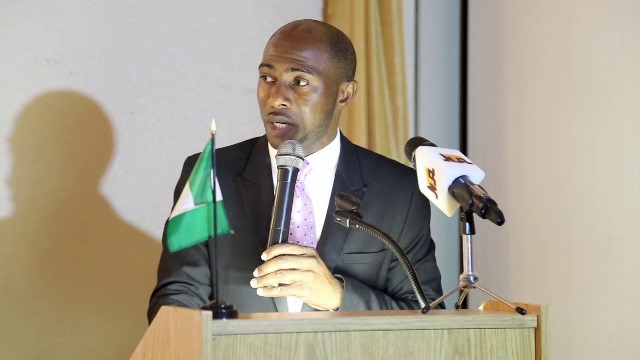
Dr. Tolulope A. Adegoke, AMBP-UN is a globally recognized scholar-practitioner and thought leader at the nexus of security, governance, and strategic leadership. His mission is dedicated to advancing ethical governance, strategic human capital development, and resilient nation-building, and global peace. He can be reached via: tolulopeadegoke01@gmail.com, globalstageimpacts@gmail.com










 Headline4 days ago